What Is a Point-And-Shoot Camera? A Practical Guide
Learn what makes a camera point-and-shoot, how compact cameras differ from phones and interchangeable-lens systems, and which features actually matter.
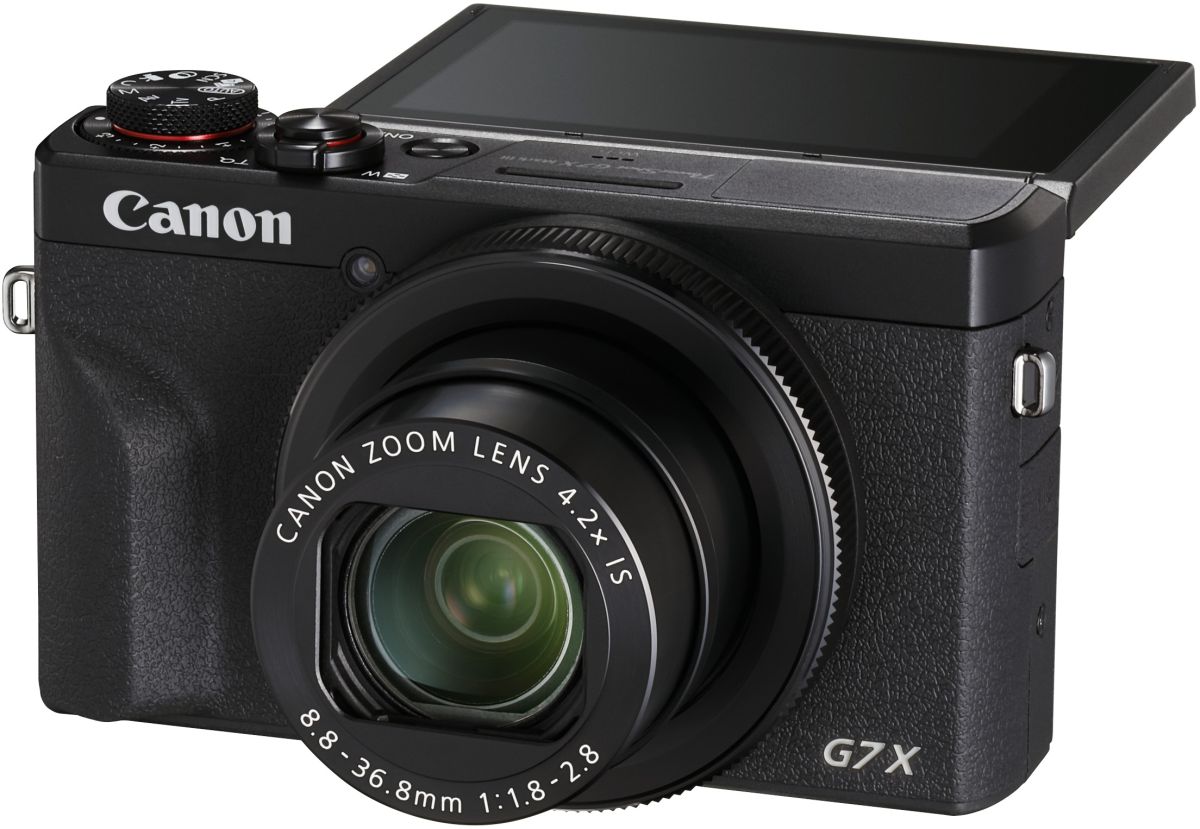
What “point-and-shoot” really means
The traditional point-and-shoot is a small fixed-lens camera designed to make a correctly exposed, focused photograph with minimal setup. You turn it on, frame the scene, and press the shutter.
That simple definition now covers very different products. A basic model may have a tiny sensor, fully automatic controls, and a long slow zoom. A premium compact may have a larger sensor, a bright lens, physical dials, an electronic viewfinder, RAW capture, and advanced subject detection.
Compact camera is the more useful technical description. Point-and-shoot emphasizes convenience. Most point-and-shoots are compact cameras, but not every compact is limited to automatic shooting.
The fixed lens is the defining feature
The lens stays attached to the body. It may be:
- a retracting optical zoom that fits into a pocket;
- a long zoom in a larger body;
- a bright short zoom for low light; or
- a fixed-focal-length prime designed for compactness and image quality.
You do not need to buy, carry, or change lenses. The sensor is also less exposed to dust during normal use. The tradeoff is that the original lens sets the camera's permanent limits for field of view, aperture, close focus, and reach.
Sensor sizes vary widely
Two cameras of similar outside dimensions can use very different sensors. Common formats include small 1/2.3-inch-type sensors, 1-inch-type sensors, Four Thirds, and APS-C.
A larger sensor can generally collect more total light for matched framing and depth of field, giving more flexibility in dim conditions and stronger background separation. It also requires a larger lens for the same zoom range and aperture, so compact design is always a compromise.
Do not compare only megapixels. A 20-megapixel 1-inch-type sensor and a 20-megapixel small sensor divide different physical areas into those pixels. Lens sharpness, processing, and exposure determine how much usable detail reaches the file.
Why optical zoom is still valuable
A compact zoom lens can cover genuine focal lengths continuously between its wide and telephoto ends. A phone usually switches among several camera modules and fills intermediate values with cropping or computational processing.
Optical zoom is useful for travel details, children's events, wildlife at a respectful distance, and compositions you cannot reach safely. Check the 35mm-equivalent range, not only the “x” ratio. A 24–120mm-equivalent 5x zoom reaches farther than a 20–100mm-equivalent 5x zoom even though both have the same ratio.
The optical versus digital zoom guide explains how cropping affects detail.
Maximum aperture across the zoom
A lens labeled f/1.8–2.8 can admit considerably more light than one labeled f/3.5–6.3, particularly at the long end. The two-number range means the widest available aperture becomes smaller as you zoom.
A bright lens helps the camera use faster shutter speeds or lower ISO. It can also create more background blur, though sensor size and subject distance remain important. Long travel zooms usually trade aperture brightness for range and small size.
Point-and-shoot versus smartphone
A phone wins on availability, editing, backup, communication, and automatic multi-frame processing. A compact camera can provide:
- a real optical zoom;
- a shutter button, grip, and control dials;
- a viewfinder on selected models;
- RAW capture and predictable manual settings;
- a memory card and removable battery; and
- a dedicated device that does not interrupt shooting with calls or notifications.
The phone may produce the more pleasing result immediately in difficult light because its software combines frames automatically. The compact may provide the more controllable file and better telephoto detail. Compare the exact devices and intended output rather than assuming one category always wins.
Point-and-shoot versus mirrorless camera
A mirrorless camera accepts interchangeable lenses and usually offers a larger grip, broader accessory support, and more room to grow. It also becomes a system: lenses, caps, bags, sensor cleaning, and purchase decisions are part of ownership.
A premium compact can be the better travel or daily camera when its attached lens covers everything you need. A mirrorless body is better when you require specialized macro, ultra-wide, super-telephoto, tilt-shift, or very bright lenses.
For the wider category comparison, see the beginner's guide to camera types.
Point-and-shoot versus bridge camera
A bridge camera is also fixed-lens, but it usually has a deep grip, electronic viewfinder, and extremely long zoom. It bridges some handling characteristics of an interchangeable-lens camera with the convenience of one attached lens.
A pocket compact prioritizes size. A bridge camera prioritizes range and stability. Many bridge cameras use a small sensor so the long lens remains manageable, though premium 1-inch-type bridge models also exist.
Controls beginners should look for
- Exposure compensation: quickly makes automatic exposures brighter or darker.
- Mode dial: gives direct access to Auto, Program, Aperture Priority, Shutter Priority, and Manual where supported.
- Control ring or dial: changes settings without repeated menu taps.
- Touch focus: places the focus point on the subject.
- Viewfinder: improves visibility and stability in bright sunlight.
- Tilting screen: makes low, high, and self-facing compositions easier.
- RAW+JPEG: keeps an editable file and a ready-to-share version.
A simple camera with clear controls is often easier to learn than a feature-rich model whose most-used settings are buried.
Autofocus and shutter response
Old compact cameras earned a reputation for shutter lag. Current performance varies. Check how quickly the camera wakes, extends its lens, focuses in low light, and records the next photograph.
Face and eye detection help with people, while subject tracking matters for pets and action. Long bursts can fill a small buffer, making the camera pause while writing to the card. A high frame-rate number is less useful if autofocus does not update or the camera becomes unresponsive afterward.
Image stabilization
Optical stabilization moves a lens group or sensor to counter camera shake. It is particularly useful at the telephoto end and in dim light. Electronic stabilization for video usually crops the image and may work with optical stabilization.
Stabilization does not freeze a moving person or animal. For subject motion, you still need a suitable shutter speed.
Video and audio considerations
A compact can be an excellent travel-video or vlogging camera, but check more than the 4K label:
- whether 4K crops the lens's wide view;
- autofocus reliability during recording;
- screen direction and whether accessories block it;
- microphone input and headphone monitoring;
- recording limits and heat behavior;
- USB charging or external power; and
- stabilization while walking.
A flip screen cannot compensate for poor audio, unreliable focus, or a lens that is not wide enough at arm's length.
Who benefits from a point-and-shoot?
It is a strong choice for travelers who want a dedicated camera without changing lenses, parents who need a simple zoom, hikers minimizing weight, photographers who prefer a discreet body, and experienced shooters who want a capable second camera.
It is less suitable when your main subjects require very long lenses, specialist close-up capability, extensive flash systems, or frequent lens upgrades.
A practical buying checklist
- Write down the widest and longest views you actually use.
- Check the lens's maximum aperture at both ends.
- Compare sensor size and real low-light samples at the same output.
- Hold the camera and test the grip, buttons, menus, screen, and viewfinder.
- Confirm RAW, autofocus, video, microphone, and connection features you need.
- Check battery availability, USB charging, memory-card type, and transfer workflow.
- Test startup time and lens extension if quick moments matter.
Common misconceptions
- “Point-and-shoot means low quality.” The category includes basic and premium cameras.
- “More zoom is always better.” Greater range can require a slower lens, smaller sensor, or softer extremes.
- “A compact replaces every phone feature.” Sharing and computational processing may remain easier on a phone.
- “A fixed lens removes all decisions.” You still choose light, position, timing, focus, and framing.
- “The smallest camera is the easiest to hold.” Tiny buttons and shallow grips can become uncomfortable.
Frequently Asked Questions
-
It is usually a compact digital camera with a permanently attached lens and automatic shooting modes. Many also provide manual controls, RAW files, optical zoom, and advanced autofocus.
-
It can be better for optical zoom, handling, viewfinder use, RAW control, and dedicated shooting. A phone is usually better for convenience, automatic computational processing, editing, backup, and immediate sharing.
-
Yes, when the camera's lens, sensor, controls, and reliability suit the assignment. Professional results depend on light, timing, technique, output, and workflow—not whether the lens detaches.
-
No. The lens is permanently attached. If you need to add specialist lenses or upgrade them separately, choose an interchangeable-lens mirrorless camera or DSLR.
-
Prioritize the useful focal range, sensor size, aperture across the zoom, autofocus, stabilization, controls, viewfinder or screen, RAW support, battery, and transfer workflow for your subjects.