Camera Shutter Count Explained: What It Means and When It Matters
Learn what a shutter count records, how mechanical and electronic shutters affect it, what durability ratings mean, and how to assess a used camera.
What the shutter count measures
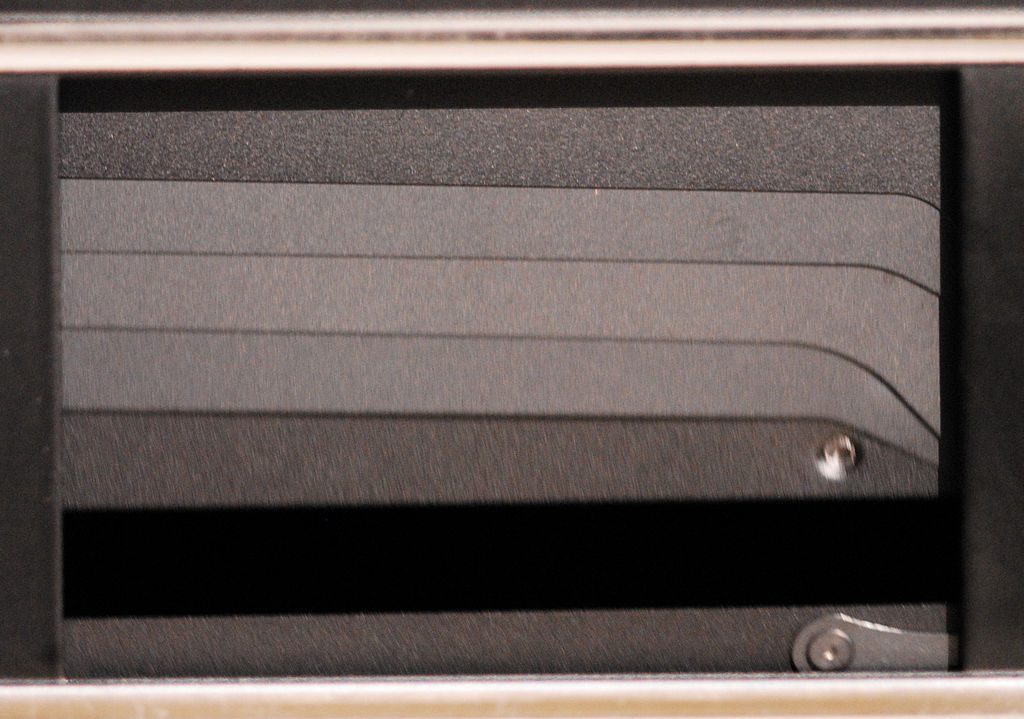
Most interchangeable-lens cameras with a mechanical focal-plane shutter use thin curtains immediately in front of the image sensor. An exposure can require those curtains to close, open, travel across the frame, and reset depending on the camera's design and live-view state.
A shutter actuation is one operating cycle recorded by the camera's internal counter. Sellers commonly call the total the shutter count.
It is not necessarily the same as:
- the file number shown in a filename;
- the number of photographs currently on a memory card;
- the number of times the shutter button was pressed; or
- the total number of sensor exposures made with electronic modes.
File numbering can be reset, cards can be changed, burst modes create many images from one press, and video can use the sensor without cycling the mechanical shutter for every frame.
How a focal-plane shutter works
A conventional focal-plane shutter uses a front and rear curtain. At slower speeds, the front curtain uncovers the sensor, the whole frame receives light, and the rear curtain ends the exposure. At faster speeds, the second curtain starts closing before the first has fully opened, so a narrow slit travels across the sensor.
These assemblies accelerate and stop rapidly with tight timing. Bearings, blades, springs, motors, and control parts are designed for repeated cycles, but they are mechanical components and can eventually wear or fail.
Shutter Speed Stops Explained covers how exposure time changes light and motion; this guide focuses on the hardware count.
Mechanical, electronic front curtain, and electronic shutter
Fully mechanical shutter
Both the beginning and end of the exposure use physical curtains. A photograph normally contributes a mechanical cycle, although the exact movement sequence depends on whether the camera is a DSLR, mirrorless body, or operating in live view.
Electronic front-curtain shutter
The sensor begins the exposure electronically, and a mechanical rear curtain ends it. This reduces movement at the start and may reduce vibration and sound. The rear curtain still operates, so it should not be treated as a completely shutter-free mode.
Fully electronic shutter
The sensor begins and ends exposure electronically, normally by scanning rows. The mechanical curtains do not need to time each photograph. This can avoid adding conventional mechanical cycles, but the camera may still close the curtains for power-off, lens changes, sensor protection, cleaning, or mode transitions.
Electronic shutter can introduce rolling-shutter distortion or bands under flickering light. It is a photographic choice, not merely a strategy to protect the count. The camera sensor design guide explains why readout speed matters.
Do electronic photographs appear in the count?
There is no universal answer. Some cameras store a mechanical shutter count, some expose additional counters to service tools, and some metadata fields represent total images or other events. Third-party software may label these values differently.
For that reason, a seller should identify the camera model, method used, source file, and whether the body was commonly used in silent or electronic modes. A count without a method is weaker evidence.
What a shutter durability rating means
Manufacturers sometimes state that a shutter unit was tested to a certain number of cycles—for example, Nikon documented 200,000 test cycles for models including the D810 and Z f. That wording describes a design validation under the manufacturer's test conditions.
It is not a countdown timer. A shutter can fail earlier, and many continue far beyond the test number. It also is not always a warranty promise; warranty coverage follows the written terms for the product and region.
Do not transfer a rating from one model to another. Entry, enthusiast, and professional bodies can use different shutter assemblies, and some current cameras rely more heavily—or entirely—on electronic exposure.
A tested-cycle figure is a reliability reference, not an exact life expectancy.
What is a low, normal, or high count?
There is no meaningful universal cutoff. Interpret the count relative to:
- the exact model and any published test figure;
- camera age;
- price compared with lower-count examples;
- expected future use;
- availability and cost of shutter service; and
- overall condition.
A five-year-old camera with 10,000 actuations may have been used lightly. A sports body can accumulate 100,000 in a season and still be professionally maintained. A studio camera may have a modest count but thousands of hours of tethered live view or video that the shutter number does not reveal.
How to check shutter count
1. Check the camera's own information screens
A few cameras show a shutter or image count in a menu, status screen, or service-related page. Use the manual for the exact model; do not assume a menu path from another camera in the same brand.
2. Read an original image file
Some cameras write an actuation value in maker-specific metadata inside an original JPEG or RAW file. A copied social-media image, screenshot, edited export, or stripped file may not contain it.
Metadata support changes by model. A website or desktop reader that works for one camera may return no value or the wrong field for another. Avoid uploading private photographs to unknown services without considering their privacy policy.
3. Use manufacturer or authorized service
For models that do not expose a dependable public value, a manufacturer or authorized repair center may be able to read internal counters with diagnostic software. Availability and fees vary.
4. Treat seller screenshots as supporting evidence
A screenshot is easy to separate from the camera it supposedly describes. Ask for a fresh original file, visible serial number where appropriate, or an in-person check when the purchase value justifies it.
Why the filename is not evidence
A file named DSC_0042 or IMG_0042 does not prove the camera has made 42 exposures. Cameras roll over after a numbering limit, create new folders, continue from a card's existing sequence, or allow numbering to reset. Replacement cards and firmware settings also affect names.
What shutter count does not reveal
The counter says little about:
- drops, impacts, or a bent mount;
- salt spray, sand, moisture, fungus, or smoke;
- sensor scratches, dust bonded to the cover glass, or laser damage;
- overheated video use or long live-view operation;
- worn buttons, dials, doors, hinges, and card slots;
- battery health or swollen third-party batteries;
- autofocus alignment and stabilization faults;
- previous repair quality; or
- stolen-property risk and serial-number history.
A camera can have a replacement shutter with a low count but extensive wear elsewhere. Conversely, cosmetic scuffs can appear on a mechanically healthy working body.
A used-camera inspection checklist
- Confirm identity. Match model and serial number to the receipt, listing, and service records when available.
- Inspect the mount and body. Look for loose screws, impact marks, corrosion, damaged seals, and bent doors.
- Test every control. Use buttons, dials, joystick, touch screen, hot shoe, ports, card slots, and both displays.
- Make mechanical exposures. Test slow and fast shutter speeds plus a burst. Listen for irregular sounds and check for black or uneven frames.
- Test electronic modes. Check for expected behavior under ordinary light without confusing normal rolling-shutter limitations with failure.
- Inspect the sensor. Photograph a plain bright surface at a small aperture to reveal dust; inspect a normal image for lines, dead regions, or laser damage.
- Check autofocus and stabilization. Test with a known-good compatible lens.
- Read fresh files. Examine RAW and JPEG files for corruption and obtain the count with a model-appropriate method.
- Price the risk. Compare the saving with return policy, repair cost, and replacement availability.
Should you avoid a high-count camera?
Not automatically. A high-count professional body can be a good purchase if the price reflects use, the camera passes inspection, its history is clear, and repair remains economical. It can be a poor choice when you need maximum reliability for an unrepeatable assignment and cannot carry a backup.
A low-count body is not automatically safer. Long storage in humidity, a hard fall, or water exposure can cause more concern than ordinary actuations.
Can the shutter be replaced?
On many cameras with a discrete mechanical assembly, a qualified service center can replace the shutter. The repair may include calibration and related parts. Cost and parts availability vary, and repair can exceed the market value of an older body.
Ask whether a service invoice documents the replacement and whether the reported counter resets, continues, or includes multiple internal values. Do not assume a zero reading means the entire camera is new.
How to reduce unnecessary mechanical use
- Use electronic shutter when it suits the subject and lighting—not merely to protect a number.
- Avoid long bursts that produce dozens of near-identical frames you will never review.
- Use interval and time-lapse features deliberately; they can accumulate counts quickly in mechanical mode.
- Turn off accidental shutter release while handling the camera.
- Do not avoid making an important photograph. The shutter is designed to be used.
Common misconceptions
- “The rating is the camera's expiration date.” It is a test reference, not a scheduled failure.
- “File number equals shutter count.” File sequences can reset and roll over.
- “Electronic shutter never moves a mechanical curtain.” The camera may move curtains outside the exposure itself.
- “Low count means like new.” Condition and history require separate evidence.
- “One online checker supports every camera.” Maker metadata and counters vary by model.
Sources and further reading
Mechanical curtain operation and electronic front-curtain behavior were checked against Sony's official e-Front Curtain Shutter explanation. Electronic-shutter limitations were cross-checked with Sony's current electronic-shutter restrictions. Examples of manufacturer test language come from Nikon's official D810 announcement and Z f specifications.
Frequently Asked Questions
-
It is usually the number of operating cycles made by the camera's mechanical shutter assembly. It is not necessarily the total number of files or all sensor exposures.
-
There is no universal number. Compare the count with the exact model, age, published test figure, physical condition, price, service history, and your expected use.
-
A fully electronic exposure generally avoids a conventional mechanical actuation, but camera counters and curtain movements vary. Some bodies record separate values, and curtains may still operate during power or mode changes.
-
Yes. A tested-cycle figure is not a hard limit; many shutters continue beyond it, while some can fail earlier. The figure reflects manufacturer testing rather than an exact expiration.
-
File numbering can easily reset, but the internal counter is different. A shutter replacement or service procedure may affect displayed counters depending on the model. Ask for documentation and the method used to obtain the value.