How to Choose a Telephoto Lens Without Overbuying
Choose the right telephoto focal range, aperture, autofocus, stabilization, close-focus capability, size, and compatibility for portraits, sports, wildlife, and travel.
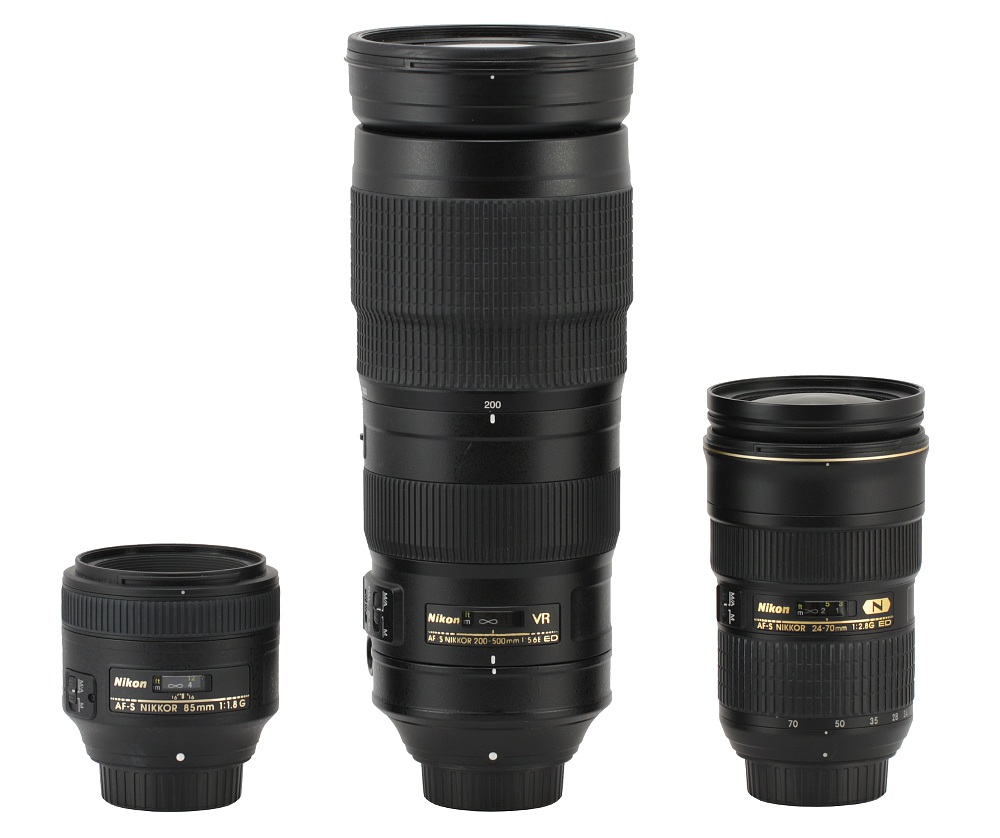
What counts as telephoto?
A telephoto lens produces a narrower field of view than a normal lens. In full-frame terms, the category often begins around 70mm. Rough working groups are:
- 70–135mm: portraits, events, details, indoor and court sports;
- 100–300mm: field sports, larger wildlife, landscapes, stage work;
- 300–600mm: birds, distant wildlife, motorsports, aviation; and
- 600mm and beyond: small or very distant subjects with demanding technique.
These are not rules. Access and subject distance decide the lens.
Begin with one real shooting position
Estimate how large the subject appears with equipment you already own. If a bird fills one-quarter of the frame height at 200mm and you want it to fill one-half, roughly 400mm from the same position gives that framing.
This proportional estimate is more useful than buying 600mm because it is popular. Venue restrictions, safety barriers, blinds, sidelines, and subject approach distance determine what you can use.
Account for sensor format
A 300mm lens remains 300mm on every camera, but APS-C records a smaller central portion of its image circle. A 1.5x APS-C camera gives field of view similar to 450mm on full frame.
This can place more pixels on the subject when the APS-C sensor has high pixel density. A high-resolution full-frame file may provide a similar crop. Compare actual pixel coverage, autofocus, noise, and output rather than treating crop factor as free reach.
Zoom or prime?
Telephoto zoom
A 70–200mm, 100–400mm, 150–600mm, or 200–600mm zoom adapts as distance changes. It is easier to locate a moving subject at the wide end, zoom in, and keep framing when action approaches.
The tradeoffs can include a smaller maximum aperture, greater length, zoom creep, extending barrels, and variable balance.
Telephoto prime
A 300mm, 400mm, 500mm, or 600mm prime may offer a wider aperture, lower weight for a particular specification, faster focus, stronger teleconverter support, or the highest optical performance. It fixes the framing, so subject distance or a second body must provide flexibility.
Maximum aperture is a practical constraint
At the same light and shutter speed, f/4 requires half the ISO of f/5.6 and one-quarter the ISO of f/8. That can matter at dawn, under stadium lighting, or when freezing wings.
A wider aperture also supplies more light to the autofocus system and can isolate the subject. The cost is larger glass, more weight, shallower depth of field, and substantially higher price.
Modern noise reduction makes slower lenses more usable, and strong daylight may make the extra stop unnecessary. Buy the aperture your hardest regular conditions need.
Constant versus variable aperture
A 100–400mm f/4.5–5.6 lens gradually loses maximum aperture while zooming. Autoexposure can compensate by raising ISO or slowing shutter. In Manual exposure with fixed ISO, brightness changes.
A constant f/2.8 or f/4 zoom retains its maximum throughout the range, which simplifies event and video work. It is usually heavier and more expensive.
Autofocus matters beyond speed
Evaluate:
- initial acquisition on a small distant subject;
- tracking toward and across the camera;
- performance against cluttered backgrounds;
- focus consistency at the long end;
- behavior with a teleconverter;
- motor noise for video; and
- compatibility with the camera's fastest burst mode.
A focus limiter can prevent the lens from searching through close distances when the action is far away. Custom buttons and memory recall are valuable when subjects move between known distances.
Stabilization and shutter speed
Optical stabilization makes the viewfinder steadier and reduces camera shake. It helps static subjects at slower shutters and improves framing. It does not freeze a running athlete or flying bird.
Some lenses offer normal, sport, panning, or tripod modes. Follow the model manual; a mode designed for fixed support can behave differently on a monopod or loose gimbal.
Minimum focus and maximum magnification
A telephoto that focuses close can double as a near-macro lens for flowers, reptiles, dragonflies, and product details. Compare maximum reproduction ratio, not only minimum distance, because focal length changes during internal focusing.
Working distance helps avoid disturbing small subjects and keeps the lens or camera from blocking light.
Teleconverter compatibility
A compatible 1.4x converter multiplies focal length and f-number by 1.4. A 400mm f/4 becomes 560mm f/5.6. A 2x converter turns it into 800mm f/8.
Compatibility is often restricted to selected lenses. Autofocus, sharpness, stabilization, and handling can change. Read What Is a Teleconverter? before treating it as a cheap substitute for a longer lens.
Weight, balance, and carrying
Published weight does not reveal balance. A front-heavy lens strains the wrist more than an evenly balanced one. Test it with your camera, plate, hood, and strap.
Ask whether you can:
- handhold it for a full event;
- fit it in your normal bag;
- carry it onto an aircraft;
- rotate the tripod collar smoothly;
- zoom without shifting your grip; and
- use controls with gloves.
A lens left at home has no optical advantage.
Internal versus extending zoom
An internal zoom keeps its physical length and balance more consistent and can be easier to seal. An extending zoom packs shorter and may weigh less. Neither design guarantees weather resistance or sharpness.
Push-pull zooms change focal length quickly but can be easier to move accidentally. Ring zooms offer familiar control. Try the actual mechanism.
Tripod collar and foot
Long lenses should mount to support near their balance point rather than hanging from the camera body. A rotating collar also makes horizontal-to-vertical changes easier.
Check whether the foot is compatible with your clamp or needs a separate plate. A long dovetail helps balance a changing zoom or accessories. Locking security matters more than convenience.
Weather and front element
Sealing claims depend on the whole camera-lens combination and do not mean waterproof. A protective front filter for a huge lens may be impractical; many super-telephotos use a small rear drop-in filter instead.
The hood protects against flare, rain, and physical contact. Verify its size and whether it reverses for packing.
Sharpness: compare the right things
Compare RAW files with accurate focus at equal framing and output size. Long-lens detail is often limited by:
- subject motion;
- camera shake;
- heat shimmer and haze;
- missed focus;
- high ISO noise reduction; and
- insufficient pixels on the subject.
Small laboratory differences may disappear outdoors. Contrast, flare control, autofocus, and consistency can matter more.
Matching range to common subjects
- Indoor sports: 70–200mm f/2.8 is a common flexible choice; court position changes the answer.
- Field sports: 100–400mm or 200–600mm provides range; night games favor faster primes.
- Birds: 400–600mm is often useful, with close focus and tracking important.
- Large wildlife: 100–400mm can preserve environmental context and handle changing distance.
- Portraits and events: 70–200mm controls background and working distance.
- Telephoto landscapes: 100–300mm isolates layers; extreme aperture is less important on support.
A smart buying sequence
- Review your existing photographs and identify the focal lengths and crop amounts you use.
- Set a maximum carried weight and packed length.
- Choose the required long end and aperture from your darkest regular conditions.
- Confirm autofocus, stabilization, collar, and converter compatibility.
- Rent the lens for the actual venue or subject.
- Compare keeper rate and comfort, not only one perfectly sharp test frame.
- Budget for the hood, plate, support, case, and insurance.
Common mistakes
- Buying maximum reach without a subject plan. Longer can be harder to aim and carry.
- Ignoring aperture at the long end. It sets shutter and ISO options.
- Expecting stabilization to freeze action. Subject motion still requires shutter speed.
- Judging only sharpness charts. Focus, balance, and atmosphere decide field results.
- Forgetting minimum focus. It can determine whether small subjects fill the frame.
- Skipping a rental. Ergonomic problems rarely appear in specifications.
Frequently Asked Questions
-
Choose from your real subject distance and desired subject size. Around 70–200mm suits portraits and many events; 100–400mm is flexible for field sports and larger wildlife; 400–600mm is common for birds and distant action.
-
A zoom handles changing distance and makes subjects easier to locate. A prime may offer a wider aperture, lower weight for its specification, faster focus, or stronger optical performance. Your access and light decide.
-
It can be in good light, especially with current high-ISO processing. Dawn, dusk, forest, and fast motion benefit from a wider aperture, but the size and price increase may outweigh one stop for some photographers.
-
It is highly useful for steady framing and static subjects, especially at long focal lengths. It does not replace the fast shutter needed to stop subject movement.
-
APS-C gives a narrower field from the same lens and may provide high pixel density. Full frame may offer better high-ISO output and wider framing flexibility. Compare pixels on subject, autofocus, noise, lens options, and total system size.