What Is a Teleconverter and How Does It Work?
Learn how 1.4x and 2x teleconverters change focal length, aperture, autofocus, sharpness, close-up magnification, and lens compatibility.
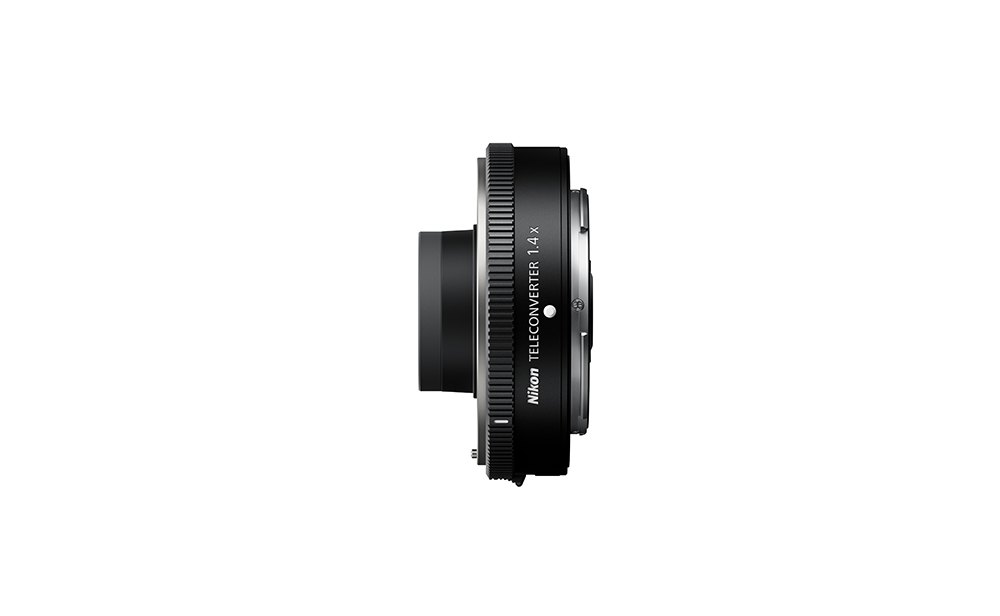
Where the teleconverter sits
The accessory has a camera mount on one side and a lens mount on the other. Its optical elements intercept the image produced by the main lens and magnify the central portion before it reaches the sensor.
Manufacturers may also call it an extender. This is different from a hollow extension tube, which contains no optics and is used to focus closer for macro photography.
How to calculate the new focal length
Multiply the lens focal length by the converter factor:
- 300mm × 1.4 = 420mm;
- 400mm × 1.4 = 560mm;
- 70–200mm × 2 = 140–400mm; and
- 600mm × 2 = 1200mm.
The narrower field is optical, not merely a digital crop. The full sensor can still be used, although the converter magnifies lens aberrations along with the subject.
Sensor crop factor is a separate calculation. A 400mm lens with a 1.4x converter is physically a 560mm combination. On a 1.5x APS-C camera, its field of view resembles about 840mm on full frame. The APS-C guide explains why the camera does not turn it into an 840mm lens.
Why maximum aperture becomes smaller
The converter spreads the lens's projected light over a larger image. The entrance pupil has not grown, but the effective focal length has. Because f-number equals focal length divided by entrance-pupil diameter, the effective f-number increases by the same factor.
- 1.4x converter: one-stop loss; f/2.8 becomes f/4, f/4 becomes f/5.6.
- 1.7x converter: about 1.5 stops; f/2.8 becomes roughly f/4.8, commonly displayed near f/4.5 or f/5 depending on the system.
- 2x converter: two-stop loss; f/2.8 becomes f/5.6, f/4 becomes f/8.
A compatible electronic converter normally reports the effective aperture to the camera, so metering and metadata update automatically.
What the light loss changes
To maintain the same exposure, you must use a slower shutter speed, higher ISO, or brighter light. Wildlife and sports often already demand fast shutters, so the lost stop can matter more than it would on a tripod-mounted landscape.
The smaller effective aperture also gives autofocus less light and a less distinct phase signal. Current mirrorless systems can focus at smaller effective apertures than many older DSLRs, but speed and reliability can still decline in low contrast or dim conditions.
Compatibility is deliberately limited
Do not buy by mount name alone. Many converters have a front optical group that protrudes into a recess at the rear of selected telephoto lenses. A physically incompatible lens can strike the glass or fail to mount.
Compatibility can affect:
- physical clearance;
- autofocus availability and focus-point coverage;
- vibration reduction or image stabilization;
- aperture reporting and metering;
- firmware communication;
- weather sealing; and
- image quality approved by the manufacturer.
Check the current compatibility chart for the exact camera, lens, converter, and firmware. Adapters between DSLR and mirrorless mounts add another layer of restrictions.
What happens to image quality
A converter magnifies the main lens's resolved detail, but also magnifies spherical aberration, chromatic aberration, flare, focus error, and atmospheric distortion. It adds its own glass and alignment tolerances.
A high-quality 1.4x converter on a sharp telephoto often delivers a useful increase in detail. A 2x converter is more demanding. Stopping down may improve optical performance, but that costs still more light and can bring diffraction into the balance.
Judge the combination at the final output size. A converter file may look slightly softer at 100% yet contain more subject pixels than the unconverted crop.
Teleconverter versus cropping
The fair test is not “full converter image versus full unconverted image.” Crop the unconverted frame to the same subject framing, then compare both at the same display or print size.
A teleconverter is likely to help when:
- the base lens resolves more detail than the sensor samples;
- focus remains accurate;
- there is enough light for a suitable shutter speed;
- atmospheric conditions are clear; and
- the converter is optimized for that lens.
Cropping may be better when the converter slows autofocus, forces excessive ISO, makes tracking difficult, or adds little detail beyond interpolation. High-resolution sensors give more crop room, but pixel count alone does not guarantee resolved detail.
Minimum focusing distance and magnification
Most rear teleconverters do not change the main lens's minimum focusing distance. Because the image is magnified more at that same distance, maximum reproduction ratio increases by the converter factor.
A lens reaching 0.25x magnification becomes approximately 0.35x with a 1.4x converter and 0.5x with a 2x converter. This can be useful for butterflies, flowers, and small wildlife while maintaining working distance.
Depth of field becomes shallower for the larger captured subject magnification and equivalent framing. Focus accuracy and camera support become more critical.
Does stabilization still work?
With a fully compatible modern converter, lens and in-body stabilization usually receive the effective focal-length information. An unsupported manual combination may not. If the camera allows manual focal-length entry, use the converted value.
Stabilization reduces camera movement, not subject movement. Long effective focal lengths also magnify vibration from wind, tripod flex, and touching the shutter. Use solid technique even when the viewfinder looks steady.
Using a teleconverter in the field
- Turn the camera off if the manufacturer instructs it.
- Attach the converter to the compatible lens first, then mount the combination to the camera, following the manual.
- Confirm the displayed focal length and effective aperture.
- Test autofocus on the intended subject before the decisive moment.
- Increase shutter speed or support if the longer view reveals shake.
- Check sharpness, chromatic aberration, and atmospheric shimmer at useful output size.
- Keep both converter caps accessible when removing it.
Avoid changing the combination in dust, spray, or blowing sand. You create two exposed mounts instead of one.
Built-in teleconverters
Some professional super-telephoto lenses contain a converter that swings into the optical path with a lever. This allows a rapid change without exposing the mount or removing the eye from the action.
The same focal-length and aperture math applies. The advantage is speed, sealing, and optimization; the disadvantages are cost, weight, and a more complex lens.
Can teleconverters be stacked?
Some combinations can physically stack, but manufacturers often do not support them. Light loss and optical demands multiply. Two 1.4x converters give approximately 2x total magnification and two stops of loss, not 2.8x.
Autofocus, metering, stabilization, clearance, and metadata may fail. Use only an explicitly supported combination and compare it with a single 2x converter or crop.
When a teleconverter makes sense
- Wildlife: reach without carrying another very large lens.
- Field sports: extra framing flexibility from a fixed shooting position.
- Close-ups: greater reproduction at the same working distance.
- Travel: a small accessory instead of a second super-telephoto.
- Bright outdoor events: enough light to absorb the aperture loss.
It makes less sense on an already slow consumer zoom, in dim indoor sports, through heavy heat haze, or when the camera-lens combination is not officially compatible.
Common mistakes
- Assuming every lens in the mount works. Check the exact compatibility chart.
- Forgetting effective aperture. A 2x converter costs two stops.
- Using the old shutter speed. The narrower view reveals shake and subject motion more strongly.
- Judging at unequal sizes. Compare matched framing and output.
- Blaming the converter for heat shimmer. Long-distance air movement can destroy detail before it reaches the lens.
- Confusing it with an extension tube. One adds reach optically; the other changes close-focus geometry.
Frequently Asked Questions
-
It mounts between a compatible lens and camera and optically magnifies the lens's central image. This increases effective focal length and narrows the field of view while reducing maximum aperture.
-
A 1.4x teleconverter loses one stop, a 1.7x model about one and a half stops, and a 2x model loses two stops. For example, a 300mm f/2.8 becomes a 420mm f/4 with a 1.4x converter.
-
Usually to some degree, because it magnifies lens aberrations and adds optics. A high-quality matched converter on a sharp lens can still record more subject detail than cropping, especially with a 1.4x model.
-
No. Physical clearance, optical design, autofocus, stabilization, firmware, and mount communication limit compatibility. Use the manufacturer chart for the exact lens, camera, converter, and adapter.
-
A 1.4x model normally preserves more light, autofocus performance, and sharpness. A 2x model gives more reach but costs two stops and demands an excellent lens, strong light, accurate focus, and stable technique.