22 Wedding Photo Booth Ideas Guests Will Actually Use
From elegant portrait lounges and instant-print guest books to vintage campers and playful custom sets, these photo booth ideas balance style with a genuinely good guest experience.
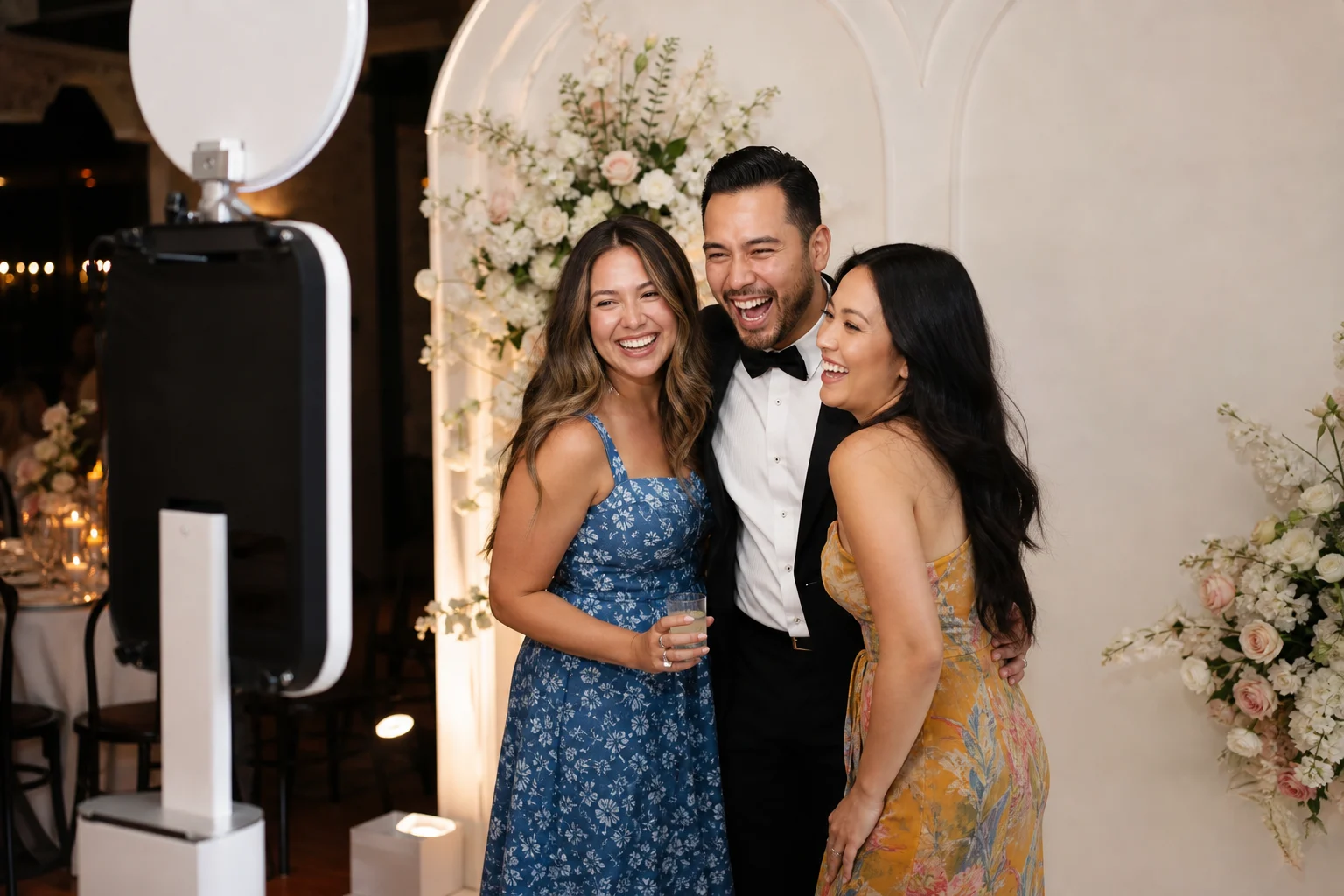
First, decide what you want the booth to do
Before choosing flowers or props, decide what guests should receive. A classic booth makes nostalgic strips. An open-air station handles larger groups. A portrait lounge creates polished pictures worth framing. An instant-camera table turns photos into a guest book. A GIF or video setup prioritizes sharing rather than prints.
That single decision controls the camera, light, footprint, staffing, and budget. It also prevents a common mismatch: building an elegant backdrop, then using a tiny light and a tablet that cannot photograph a full group well.
Once the experience is clear, choose one of the ideas below—or combine two that solve different needs.
Elegant and design-led photo booth ideas
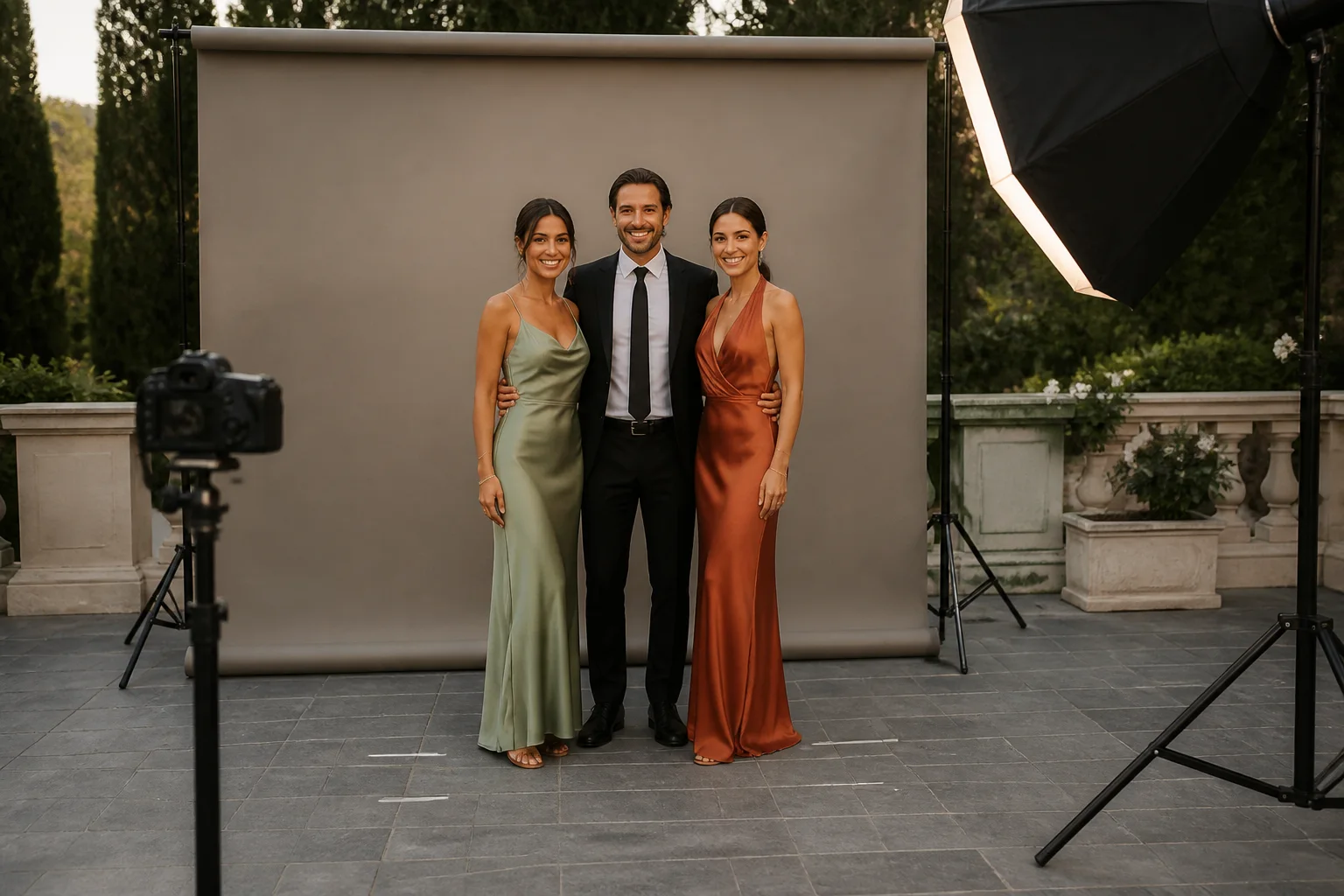
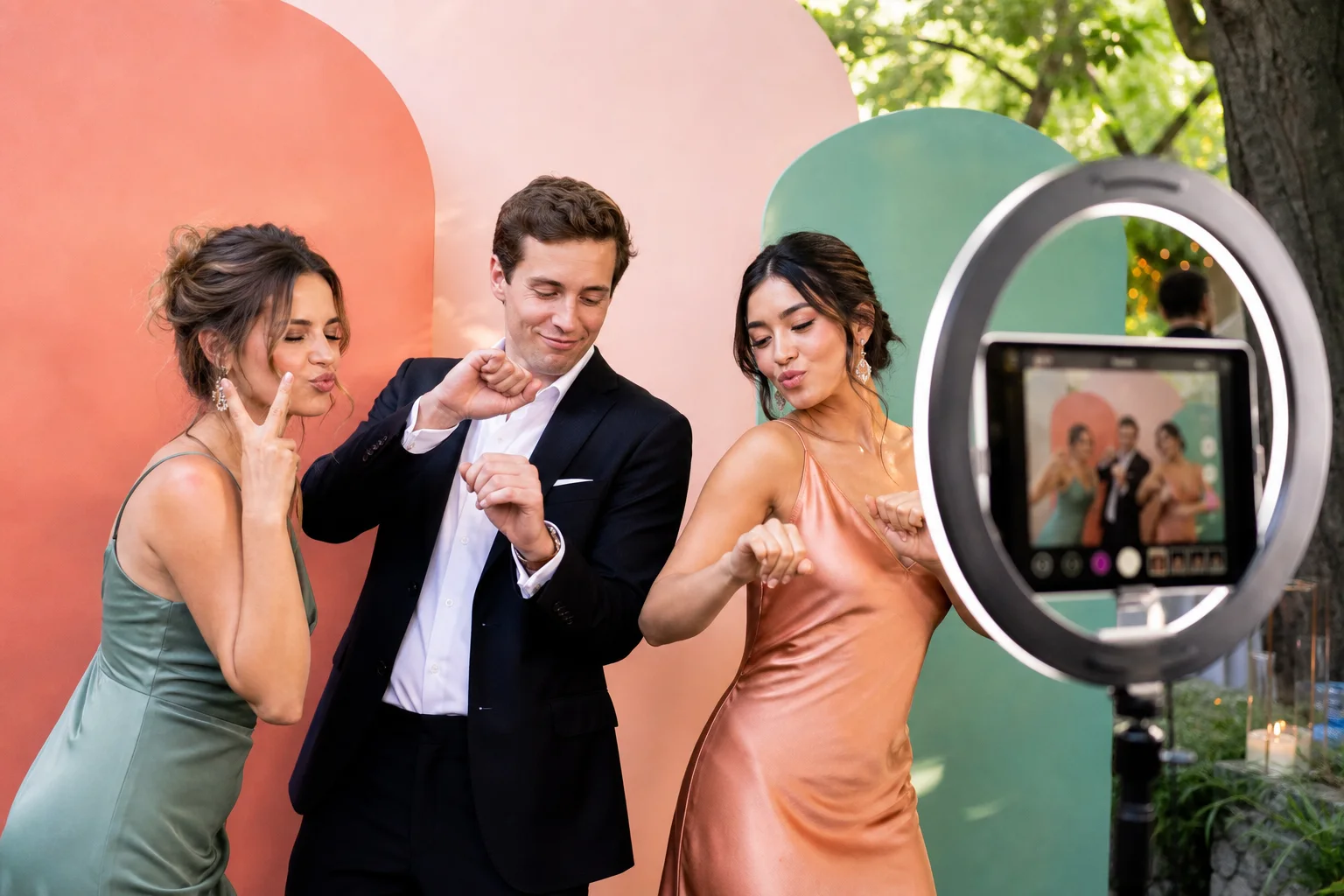
1. A clean open-air portrait station
Use a neutral seamless backdrop, one flattering light, and a camera positioned far enough back for groups. This is the most versatile choice because it can feel modern, formal, or relaxed depending on the print design.
Keep the floor clear and mark the ideal standing area subtly. Guests should understand where to look without an attendant directing every pose.
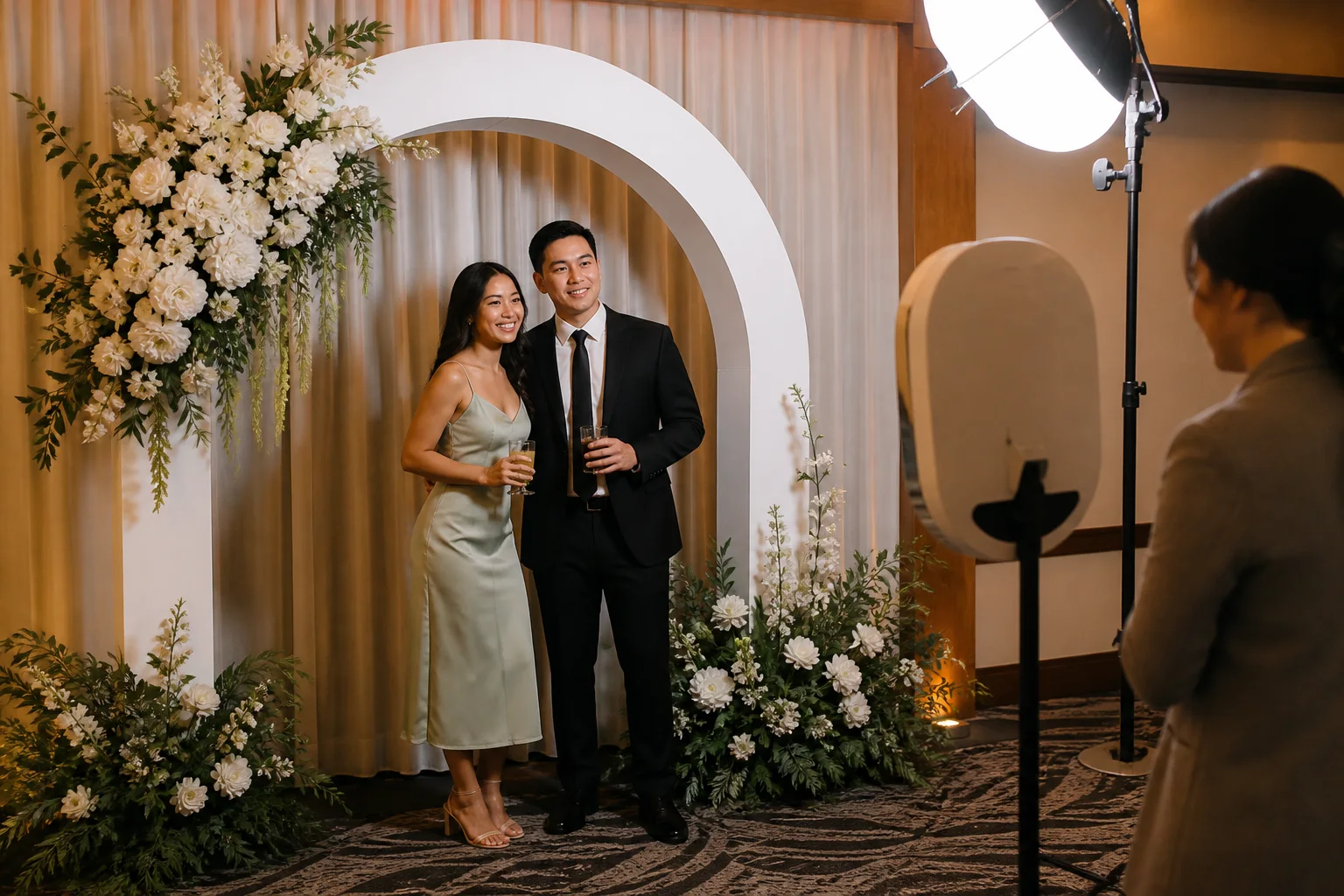
2. Reuse the ceremony backdrop
An arch, painted panel, or floral installation can move from the ceremony to the reception and do a second job as a photo backdrop. It is a sensible way to get more value from a major decor piece.
Confirm who will move it, when that can happen, and whether it remains stable without the ceremony structure. Never ask guests or the photography team to improvise the move during cocktail hour.
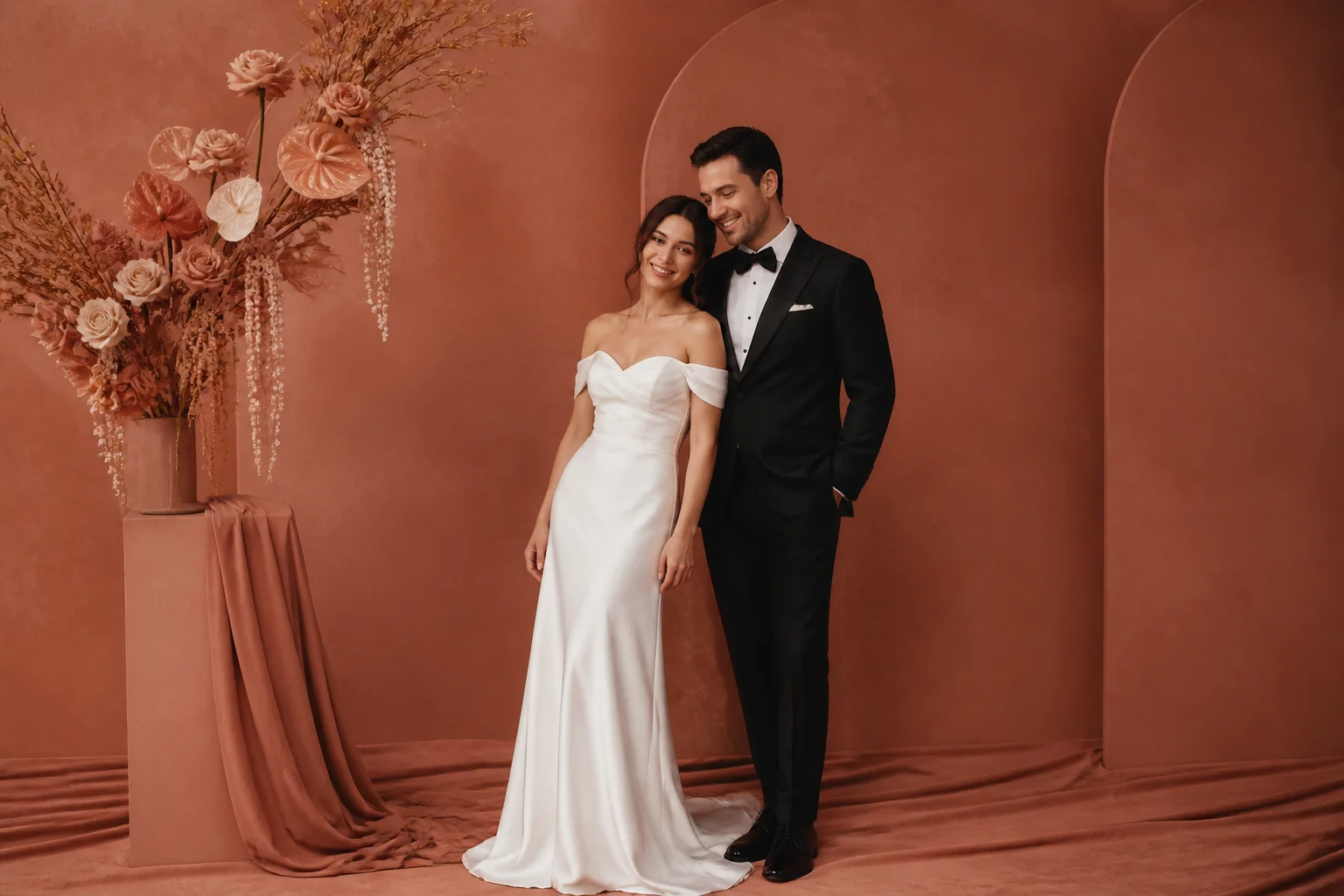
3. A monochrome wall with one floral accent
A solid wall in a color from the wedding palette photographs more cleanly than a busy pattern. Add one asymmetrical arrangement rather than surrounding every edge with flowers.
Test dark suits, pale dresses, and different skin tones against the chosen color. The backdrop should create separation without reflecting a strong color cast onto faces.
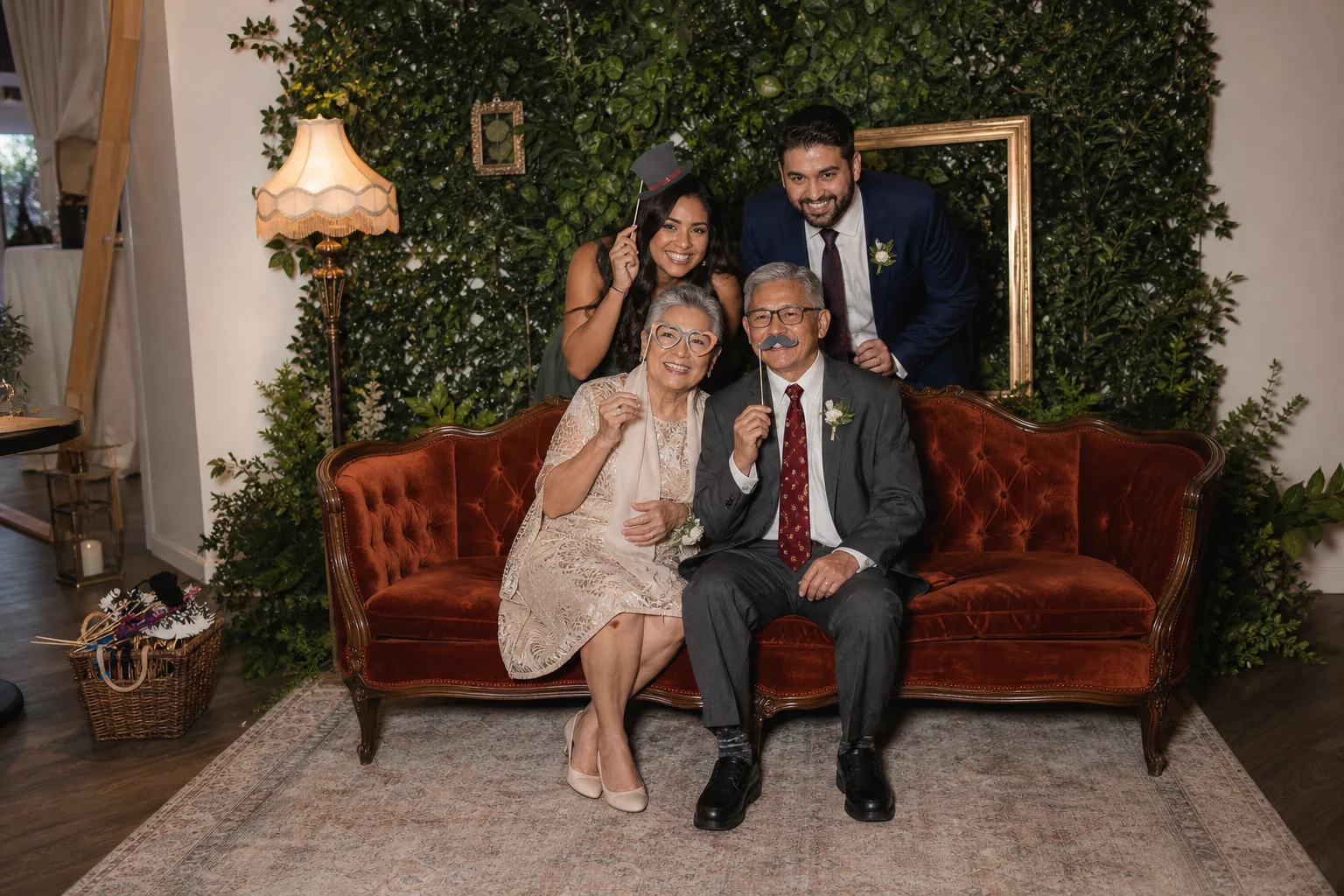
4. A portrait lounge with real seating
A sofa or pair of armchairs changes the booth from a quick selfie stop into a small portrait set. It is especially useful for grandparents, guests with limited stamina, and groups who want a composed picture.
Choose firm seating at a practical height, leave space beside it for mobility devices, and avoid deep furniture that swallows formal clothing. A simple greenery wall or fabric drape is enough behind it.
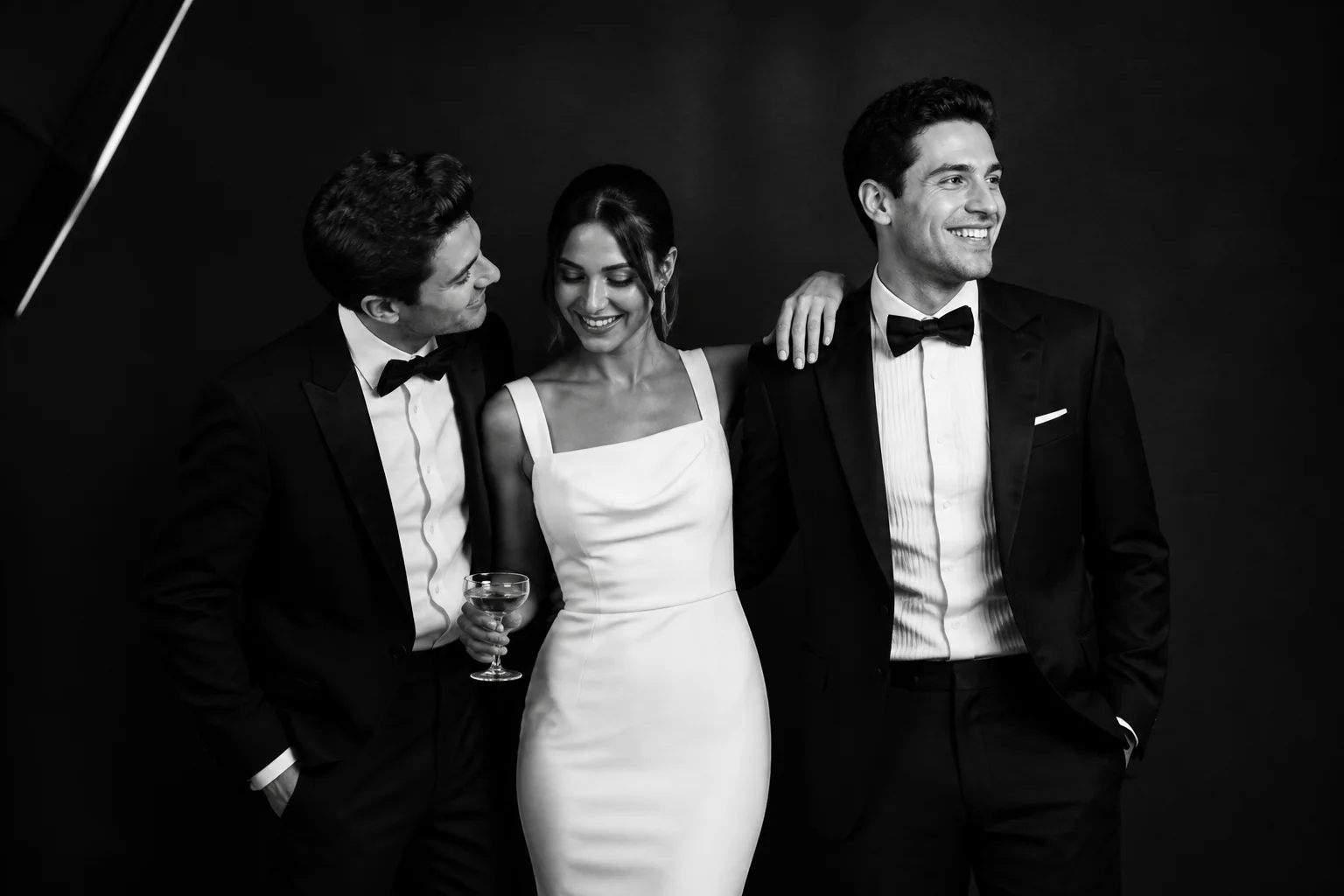
5. An editorial black-and-white studio
Skip themed props and ask the booth operator for directional light, a plain background, and a black-and-white output. Guests can pose as couples, families, or old friends, and the results feel closer to a magazine portrait than a party novelty.
This concept succeeds through lighting and posing, so an attendant who can offer quick, confident direction is more valuable than extra decor.
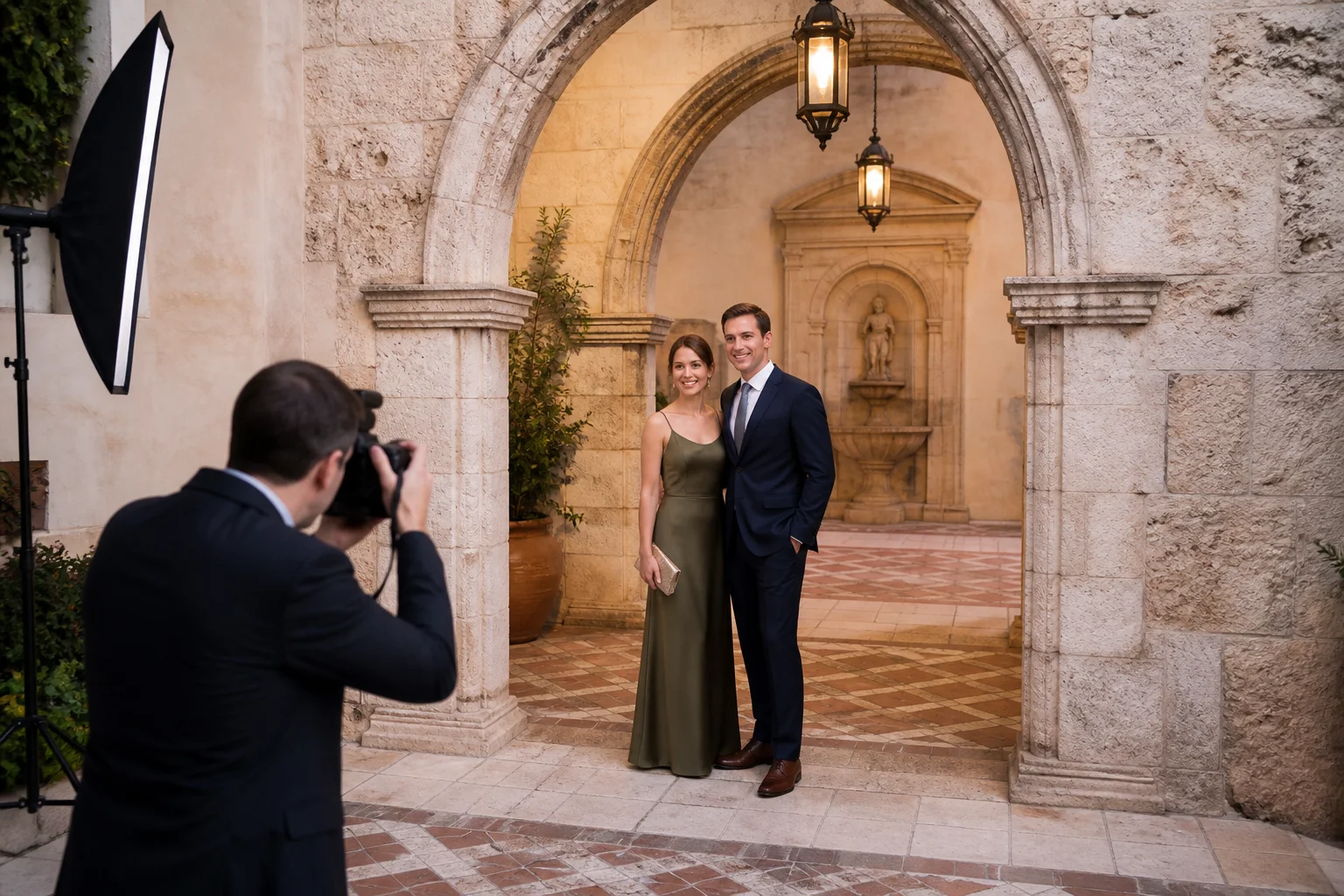
6. A framed view of the venue
Sometimes the best backdrop already exists: a stone arch, sculpture, library wall, tiled courtyard, dramatic staircase, or garden hedge. Position a camera and light so the feature becomes a consistent setting rather than an accidental phone-photo spot.
Ask the venue whether the area stays available all evening and whether other guests need it as a walkway. Protect historic floors and surfaces from stands and adhesive.
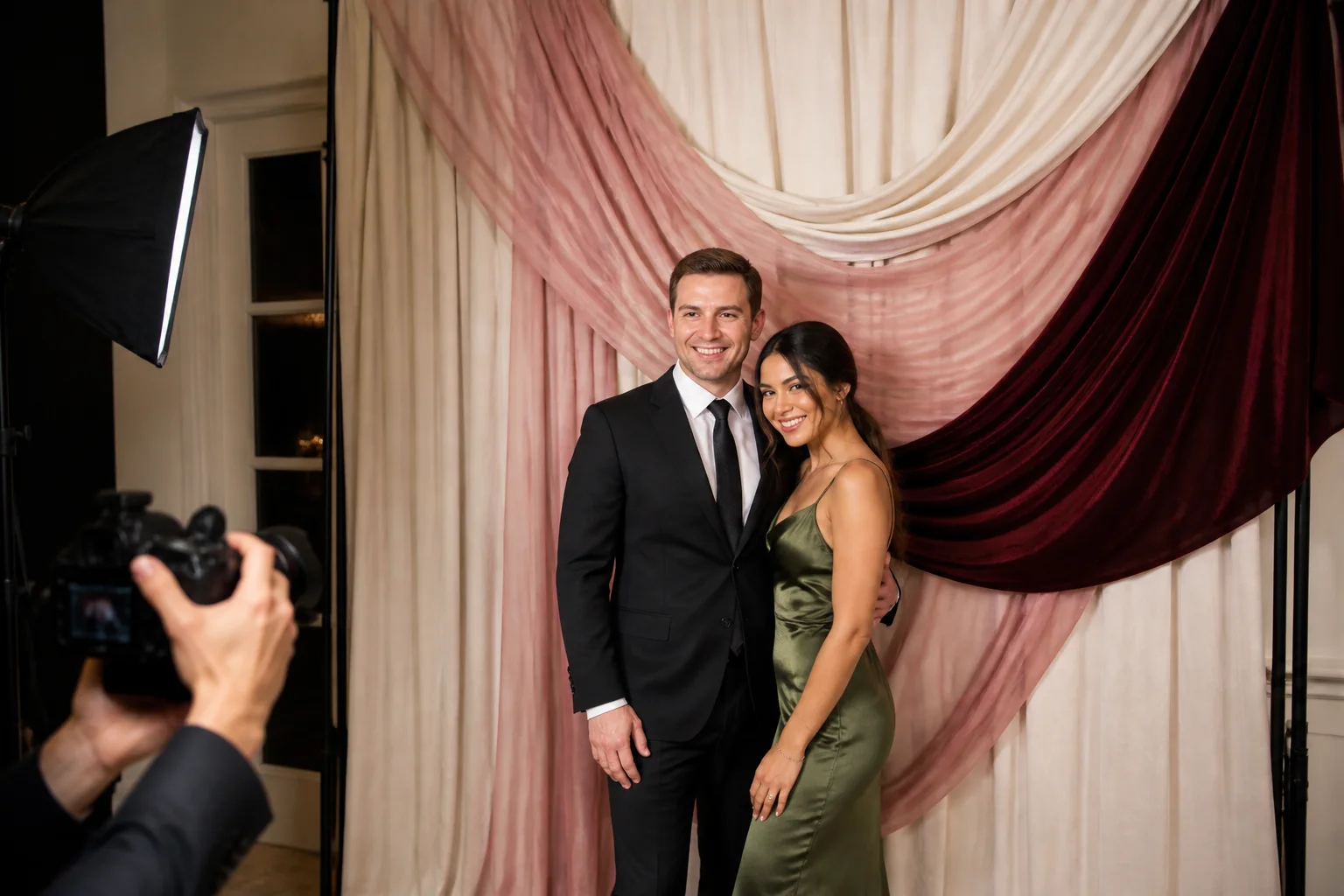
7. A softly draped fabric backdrop
Layered linen, velvet, or sheer fabric can look more dimensional than a flat wall while packing into a small space. Use fabric with enough width to cover groups and enough weight to avoid revealing every wrinkle.
Steam it before setup, secure the bottom safely, and keep open flames away. If light passes through, hide cables, doors, and storage behind it.
Personal photo booth ideas
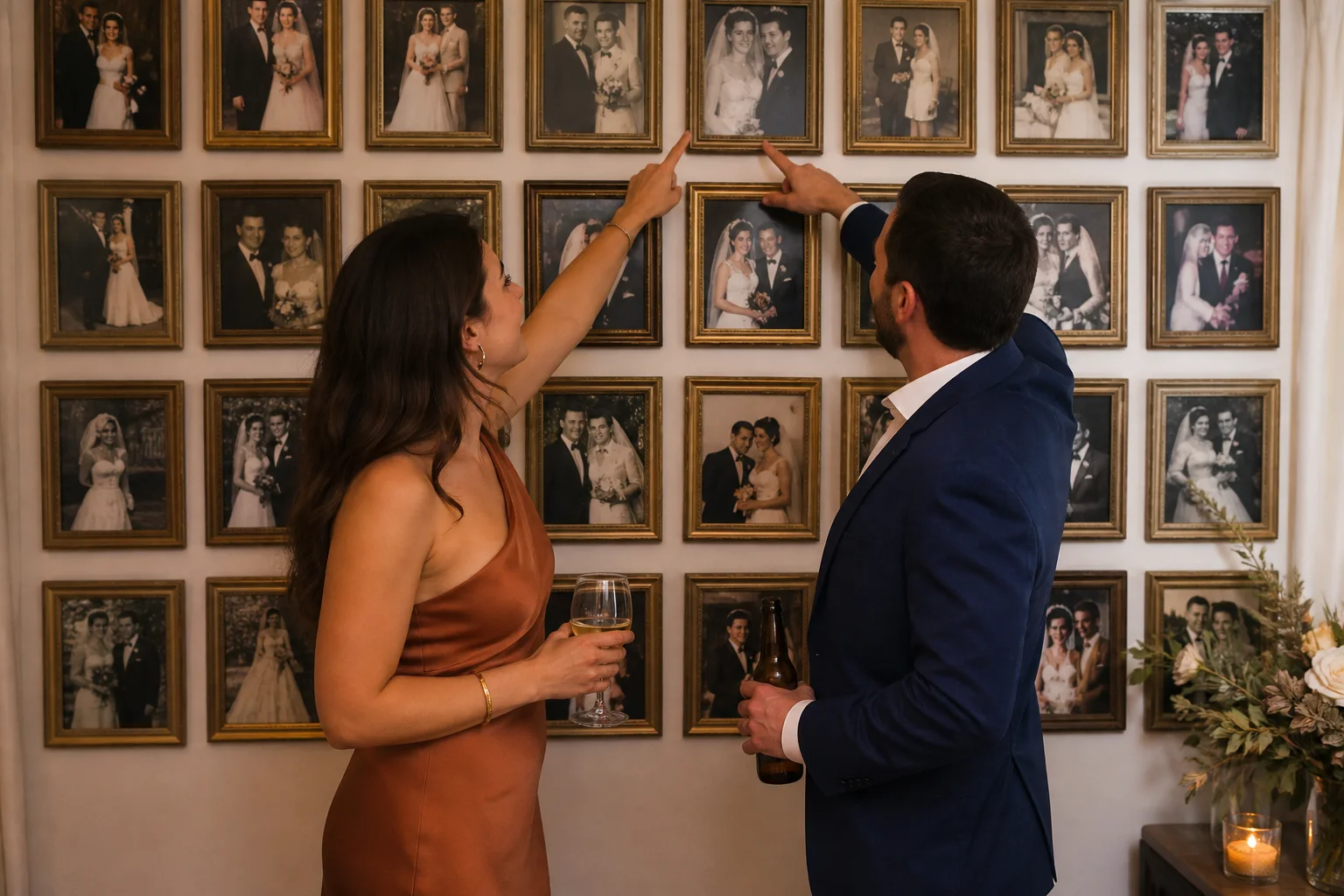
8. A family-photo gallery wall
Build the backdrop around wedding portraits from parents and grandparents, childhood snapshots, or pictures from the couple's relationship. Guests get a conversation starter as well as a photo setting.
Use reproductions rather than irreplaceable originals, and keep the arrangement simple enough that faces in the new photo remain dominant. Avoid placing meaningful images where drinks or props can damage them.
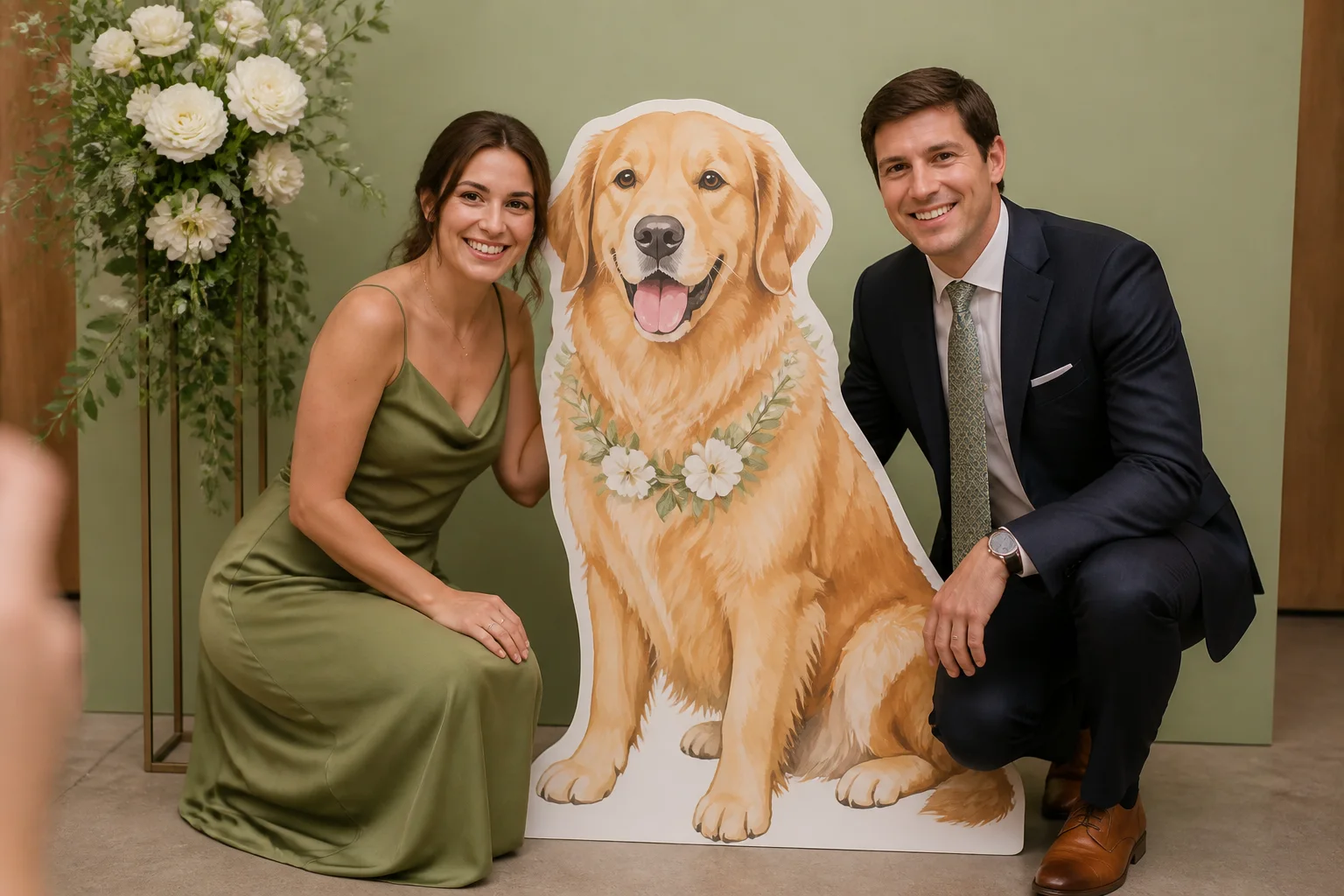
9. A tasteful pet cameo
If a pet cannot attend, include one well-made illustrated cutout, small portrait, or custom prop. It feels more personal than generic lips and mustaches and gives guests who know the pet an immediate pose idea.
One or two pet elements are enough. Large face cutouts can be funny, but check that they do not block everyone else in a group.
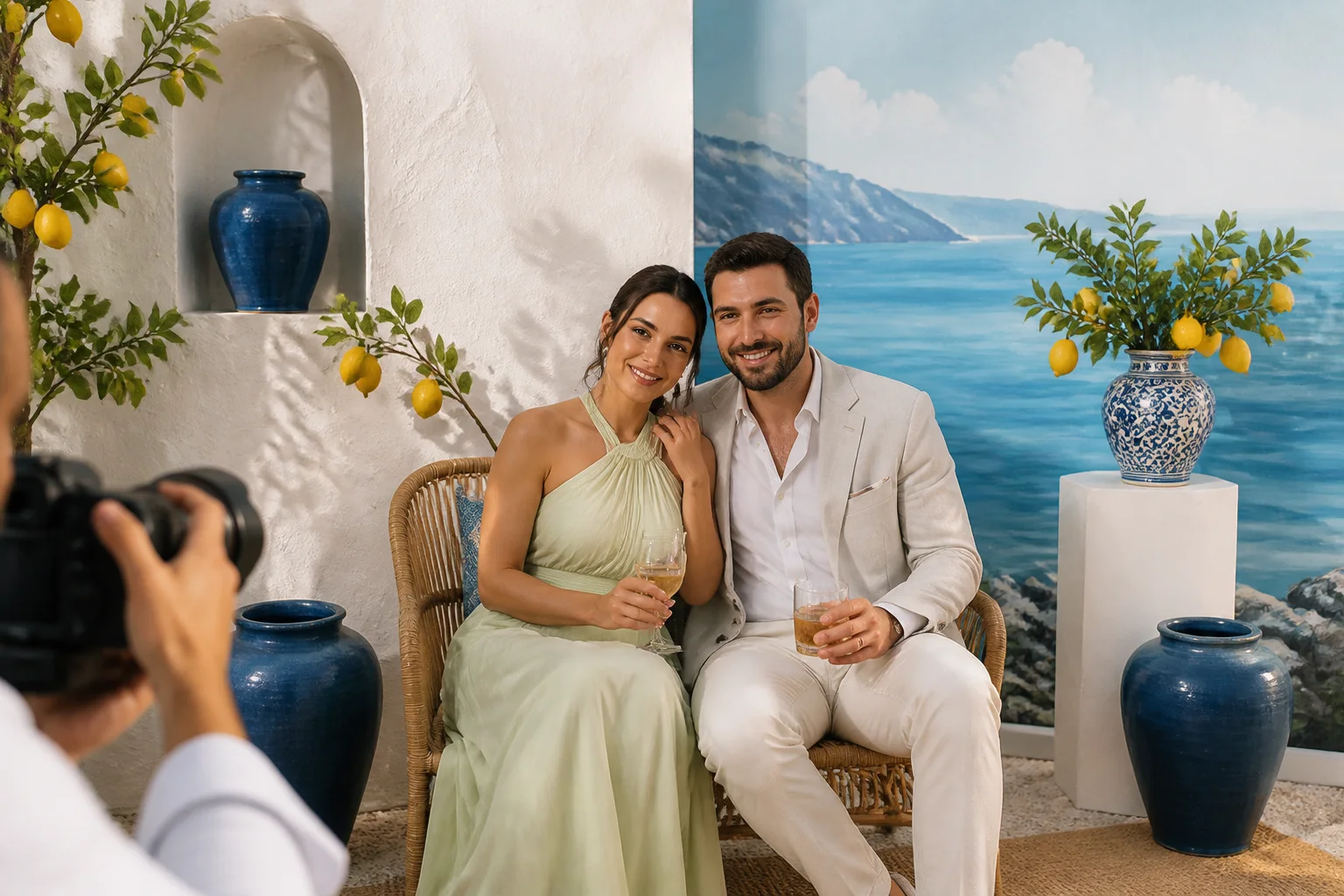
10. A hometown or destination set
Reference the place where you met, live, got engaged, or are celebrating. Use a painted streetscape, vintage travel-poster palette, local flowers, or a small collection of recognizable objects.
Avoid turning the booth into a souvenir shop. Select two or three details with a real story and let the sign or print border provide the rest of the context.
11. A shared-hobby set
Books, records, hiking maps, theater curtains, arcade graphics, sports colors, or cinema lighting can make the booth feel unmistakably yours. Build a visual world rather than laying unrelated hobby objects on a table.
If the idea relies on copyrighted characters or team marks, ask the vendor what they can legally reproduce. A subtle reference often ages better than a literal branded backdrop.
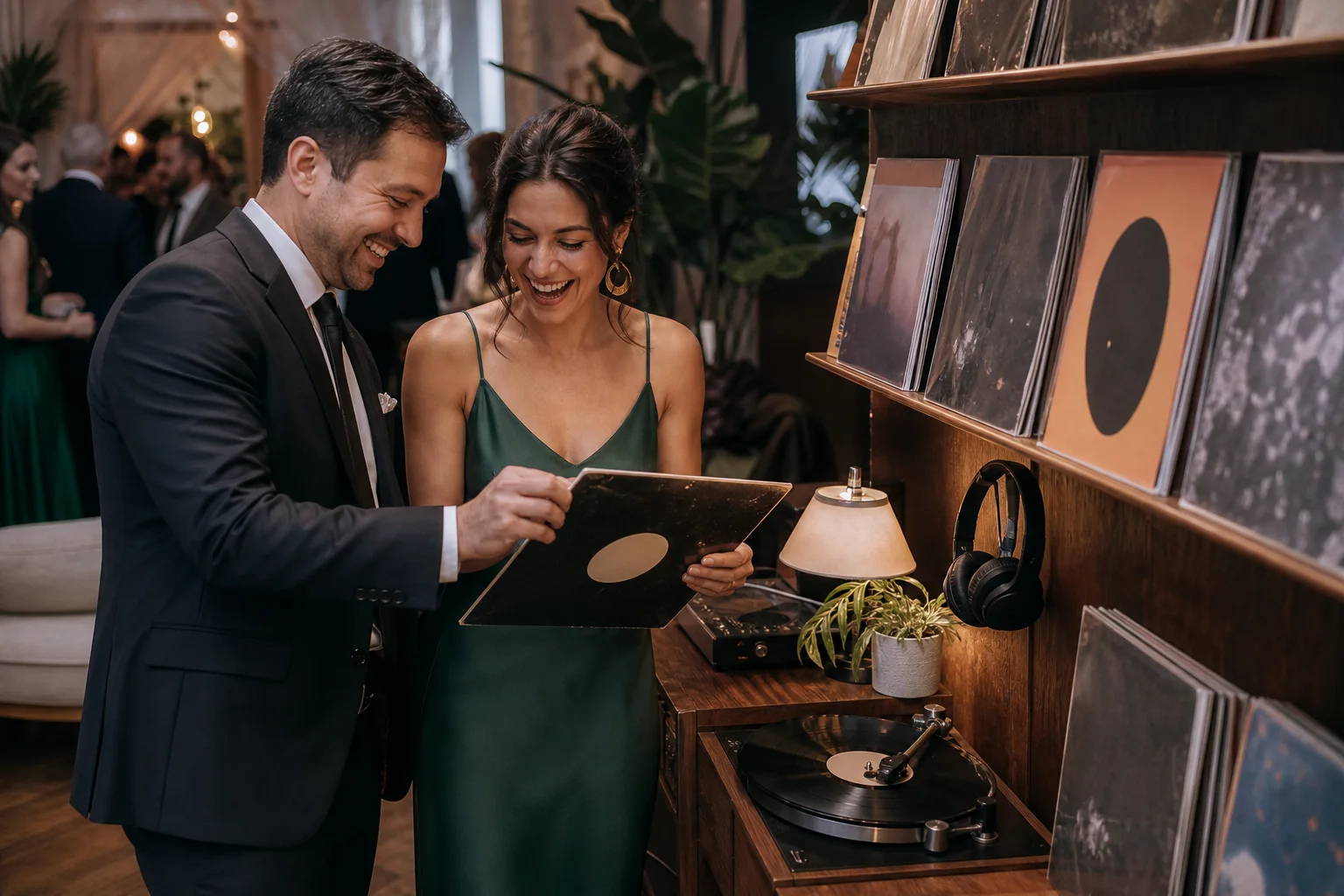
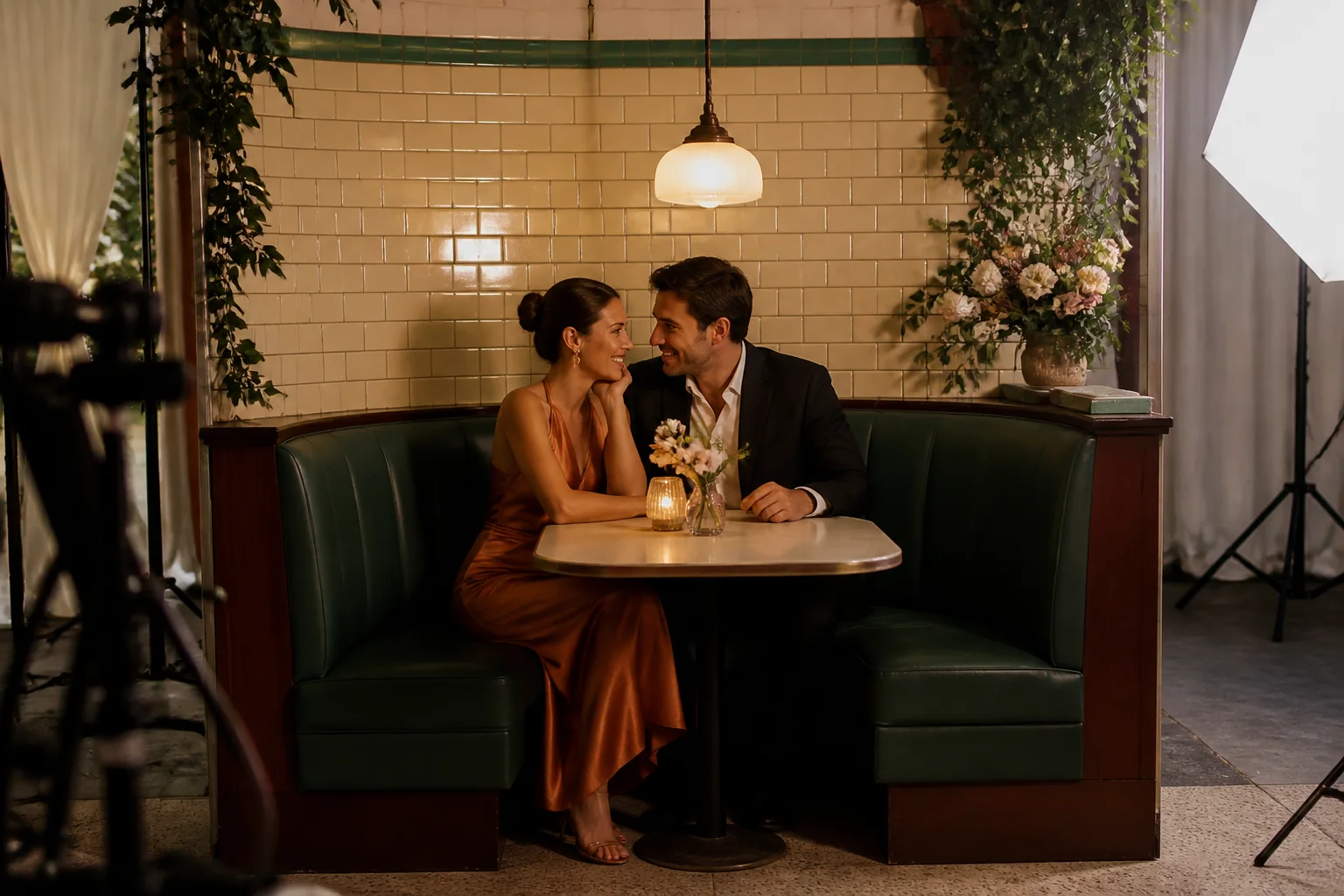
12. A recreation of a meaningful room
Reimagine a favorite cafe booth, living-room corner, record store, greenhouse, or late-night diner. Furniture and practical lamps give guests something to do with their hands and encourage small-group scenes.
This works best when the set is deep enough to feel real but open enough for safe entry. Tape or cover every cable, stabilize freestanding walls, and remove fragile props.
Prints, guest books, and interactive ideas
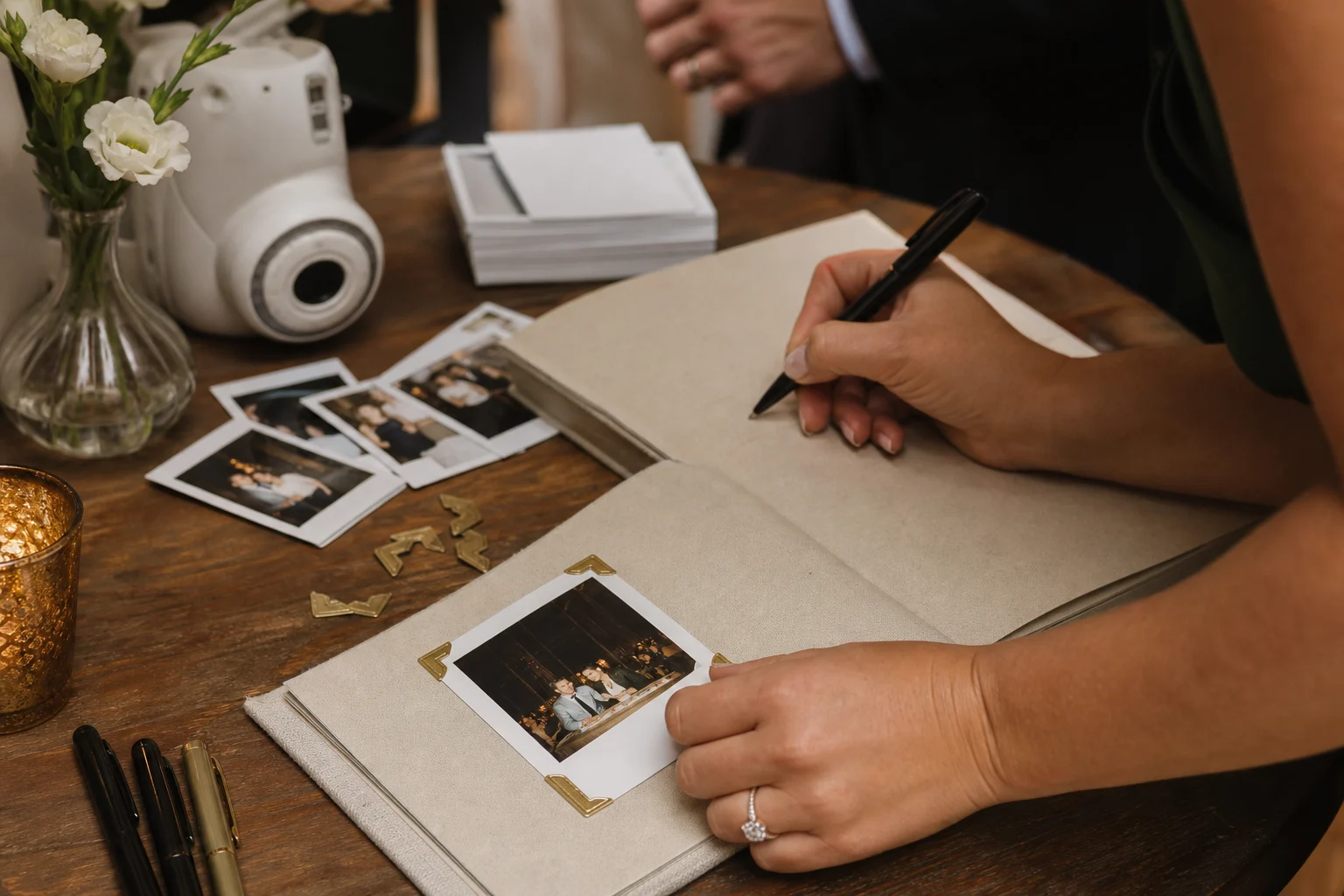
13. An instant-photo guest book
Set out an instant camera or printer beside a bound album. Guests add one photo, leave a note, and take a second print if supplies allow. By the end of the reception, the couple has a guest book that feels alive rather than formal.
Assign an attendant or trusted helper to reload film, explain the process, and keep wet prints from being stacked. Use photo corners or adhesive made for photographs, and test pens on the actual paper before the wedding.
14. A classic enclosed photo booth
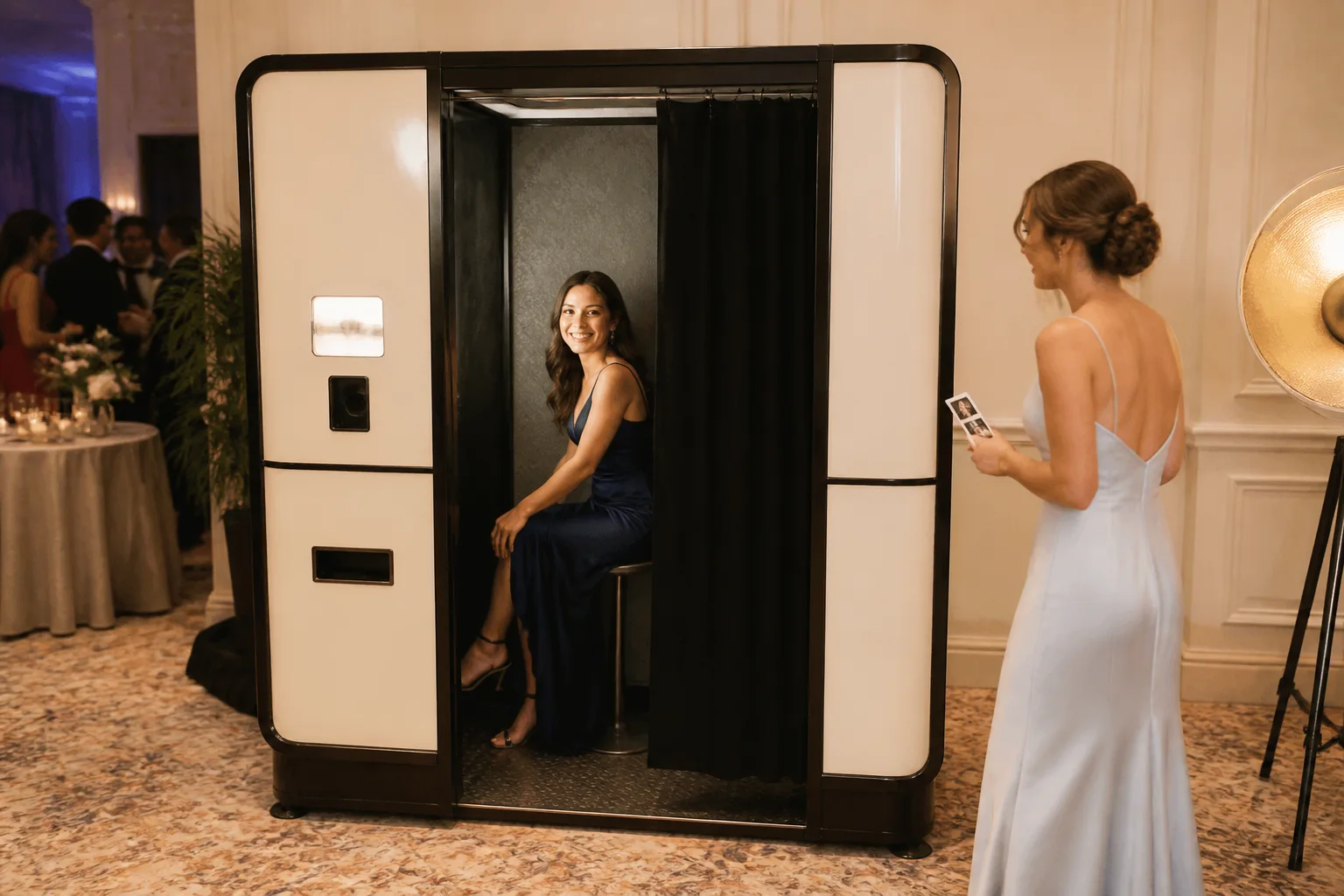
The curtain, bench, countdown, and narrow strip are familiar for a reason. Guests understand the ritual immediately, and the enclosed space lets quieter people be playful away from an audience.
Ask about interior dimensions, ventilation, wheelchair access, and whether the curtain can remain open. A beautiful vintage shell is not useful if half the guest list cannot enter comfortably.
15. A duplicate-print guest book
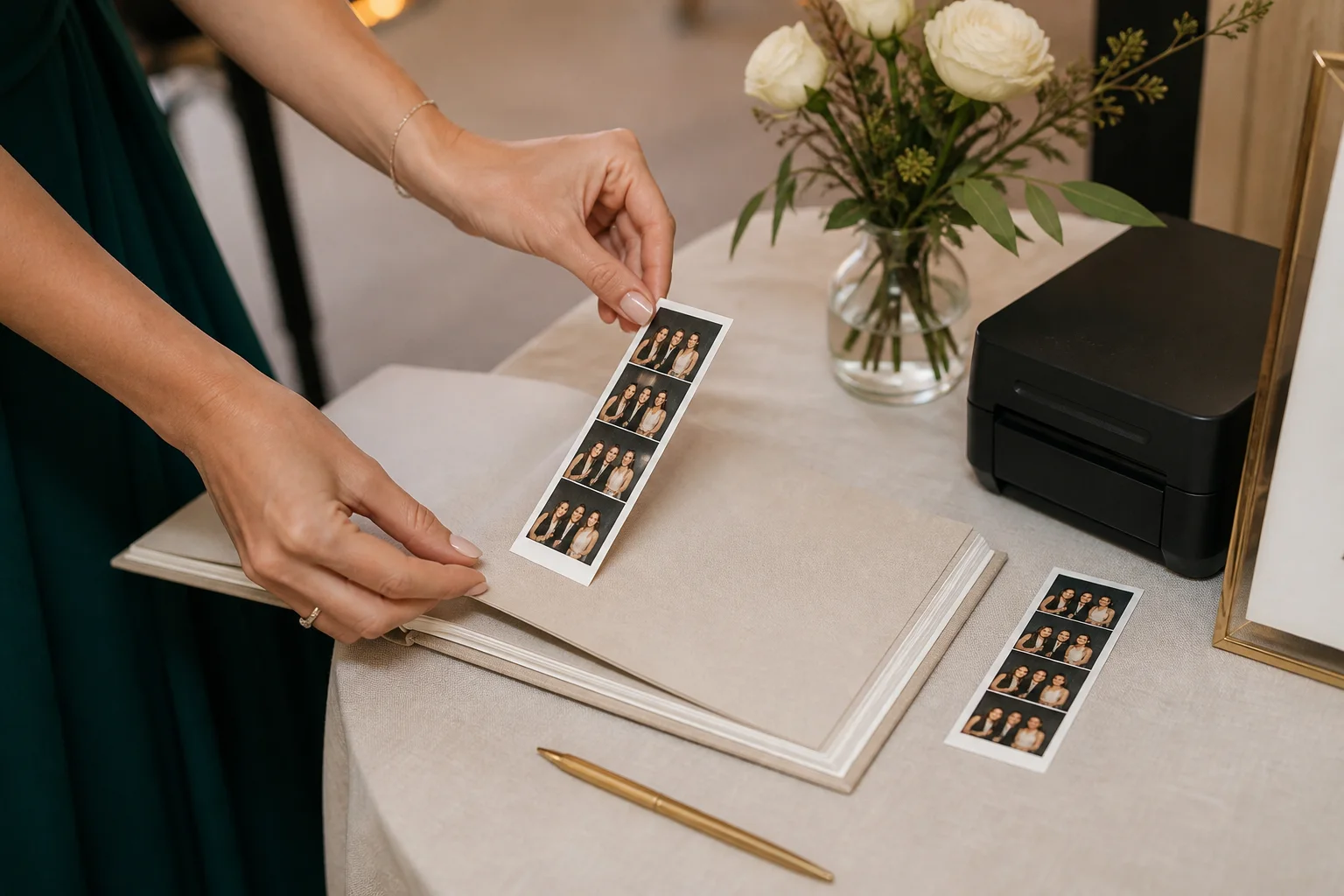
Configure the booth to print two copies: one for the guests and one for the couple. Place a simple album and adhesive station nearby so every group can leave its second strip with a short message.
Confirm whether duplicate prints are unlimited and how quickly the printer replenishes them. If a line forms while paper is changed, guests often wander away.
16. A GIF or short-loop booth
A short moving sequence captures gestures that a still image misses: a toast, spin, wave, or group entrance. It suits a lively reception and gives guests something easy to share.
Keep each clip short and offer a clear privacy choice. Not everyone wants their image uploaded or texted, and cellular service at large venues can be unreliable. The booth should save locally and deliver later if necessary.
17. A video-message booth
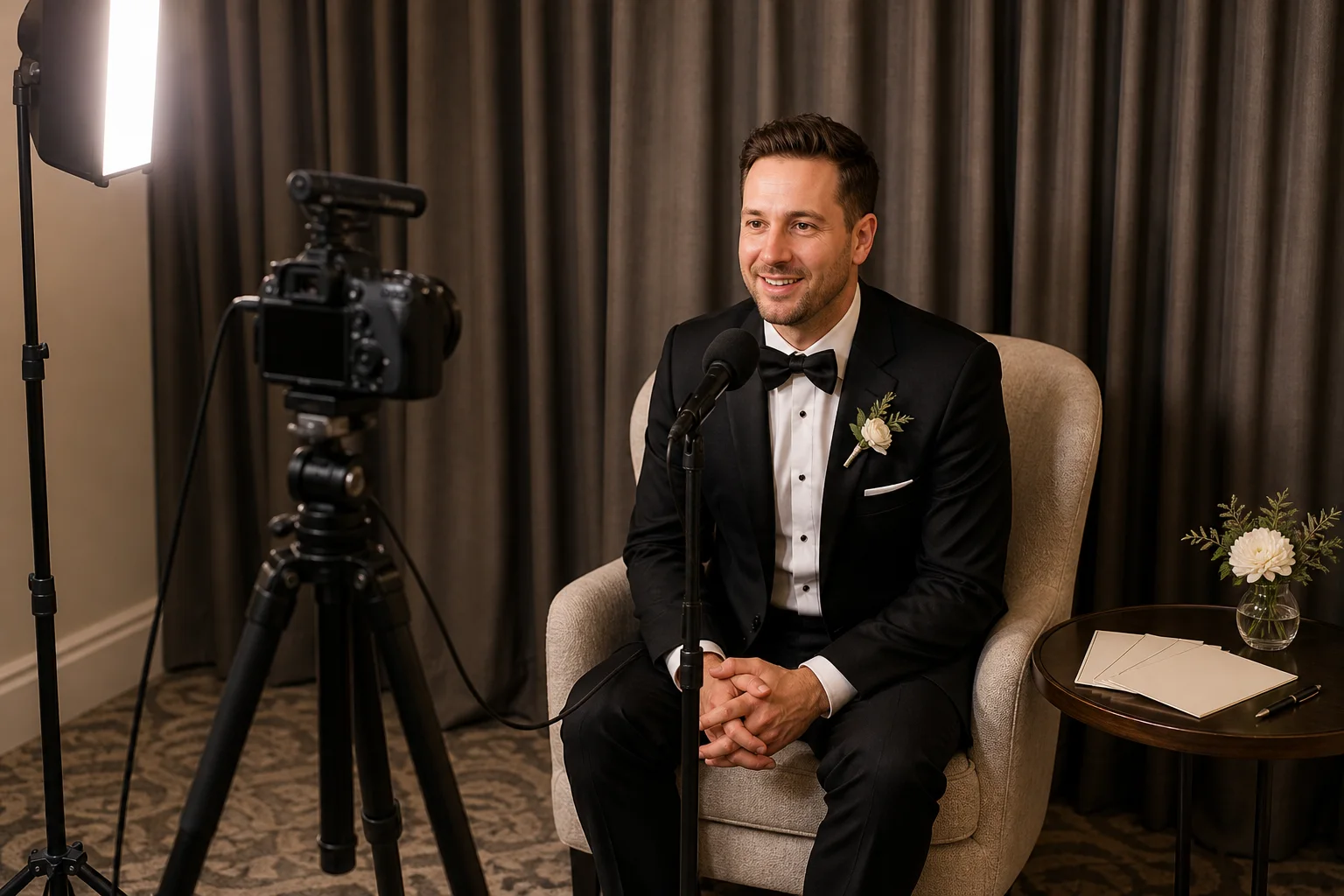
Create a quiet corner where guests can record a 15- to 30-second message. Prompt cards such as “share a favorite memory” or “give one piece of marriage advice” help people move beyond saying congratulations.
Audio quality is the deciding factor. Put the booth away from speakers, bars, and kitchen doors, use a real microphone, and tell guests clearly when recording begins and ends.
18. A 360-degree video platform
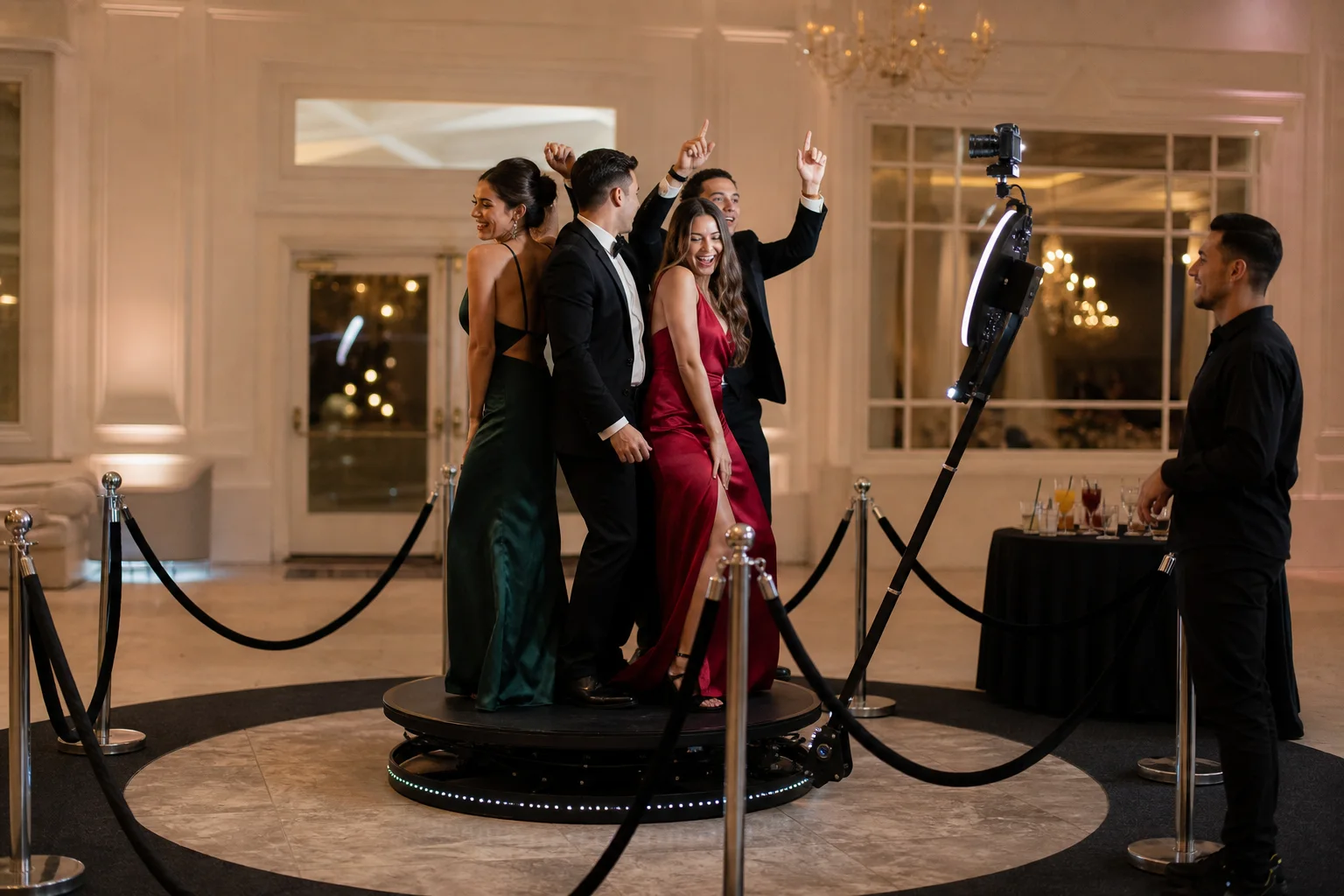
A platform camera that moves around a small group creates dramatic slow-motion clips. It can be a crowd-pleaser for a fashion-forward or dance-heavy reception.
It also requires more space, active supervision, a clear no-drinks rule, and a step or platform that may exclude some guests. Ask for a level, step-free alternative nearby so the experience is not the only booth option.
Outdoor and unexpected installations
19. A vintage camper or trailer booth
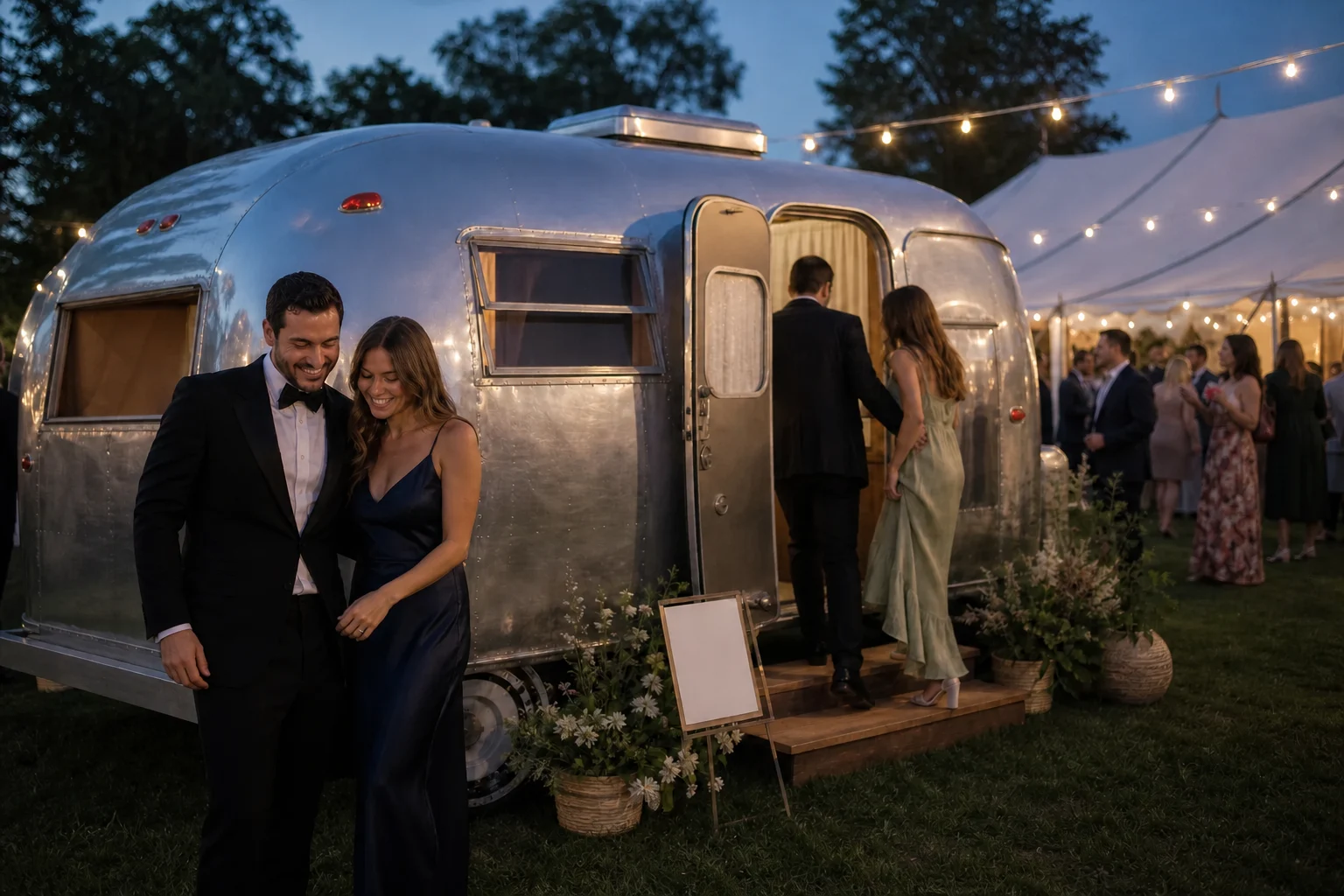
A converted camper becomes both an attraction and an enclosed booth. It is especially effective at a garden, farm, or tented wedding because the exterior contributes to the scene after dark.
Confirm vehicle access, ground conditions, power, leveling, ventilation, steps, and a rain plan. Keep the entry well lit and provide an alternative for guests who cannot use a narrow doorway.
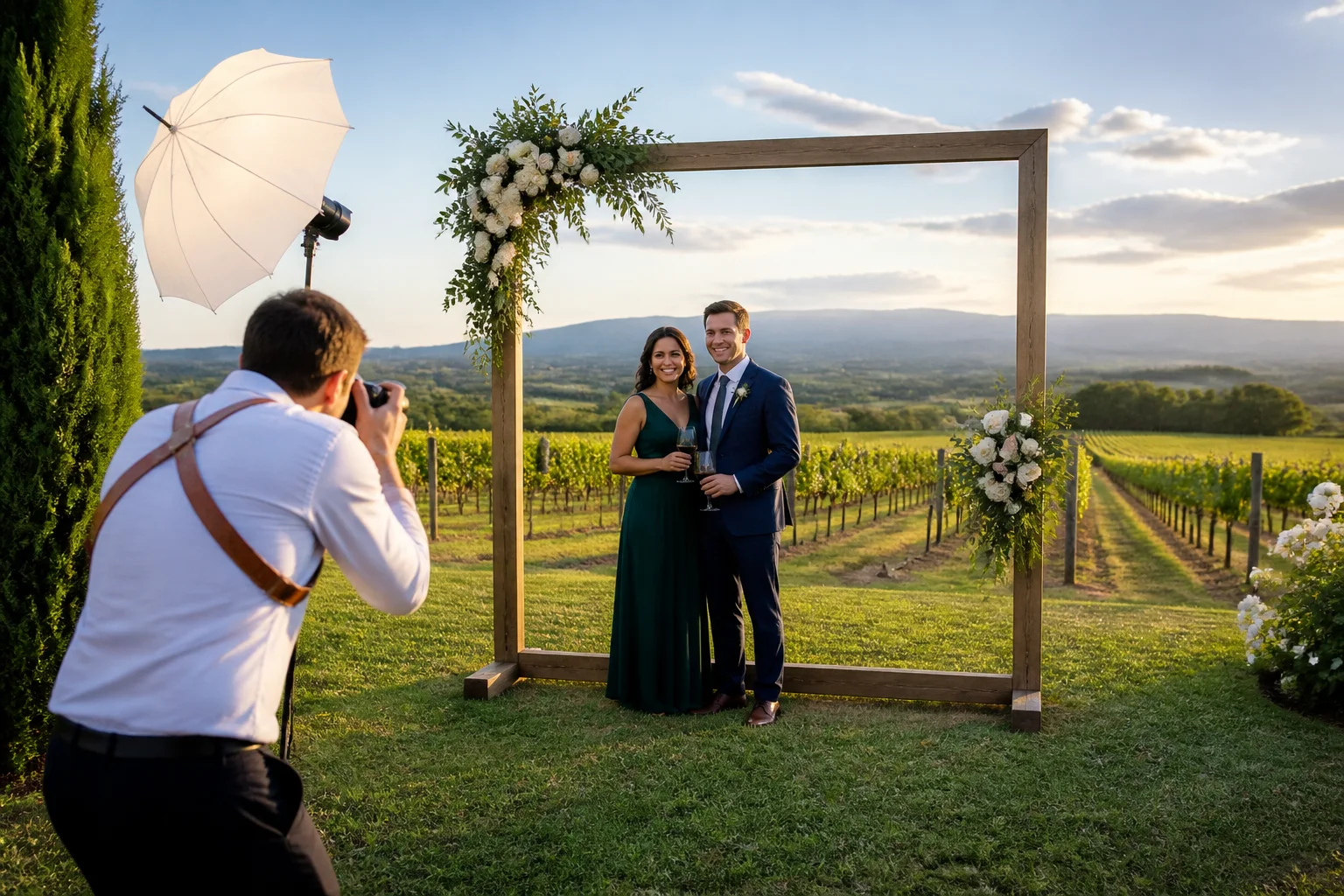
20. A garden portrait frame
Place a freestanding open frame or arch where the garden, mountains, vineyard, or water becomes the background. Add subtle light after sunset rather than covering the view with decor.
Visit at the same time of day as the reception. Backlight, wind, sprinklers, and a setting sun can completely change a location that looked perfect during a morning tour.
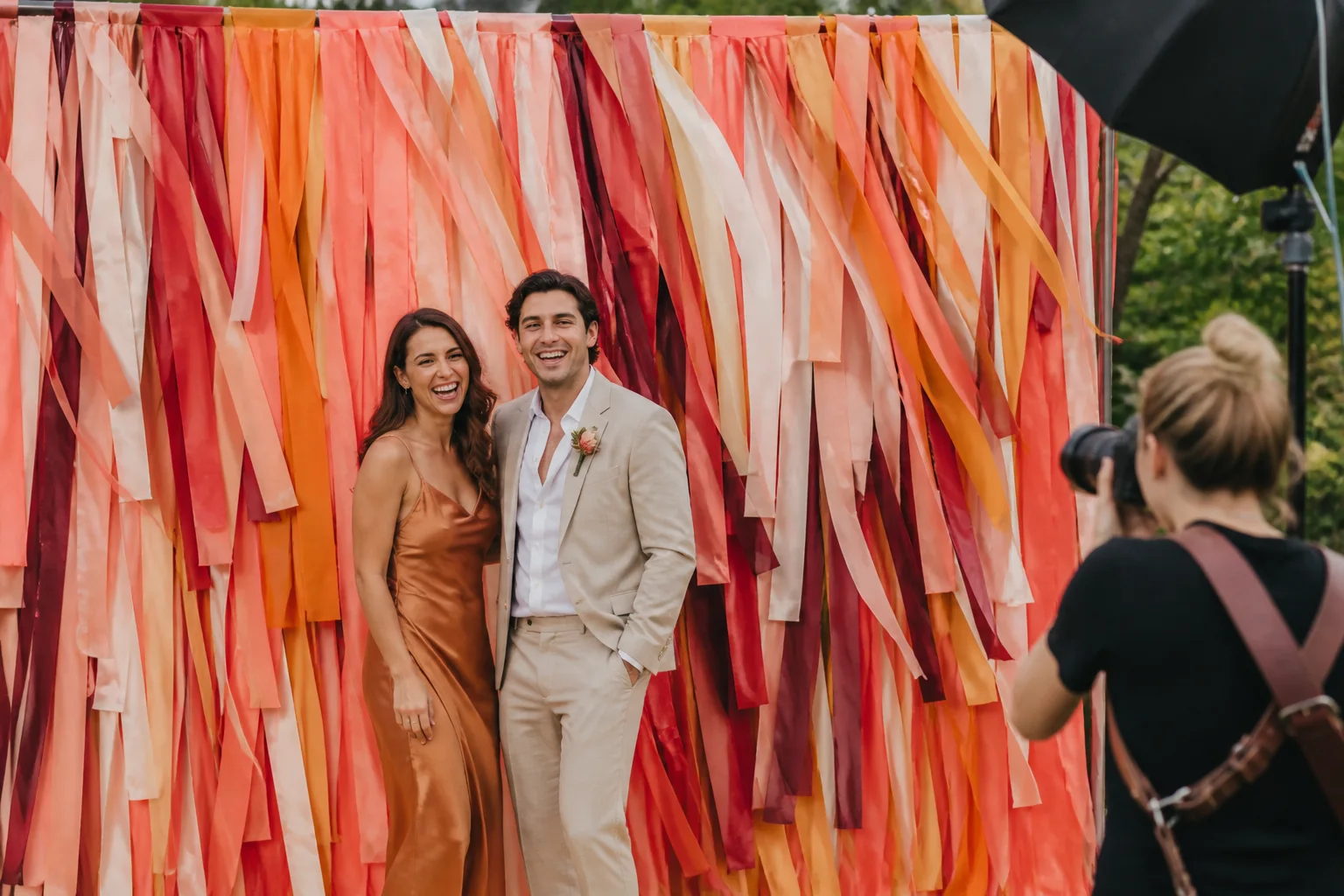
21. A ribbon, streamer, or paper installation
Fabric ribbons, matte streamers, folded paper, or hand-cut shapes provide color and movement without the cost of a full flower wall. They are also easier to customize to a nontraditional palette.
Use flame-rated materials where required, secure loose ends, and avoid glossy surfaces that produce hot reflections. Outdoors, test whether the installation becomes noisy or tangled in wind.
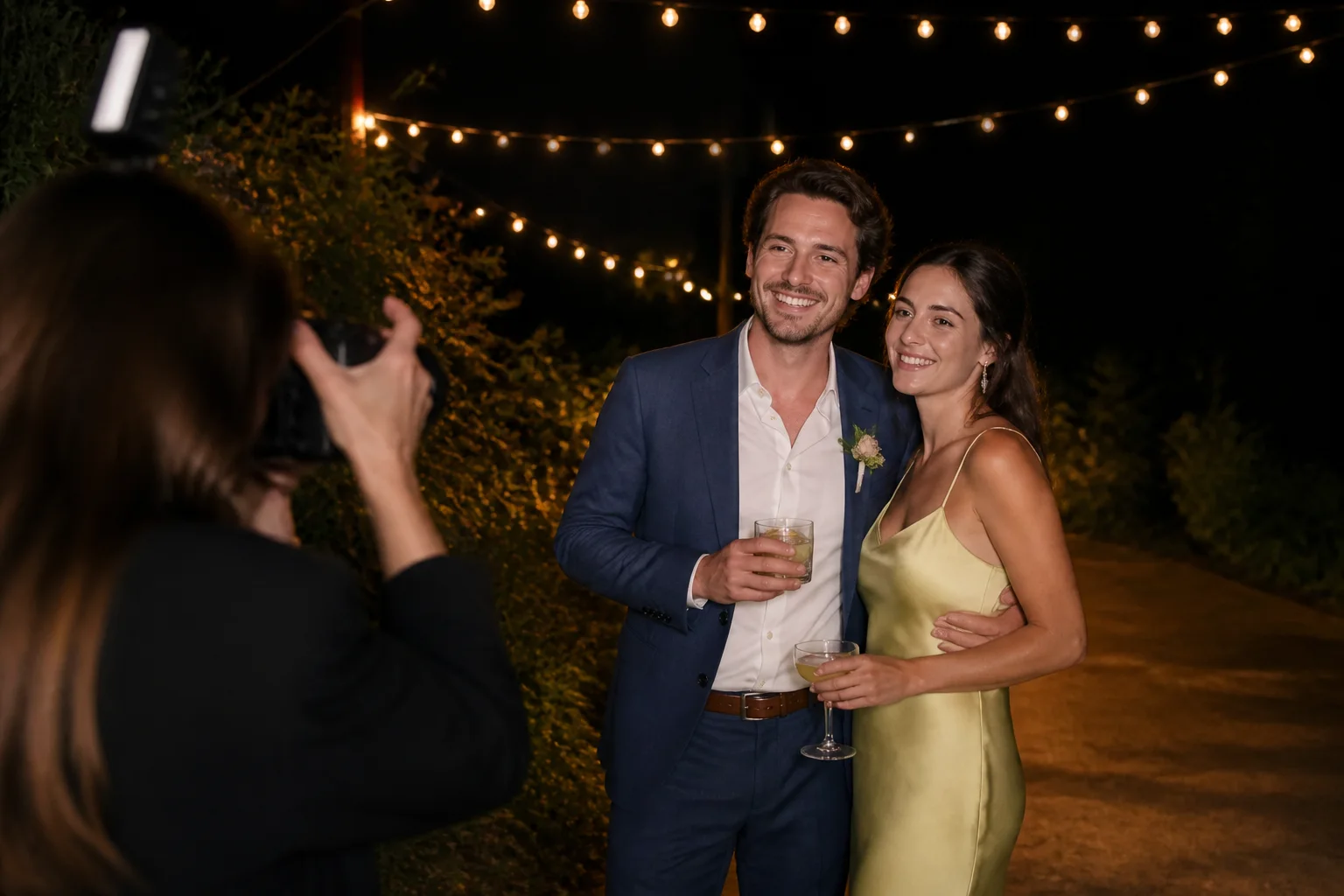
22. A night portrait station under string lights
Instead of a physical booth, create a small lit portrait area outside the reception tent or ballroom. A dark background, warm overhead bulbs, and one flattering light can produce atmospheric pictures after sunset.
Do not rely on string lights alone to illuminate faces. They are decor, not a sufficient key light. Keep the path visible, dry, and separated from smoking areas or service traffic.
Props that improve the photos
The strongest prop collection is small and specific. Choose perhaps six to ten durable items: a few elegant hats, one pair of oversized glasses, a local or family reference, a pet cutout, a frame, and two short signs. Guests can find something quickly without digging through a costume-store bin.
Avoid props that stereotype a culture, imitate a disability, hide every face, shed glitter, stain clothing, or become dangerous after drinks. Wipeable items and a clearly marked return basket make the station easier to maintain.
Where to place the booth
Put it where guests can see it but where its line will not block dinner service, restrooms, doors, or the dance floor. Cocktail hour and the space just beyond the bar often work well. A booth hidden in another room needs stronger signage and may require an attendant to invite the first groups.
Avoid placing microphones beside DJ speakers, cameras in front of bright windows, or backdrops under mixed green and magenta event lights. Your vendor should see the floor plan before arrival.
How much space to allow
The backdrop is only part of the footprint. Include room for the camera and light, posing distance, prop table, printer, attendant, waiting guests, and an accessible route around the queue. A 360 platform or camper needs substantially more than a tablet stand.
Use the vendor's exact contracted measurements rather than estimating from an inspiration photo. Ask whether those measurements include the line and any safety perimeter.
Questions to ask a photo booth vendor
- What are the complete footprint, ceiling-height, power, and internet requirements?
- Is an attendant present for the entire operating period?
- How many prints are included, and can guests request reprints?
- Can the print design match our invitation or color palette without becoming hard to read?
- What camera and lighting are used?
- How are digital files delivered, and how long are guest contact details and images retained?
- Can guests opt out of uploading, texting, or appearing in a public gallery?
- Is the setup step-free and usable from a seated position?
- What happens if equipment, a printer, Wi-Fi, or weather fails?
- Who handles setup, breakdown, insurance, and venue coordination?
A simple DIY setup that still looks polished
For a small wedding, use a recent camera or phone on a stable stand, a large soft light, a wired or reliable remote trigger, and a background at least wide enough for four people. Mark the standing point, lock exposure and white balance, disable aggressive sleep settings, and provide charging power.
Test it with people wearing black, white, and reflective fabrics. Make sure the camera saves locally even if sharing fails. Assign someone to check framing, battery, storage, and the lens during the evening; a DIY station without an owner often stops working quietly after the first hour.
The version guests remember
Guests rarely remember how many flowers were attached to the wall. They remember that the booth was easy to find, made them look good, gave their group enough space, and produced a print or file without a complicated form. Spend first on light, reliability, and flow. Decor can be as simple as one beautiful color and one detail that belongs to you.
Frequently Asked Questions
-
Three to four hours covers many receptions. Opening near the end of dinner and running through the busiest dancing period usually gives guests multiple chances without paying for idle setup time.
-
It can be when you want an easy guest activity, casual group pictures, and take-home prints. It is less valuable if the venue has no visible space, the guest list is very small, or the setup duplicates another planned portrait experience.
-
Try a portrait lounge, meaningful family photos, one pet illustration, a venue feature, flowers, fabric, or simple prompt cards. Guests do not need novelty props to make expressive pictures.
-
Provide a step-free route, clear floor space, controls and framing that work from a seated height, stable seating, good lighting, readable instructions, and an attendant who can help without rushing anyone.
-
Use a stable camera, flattering soft light, a wide enough background, remote trigger, locked exposure and white balance, local file storage, charging power, simple instructions, and one person assigned to check it regularly.