Average Wedding Photographer Cost: A Data-Backed Guide
See what US couples actually spend on wedding photography, how prices differ by region and guest count, what packages include, and how to compare quotes fairly.

How much does a wedding photographer cost?
The latest The Knot Real Weddings Study reports an average professional wedding-photographer cost of $3,000 in the United States. The study surveyed 10,474 couples who married from January through December 2025 and was published for 2026 planning.
Real quotes are much wider. A small weekday ceremony with one photographer and limited coverage may cost well below the national average. An established photographer covering a full Saturday wedding with a second photographer, engagement session and album may cost $5,000 or considerably more. Luxury, destination and multi-day coverage can reach five figures.
A practical first budget: Start near $3,000, then collect local quotes for the same coverage. In a higher-cost city or for a fuller package, planning around $4,000 to $5,500 may be more realistic.
Why do reputable sources give different averages?
The national figures do not all measure the same group of couples. They may use different years, geographic mixes, marketplace users, package definitions and methods. One source may report what couples ultimately spent; another may summarize prices listed by vendors using its platform.
| Source | Published figure | What to know |
|---|---|---|
| The Knot, 2026 Real Weddings Study | $3,000 average | 10,474 US couples married in 2025; the most clearly disclosed large-sample methodology of the three |
| Zola Wedding Cost Index | $4,400 average; $3,500–$5,300 typical range | Updated February 2026; Zola says photography is about 9% of the total wedding budget |
| WeddingWire Cost Guide | About $2,000 average; $1,150–$3,000 general range | A marketplace cost guide; its public page does not provide the same sample detail beside the estimate |
The numbers are not interchangeable, and averaging the three together would create a figure with no coherent methodology. For national planning, this guide uses The Knot’s $3,000 result as the anchor because the sample size and wedding dates are stated. We use Zola’s current guide and WeddingWire’s cost guide to show how strongly the answer can change with the market being measured.
Average is not the same as median
An average can be pulled upward by a smaller number of very expensive weddings. A median is the middle observation after every price is placed in order and is often closer to what a “typical” couple experiences. The current photographer-cost page from The Knot publishes an average, but it does not publish a national median photographer price.
Its labels “lower cost quartile,” “median cost quartile” and “upper cost quartile” refer to groups based on the couple’s overall wedding budget. They should not be presented as the 25th percentile, median and 75th percentile of photographer prices. That distinction matters when comparing articles.
Average wedding photographer cost by US region
Location changes wages, insurance, rent, travel, demand and what local couples expect in a package. The Knot’s latest regional breakdown shows a $1,200 difference between the lowest and highest broad US regions.
| US region | Average spend | Difference from $3,000 national benchmark |
|---|---|---|
| Mid-Atlantic | $3,800 | +$800 |
| Northeast / New England | $3,700 | +$700 |
| Midwest | $2,900 | −$100 |
| West | $2,900 | −$100 |
| South / Southeast | $2,700 | −$300 |
| Southwest | $2,600 | −$400 |
These are broad regional averages, not city prices. New York City and a rural town can sit in the same general part of the country while operating in very different markets. Zola’s guide illustrates that gap with an average of $5,000 for New York City and $3,600 for Salt Lake City. Your best local benchmark is still three to five quotes from photographers whose work and experience are genuinely comparable.
How wedding size changes photography spending
Photography is not priced per guest in the same way as catering. Still, larger weddings often require longer coverage, more family combinations, more reception coverage or an additional photographer. The Knot reports the following averages:
| Guest count | Average photographer spend |
|---|---|
| 1–50 guests | $2,000 |
| 51–100 guests | $2,700 |
| 101 or more guests | $3,500 |
Guest count is probably acting as a signal for the scale and budget of the wedding as much as it is directly creating photography work. A 30-person destination wedding across several days can cost more to photograph than a 120-person event held in one venue.
What does a wedding photography package usually include?
Most professional packages combine visible deliverables with work that happens before and after the wedding. A quote may include:
- Planning calls, questionnaires and photography timeline help
- A stated number of wedding-day coverage hours
- One lead photographer, with a second photographer included or optional
- Culling, color correction and the photographer’s standard editing
- A curated number of high-resolution digital images
- An online gallery for viewing, downloading and sharing
- A personal-use print release
- Backup equipment, file storage and gallery hosting
- Sometimes an engagement session, prints or a designed album
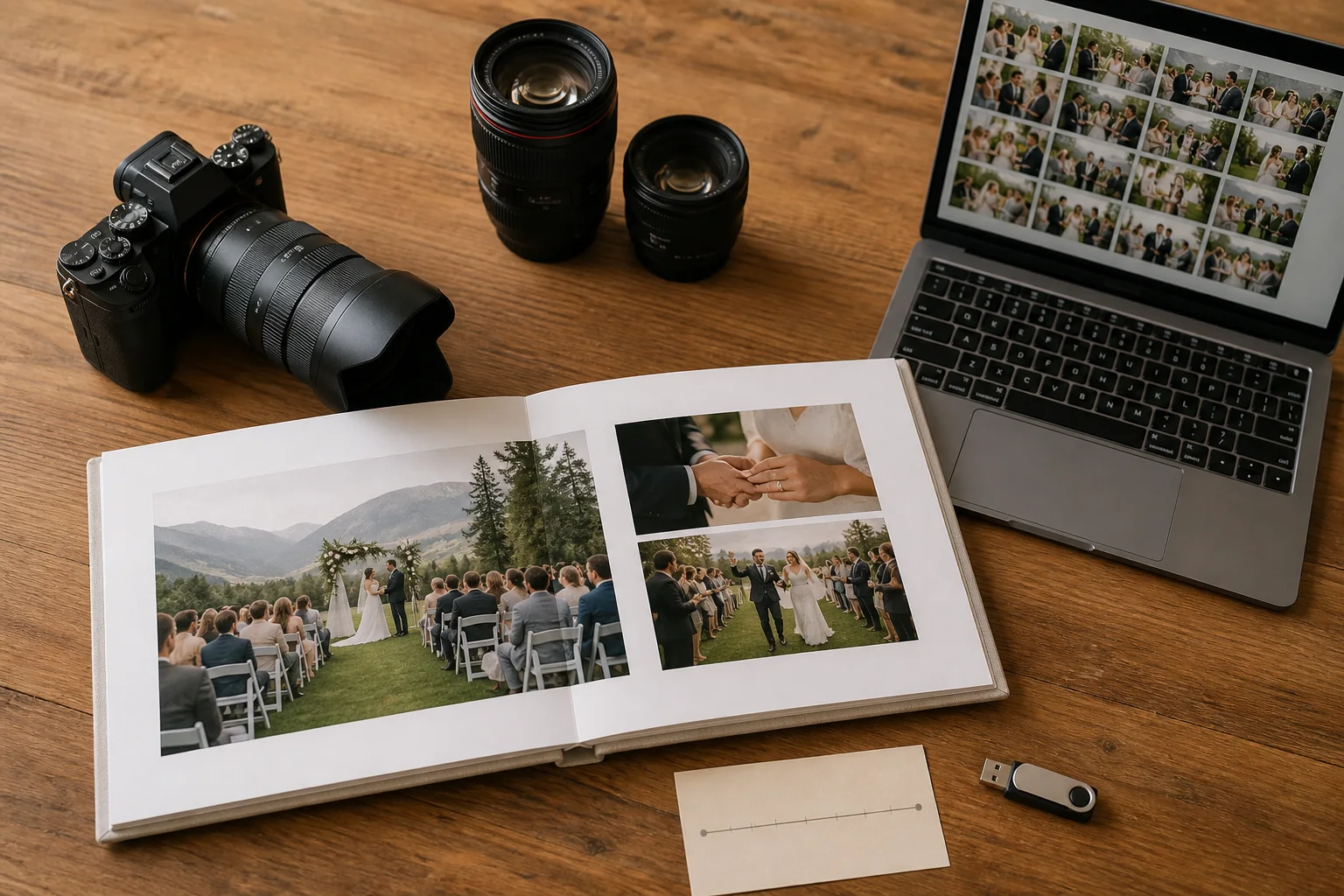
“Digital images included” normally means edited JPEG files, not every photograph taken and not RAW files. A print release lets you make prints for personal use; it is not the same as receiving the copyright. Read the exact contract language.
How many hours of coverage do you need?
| Coverage | Often fits | Likely tradeoff |
|---|---|---|
| 4–6 hours | Elopements, micro weddings, short single-location celebrations | Usually skips part of getting ready or the later reception |
| 8 hours | Many traditional weddings with ceremony and reception reasonably close together | A long gap, travel or late exit may not fit |
| 10 hours | Fuller preparation coverage, multiple locations or later dance-floor events | Higher base price and a longer vendor day |
| 12+ hours or multi-day | Cultural celebrations, destination events and extensive full-day storytelling | May require shifts, a second photographer, travel or lodging |
Eight hours is common in standard packages, but schedule shape matters more than the headline number. Map the desired coverage from the first meaningful photograph to the last. Add travel and a small delay buffer. If the result is nine hours, a cheap eight-hour package plus a costly overtime hour may not be the better deal.
The factors that move a quote up or down
Experience, consistency and demand
You are paying for more than an attractive portfolio. An experienced wedding photographer has handled bad weather, dark venues, late schedules, difficult family dynamics and equipment failure. Review complete galleries—not only highlight images—to see whether quality holds through ceremonies, family groups and receptions.
One photographer versus two
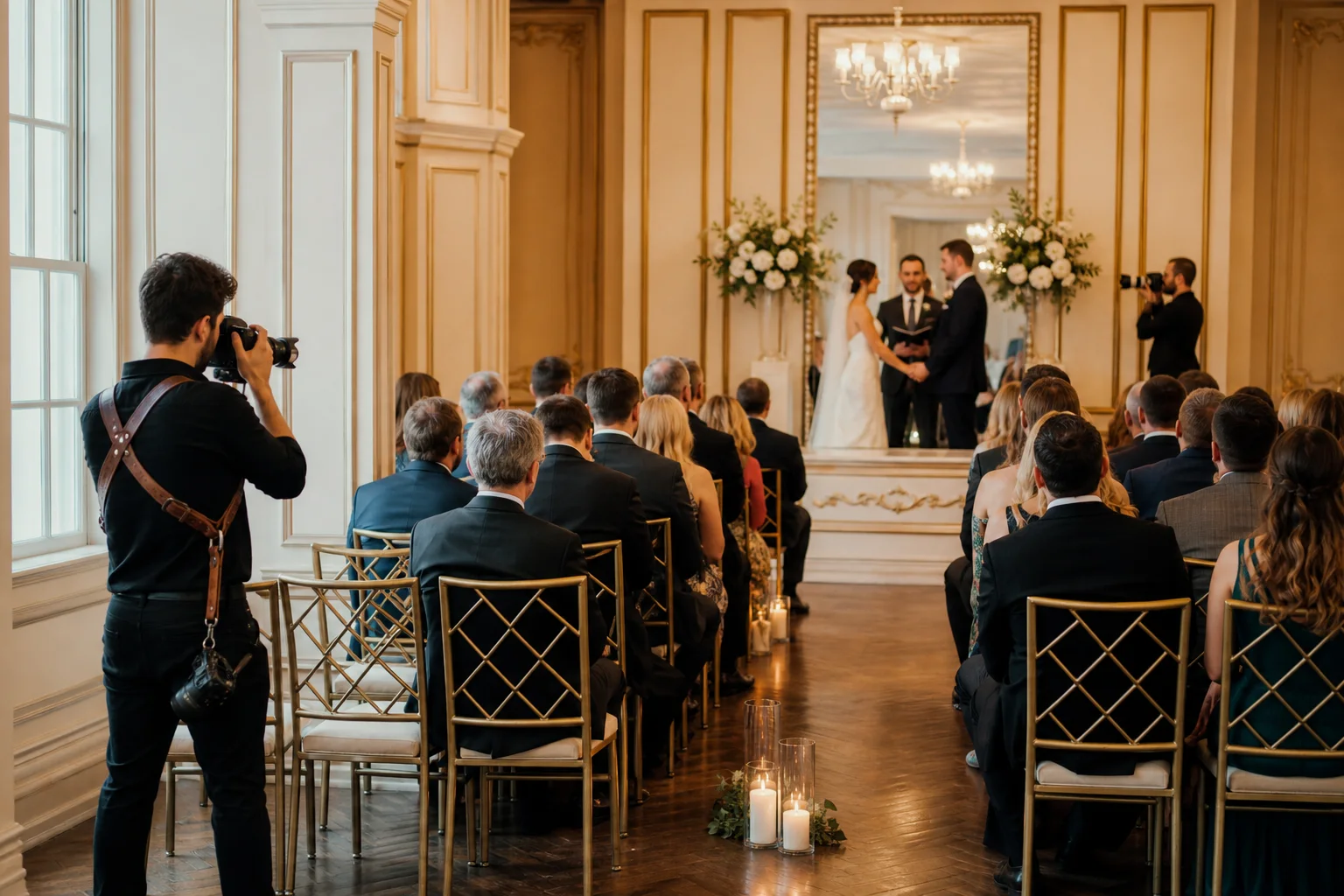
A second photographer can cover simultaneous preparations, photograph both partners’ reactions during the processional, provide another ceremony angle and capture cocktail hour while the lead handles portraits. They are especially useful with separate locations, large guest counts or a tight schedule. They are not automatically necessary for every intimate, single-location wedding.
Coverage length and extra events
Additional hours add both shooting and editing. Rehearsal dinners, welcome parties, after-parties and next-day events may be priced separately. Confirm whether overtime is allowed, its hourly rate, and who can authorize it on the wedding day.
Albums, engagement sessions and advanced retouching
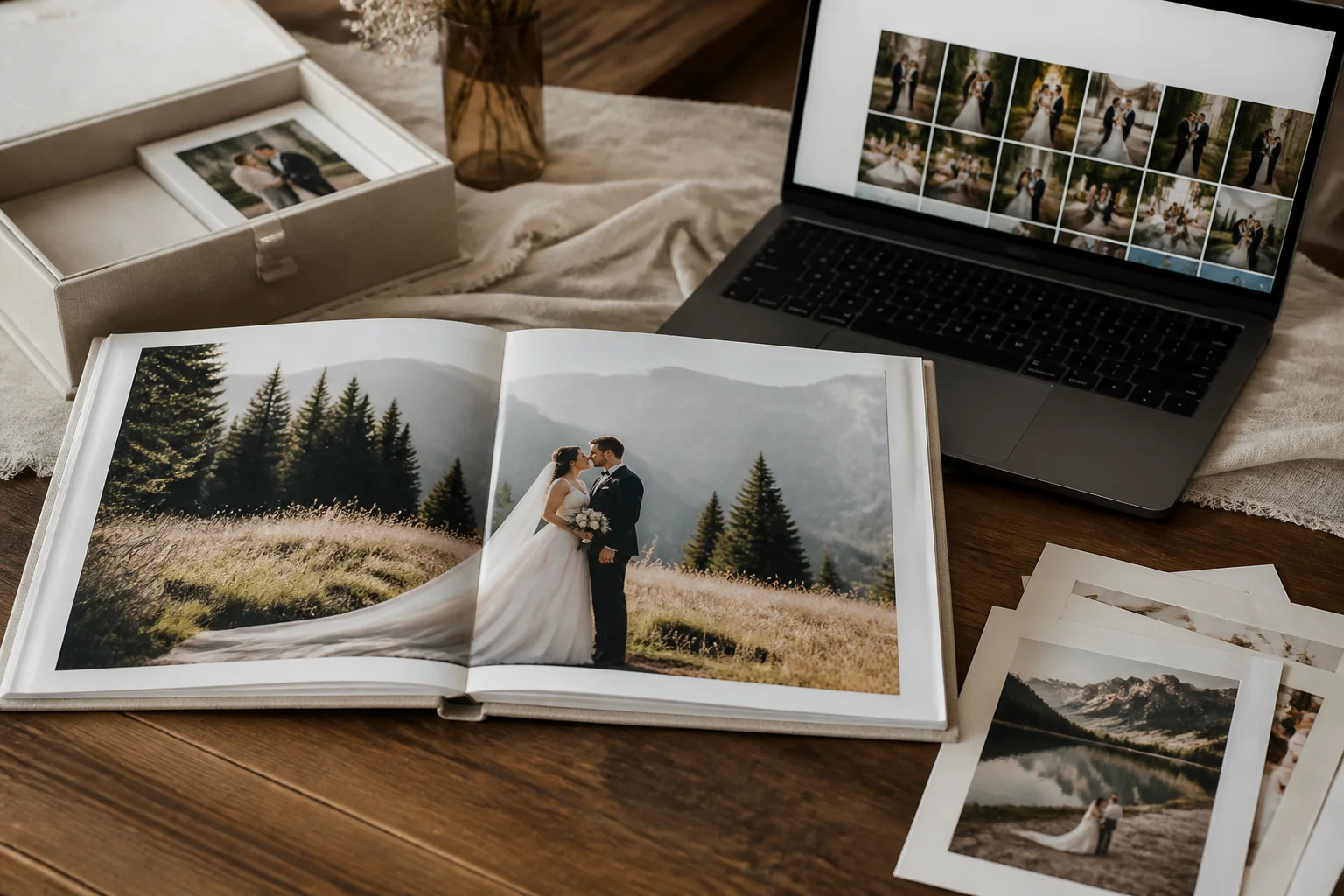
Albums vary enormously by size, page count, materials, printing and design revisions. Engagement sessions require another shoot and edit, though bundling can be less expensive than booking separately. Standard editing is not the same as detailed retouching or removing objects from hundreds of frames.
Travel, date and logistics
Mileage, flights, hotel nights, parking, permits and travel days may be additional. Peak-season Saturdays are the hardest dates to discount because accepting one wedding prevents the photographer from booking another. Some businesses offer shorter coverage or different pricing for weekdays and off-season dates, but do not assume—ask.
Film, specialty processes and fast delivery
Film and hybrid coverage add stock, processing, scanning and a less forgiving capture workflow. Drone work may require legal operation, venue permission and suitable weather. Rush editing or same-day slideshows create additional labor. Each can be worthwhile, but it should appear clearly in the proposal.
Common add-ons and broad planning ranges
Add-on prices are less consistently surveyed than total spending. Current US pricing guides and publicly available 2026 photographer rate sheets show wide variation. Use these only as rough planning ranges—not national averages:
| Add-on | Broad planning range | What changes the price |
|---|---|---|
| Second photographer | $400–$1,500+ | Hours, local labor rate and the lead photographer’s additional editing |
| Extra coverage | $250–$600 per hour | Whether booked in advance or added as overtime |
| Engagement session | $300–$1,200 | Length, travel, locations and whether bundled |
| Professional album | $500–$3,000+ | Size, spreads, cover material, printing and design service |
| Rehearsal or welcome event | $500–$1,500+ | Coverage time, travel and whether another photographer is needed |
The range matters more than its midpoint. A handmade album and a small press-printed book are not comparable products. Likewise, the client price for a second photographer includes more than that person’s hourly pay: coordination, insurance, file handling, culling and editing remain with the studio.
What is a reasonable percentage of the wedding budget?
Zola uses about 9% of the total wedding budget as a starting point. The Knot’s $3,000 photographer average is also about 8.8% of its $34,200 average total wedding cost, so the two datasets align surprisingly closely on budget share even though their dollar averages differ.
That percentage is not a rule. A small wedding still requires professional equipment, travel, planning and postproduction, so photography can occupy a larger share of a modest budget. A very expensive wedding may spend more dollars on photography while photography represents a smaller percentage of the total.
How to compare wedding photographer quotes fairly
Ask each photographer to quote the same scenario. A useful comparison brief might say: “Saturday wedding, two nearby venues, eight hours, approximately 110 guests, digital gallery, engagement session optional, and a separate price for a second photographer.” Then compare:
- Who will photograph the wedding? Confirm the named lead, not only the studio brand.
- How many continuous hours are included? Check travel between venues and overtime rates.
- What is delivered? Ask about edited image range, resolution, gallery duration and print rights.
- What is optional? Separate engagement session, second photographer, albums and rehearsal coverage.
- What is the total? Include sales tax, travel, lodging, parking and required fees.
- What protects the wedding? Ask about backup equipment, dual-card recording, file backups, insurance and emergency replacement.
- When is it delivered? The contract should state gallery timing, album steps and any sneak-peek promise.
A quote that is $500 higher may actually be less expensive if it includes an engagement session and second photographer that cost $1,000 when added to the lower quote.
How to save money without taking the biggest risks
- Shorten the story thoughtfully. Six focused hours can work for a compact wedding; decide whether preparation or late dancing matters more.
- Keep locations close. Less travel means more of the booked time produces photographs.
- Ask about Friday, Sunday or off-season availability. Discounts are not guaranteed, but flexibility can create options.
- Choose digital delivery first. Add an album later only if the contract preserves pricing or you are comfortable with future rates.
- Hire locally. An excellent nearby photographer can avoid flights, hotels and travel-day charges.
- Request a custom scope, not a blanket discount. Removing an album or two hours is clearer than asking the photographer to do the same work for less.
Do not economize by accepting unclear file safety, no written contract or a photographer whose complete work you have not seen. The cheapest quote is unusually expensive if the coverage fails.
The bottom line
Use $3,000 as a defensible national US benchmark for wedding photography in 2026, based on couples who married in 2025. Then replace that national number with evidence from your own market: comparable local photographers, the same hours, the same staffing and the same deliverables.
For many couples, a realistic professional range will land somewhere between roughly $2,000 and $5,500. It can be lower for limited or emerging-photographer coverage and much higher for sought-after, luxury, destination or multi-day work. The useful question is not simply “Is this above average?” It is “What exactly are we receiving, how consistently can this photographer deliver it, and does it match what we value?”
Frequently Asked Questions
-
The latest The Knot Real Weddings Study reports a $3,000 US average, based on 10,474 couples who married in 2025. Other platforms publish figures from about $2,000 to $4,400 because their samples and methods differ. Local quotes for comparable packages are more useful than any single national number.
-
It is above The Knot’s $3,000 national average but can be normal for an experienced photographer in a higher-cost market or for a package with eight to ten hours, a second photographer, an engagement session and an album. Compare the complete package and full galleries before deciding whether the price is high.
-
About 9% is a useful starting point supported by Zola’s budget guidance and broadly consistent with The Knot’s current photographer and total-wedding averages. Your percentage can be higher if photography is a priority or if a small wedding still requires substantial professional coverage.
-
There is no reliable national eight-hour average separate from package details. The Knot’s $3,000 overall average is often used as a starting point, while local eight-hour quotes can range from below $2,000 to $5,000 or more depending on experience, region, second-photographer coverage and deliverables.
-
Most packages include a curated set of edited high-resolution JPEG images, not every frame taken and usually not RAW files. Confirm the expected image range, download rights, gallery expiration, print release and whether additional retouching costs extra.
-
A tip is not universally required, particularly when the photographer owns the business, but it may be welcomed for exceptional service. Check whether gratuity is already included and consider local custom. A thoughtful review, referral and thank-you note are also meaningful.
-
Retainers vary by studio and jurisdiction, so there is no single national amount. The contract should state the retainer, payment schedule, refundability, cancellation terms and what happens if the photographer cannot perform. Do not send money without a signed agreement.