19 Engagement Photo Ideas That Feel Like You
From slow mornings at home and favorite neighborhood dates to windswept beaches and polished city portraits, these engagement photo ideas are personal, practical, and easy to make your own.
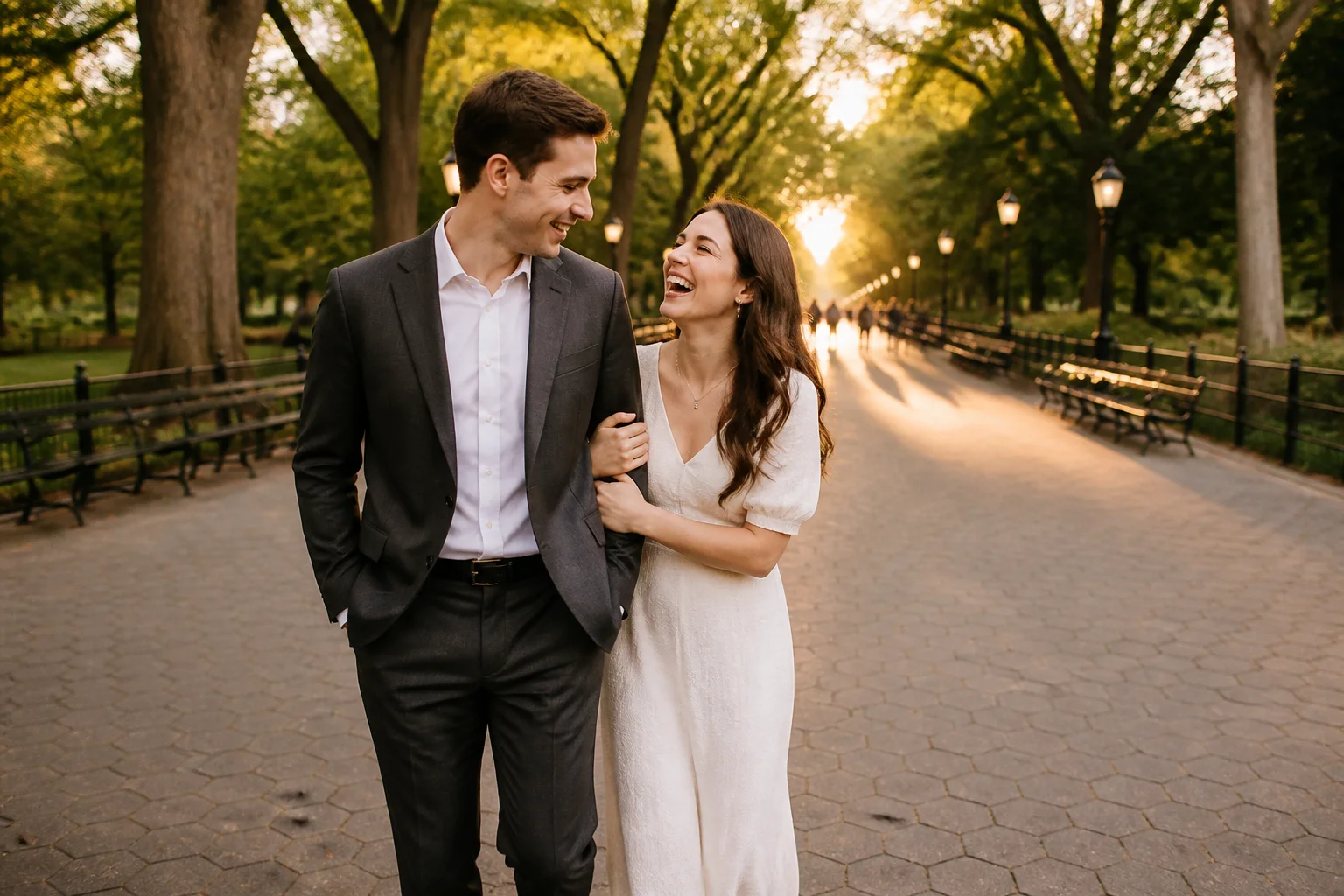
How to choose an idea that will still feel right years from now
Begin with a sentence, not an aesthetic: “Sunday coffee at home,” “the neighborhood where we met,” or “a dressed-up evening downtown.” That sentence gives the photographer more useful direction than a folder containing dozens of unrelated poses.
You do not need to fit every side of your relationship into one session. Pick one main idea and, if time allows, one contrasting look. A quiet indoor beginning followed by an outdoor walk often gives enough variety without turning the shoot into a costume change marathon.
Personal and story-led engagement photo ideas
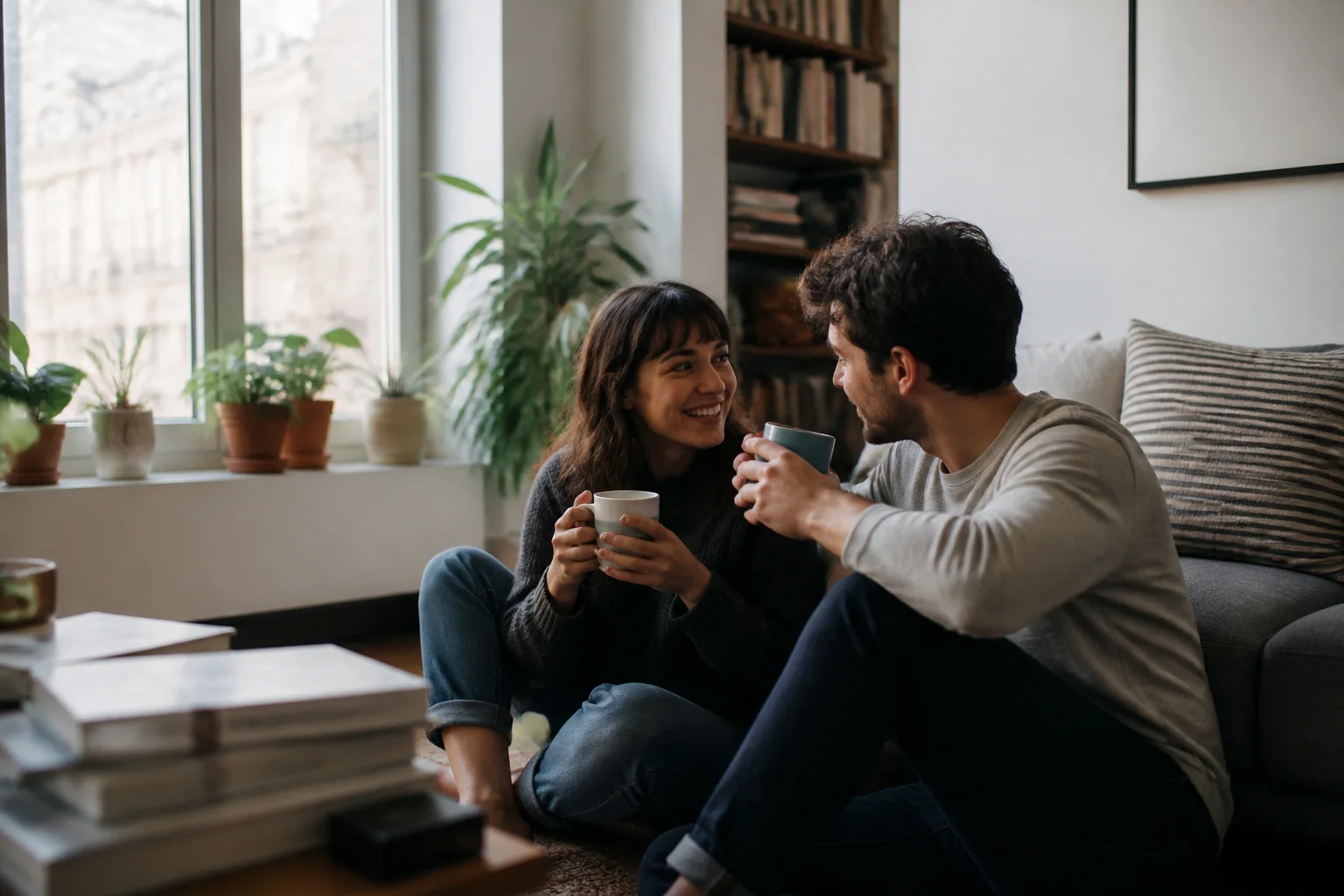
1. Spend a slow morning at home
Open the curtains, make coffee, sit on the floor, or curl up on the sofa. Familiar rooms make it easier to stop performing for the camera, and the photographs preserve details of a home that may change long before the relationship does.
Tidy distractions rather than erasing every sign of life. Clear mail, charging cables, and plastic packaging, but keep the books, plants, blankets, and objects that make the space yours. Window light is usually more flattering than switching on every ceiling fixture.
2. Return to your first-date location
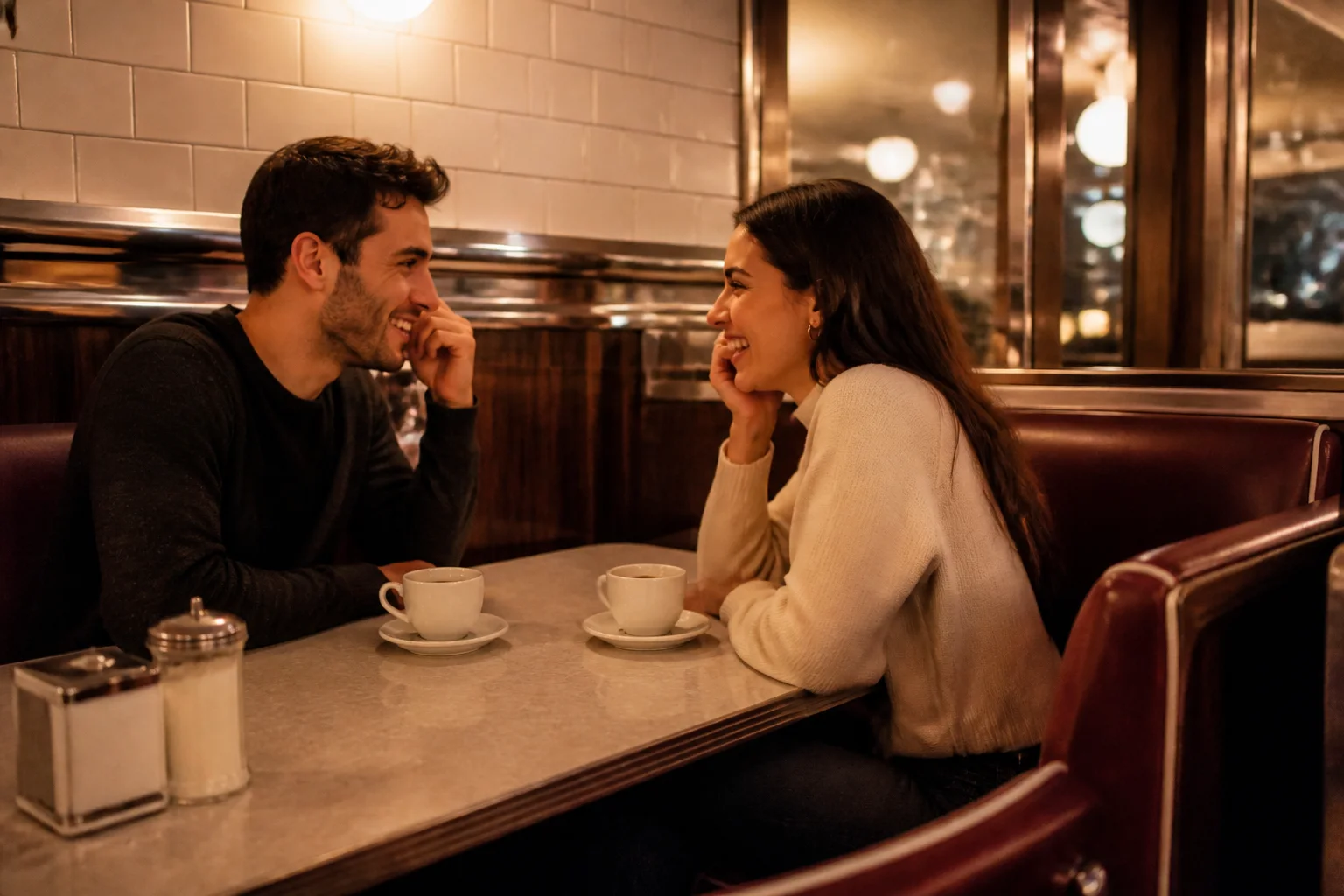
Revisit the diner, park, arcade, museum, or street where the relationship began. You do not have to reenact every moment. Simply being back in a meaningful place gives you real memories to talk about, which is far more useful than being told to laugh on command.
Ask for permission if the location is a private business, and visit at the same hour you plan to photograph. A cozy restaurant at 4 p.m. may be crowded and dark at 8 p.m.; a quiet plaza on Sunday may be full of commuters on Tuesday.
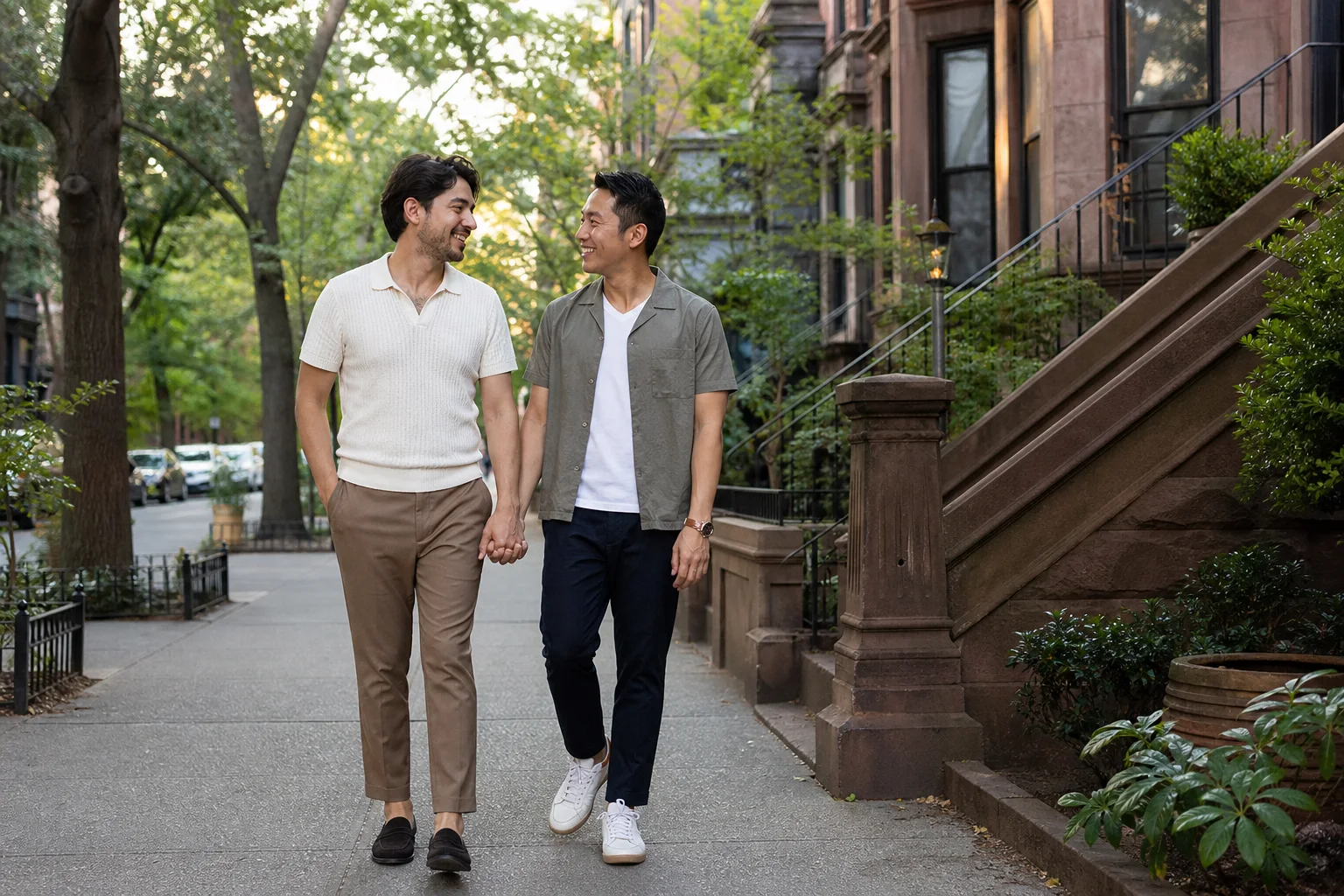
3. Walk through your favorite neighborhood
A familiar block can provide more variety than a landmark: front steps, a shaded sidewalk, a corner store, a painted wall, and a crosswalk may all be within a few minutes of one another. The setting feels personal without requiring props.
Choose a route with safe stopping points and relatively consistent light. Your photographer can work with passing bicycles and pedestrians, but a narrow sidewalk beside fast traffic makes relaxed movement difficult.
4. Build the session around a shared ritual or hobby
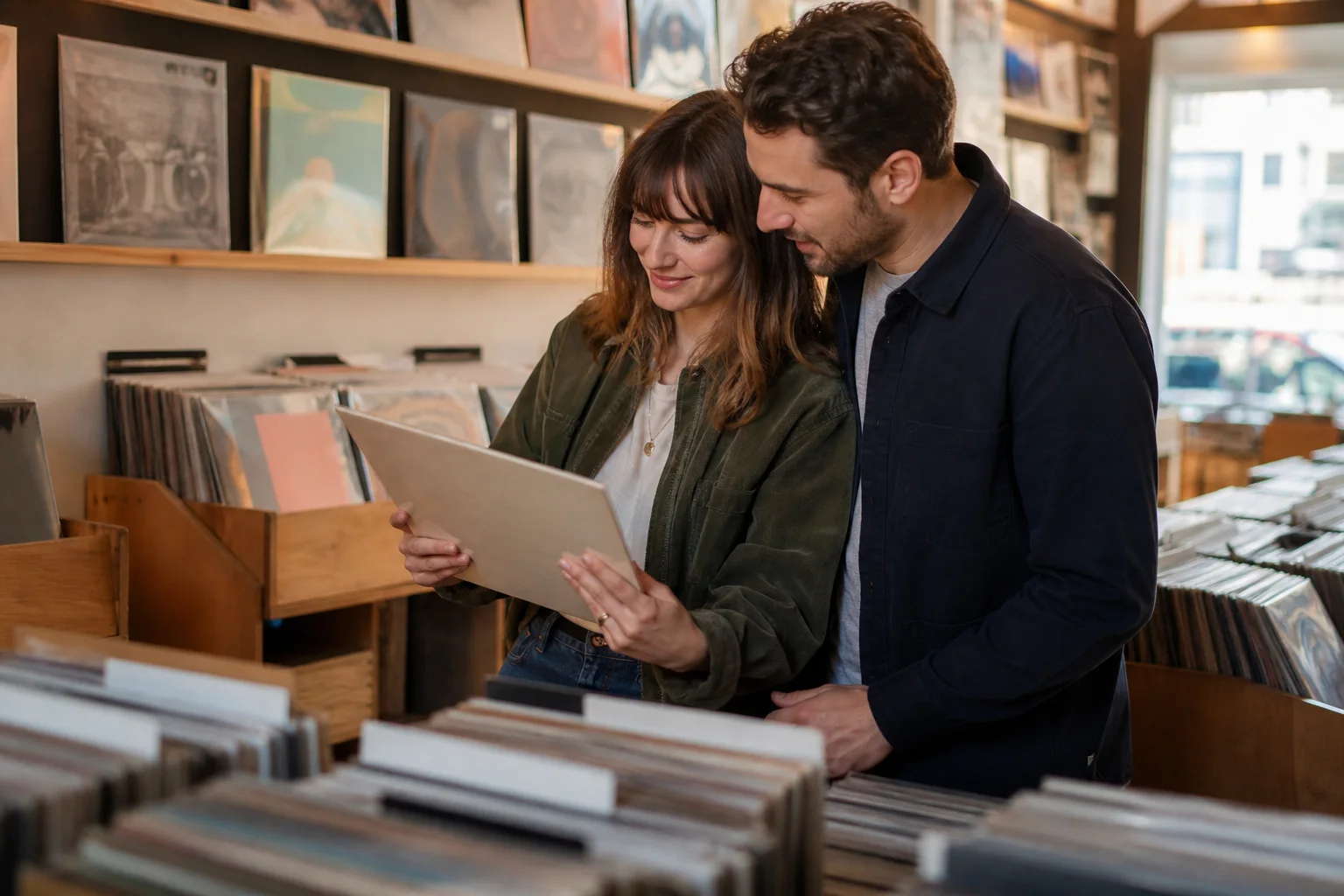
Browse records, work on a puzzle, tend a garden, make pottery, paddle a canoe, or tune a guitar. An activity gives your hands a job and creates small reactions that cannot be manufactured as easily in a static pose.
Choose something you can do safely while still talking to each other. A complicated sport may require more attention than the camera allows. Often the quiet preparation—lacing boots, choosing a record, mixing paint—photographs better than the most obvious action.
5. Include your pet for part of the session
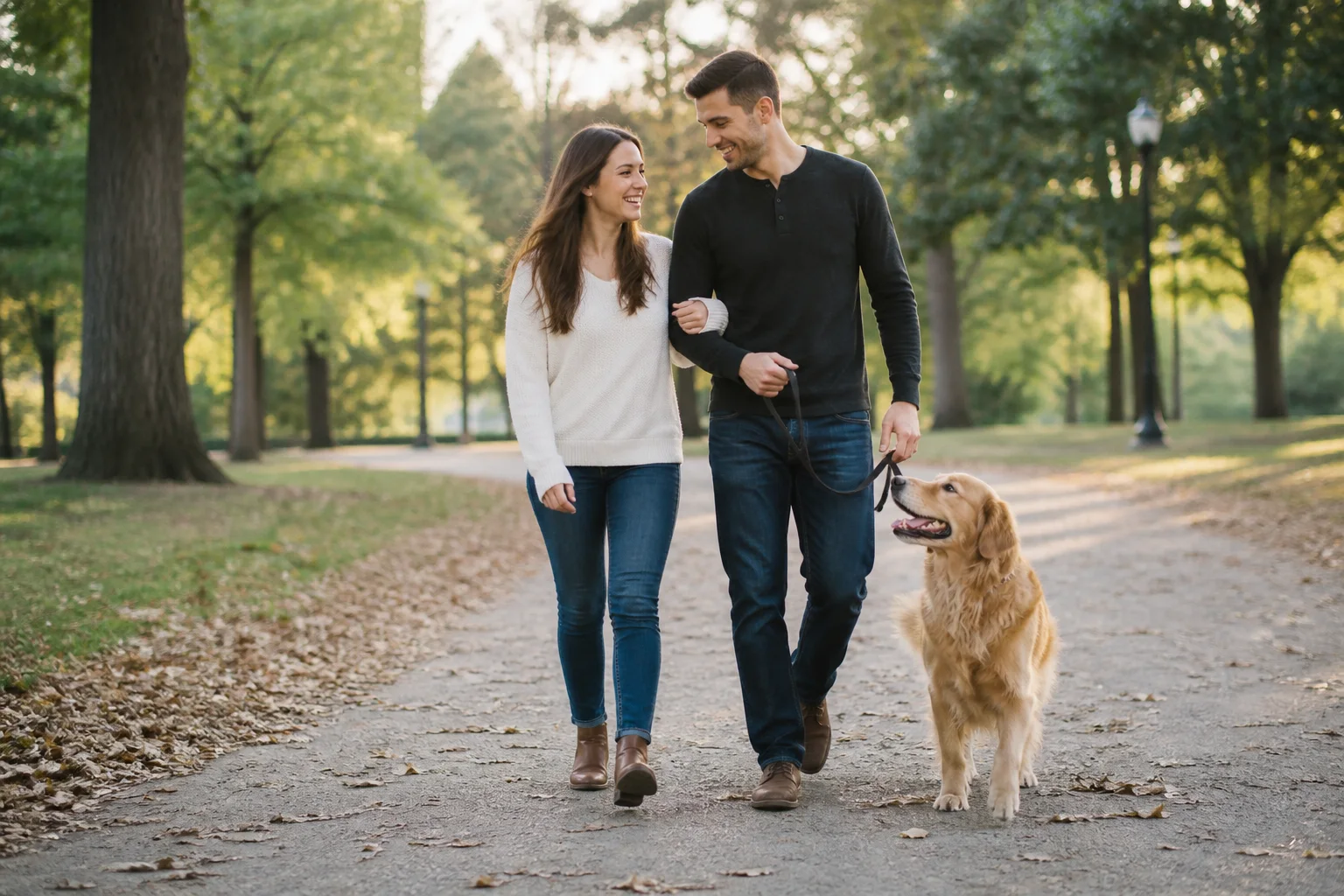
A walk, couch cuddle, or backyard game can turn the shoot into a family portrait. Pets also create genuine laughter because they rarely follow a perfect pose plan.
Bring water, treats, waste bags, and a person the pet trusts. Photograph the pet first, then let the helper take them home or on a walk so the rest of the session can continue calmly. Check leash rules and never remove a lead in an unsecured public area.
6. Turn a favorite cafe or bar into a date
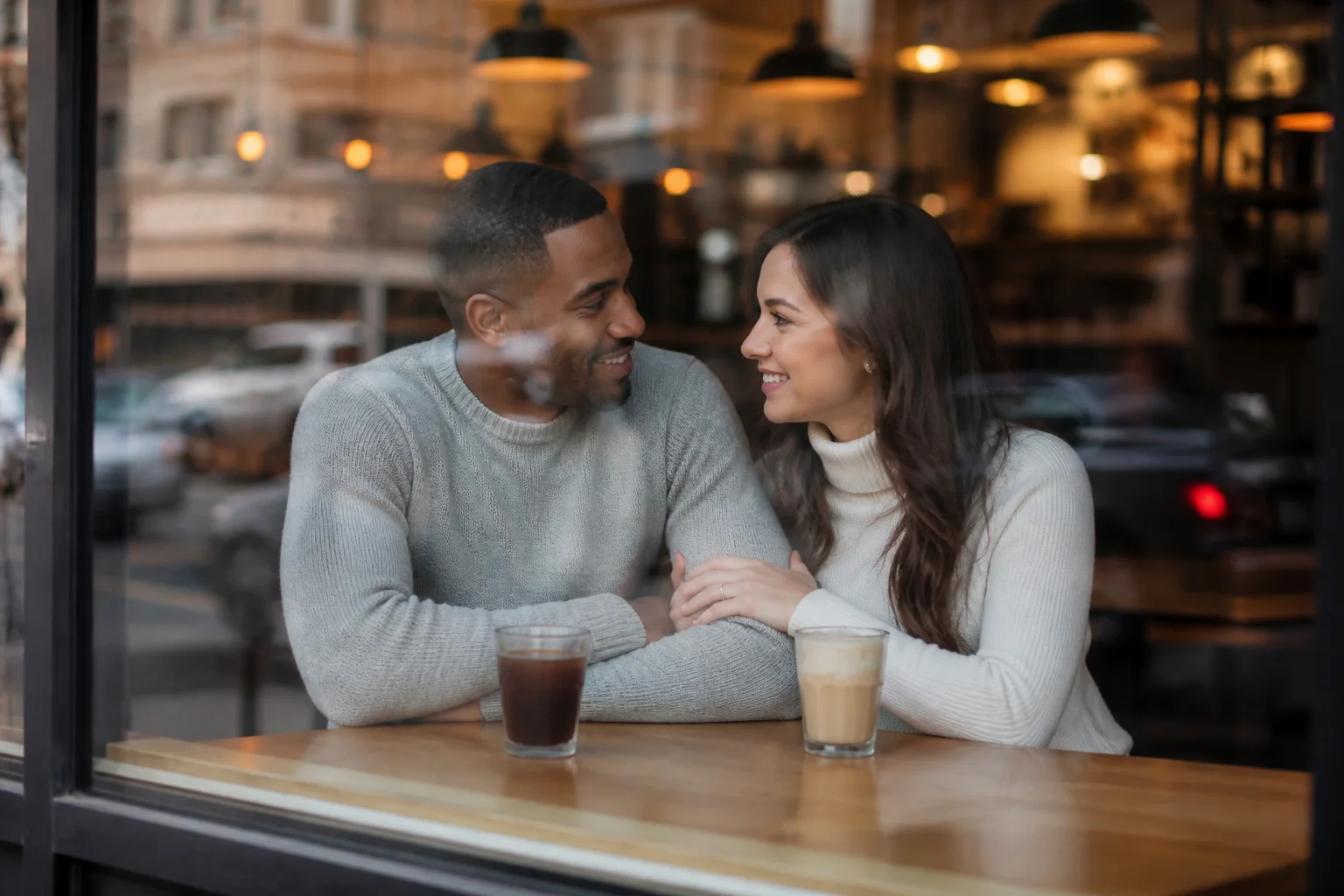
Order the drink you always share, take a window table, and let the photographer observe the conversation. Glassware, booths, mirrors, and practical lamps create a layered setting without bringing a bag of props.
Arrange access with the owner and avoid the busiest service period. Sit near a window if possible, and order something you genuinely enjoy—an untouched decorative drink looks less natural than a real date.
Outdoor engagement photo ideas
7. Walk at the edge of the water
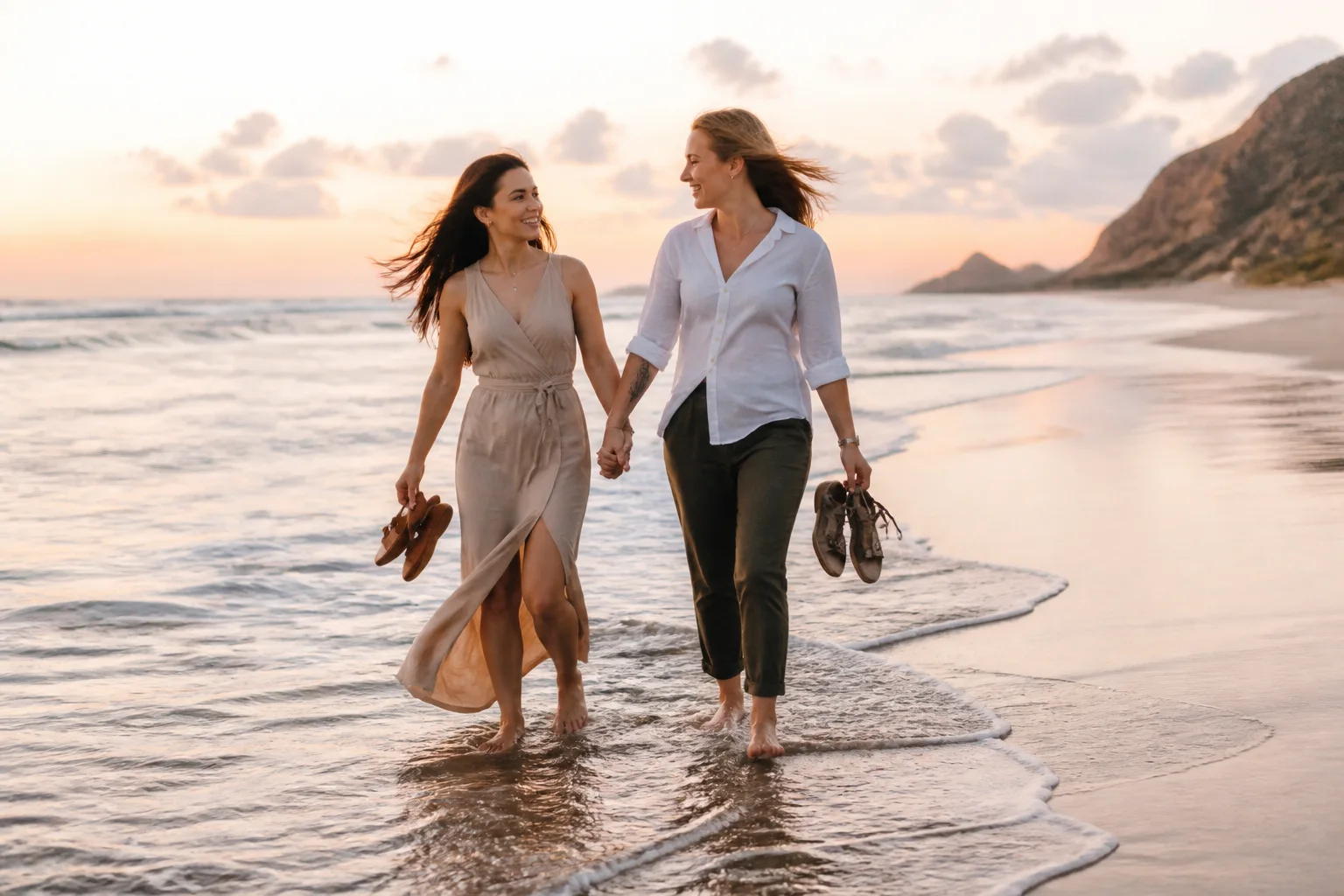
A beach session works best when the shoreline becomes part of the activity rather than a distant background. Walk barefoot, let the wind move your clothing, and expect a little sand and spray.
Check tide times, wind, temperature, parking, and the distance from the car. Bring practical shoes for the approach and a towel. Midday sun reflecting from water can be severe, so early morning or the final hour before sunset is usually easier.
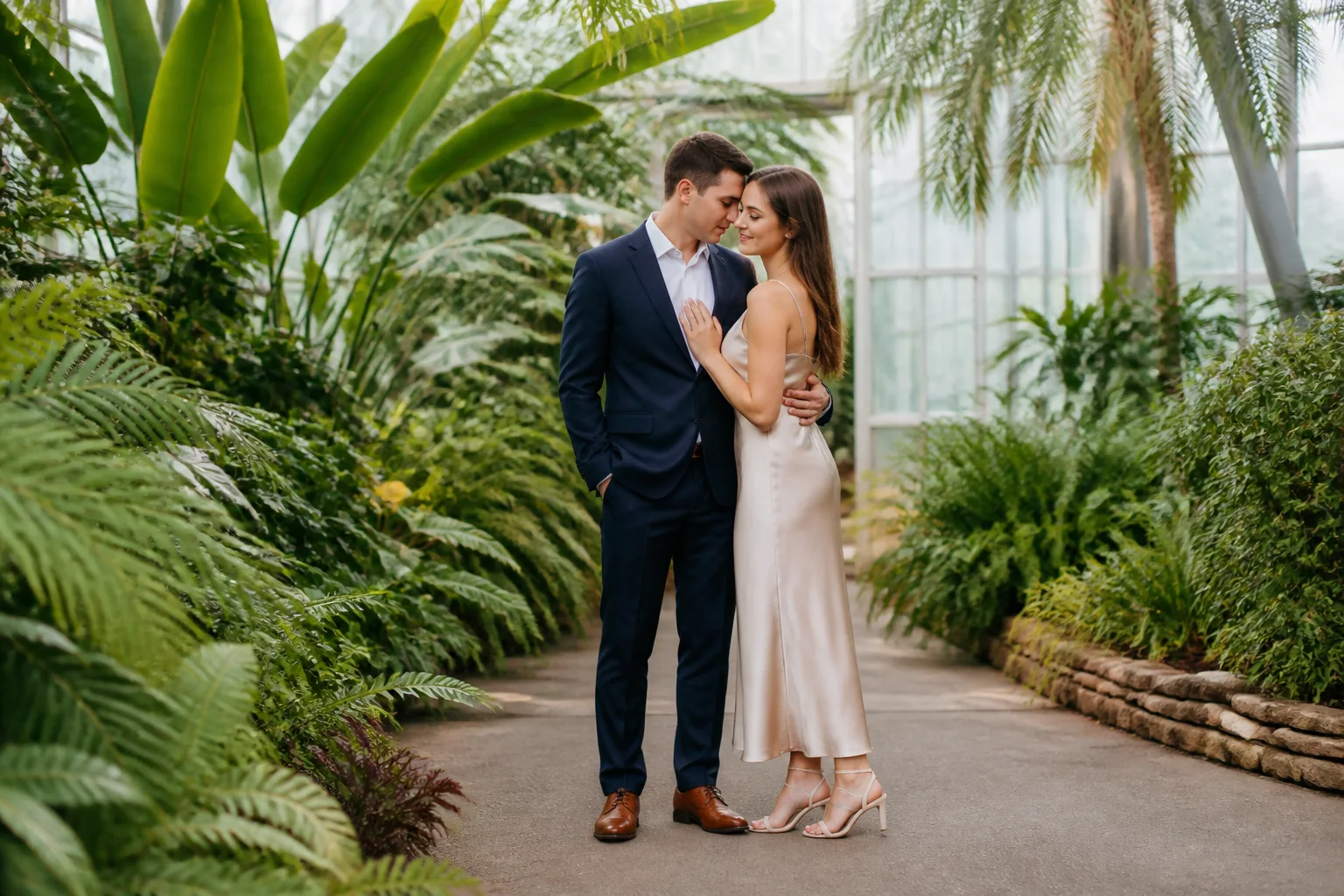
8. Use a botanical garden as a quiet portrait setting
Greenhouses, paths, hedges, and seasonal flowers provide several backgrounds without a long drive. Keep the styling simple so the couple remains more important than the garden.
Many gardens require reservations, permits, or an admission fee for professional photography. Ask about tripods, changing rooms, opening hours, and areas closed for events. Stay on paths and do not move plants or displays for a picture.
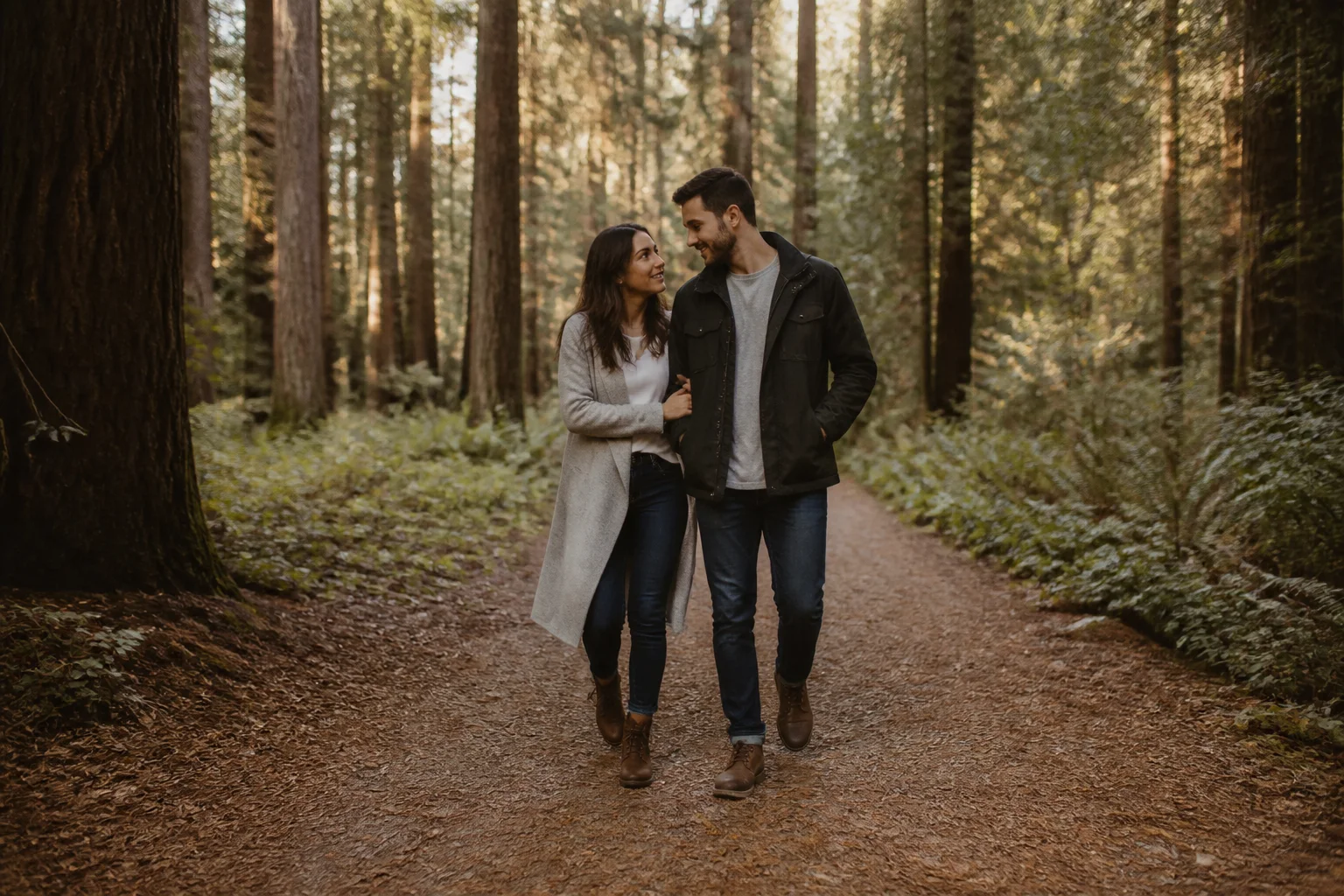
9. Take a forest walk instead of staging a woodland scene
Tall trees and filtered light suit close, intimate portraits, but the most believable frames often happen while moving along the trail. Stop at a clearing, sit on a fallen log only where permitted, or pause beneath a canopy.
Wear shoes with traction and clothing that can brush against leaves. Check trail conditions, insects, restrooms, and the time needed to return before dark. Avoid delicate terrain and never block a public path with equipment.
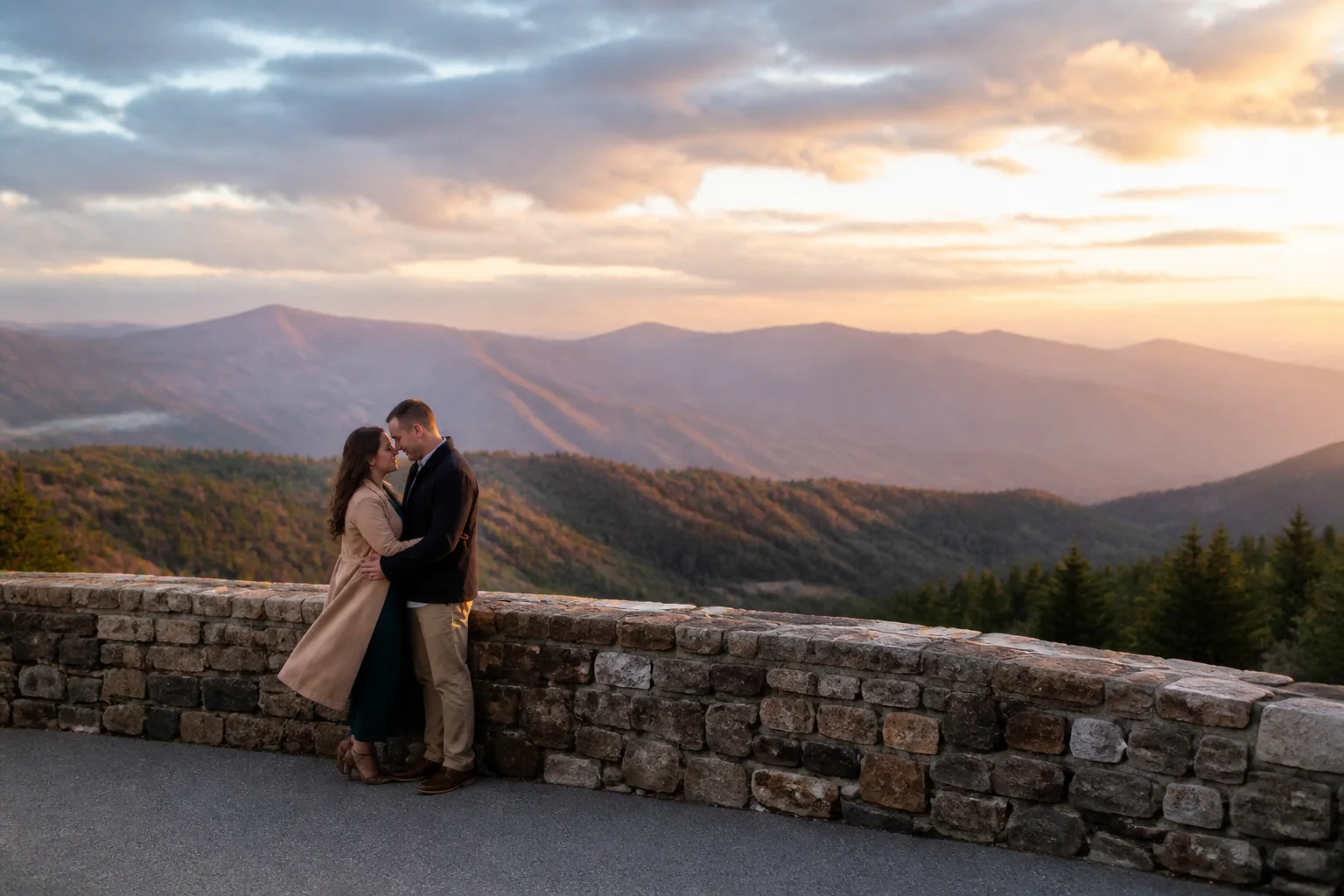
10. Let a mountain view stay wide
At an overlook, ask for a few photographs in which you appear small within the landscape. These images add scale and breathing room to a gallery filled with closer portraits.
A dramatic view does not justify unsafe footing. Use established overlooks, respect barriers, and choose an accessible alternative if either person is uncomfortable with heights or uneven trails. Wind can change quickly, so secure loose accessories.
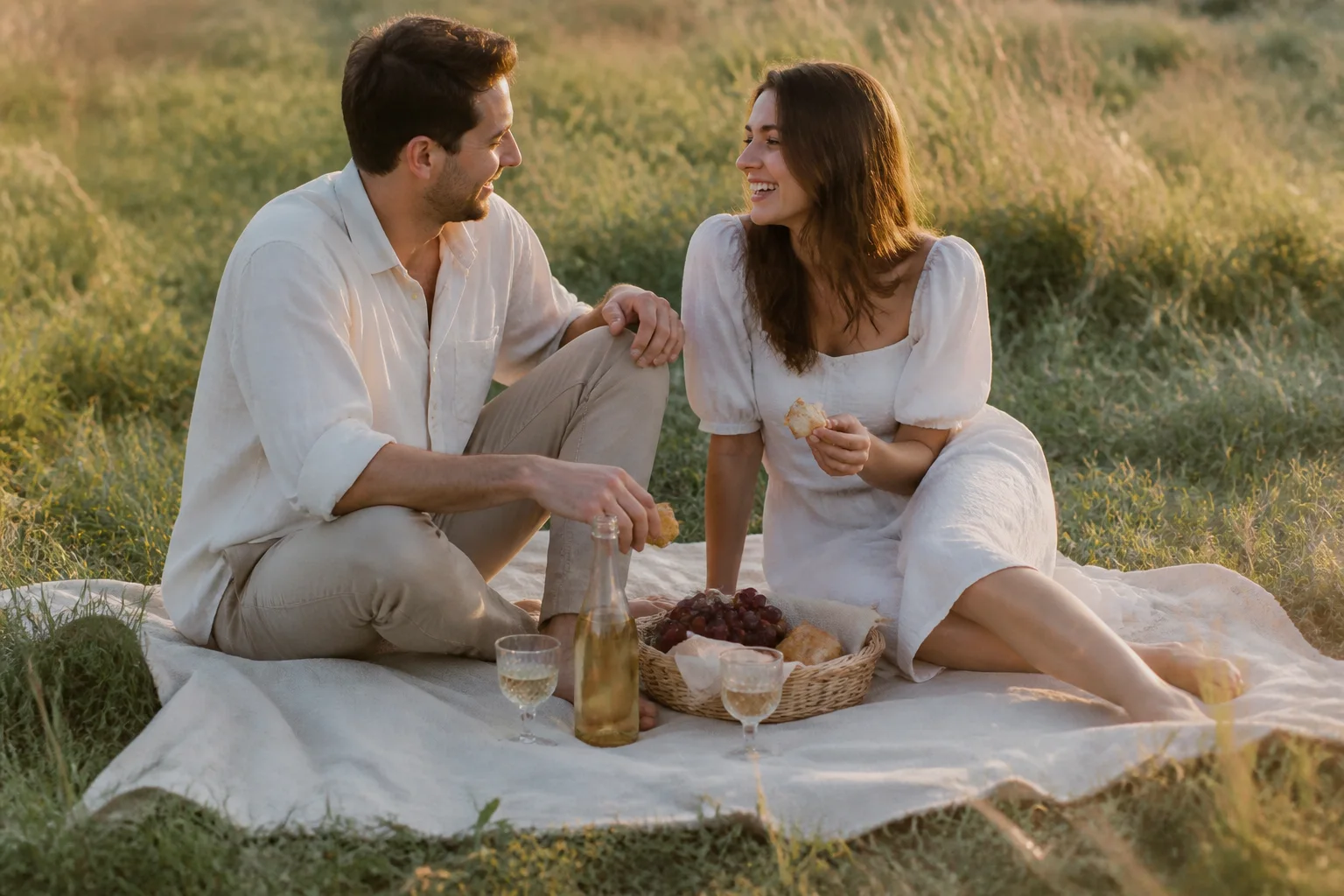
11. Keep a picnic simple enough to enjoy
A blanket, fruit, bread, and one drink are usually enough. The purpose is to create a place to sit, talk, and share something—not to build a table setting that takes an hour to arrange.
Choose food that survives the temperature and does not stain clothing. Weight the corners of the blanket, pack everything out, and skip confetti, glitter, or lightweight paper that can escape into the landscape.
12. Make the season part of the story
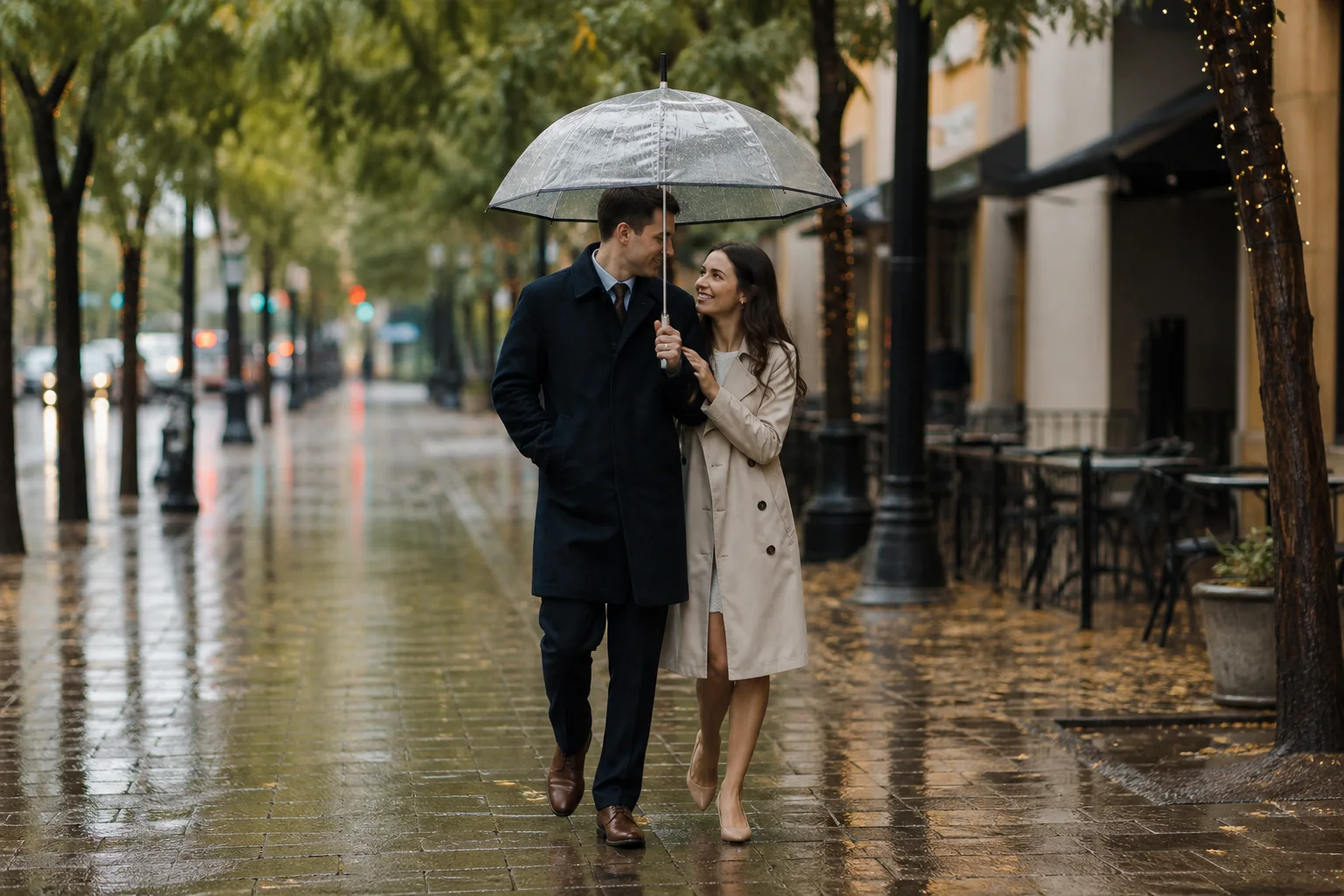
Spring rain, summer evening light, autumn leaves, or fresh snow can give the session a clear mood. Work with the weather instead of pretending every engagement shoot must look warm and golden.
Prepare for comfort first. Bring layers, hand warmers, umbrellas, water, sunscreen, or insect repellent as needed. Your photographer should have a threshold for unsafe wind, lightning, heat, smoke, or ice and a clear rescheduling plan.
City and editorial engagement photo ideas
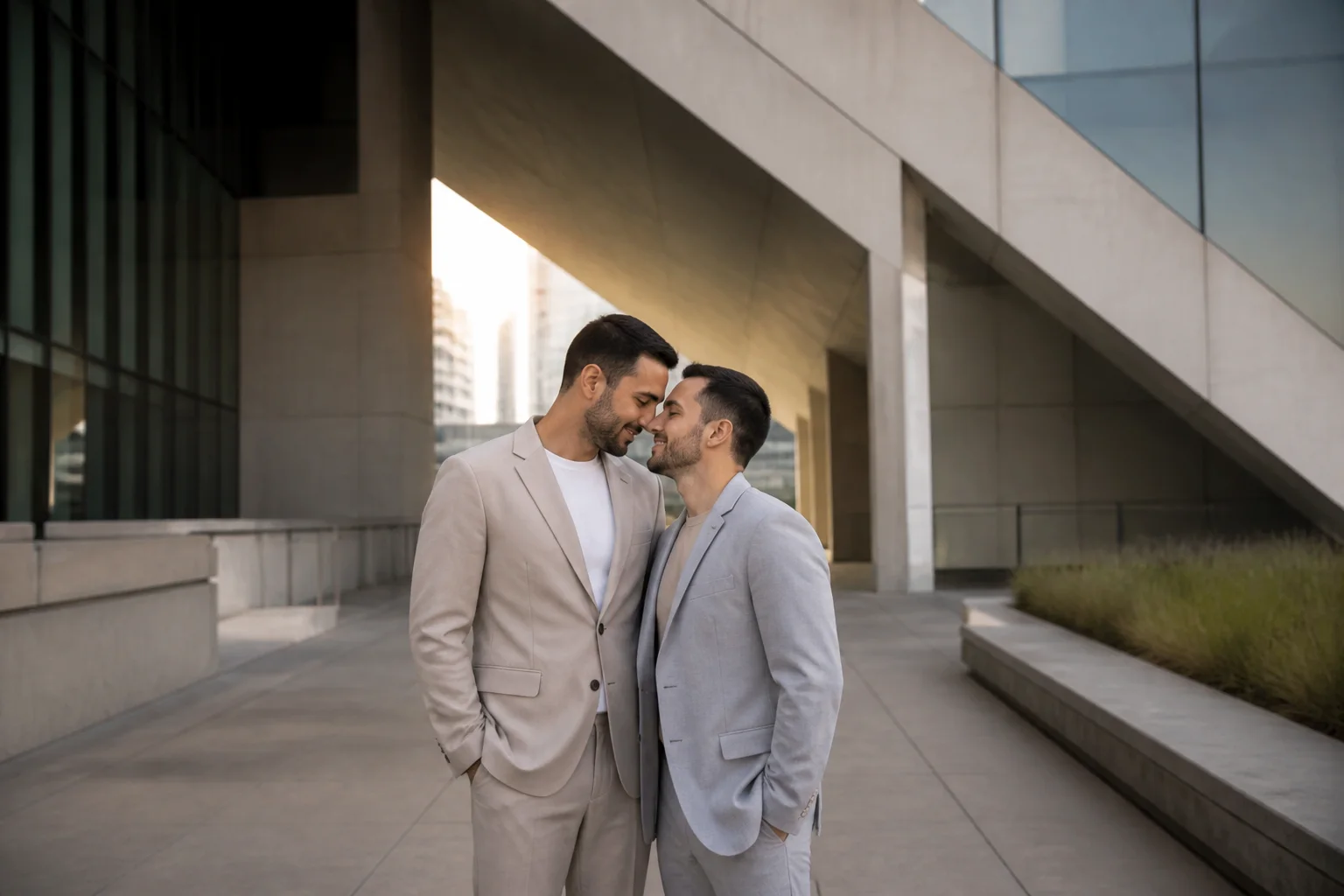
13. Use architecture instead of a decorative backdrop
Columns, concrete walls, staircases, glass, and strong shadow lines can make a city session feel intentional. Choose one building or block with several angles rather than driving between every recognizable landmark.
Confirm whether professional photography is allowed and keep entrances, ramps, and sidewalks clear. Historic interiors, transit stations, museums, and privately managed plazas may have rules that are not obvious from the street.
14. Dress up for an editorial portrait
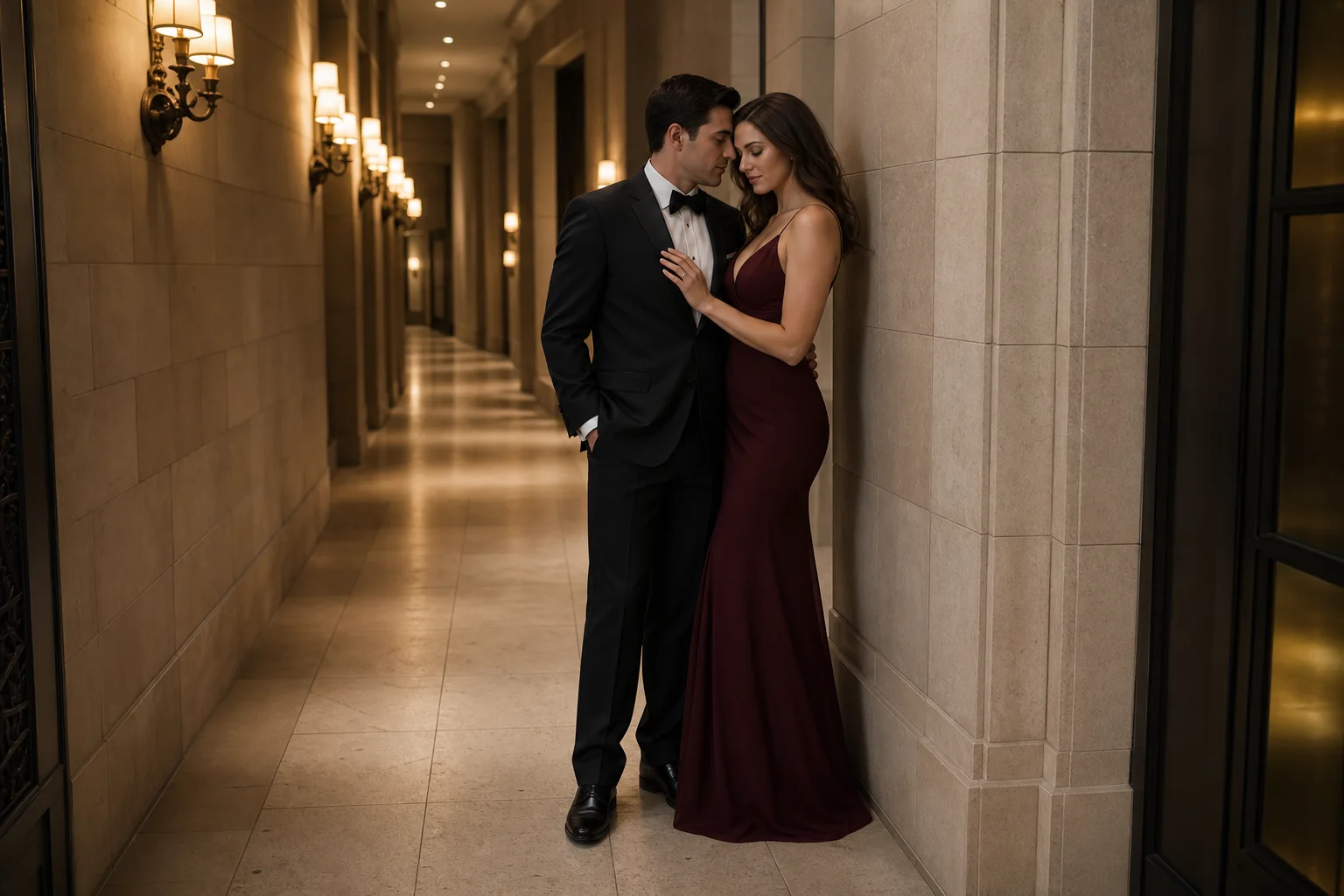
Formal clothes against a restrained studio, hotel, theater, or downtown background can feel cinematic without becoming costume-like. Use clean poses, directional light, and a few black-and-white frames.
Fit and movement matter more than formality. Sit, walk, reach, and raise your arms while trying on the clothes. Steam everything, empty bulky pockets, and bring comfortable shoes for moving between photographs.
15. Continue into blue hour and the city lights
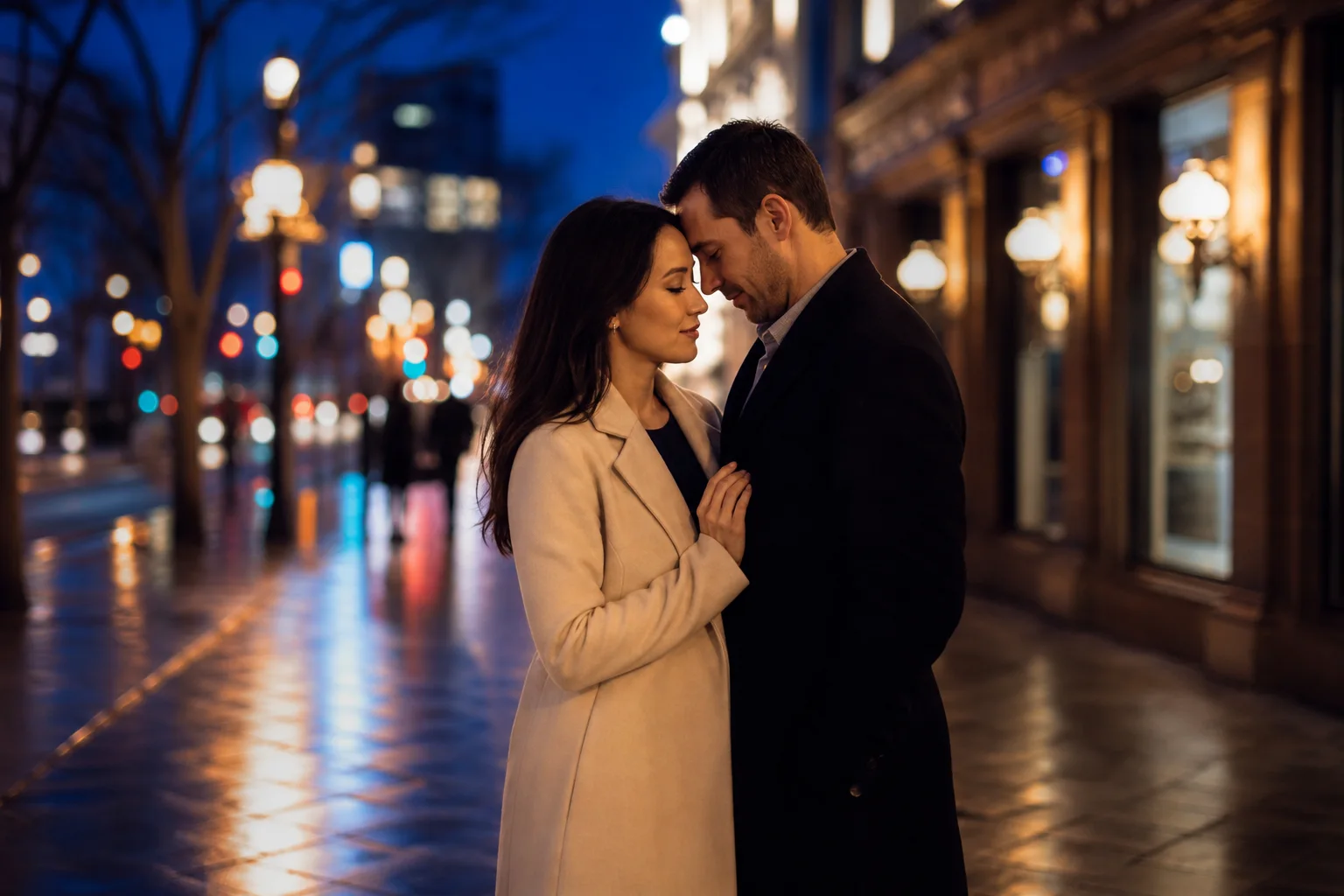
The short period after sunset adds glowing windows, street lamps, reflections, and deeper color. It is a useful contrast if the session begins with soft daylight.
Night photographs require a photographer who can focus and light confidently in low light. Choose a well-traveled area, stay aware of traffic, and do not step into a road for a composition. A small continuous light or off-camera flash should illuminate faces without flattening the atmosphere.
Natural engagement photo poses and moments
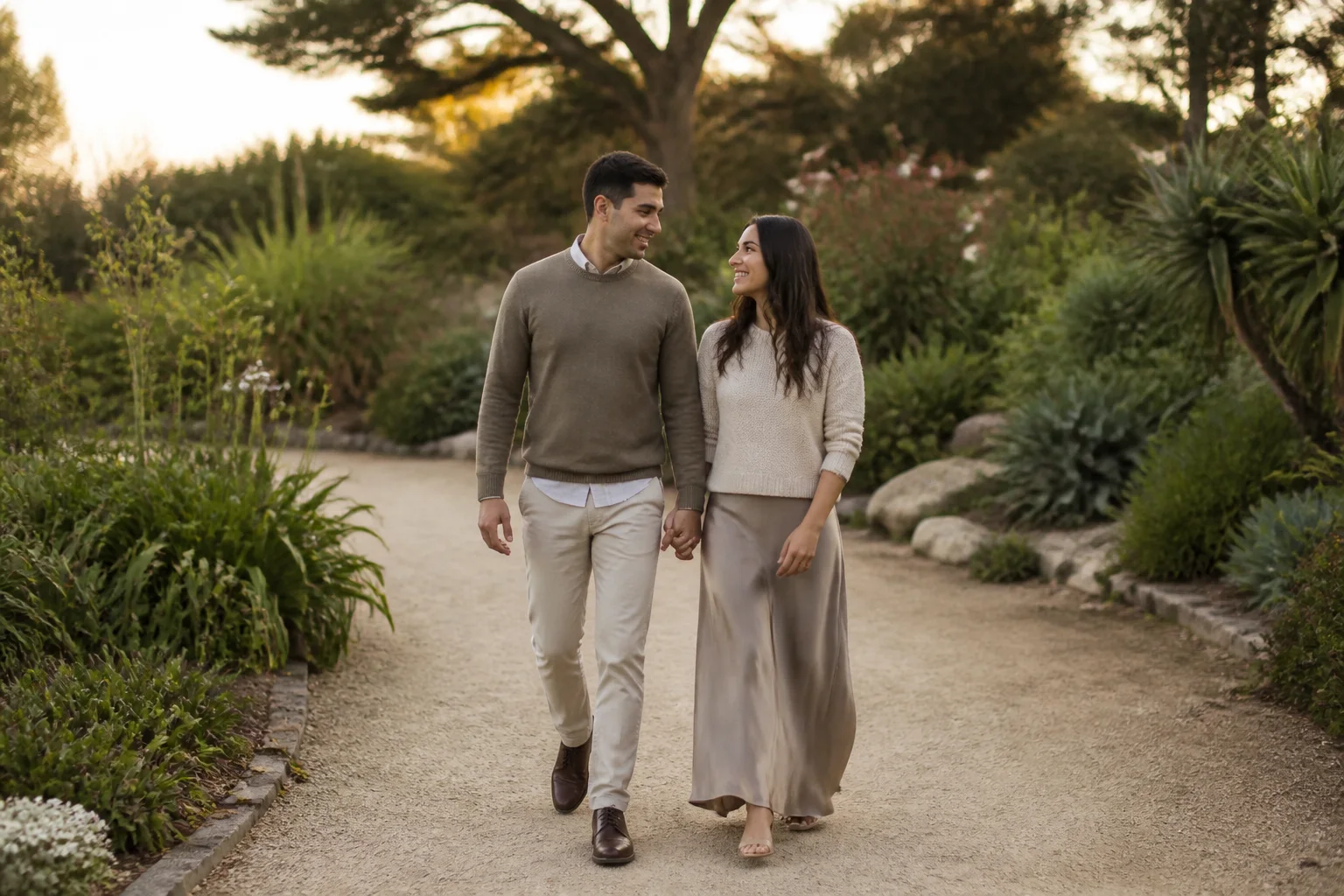
16. Walk and talk
Walking gives the body a familiar rhythm and stops hands from feeling stranded. Hold hands loosely, look at each other, and talk about an actual memory or plan rather than silently walking toward the lens.
Move more slowly than normal so the photographer can refine the composition. Choose shoes that feel stable and a path wide enough to walk side by side without watching every step.
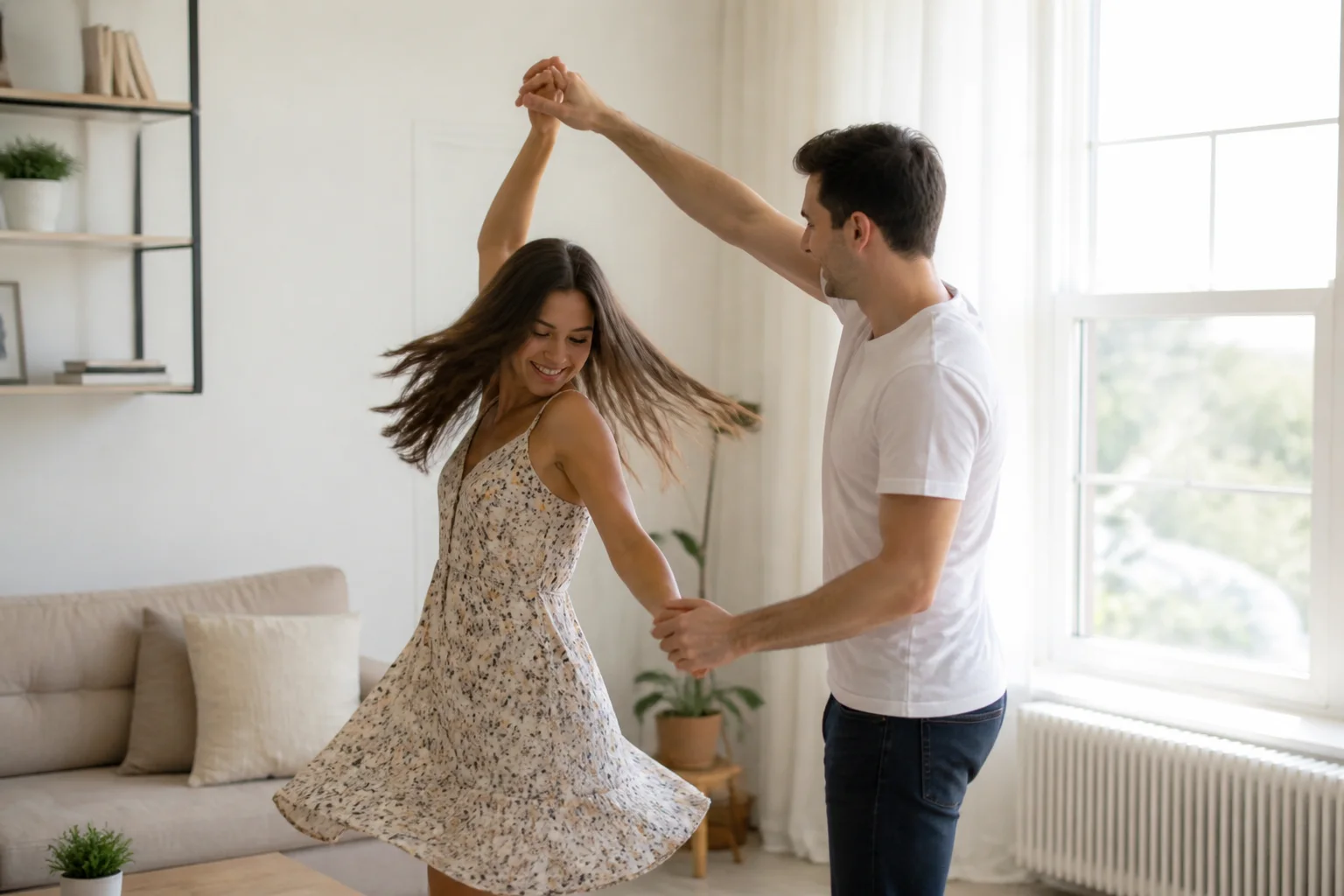
17. Dance without performing a routine
A slow sway, a simple turn, or a few steps in the kitchen creates movement in clothing and a sequence of changing expressions. You do not need choreography; you need enough space and music you both enjoy.
Tell the photographer if lifts, spins, or dips are not comfortable. A safe, small movement looks more confident than an ambitious pose you are worried about holding.
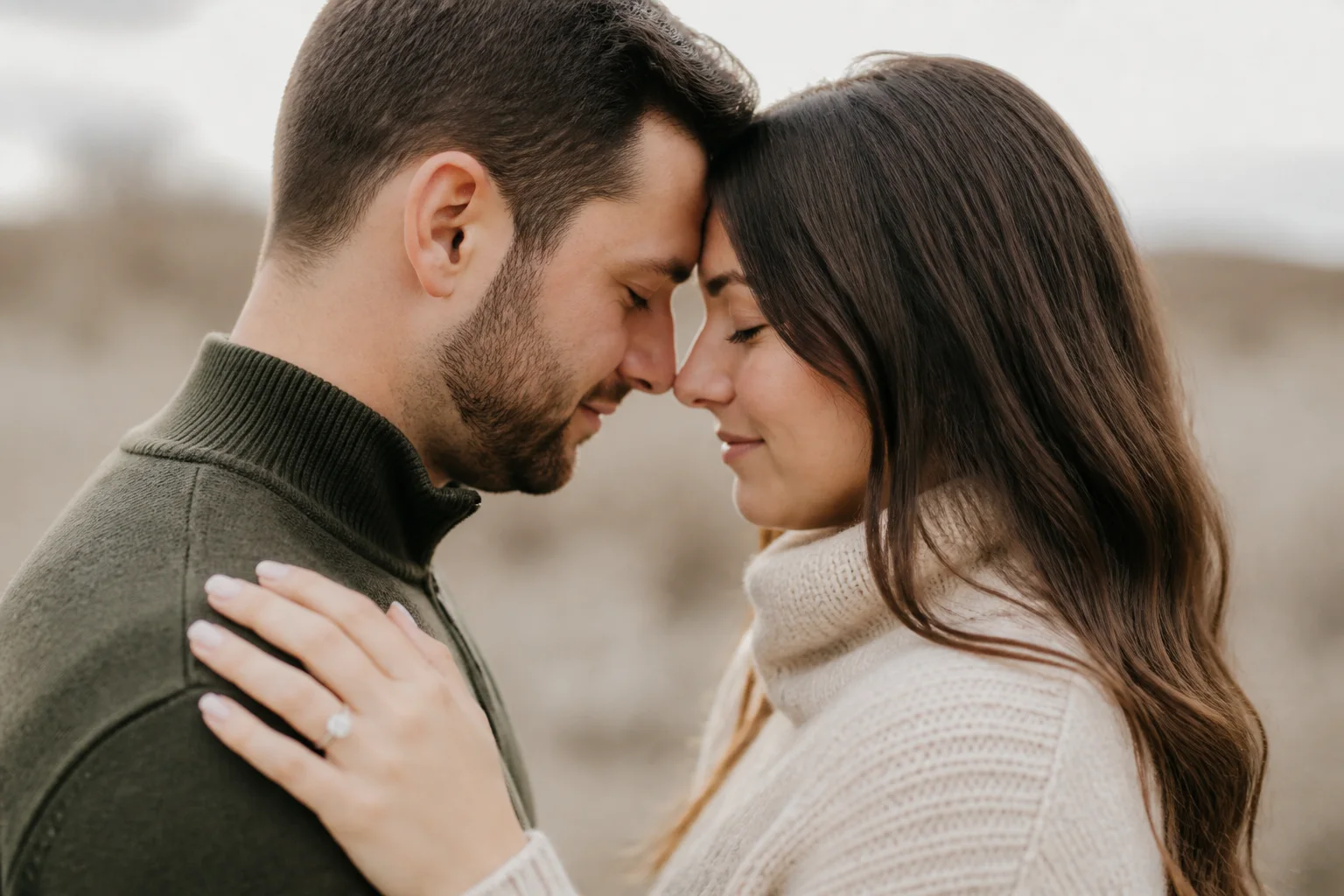
18. Leave room for one quiet close portrait
Not every image needs laughter or motion. Stand close, breathe, rest a forehead or temple together, and let the photographer make a simple frame where expression and connection carry the picture.
Discuss affection and physical boundaries before the session. A good photographer can create intimacy through proximity, hands, and eye line without asking for a pose that feels too public or unlike you.
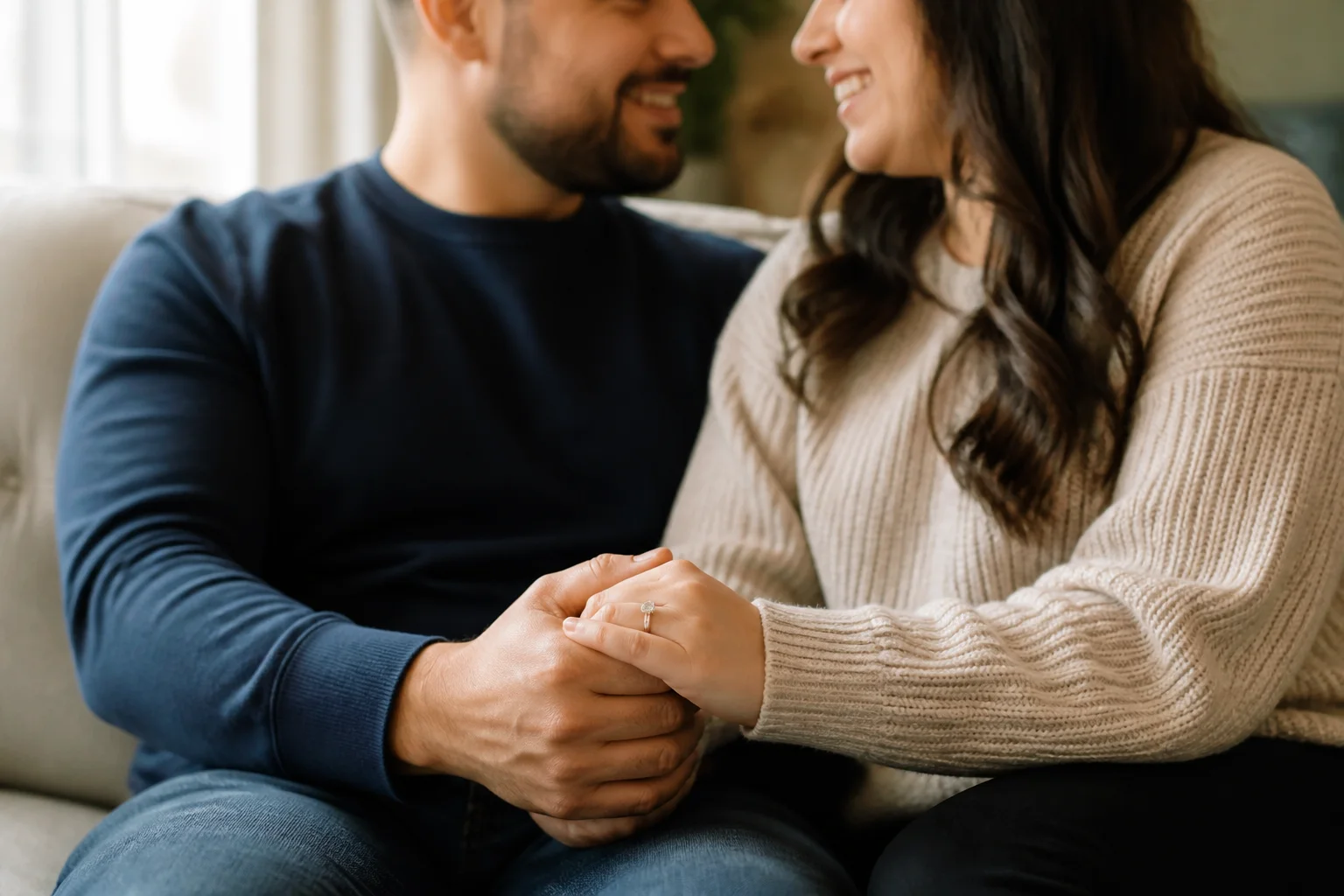
19. Photograph the ring within a real moment
Instead of presenting the ring directly to the camera in every detail shot, photograph it while holding hands, fastening a coat, pouring coffee, or resting a hand on your partner's arm. The jewelry remains visible, but the image still belongs to the story.
Clean the ring beforehand and tell the photographer about engravings or heirloom details. Make one clear close-up, then return attention to the two people; the session should not become a product shoot.
What to wear for engagement photos
Coordinate rather than match. Shared undertones, related levels of formality, or one repeated color are enough to make two outfits belong together. Solid colors and restrained patterns are easy to photograph, but personality matters more than following a neutral-color rule.
Dress for the location and the movement you plan to do. Test every outfit by walking, sitting, hugging, and raising your arms. Check for visible undergarments, pulling buttons, wrinkled fabric, and pockets that change shape when filled. If you bring a second outfit, make it meaningfully different and confirm where you can change.
When to schedule the session
Golden hour is popular because low sun can be soft and dimensional, but it is not the only workable light. An overcast morning can suit a city or home session, and blue hour can add atmosphere after sunset. The best time depends on the direction of the light, building shadows, crowds, opening hours, and the season.
Ask your photographer to recommend a start time for the exact location and date. Arriving late can remove an entire look because sunset does not wait. Build in travel and parking time before the photography window begins.
What to bring—and what to leave behind
Bring only what solves a real problem: comfortable shoes, water, weather layers, touch-up items, pet supplies, permits, and perhaps one meaningful object. Keep keys, phones, wallets, and sunglasses in a small bag that someone can carry between frames.
Leave behind a large box of generic props. If an item does not connect to your relationship or create a useful action, it usually becomes something awkward to hold. A session feels more personal when the details are specific and few.
If you feel awkward in front of the camera
Most people do. Tell the photographer before the session rather than trying to hide it. Ask how they direct couples and whether they use prompts, demonstrations, or quiet observation. You should not be expected to arrive knowing a pose vocabulary.
During the shoot, focus on your partner and the small task you have been given. Talk, walk, adjust a collar, share a drink, or answer a question. The goal is not to look candid every second; it is to create enough real interaction that the posed and unposed moments blend naturally.
Make a short shot list, not a script
Share a few priorities: one horizontal image for a wedding website, one vertical portrait, a clear ring detail, a photograph with the pet, and perhaps a specific place or heirloom. Then give the photographer room to respond to light and expression.
A list of dozens of copied poses can make the session feel like a checklist and may not suit your bodies, clothing, or location. Use inspiration to explain mood—playful, quiet, editorial, documentary—not to demand an exact replica of another couple's photograph.
The idea worth choosing
The strongest engagement photo idea is the one that removes pressure instead of adding production. Choose a place you can enter comfortably, clothes you can move in, and an activity that gives you something real to share. Good light and thoughtful direction will do more for the photographs than a complicated theme ever could.
Frequently Asked Questions
-
Schedule them early enough to receive edited files before you need save-the-dates, a wedding website, or a guest book. Season, photographer availability, and the desired location matter more than a fixed number of months before the wedding.
-
About 60 to 90 minutes is common for one area and one or two looks. Extra travel, outfit changes, pets, difficult access, or night photography can require more time.
-
One outfit is enough when it fits the story and location. Two can provide variety—often one relaxed and one dressier—but only if there is a practical changing place and the change will not consume the best light.
-
Yes, if the location permits pets. Bring a leash, water, treats, waste bags, and a trusted helper who can take the dog after the pet portraits are finished.
-
Talk with the photographer about whether light rain suits the planned mood and whether the location remains safe. Prepare umbrellas and weather-appropriate clothing, but reschedule for lightning, dangerous wind, ice, extreme temperatures, smoke, or other unsafe conditions.