Monopod vs. Tripod: Which Camera Support Do You Need?
Compare monopod mobility and lens support with tripod stability, locked composition, long exposures, video movement, portability, and safety.
The structural difference
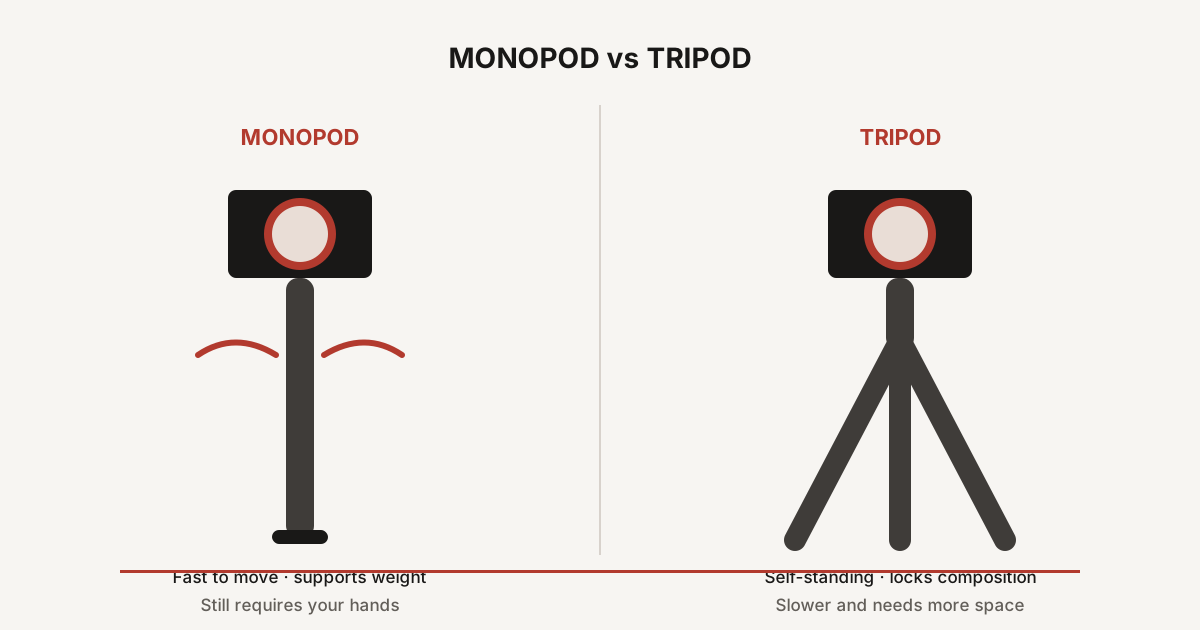
A monopod forms one contact point with the ground. Your body and hands provide the other constraints. It transfers the camera and lens weight downward and damps some movement, but it can still tilt in any direction.
A tripod spreads three legs into a stable polygon. When the center of gravity stays inside that footprint and all locks hold, the system can stand independently.
What a monopod does well
Supports heavy lenses
A 400mm or 600mm lens becomes tiring to hold through a game or long wildlife wait. A monopod carries most of the mass while the photographer keeps the lens aimed and ready.
Moves quickly
Collapse or lift one leg and change position in seconds. This is valuable on sidelines, in crowds, from vehicles, and anywhere a tripod footprint would block others.
Improves framing stability
The supported lens moves less vertically and can be easier to track smoothly. It does not make the system motionless, but it reduces fatigue-related shake and keeps the viewfinder steadier.
Fits narrow spaces
A monopod can stand between seats or close to a barrier where three legs cannot spread safely.
What a tripod does well
Long exposures
Seconds or minutes of exposure require a self-standing platform. A monopod cannot remain still enough without additional bracing and active control.
Locked composition
Landscapes, architecture, products, self-portraits, interviews, and studio work benefit when the frame remains exactly fixed while light or subject changes.
Multi-frame techniques
Exposure brackets, focus stacks, panoramas, composites, time-lapses, and frame-by-frame animation depend on repeatable alignment.
Hands-free operation
A tripod can support the camera while the photographer adjusts a light, directs a person, or operates from a remote position—provided the site is safe and the camera remains supervised.
Stability is directional
A monopod strongly reduces vertical movement and partially damps pitch and yaw. You can improve it by leaning the foot slightly forward and pulling back gently, creating tension between your body and the ground.
Bracing it against a seat, railing, or your foot can add stability, but never create a hazard or damage property. The system remains dependent on your hands.
A tripod resists movement in all directions, but wind, flexible legs, a raised center column, soft ground, and an unbalanced load can still make it vibrate or tip.
Sports and wildlife
A monopod is often ideal when the subject moves unpredictably and the lens is heavy. Mount the monopod to the lens collar, not the camera body, so the load balances near its center.
Set height so you can stand naturally without raising shoulders. Keep one hand on the camera and one on the lens or collar. Lift the foot before changing position rather than dragging it near other people.
A tripod with a gimbal head is better when you can establish a fixed location and wait for wildlife. It carries the weight while allowing balanced pan and tilt. It also occupies more space and takes longer to deploy.
Landscapes and night photography
Choose a tripod. Even if stabilization permits a sharp handheld frame, a tripod helps refine edges, wait for light, bracket exposure, use strong ND, focus stack, and make panoramas.
A monopod can improve sharpness during a hike when tripods are prohibited or impractical, but it does not replace a locked camera for star trails, blue-hour brackets, or multi-second water blur.
Portraits and events
A monopod can support a large 70–200mm lens through a ceremony, stage performance, or long portrait session. It remains quick and has a small footprint.
A tripod is useful for formal groups, tethered portraits, photo booths, and consistent headshot framing. It can slow spontaneous interaction and create a trip hazard in crowded receptions.
Video use
A video monopod with a fluid base and small feet can support static-ish shots, gentle pans, and quick repositioning. The feet increase damping but do not make it safe to leave unattended.
A proper video tripod with a fluid head provides stable pans and tilts, repeatable starts and stops, and better control of a balanced rig. Walking shots require another tool or deliberate handheld technique.
Do small feet make a monopod a tripod?
No. Fold-out feet increase resistance and may allow a very light setup to remain upright on level ground under supervision. The base is narrow, the center of gravity is high, and wind or a cable can tip it easily.
Follow the product instructions. Treat “self-standing” as a limited operating mode, not permission to walk away.
Heads for monopods
A simple tilt head lets a long lens move up and down while the collar rotates for orientation. A small ball head adds flexibility for lighter gear but can flop sideways when loosened.
Many sports photographers attach the lens collar directly to the monopod or use an Arca-style clamp. A fluid cartridge can smooth video pan at the foot or head. Keep the setup simple enough to move safely.
Heads for tripods
Ball heads are fast and compact. Three-way and geared heads adjust axes independently for precise landscapes and architecture. Gimbal heads balance long lenses. Fluid heads control video movement.
The legs and head must both support the complete load. A strong tripod with an undersized head still creeps or tips.
Height and center column
Both supports should reach working height without forcing a hunched posture. On a tripod, extending the center column raises the load above the strongest part of the structure and increases vibration. Use it sparingly when maximum stability matters.
A monopod commonly needs full height because it is designed to support a standing photographer. Check height with the head, camera viewfinder, terrain, and your footwear included.
Carbon fiber versus aluminum
Carbon fiber normally reduces weight and damps vibration well; aluminum costs less and can tolerate rough impacts without hidden layer damage. In cold weather, carbon is less uncomfortable to hold.
Tube diameter, joint design, locks, and leg sections influence rigidity as much as material. More sections fold shorter but create more joints and narrower bottom tubes.
Stabilization settings
Lens and camera stabilization can behave differently on a locked tripod, a loose head, and a monopod. Some lenses provide tripod, sport, or panning modes; others detect support automatically.
Use the manual for the exact lens. Do not repeat the old blanket rule that stabilization must always be off on a tripod—modern systems vary.
Safety in public spaces
- Keep legs and feet out of walkways.
- Never lift a deployed tripod with loose leg sections.
- Use the lens collar for heavy glass.
- Keep one hand on a monopod-mounted camera.
- Do not hang a swinging bag from support in wind.
- Check venue restrictions and avoid blocking other photographers.
- On soft ground, widen the tripod stance and test every foot.
Which one should you buy first?
Buy a tripod first if you photograph landscapes, interiors, products, night scenes, self-portraits, brackets, panoramas, or video interviews.
Buy a monopod first if your main problem is holding a heavy telephoto for sports, wildlife, aviation, stage, or long events while changing position frequently.
A convertible tripod leg can provide occasional monopod use, but the conversion may be slower and heavier than a dedicated model.
Common mistakes
- Expecting a monopod to hold a long exposure. It reduces shake but remains movable.
- Leaving a footed monopod unattended. Its base is too narrow for general self-standing use.
- Mounting a heavy lens by the camera. Use the lens collar when provided.
- Buying by load number alone. Rigidity, balance, height, and head behavior matter.
- Extending the thinnest sections first. Use the widest tubes when partial height is enough.
- Using support as a substitute for shutter speed. It cannot stop subject motion.
Frequently Asked Questions
-
No. A monopod supports weight and reduces some movement, but the photographer must keep it upright. A tripod forms a self-standing base and can hold a locked composition.
-
It may improve a marginal handheld shutter speed, but it is not stable enough for multi-second exposures or repeatable brackets. Use a tripod for true long-exposure work.
-
They carry the weight of heavy telephoto lenses, reduce fatigue, occupy little ground space, and can be lifted and repositioned quickly as action moves.
-
Some have small feet and may stand with light gear on level ground under close supervision. They are much easier to tip than tripods and should not be left unattended.
-
Not always. A lens collar can attach directly. A tilt head is useful for long lenses, while a small ball or fluid head can help lighter photo or video setups. Keep the load balanced and secure.