7 Best Vintage Digital Camera in 2026: Retro Looks, Real Performance

A practical guide to retro-styled digital cameras that balance vintage charm with everyday usability, from gift-grade novelties to dependable Kodak compacts.

Most 'vintage' digital cameras on the market today are not actually from 2005. They are new compacts wrapped in retro styling, and they range from fun little toys to surprisingly usable everyday cameras.

The catch is that megapixel counts and 4K labels on budget models are often inflated. A 64MP claim on a camera that optically resolves closer to 12MP is a spec-sheet illusion, not a performance promise.

This guide separates the genuinely practical retro digicams from the ones best treated as gifts or novelty gadgets, based on what real users consistently report. The right choice comes down to optical zoom, battery type, and how much reliability you actually need.

1

Best Overall

KODAK PIXPRO FZ55

89 /100
Studio Score Strong Evidence

Key details

Video
1080p
Screen
2.7-inch LCD
Battery
Rechargeable Li-Ion
Optical Zoom
5x optical
Check Price on Amazon

The FZ55 is a compact point-and-shoot with a genuine 5x optical zoom lens and a rechargeable Li-Ion battery, putting it ahead of the fixed-focus retro-styled modules in this category. The 28-140mm equivalent range covers group shots, portraits, and travel scenes without relying on digital crop. Stills come out at 16MP, and video tops out at 1080p Full HD — enough for casual clips without menu gymnastics. The rechargeable battery means one less thing to buy and no AA hunt, while the body stays light enough for a coat pocket or small bag.

Flash photography and selfies are the highlights here. Indoor shots with the flash stay sharp, and the compact body delivers the old point-and-shoot feel that buyers in this category want. The controls are simple enough for a first-time owner, with no buried menus or confusing modes. The retro styling gets noticed, but it doesn't get in the way of day-to-day usability. Image quality is good for the class rather than class-leading, which is exactly the tradeoff this category is built around.

This is for beginners and family shooters who want one camera for birthdays, trips, and everyday memories. It's not aimed at advanced photographers who need 4K or long telephoto; those buyers need a different tool. For casual video and stills, the 1080p and 5x zoom hit the intended mark, and the small kit-bag footprint makes it easy to bring along. The lens range is practical rather than exotic, and the camera encourages the kind of spontaneous shooting that suits this user.

Quality control can vary between units; a small number may shut down without warning in the first months. That caveat matters for anyone who wants zero hardware risk. For casual owners, the camera delivers enough performance that this is a boundary to budget around, not a reason to avoid the whole category. The style-first alternatives in this space may look more distinctive on a shelf, but they don't offer the same optical zoom and charging convenience.

The price sits above the cheapest unbranded retro cameras, and that premium buys the optical zoom, rechargeable power, and a recognized name. Spec-sheet shoppers will find lower prices, but the gap closes when the lens and battery are weighed in. For an all-round first digicam, the feature set matches its mid-range price. It lands in a sweet spot between disposable novelty and complex enthusiast gear.

Pros

  • High overall quality for a compact point-and-shoot, with sharp results across everyday scenes.
  • Strong value for the feature set
  • Very easy to use, with simple menus and controls that first-time owners pick up quickly.
  • Flash portraits and selfies come out well, making it a fun low-light companion.
  • Compact retro design that captures the old point-and-shoot look without feeling like a toy.

Cons

  • The 2.7-inch screen is small for photo review and menu reading.
  • Battery and charging behavior can vary between units; some may not hold a charge.
Our verdict

For casual shooters who want the old point-and-shoot feel in a working everyday camera, the FZ55 is the one to carry.
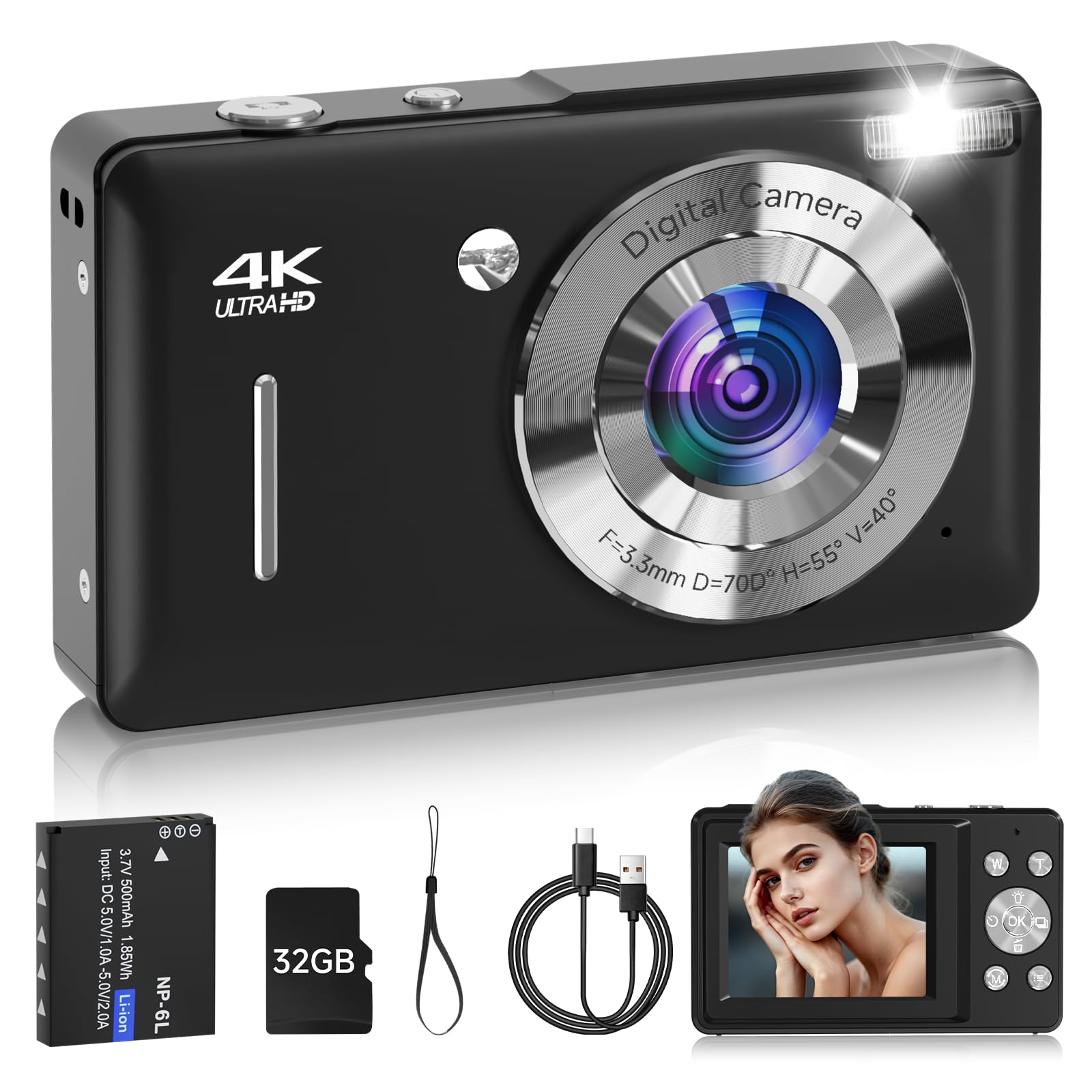
Check Latest Price
2

Best Retro Selfie / Vlogging Styling

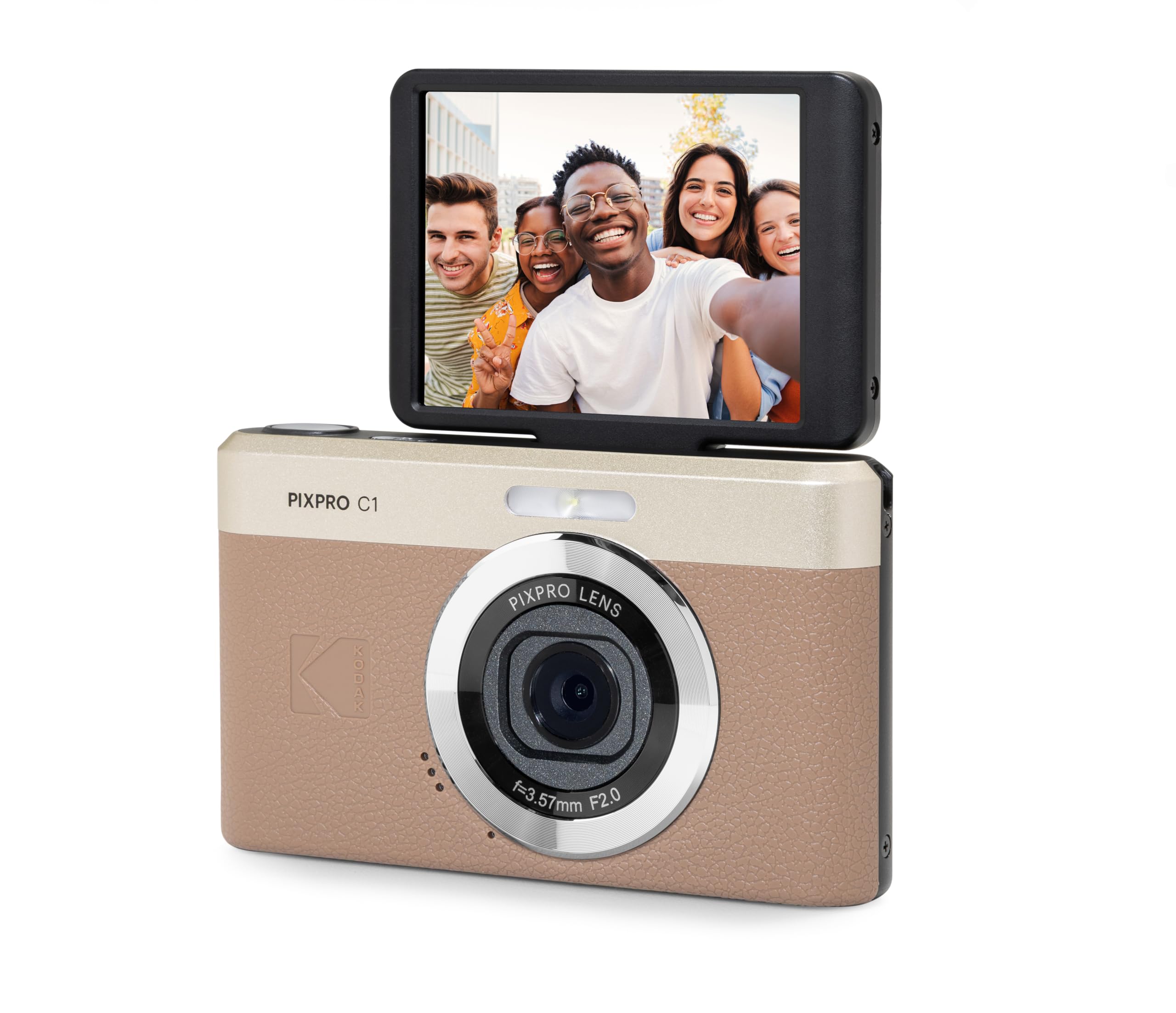
KODAK PIXPRO C1 Retro

82 /100
Studio Score Strong Evidence

Key details

Video
1080p
Screen
2.8-inch tilting
Battery
Rechargeable Li-Ion
Optical Zoom
None, fixed 26mm
Check Price on Amazon

The C1 makes its case with what a selfie-first shooter sees first: a compact brown retro body, a 180° flip screen, and a fixed 26mm f/2 lens that keeps daylight snaps crisp. The 13MP BSI CMOS sensor and 1080p video cover casual daily clips without menu-diving, and the point-and-shoot interface is the kind a beginner can learn in one outing.

The right owner is a selfie or vlog beginner who wants vintage digicam styling for daytime travel and daily snapshots. Low-light and night performance is poor, and the stabilization is less assertive than the spec sheet suggests, so this is not an evening or indoor camera; buyers who need optical zoom or all-day battery life are better served by the all-rounder in this set. The f/2 lens does its best work in bright conditions, where the retro look really shows.

The compact body slides into a pocket, the controls stay out of the way, and USB-C charging keeps the routine casual. The fixed wide-angle lens keeps selfie framing simple without needing to fuss with zoom. For a first camera, the tradeoff is clear: choose this for the retro look, and plan daytime shoots around it.

💡 Charge it overnight before a travel day; USB-C makes top-ups easy.

Pros

  • Point-and-shoot interface keeps operation simple for a first camera.
  • Compact body slips into a pocket or small bag without adding bulk.
  • Retro brown styling and clean daylight frames deliver the old-school digicam look.

Cons

  • Dim scenes can come out blurry or pixelated, so evening use is the main tradeoff.
  • A unit can power off mid-session, so a quick functional check after arrival is worthwhile.
Our verdict

At a mid-range price, it is a fair entry point for a retro flip-screen camera that favors simple daylight shooting.

Check Latest Price
3

Best for Kids & Teens

SMARTKLIK DC228 Kids Cam

80 /100
Studio Score Strong Evidence

Key details

Video
1080p
Screen
2.4-inch with mirror
Battery
Rechargeable
Optical Zoom
16x digital
Check Price on Amazon

The DC228 is built around face/smile capture, 20 filters, and a bundled 32GB card, so a child gets playful results from the first power-on. The 2.4-inch LCD and front selfie mirror keep framing easy, and the button layout is simple enough for young kids to handle without any adult help. It also records 1080p FHD video, so first-time shooters can move between stills and short clips without any menu digging.

Image quality is appropriate for the price: clear, cute photos in daylight with enough filter variety to keep experimentation fun. The 44MP claim is marketing math, not a promise of professional output, which is fine for the intended age group.

The right owner is a kid or teen moving up from a toy camera, or a parent who wants a budget-friendly retro-styled starter with filters and face capture. This is not a low-light or indoor camera — dim shots will soften into noise — and sharing photos requires a wired connection because there is no WiFi. For serious hobbyists, it is not a serious creative tool; for daylight play and a first taste of photography, those boundaries are acceptable.

Pros

  • Purpose-built for kids: face/smile capture and filters make the first camera experience genuinely playful.
  • Strong budget value for a starter camera that includes a 32GB card.
  • Image quality in daylight is clear and appealing for a kids camera.
  • Controls are intuitive enough for young children to operate on their own.

Cons

  • Phone transfer is wired-only and requires a cable; no WiFi means sharing is more awkward than on a modern digicam.
  • In dim indoor spaces, photos turn soft and grainy; this camera is best in daylight or bright rooms.
Our verdict

This is the kids-first camera in the retro digicam set: playful filters, face capture, and simple controls for daylight use.

Check Latest Price
4

Best Budget Flip-Screen Vlogging

Gavonde WD08 Flip-Screen

80 /100
Studio Score Strong Evidence

Key details

Video
4K claimed
Screen
3-inch flip IPS
Battery
Two rechargeable
Optical Zoom
18x digital
Check Price on Amazon

The Gavonde WD08 is the budget flip-screen companion among these compact cameras, pairing a 180° panel with WiFi sharing, webcam mode, two batteries, and a 32GB card. That combination makes it a more complete social-sharing kit for the price, and it keeps the old-school point-and-shoot feel of framing from the screen rather than a phone app. The package leans into casual selfie and video use rather than the all-round optical-zoom approach of the category's top pick.

The flip screen is the main reason to choose it: vlogging is easier when you can see yourself while recording, and the built-in WiFi moves stills to a phone without a cable. Two batteries in the box keep a day of casual shooting practical without a recharging stop, and the compact body slips into a small bag or jacket pocket.

Teens and social-media beginners who want a compact, point-and-shoot-style camera for everyday selfies and short clips will get the most from this model. The marketed 4K/64MP level overstates real output, and in some cases autofocus can be inconsistent, so the WD08 works best for bright, relaxed shooting rather than critical image work. If optical zoom or true 4K video is a priority, the top pick in this category is a better match.

💡 Use the 1080p video setting for smoother, more realistic footage.

Pros

  • 180° flip screen makes selfie framing and vlogging noticeably easier.
  • WiFi sharing and webcam mode suit daily social posts and video calls.
  • Two batteries and a 32GB card are included, ready for a day of casual shooting.
  • Compact body is easy to slip into a pouch or pocket for travel.

Cons

  • Autofocus can be hit-or-miss, so a quick retake may be needed for sharp results.
  • The 4K/64MP claims overstate real output; footage is closer to upscaled HD than true 4K.
Our verdict

The WD08 fills the flip-screen, social-sharing side of this category: easy selfie framing, WiFi transfers, webcam mode, and two batteries in a budget compact.

Check Latest Price
5

Best Vintage-Style Gift / Waist-Level Screen

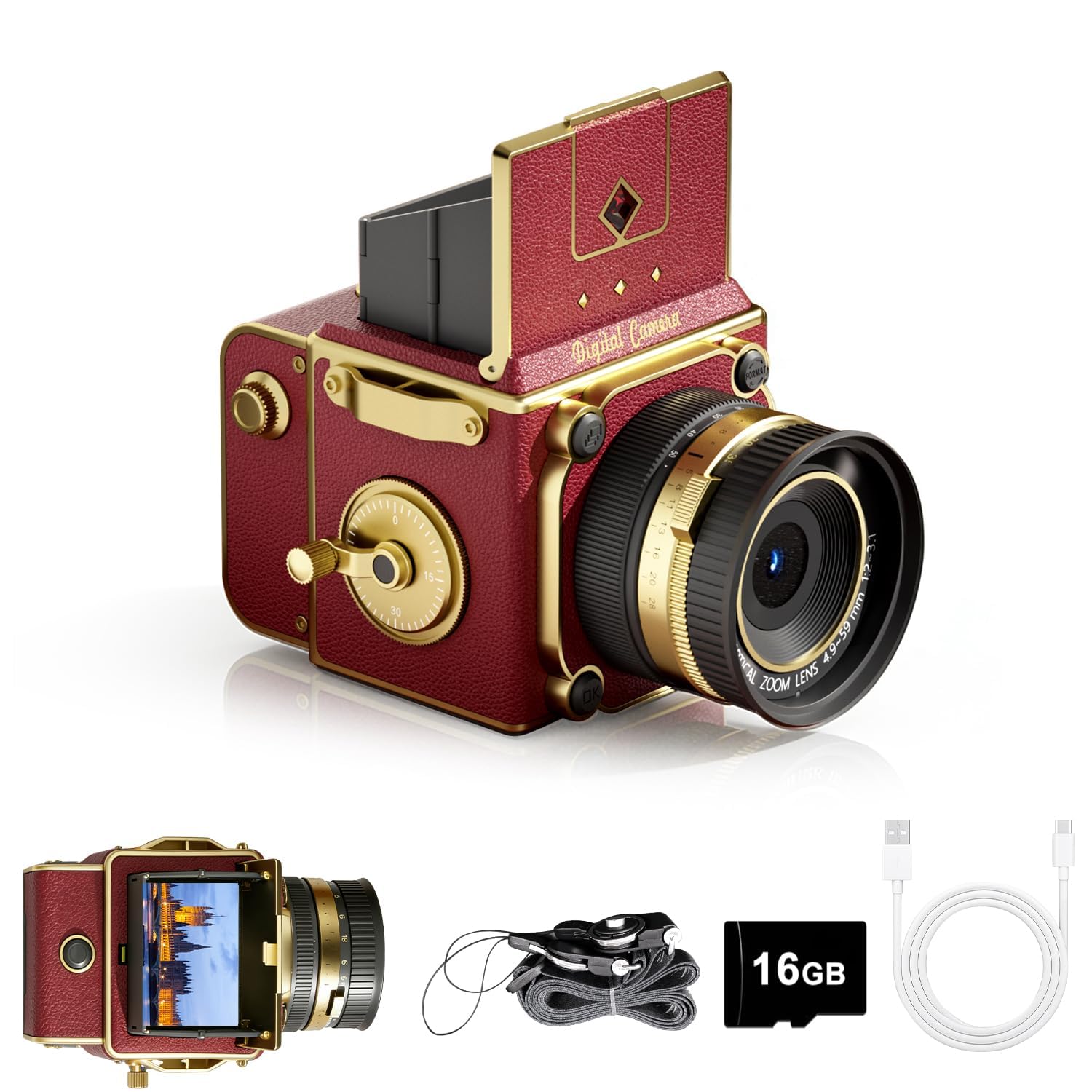
EJXHKNF M31 Retro Camera

81 /100
Studio Score Strong Evidence

Key details

Video
2.7K
Screen
2.4-inch waist-level
Battery
Rechargeable
Optical Zoom
16x digital
Check Price on Amazon

The EJXHKNF M31 is a retro waist-level point-and-shoot that makes ordinary snaps feel like an event. Its fun factor is the headline: a small body, waist-level 2.4-inch screen, and vintage filters encourage a slower, more playful way of shooting. The waist-level posture changes how you frame, turning casual shots into a hands-on ritual. It doesn't chase the everyday all-rounder role of the category's optical-zoom leader, and that tradeoff defines its audience.

Build quality lands above the price point, and the lightweight shell is easy to grab on the way out. Casual stills and 2.7K video beat the modest expectations set by the budget tag, while the included 16GB card and autofocus cover the basics for a first camera. The compact form slips into a jacket pocket, making it an easy companion for day trips.

This suits teens, beginners, and gift-givers chasing retro/Y2K aesthetics for social-media snapshots. The 64MP spec is optimistic; output is closer to a 12MP phone-style file, so it won't satisfy photographers who need true high-resolution results. The M31 is a character-first camera, not a spec-sheet conqueror.

Pros

  • Small retro waist-level body turns casual snaps into a playful, conversation-starting experience.
  • Build quality and finish feel better than the budget price suggests.
  • Casual stills and 2.7K video come out better than the low price implies.
  • Lightweight body is easy to grab and carry for day trips.

Cons

  • Waist-level screen and tiny controls can make precise framing and quick adjustments fiddly.
  • Video playback can lag or jump, and AVI files may need conversion for Mac drag-and-drop.
Our verdict

If you're shopping for a first camera with retro style and low pressure, the M31 is a charming way into the hobby. For daily photography with a real zoom lens, the category's practical all-rounder remains the better fit.

Check Latest Price
6

Screen-Free Shooting

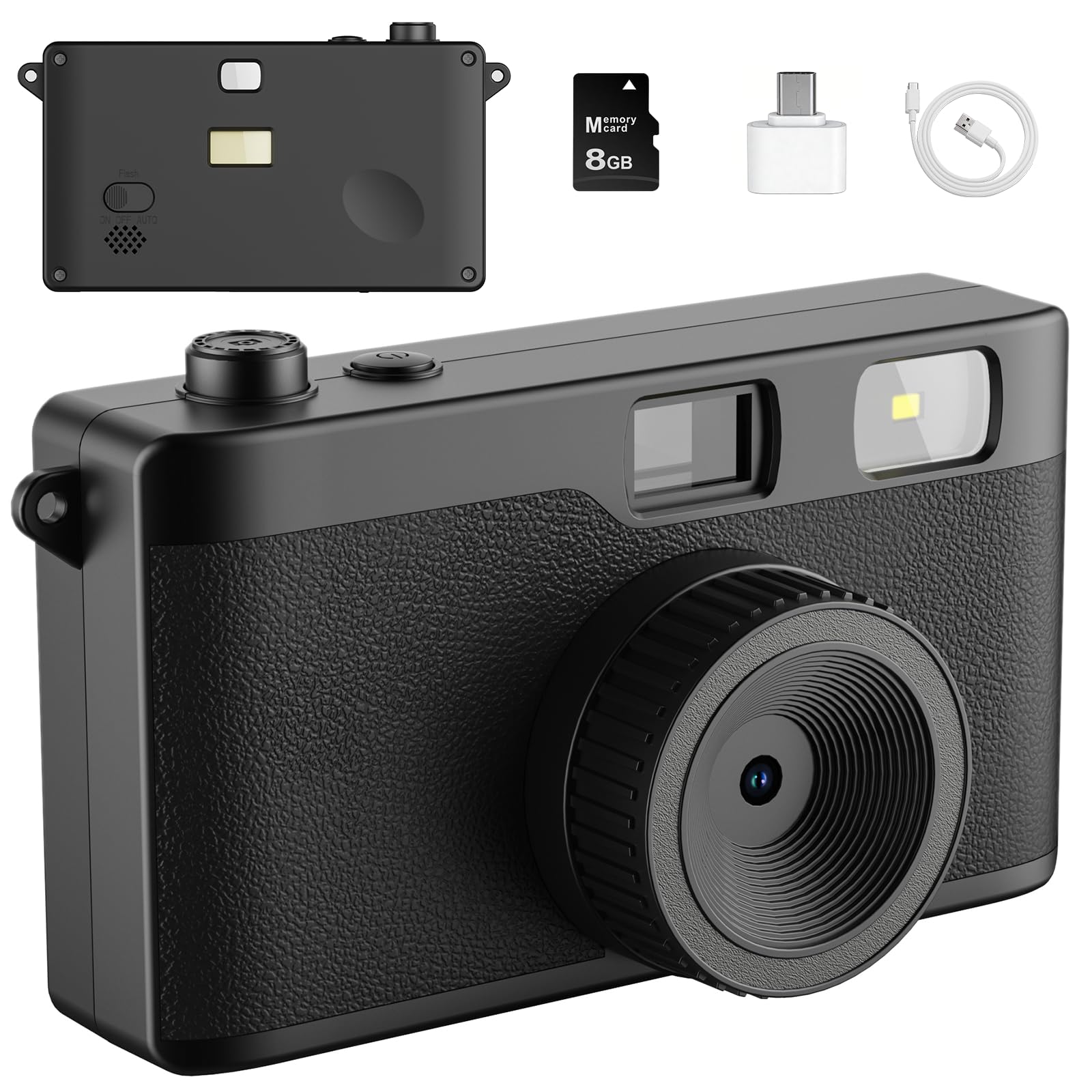
Voxcamy DC053 Screen-Free

92 /100
Studio Score High Confidence

Key details

Video
None
Screen
None
Battery
Rechargeable
Optical Zoom
None
Check Price on Amazon

The Voxcamy DC053 pairs a lightweight vintage shell with a screen-free 12MP stills sensor, so the shooting loop is frame, press, and move on — an intentional reset for camps, weddings, and unplugged trips. Files move to a phone or computer through OTG transfer from the included 8GB micro card. It is a niche stills-only product: video and zoom are not part of the package, which keeps the experience simple but limits the audience. Parents wanting a low-distraction first camera for kids may appreciate the simple controls, while anyone expecting modern point-and-shoot conveniences should choose a rear-screen digicam instead.

Pros

  • Charming vintage shell adds character without bulk, so it's easy to carry anywhere.
  • Lightweight build suits camps, weddings, and trips where a phone can stay packed.
  • Screen-free operation encourages shooting on instinct and reviewing later, like a disposable.

Cons

  • No way to review shots until transfer means you shoot without immediate feedback.
  • Fixed-focus lens locks composition, so framing is determined by moving yourself.
Our verdict

Buy it for camps and parties where the delayed reveal is the point, not for anyone who needs a do-it-all digicam.

Check Latest Price
7

Retro Collectors

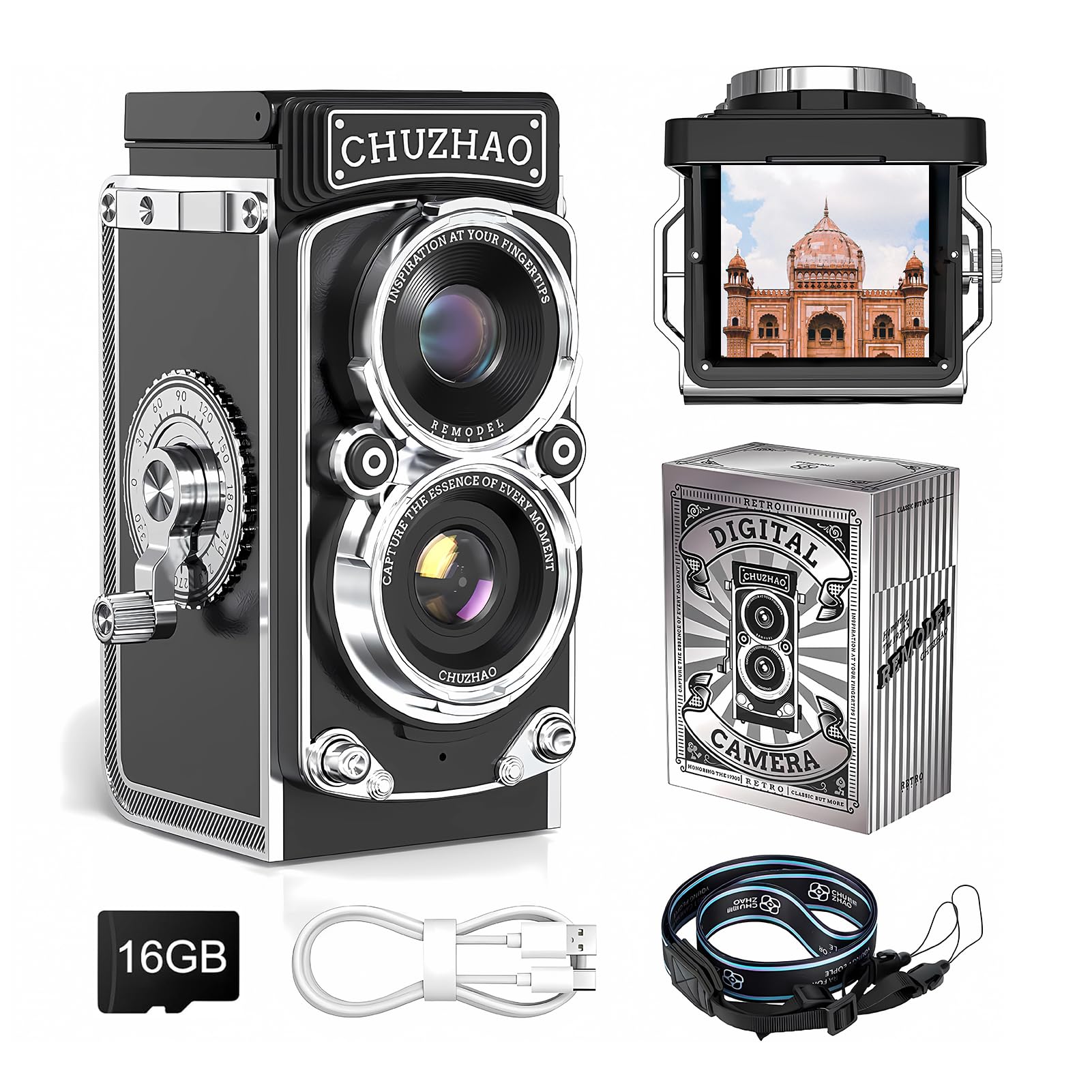
Chocapt M1 TLR Retro

81 /100
Studio Score Strong Evidence

Key details

Video
1080p
Screen
1.54-inch waist-level
Battery
Rechargeable
Optical Zoom
None
Check Price on Amazon

The Chocapt M1 is a conversation-friendly retro camera: a TLR-style body that turns a basic snapshot into a small waist-level ritual. The joystick and top-down finder add a playful layer that suits a collector or gift-buyer mindset, and the lens produces decent casual photos in daylight. Video capture covers short 1080p clips well enough for social sharing. The tradeoff shows up immediately: the waist-level viewfinder is small, exact framing needs patience, and the novelty format keeps composition approximate. That narrow appeal makes it a fitting desk piece for design lovers, but not the camera to pick when one practical all-rounder is the goal.

Pros

  • TLR-style waist-level finder and joystick controls make casual shooting a tactile, playful experience.
  • Daylight snapshots from the 12MP sensor hold up well for social sharing.

Cons

  • Fixed wide-angle lens means changing the shot means moving yourself rather than zooming.
  • Niche toy-camera appeal limits serious use outside casual collector and gift scenarios.
Our verdict

Right for design lovers and gift shoppers who want a desk-worthy TLR-style object and can accept casual image quality.

Check Latest Price

How to Choose

Optical Zoom vs Digital Zoom

Optical zoom uses glass to magnify the scene before the sensor sees it. Digital zoom simply crops the image and enlarges the remaining pixels, which means zooming in past the optical range is like taking a photo and then zooming into it on a phone screen.

A camera like the Kodak Pixpro FZ55 with 5x optical zoom lets you tighten a portrait from across a room without losing detail. A 16x digital-only zoom on a budget camera is a marketing number that produces soft, grainy results after the first few steps.

Sensor and Real Megapixels

Budget retro cameras rarely state their sensor size, and the gap between claimed and actual resolution is the most consistent issue in this category. A 64MP label on a small sensor camera is typically interpolated from a 12-16MP sensor, so the real output is closer to a basic smartphone sensor from a few years ago.

This matters if you plan to crop photos or print larger than a 4x6. For social media posts and small prints, a 13MP or 16MP sensor from a known brand like Kodak is plenty, and the image quality will be more consistent than an inflated spec from an unbranded shell.

Video Resolution and File Format

A 4K label on a budget retro digicam usually means the camera can interpolate a 4K-sized video file, not that it captures genuine 4K detail. Real 4K on this class of camera is effectively marketing fiction, and buyers repeatedly describe the output as closer to 1080p with extra pixels.

File format matters more than the resolution number. Some budget cameras output AVI files that require conversion for Mac playback, while Kodak's 1080p MP4 files open directly in QuickTime and most editors. If you want hassle-free video, choose a camera that records MP4 with a known brand behind it.

Webcam mode is a separate practical feature. If you plan to use the camera for Zoom or Discord, look for a model with explicit webcam support rather than assuming you can repurpose a standard camera's video output.

Battery Type and Runtime

The divide between AA-powered and rechargeable lithium-ion cameras is a real usability fork in the road. AA power lets you buy batteries anywhere on a trip, but budget retro cameras drain them quickly, so you end up carrying a spare pack and a screwdriver.

Rechargeable Li-Ion batteries cost more upfront but are the better long-term value. The Kodak FZ55 and Gavonde WD08 both use USB-C charging, and the Gavonde even includes a spare battery; that two-battery setup eliminates the anxiety of running dry on an afternoon shoot. The tradeoff is that when a Li-Ion cell eventually dies, you are often buying a replacement charger or a new camera rather than swapping in fresh AAs.

Screen and Viewfinder Style

The screen is the control surface that defines the entire shooting experience. A flip screen is a must for selfies and vlogging, and it replaces the awkward mirror-on-the-back approach with actual framing at your eye line.

A waist-level screen, like the one on the EJXHKNF M31, gives you a vintage medium-format feel when you hang the camera around your neck and look down to compose. It is charming and a great conversation starter, but the small screen is harder to see in bright sun and precise framing becomes guesswork.

No screen at all, as on the Voxcamy DC053, is a different kind of experience: you point and shoot without reviewing, which is the closest digital equivalent to a disposable camera. It forces a slower, more intentional way of shooting, but it is easy to miss a shot if your aim is off.

For a practical everyday retro camera, a standard rear screen with good sun visibility is the safest choice. A flip screen adds flexibility without removing that basic functionality, while a waist-level-only screen is best treated as a style feature, not a serious framing tool.

Frequently Asked Questions