8 Best Camera for Concert Photography in 2026: Real Low-Light Reach

The best camera for concert photography balances low-light clarity, optical zoom, and portability — without falling for megapixel hype.

Most 'concert camera' listings lean on 8K and 88MP labels while hiding a small sensor and digital-only zoom. In a dark venue, those numbers do not matter. What matters is sensor size, optical zoom, and autofocus behavior — the parts of the spec sheet that determine whether a stage shot stays sharp or turns into a blurry silhouette.

Budget compacts can handle daylight travel and vlogging, but they hit a wall when the lights drop. A pocketable superzoom gives you reach; an interchangeable-lens camera gives you cleaner high-ISO images and room to grow. Figuring out which trade-off fits your typical show is the difference between a camera you use and one you leave at home.

Pit access and nosebleed seats demand different tools: the first rewards wide apertures and fast autofocus, while the second rewards long optical reach. Matching the camera to the distance you actually shoot is the starting point for a useful purchase.

1

Best Overall

Canon Rebel T7 DSLR

94 /100
Studio Score High Confidence

Key details

Sensor Size
APS-C CMOS, 24MP
Optical Zoom
Two-lens kit, 300mm max
Stabilization / 4K
Full HD 1080p
Check Price on Amazon

Inside the Rebel T7 kit, the 24.1MP APS-C sensor provides the low-light advantage this search centers on. The included 18-55mm and 75-300mm lenses cover everyday wide-angle work and distant stage reach without an immediate second purchase. A larger sensor is what separates a dark-venue photo with recoverable shadow detail from the soft, noisy output of a compact superzoom at high ISO. The 75-300mm lens reaches well beyond the typical kit lens, so even from a distant seat you can frame the performer rather than the whole stage. That is the key difference between the Rebel T7 and the pocket long-zoom options in this set.

The optical viewfinder and physical mode dial keep the shooting flow moving, and the grip is comfortable for hours on a barrier. Battery life covers a full show, so you are not hunting for a charger between opening acts. The menu system is organized for someone learning exposure basics rather than someone who already knows where every setting lives. The dual-lens layout also encourages switching between a wide perspective and a compressed telephoto shot, which is a useful way to learn how focal length changes the look of a stage.

This is the pick for a first-time concert photographer who wants one kit to learn on and grow from. The interchangeable lens mount leaves a clear upgrade path to a fast prime like a 50mm f/1.8, but the 9-point AF and 75-300mm lens are dated, so dim stage work may need high ISO or a faster prime. Anyone expecting pocket carry should look at the compact long-zoom in this set; this camera's size is the price of sensor area and reach. For the buyer who wants clean images more than a small jacket pocket, that is an acceptable exchange.

Value here is measured in avoided second purchases. A concert newcomer can buy this kit, attach the 75-300mm for the main set, and switch to the 18-55mm for walk-around shots without carrying two camera systems. A separate telephoto lens for a mirrorless body would push the total outlay higher, while this bundle keeps the body and both lenses in one premium-priced package. That makes the whole kit feel like a foundation rather than a starter compromise.

The farther you sit from the stage, the more useful this kit becomes. A front-row shooter can get by with a shorter lens, while a balcony seat is where 300mm turns an unreadable distance into a usable photo. That is the boundary where the dual-lens kit stops being a convenience and becomes the reason to choose this camera over a body-only mirrorless option.

Pros

  • APS-C sensor keeps high-ISO shots usable in dim venues
  • Dual-lens kit delivers both wide-angle and 300mm telephoto reach without a second purchase
  • Beginner-friendly controls and guided menu make a first DSLR approachable
  • Interchangeable lens mount leaves an upgrade path to faster primes for darker stages

Cons

  • 4K video and modern eye-detection AF are absent from this body
  • Quality control can vary between units, so a quick check of key functions after unboxing is worthwhile
Our verdict

For a first-time concert shooter, the Rebel T7's dual-lens kit is the direct answer: APS-C sensor, 75-300mm reach, and an upgrade path into faster glass.

Check Latest Price
2

Best Compact Superzoom for Concerts

Panasonic LUMIX ZS99

85 /100
Studio Score Strong Evidence

Key details

Sensor Size
1/2.3-inch CMOS, 20MP
Optical Zoom
30x Leica, 24-720mm
Stabilization / 4K
OIS, 4K UHD
Check Price on Amazon

The Panasonic LUMIX ZS99 packs a genuine 30x Leica zoom into a body small enough for a coat pocket, which is what separates it from the APS-C dual-lens kit on the Canon side. The 24-720mm range covers wide stage views and tight performer close-ups without changing lenses. That reach is the reason it fits a concert bag that otherwise would have to hold a camera body plus telephoto glass.

The 3-inch tilt touchscreen and built-in EVF make framing easy in daylight and indoors. Optical stabilization helps hold the long end steady in reasonable light, and 4K video/photo modes extend the camera's usefulness beyond stills. For daylight sightseeing and indoor events with decent stage lighting, reach, portability, and video flexibility come together in one pocketable package.

This is the right fit for a concertgoer who wants a usable photo of the stage from a distant seat and wants to leave the camera bag at home. The 1/2.3-inch sensor limits low-light quality, and long-zoom shots can soften in dark venues, so a buyer who needs clean high-ISO output or shallow depth-of-field is better served by the Canon DSLR with its larger sensor and telephoto kit.

Pros

  • The 30x Leica zoom reaches 720mm, so distant stages and performers are within range from far seats.
  • The body stays pocketable while covering 24-720mm and recording 4K, a combination rare among long-zoom compacts.
  • Daylight and indoor event shooting are both workable, giving one camera travel and concert duty.

Cons

  • The menu/UI can feel dated compared with modern touch interfaces.
Our verdict

For a distant-seat concertgoer who wants 30x reach without a camera bag, this compact superzoom is the right fit.

Check Latest Price
3

Best Entry Mirrorless

Canon EOS R100

90 /100
Studio Score High Confidence

Key details

Sensor Size
APS-C CMOS, 24MP
Optical Zoom
18-45mm kit lens
Stabilization / 4K
IS, 4K, 6.5fps
Check Price on Amazon

The R100 is the most compact route into Canon's RF mirrorless system, pairing Dual Pixel CMOS AF and 4K video with a 24.1MP APS-C sensor. The 143-zone autofocus tracks moving performers in low light, and 6.5 fps burst capture covers most stage moments. The RF mount opens a catalog of Canon RF and RF-S lenses, so the body can evolve from a casual 18-45mm kit into a concert setup without being replaced.

At close quarters and crowd level, the kit lens delivers sharp images while keeping the combined weight low enough for a night on your shoulder. The APS-C sensor keeps usable high-ISO output in dim venues, a step above the small-sensor compacts in this comparison. The small body also fits a padded insert or messenger bag rather than demanding a dedicated camera backpack.

This is a beginner mirrorless for someone who wants modern autofocus and a compact body, not a one-box lens solution. Distant concert subjects require adding an RF-S telephoto lens, which raises the total cost; the dual-lens DSLR kit in this comparison already has that reach in the box. Buyers who prefer an optical viewfinder DSLR will feel more at home with that DSLR, while the R100's EVF keeps the package smaller.

Pros

  • Sharp images from a compact APS-C body that leaves room in a small bag.
  • Modern Dual Pixel AF with 143 zones tracks moving subjects.
  • 4K video and 6.5 fps stills cover stills and clips in one small body.
  • Strong entry point for a beginner mirrorless system with a clear upgrade path.

Cons

  • Quality control can vary; some units arrive with screen faults or require an exchange.
  • The included 18-45mm zoom is a short-range starter; long reach is not in the box.
Our verdict

The R100 fits a concert photographer who plans glass rather than expecting one kit to cover every seat; the body and autofocus are ready, and the lens roadmap is yours.

Check Latest Price
4

Best Budget Compact with Optical Zoom

Kodak Pixpro FZ55

89 /100
Studio Score Strong Evidence

Key details

Sensor Size
1/2.3-inch CMOS, 16MP
Optical Zoom
5x optical, 28-140mm
Stabilization / 4K
Full HD 1080p
Check Price on Amazon

The Pixpro FZ55 pairs a genuine 5x optical zoom with a 16MP CMOS sensor in a compact body, so budget buyers get real framing flexibility without carrying an interchangeable-lens kit. The 28-140mm equivalent range covers wide group shots through modest close-ups, something other budget compacts handle with digital-only zoom. The rechargeable Li-ion battery keeps the body light enough for a jacket pocket.

Menus and controls are approachable enough for first-time users, and the built-in flash does solid work at close range, which shows up in well-exposed selfies and group shots. The 2.7-inch LCD keeps composition simple, and the zoom control falls naturally under the thumb. The retro-styled body and small footprint are a big part of its everyday appeal, and 1080p video mode covers casual clips when a phone is not enough.

This camera suits budget shoppers who want a low-stress compact for daylight travel and nostalgic everyday snapshots, not concert photographers who need clean high-ISO output from a dark venue or long telephoto reach. Optical zoom is a genuine advantage at this price, but the sensor is best suited to daylight scenes. Buy through a return-friendly retailer, since individual examples can behave differently.

Pros

  • Budget buyers get a true 5x optical zoom and strong overall quality for the price.
  • Easy controls and a capable flash make selfies and close-range shots simple.
  • The compact retro-styled body is a pleasure to carry for everyday outings.

Cons

  • Battery charge life can be inconsistent, and a particular pack may drain quickly or stop accepting a full charge.
  • Individual units can shut down without warning or arrive non-functional, so buying from a return-friendly retailer is wise.
Our verdict

A budget compact with real optical zoom and easy carry size — a natural match for travel and everyday snapshots.

Check Latest Price
5

Best Long-Zoom Budget Bridge

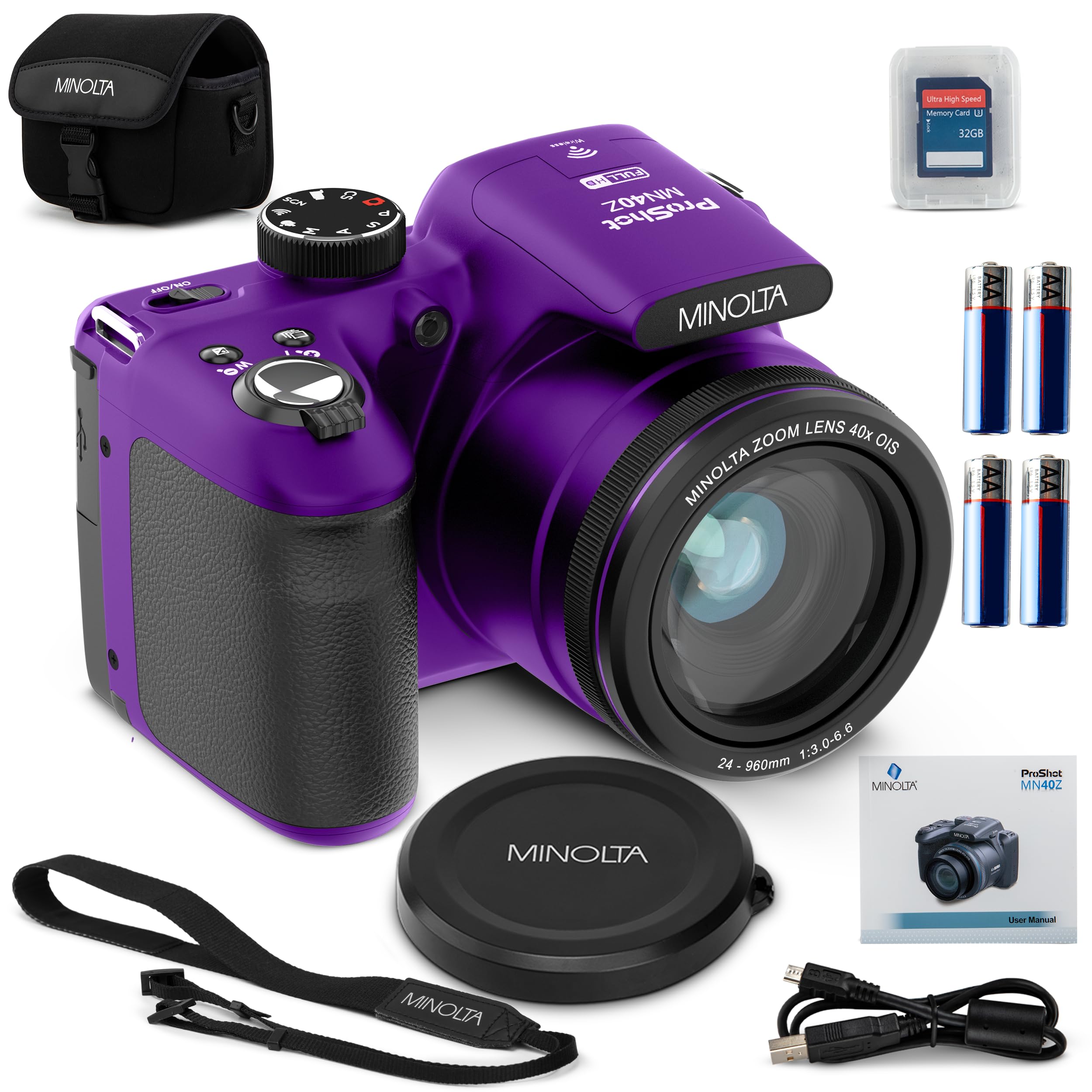
Minolta ProShot MN40Z

79 /100
Studio Score Established

Key details

Sensor Size
—
Optical Zoom
40x optical zoom
Stabilization / 4K
OIS, Full HD
Check Price on Amazon

The ProShot MN40Z puts genuine 40x optical zoom at a mid-range price, a reach that would require a costly separate lens on a DSLR. Compared with the pocketable 30x superzoom in this set, the Minolta adds longer range and a more secure bridge-camera grip, while demanding a bit more bag space.

At a daylight festival, that zoom pulls in stage banners and lawn-seat crowd shots, and the optical stabilizer keeps handheld frames steady at full extension. The 20MP sensor turns out clean, usable color in good light, and the body stays light enough for an all-day event bag.

This is the call for budget shooters whose concert calendar leans toward outdoor amphitheaters, sports fields, and early-evening sets. Dark indoor clubs and fast action in dim light sit outside its envelope: the autofocus can hunt at full zoom, and the AA battery setup means no included rechargeable pack.

💡 Carry spare rechargeable AA cells, since no charger or battery is included.

Pros

  • Genuine 40x optical zoom reaches distant stages without a costly DSLR telephoto lens.
  • Daylight picture quality and overall value suit outdoor event budgets.
  • Compact bridge body is easy to carry through venues and onto trails.

Cons

  • AA battery operation relies on cells you supply, and a long event can drain them quickly.
  • Autofocus can hunt at full zoom, which may soften distant fast-moving subjects.
Our verdict

For daylight and outdoor event shooting, the MN40Z's reach-to-price ratio is the best reason to buy; leave it at home when the venue turns off the lights.

Check Latest Price
6

Budget Vlogging Beginners

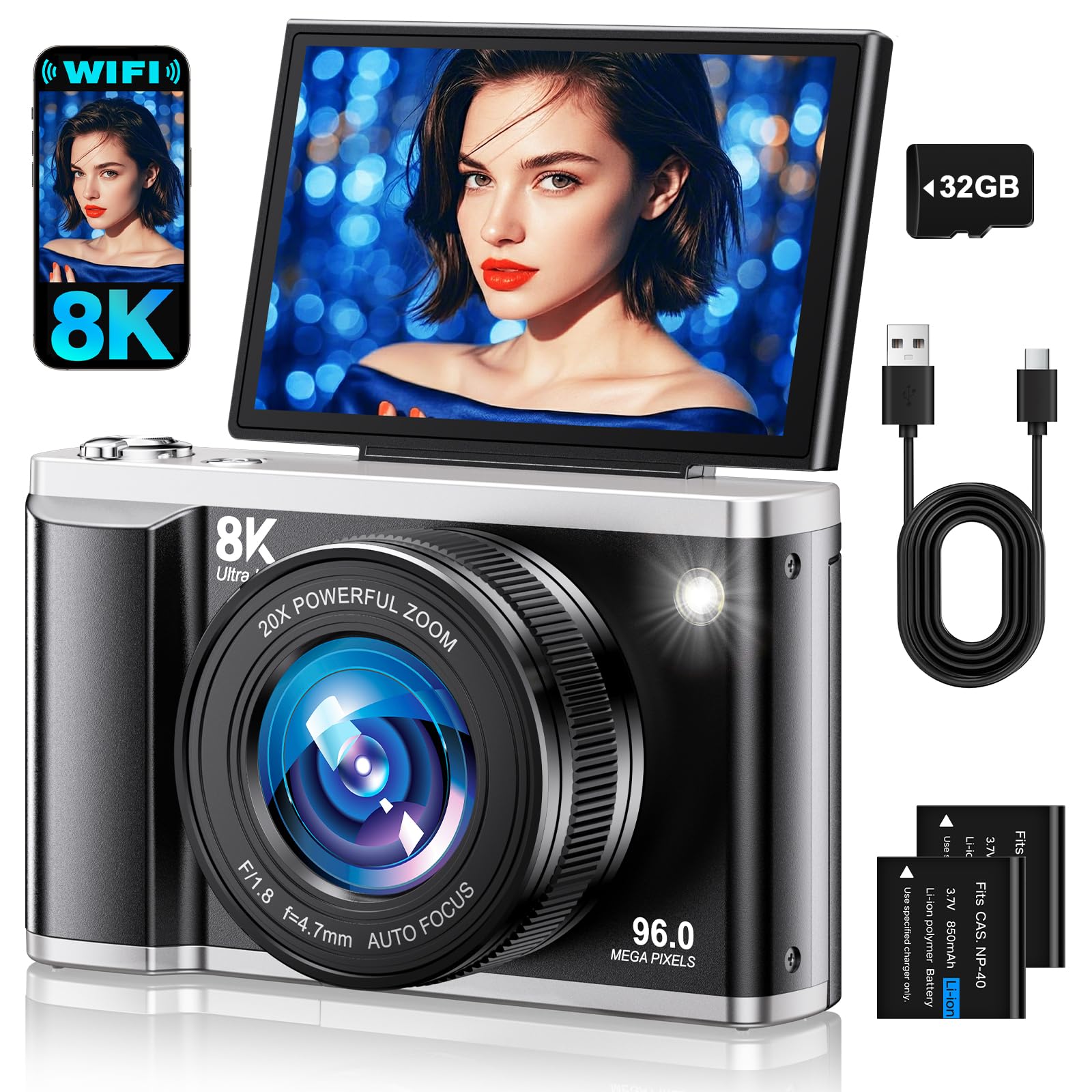
AUREAPIX DC105 8K

84 /100
Studio Score Strong Evidence

Key details

Sensor Size
1/2.3-inch CMOS, 96MP
Optical Zoom
20x digital only
Stabilization / 4K
8K (marketed)
Check Price on Amazon

The AUREAPIX DC105 bundles a 180-degree flip LCD, WiFi, and a full starter kit at a budget price, which makes it a low-friction entry point for vloggers and selfie creators. Autofocus and image quality hold up for well-lit scenes, so the learning curve stays gentle.

The 8K headline is marketing; the 20x zoom is digital, not optical. Add a 1/2.3-inch sensor and this camera sits firmly in the casual daytime category rather than the concert camera category — a boundary that matters when the stage lights drop.

Pros

  • Flip screen, WiFi, and autofocus make self-framing and phone transfer simple for new users.
  • Complete starter bundle covers batteries, charger, and accessories out of the box.
  • Image quality supports daylight and well-lit indoor content.

Cons

  • Distant subjects soften because the 20x zoom crops digitally rather than adding optical reach.
  • In a dark venue, the compact sensor's noise limits usable stills.
Our verdict

This is a sensible buy for a first-time vlogger who wants a selfie-friendly bundle for daylight content; anyone chasing distant stage shots in low light needs an optical-zoom or larger-sensor camera.

Check Latest Price
7

Selfie and Vlogging

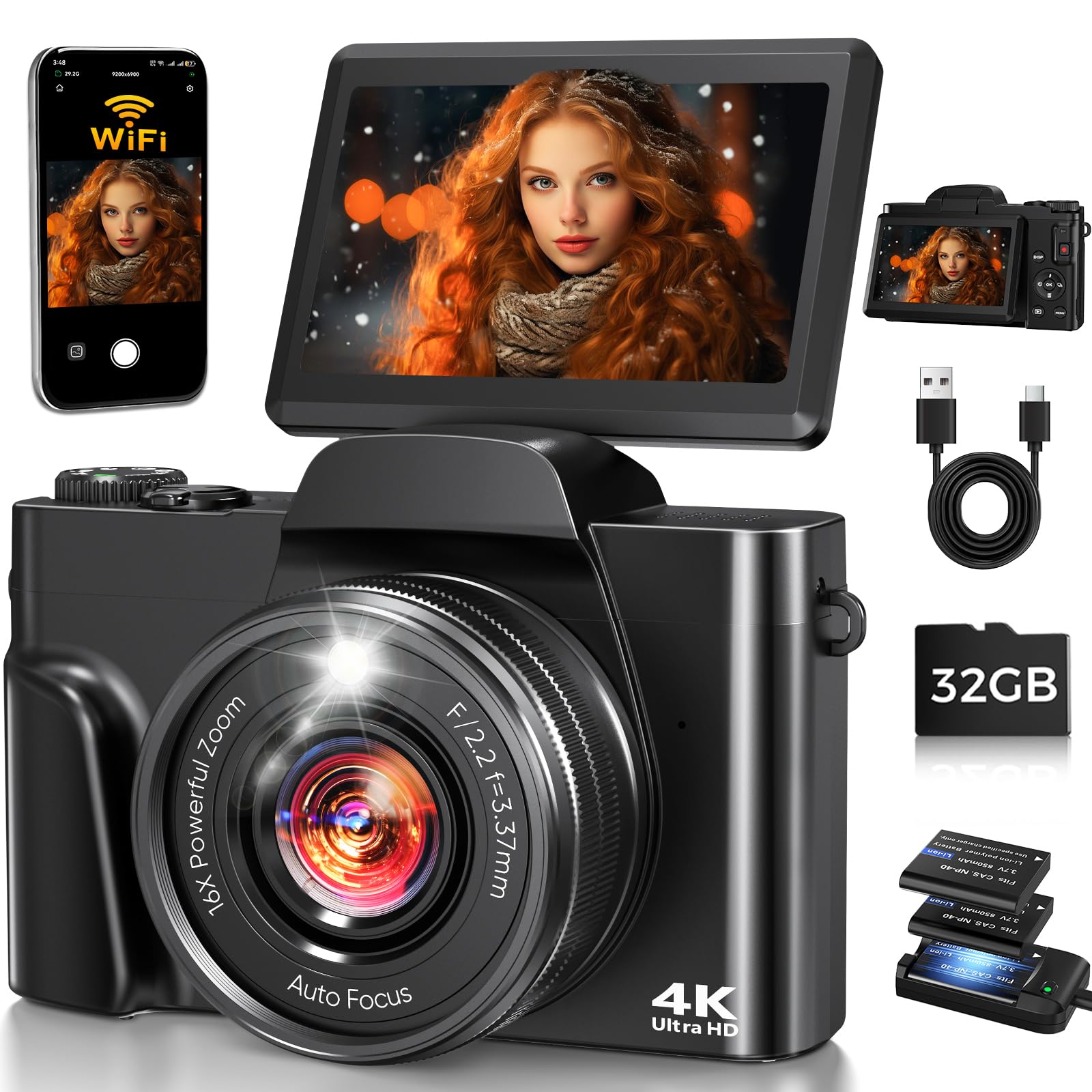
FACLAM DC103 4K

87 /100
Studio Score Strong Evidence

Key details

Sensor Size
1/3.2-inch CMOS, 64MP
Optical Zoom
16x digital only
Stabilization / 4K
4K UHD 2160p
Check Price on Amazon

The FACLAM DC103 is a ready-to-run vlogging starter: the 180-degree flip screen frames your face, 4K video handles casual clips, and the included two batteries plus a 32GB card remove the usual setup cost. No optical zoom and a small sensor are the boundaries here; the 16x zoom is digital only, so distant subjects lose detail quickly. It fits a beginner who wants a low-cost selfie and travel camera, not a buyer chasing clean concert shots from the seats.

Pros

  • Flip screen and 4K make self-recording and casual vlogs easy for a first-time camera owner.
  • Included two batteries and a 32GB card give a complete starter setup without extra purchases.
  • Budget-friendly picture quality holds up for bright travel snapshots and social posts.

Cons

  • In low-light venues, the small sensor can leave stills looking soft.
  • At far stage distances, the digital-only zoom quickly runs out of usable detail.
Our verdict

Only pick the DC103 for casual selfies and travel clips; concert buyers should look at an optical-zoom camera or an APS-C kit instead.

Check Latest Price
8

Casual Travel Vlogging

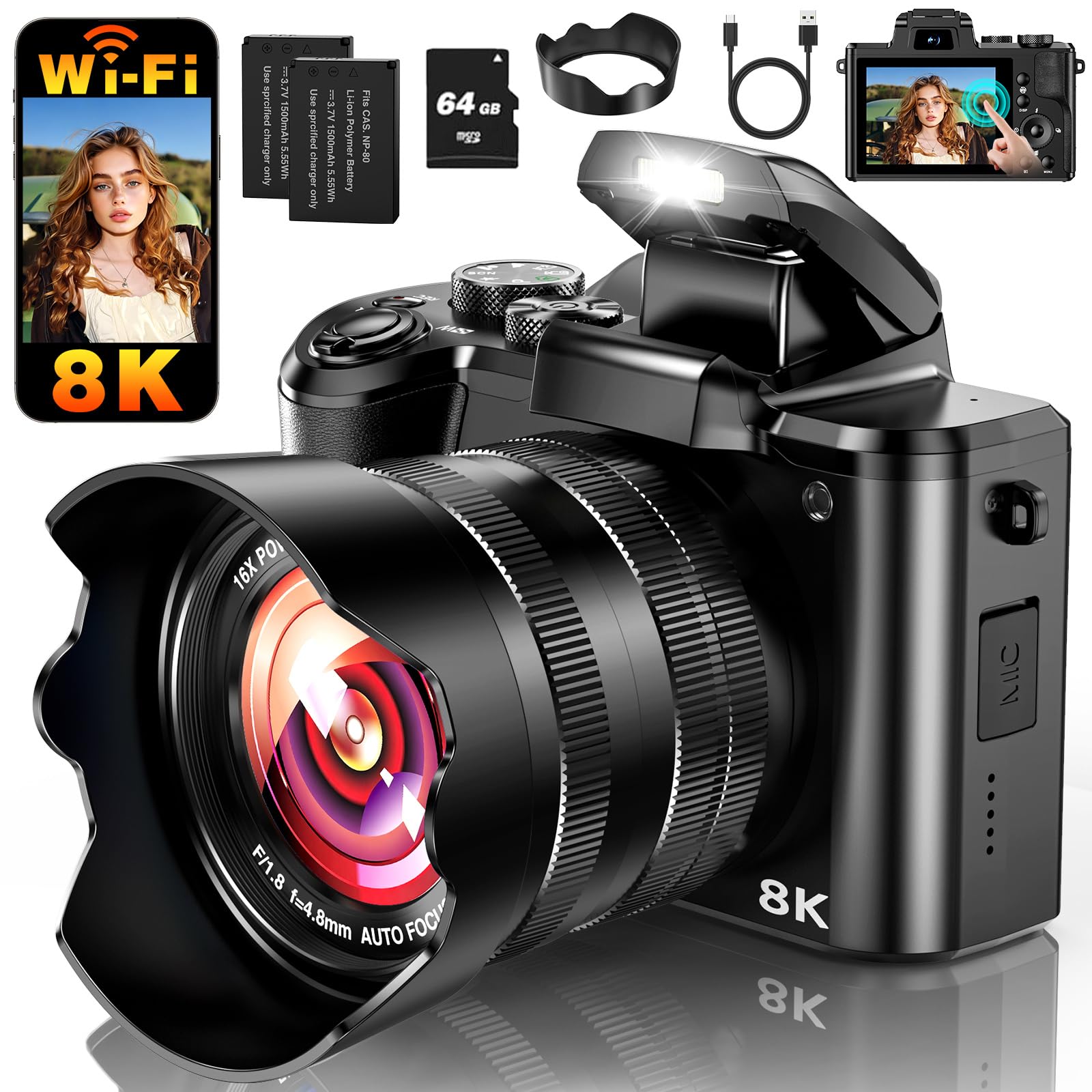
toberto DC226 8K

86 /100
Studio Score Strong Evidence

Key details

Sensor Size
1/2.7-inch CMOS, 88MP
Optical Zoom
16x digital only
Stabilization / 4K
8K (marketed)
Check Price on Amazon

Touchscreen framing, WiFi transfer, and a complete accessory bundle make this an easy first camera for travel and vlogging. The 16x zoom covers daytime scenes, and the compact body is comfortable in hand. Keep expectations in check: the 8K label overstates what this 1/2.7-inch sensor can deliver, so it is not a true 8K production tool. Those same sensor limits put it below the main concert recommendations in this guide; it works for bright, relaxed settings rather than the demanding conditions of concert shooting.

Pros

  • Comfortable build and strong picture output for a budget-conscious first camera.
  • Accessory bundle and battery life add value for someone starting from zero.
  • Small body and light weight make it easy to pack for travel.

Cons

  • Distant stage subjects can exceed what the 16x zoom holds at the long end.
  • Dark venues can push the small sensor past its clean high-ISO range.
Our verdict

If your concert needs are limited to a well-lit outdoor stage or a casual backup camera, this compact bundle can handle it. Dark indoor venues and distant performers belong to a larger-sensor kit.

Check Latest Price

How to Choose

Sensor Size

Larger sensors use bigger individual pixels that capture more light before noise sets in. A 1/2.3-inch sensor in a budget compact needs high ISO in a dark venue, which produces visible speckle and soft detail. An APS-C sensor in a DSLR or mirrorless carries about seven times the area, so ISO 3200 remains much cleaner.

Optical Zoom and Reach

Optical zoom physically moves lens elements, so it preserves the sensor's full resolution at distance. Digital zoom crops and enlarges the same image, which is why distant stage shots from digital-only zooms turn into smudges. A 300mm telephoto lens on an APS-C camera reaches a typical arena stage, while a compact with 30x zoom covers the same distance but with a smaller sensor behind it.

Lens Aperture Speed

Aperture is the opening that lets light reach the sensor. A kit lens at f/5.6 at 300mm is darker than a fast prime at f/1.8, so the camera compensates with a longer shutter speed or higher ISO. In a concert, that means either motion blur or more noise. Pairing a fast fifty-millimeter prime with a DSLR is often the cheapest way to get clean indoor shots, but you lose zoom reach.

Autofocus in Low Light

Low-light autofocus depends on the focusing system, not the megapixel count. Entry DSLRs with a small number of phase-detect points can hunt when the stage is dim and contrast is low. Mirrorless cameras with on-sensor phase-detect points usually lock onto faces and eyes more confidently. If your subject moves across the stage, AF tracking speed matters more than total pixel resolution.

Stabilization and Burst

Image stabilization helps keep static shots crisp when shutter speeds drop, but it does not freeze a moving guitarist. To stop motion you need a fast shutter speed, which means a wider aperture or higher ISO. Burst shooting gives you a few frames to catch a peak expression, and 4K video lets you pull stills if the camera supports frame grabs. Know which of those matters for your typical show.

Frequently Asked Questions