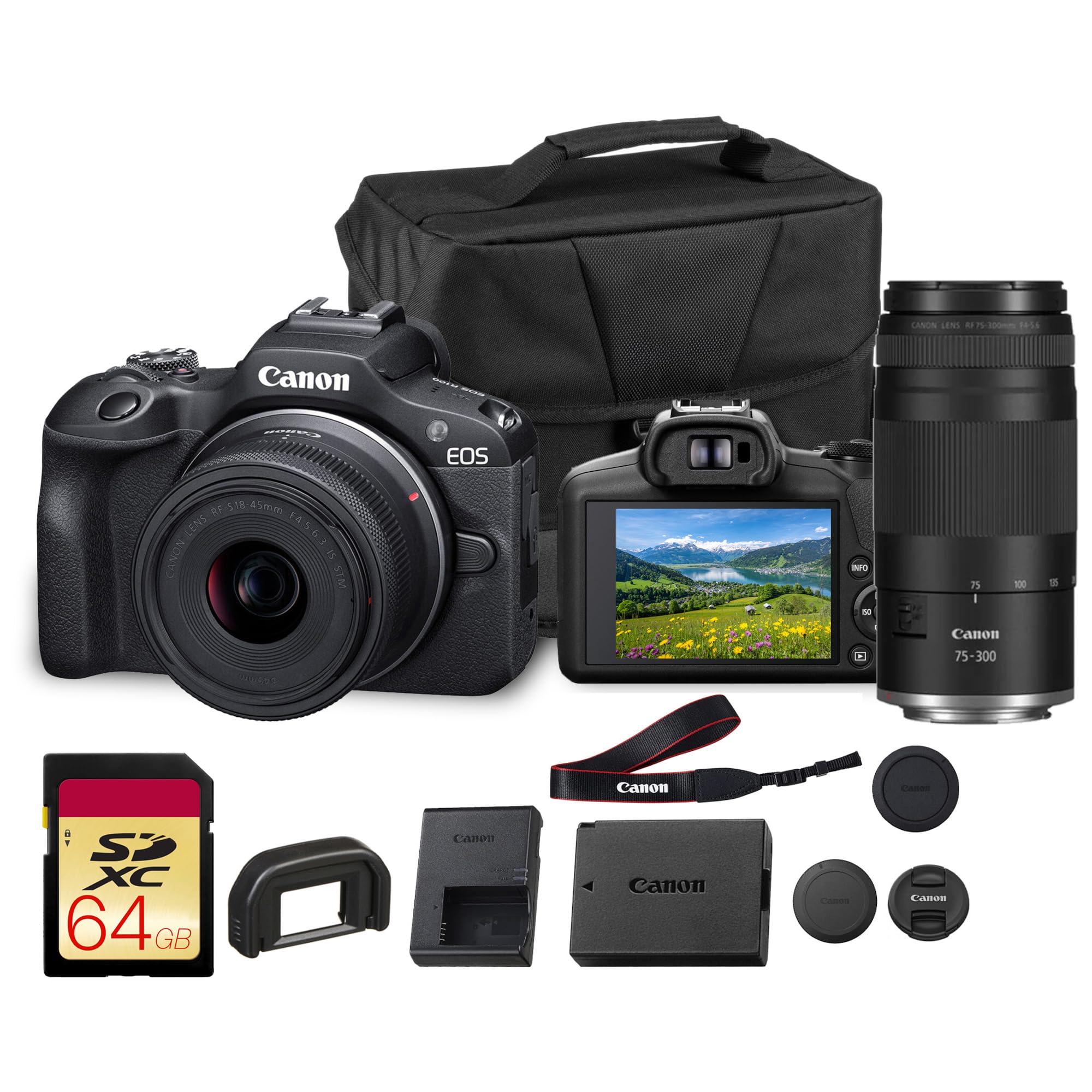
Best Overall
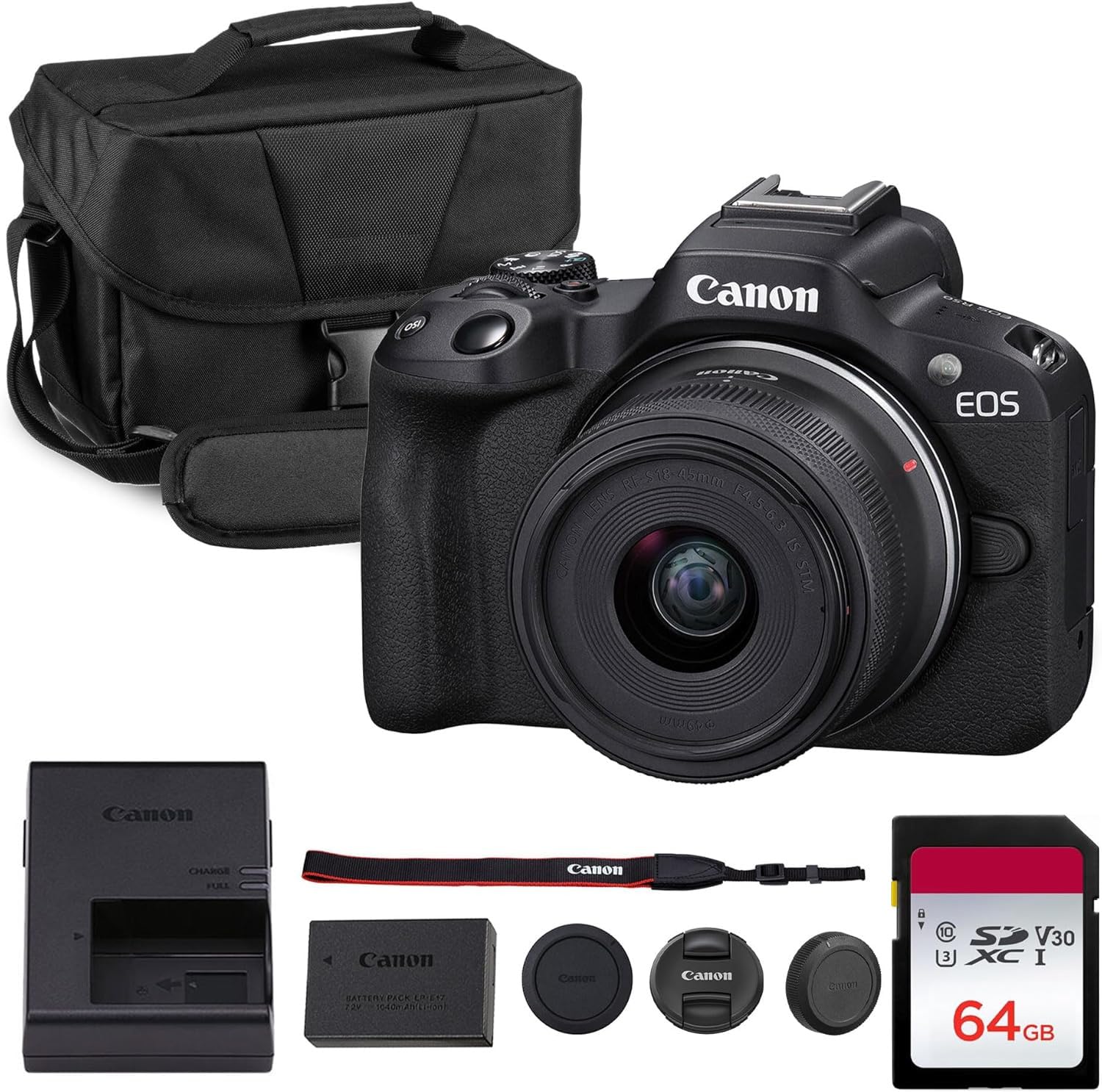
Canon EOS R50 Mirrorless Kit
Key details
- Sensor
- 24.2MP APS-C CMOS
- Kit Lens
- 18-45mm f/4.5-6.3 IS
- Autofocus
- Dual Pixel AF II eye-detect
- Burst Speed
- 6 fps
The R50's Dual Pixel CMOS AF II tracks a subject's eye closely enough to keep portraits sharp even when the pose shifts, and the oversampled 4K output gives hybrid shooters a clean video path without a full-frame investment. At typical portrait distances, eyes stay locked even when the subject tilts their chin; the AF system is a generation ahead of the contrast-detect approach found in some budget mirrorless bodies. The vari-angle touchscreen moves the focus point with a tap, separating this body from the fixed-screen entry RF model in this set. That combination matters more than pixel count: a portrait that lands on the eye reads as sharp, while one that misses by a few centimeters does not.
Body and kit lens are light enough for a walk around a park or an extended indoor session, and the touchscreen flips out for low-angle work. The 24.2MP sensor captures detail that allows light cropping after a portrait set, and the camera responds to focus changes quickly enough to keep a moving subject framed without menu diving. Owners who want a single carry-everywhere camera will appreciate that the body doesn't demand a second grip or a heavier strap. The kit zoom is fine at its wider positions for group shots and environmental portraits, which gives a new owner room to learn composition before adding lenses.
This is for portrait and hobbyist shooters who want current-generation AF without going full-frame. The 18-45mm kit lens is a sensible starting point, but anyone serious about shallow depth of field should budget for an affordable fast prime; the RF system has a clear upgrade path. It also suits vloggers who want one camera for stills and 4K clips, since the vari-angle screen faces forward when needed. New mirrorless users get an interface that explains setup choices without forcing them into menus before every shot.
At a mid-range price, the bundle concentrates the features portrait buyers actually use: eye-detect AF, a vari-angle touchscreen, and oversampled 4K. It sits above the entry-level RF body in the same lineup, which saves money but uses a fixed non-touch screen. The price difference pays for the more useful controls and screen on the R50. For someone moving from a smartphone, the body also keeps the shooting process direct: tap the screen to choose the eye, take the shot, review it, adjust. This is the part that separates a growing system from one that gets in the way.
Paid-event pros who need weather sealing and dual card slots are outside this camera's brief; that work belongs to the heavier enthusiast DSLR in this set, which trades the newer eye-detection AF for an optical viewfinder and faster burst rates. For portrait-oriented buyers, the R50's combination of AF generation, touch control, and compact size is the better fit. The DSLR will still produce strong stills, but its AF system is not in the same class for one-on-one portraiture where eye placement is critical.
Pros
- Eye-Detection AF II keeps a subject's eye in focus while composing portraits.
- The 24.2MP APS-C sensor delivers sharp, natural-looking portraits.
- Small body and kit lens are light enough for long carrying sessions.
- Bundle package offers strong value for the included body and lens.
- Operating behavior is steady during everyday shooting.
Cons
- The 18-45mm kit lens is slow at the telephoto end, so indoor portraits lean on higher ISO.
- Bundled SD card can stop 4K recording mid-clip; a faster card should be added.
For portrait shooters who want current-generation AF and 4K without full-frame bulk, the R50 sets the reference point for this category.