6 Best Camera for Car Photography 2026: Sharpness over Megapixels

Find the right camera for car photography by separating megapixel hype from the sensor size, autofocus, and lens system that actually keep shots sharp.

Budget cameras advertising 48MP and 4K video look like a steal, but those numbers do not guarantee a sharp car photo. A small sensor and digital zoom limit how much detail you can actually capture, especially at a car meet or track. Sensor size, lens quality, and autofocus determine whether those shots stay crisp.

A 24MP camera with a larger sensor and interchangeable lens will almost always produce more usable car photos than a 48MP pocket compact with a fixed digital zoom. The distinction becomes obvious when you try to pull detail from a distant shot or shoot in low garage light.

The smart buying move is to match the camera to how you actually shoot: static show cars, detail close-ups, car-culture vlogs, or track-side action. That choice affects sensor size, autofocus, and lens system far more than the megapixel number on the box.

1

Best Overall

Canon EOS Rebel T7 DSLR Kit

93 /100
Studio Score High Confidence

Key details

Lens System
Interchangeable EF/EF-S
Sensor Size
APS-C 24.1MP
Video Features
1080p Full HD
Check Price on Amazon

Canon's Rebel T7 kit wraps a 24.1MP APS-C CMOS sensor in an interchangeable-lens DSLR body with an optical viewfinder and full manual exposure controls. The EF-S 18-55mm IS II lens covers the walk-around range for car shows, garage details, and portraits, and the sensor holds enough shadow detail to work with a car's body lines before noise becomes a factor. This is the one camera in the set that grows with your lens collection rather than forcing a fixed optic.

Use the optical viewfinder for a composed, deliberate session at a car meet or in a driveway. Stationary subjects play to the T7's strengths, and the optical viewfinder gives you a clear, direct look at the scene without battery-draining live view. If you are used to framing on a phone, the viewfinder is the better tool with this camera.

Beginners who want a real interchangeable-lens camera, and car photographers who shoot parked cars, details, and portraits, are the buyer this DSLR serves best. The EF/EF-S mount leaves room to add a 50mm prime or a wider zoom later, which matters once the kit lens starts feeling limiting. Autofocus is slow in live view and Wi-Fi setup can be finicky, but neither stops static and detail car photography.

The 24MP sensor keeps enough resolution for crops of a door handle or emblem, and the beginner-friendly creative modes explain exposure choices as you shoot. Combined with the optical viewfinder, that makes this the most instructive still-camera option in this group for someone starting out in automotive photography.

Pros

  • 24MP APS-C sensor with kit lens delivers sharp, printable stills for car-show photography.
  • Beginner-oriented controls and creative modes make manual exposure approachable.
  • Complete body-plus-lens kit is solid value as a first interchangeable-lens camera.
  • Body quality and ergonomics suit regular carrying at meets and garage sessions.

Cons

  • Burst rate tops out at 3 fps, so the camera is not for capturing racing sequences.
  • Movie-mode autofocus is limited for tracking moving cars.
Our verdict

For a beginner who wants to learn car photography on a system that can grow, the T7 kit delivers where fixed-lens compacts can't: interchangeable optics, APS-C image quality, and manual control at a mid-range price.

Check Latest Price
2

Best Budget Car-Meet Camera

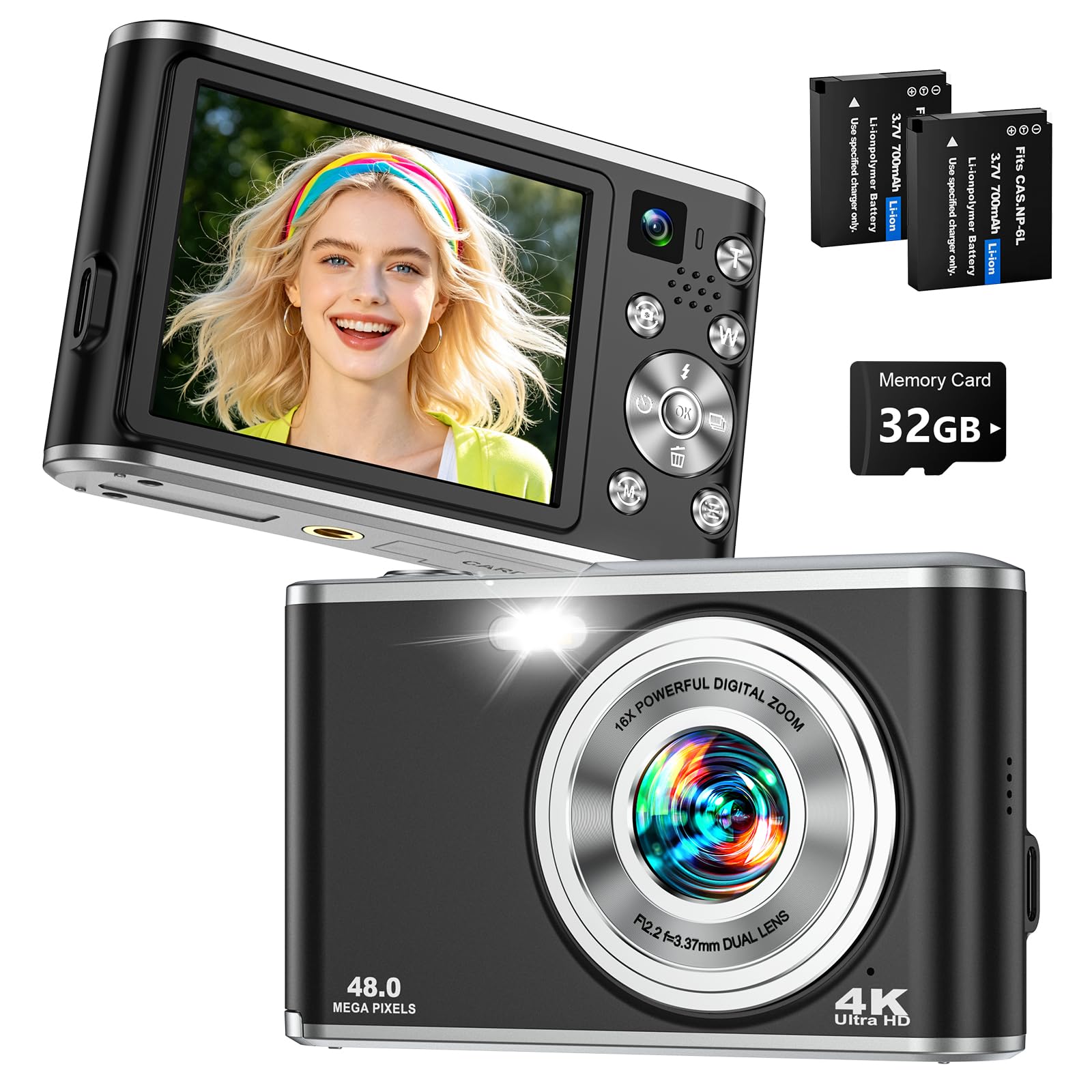
Duluvulu 4K Digital Camera

85 /100
Studio Score Strong Evidence

Key details

Lens System
Fixed 16x digital
Sensor Size
1/3-inch 48MP
Video Features
4K UHD
Check Price on Amazon

The Duluvulu 4K compact is a grab-and-go companion for car-show walkarounds, pairing a 180° flip screen with simple point-and-shoot operation. The kit includes a 32GB card and two batteries, so the essentials are covered before the first outing. That flip screen is a practical aid for framing hood badges and wheels without crouching. The 48MP sensor and 16x zoom are listed prominently, but the overall package remains firmly at the budget end of the compact market.

Budget-conscious car-show attendees who stick to daytime displays fit this camera best; the flip screen helps with low-angle shots of bumpers and interiors, and the compact body slides into a bag without planning. The small sensor and digital-only zoom cap low-light and telephoto detail, and autofocus is better suited to static displays than moving cars. It is a reasonable first camera for someone learning framing and basic exposure before graduating to a larger-sensor system.

Pros

  • Clean stills at this price for close-range car-show shots.
  • Bundled 32GB card and second battery cover a full day of shooting without extra purchases.
  • 180° flip screen makes selfie framing and low-angle vehicle details easier.

Cons

  • Longer video clips are stored as roughly 10-minute files, which can interrupt continuous walkaround footage.
  • Occasional early shutdowns or power-on issues have been noted, so testing the camera soon after arrival is worthwhile.
Our verdict

For daytime car-show photographers, the Duluvulu delivers a complete kit in one box, with the flip screen and spare battery making it easy to stay out shooting.

Check Latest Price
3

Best for Car Content Creators

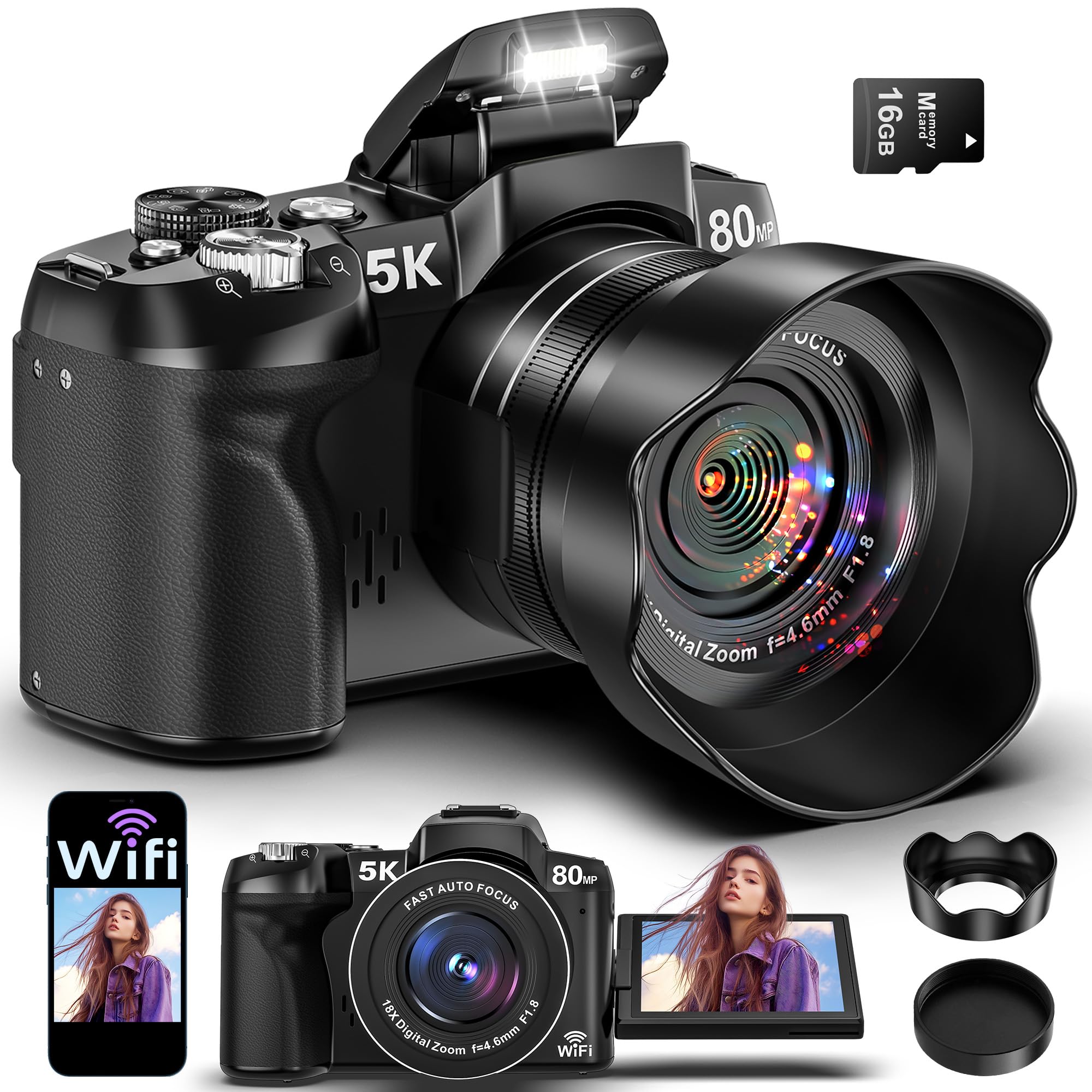
Notoldpine 5K WiFi Camera

81 /100
Studio Score Strong Evidence

Key details

Lens System
Fixed 18x digital
Sensor Size
1/2.5-inch 80MP
Video Features
5K UHD
Check Price on Amazon

The Notoldpine puts 5K UHD video, 80MP stills, and Wi-Fi transfer into a compact body with a 270-degree flip screen. For car-culture content, that means walkaround videos framed from the front and clips moved to a phone without a card reader.

Everyday stills come out clean and nicely saturated in good light, and the small body is easy to bring to a car meet or travel trip. The 5K video mode keeps enough detail for quick spec-sheet clips and walkarounds, while the flip screen makes framing easier when you are recording yourself.

This is a budget content creator's tool for car-meet vlogs and quick social clips, not a still-photography learning platform. The fixed digital zoom has no optical reach for distant track subjects, so the strongest results come from static show cars, close details, and interviews; shooters who need interchangeable lenses for distant action should look at the top pick.

Pros

  • Clear, nicely colored images for everyday car-show and detail stills.
  • Overall quality stands out for the budget tier.
  • Compact build is convenient for travel, meets, and walkaround video.

Cons

  • Manual exposure controls are limited, so still photographers chasing a precise look may feel constrained.
  • Burst-mode tracking is limited, so action and rolling shots are better handled by a system camera.
Our verdict

For car-culture vloggers and social-first shooters, this is the budget pick that moves 5K clips to a phone quickly; the DSLR top pick remains the better learning tool for still photography.

Check Latest Price
4

Best Touchscreen Beginner Option

Saneen 4K Touch Screen Camera

81 /100
Studio Score Strong Evidence

Key details

Lens System
Fixed 16x digital
Sensor Size
1/2.5-inch 64MP
Video Features
4K UHD
Check Price on Amazon

The Saneen's 4-inch touchscreen and front/rear lens switching make it one of the easiest budget cameras to hand to a teenager at a car show. It ships with Wi-Fi, a 64MP sensor, 4K video, a 32GB card, and a 3000mAh battery, so the kit is complete out of the box. In daylight, parked-car details and static show shots come out with acceptable clarity for the price, and the dual lenses let you flip from a rear view to a front-facing shot without diving into menus.

This is a budget starter camera for families and social-media beginners who want a simple way to capture walkaround snaps and share them over Wi-Fi. Autofocus inconsistency and soft digital zoom put moving-car tracking and distant telephoto shots outside its range; a system camera with a larger sensor and interchangeable lens is the better tool for those needs. For static displays, close-up trim details, and casual 'car meet in my pocket' photos, the Saneen fits.

💡 Tap the touchscreen on the car you want to shoot to lock focus; it helps for static display shots.

Pros

  • Large 4-inch touchscreen with front/rear lens switching keeps controls simple for first-time users.
  • Complete bundle includes Wi-Fi, 32GB card, and 3000mAh battery for a low entry cost.
  • Daylight stills of parked cars and static show details come out acceptably sharp for a budget camera.

Cons

  • 16x digital zoom loses detail at distance; telephoto shots won't match marketing expectations.
  • Autofocus can be inconsistent, so moving subjects may blur.
Our verdict

A likeable starter for casual car-show snapshots, with the touchscreen and complete bundle making it an easy first gift camera.

Check Latest Price
5

Pocket-Sized Starter Pick

YOODEE 4K Digital Camera

86 /100
Studio Score Strong Evidence

Key details

Lens System
Fixed 16x digital
Sensor Size
—
Video Features
4K UHD
Check Price on Amazon

The YOODEE is the lightest, least expensive camera in this lineup, and it is the simpler alternative to the broader-featured budget compact here. The kit covers the basics: 4K video, a 32GB card, and two batteries, with image quality that stays clear and sharp for an ultra-budget compact.

At car events, it fits casual car-show duty: parked cars, detail shots, and people standing around the hood. With no optical zoom and minimal manual controls, this is best treated as a casual snapshot camera for kids and first-time owners, not a serious car photography tool.

Build quality is better than the price suggests, which matters when the camera lives in a kid's backpack. The 2.8-inch screen is adequate for checking shots after a show day. A teen can learn basic composition without the weight of a system camera.

Pros

  • Picture quality is clear and sharp for an ultra-budget compact.
  • Lightweight body is easy for a kid or teen to carry through a full car show.
  • Two included batteries give enough runtime for a day of casual shooting.

Cons

  • Fixed-lens design rules out interchangeable glass, so there is no upgrade path to more serious gear.
  • Moving cars in poor light can blur, so night event shots need parked or slow-moving subjects.
Our verdict

Light enough to carry all day and bundled with everything a beginner needs, it fills the first-camera role without demanding a big investment.

Check Latest Price
6

Spec-Focused Travel

Frenitt 4K Digital Camera

81 /100
Studio Score Strong Evidence

Key details

Lens System
Fixed 16x digital
Sensor Size
56MP CMOS
Video Features
4K UHD
Check Price on Amazon

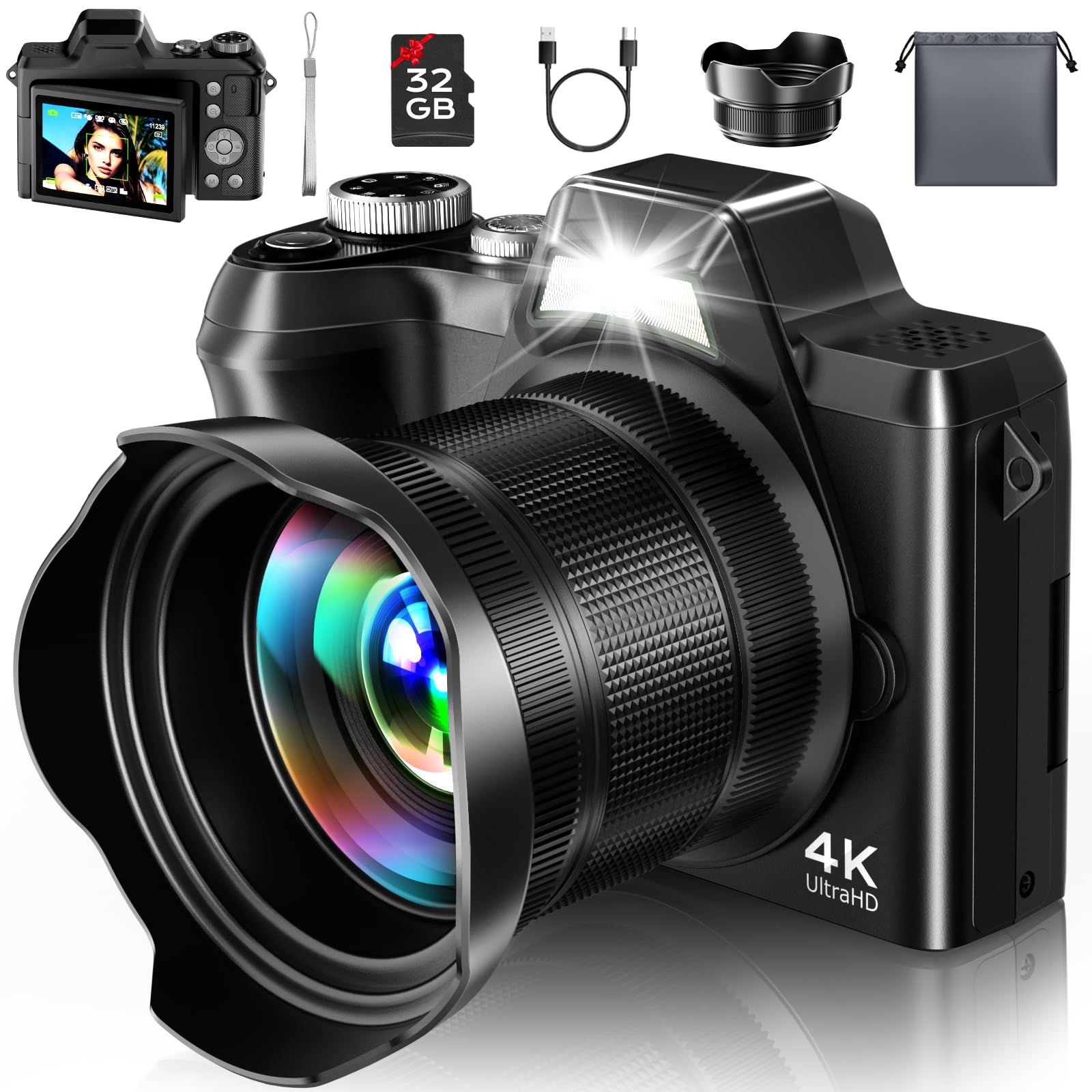
The Frenitt bundles a 56MP CMOS sensor, 4K UHD video, 180-degree flip screen, lens hood, and USB-C into a low-priced compact body, making it an easy grab for a car-show walkaround. The headline numbers are ceiling promises rather than confirmed results, so the safest use is static show cars, interior details, and travel snapshots rather than tracking moving vehicles. For close-up badges, wheels, and body work, the feature set is competitive at this budget tier.

Pros

  • 56MP stills allow room to crop into badges, wheels, and body lines before hitting resolution limits.
  • Lens hood and USB-C come in the box, so the usual accessory purchases are already covered.

Cons

  • The 16x zoom is digital only, so far-side or track-side car shots lose detail when you push in.
Our verdict

This fits the budget traveler who wants a compact camera for static car-show details and cross-country photo stops.

Check Latest Price

How to Choose

Sensor Size and Image Quality

A full-frame or APS-C sensor has a much larger physical area than the 1/2.5-inch sensors found in budget compacts. A 48MP label on a tiny sensor means very small pixels that collect less light, so you see noise in shadows and smeared detail in low-light garages or evening meets. The result is that a 24MP APS-C camera usually delivers sharper, cleaner car photos than an ultra-compact with twice the megapixels.

Lens System and Zoom

Interchangeable lens systems let you choose a wide-angle for rolling shots or a telephoto for track-side panning. Fixed-lens compacts rely on digital zoom, which crops into the sensor instead of using glass to magnify the scene. That crop loses real detail, especially at the 16x settings advertised on budget cameras, because it effectively enlarges a smaller portion of the image.

Autofocus and Burst Rate

Autofocus speed and continuous shooting determine whether a moving car stays sharp. A camera that focuses slowly in live view will hunt before shooting, so a car exiting a corner can be gone before the shutter fires. For motorsports, choose a body with subject-tracking autofocus and a burst rate of at least 5-10 fps; for static car shows and slow drive-bys, entry-level autofocus is enough.

Manual Exposure Controls

Manual controls matter because car paint, chrome, and headlights create extreme highlights and deep shadows. Auto exposure often blows out reflections or crushes shadow detail. A camera with aperture-priority, shutter-priority, and manual modes lets you lock exposure settings as the light changes, while exposure compensation helps adjust quickly.

Video Features for Car Content

If you plan to shoot walkaround video or vlog from a car show, look beyond resolution. 4K and 5K labels are common, but a flip screen, external mic input, and reliable Wi-Fi transfer make everyday use far easier. Some budget compacts record in 10-minute chunks that stop and restart, which is annoying for a long walkaround.

Frequently Asked Questions