9 Best Travel Camera of 2026: Real Zoom Beats Fake Megapixels

Best travel camera picks for your trip: pocket zooms, vlogging mirrorless cameras, and beginner DSLRs with real optical reach — not megapixel hype.

Travel camera listings are full of bold claims: 8K video, 88-megapixel stills, 16x zoom. Most of those numbers come from a tiny sensor and digital cropping, not a lens that actually reaches distant subjects. The cameras worth packing are the ones whose optical zoom and sensor size do the heavy lifting.

The trade-off that matters is between reach and bulk. A 30x pocket zoom covers everything from landscapes to wildlife, but its small sensor asks for daylight. An APS-C mirrorless gives you better low-light and lens options, but it takes up real bag space.

This guide separates those choices by use-case: what you shoot, how much you want to carry, and how much you want to spend. Match the camera to that, and the inflated specs become easy to ignore.

1

Best Overall Travel Camera

Panasonic Lumix TZ99

85 /100
Studio Score Strong Evidence

Key details

Portability
Pocket-size
Sensor Size
20.3MP 1/2.3-inch
Optical Zoom
24-720mm equiv
Autofocus And Controls
Tilt touchscreen
Check Price on Amazon

The Panasonic Lumix TZ99 / ZS99 puts a 30x optical zoom in a body that slips into a jacket pocket. At the wide end, 24mm handles interiors, streets, and landscapes; at the long end, 720mm pulls concert stages, wildlife, and distant landmarks into frame without changing lenses. That range is the whole pitch: one twist of the zoom ring takes you from a wide group shot to a distant animal. Video capture reaches 4K/30p with 1080p/120p for slow-motion clips, and USB-C charging means the same cable that powers a phone can top up the camera overnight.

In bright daylight, the long end is what separates this from ordinary pocket compacts. Subjects far across a plaza, on a canyon rim, or at the far side of a stadium become frameable. At the stadium, that reach turns a back-row seat into a usable close-up. The 20.3MP BSI CMOS sensor delivers clean travel photos in sunny conditions, which is the core environment for this kind of travel zoom. A traveler can keep the camera out all day without worrying about lens swaps or a camera backpack.

This is a daylight-first travel camera. The 1/2.3-inch sensor keeps the body compact, but it cannot match the low-light clarity or fine-detail headroom of larger-sensor compacts, so evening and indoor work belongs to a different device. Travelers who spend daylight hours on family trips, concerts, wildlife viewing, and city sightseeing are well served by that range: one pocketable body that frames a group shot and a distant stage without a second thought. Video-first vloggers who want gimbal-smooth handheld clips should also look to a dedicated vlogging camera rather than this compact zoom.

The TZ99 sits in the mid-range price band, well below the premium compact in this set while reaching much farther. That combination makes it the practical top pick for travelers who want one camera to cover a long trip without loading a bag with lenses, and the mid-range pricing keeps it within reach of buyers who do not already own a camera system. The reach difference is large enough that it overshadows the spec-sheet appeal of shorter-zoom compacts; a 200mm lens simply cannot frame the same distant subject.

Bluetooth 5.0 and Wi-Fi make pulling a few shots onto a phone simple enough for a quick social post, and the 3-inch 1840k-dot tilt touchscreen covers low-angle and overhead framing without contorting the body.

Pros

  • A 24-720mm optical zoom in a jacket-pocket body frames wide landscapes and distant wildlife without a lens change.
  • Pocketable design suits day trips, concerts, and family vacations without a camera bag.
  • Cost-effective entry into long-zoom travel photography with a feature set above budget compacts.
  • 4K/30p and USB-C charging handle travel clips and one-cable packing.

Cons

  • No built-in flash leaves low-light fill to an external unit, adding weight to a travel kit.
  • Menu structure can feel dated, and newer photographers may need extra time to locate key options.
Our verdict

The TZ99 is the travel camera you will actually take out: a 30x zoom in a jacket pocket, with enough reach to make distant subjects part of the trip.

Check Latest Price
2

Best Hybrid Vlogging Camera

Sony ZV-E10

86 /100
Studio Score Strong Evidence

Key details

Portability
Compact body
Sensor Size
24.2MP APS-C
Optical Zoom
16-50mm kit lens
Autofocus And Controls
425-point phase-detect
Check Price on Amazon

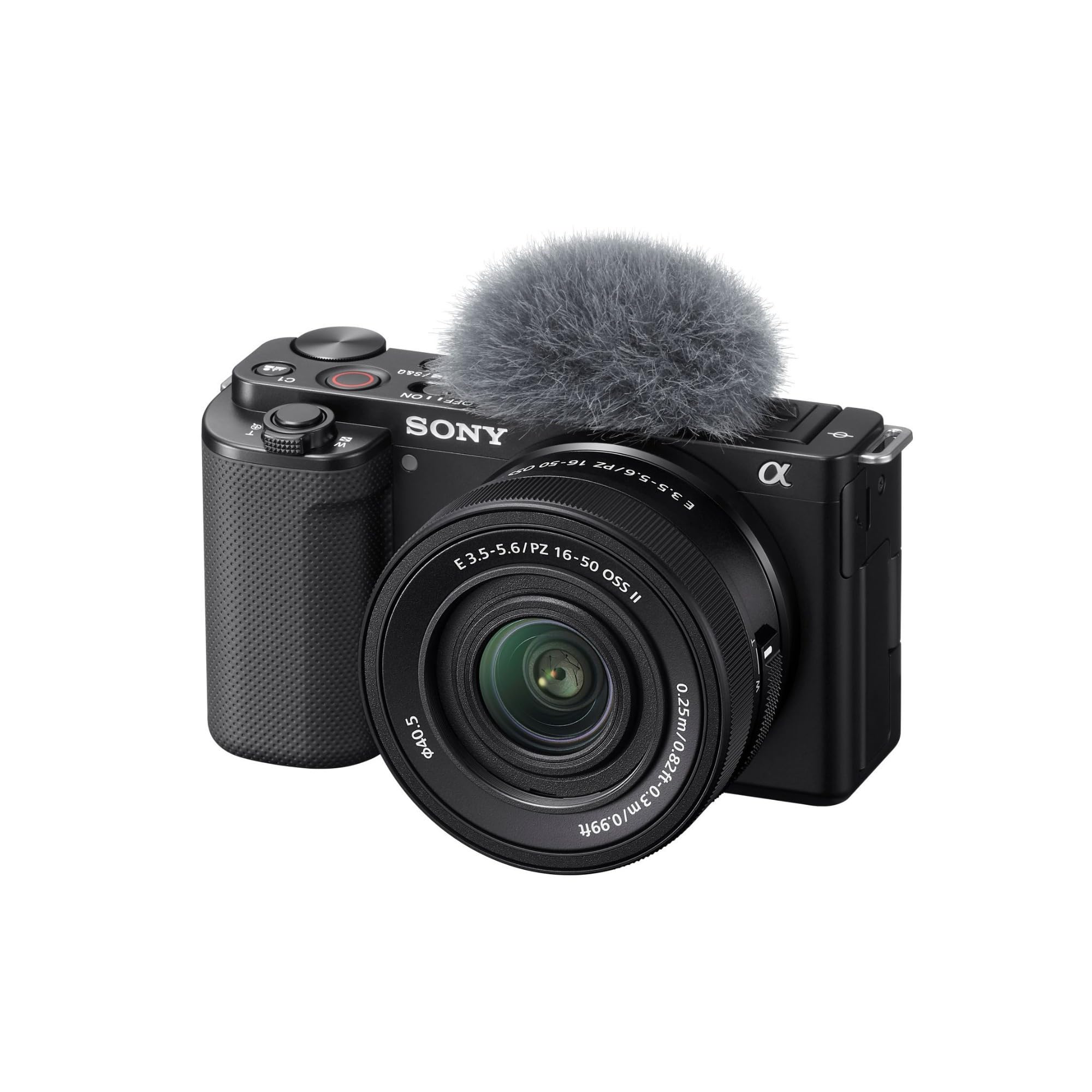
The ZV-E10's 4K oversampled from 6K, Real-Time Eye AF, and flip-out screen put APS-C video quality into an interchangeable-lens body. The slimmer pocket compact in this set reaches further optically, but this Sony gives hybrid shooters a larger sensor and a lens mount that can expand with their kit.

Focus stays on faces and eyes through the 425-point hybrid AF, which keeps one-person vlogs and moving travel subjects sharp. The articulating touchscreen simplifies angle choices, and the 24.2MP sensor delivers stills that hold up alongside dedicated photo bodies at this premium tier.

This is the runner-up for travelers who want one camera for photo and video and don't mind carrying a mirrorless kit. The bundled 16-50mm lens covers standard scenes but stops at 50mm, and outdoor framing depends on the LCD because there is no viewfinder; bright-sun shooting may need a hood or a shaded spot. Long-zoom tourists are better served by the top pick's 30x optical zoom, while creators who plan landscapes, street scenes, and vlogs will find the APS-C output worth the extra bag space.

Pros

  • 4K oversampled from 6K and 24.2MP stills give travel photos and video a consistent hybrid look.
  • Real-Time Eye AF holds focus on faces and eyes, so solo vlogs and street portraits stay sharp.
  • Strong price-to-performance for APS-C video, with an interchangeable lens mount that grows beyond the kit zoom.

Cons

  • Outdoor framing relies on the LCD in bright sun, with no viewfinder to fall back on.
  • The 16-50mm kit lens stops at 50mm, so far-off landmarks and wildlife need another lens.
Our verdict

Travel creators who value 4K video and APS-C image quality over maximum reach will get a flexible hybrid that grows with their lens bag. Long-zoom tourists should let the top pick's 30x optical zoom do the walking.

Check Latest Price
3

Best Pocket Gimbal Camera

DJI Osmo Pocket 3

91 /100
Studio Score High Confidence

Key details

Portability
Pocket-size
Sensor Size
1-inch CMOS
Optical Zoom
Fixed 20mm
Autofocus And Controls
ActiveTrack, face tracking
Check Price on Amazon

Built around a 3-axis mechanical gimbal and 4K/120fps capture, the DJI Osmo Pocket 3 delivers steady walking footage without a separate stabilizer. The 1-inch CMOS sensor and f/2.0 lens produce sharper and cleaner video than small-sensor pocket cameras, and the 10-bit D-Log M profile leaves room to recover highlights in post. The rotatable touchscreen keeps self-facing framing simple, which matters for solo creators.

Solo vloggers and video-first travelers who frame close-up scenes are the right audience; this records smooth motion clips and handles low-light evening settings better than typical pocket cameras. Travelers whose checklist includes distant landmarks or high-resolution stills should look at a compact travel zoom or interchangeable-lens camera instead.

The 4K/120fps mode adds slow-motion flexibility for street scenes, and the 2-inch touchscreen flips around to keep the subject framed during self-recordings. The gimbal holds the horizon level as you walk, so edits stay clean. For a one-person production, the body fits a jacket pocket and the touchscreen responds quickly enough to capture passing moments without menu hunting. Walking through a city, you can hold it at arm's length and still keep the frame steady.

💡 Keep subjects close; this camera records best when you move in rather than zoom.

Pros

  • Built-in 3-axis gimbal keeps handheld walking footage smooth without extra stabilizer gear.
  • Sharp 4K video with good low-light behavior from a 1-inch CMOS sensor and f/2.0 lens.
  • Pocket-sized body and intuitive touchscreen allow quick setup before the moment passes.

Cons

  • Still resolution is capped at 9.4MP, so large prints and heavy crops are out of bounds.
  • Fixed 20mm wide lens has no optical zoom, so distant subjects need cropping or digital zoom.
Our verdict

Travelers who want moving memories from a jacket pocket will find the Pocket 3 a natural fit; travelers who need reach or print-size stills should take a compact travel zoom instead.

Check Latest Price
4

Best Beginner DSLR

Canon EOS Rebel T7

93 /100
Studio Score High Confidence

Key details

Portability
Backpack kit
Sensor Size
24.1MP APS-C
Optical Zoom
18-55mm kit lens
Autofocus And Controls
9-point phase-detect
Check Price on Amazon

The Canon EOS Rebel T7 pairs a 24.1MP APS-C sensor with an optical viewfinder, giving new photographers a true DSLR experience and access to Canon's EF lens system. That combination makes it a strong base for learning manual exposure before moving up.

Landscape and portrait results are strong for a starter kit, and the EF-S 18-55mm IS II adds image stabilization for handheld shots. The 24.1MP APS-C sensor provides enough resolution for cropping, which helps beginners frame loosely and fix composition later.

The optical viewfinder holds up in bright outdoor light, and the kit lens covers the everyday focal lengths used for family and street shots. The sensor also has a clear size advantage over a smaller travel compact, especially in shade or overcast conditions.

This is a stills-first learning tool for family and portrait shooters who want a budget-friendly entry into Canon's lens system. The body will take up real bag space and the 18-55mm lens is not a travel zoom, so travelers who want a pocket kit should look at compact options in this comparison. For anyone who wants to learn manual exposure rather than pack light, this is the right tradeoff.

Pros

  • APS-C sensor paired with optical viewfinder produces strong stills for the price.
  • Canon EF lens mount keeps future lens options open.
  • Beginner-friendly controls make the learning curve manageable.
  • Body layout is familiar and welcoming for first-time DSLR users.

Cons

  • Wi-Fi transfer to a phone can be finicky, so a card reader is the consistent way to move images.
  • Live-view and movie autofocus can hunt in lower contrast scenes, so video works best with static subjects.
Our verdict

For stills-focused travelers who will carry a camera bag, this kit is a budget-friendly way to learn photography on a real APS-C system. Pick the compact travel zoom in this set when zoom reach and pocketability are the deciding factors.

Check Latest Price
5

Premium Pocket Zoom

Sony RX100 VII

83 /100
Studio Score Strong Evidence

Key details

Portability
Pocket-size
Sensor Size
20.1MP stacked 1-inch
Optical Zoom
24-200mm equiv
Autofocus And Controls
0.02s phase-detect
Check Price on Amazon

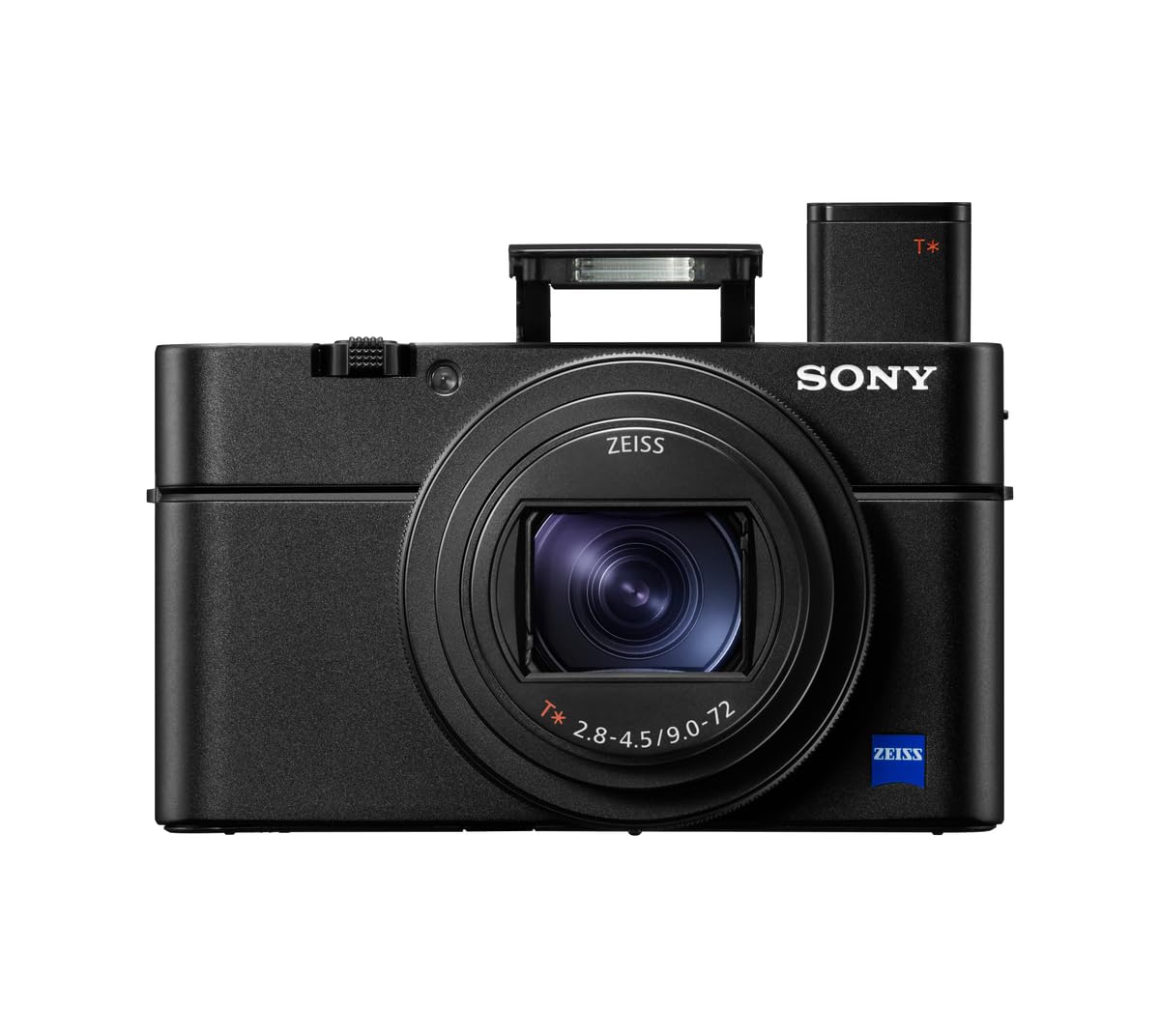
The RX100 VII is the premium pocket stills camera in this comparison. A 1-inch stacked sensor, 24-200mm f/2.8-4.5 lens, 20fps burst, and 0.02-second autofocus fit in a jacket-pocket body, giving it class-leading compact performance without a camera bag. That makes it a serious alternative to a mirrorless body for city trips where you do not want to carry a second lens.

The 24-200mm zoom covers wide city scenes, street portraits, and moderate telephoto compression, while the 20.1MP stacked sensor holds fine detail in daylight. Blackout-free burst shooting at 20fps lets you track moving subjects, and 4K UHD video handles travel clips without pulling out a camcorder. The lens is f/2.8 at the wide end and f/4.5 at 200mm, so low-light telephoto shots lean on higher ISO settings rather than a wide aperture.

This is an enthusiast-traveler camera rather than a guided beginner model. The premium price and dense menu system suit travelers who already know their way around exposure modes and custom buttons; casual users who want faster, simpler operation will find the top pick easier. It slips into a jacket pocket or a small purse, so it can be the only camera on a light trip. Street photographers get fast autofocus and a quick burst for candid moments.

Pros

  • Pocket-size body still delivers 1-inch-sensor quality for travel stills.
  • Slips into a jacket pocket or small purse for light travel.
  • Full-size camera features like burst, 4K, and long zoom fit in a compact body.
  • Autofocus locks on in 0.02 seconds and tracks subjects well in good light.

Cons

  • Close-focus performance trails dedicated macro cameras, so small-subject detail shots are limited.
  • Fixed 24-200mm lens cannot be swapped for wider or longer optics on the road.
Our verdict

For the traveler who wants a pocket stills camera with fast autofocus and useful zoom, this is the one worth carrying.

Check Latest Price
6

Best Budget Travel Compact

Kodak Pixpro FZ55

89 /100
Studio Score Strong Evidence

Key details

Portability
Compact body
Sensor Size
16MP 1/2.3-inch
Optical Zoom
5x optical zoom
Autofocus And Controls
Check Price on Amazon

With a real 5x optical zoom (28-140mm equivalent), 1080p video, and a rechargeable battery, the Kodak Pixpro FZ55 packs the essential travel features into a body that costs far less than enthusiast compacts. Unlike fixed-lens pocket cameras, the zoom gives you actual reach for a closer shot of a landmark or a street performer, rather than relying on digital cropping. The uncluttered controls and light weight make it a natural first camera for someone who wants point-and-shoot simplicity without trading away optical zoom.

This camera suits budget-conscious travelers, casual point-and-shoot users, and first-time camera buyers who want a lightweight travel companion for daylight outings. Daytime colors are pleasant, and the compact body slides into a daypack or crossbody bag without drawing attention. Low-light performance and RAW control are outside its scope, so enthusiasts after sunset or post-processing flexibility should look elsewhere. If long-term dependability assurance is a priority, a pricier compact is the safer direction; quality control can vary between units, so a quick check soon after purchase is a sensible step.

The ease-of-use advantage shows up immediately: the zoom rocker is intuitive and the auto modes set exposure without fuss. Daylight images hold up well for sharing on social media or making small prints, and the 1080p video is enough for casual travel clips.

💡 Charge the battery fully the night before a long day of shooting and keep a spare battery on hand for extended trips.

Pros

  • Simple controls and a lightweight body make it easy for a beginner to start shooting.
  • Budget-friendly price includes real optical reach, not just digital cropping.
  • Daytime colors are pleasing, and flash/selfie shots come out well.
  • Compact retro styling adds personality without adding weight.

Cons

  • Occasional shutter or button damage has been noted with normal handling.
  • Quality control can vary between units, so a new copy may need an exchange soon after arrival.
Our verdict

If your travel shooting is mostly daytime and casual, the FZ55 makes optical zoom affordable in a pocket-sized body.

Check Latest Price
7

Retro Selfie Users

Kodak Pixpro C1

82 /100
Studio Score Strong Evidence

Key details

Portability
Pocket-size
Sensor Size
13MP 1/3-inch
Optical Zoom
Fixed 26mm
Autofocus And Controls
Check Price on Amazon

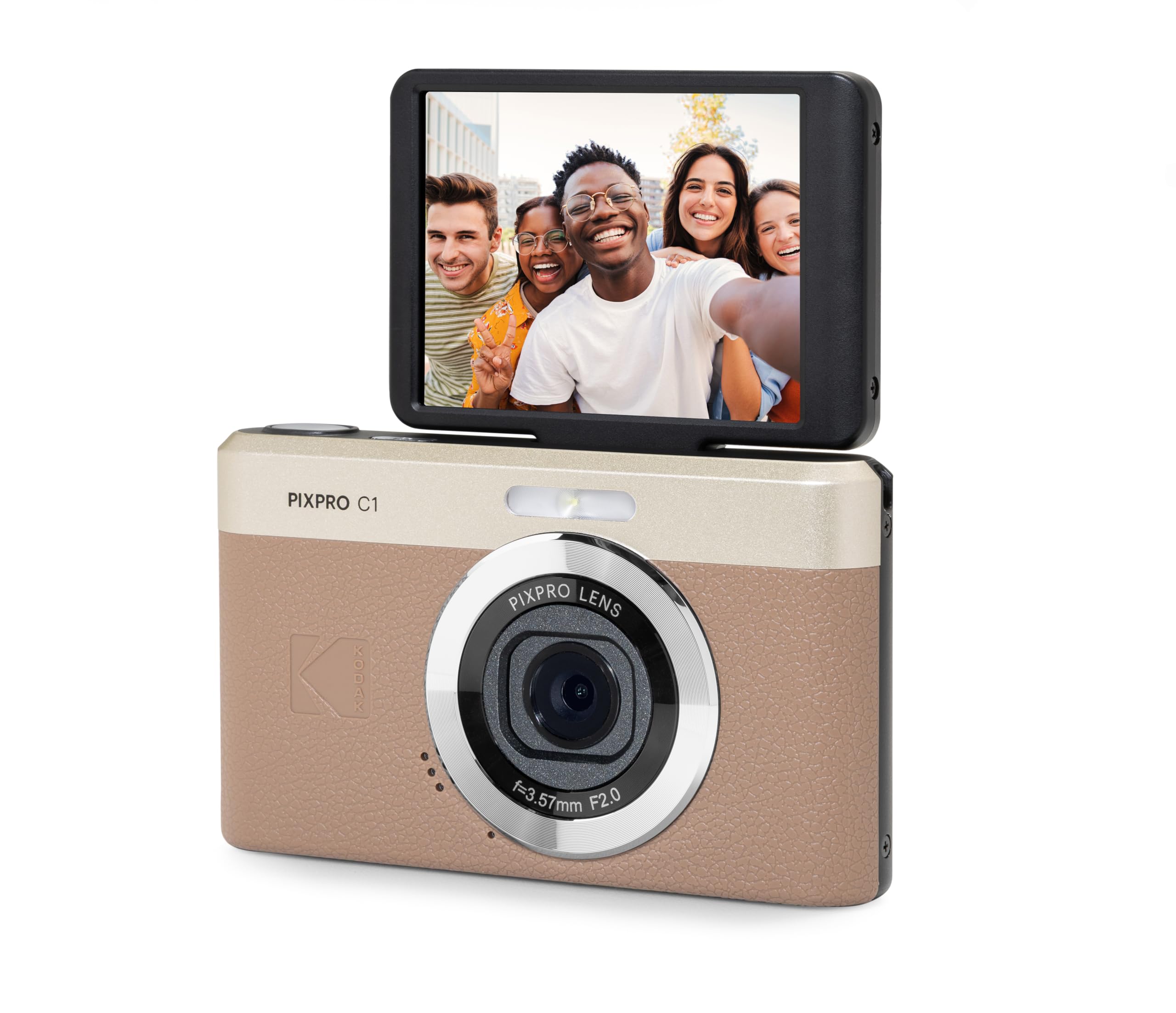
The Kodak Pixpro C1 is a tiny, style-forward camera with a 180-degree flip LCD, an f/2.0 lens, and a vintage shell. It slips into a pocket, charges over USB-C, and keeps controls simple enough for point-and-shoot ease.

The fixed 26mm lens and modest image quality place it in the style-first category rather than the all-around travel tier. It can’t pull distant subjects closer, so framing variety is limited. For selfie and casual-vlog use, the retro look and flip screen carry the appeal.

Pros

  • Slips into a pocket or small bag, keeping travel kit light.
  • Simple point-and-shoot controls let casual users start shooting without menus.
  • Distinct retro shell and flip LCD give it personality for selfie framing.

Cons

  • Handheld video may come out shaky during walking shots.
  • Indoor or low-light stills can lose sharpness and show soft detail.
Our verdict

This fits as a pocketable lifestyle camera for travelers who want flip-screen selfies and a retro look without fussing over settings.

Check Latest Price
8

Kids and Teens

YOODEE DC306

86 /100
Studio Score Strong Evidence

Key details

Portability
Lightweight
Sensor Size
Optical Zoom
16x digital only
Autofocus And Controls
Autofocus
Check Price on Amazon

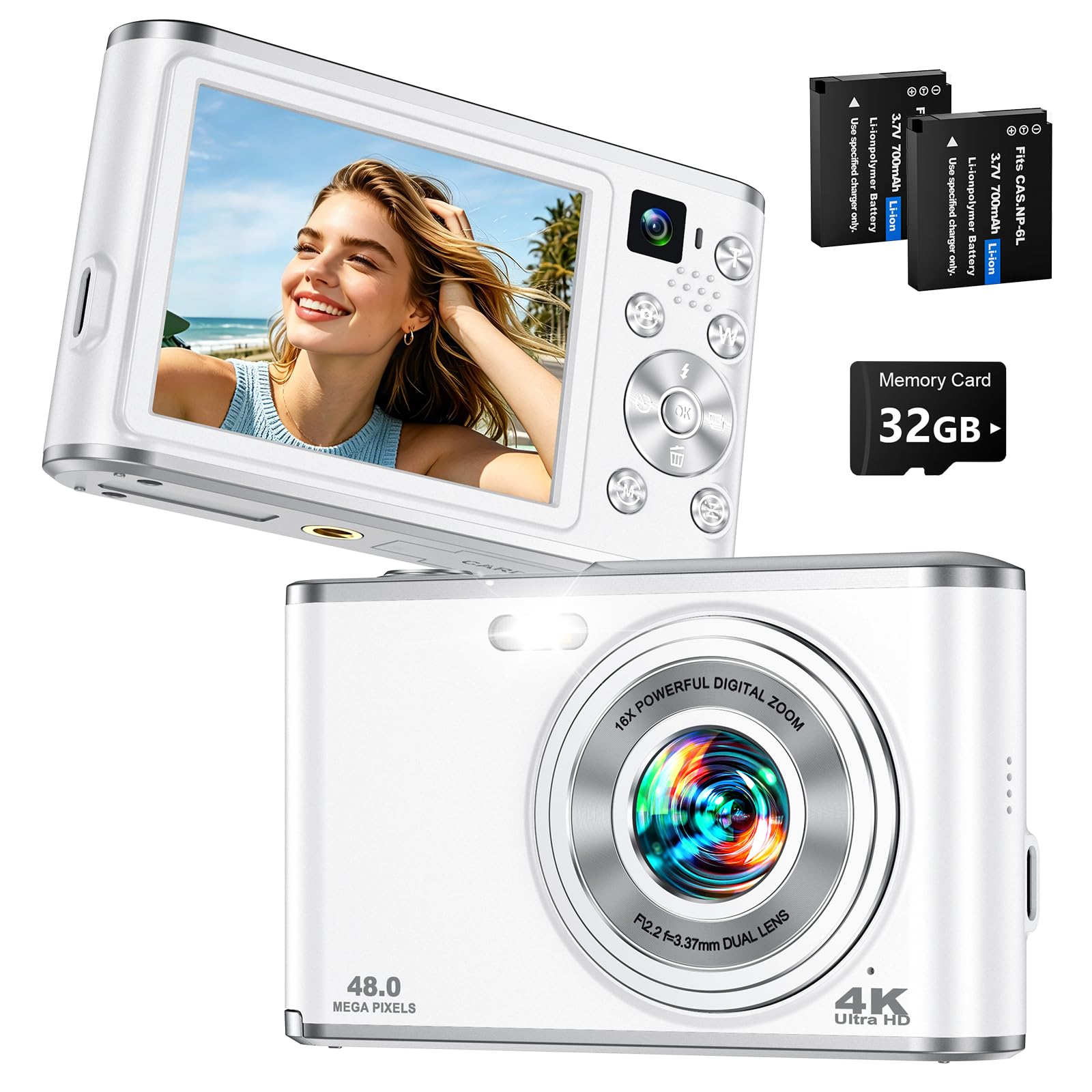
An easy-to-use first camera arrives with two batteries, a 32GB card, and 4K video, so the kit is ready for family moments right away. Daylight snapshots come out clear enough for photo albums, and the 2.8-inch screen gives a clear view for framing shots. The simple control layout won't intimidate a beginner.

That convenience is the main story: this is a starter camera for kids and teens who want casual everyday photos, not a serious travel-zoom companion. It is a low-pressure way to learn framing and composition, and a gift that gets a teenager started without extra purchases.

Pros

  • Ready-to-go kit includes two batteries and a 32GB card.
  • Daylight stills and clips come out clear for casual family use.
  • Light body is easy to carry around for daily snapshots.

Cons

  • Small sensor limits low-light detail; evening scenes can look soft.
  • Distant subjects soften at the end of the 16x digital zoom range; no optical zoom is available.
Our verdict

For a young photographer whose travel shots stay casual and close-up, this kit delivers plenty of starter value.

Check Latest Price
9

First-Time Creators

Lecnippy DC402

84 /100
Studio Score Strong Evidence

Key details

Portability
Lightweight
Sensor Size
1/3.2-inch CMOS
Optical Zoom
16x digital only
Autofocus And Controls
Autofocus
Check Price on Amazon

The Lecnippy DC402 puts 4K video, 48MP stills, two batteries, and a 32GB card into a light, easy-to-carry body at an entry-level price. Daytime shots and casual clips come out clear enough for a first camera, and the controls are simple enough for a teenager or a parent who does not want to learn menus. The DC402 is a starter camera rather than a serious travel-zoom camera; the optical credentials are not there to lead that category.

Budget parents buying a first camera, kids and teens, and casual vloggers starting out will find the DC402 ready to use out of the box. Travelers whose priority is zoom flexibility should select an optical-zoom model from this guide instead.

Pros

  • Simple controls and clear 4K/48MP results for casual use make it an easy first camera for beginners.
  • Complete out-of-box kit with 32GB card and two batteries removes the usual accessory purchases.
  • Light body slips into a day bag without needing a separate camera case.

Cons

  • Small sensor limits low-light quality, so night scenes come out soft; keep evening photography expectations modest.
  • Distant subjects lose detail because the 16x zoom is digital; there is no optical reach for far landmarks.
Our verdict

For travel days that are casual, daylight-first, and mostly near-to-mid subjects, the DC402 is the low-cost starter kit to grab; zoom-first travelers should look elsewhere in this guide.

Check Latest Price

How to Choose

Optical Zoom Range

Optical zoom is a physical lens movement, not a crop. A 5x optical lens moves glass to magnify the scene, while a 16x digital zoom just crops into the same pixels and enlarges them, which softens detail.

For travel, think about your longest shot: a cathedral ceiling, a mountain ridge, a stage from the back of a hall. A 24-720mm equivalent lens covers those moments; a fixed wide-angle lens cannot reach them without heavy cropping.

Sensor Size

Sensor size controls how much light each pixel captures. A 1-inch sensor collects noticeably more light than a 1/2.3-inch sensor; an APS-C sensor collects even more, which shows up in low-light sharpness and depth of field.

The trade-off is bulk. Larger sensors need larger lenses, so a pocketable 30x zoom and a bag-worthy mirrorless are different tools, not versions of the same camera.

Video and Stabilization

4K is common now, but stabilization separates steady footage from shake. Optical or gimbal stabilization steadies the light path or sensor, while digital stabilization crops the frame and can reduce sharpness.

If you'll shoot walking shots or solo talking-heads, choose a camera with a gimbal or strong optical stabilization over a higher frame rate.

Weight and Portability

A camera you carry all day gets used; one that stays in the hotel bag doesn't. Pocket zooms weigh about the same as a smartphone and fit in a jacket, while interchangeable-lens kits add a bag and lens decisions.

Match the kit to the trip: city breaks and day hikes favor pocket compacts, while road trips and planned shoots can justify the extra bag.

Autofocus and Controls

Autofocus speed matters when subjects move or light changes quickly. Phase-detect AF locks on in fractions of a second; contrast-detect systems can hunt in dim conditions.

Controls are easier to judge in hand than on paper. A tilt touchscreen, direct dials, and a stable app connection are the details that let you catch a moment instead of fighting the interface.

Frequently Asked Questions