6 Best Compact Camera for Travel Photography in 2026: Optical Zoom

The best compact camera for travel photography uses real optical zoom, not inflated digital-zoom claims, so distant shots stay sharp.

Many travel compacts advertise huge zoom and high megapixel counts, but the spec that decides whether your photos are keepers is optical zoom. Digital zoom just crops into the sensor, so a 16x marketing number will not make a distant temple or wildlife shot sharp. The best travel compacts pair real lens reach with stabilization you can trust.

The trade-off in this set is between proven long-zoom compacts and newer models with 4K video, USB-C charging, and tilt screens. Older designs often have stronger track records and lower prices; newer designs bring modern convenience with less long-term evidence. Knowing which side you need is the first step.

This guide sorts those options around actual travel use: what you can pocket, how much reach you truly need, and which specs matter once you are on the road.

1

Best Overall Travel Zoom

Canon PowerShot SX720 HS

85 /100
Studio Score Strong Evidence

Key details

Optical Zoom
40x (24-960mm)
Stabilization
Optical
Sensor And Lens
20.3MP CMOS, 40x lens
Size And Weight
Pocketable compact
Check Price on Amazon

The 40x optical zoom on the Canon PowerShot SX720 HS covers a 24mm wide-angle through a 960mm telephoto equivalent, and optical stabilization keeps the long end usable for handheld shots. The 20.3MP CMOS sensor produces clear daylight detail and vivid color, which covers typical travel photography. A 3-inch LCD with 922K dots provides framing, and Full HD video records at 60p for short clips. The zoom is the headline, but the camera works as an everyday compact too.

At full zoom, a distant bird or a performer on stage can fill the frame, and the lens responds smoothly when you reframe to follow action. Because the reach is optical rather than digital, distant subjects keep their detail instead of being cropped and upscaled. Holding the camera steady or bracing against a railing helps at 960mm, but the payoff is a reach-per-size ratio that a short-zoom compact cannot match. The body stays small enough for a jacket pocket through the entire zoom range, which is what separates this from bridge-style superzooms.

This is a Full HD travel compact rather than a 4K recorder. Buyers who need 4K should look elsewhere; Wi-Fi pairing can take patience, especially when connecting to a computer; low-light performance is moderate, so indoor autofocus may slow and flash shots can be soft. The right buyer is a traveler, safari-goer, wildlife watcher, or concert attendee who puts 40x reach ahead of video specs and shoots primarily in daylight. Budget shoppers will find cheaper compacts with shorter zoom, so the price makes sense only when reach is the priority.

The premium price is easier to defend when the lens is the feature. The main modern alternative in this category is a slimmer 4K model that costs more and stops at a 30x zoom. The SX720 also fits in a smaller body than a bridge-style superzoom, without giving up the zoom range that drives that category. In a travel bag, it takes up less room than a mirrorless kit and covers more focal length, which makes it a practical single-camera option for itineraries that shift from streets to overlooks.

Pros

  • 40x optical zoom reaches distant subjects without making the camera bulkier
  • Daylight photos keep clear detail and vivid color
  • Slips into small purses and jacket pockets
  • Good value for the zoom performance

Cons

  • Battery life is moderate; heavy shooters should pack a spare
Our verdict

For travelers who put reach first and are comfortable with Full HD, the SX720 HS is the fixed-lens travel compact to beat.

Check Latest Price
2

Best Budget Travel Compact

Kodak PIXPRO FZ55

89 /100
Studio Score Strong Evidence

Key details

Optical Zoom
5x optical
Stabilization
Digital
Sensor And Lens
16MP CMOS
Size And Weight
Compact
Check Price on Amazon

The FZ55 is a budget-friendly entry point to a dedicated travel compact: real 5x optical zoom, 1080p video, and controls simple enough for a first-time owner. The low commitment of the price makes it easy to test whether a dedicated camera adds enough over a phone.

The 28mm wide setting handles group shots and street scenes, while the 140mm long end suits portraits and close crops of landmarks. For casual indoor moments, the built-in flash and selfie mode produce pleasing images at typical phone-zoom distances.

Distant wildlife and stadium action are beyond the 5x reach, so the camera works best when you can move closer. The compact body fits in a small pouch, and the retro styling adds character without bulk. Stabilization is digital, so holding the camera steady matters more in dim light. For casual days out, that tradeoff is easy to live with.

This is for budget travelers, teens, and casual family shooters who want a dedicated compact without a complex system. Quality control and battery behavior can vary between units, so check the return policy before a trip-critical purchase; if every shot counts, a longer-reaching compact in this roundup is the more reassuring route. That makes it a practical first camera rather than a lifetime investment.

Pros

  • Entry-level price keeps the cost of trying a dedicated travel compact low.
  • Simple controls make it approachable for teens and first-time camera owners.
  • Image quality with flash and selfies works well for casual indoor and social shots.
  • Compact retro body fits easily in a small pouch or jacket pocket.

Cons

  • Shutter or body wear may show up sooner in some units under heavier use.
  • Power-on behavior can vary between units, so keep the return policy in mind for trip-critical shoots.
Our verdict

For a low-cost, low-commitment way to carry a dedicated compact with real optical zoom, the FZ55 fits. It suits short trips and casual shooting more than once-a-year expeditions.

Check Latest Price
3

Best Modern 4K Travel Zoom

Panasonic Lumix ZS99

77 /100
Studio Score Established

Key details

Optical Zoom
30x Leica optical
Stabilization
Optical 5-axis
Sensor And Lens
20.3MP MOS, Leica
Size And Weight
Compact, pocketable
Check Price on Amazon

The Panasonic LUMIX ZS99 brings 4K/30p video, USB-C charging, and a tilt touchscreen to the pocket-superzoom class. Its 30x Leica DC Vario-Elmar lens covers 24-720mm equivalent, so a traveler can frame a wide piazza or a distant ridgeline without swapping lenses. The compact body keeps it well outside the large-bridge-camera category, while still delivering real optical zoom.

Hybrid O.I.S.+ stabilization keeps handheld shots steady at the long end, and the 3-inch 1,840K-dot tilt touchscreen opens more framing options for low and high angles. The zoom range is the headline: 30x optical reach in a body that slips into a pocket, which is exactly what a fixed-lens travel compact should do.

This is the modern-feeling pick for travel photographers who want one fixed-lens camera with 4K, USB-C, and a tilt touchscreen, and who understand a premium price pays for that convenience. Anyone chasing maximum reach for less money should look at the 40x Canon in this roundup; the ZS99 is the better match when current charging and video features carry more weight.

💡 The Wi-Fi transfer workflow depends on the Panasonic app, so install and pair the camera before leaving home.

Pros

  • The 30x optical zoom covers wide to distant subjects in a body that still fits a pocket.
  • USB-C charging and a tilt touchscreen add modern convenience to an otherwise traditional compact.
  • Solid body construction and Leica-branded optics hold up through daily travel packing.
  • Light enough and slim enough for a jacket pocket or small day bag.

Cons

  • The tilt-screen hinge can become flimsy with repeated folding, so it deserves gentle handling.
  • 4K video can look soft or less polished than expected in some lighting conditions.
Our verdict

For a traveler whose trip list mixes concerts, city walks, and video clips, the ZS99 is the right modern compact.

Check Latest Price
4

Best Superzoom Reach

Canon SX530 HS

82 /100
Studio Score Strong Evidence

Key details

Optical Zoom
50x optical
Stabilization
Optical
Sensor And Lens
16MP CMOS
Size And Weight
Bridge-style body
Check Price on Amazon

The Canon PowerShot SX530 HS stretches a 50x optical zoom — 24mm to 1200mm equivalent — into a renewed superzoom priced below comparable new long-lens compacts. That reach is the reason to carry it: wildlife, stadium seats, and concert stages become manageable when you can zoom to 1200mm without swapping lenses. No other fixed-lens travel camera in this roundup goes farther for the money.

Daylight shots hold up well across the zoom range, with natural colors and optical stabilization that keeps distant subjects composed. Wi-Fi and NFC are included for transferring images to a phone, which matters on trips where a laptop stays home. Low-light performance is middling, so expect softer detail indoors or at dusk.

This is the budget pick for travelers who want maximum optical reach without stepping into interchangeable-lens gear. It suits wildlife and birding outings, sports trips, and concert vacations where the camera rides in a day bag rather than a pocket. The renewed-condition variance, sun-glare screen, and bridge-size body set clear boundaries; if any of those are deal-breakers, the pocketable Canon travel zoom in this set covers that need.

Pros

  • Massive 50x optical zoom reaches distant wildlife, stadium action, and performers.
  • Daylight photos come out clean with natural colors.
  • For a renewed superzoom, image quality and handling hold up well.

Cons

  • Screen glare can make outdoor composition difficult in full sun.
  • Bridge-style body with 50x lens is too large for a pocket.
  • Renewed stock can vary: cosmetic wear or unexpected power-off may appear.
Our verdict

The SX530 turns far-away moments into keepable images without new-superzoom pricing, making it a sensible match for travelers who know reach comes before compactness.

Check Latest Price
5

Legacy Zoom Buyers

Panasonic Lumix ZS25

84 /100
Studio Score Strong Evidence

Key details

Optical Zoom
20x Leica optical
Stabilization
Optical
Sensor And Lens
16.1MP CMOS, Leica
Size And Weight
Compact
Check Price on Amazon

The 20x Leica lens produces sharp, well-exposed images across daylight and moderate low-light scenes, and the body is compact enough for a travel pouch. The tradeoff is age: no 4K video, a dated Wi-Fi setup, and a current price that is high for a camera this old. That puts it in clearance-or-used territory rather than a first choice at full price. Travelers who want a dedicated optical-zoom compact without 4K or modern wireless needs will find an approachable feature set and solid stills in a small package.

Pros

  • 20x Leica optical zoom covers wide to telephoto while keeping the body compact.
  • Sharp picture quality holds up in varied lighting conditions.
  • Controls are approachable for travelers who want a dedicated camera without a steep learning curve.

Cons

  • The body shell can feel less premium than newer travel compacts in the same size class.
  • The rear screen may develop issues after extended light use.
Our verdict

Grab it when the price drops to clearance or used levels; otherwise, spend the same money on a newer travel compact.

Check Latest Price
6

Budget Content Creators

AUREAPIX DC105

86 /100
Studio Score Strong Evidence

Key details

Optical Zoom
None, digital only
Stabilization
Sensor And Lens
96MP 1/2.3-inch CMOS
Size And Weight
Compact
Check Price on Amazon

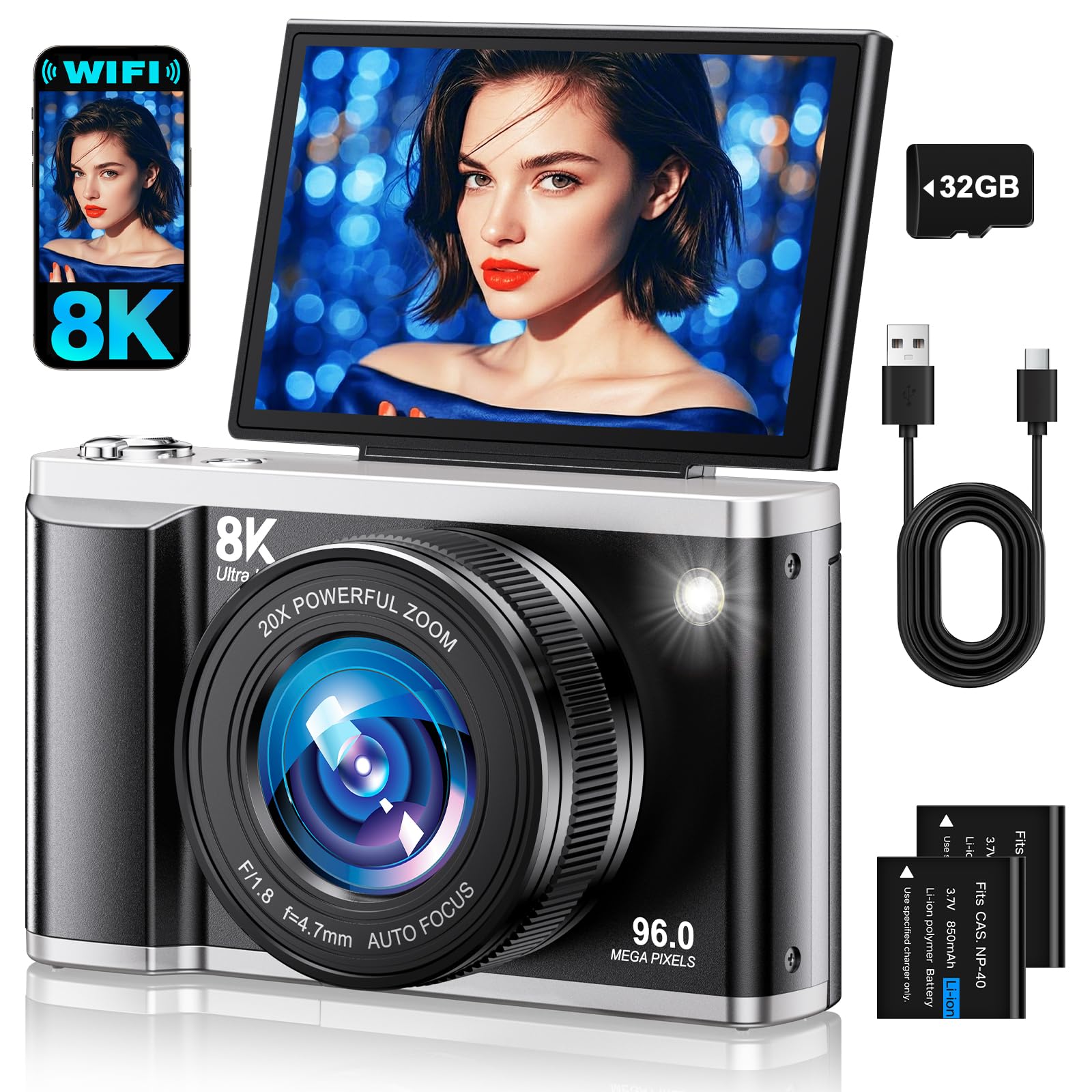
An 8K/96MP sensor and a 3.5-inch flip screen make this a strong budget creator camera for arm's-length vlogging and social clips. In good light, stills are sharp and autofocus keeps up, while WiFi transfer moves photos to a phone without much fuss. The compact body is light enough for daily bags, and the 180-degree screen makes self-framing easy. There is no optical zoom, so it sits outside the fixed-lens travel-zoom intent except for travelers who only occasionally need reach and mainly shoot at arm's length.

Pros

  • The large flip screen makes arm's-length vlogging framing easy.
  • In good light, shots stay sharp and colors hold up.
  • WiFi transfer gets images to a phone quickly.

Cons

  • The 20x digital zoom is a sensor crop, so distant subjects lose fine detail quickly.
Our verdict

For a budget creator who wants a large flip screen and easy phone transfer, this works as a creator-first camera rather than a true travel-zoom compact.

Check Latest Price

How to Choose

Optical Zoom Reach

Pick the longest optical zoom that matches the subjects you actually shoot. A 5x range covers streets and family moments, while a 30x or 40x lens brings wildlife, architecture details, and stadium action into the frame without detail loss.

Longer lenses add weight and emphasize hand shake at full extension, so balance reach against how often you need it. If distant subjects are rare, extra reach is just extra cost.

Sensor and Lens Quality

Most travel compacts use a small 1/2.3-inch sensor to keep the body pocketable; larger sensors improve low-light cleanliness but increase size and price. A bright lens at the wide end helps indoor and dusk shots more than a high megapixel count.

Lens glass matters more than brand name, and sample images are the real test. If you often shoot after sunset, prioritize a faster lens and larger sensor even if it means less zoom.

Image Stabilization

Optical stabilization moves the lens or sensor to counter hand shake, so it preserves sharpness at slow shutter speeds. It matters most at full telephoto, where even small movement is magnified by the long lens.

Digital stabilization crops the frame and works better for video than stills. If you shoot handheld at 30x or 40x, choose a model with optical or hybrid stabilization.

Size and Weight

A travel camera only helps if it is with you when the scene appears. Pocket compacts fit a coat pocket or small sling, while bridge-style superzooms need a strap or bag and are easier to hold steady.

The trade-off is convenience against control: a slightly larger body gives better grip, but travelers often leave it behind. Decide where the camera will live during a full day of walking before choosing a lens range.

Video and Charging

4K video is useful if you crop or want sharp footage on a modern screen, but stills-first shooters can stick with 1080p. USB-C charging lets you top up from a power bank; older models need a dedicated charger and spare batteries.

If you record often, carry an extra battery no matter what. Charging convenience becomes a daily annoyance when the camera is your main travel tool.

Frequently Asked Questions