8 Best Camera for Street Photography 2026: Fast-AF Compact Picks

Street photography demands a compact body, dependable autofocus, and real stabilization. This guide separates the practical cameras from the zoom-spec hype.

Street photography listings often lead with zoom ranges and megapixel counts. In practice, candid urban shooting comes down to a body you will carry every day, autofocus that locks when a moment appears, and enough stabilization to keep handheld frames sharp.

That creates a real trade-off. A larger sensor with fast phase-detect autofocus gives cleaner low-light files and better subject tracking, but it often means managing battery life and relying on lens stabilization. A smaller stabilized body is more forgiving in mixed light, but its autofocus may not hold moving subjects as confidently.

The practical goal is matching those priorities to how you actually shoot. A camera you keep with you and can focus quickly will outperform an impressive zoom spec in the street.

1

Best Overall

Sony a6400

89 /100
Studio Score Strong Evidence

Key details

Sensor
24.2MP APS-C CMOS
Autofocus
425-point phase-detect AF
Lens Range
16-50mm f/3.5-5.6
Compact Body
Compact APS-C body
Check Price on Amazon

Real-time Eye AF and 425 phase-detect points lock onto faces with a speed that makes candid street portraits feel almost automatic. The 24.2MP APS-C sensor leaves room to crop after the shot, and 11fps burst gives you several frames of a fleeting expression. A 180-degree tilting touchscreen makes low-angle and over-the-shoulder work easier without raising the camera to eye level. The autofocus holds onto the subject even when a face briefly turns away, which is exactly what street portraiture needs.

Carrying the a6400 with the 16-50mm kit lens through a day of urban walking feels closer to a compact point-and-shoot than a full DSLR kit. The tilting screen folds flush into the body, controls do not catch on jacket lining, and the whole package is light enough to stay in hand between shots. In mixed light, the sensor holds shadow detail well, so street scenes can be processed without fighting noise. The kit zoom’s modest range is fine for environmental portraits and working the edges of a scene.

On the video side, 4K UHD recording with full pixel readout makes this a hybrid that stills shooters can actually use. The same face-tracking AF that works for candids locks onto subjects in movie mode, so switching from stills to clips does not mean losing focus discipline. For a compact interchangeable-lens camera in this price tier, that dual role is the core appeal. It adds weight to the case for the a6400 over slower-focusing alternatives.

The a6400 is for street photographers who prioritize eye-AF and candid portraiture, and for content creators who want 4K plus stills in one bag-friendly APS-C body. No in-body stabilization and modest battery life require planning for long handheld sessions, so carry a spare battery and rely on lens stabilization or a fast shutter when the light gets demanding. Buyers who need in-body stabilization or refuse to pack spares will find the a6400 less comfortable as their only camera.

The camera earns its place by how the core controls work together. The autofocus removes the slow-lock hesitation that can show up on budget mirrorless bodies, and the compact build keeps it from being left at home. At a mid-range price, the a6400 is one of the stronger feature-per-dollar options in the compact E-mount segment for stills-first street shooters.

Pros

  • Real-time Eye AF with 425 phase-detect points keeps moving faces sharp for candid shots.
  • APS-C picture quality and 4K video hold up in a compact body.
  • Lightweight kit body stays manageable through a full day of street walking.
  • Feature set delivers strong value at a mid-range price.

Cons

  • Stock battery can drain while the camera is off, so all-day street sessions are easier with a spare.
  • Handheld low-light shots lean on lens stabilization or a fast shutter with no IBIS in the body.
Our verdict

The a6400 is the compact E-mount body that turns candid street shooting into a matter of framing, not focus.

Check Latest Price
2

Best Stabilized Compact

OM System E-M10 IV

88 /100
Studio Score Strong Evidence

Key details

Sensor
20MP Live MOS MFT
Autofocus
121-point contrast-detect AF
Lens Range
14-42mm collapsing kit
Compact Body
Compact MFT kit
Check Price on Amazon

The 5-axis IBIS and collapsing 14-42mm kit keep a capable Micro Four Thirds camera small enough for a jacket pocket, and the stabilization smooths the handheld mixed-light shots that dominate street work. At 1.1 lb with the kit lens, the combination is lighter than most APS-C mirrorless kits, which matters when a camera stays around your neck or in a small bag all day. The collapsing lens also means the camera fits into spaces a chunky zoom would never clear.

The 20MP Live MOS sensor delivers clean detail in low light for this class, and the menu system guides beginners through exposure settings without dropping them into a pile of jargon. The lens tucks away when powered down, so the whole package sits inside a small crossbody without forcing you to carry a camera bag. The 14-42mm range covers the usual wide-to-short-telephoto street focal lengths. Image quality is well matched to its mid-range price, with enough resolution for prints at normal viewing distances.

This is for street and travel photographers who want manual controls without bulk, and for beginners learning on a body that fits a small bag. Contrast-detect AF is less sticky for moving subjects than the phase-detect system in the top-pick APS-C rival, so the smoothest fit is static street scenes and slow urban moments. If you mainly shoot architecture, posed portraits, or handheld detail shots, the compact size and IBIS make this a natural travel companion.

Pros

  • Compact body with a collapsing 14-42mm kit slips into a small crossbody or jacket pocket.
  • 5-axis IBIS steadies handheld street shots in mixed light without a tripod.
  • 20MP images hold clean detail in low light for the class.
  • Beginner-friendly menus make manual exposure control approachable for new photographers.

Cons

  • Individual units can vary at startup: a black screen or a lens-communication issue is possible.
Our verdict

The E-M10 IV packs IBIS, a compact MFT body, and a collapsing kit lens into a bag-friendly package at a mid-range price.

Check Latest Price
3

Best Beginner Mirrorless

Canon EOS R50

90 /100
Studio Score High Confidence

Key details

Sensor
24.2MP APS-C CMOS
Autofocus
Dual Pixel CMOS AF II
Lens Range
RF-S 18-45mm kit
Compact Body
Lightweight APS-C mirrorless
Check Price on Amazon

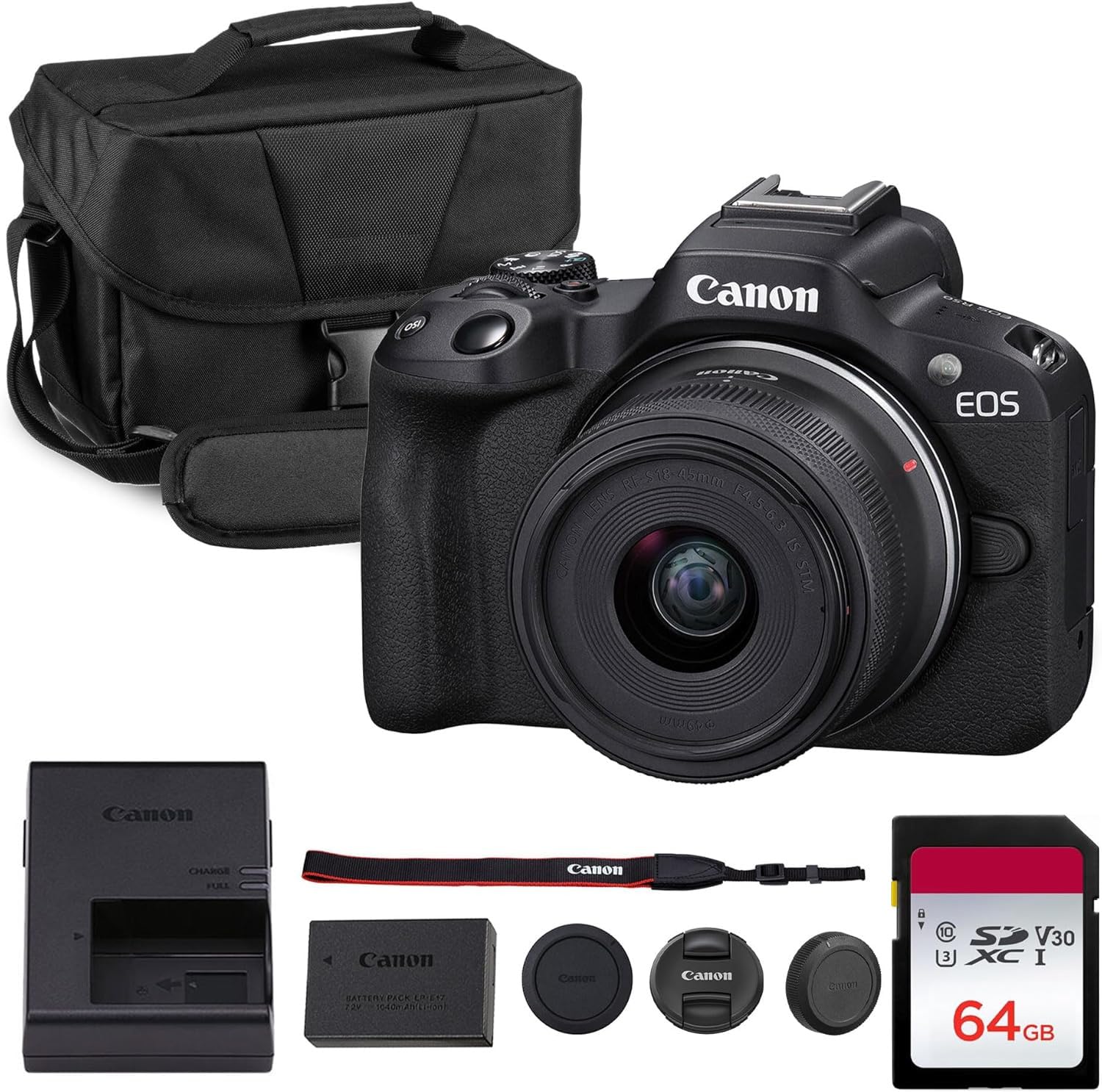
Dual Pixel AF II gives the R50 fast face and eye detection for candid street portraits, while 4K oversampling adds video headroom in a body light enough for all-day carrying. The control layout is friendly enough for a first mirrorless camera, and the RF-S 18-45mm kit covers the walkaround range without weighing you down. That focal range suits tight and wide street frames, and one lens can cover a full day of walking.

On the street, the grip and body size suit small to medium hands, and the vari-angle touchscreen makes waist-level framing simple. The body carries comfortably through long walking sessions, and the kit stays balanced on a shoulder strap. Even with the kit zoom attached, it stays easy to tuck into a small shoulder bag. Touch-to-focus lets you move the AF point without digging into menus.

This is for first-time mirrorless buyers who want Canon usability in a compact stills body, not for shooters who need in-body stabilization or a built-in flash. Handheld low-light work leans on lens stabilization or faster glass. The bundled SD card can also interrupt 4K recording, so a faster card is worth including if video matters.

Pros

  • Image quality holds up in a small, lightweight body.
  • Controls and menu layout are approachable for new mirrorless users.
  • Compact frame and comfortable grip ride well on a shoulder strap.
  • Face and eye detection keeps moving subjects in focus in candid frames.

Cons

  • Kit lens narrows to f/6.3 at the long end, pushing low-light handheld shots toward higher ISO.
  • RF-S lens lineup is still small, so compact street primes are scarce.
Our verdict

The R50 is the practical entry point for first-time street shooters who want Canon's current autofocus and a compact body.

Check Latest Price
4

Best Pocketable All-In-One

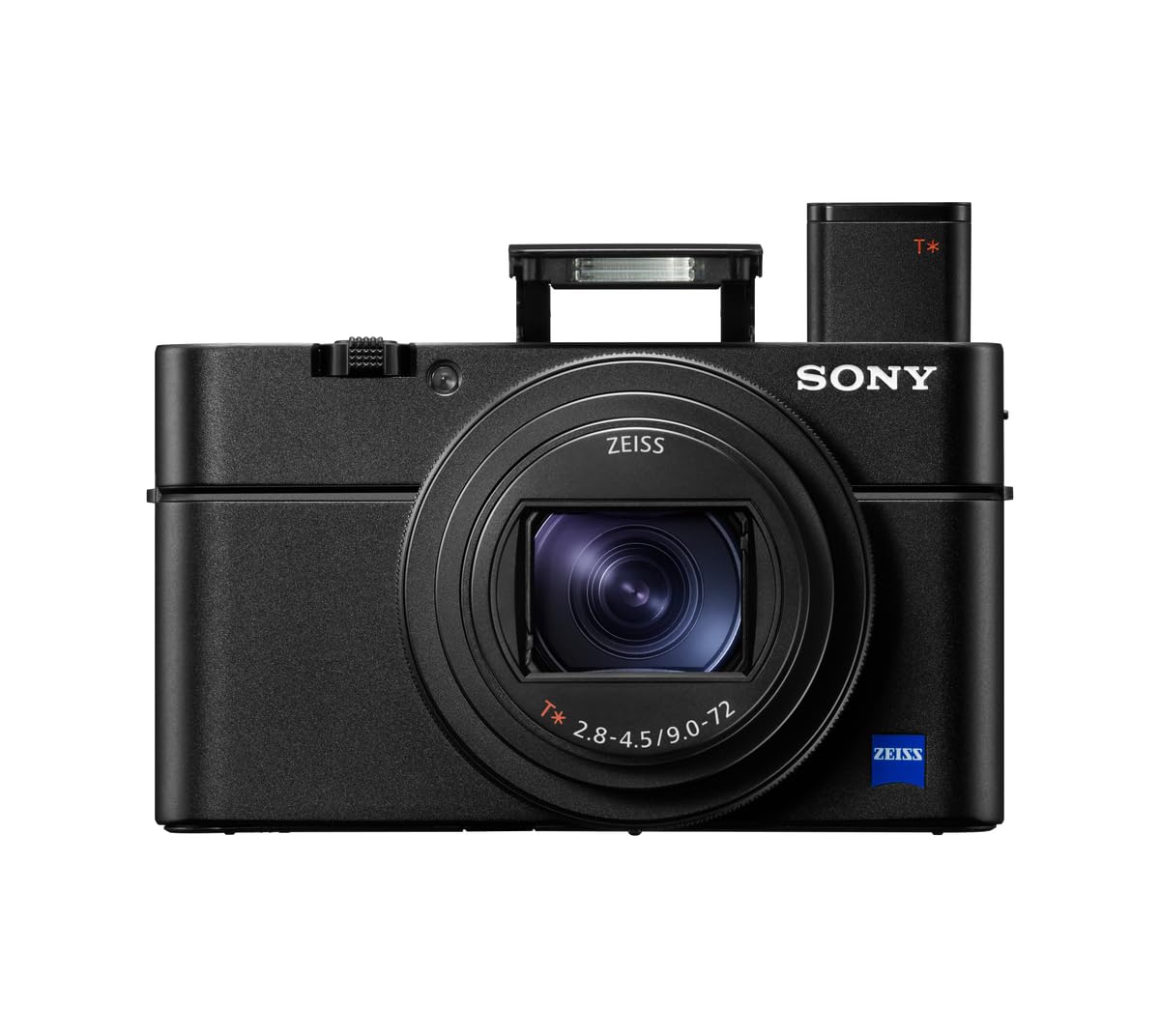
Sony RX100 VII

83 /100
Studio Score Strong Evidence

Key details

Sensor
20.1MP 1-inch stacked CMOS
Autofocus
357-point phase-detect AF
Lens Range
24-200mm f/2.8-4.5 Zeiss
Compact Body
Pocketable fixed-lens compact
Check Price on Amazon

The RX100 VII packs a 24-200mm equivalent zoom and 20fps blackout-free shooting into a body that slips into a jacket pocket. That combination sets it apart from the interchangeable-lens mirrorless cameras in this roundup: the top pick delivers faster phase-detect AF on a larger APS-C sensor, but it needs a lens and a bag. The Sony keeps the entire kit in your hand.

Daylight image quality holds up well for candid street work. Detail from the 20.1MP stacked CMOS sensor is clean at base ISO, and the long end of the zoom lets you isolate faces or signs without stepping into the scene. Autofocus with Real-time Tracking locks onto subjects quickly, and the blackout-free burst makes it easy to shoot a short sequence of a moving person and pick the sharpest frame later.

This is for street and travel shooters who refuse to carry a camera bag and want a single tool for daytime-to-dusk walkaround shooting. The 1-inch sensor shows grain in dim interiors, and the fixed lens cannot be swapped, so this is not the camera for nighttime event work or for photographers who want to change lenses. It is a specialized pocket tool, not a mirrorless replacement.

Pros

  • Jacket-pocket size with a 24-200mm equivalent lens
  • Daylight image quality holds detail well for a 1-inch compact, with clean stills in street settings.
  • Real-time Tracking autofocus locks onto faces quickly, making candid portraits easier.
  • 20fps blackout-free shooting catches fleeting street moments without missing the frame.

Cons

  • Video autofocus can lose fast-moving subjects when recording 4K.
  • Close-focus distances are limited, so true macro shots are out of reach.
Our verdict

The RX100 VII is the pocket camera for street shooters who want 24-200mm reach without a bag. The premium price only makes sense if pocketability is the top priority.

Check Latest Price
5

Best Travel-Zoom Compact

Panasonic Lumix ZS99

77 /100
Studio Score Established

Key details

Sensor
20.3MP 1/2.3-inch MOS
Autofocus
Contrast-detect AF
Lens Range
24-720mm f/3.3-6.4 Leica
Compact Body
Pocketable travel zoom
Check Price on Amazon

Panasonic packs a 30x optical zoom with a 24-720mm equivalent Leica lens into a compact body that slips into a jacket pocket. That reach is the main advantage over the slimmer pocket fixed-zoom option in this set: you can frame a street scene at 24mm and pull in distant details at 720mm without swapping lenses. Daylight street shots stay crisp, and 4K/30p video adds a single-camera option for event coverage.

The 20.3MP 1/2.3-inch sensor sets the boundary: in bright conditions the ZS99 delivers usable travel photos, but as light drops or you push toward the long end, handheld frames can look soft. That makes this a daylight camera by design. Photographers who need after-dark candid reach should choose the 1-inch pocket compact or the APS-C mirrorless option in this set.

The small 1/2.3-inch sensor is the daylight boundary, and the tilt-screen hinge is the part to check. This suits daytime street and event shooters, travelers, and anyone who wants the whole 24-720mm range without a bag. If you shoot after dark or prefer wide-aperture depth of field, this camera is not aimed at you.

Pros

  • 30x optical zoom covers 24-720mm equivalent in a body that slips into a pocket.
  • Crisp daylight images and long-range travel reach make it a one-camera carry for daytime trips.
  • Compact body and simple carry suit everyday shooting and travel.

Cons

  • A finger can land on the flash during one-handed street shooting.
  • As light drops, handheld frames at the long end of the zoom can be soft.
Our verdict

For daytime travelers and street shooters who want 30x reach without a bag, this is a practical superzoom compact.

Check Latest Price
6

Budget Beginner Learning

Canon EOS Rebel T7 Kit

94 /100
Studio Score High Confidence

Key details

Sensor
24.1MP APS-C CMOS
Autofocus
9-point phase-detect AF
Lens Range
18-55mm + 75-300mm
Compact Body
Full-size DSLR body
Check Price on Amazon

Two kit lenses give beginners a complete learning setup at a budget-friendly price, and the 24.1MP APS-C sensor plus optical viewfinder make it easy to see how focal length changes framing. For street work, though, the body is bulky and live-view autofocus is slow, so candid shots of moving pedestrians may require the optical viewfinder and a bit of patience. The two-lens reach still covers a wide range of subjects for low-pressure practice, but that gap keeps it a step behind the mirrorless picks in this roundup for someone whose main goal is unobtrusive, fast-response street photography.

Pros

  • Two-lens kit covers everyday focal lengths and telephoto reach for beginners.
  • Optical viewfinder makes exposure and composition lessons clear for beginners.
  • Auto modes deliver clean stills at a budget-friendly price.

Cons

  • The 9-point phase-detect AF is dated next to mirrorless tracking.
  • Power-on issues can surface after limited use, so testing the camera soon after purchase is sensible.
Our verdict

For a beginner who wants an affordable two-lens kit and prefers an optical viewfinder, this package offers a solid first DSLR experience.

Check Latest Price
7

Budget Casual Snapshots

Kodak Pixpro FZ55

89 /100
Studio Score Strong Evidence

Key details

Sensor
16MP 1/2.3-inch CMOS
Autofocus
Contrast-detect AF
Lens Range
28-140mm f/3.9-6.3
Compact Body
Pocket compact body
Check Price on Amazon

The FZ55 is a budget-friendly pocket camera with a 5x optical zoom and point-and-shoot controls that keep the experience casual. Its compact body slips into a small bag, and the 2.7-inch LCD is fine for casual framing. The result is a low-stakes way to grab social snapshots at daytime events, especially for teens or buyers who want a dedicated camera without phone-like complexity. Durability and battery behavior can vary between units, so it works best as a casual-use compact rather than a serious street photography tool.

Pros

  • Very easy point-and-shoot operation lets beginners or teens start shooting without a learning curve.
  • Retro-styled body and fun flash output give social shots a nostalgic compact-digital look.
  • Budget-friendly entry point for a dedicated compact camera with 5x optical zoom.

Cons

  • Small sensor keeps low-light performance at a casual daytime level.
  • Autofocus is modest, so moving subjects or quick candid grabs take patience.
Our verdict

The FZ55 fits the teen or budget buyer who wants a retro-styled pocket camera for daytime social snapshots; if you need candid street moments, move up the price ladder.

Check Latest Price
8

Fujifilm Hybrid Shooters

Fujifilm X-T50

92 /100
Studio Score High Confidence

Key details

Sensor
40.2MP X-Trans CMOS
Autofocus
Hybrid face-detect AF
Lens Range
15-45mm kit lens
Compact Body
Compact APS-C mirrorless
Check Price on Amazon

The Fujifilm X-T50 bundles a 40.2MP X-Trans sensor, 6.2K video, and film-simulation dials in a compact body, with the stills side anchored by Fujifilm color and high-resolution crops. The 20 film modes and face-detection AF cover the essentials for candid work, and sensor-shift IBIS helps when you shoot handheld. The catch is the target: this is a premium body aimed at Fujifilm enthusiasts, not a budget street camera. At this price, the X-T50 leans on its spec sheet, and for decisive-moment AF the top pick remains the easier call. Stills-focused buyers who never use video are paying for that 6.2K capability, so the real fit is shooters who already value the Fujifilm system and want that color and resolution in a portable body.

Pros

  • 40.2MP sensor lets you crop street candids aggressively while keeping fine detail.
  • Film simulation dials put Fujifilm color recipes within quick reach on the body.
  • Sensor-shift IBIS steadies handheld shots without adding bulk to the kit.

Cons

  • The premium price is a stretch for street photographers who only need a compact candid camera.
  • Fast-moving street scenes may expose the hybrid AF as less decisive than the top pick's phase-detect system.
Our verdict

For Fujifilm shooters who want 40MP stills and film-simulation dials in a compact body, the X-T50 fits street work; if decisive-moment AF is the priority, the top pick is the better match.

Check Latest Price

How to Choose

Compact Body and Carry Weight

Body size determines how often the camera is actually with you. A compact body slips into a bag or hangs comfortably on a strap, while a full-size DSLR quickly becomes a deliberate load.

The hidden trade-off is grip comfort: smaller bodies reduce hand surface, which tires some shooters during long sessions. Weight affects the same equation, so a 1.1 lb kit is easier to use all day than a 2 lb kit even if both are technically portable.

Autofocus Speed and Eye Detection

Phase-detect autofocus measures focus distance in a single pass, which makes it faster at tracking moving subjects than contrast-detect systems that hunt for contrast peaks. Eye-AF builds on that by keeping a face or eye locked even as the subject moves across the frame.

In street photography, reliable eye detection means you can compose off-center and shoot without moving the focus point. The practical consequence is fewer missed candids, but the technology matters most in dim or backlit scenes where slower AF tends to hesitate.

Sensor Size and Low-Light Quality

Sensor area sets the real low-light ceiling. A larger sensor gathers more light per pixel, so it produces cleaner high-ISO files than a small 1/2.3-inch sensor with the same megapixel count.

A 20MP Micro Four Thirds sensor is a different class from a 20MP 1-inch sensor, and both sit above the tiny sensors in bridge and budget compacts. If you shoot streets after sunset, sensor size and lens aperture matter more than any zoom range.

Image Stabilization

In-body stabilization moves the sensor to offset camera shake and works with every lens you mount. Lens-based stabilization is tuned to one lens and helps most at telephoto, but it cannot steady a non-stabilized prime on a body without IBIS.

For handheld mixed-light street shooting, IBIS is the more forgiving system because it lets you drop the shutter speed without adding blur. Without it, you rely on a stabilized lens, a faster shutter, or higher ISO.

Lens Versatility

Zoom range and maximum aperture define what a camera can capture. A collapsing 14-42mm kit lens keeps the body small but gets slow near the long end, which pushes you to higher ISO in shade. A 24-200mm f/2.8-4.5 zoom adds reach without making the camera a bag-filler, but it uses a smaller sensor to keep the package pocketable.

Interchangeable-lens bodies give you an exit path: add a fast prime later. Fixed-lens compacts lock you into the built-in zoom, so the best choice depends on whether you want today's convenience or tomorrow's upgrade.

Frequently Asked Questions