8 Best Compact Camera of 2026: Choose Real Zoom, Not Megapixels

The best compact camera for your shooting style: how to weigh optical zoom, sensor size, and battery life so marketing specs match real-world photos.

Many compact camera listings lean on headline numbers: 8K video, 96MP stills, and 20x digital zoom. Those numbers describe the sensor's marketing potential, not the detail a small lens can actually resolve. The difference shows up in the first photo you crop or the first video you shoot indoors.

The right compact camera matches how you actually shoot. For travel snapshots, that usually means real optical zoom and a lens wide enough for indoor light. For casual vlogging, a flip screen and simple controls may matter more than maximum resolution.

The cheapest path to a good compact photo is not a bigger number on the box. It is a lens with actual optical reach, a sensor that fits your light, and a battery that lasts the day.

1

Best Overall

Kodak Pixpro FZ55

89 /100
Studio Score Strong Evidence

Key details

Sensor Size
16MP 1/2.3-inch CMOS
Optical Zoom
5x optical, 28-140mm
Screen / EVF
2.7-inch fixed LCD
Battery & Charging
Rechargeable Li-ion
Check Price on Amazon

The FZ55 pairs a 16MP CMOS sensor with a genuine 5x optical zoom (28-140mm equivalent) and 1080p video in an easy-to-use body at an entry-level price. The zoom reach is the honest difference between this and a phone: it pulls a distant building, a stage, or a subject across the room into the frame without the lossy crop that comes from digital zoom. The result is a camera that can actually document a trip, not just a showpiece. A fixed 2.7-inch LCD keeps the cost down, but the buttons are large and the shooting modes are labeled in plain language.

Flash portraits and selfies are a pleasant surprise. The built-in flash fills faces evenly at close range, a stronger result than the price suggests, and it makes indoor gatherings and evening outings usable rather than a blur. The 1080p video is serviceable for casual clips; the digital stabilization handles slow pans but not active legwork, so keep camera movement gentle. For someone learning composition, the scene modes take the guesswork out of choosing a setting.

This camera fits first-time buyers, budget travelers, and casual vloggers who want a fixed-lens point-and-shoot with true optical zoom and simple 1080p output. The boundaries are clear: no 4K, no waterproofing, and low-light autofocus is not a strength. As with any budget model, quality control varies between units, so test the camera early and buy from a return-friendly seller. It is at its best as a friendly tool, not a professional instrument.

The FZ55 makes a clear case against the cheaper AA-powered Kodak compact in the same lineup. The rechargeable Li-ion pack keeps running costs down, and the beginner experience feels more complete when you are not hunting for disposable batteries. The retro-styled body is light enough for a jacket pocket, and the silver-and-black design has more personality than the usual matte-black compact at this price.

Overall image quality in good light is clean, with pleasant color and enough detail for social posts and small prints. The 5x zoom makes the FZ55 genuinely more useful than a phone for travel, where you can frame a clock tower or a market stall without walking across the square. The sensor is small, but the final shots hold up on a phone or tablet, which is where this class of camera does its real work. It rewards simple handling and encourages slow, careful shots.

πŸ’‘ Charge the Li-ion battery fully before the first shoot and check the charging light.

Pros

  • Entry-level price gets real 5x optical zoom, 1080p video, and a rechargeable battery.
  • First-time users can learn the basics without heavy menu diving; controls are clearly labeled.
  • Flash portraits and selfies come through with even skin tones, a rare feat at this price.
  • Overall build quality feels solid for a budget model, and the compact body slips easily into a pocket.
  • Retro styling adds visual appeal without adding bulk.

Cons

  • Charging behavior can be inconsistent; a Li-ion pack may not hold its charge as expected.
  • Power-on and shutter behavior can vary between units, so a return policy matters more than usual.
Our verdict

The FZ55 is the budget point-and-shoot that gives first-time buyers real optical zoom, simple controls, and rechargeable power without requiring a more complex camera system.

Check Latest Price
2

Best for Vlogging

Sony ZV-1F

90 /100
Studio Score High Confidence

Key details

Sensor Size
20.1MP 1-inch CMOS
Optical Zoom
None, 4x digital
Screen / EVF
3-inch side-articulating touch
Battery & Charging
Rechargeable Li-ion
Check Price on Amazon

The ZV-1F is a 4K vlogging compact built around a 20.1MP 1-inch sensor, a fast 20mm f/2 ultra-wide lens, a side-articulating touchscreen, and a directional 3-capsule microphone. It sets itself apart from the top pick in this group by focusing on creator video tools and low-light capability rather than lens reach, all in a body small enough for a jacket pocket.

Autofocus tracks faces dependably during selfie clips, and the 3-inch flip screen keeps the framing visible while recording. The f/2 lens pulls in enough light for indoor filming without extra gear, and the built-in microphone captures clear speech for a compact camera. Photo output holds up well for casual stills, though the camera's core strength is video-first work.

This is the compact for YouTube and TikTok creators, selfie-video shooters, livestream users, and beginners who want a real step up from a phone without going interchangeable-lens. Travel still shooters needing telephoto reach and buyers who expect a viewfinder or all-day battery are better served by other compacts; the ZV-1F works best as a dedicated video companion rather than a do-everything travel zoom.

πŸ’‘ Moving the camera closer works better than the 4x digital zoom for framing.

Pros

  • Creator-friendly controls and a side flip screen suit selfie and vlog recording.
  • Strong photo and video output for a compact camera.
  • Easy for beginners to pick up and start shooting.
  • Small body that slips into a bag or jacket pocket.

Cons

  • Battery life runs about three hours of filming, so a spare battery is part of the shooting kit.
  • Fixed 20mm ultra-wide lens has no optical zoom, limiting reach for distant subjects.
Our verdict

For creators who shoot selfie-style and desk videos, the ZV-1F is the fixed-lens compact that gets the essentials right; if you need reach, the top pick in this group covers more ground.

Check Latest Price
3

Best Travel Zoom

Panasonic TZ99

85 /100
Studio Score Strong Evidence

Key details

Sensor Size
20.3MP 1/2.3-inch BSI CMOS
Optical Zoom
30x optical, 24-720mm
Screen / EVF
3-inch tilt touch
Battery & Charging
USB-C charging
Check Price on Amazon

The Panasonic TZ99 offers a 30x optical zoom (24-720mm equiv) alongside 4K/30p video, a tilt touchscreen, and USB-C charging in a compact body. It doesn't reach as far as the 40x Canon pocket superzoom in this roundup, but the shorter lens still covers the gap between a wide landscape and a distant subject.

Daylight stills at the wide end hold up for sharing and small prints. The zoom range is the main event; bright conditions bring the best out of the 20.3MP 1/2.3-inch sensor. Travelers who want a single camera for both sweeping views and distant details get a lot of framing flexibility from the 30x lens.

The right buyer is a traveler or event spectator who wants landscapes plus seat-distance zoom in one compact body. Low-light stills are not this sensor's strength, so the reach is the core reason to buy; anyone who expects interchangeable-lens quality should step up to a larger-sensor system. Casual vloggers can use the 4K and tilt screen for simple clips.

USB-C charging simplifies keeping the battery ready during long trips, and the compact body leaves room in a day pack next to essentials.

πŸ’‘ For sharp full-zoom shots, use the tilt touchscreen to brace the camera or lean against a fixed surface before pressing the shutter.

Pros

  • 30x optical zoom reaches from wide landscapes to far-away subjects without a lens swap.
  • Pocket-friendly body with 4K video, tilt touchscreen, and USB-C charging for travel.
  • Strong value for a superzoom when the buying decision centers on reach and portability.

Cons

  • Menu and touch response feel dated next to modern phone-era interfaces.
  • At the full 720mm end, detail can soften; bright light improves the result.
Our verdict

Travelers who plan around daylight and want one compact camera for both wide views and far-away subjects will find the TZ99's 30x reach worth the pocket space.

Check Latest Price
4

Best Premium Compact

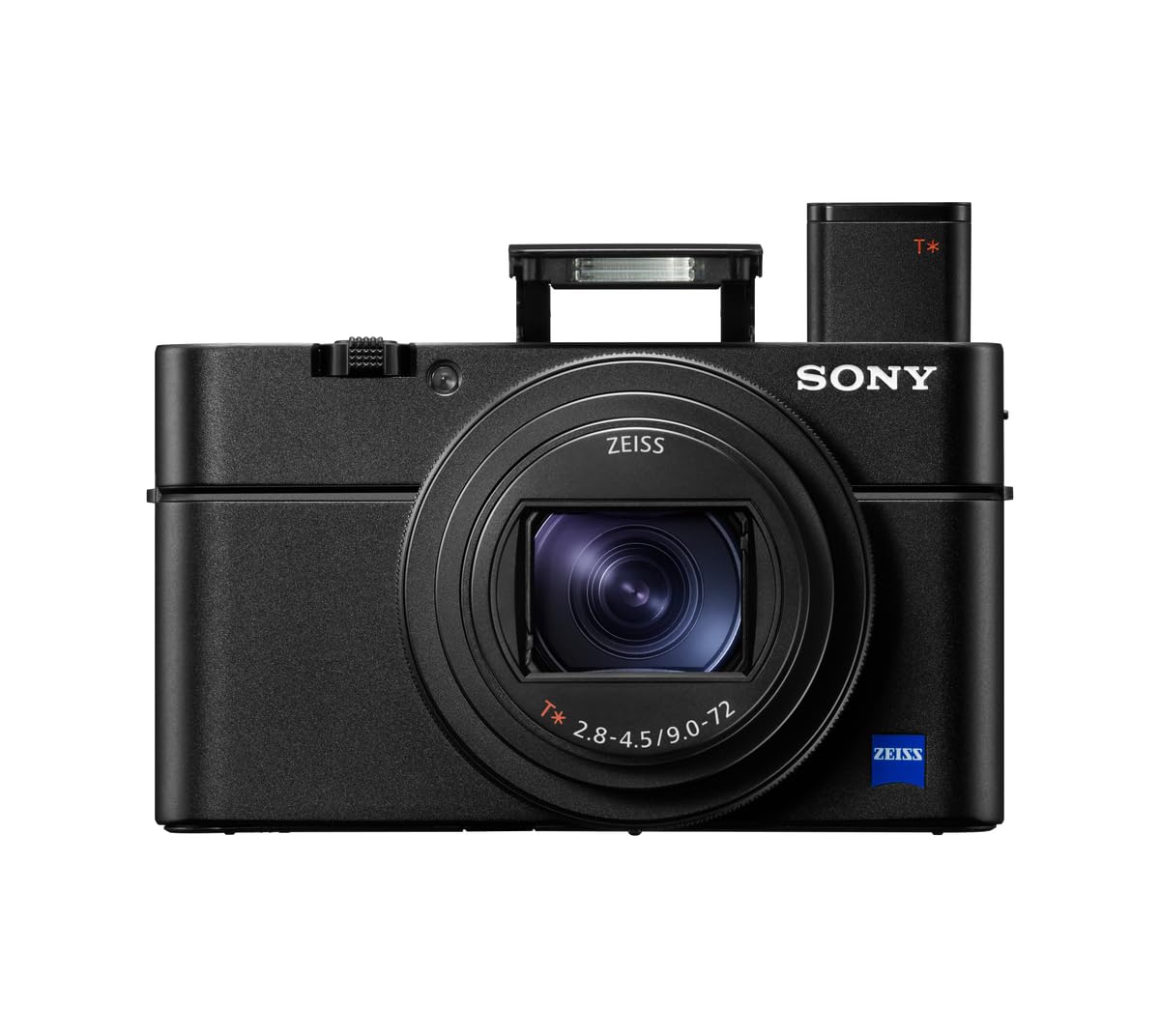
Sony RX100 VII

83 /100
Studio Score Strong Evidence

Key details

Sensor Size
20.1MP 1-inch stacked CMOS
Optical Zoom
8x optical, 24-200mm
Screen / EVF
3-inch tilting touch, EVF
Battery & Charging
Rechargeable Li-ion
Check Price on Amazon

A 1-inch stacked sensor, 24-200mm f/2.8-4.5 lens, pop-up EVF, and 357-point phase-detect AF fit into a body small enough for a jacket pocket. That combination separates it from the budget top pick in this set, which offers optical zoom at a much lower price but none of the control depth or reach flexibility. The Sony packs more photographic capability into a fixed-lens body than anything else here.

The stacked sensor keeps moving subjects locked, and the pop-up EVF gives a bright framing option when sunlight washes out the screen. The lens covers a true 24mm wide end and compresses distant details at 200mm, which makes it a genuine all-in-one travel zoom rather than a fixed-focal compromise. Handheld street shots benefit from the quick phase-detect response, so the camera feels closer to a mirrorless body than to a typical pocket point-and-shoot.

This is the compact for enthusiasts who want one camera to carry through a trip and are willing to pay for control and reach. The luxury price and low-light results that still trail larger-sensor cameras are the boundaries here: buy it for the zoom range, viewfinder, and autofocus, not for indoor noise dominance. The 20.1MP stills cover travel subjects from architecture to distant wildlife, and 4K video is there as a backup when a quick clip matters.

πŸ’‘ Pop up the EVF in bright daylight to avoid screen glare and keep the camera stable.

Pros

  • A 20.1MP stacked sensor with 24-200mm zoom delivers sharp, flexible travel stills from wide scenes to compressed details.
  • Pocket-size body keeps premium controls, a pop-up EVF, and long reach ready without a camera bag.
  • Phase-detect autofocus with 357 points tracks human and animal eyes quickly for street or travel subjects.
  • High-speed shooting, 4K video, and customizable controls pack a lot of capability into the small body.

Cons

  • Self-framing for vlogs is limited by a screen that tilts up or down, not sideways toward the user.
  • Mixed stills and 4K filming across a day can demand a spare battery; video runtime is shorter than on creator-focused compacts.
Our verdict

This is the stills-first pocket camera for travelers who want 24-200mm reach and a viewfinder without carrying a larger kit.

Check Latest Price
5

Best Everyday Compact

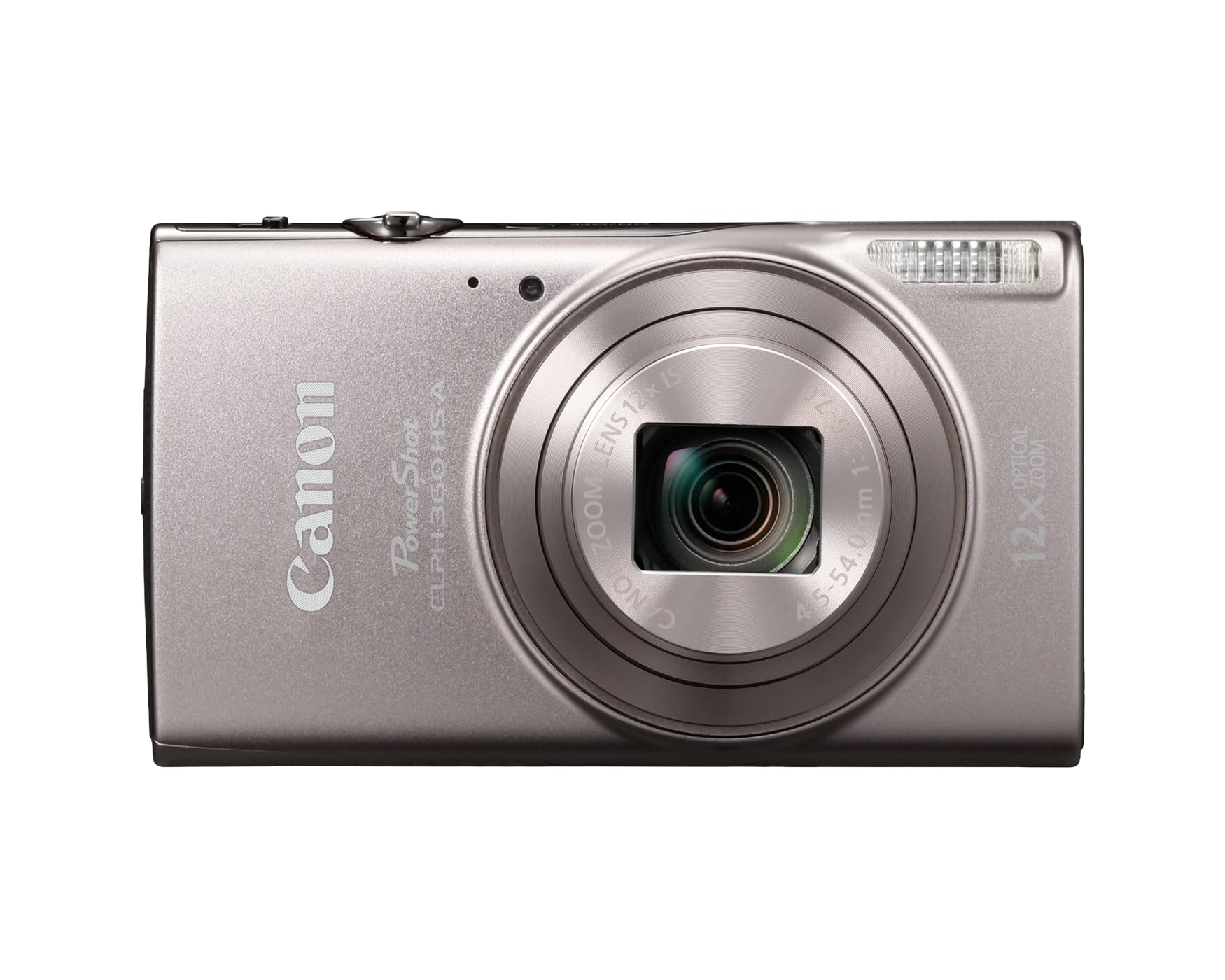
Canon ELPH 360 HS

85 /100
Studio Score Strong Evidence

Key details

Sensor Size
20.2MP CMOS
Optical Zoom
12x optical
Screen / EVF
3-inch fixed LCD
Battery & Charging
Rechargeable Li-ion
Check Price on Amazon

The Canon ELPH 360 HS packs a 12x optical zoom, optical stabilization, and Wi-Fi/NFC sharing into a body small enough for a jacket pocket. That combination makes it a simple step up from a phone for everyday stills and casual clips, without adding a steep learning curve.

This model suits casual family photographers upgrading from a phone who want a small Canon with real optical reach and easy photo sharing. The mid-range price reflects the Canon name and ease of use rather than a spec-sheet win, so buyers comparing raw features per dollar will find better value elsewhere. If your vlogging plans depend on 4K or a flip screen, this is not the camera for that job.

The zoom range covers group photos at the wide end and pulls distant subjects closer at the long end, while the optical stabilizer helps keep handheld shots sharp at full zoom. The 3.0-inch LCD keeps framing easy, and this is a grab-and-go pocket camera for daytime outings and travel days.

Pros

  • Solid overall quality for a compact camera
  • Compact body slips into a jacket or pants pocket
  • Appealing design that fits easily into everyday carry
  • 12x optical zoom with stabilization brings distant subjects closer

Cons

  • The body feels light and less substantial than the mid-range price implies.
  • Battery life can be short for a full day of shooting, and charging behavior may vary.
Our verdict

The ELPH 360 HS is a pocket Canon that does the essentials well: optical reach, stabilizer, and easy photo sharing.

Check Latest Price
6

Best for Kids & Beginners

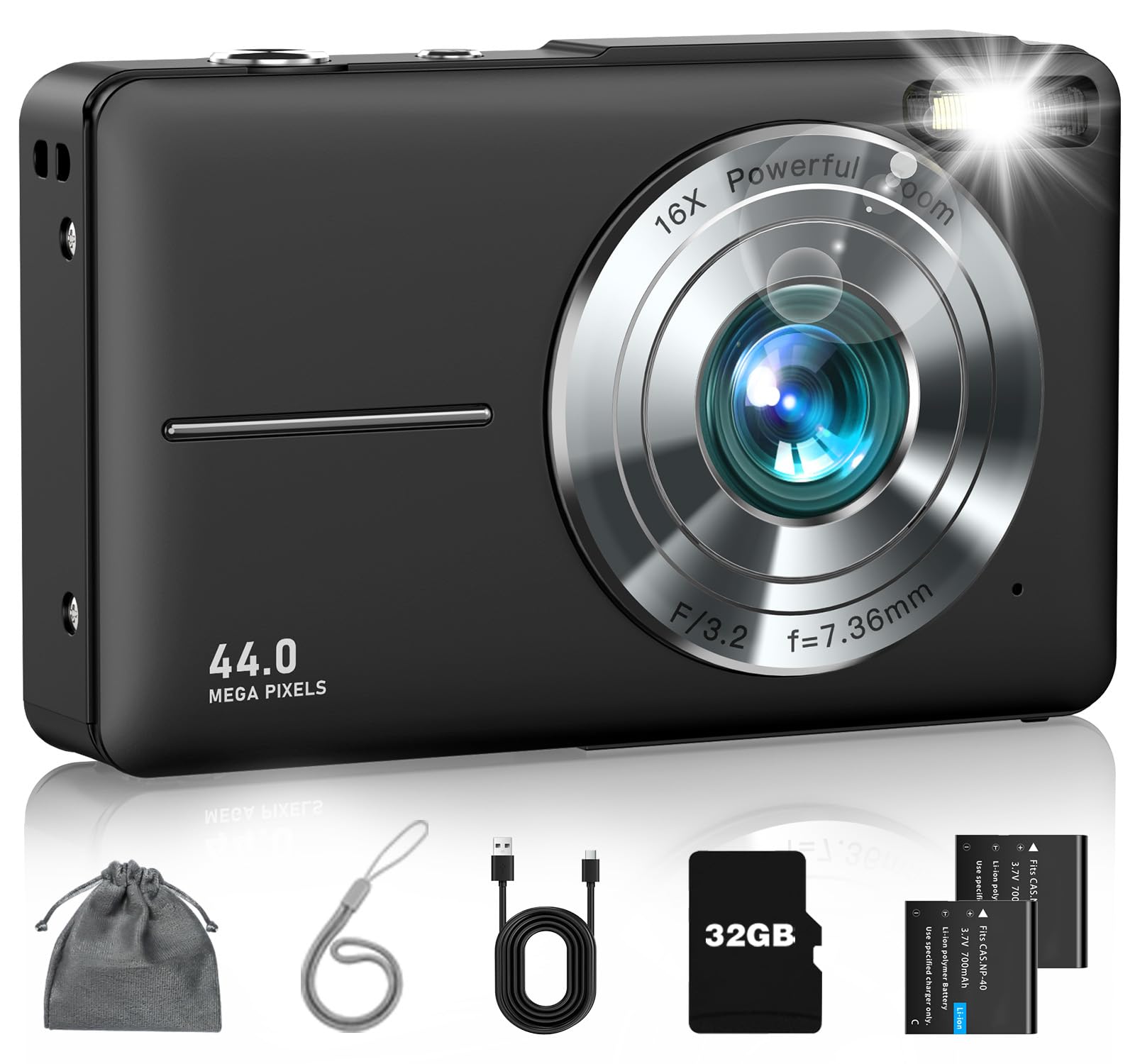
Lecran DC403

87 /100
Studio Score Strong Evidence

Key details

Sensor Size
1/4-inch CMOS
Optical Zoom
None, 16x digital
Screen / EVF
2.5-inch fixed LCD
Battery & Charging
2 rechargeable included
Check Price on Amazon

The Lecran DC403 arrives as a complete first-camera kit: two rechargeable batteries, a 32GB SD card, a lanyard, and a carry bag are in the box. The controls are reduced to point-and-shoot basics, which is the right match for a young user who wants to frame, press the shutter, and see the result on the 2.5-inch LCD.

In bright daylight, the camera produces clear stills and usable FHD 1080p video for classroom projects or vacation diaries. The two included batteries give a casual day of shooting enough power, and swapping in the spare battery takes seconds. Ease of use is the strongest day-to-day trait: there are no mode dials or focus rings to confuse a child. The compact body fits a backpack pocket and small hands without needing a case.

This is for young kids, teens, and classrooms where a complete, simple-to-use kit matters more than camera technology. The small 1/4-inch sensor means image quality depends on good light and modest expectations, and the package is not aimed at adults seeking phone-beating quality. It supplies exactly what a first-time photographer needs: no extra purchases, no steep learning curve.

πŸ’‘ Keep it in bright light and pack the spare battery for full days out.

Pros

  • Complete starter package includes two rechargeable batteries, 32GB SD card, bag, and lanyard.
  • Simple controls let a child shoot without menu-diving or parental setup.
  • Clear, colorful stills in good lighting suit first-time photographers.
  • Compact body and youthful look make it appealing to kids and teens.

Cons

  • No manual control; exposure is fully automatic, so there are no creative modes.
  • No optical zoom; the 16x digital zoom crops into the frame instead of adding reach.
Our verdict

A first-kit purchase for families and classrooms; for real zoom or low-light performance, an optical-zoom compact is the better route.

Check Latest Price
7

Budget Creators

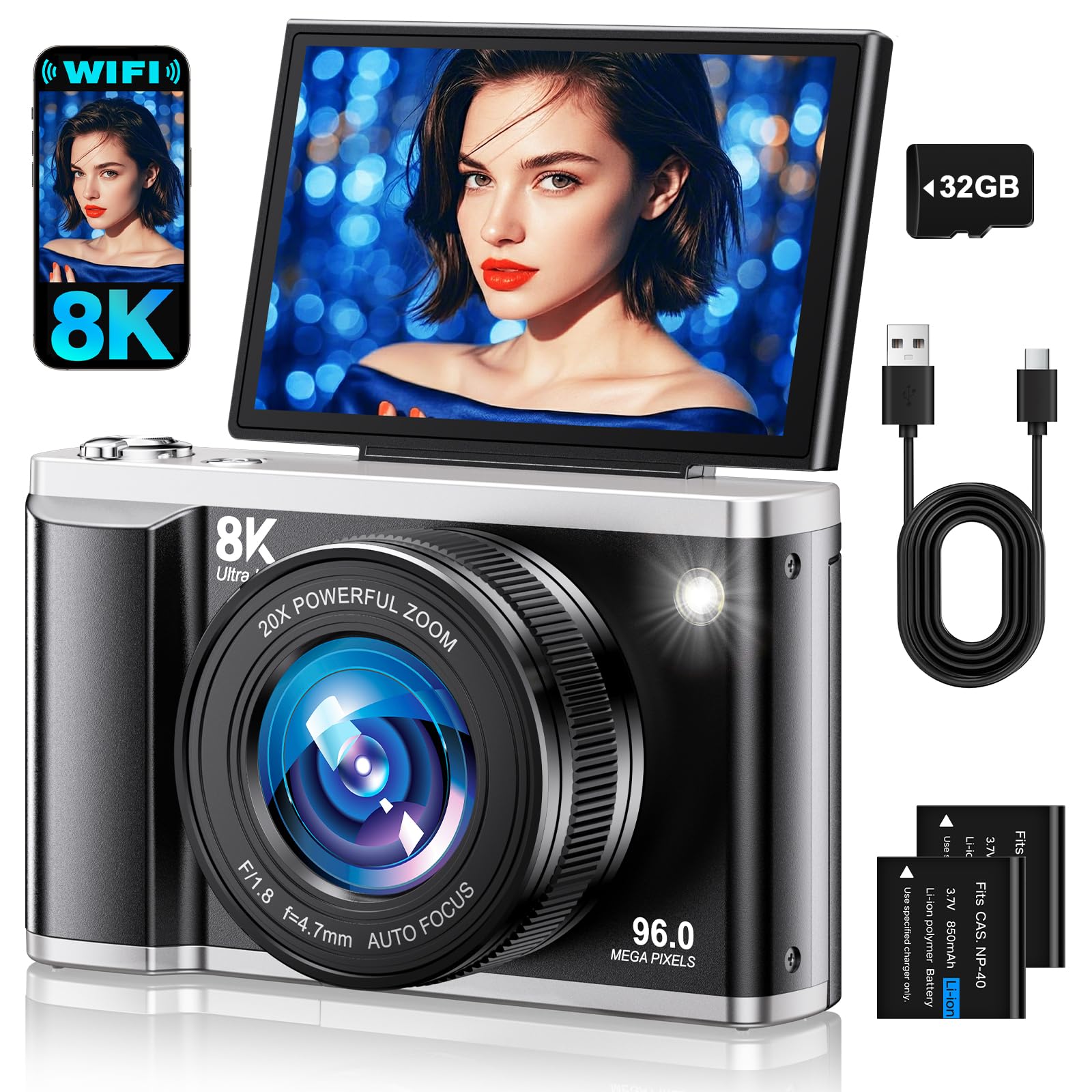
AUREAPIX DC105

84 /100
Studio Score Strong Evidence

Key details

Sensor Size
1/2.3-inch CMOS
Optical Zoom
None, 20x digital
Screen / EVF
3.5-inch flip
Battery & Charging
2 batteries, 32GB card
Check Price on Amazon

At this price, the AUREAPIX DC105 is a complete starter package: the 180-degree flip screen makes self-recording easy, WiFi transfers clips to a phone, and the included second battery and 32GB SD card cover the first-day basics. In good light, the output is sharp enough for social posts and student projects, and autofocus keeps up with casual motion. The reason it sits below stronger fixed-lens compacts is the gap between the advertised specs and the small sensor: the 8K/96MP labels are marketing numbers, not real resolution, and anyone needing true optical reach should look at a travel-zoom model instead.

Pros

  • 180-degree flip screen keeps self-recording framing easy and natural.
  • WiFi transfer moves clips and stills to a phone without a card reader.
  • Kit includes two rechargeable batteries and a 32GB SD card, so the first shooting session is covered.

Cons

  • Digital-only zoom turns long shots into crops, so the 20x setting adds reach without adding detail.
  • The 8K video and 96MP stills labels overstate what the small sensor can actually produce.
Our verdict

For a beginner on a tight budget who mostly records selfie-style clips in daylight, this bundle is a practical first camera; those expecting optical reach or true 8K detail should keep looking.

Check Latest Price
8

Teens, Social

Duluvulu DC101

85 /100
Studio Score Strong Evidence

Key details

Sensor Size
1/3-inch CMOS
Optical Zoom
None, 16x digital
Screen / EVF
3-inch flip
Battery & Charging
2 batteries, 32GB card
Check Price on Amazon

The Duluvulu DC101 arrives as a complete starter kit for first-time creators: two rechargeable batteries, a 32GB SD card, and a 180-degree flip screen in a compact body. Image and video clarity hold up in good light, which suits casual clips and selfie-style vlogs. The stated 4K/48MP output outruns what the small 1/3-inch sensor can deliver, so enlarged stills and dim scenes look soft. That makes it a fun casual camera rather than a serious photographic tool. For teens and social-media beginners, the bundled extras remove the usual first-camera friction; travel users who need zoom reach should look at the optical-zoom compact in this lineup.

Pros

  • Two rechargeable batteries and a 32GB SD card come in the box, so first-time users can start recording right away.
  • A 180-degree flip screen makes selfie composition and casual vlogging simple.
  • Image and video clarity hold up in good light, and the compact body is easy to carry.

Cons

  • No optical zoom; the 16x digital zoom crops into the image instead of adding lens reach.
Our verdict

Best for teens and social-media beginners who want a flip screen and a complete accessory bundle without chasing maximum image quality.

Check Latest Price

How to Choose

Optical vs Digital Zoom

Zoom is only real when glass moves. Digital zoom crops the image inside the camera, which throws away pixels and softens details the moment you use it.

Optical zoom extends the lens physically, so a 5x or 30x zoom keeps the full sensor resolution at the long end. If you shoot distant subjects at concerts or on trails, choose the longest optical reach you can carry.

Sensor Size and Light

Sensor size controls how much light each pixel collects. A 1-inch sensor has roughly four times the area of a 1/2.3-inch sensor, so it produces cleaner images when indoor light drops.

Larger sensors also bring larger lenses and higher prices. If you mostly shoot outdoors in daylight, a 1/2.3-inch sensor is acceptable; if evening and indoor shots matter more, push your budget toward a 1-inch model.

Video and Stabilization

Video resolution is only half the equation. A camera with 4K but no optical stabilization will produce shaky clips when you walk, while a 1080p model with solid stabilization can look steadier.

For casual vlogging, look for a camera with a flip screen and a microphone socket; the built-in mic picks up more handling noise than voice when you hold the camera.

Flip Screen and Viewfinder

A side-articulating or 180-degree flip screen lets you frame self-recording without guessing. A fixed screen is fine for stills but makes vlogging a one-arm guessing game.

A built-in viewfinder helps in bright sunlight, but it adds size and cost. Decide whether you will actually hold the camera to your eye before paying extra for one.

Battery and Charging

Battery chemistry matters as much as capacity. Cameras that use standard AA batteries are easy to replace in a pinch, but they drain quickly and add recurring cost; proprietary lithium-ion packs last longer per charge and recharge faster.

USB-C charging is a modern convenience because you can top up from a power bank on a travel day. If a camera ships without a memory card or charger, factor that into the price before comparing.

Frequently Asked Questions