5 Best Third-Party Lens for Sony in 2026: Match Autofocus to Mount

Which third-party lens for Sony fits your body and shooting style — from fast f/2.8 zooms to budget manual fisheyes.

Third-party Sony E-mount lenses span from pocket-sized manual primes to constant f/2.8 zooms. The hardest part of choosing one is not the glass; it is deciding how much autofocus, stabilization, and sensor coverage you actually need. Get those three answers right, and the rest of the spec sheet falls into place.

A full-frame lens on an APS-C body changes the effective focal length; an unstabilized telephoto forces you onto a tripod on cameras without IBIS; a manual fisheye rewards patience with focus peaking but will not autofocus. Budget listings sometimes contain copied specs from different lenses, so verify mount, focal length, and aperture before relying on the details.

This guide sorts those choices by use-case: a fast general-purpose zoom for hybrid shooters, long reach for sports and wildlife, and affordable primes for creative work. Each pick fits a specific Sony body and shooting style, so the best choice depends on what you plan to frame.

1

Best Overall

Tamron 28-75mm F2.8 G2

92 /100
Studio Score High Confidence

Key details

Aperture
f/2.8 constant
Autofocus
VXD linear motor
Focal Length
28-75mm full-frame
Stabilization
None, body IBIS
Check Price on Amazon

The Tamron 28-75mm F2.8 G2 anchors this third-party E-mount set with a constant f/2.8 aperture and sharpness that holds across the frame. Optical consistency stays controlled from 28mm through 75mm, and the aperture keeps exposure and depth of field predictable when event lighting changes. At a premium price, the lens delivers professional-level detail without requiring a bag full of primes.

The 28-75mm range covers wide group shots, environmental portraits, and tighter head-and-shoulders framing, so a wedding shooter can move from ceremony to portraits without a lens change. Mixed lighting is handled without a visible drop in color or contrast. The lightweight build keeps the camera comfortable over long assignments.

Event, wedding, and portrait photographers are the core audience, and hybrid shooters get one zoom that moves between stills and video without shifting exposure behavior. Body AF settings and shooting technique matter in difficult conditions, so this lens rewards shooters who are comfortable adjusting their camera's focus system.

Within this set, the 70-300mm lens is the choice when reach matters more than speed; the Tamron keeps the constant f/2.8 aperture instead.

💡 Use a smaller AF area and short bursts when tracking difficult subjects.

Pros

  • Optical consistency holds sharpness and contrast across the zoom range.
  • Sharpness supports professional-level detail even in wide-open shots.
  • Cost-effective entry into a constant f/2.8 zoom for full-frame Sony E-mount.
  • Keeps color and contrast stable when moving between bright and dim venues.
  • Lightweight build reduces arm fatigue during extended shoots.

Cons

  • The 75mm long end leaves distant-subject work to a separate telephoto lens.
  • Autofocus can miss focus in low-contrast or fast-moving scenes.
Our verdict

This is the zoom to build a Sony E-mount event kit around.
Check Latest Price
2

Best Telephoto Value

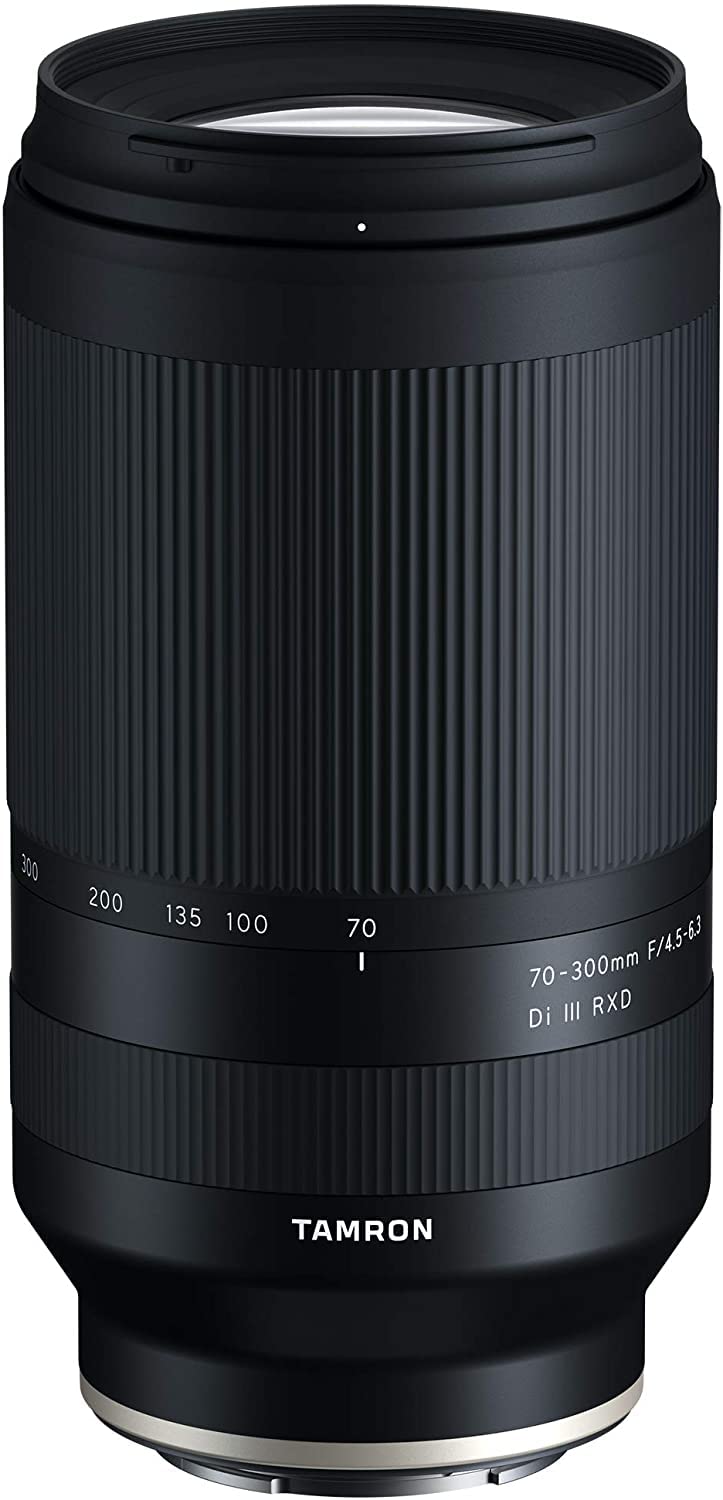
Tamron 70-300mm

90 /100
Studio Score High Confidence

Key details

Aperture
f/4.5-6.3
Autofocus
RXD stepping motor
Focal Length
70-300mm full-frame/APS-C
Stabilization
None, body IBIS
Check Price on Amazon

The Tamron 70-300mm F/4.5-6.3 Di III RXD brings a sharp, compact telephoto zoom to Sony E-mount at a budget-friendly price. The 28-75mm f/2.8 top pick in this set handles close and mid-range work; this lens takes over when the subject is farther away.

Autofocus is fast and quiet, and image quality holds up well from 70mm to 300mm. The 300mm end retains enough sharpness for wildlife framing, which makes the reach practical for sports and wildlife shooting. RXD autofocus follows moving subjects without constant corrections.

Carrying this zoom for a day in the field is easy; the barrel is light enough that arm fatigue stays low. The zoom range is well matched to outdoor venues, where distance between you and the subject is the main challenge. On an APS-C Sony body, the reach becomes even more useful for birds and small wildlife.

Sports, wildlife, and travel shooters get the reach they need without a heavy bag. No optical stabilization is built in; handheld sharpness depends on camera body IBIS or a tripod. The 28-75mm f/2.8 top pick remains the better choice for indoor event coverage.

💡 Keep shutter speed high when shooting handheld at 300mm.

Pros

  • Cost-effective alternative to Sony's long E-mount zooms
  • Sharp image quality across the zoom range
  • Fast, quiet autofocus tracks moving subjects
  • Lightweight barrel makes telephoto carry easy

Cons

  • Maximum aperture narrows to f/6.3 at 300mm, which limits low-light action.
  • Handheld sharpness at 300mm depends on body IBIS or a tripod.
Our verdict

For Sony shooters who want long reach without a heavy bag or a Sony-brand price, this Tamron is the budget-friendly telephoto for outdoor sports and wildlife.

Check Latest Price
3

Best APS-C Prime Value

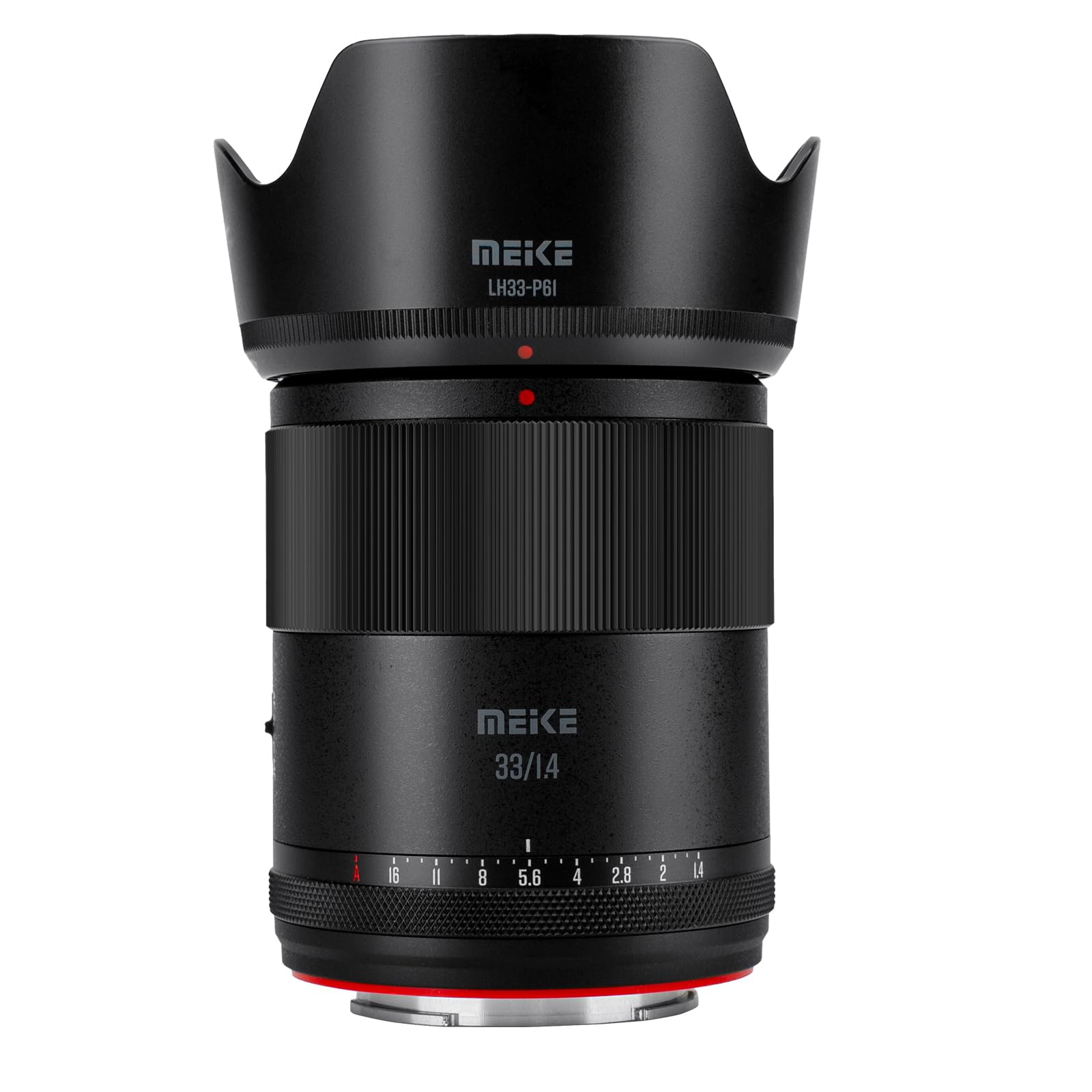
Meike 33mm F1.4

82 /100
Studio Score Strong Evidence

Key details

Aperture
f/1.4-16
Autofocus
STM autofocus
Focal Length
33mm APS-C
Stabilization
None, body IBIS
Check Price on Amazon

The Meike 33mm F1.4 gives APS-C Sony shooters a fast f/1.4 aperture, silent STM autofocus, and a 9-blade aperture in a compact barrel. Where the top pick covers a 28-75mm zoom range on full-frame, this Meike stays with crop-sensor bodies and trades zoom reach for a brighter prime. It is a budget-friendly third-party option for portrait and street work.

Autofocus is fast and smooth, which makes it a quiet partner for video on ZV-E10 or FX30 bodies. Sharpness and color hold up at this price, and the rounded blade design keeps out-of-focus backgrounds smooth for portraits and street scenes.

The right buyer is an APS-C shooter who wants an affordable f/1.4 prime for portraits, street work, and silent video focus. The plasticky barrel suits a lightweight everyday kit more than a rugged workhorse, so this is a controlled-conditions lens for city shooting rather than an outdoor beater.

Pros

  • Very good overall quality for the price
  • Strong value for an f/1.4 autofocus prime
  • Fast, smooth autofocus operation
  • Sharp images with good color

Cons

  • No weather sealing, so dusty or wet shoots are outside its comfortable envelope.
  • Full-frame Sony bodies only see an APS-C crop, so this prime is limited to crop-sensor cameras.
Our verdict

APS-C shooters get a fast, quiet prime that keeps portraits and street scenes sharp at a budget-friendly price; it sits as the value-focused alternative among third-party E-mount primes.

Check Latest Price
4

Best Full-Frame Fisheye

TTArtisan 11mm F2.8

87 /100
Studio Score Strong Evidence

Key details

Aperture
f/2.8-16
Autofocus
Manual focus
Focal Length
11mm full-frame
Stabilization
None
Check Price on Amazon

The TTArtisan 11mm F2.8 gives Sony full-frame shooters a true 180° fisheye view without the cost of the big-brand options. It is the creative outlier among the autofocus zooms in this set, the all-metal prime construction fits the budget price, and the full-frame coverage means you keep the entire 180° angle rather than cropping into an APS-C fisheye.

The focus ring turns with even resistance, so placing the plane of focus feels predictable rather than loose. The 180° projection curves straight lines hard at the edges; that is the fisheye character this lens exists to create, not a correction issue. At f/2.8, the lens holds its own when the light drops.

This lens is for full-frame Sony shooters who want an inexpensive route to extreme fisheye work and are comfortable focusing by hand. Sony's focus peaking makes that workflow usable, but sports and fast-moving subjects fall outside its reach. For still subjects such as abstract architecture, interiors, and wide environmental shots, it rewards a slow, deliberate approach. It is not a substitute for a rectilinear wide zoom; it is a specialty lens with a specific visual payoff.

Pros

  • All-metal barrel provides a solid, steady feel that matches full-frame bodies.
  • Optics stay sharp across the frame for a fisheye at a budget price.
  • f/2.8 aperture keeps indoor and low-light exposure workable.
  • Full-frame 180° coverage is one of the least expensive ways into true fisheye shooting.

Cons

  • On a long walk, the metal barrel adds noticeable heft compared with compact APS-C fisheye primes.
  • In post, you will need to add focal-length data manually because the mount has no electronic contacts for EXIF.
Our verdict

If your Sony E-mount kit needs a 180° creative angle in a metal-bodied prime that won't strain the budget, this is the one.

Check Latest Price
5

Budget APS-C Fisheye

TTArtisan 7.5mm F2.0

85 /100
Studio Score Strong Evidence

Key details

Aperture
f/2.0-16
Autofocus
Manual focus
Focal Length
7.5mm APS-C
Stabilization
None
Check Price on Amazon

Tiny, affordable 7.5mm APS-C fisheye delivering a full 180° view to Sony E-mount shooters. The f/2.0 aperture and sharp center rendering make it a low-cost way to get a dramatic spherical look without hauling a big full-frame lens. Manual focus and no electronic EXIF means it suits street and documentary work where focus peaking does the heavy lifting. The plastic cap can fall off without much force and front-ring tension can vary between copies, so handle the lens before committing. Full-frame shooters should pass — this one covers APS-C bodies only. Also, the listing pulls in copy for a different 17mm f/1.4 lens, so verify the physical markings before trusting the page.

Pros

  • Small, light fisheye with a full 180° view and sharp center image on APS-C Sony bodies.
  • Fun creative prime that is easy to carry and quick to use for manual-focus street shots.
  • Budget-friendly way to enter fisheye photography without buying a full-frame or autofocus lens.

Cons

  • The included lens cap can fall off without much force, making it easy to lose.
  • Front-ring tension can vary between copies, so a quick check before buying is wise.
Our verdict

For APS-C Sony shooters who want a manual-focus fisheye on a budget, this delivers the look — once you confirm the cap and front ring are fine.

Check Latest Price

How to Choose

Autofocus Speed

The focus motor determines how quickly the lens locks onto a moving subject. Tamron's VXD uses a voice-coil linear motor, while RXD is a stepping-motor design; a manual lens has no motor at all. If you shoot sports or events, prioritize a modern motor, while static subjects make a slower motor a cost saving rather than a dealbreaker.

Image Stabilization

Optical stabilization shifts lens elements to counter shake, which is separate from in-body stabilization. On cameras with IBIS, an unstabilized lens still works, but shake magnification grows with focal length. Check your camera body before choosing an unstabilized telephoto; without IBIS, handheld 300mm shots need a tripod or a stabilized lens.

Aperture and Low Light

Maximum aperture controls how much light reaches the sensor at any shutter speed. A constant f/2.8 zoom keeps that light across the range, while a variable-aperture lens like f/3.5-6.3 loses light as you zoom. For indoor or evening work, an f/1.4 prime captures more light and creates thinner depth of field, with size and cost as the trade-off.

Focal Length and Format

E-mount lenses are full-frame (FE) or APS-C. A full-frame lens on an APS-C body works but changes the effective view; an APS-C lens on a full-frame body usually vignettes heavily or forces crop mode. Match the format to your sensor before comparing focal lengths.

Weight and Portability

Long telephoto zooms and fast wide-aperture primes need bigger glass, so weight climbs with range and speed. The hidden trade-off is balance: a heavy lens on a small APS-C body pulls forward and handles worse than the same lens on a full-frame grip. Travel shooters should weigh the lens against the body, not just the lens alone.

Frequently Asked Questions