5 Best Lens for Astrophotography in 2026: Match Lens to Your Camera

Find the best lens for astrophotography by matching aperture, focal length, and sensor size to your camera and night-sky goals.

Most astrophotography lens disappointments come down to focal length and sensor format, not lens quality. On an APS-C body, a 50mm prime frames like roughly 80mm, which is too tight for sweeping Milky Way shots. A 16mm APS-C lens gives the equivalent of a 24mm full-frame view, the range most night-sky shooters actually want.

Aperture is the second decision. Faint stars need light, so f/1.4 or f/2 lenses keep shutter times shorter and ISO lower than f/2.8 options. That extra stop is worth more than lens coatings or brand prestige when you are shooting a dark sky.

This guide frames each pick around the camera you own and the target you shoot, from tight deep-sky objects to wide starscapes. Manual focus is part of the workflow for many astro shooters, so a lens that excels optically can still be a smart buy even without autofocus.

1

Best Overall for Astrophotography

Sigma 16mm f/1.4 Sony E

96 /100
Studio Score High Confidence

Key details

Weight
14.3 oz
Focus Type
Autofocus
Focal Length
16mm, 24mm equiv.
Max Aperture
f/1.4
Check Price on Amazon

F/1.4 speed on a 16mm APS-C prime delivers bright stars and a 24mm-equivalent field of view, making this the default astro lens for Sony APS-C shooters. The optics stay sharp wide open, so night-sky images hold crisp star points without stopping down. Autofocus locks quickly in dim conditions on Sony APS-C bodies, and the build feels solid during extended outdoor sessions.

Fixed-tripod Milky Way work benefits from the f/1.4 aperture because exposures can stay short enough to limit star trailing. At f/1.4, the aperture gathers roughly twice the light of an f/2 lens, which can be the difference between a clean ISO 1600 frame and a noisier ISO 3200. The 24mm-equivalent field accommodates the core and a stretch of foreground, which is what single-frame starscapes need. The same wide angle is useful for low-light video and event coverage, where the fast aperture keeps shutter speeds usable without raising ISO too far.

Sony APS-C owners chasing the Milky Way are the primary fit. Full-frame E-mount users should know this is an APS-C lens, so a full-frame body will shoot in crop mode rather than use the whole sensor. That is not a drawback for the intended APS-C audience, but it is a clear boundary before purchase. Photographers who want a genuinely tiny lens will also feel the 14.3 oz weight; the f/1.4 glass and solid construction are the reason it is there.

At its price point, the Sigma pairs f/1.4 light collection with strong sharpness and autofocus, a combination tied to higher price tiers. That makes it a cost-effective step for APS-C shooters who want a dedicated astro prime instead of a slow kit zoom. Landscape and event photographers also get a wide-angle that handles daytime framing and night-sky work in one bag.

The premium full-frame 14mm in this comparison adds a wider view and larger image circle, but it also asks for a full-frame body and a steeper price. The Sigma avoids both of those requirements for Sony APS-C owners while keeping the astro essentials: f/1.4, 16mm, and steady autofocus. For Sony APS-C owners, this is the widest f/1.4 framing in the group without stepping up to the full-frame GM option.

๐Ÿ’ก Use manual focus with focus magnification to confirm infinity on nights when autofocus cannot find a bright star.

Pros

  • Sharp wide open, so night-sky images keep crisp star points without stopping down.
  • F/1.4 aperture and 24mm-equivalent field make Milky Way framing easy with foreground.
  • Autofocus keeps up in dim conditions on Sony APS-C bodies.
  • Solid build and cost-effective pricing for an f/1.4 wide prime.
  • Covers landscapes, events, and low-light video from one compact wide-angle lens.

Cons

  • Close-range indoor shots can show minor barrel distortion at the edges.
  • Full-frame Sony bodies must crop into the APS-C image circle instead of using the full sensor.
Our verdict

Sony APS-C owners get one lens that handles Milky Way framing, f/1.4 light collection, and daytime wide-angle work without moving to a full-frame system.
Check Latest Price
2

Best for Deep-Sky / Telephoto Astro

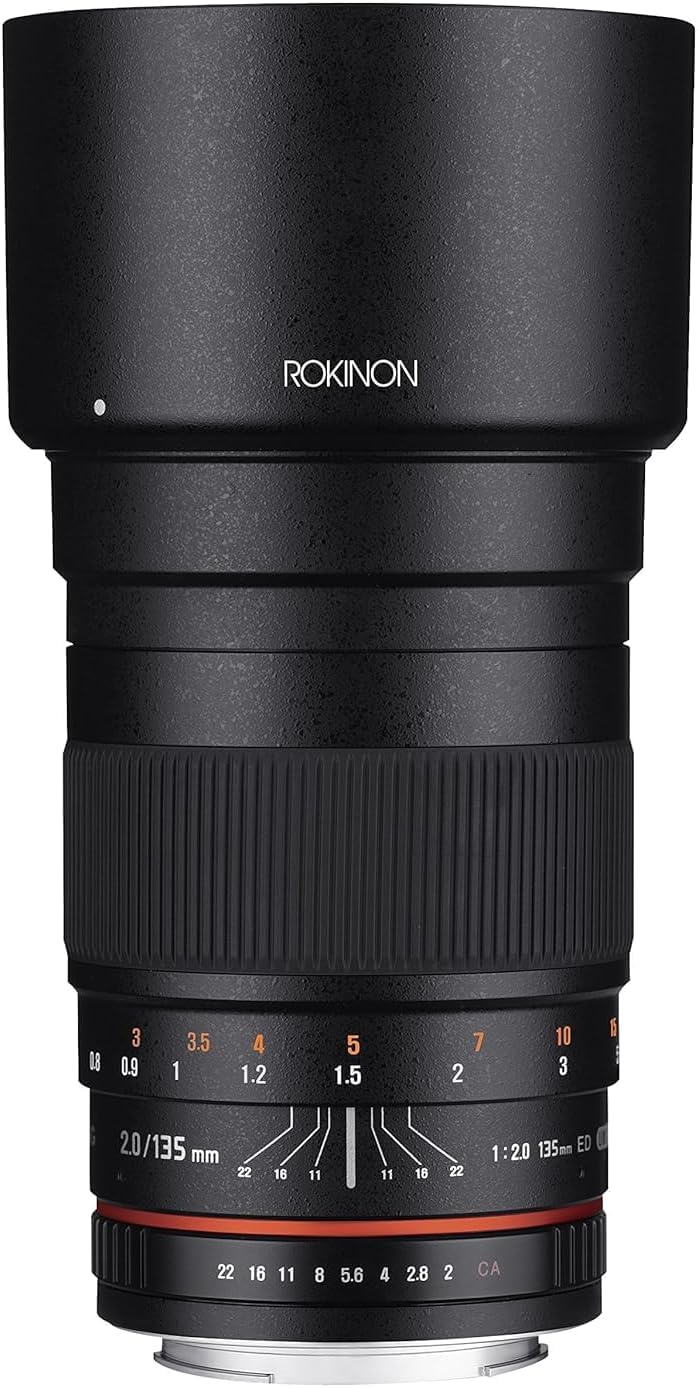
Rokinon 135mm f/2.0 Canon

92 /100
Studio Score High Confidence

Key details

Weight
1.8 lb
Focus Type
Manual
Focal Length
135mm
Max Aperture
f/2.0
Check Price on Amazon

The Rokinon 135mm f/2 is a manual-focus telephoto prime with enough speed and ED-glass correction to hold stars across a tracked frame. At f/2, bright stars stay compact and color fringing remains low, which makes this focal length practical for small nebulae and tight star groups without moving to a telescope. It takes the middle ground between a 50mm constellation lens and a dedicated astrograph for Canon EF shooters.

The f/2 aperture keeps exposure times short enough for night-sky work at 135mm. That speed matters because a 135mm prime is too narrow for single-frame Milky Way scenes; it is built for framed targets like small nebulae and constellations, not sweeping wide-field landscapes.

Canon EF shooters who already own a star tracker and are comfortable with manual optics will get the most from this lens. Manual-only operation with no electronic focus confirmation is the tradeoff: focus and exposure are set by hand. Photographers who need autofocus for moving subjects should look at an AF telephoto instead.

๐Ÿ’ก Set focus with magnified framing before the tracking run; the ring has enough damping to hold that position.

Pros

  • Fast 135mm f/2 reach for deep-sky targets without the cost of an autofocus telephoto.
  • ED glass keeps stars tight and controls color fringing at wide apertures.
  • Smooth manual focus ring with firm resistance; focus position can hold through a sequence.
  • Cost-effective alternative to autofocus telephotos with comparable optical quality.

Cons

  • Focus is the slow part of the workflow: each target needs a deliberate live-view check before capture.
Our verdict

For a Canon EF shooter building a tracked deep-sky kit, this 135mm f/2 pairs sharpness with reach at a realistic price.

Check Latest Price
3

Best Compact RF Ultra-Wide

Canon RF16mm f/2.8 STM

92 /100
Studio Score High Confidence

Key details

Weight
163 g
Focus Type
Autofocus
Focal Length
16mm full-frame
Max Aperture
f/2.8
Check Price on Amazon

The RF16mm f/2.8 weighs 163 g and stays close to the camera body, so it slips into a bag without the bulk of a fast-aperture wide prime. Against the EF 50mm f/1.8 in this set, it trades reach for a true starscape field of view, making single-frame Milky Way framing practical on full-frame RF bodies. Native RF mount means EOS R owners get autofocus without an adapter.

Center sharpness holds up well at f/2.8, and the image quality stays clear across the frame for a compact prime in this price tier. The small barrel keeps the camera balanced on a travel tripod, and the wide 16mm view leaves room to crop during post-processing.

Priced below other RF wide primes, the lens opens up full-frame 16mm coverage for shooters building a kit around night landscapes and travel. The STM autofocus handles general shooting without issue, and the light weight encourages keeping the lens on the camera.

This lens fits Canon RF shooters who want one lightweight ultra-wide for starscapes and travel. F/2.8 is the slowest aperture among the dedicated astro picks, so very dark-sky work calls for higher ISO or longer tracking; budget astrophotographers who can work with that constraint get a highly portable full-frame night-sky lens.

Pros

  • Weighs 163 g and stays close to the camera body, making it an easy carry for all-day travel shoots.
  • Priced well below other RF ultra-wides while still delivering sharp, clear frames on full frame.
  • Ultra-wide 16mm field of view covers night landscapes, vlogging, and trip-based shooting without a heavy kit.

Cons

  • Low-contrast night scenes can cause autofocus to slow or hunt, so manual focus is the dependable route.
Our verdict

Canon RF shooters who want a go-anywhere ultra-wide for night landscapes and travel get a compact, sharp prime at a budget-friendly price.

Check Latest Price
4

Best Premium Full-Frame Ultra-Wide

Sony 14mm f/1.8 GM

92 /100
Studio Score High Confidence

Key details

Weight
460 g
Focus Type
Autofocus
Focal Length
14mm
Max Aperture
f/1.8
Check Price on Amazon

The Sony 14mm f/1.8 GM pairs a full-frame image circle with an ultra-wide, fast-aperture formula that no other lens in this set matches. At 14mm it frames a broader night-sky view than the crop-sensor top pick, and the f/1.8 aperture gathers more light than f/2.8 ultra-wides, which matters for fixed-tripod starscapes. The 460g autofocus body keeps the premium build easy to carry to a dark-sky site.

On a full-frame Sony body, the 14mm view fits the Milky Way arch and a foreground line into a single frame. The GM optics target corner-to-corner sharpness at f/1.8, so edge stars stay tight at maximum aperture. The fast f/1.8 opening also keeps exposure times shorter than an f/2.8 ultra-wide, reducing the chance of visible star motion before trailing becomes a concern.

Dedicated full-frame Sony astrophotographers are the buyers who will fully use this lens. Budget-focused photographers and APS-C shooters who do not need full-frame GM coverage can cover similar starscape framing with the crop-sensor top pick for less money; the luxury price and full-frame GM design are more than casual or APS-C shooters need. For anyone working with a full-frame body and treating astro as a primary genre, the 14mm f/1.8 GM sets the reference point.

๐Ÿ’ก For the sharpest f/1.8 stars, confirm focus with magnification on a bright star rather than relying on the distance scale.

Pros

  • Widest full-frame field of view in the astro set; 14mm captures the Milky Way without stitching.
  • F/1.8 light gathering shortens exposure times compared with f/2.8 ultra-wides.
  • Corner-to-corner sharpness at f/1.8 keeps edge stars tight for detailed wide-field images.
  • 460g autofocus body is practical for carrying to a dark-sky site.

Cons

No notable drawbacks to flag.

Our verdict

For full-frame Sony shooters whose night-sky work favors wide, single-frame starscapes, the 14mm f/1.8 GM is the reference lens in this category.

Check Latest Price
5

Budget Low-Light

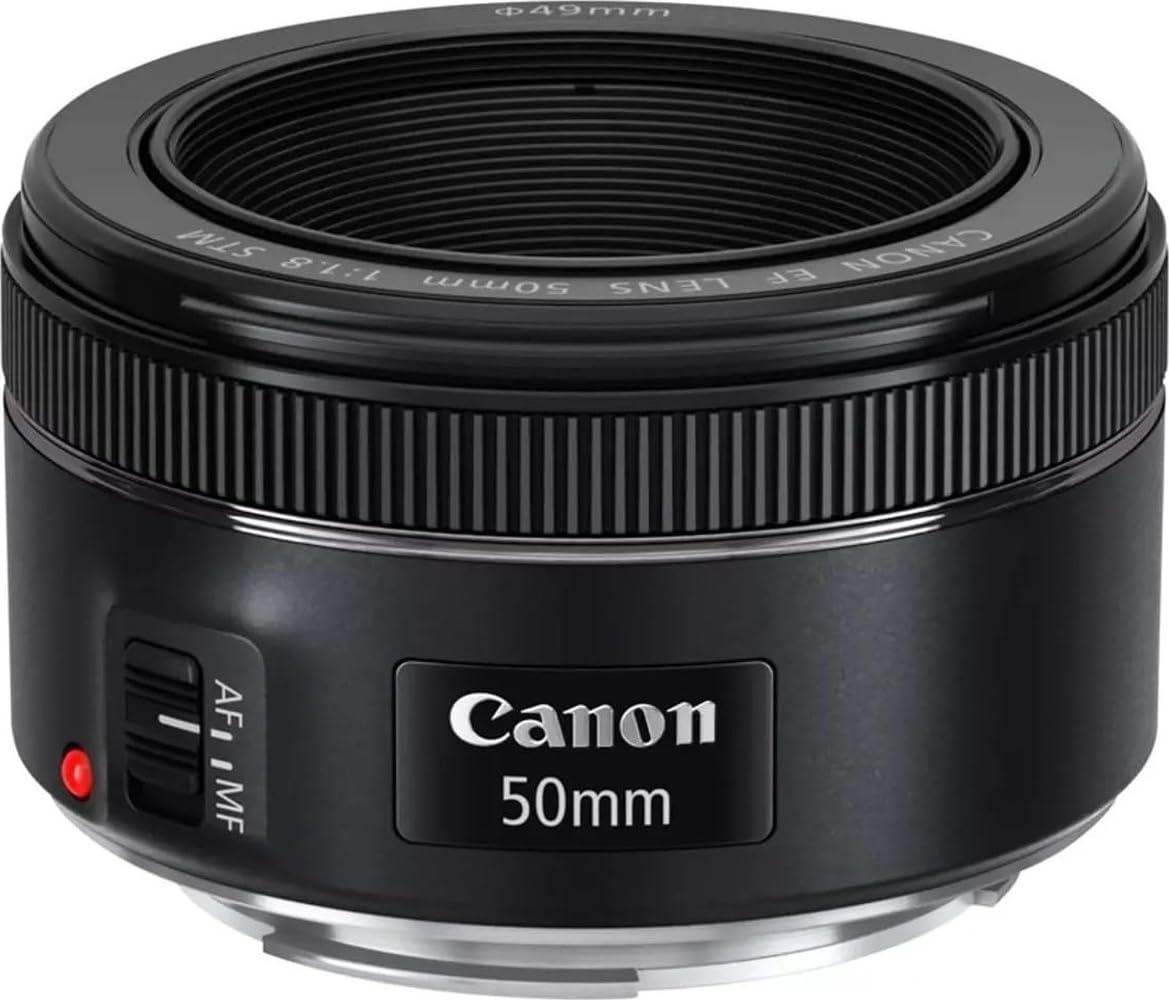
Canon EF 50mm f/1.8 STM

96 /100
Studio Score High Confidence

Key details

Weight
5.6 oz
Focus Type
Autofocus
Focal Length
50mm, 80mm equiv.
Max Aperture
f/1.8
Check Price on Amazon

With f/1.8 speed, a 5.6 oz body, and a budget price, the Canon EF 50mm f/1.8 STM is a flexible low-light prime for Canon EF shooters. The aperture is bright enough for handheld evening portraits and tracked constellation targets, and the sharpness holds up without moving to a premium lens. But 50mm on full-frame and APS-C bodies is too tight for single-frame Milky Way arches; that wide-field job belongs to the RF ultra-wide in this guide. The Canon shooter who gets the value here is one who wants a single affordable prime for portraits plus occasional night-sky work rather than a dedicated starscape lens.

Pros

  • Sharpness and image quality hold up at f/1.8 without stepping up to a premium lens.
  • Low-light performance keeps handheld evening shots usable without a flash.

Cons

  • Focusing noise can be audible in a quiet room, potentially drawing attention during close-up portraits.
  • Autofocus can feel slow to lock in low-contrast night scenes.
Our verdict

The best fit for this lens is a Canon EF shooter who wants one affordable prime for portraits and occasional tracked constellation work.

Check Latest Price

How to Choose

Maximum Aperture

Maximum aperture controls how much light reaches the sensor per second. An f/1.4 lens collects about four times as much light as an f/2.8 lens, which translates into noticeably brighter stars, shorter shutter times, or lower ISO. On a fixed tripod, that extra stop can be the difference between a clean 10-second exposure and a noisy one.

Focal Length & Field of View

Focal length sets the angular width of the sky you can capture. A 14mm or 16mm lens frames broad Milky Way arches, while a 50mm lens frames a narrow slice and suits constellation work. For starscapes, wider is usually the right call.

On APS-C, multiply the focal length by 1.5 (Canon by 1.6) to get the actual framing. A 16mm APS-C lens behaves like a 24mm full-frame wide-angle; a 50mm lens becomes a short telephoto. Ignoring this crop factor is the quickest way to buy the wrong lens.

Mount & Sensor Compatibility

The mount determines whether the lens physically fits, but sensor coverage decides whether the image circle covers the whole frame. An APS-C lens on a full-frame body forces crop mode or heavy vignetting; a full-frame lens on APS-C works but changes framing.

Check the lens code: Sony FE is full-frame, Sony E and Sigma DC are APS-C, and Canon RF-S or EF-S labels indicate APS-C. Buying an APS-C lens for a full-frame body is one of the most common sensor mismatches in astro gear.

Focus Type & Reliability

Autofocus helps during the day, but at night most astrophotographers focus manually with magnified live view, because contrast AF struggles on stars. A well-damped manual focus ring is therefore a real feature, not a limitation, for night-sky work. If a lens is manual-only, budget extra time for the focusing workflow.

Weight & Portability

Weight matters when the lens rides on a star tracker, gimbal, or backpack all night. A 460g full-frame prime is manageable, while a 1.8 lb telephoto needs a sturdier tracker head for deep-sky work. The ideal weight depends on your mount's payload capacity, not just your arm.

Frequently Asked Questions