7 Best Canon Portrait Lens 2026: Match Your Mount and Autofocus

Find the best Canon portrait lens for your body and style, from budget EF 50mm primes to RF 85mm hybrids and pro 70-200mm zooms.

Every Canon portrait lens listing promises creamy bokeh, yet the choice that determines whether you actually use it is the mount on your camera. EF lenses fit older DSLRs and adapt onto mirrorless bodies; RF lenses drop in without an adapter but only work on Canon's R series. Pick the wrong one and you are already planning around an adapter or a body upgrade.

Autofocus behavior is the second quiet trade-off. A cheap f/1.8 can produce lovely stills, but slow, noisy AF reduces hit rate when people move or light drops. The practical result: a lens that works well for posed portraits can be frustrating for an event or a toddler.

Match the lens to your body and the way you shoot, not just the aperture number. That means choosing between a proven EF prime you can carry from DSLR to mirrorless and a native RF lens built for the smaller, lighter R-series kit.

1

Best Overall

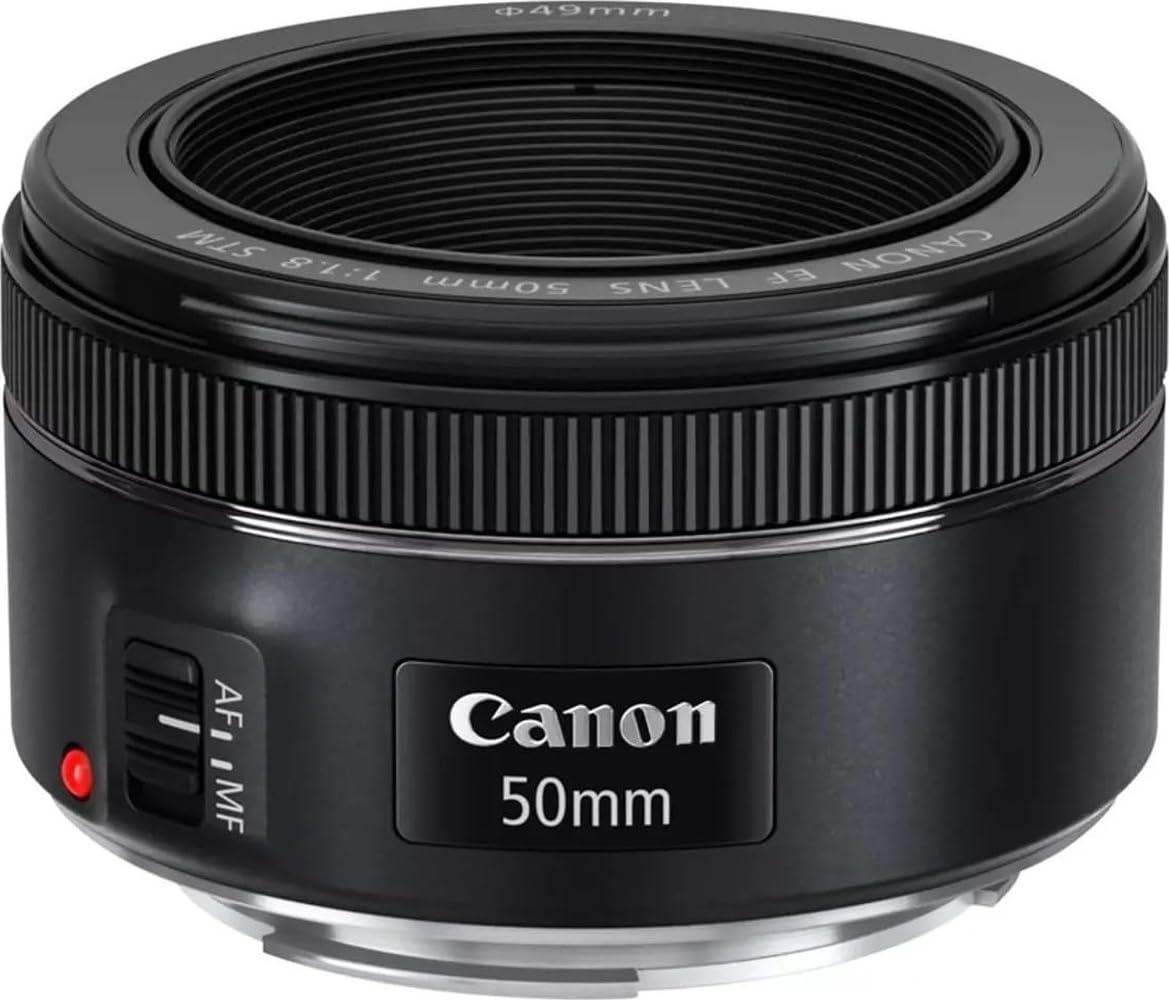
Canon EF 50mm f/1.8 STM

96 /100
Studio Score High Confidence

Key details

Mount Type
Canon EF
Focal Length
50mm
Max Aperture
f/1.8
Autofocus Motor
STM
Check Price on Amazon

Sharp f/1.8 portraits, creamy bokeh, and native EF compatibility at an entry price are the core of the Canon EF 50mm f/1.8 STM. At normal portrait distances, the wide aperture isolates subjects and the out-of-focus falloff stays smooth rather than busy. Stop down to f/2.8 or f/4 and the lens resolves fine detail well enough to cover typical portrait needs. This is the rare budget prime that does not force you to trade away image character.

On APS-C bodies, the 50mm produces an 80mm-equivalent field of view, a classic portrait length. On full-frame, it sits closer to a standard lens, so three-quarter framing is the sweet spot; tight headshots call for more distance or an 85mm. The barrel is light and compact enough to carry through an event without weighing you down, and the f/1.8 aperture keeps shutter speeds usable indoors.

This lens suits first-time Canon DSLR portrait shooters, budget-conscious full-frame or APS-C users, and event/walkaround shooters who want a fast, light prime. The autofocus can be audible and may hunt in low-contrast scenes, so a quiet ceremony or video session may expose that. R-series owners already adapting EF glass get the same optical character without moving to a native RF prime; shooters who refuse an adapter should pick the compact RF option instead. For the money, it is the easiest way to get a portrait-sharp 50mm.

Compared with that native RF 50mm, this EF version is the value pick when you already own an adapter or a DSLR. The RF lens adds a control ring and smaller footprint, but the EF STM costs less and fits existing EF mounts. For anyone migrating from a Canon DSLR to an R-series body, this lens makes the transition cheaper before committing to RF-native glass. The tradeoff is an older, simpler physical package rather than the RF's more modern ergonomics.

The f/1.8 aperture is several stops faster than a typical kit zoom, which opens up indoor event shooting without a flash. At 50mm, framing is direct: move your feet for the crop you want. It will not replace a 70-200mm f/2.8 for flexible event coverage, but for a single fast prime it covers a lot of portrait ground.

๐Ÿ’ก With no image stabilization, keep shutter speed around 1/80s or faster when shooting handheld.

Pros

  • Sharp image quality and detail at a budget price.
  • Flattering portrait isolation with strong background blur.
  • Dependable everyday performer for casual event shooting.
  • Creamy bokeh with a smooth falloff in out-of-focus areas.
  • Impressive sharpness for close-range portrait work.

Cons

  • Focus motor can be audible in quiet settings, which matters for video or hushed scenes.
  • Autofocus can hunt in low-contrast scenes, slowing the shot in dim or backlit conditions.
Our verdict

For portrait-focused Canon users on a budget, the EF 50mm f/1.8 STM is the sensible buy: it delivers the look without the L-series cost, and it adapts cleanly to R-series bodies.

Check Latest Price
2

Best 85Mm for EF DSLRs

Canon EF 85mm f/1.8 USM

94 /100
Studio Score High Confidence

Key details

Mount Type
Canon EF
Focal Length
85mm
Max Aperture
f/1.8
Autofocus Motor
Ring USM
Check Price on Amazon

The 85mm f/1.8 delivers creamy bokeh and fast, quiet ring-USM autofocus โ€” a combination made for people photography. Center sharpness is strong at f/1.8, so eyes stay crisp while the background melts into soft blur. Color and contrast skew natural, which keeps skin tones flattering without extra editing. At f/2.8 and beyond, edge detail cleans up further, which helps when the portrait needs more of the frame in focus.

The mid-range price undercuts L-series 85mm glass while keeping the classic EF portrait look. Event shooters can frame a head-and-shoulders shot from a comfortable distance, and the wide f/1.8 aperture is useful in rooms where kit zooms start to struggle for light. For an enthusiast, the jump from a general-purpose zoom to this prime shows up immediately in subject separation.

Ring-USM focus responds quickly on EF DSLR bodies, and the 85mm compression flatters facial features at typical shooting distances. The barrel is compact enough to avoid front-heavy balance on smaller cameras, which makes it a practical daily carry for people-focused shooters.

This is for EF DSLR owners who want a true portrait prime without stepping into L-series pricing. There is no image stabilization, so keeping shutter speed around 1/125s or faster is part of the routine. RF-only mirrorless users who don't want an adapter will prefer a native RF lens, and anyone needing weather sealing should look at L-series alternatives.

Pros

  • Sharp center detail at f/1.8 keeps eyes crisp while backgrounds soften.
  • Smooth bokeh at f/1.8 separates people from busy backgrounds.
  • Ring USM autofocus responds quickly and quietly during events.
  • Mid-range price undercuts L-series portrait glass without losing the 85mm look.

Cons

  • Purple fringing can appear on high-contrast edges at f/1.8; stopping down reduces it.
  • Autofocus can hunt in low-contrast scenes, so backlit or dim subjects may need a second focus attempt.
Our verdict

For EF DSLR portrait work, this 85mm f/1.8 is the mid-range route to creamy bokeh and flattering compression without the L-series price.

Check Latest Price
3

Best Budget RF Prime

Canon RF 50mm f/1.8 STM

94 /100
Studio Score High Confidence

Key details

Mount Type
Canon RF
Focal Length
50mm
Max Aperture
f/1.8
Autofocus Motor
STM
Check Price on Amazon

The RF 50mm f/1.8 STM is the native mount answer to the adapted EF nifty-fifty: shorter, lighter, and loaded with a programmable control ring that the older lens lacks. It sits flush on R-series bodies, making it a natural daytime carry for environmental portraits and street photography. The f/1.8 aperture gives enough background separation for flattering people shots without the size of an 85mm prime.

At f/1.8, central sharpness is strong and bokeh stays smooth for flattering portrait backgrounds. Stills autofocus is quick and precise for a budget prime, and the STM motor keeps focus changes predictable. The plastic barrel and mount keep weight low, which helps all-day carry, though the build does feel budget-oriented next to L-series glass.

This is the right lens for new R-series owners who want a native 50mm for stills portraits and everyday photography without adding EF adapter bulk. If your priority is tight headshots, the 50mm focal length won't match an 85mm. Video shooters tracking moving subjects should expect the autofocus to hunt; this lens is best treated as a stills portrait prime.

Pros

  • Budget-friendly native RF prime with autofocus and no adapter needed
  • Lightweight design that suits everyday carry and travel
  • Sharp image quality and detail at f/1.8
  • Pleasant bokeh for flattering portrait backgrounds

Cons

  • Plastic barrel and mount feel budget-oriented, a tradeoff for the light weight
Our verdict

For R-series stills shooters, this is the light, native prime that makes everyday portraits easy and keeps the kit bag small.

Check Latest Price
4

Best RF Portrait/Macro Hybrid

Canon RF 85mm f/2 Macro

92 /100
Studio Score High Confidence

Key details

Mount Type
Canon RF
Focal Length
85mm
Max Aperture
f/2
Autofocus Motor
STM
Check Price on Amazon

The Canon RF 85mm f/2 Macro IS STM combines 85mm portrait compression with 0.5x close-up capability and 5-stop image stabilization in one native RF lens, setting it apart from the dedicated EF portrait primes in this comparison. It is a portrait-plus-macro hybrid, not an f/1.2 low-light bokeh specialist.

Sharp RF optics deliver clean detail at f/2, smooth background separation for people shots, and enough resolution for product close-ups. The mid-range price undercuts RF L-series portrait primes while keeping the optical character that makes an 85mm flattering.

At 0.5x magnification, a hand-sized subject can fill the frame, and the IS steadies hand-held close-ups. This lens is at its best with static subjects: posed portraits, details, and tabletop products.

This suits RF mirrorless owners who want one lens for portraits and product work without adding an EF adapter. Autofocus is not L-series quick, so event shooters relying on fast tracking in dark rooms should weigh that before choosing.

Pros

  • Sharp RF optics deliver clean detail at f/2 and smooth background separation for portraits.
  • 0.5x macro captures product and detail shots without adding a separate macro lens.
  • 5-stop IS steadies hand-held close-ups and portrait frames.
  • Mid-range pricing undercuts RF L-series portrait primes while keeping strong image quality.

Cons

  • At f/2, it gives up a stop of light versus f/1.2 portrait primes in near-dark venues.
  • In dim light or close-focus situations, the STM motor can hunt before locking.
Our verdict

For R-series owners who want one lens for portraits and product close-ups, this RF 85mm f/2 Macro covers both at a mid-range price.

Check Latest Price
5

Best Pro Telephoto Zoom

Canon RF 70-200 f/2.8 L

93 /100
Studio Score High Confidence

Key details

Mount Type
Canon RF
Focal Length
70-200mm
Max Aperture
f/2.8
Autofocus Motor
Dual Nano USM
Check Price on Amazon

At 70-200mm f/2.8, this RF zoom covers the portrait lengths that matter at events and weddings, with dual Nano USM and 5-stop IS in a body lighter than the EF version it replaces. The f/2.8 aperture holds exposure steady as you zoom, and the range gives tight headshots at 200mm and environmental portraits at 70mm without swapping lenses.

On an R-series body, autofocus locks quickly in low light, and the control ring adjusts exposure without moving your eye from the viewfinder. The 5-stop IS steadies handheld shots at telephoto lengths, which helps hybrid sessions that alternate between stills and video.

The working RF shooter gets a flexible one-lens solution for group portraits, tight candid moments, and video in the same session. It is heavier and more expensive than a prime, but the RF version is compact for its class. Casual shooters on a budget will find better value in primes, while working shooters get the framing flexibility that primes cannot match.

Pros

  • L-series build and weather resistance hold up in event environments.
  • Image quality stays sharp and consistent across the zoom range.
  • RF construction trims weight compared with the EF 70-200mm f/2.8, easing handheld sessions.
  • Dual Nano USM autofocus responds quickly on R-series bodies for moving subjects.

Cons

  • The zoom body is substantial, making it more obtrusive in street or travel settings than a compact prime.
  • At f/2.8, background separation falls short of f/1.8 or faster primes, so bokeh-driven shooters will prefer a prime.
Our verdict

A working event photographer gets one lens that spans full-body portraits to tight headshots without switching glass.

Check Latest Price
6

Budget EF Buyers

Yongnuo YN50mm f/1.8

89 /100
Studio Score Strong Evidence

Key details

Mount Type
Canon EF
Focal Length
50mm
Max Aperture
f/1.8
Autofocus Motor
DC motor
Check Price on Amazon

The YN50mm f/1.8 gives Canon DSLR owners a true 50mm f/1.8 portrait look at an entry-level price. Background separation and bokeh are genuinely nice for head-and-shoulders work, and overall image quality holds up for the money. Casual portrait shooters get the shallow depth of field that kit zooms cannot deliver. The slow, noisy autofocus and plastic build are the price of that low entry cost; Canon's EF 50mm f/1.8 STM avoids those compromises for a higher price, which is why this Yongnuo sits below it.

Pros

  • Entry price makes it the least expensive way to get an AF 50mm f/1.8 portrait look on Canon DSLRs.
  • At f/1.8, depth of field is shallow enough for flattering subject separation and soft backgrounds.

Cons

  • Sharpness can vary between copies, so some lenses are softer than others at f/1.8.
  • Autofocus is audible and can be slow to lock, so it may intrude on quiet portrait sessions.
Our verdict

Keep this one on the short list when the budget is the first constraint and portrait sessions are casual rather than commercial.

Check Latest Price
7

Manual-Focus Budget Shooters

Lightdow 85mm f/1.8 MF

84 /100
Studio Score Strong Evidence

Key details

Mount Type
Canon EF
Focal Length
85mm
Max Aperture
f/1.8
Autofocus Motor
Manual only
Check Price on Amazon

The Lightdow 85mm f/1.8 delivers a flattering portrait focal length on Canon EF/EF-S bodies at a budget price, with clear, sharp rendering for posed people shots. Image quality overall holds up well beyond the cost.

Fully manual operation with no electronic contacts means you set focus by hand, and some Canon bodies require enabling release-without-lens in the menu before the shutter ever fires. That setup keeps it a specialist tool for patient manual-focus shooters rather than a general portrait lens.

Pros

  • Clear, sharp portrait rendering at a fraction of normal 85mm prime pricing.
  • Budget-friendly entry into the 85mm f/1.8 look for Canon APS-C and full-frame owners.

Cons

  • Mounting alignment can vary between individual samples, so testing fit on your own Canon body matters.
  • Fast-moving event or wedding coverage needs autofocus speed this lens cannot provide.
Our verdict

If slow, composed portraits are your style, this is a cost-effective way to get the 85mm f/1.8 look on a Canon body.

Check Latest Price

How to Choose

Mount Type

EF fits Canon DSLRs and adapts to R-series mirrorless; RF is native to R-series bodies with no adapter. An adapter adds bulk and one more contact point, though EF lenses generally retain autofocus and exposure control on R bodies.

Choose EF if you own a DSLR or want the large used market; choose RF for the smallest mirrorless kit. Mount decides which cameras the lens will ever touch.

Focal Length

Focal length controls both magnification and facial perspective. A 50mm on APS-C gives an 80mm-equivalent view; on full-frame it acts as a normal lens. An 85mm compresses the face more, making it the classic headshot choice, and needs more working distance on crop bodies.

Pick 50mm for tight spaces and walkaround use; pick 85mm for dedicated people portraits with room to stand back.

Max Aperture

A wider aperture gathers more light and thins the in-focus zone. f/1.8 versus f/2.8 is about one and a third stops, which matters in dim rooms and for background blur. The trade-off is visible focus error: at f/1.8, miss by a few inches and the eyes go soft.

For posed portraits that is manageable; for moving subjects, focus speed matters more than the extra stop.

Autofocus Motor

The AF motor sets speed and noise. Ring USM is fast and quiet, Nano USM is similar for RF zooms, STM is smooth and suits stills, and budget DC motors are slower and louder. In low contrast, any motor can hunt, but cheaper motors hunt longer.

Photograph people who move? Prioritize a USM or Nano lens. Shoot mostly posed work? Even manual focus can work.

Image Stabilization / Macro

IS steadies the camera, not the subject. A 5-stop IS lens helps handheld low-light stills of stationary people, but a moving person still needs a fast shutter. Macro reach is separate: 0.5x magnification turns the same lens into a close-up tool.

Know whether you want a people lens or a hybrid people-and-product lens; stabilization is a safety net, not a substitute for shutter speed.

Frequently Asked Questions