7 Best Sony E-Mount Lens of 2026: Match Your Autofocus Reality

The best Sony E-mount lens depends on your body and shooting style; this guide matches fast primes, compact zooms, and pro glass to the right shooter.

Sony E-mount's biggest strength — a lens for every budget and body style — also makes it the hardest mount to shop. Sharpness differences are smaller than buyers expect. Autofocus behavior varies more: a lens that locks focus on one body can hesitate in low light or at the long end of a zoom.

That is why useful recommendations hinge on how and where a lens earns its keep: travel reach, portrait bokeh, event speed, or compact everyday size. You will also face a trade-off between broad zoom range and constant f/2.8 light, and between fast glass and daily carry weight. Choose the trade-off that fits your typical shoot, and the right lens becomes obvious.

Third-party lenses now deliver most of the performance at lower prices, so the right pick is no longer the Sony badge. It is the lens whose limitations you can live with.

1

Best Overall

Tamron 28-200mm F2.8-5.6

90 /100
Studio Score High Confidence

Key details

Focal Length
28-200mm
Weight And Size
20.3 oz
Sharpness And Bokeh
Sharp across range
Autofocus Reliability
RXD motor
Check Price on Amazon

Nothing else in this E-mount roundup covers 28mm wide to 200mm telephoto while holding image quality this well in a 20.3 oz body. The wide end opens to f/2.8, which is close to prime speed for interiors and street work, and the RXD motor keeps focus quiet enough for casual video. This is the lens for leaving the house with one body and one lens, then framing through the day instead of digging into a bag.

At 28mm the f/2.8 aperture stays genuinely useful in lower light, while the 67mm filter thread keeps accessories simple. For travelers, the range replaces a two-lens kit: you get the wide-to-short-tele coverage of a standard zoom plus the reach of a compact telephoto without losing time to lens changes.

Daylight travelers, one-lens shooters, and hybrid users get the best from this Tamron. Autofocus can hunt in low-contrast scenes, and the aperture narrows to f/5.6 at 200mm, so the clear boundary is low-light work at the long end and event shooting that demands constant f/2.8. Event photographers who need that constant aperture should look at the 35-150mm f/2-2.8 alternative, which is heavier but purpose-built for that role.

The 20.3 oz weight and compact barrel make it comfortable for full-day carrying, and on an APS-C body the same lens frames like a 42-300mm zoom, which extends its usefulness for hiking and outdoor photography. The close focus distance of 7.5 inches at the wide end adds a simple macro-style option for tabletop shots. It will not replace a constant f/2.8 GM zoom for fast indoor sports, but for a general E-mount kit it covers more shooting situations than any single native zoom near its price.

Among the other lenses in this roundup, the closest calls come down to reach versus speed. Sony's premium 24-70mm f/2.8 G Master is sharper and keeps a constant aperture but stops at 70mm; the 35-150mm f/2-2.8 is event-ready but heavier. The Tamron splits that difference by covering both ends at a weight that stays welcome on a walk.

💡 Use a single AF point on a high-contrast edge in dim scenes; at 200mm in twilight, raise ISO rather than expect a faster aperture.

Pros

  • Covers 28mm wide to 200mm telephoto in a single lens you can carry all day.
  • Mid-range price undercuts the cost of buying separate wide and telephoto zooms.
  • Image quality holds across the zoom range, so long-end shots stay usable after cropping.
  • 20.3 oz weight and 67mm filter thread make it an easy all-day walkaround companion.

Cons

  • At 200mm the aperture drops to f/5.6, so low-light work at the long end needs a higher ISO.
  • Autofocus may hunt in low-contrast scenes, which matters in dim interiors rather than daylight travel.
Our verdict

For a one-lens Sony E-mount kit built around daylight travel and everyday shooting, this Tamron is the rational default; the long-end aperture and AF behavior are boundaries, not deal-breakers.

Check Latest Price
2

Best Full-Frame Pro Standard Zoom

Sony FE 24-70mm F2.8 GM II

89 /100
Studio Score Strong Evidence

Key details

Focal Length
24-70mm
Weight And Size
695g
Sharpness And Bokeh
Sharp edge-to-edge
Autofocus Reliability
—
Check Price on Amazon

Constant f/2.8, GM-level edge-to-edge sharpness, fast autofocus, and a 695g body make this the standard zoom for professional stills and event work. Where the travel zoom top pick trades speed for range, this lens keeps f/2.8 across the whole 24-70mm span, with an 11-blade aperture for smoother out-of-focus rendering.

Autofocus tracks moving subjects with speed and accuracy, and the 11-blade aperture renders out-of-focus areas with a smooth transition. The optical design holds contrast wide open, which keeps event and portrait work clean even before stopping down. At 695g, it is light for a constant-aperture standard zoom, so handholding through a long ceremony is practical.

Professional full-frame photographers shooting events and portraits will get the most from it, as will hybrid still/video creators who need f/2.8 and fast tracking. Its premium price puts it beyond casual budgets, and if you do not need constant f/2.8 speed, this is overkill — the larger range and lower cost of the travel zoom top pick make more sense. Shooters who primarily need telephoto reach will also want a longer lens.

Pros

  • Professional-grade lens quality for demanding paid work.
  • Sharp across the frame at f/2.8, keeping detail consistent from edge to edge.
  • Fast, accurate autofocus tracks moving subjects during events and portraits.
  • Lightweight for a constant-aperture standard zoom at 695g.

Cons

  • Telephoto reach stops at 70mm, so distant wildlife and compressed candid shots need a separate lens.
  • At 695g, it is heavier than the travel zoom top pick for walk-around carry.
Our verdict

Paid event and portrait shooters who need f/2.8 and edge-to-edge sharpness will prefer this over the travel zoom; everyone else can stick with the 28-200.

Check Latest Price
3

Best Portrait Prime

Sony FE 85mm F1.8

94 /100
Studio Score High Confidence

Key details

Focal Length
85mm
Weight And Size
10.4 oz
Sharpness And Bokeh
9-blade circular bokeh
Autofocus Reliability
—
Check Price on Amazon

The 85mm f/1.8 is the best-value portrait prime in this set, pairing a lightweight 10.4 oz body with fast, quiet autofocus and a 9-blade circular aperture. It is light enough to carry all day without adding fatigue and still feels solid in hand. Where the GM standard zoom is the professional all-rounder, this prime is the focal-length-specific portrait specialist.

On a full-frame body, the 85mm length frames a head-and-shoulders portrait naturally, and f/1.8 separates subject from backdrop cleanly. The fast aperture also keeps the lens usable in dim reception rooms and late-afternoon shoots without pushing ISO too high.

It suits full-frame shooters who want classic 85mm compression and creamy bokeh without GM pricing. The lens has no optical stabilization, so handheld video on bodies without IBIS can carry shake, and high-contrast wide-open shots can show chromatic aberration.

The 9-blade aperture renders out-of-focus highlights as circles rather than polygons on Sony bodies, giving backgrounds a smooth, painterly quality. Center sharpness holds at f/1.8 and tightens further as the aperture closes.

Pros

  • Sharp rendering at f/1.8 with smooth, circular bokeh for portrait backgrounds
  • Creamy background rendering with clean separation between subject and backdrop
  • Strong portrait value against pricier GM alternatives
  • Fast, quiet autofocus suits candid portraits and eye tracking

Cons

  • Fixed 85mm focal length means framing changes come from moving, not zooming
  • Sports and action shooters needing fast telephoto zoom will want a different lens
Our verdict

A portrait prime that gives GM-style rendering at a mid-range price, for photographers who know 85mm is their focal length.

Check Latest Price
5

Best Value Ultra-Wide Prime

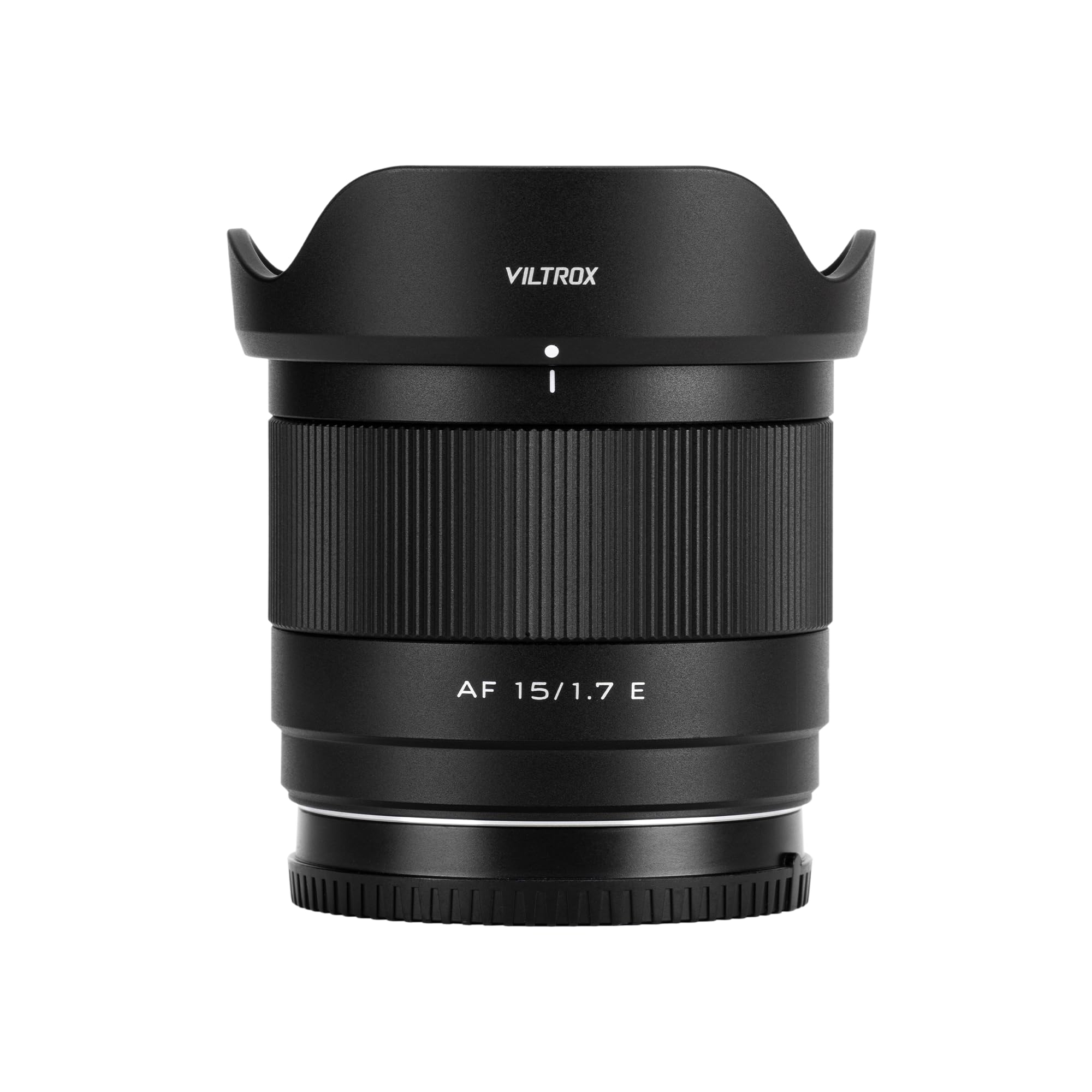
VILTROX 15mm F1.7 AF

88 /100
Studio Score Strong Evidence

Key details

Focal Length
15mm
Weight And Size
180g
Sharpness And Bokeh
Sharp and compact
Autofocus Reliability
STM autofocus
Check Price on Amazon

The Viltrox 15mm F1.7 AF is a 180g APS-C prime for Sony E that pairs f/1.7 speed with STM autofocus and a 22.5mm full-frame equivalent view. Low-light capability, wide coverage, and portability come together at a price native E-mount options do not match. For budget shooters, this means fast ultra-wide coverage without giving up autofocus.

This lens fits APS-C vloggers and content creators who want a wide field of view without a bulky zoom, plus landscape and interior shooters looking for a fast, light ultra-wide. It is APS-C only, so full-frame users must shoot in crop mode. Slight corner vignetting at f/1.7 clears by f/2.2. The 0.23m minimum focus adds flexibility for close-up-style wide shots without turning this into a macro lens.

The top pick's 28-200mm range serves more buyers in a general roundup, but this lens answers a narrower need with more speed and less weight. At 180g with active autofocus, it is the rational choice for budget shooters who already know they want an ultra-wide prime for vlogging, interiors, or landscape work.

Pros

  • Optical quality holds up well across the frame for an ultra-wide prime.
  • Exceptional value for a wide-angle AF prime on Sony APS-C.
  • Compact 180g body keeps the lens easy for gimbal, travel, and interior work.

Cons

  • Fixed 15mm angle of view is limited to ultra-wide work; it won't serve as a standard or short-telephoto focal length.
Our verdict

For APS-C Sony shooters who need f/1.7 ultra-wide coverage with autofocus, this is the high-value route without native pricing.

Check Latest Price
6

Compact Travel Zoom

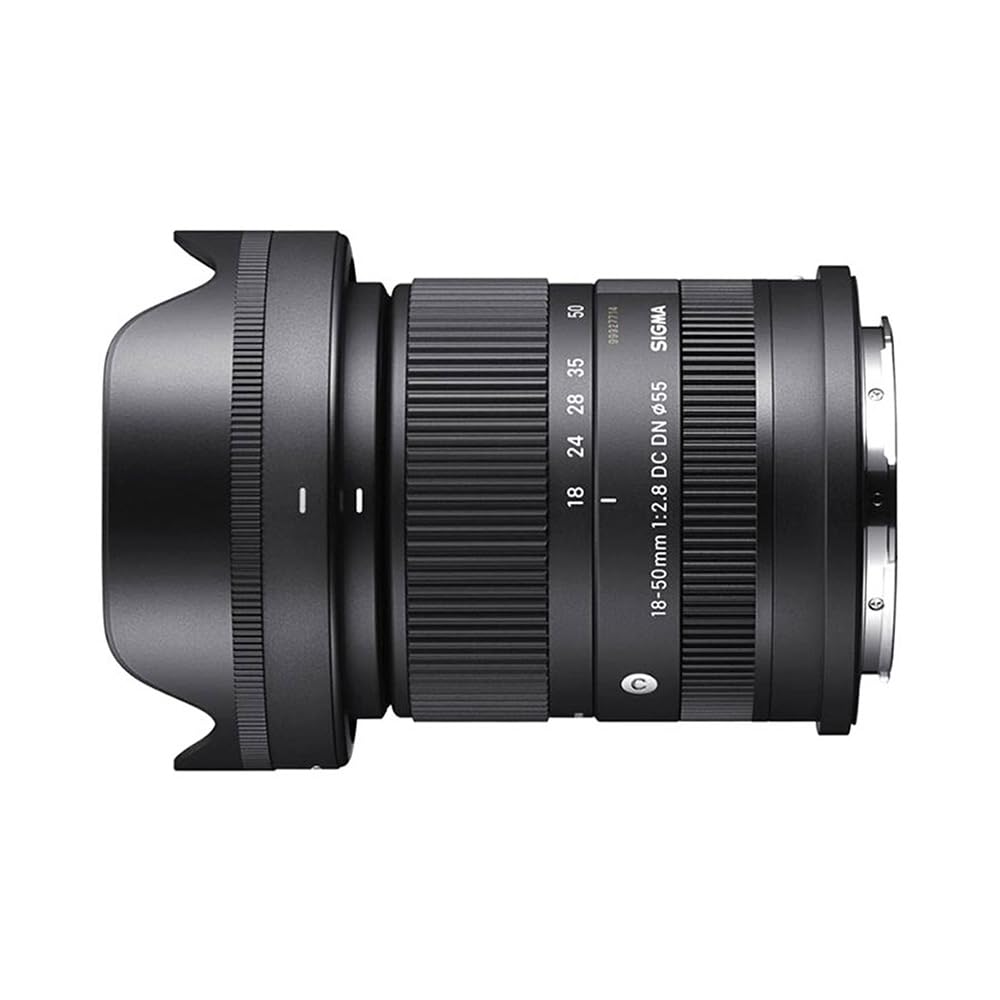
Sigma 18-50mm F2.8 DC DN

93 /100
Studio Score High Confidence

Key details

Focal Length
18-50mm
Weight And Size
—
Sharpness And Bokeh
In-camera aberration correction
Autofocus Reliability
—
Check Price on Amazon

The Sigma 18-50mm f/2.8 is a compact, travel-ready constant-aperture standard zoom that keeps an APS-C E-mount kit small without giving up low-light speed. Optical quality and in-camera aberration correction hold up well in everyday scenes, and the constant f/2.8 aperture suits hybrid creators and stills shooters. For APS-C shooters who prioritize size, it is a strong everyday match; full-frame E-mount users fall outside its compatibility. The spec sheet is strong, though AF and edge sharpness are worth verifying in your own shooting conditions. Its focused APS-C standard-zoom role is why it sits below the top pick rather than leading the roundup.

Pros

  • Constant f/2.8 in a compact, travel-ready body for APS-C E-mount cameras.
  • Strong optical quality with in-camera aberration correction for clean everyday images.

Cons

  • No power zoom; video shooters who want smooth servo zooming will need the Sony 18-105mm PZ.
  • Reach ends at 50mm, so distant subjects require a second lens.
Our verdict

This is the compact standard-zoom choice for APS-C shooters who want f/2.8 speed without a bulky lens.

Check Latest Price
7

Budget Street Prime

VILTROX 35mm F1.7 AF

89 /100
Studio Score Strong Evidence

Key details

Focal Length
35mm
Weight And Size
170g
Sharpness And Bokeh
Sharp wide open
Autofocus Reliability
STM autofocus
Check Price on Amazon

The Viltrox 35mm F1.7 AF is a 170g, budget-priced prime that stays sharp wide open and renders bokeh with a soft, natural falloff. The STM autofocus is quiet enough for casual video work, and the compact body makes it a natural fit for street or travel kits on APS-C bodies. The lens is APS-C-only and fixed at 35mm, so owners of full-frame Sony cameras will need to use crop mode, and anyone expecting zoom flexibility will find the top pick's 28-200 range more useful for a general kit. If you already have a zoom covering this normal range, this prime is a redundant addition; if you don't, it covers the everyday focal length well at a low cost.

Pros

  • Sharp wide open with smooth bokeh at a budget price.
  • Weighs only 170g and feels solid
  • Delivers strong optical quality for a very low cost.

Cons

  • Fixed 35mm focal length means no zoom flexibility; framing changes require moving or swapping lenses.
  • APS-C-only mount restricts use to crop-sensor Sony bodies.
Our verdict

Best for APS-C shooters who want a light, fast normal prime for street, travel, or casual portraits; skip it if zoom flexibility or full-frame coverage matters more.

Check Latest Price
8

Manual Street Shooters

TTArtisan 25mm F2 APS-C MF

84 /100
Studio Score Strong Evidence

Key details

Focal Length
25mm
Weight And Size
—
Sharpness And Bokeh
—
Autofocus Reliability
Manual focus
Check Price on Amazon

The TTArtisan 25mm f/2 brings a click-stopped aperture ring, a small body, and center sharpness that holds up well at a budget price. For crop-sensor bodies, it covers the classic reportage focal length. Manual focus only is the entry price, and vignetting plus chromatic aberration appear wide open in high-contrast frames. Stopping down reduces both, which makes the lens easier to live with for street shooters who want tactile control. That narrow use-case is why it stays out of the top picks, but the price and small size make it a capable creative tool.

Pros

  • Strong optical quality for the money
  • Outstanding value for a budget prime
  • Compact enough to stay mounted on an APS-C body

Cons

  • Fixed 25mm focal length means framing changes come from footwork, not zoom.
  • APS-C-only coverage means full-frame Sony bodies operate in crop mode.
Our verdict

For manual-focus street shooters on a budget, this compact 25mm f/2 is a low-risk way to explore the focal length.

Check Latest Price

How to Choose

Autofocus and Reliability

Autofocus depends on the lens motor and the camera body. Linear motors like VXD and STM respond quickly on newer cameras, but older APS-C bodies may hesitate in low contrast. A lens that locks focus on one body can hunt on another, especially at the long end of a zoom.

Variable-aperture zooms also give the AF system less light at telephoto, which slows acquisition. If you shoot action in dim light, a fast prime or constant f/2.8 zoom is the safer choice.

Aperture and Low Light

Maximum aperture controls light and background blur. A constant f/2.8 keeps exposure stable while zooming; a variable f/2.8-5.6 starts bright but loses light at the long end. At 200mm, f/5.6 means higher ISO or a slower shutter than f/2.8.

For handheld evening work, f/1.8 primes deliver about two stops more light than a kit zoom. That lets you shoot at ISO 800 instead of 3200.

Focal Length and Versatility

Focal length sets how much you fit in the frame and how close you need to be. A 28-200mm zoom covers wide street scenes to compressed telephoto portraits without a lens change. A 24-70mm covers the standard range but stops at moderate telephoto, forcing you closer or needing a second lens.

Sharpness and Bokeh

Modern Sony E lenses are usually sharp enough in the center; the real difference is out-of-focus rendering. Aperture blade count and shape determine whether background lights become smooth circles or octagons. Lenses with 9 or 11 rounded blades produce creamier bokeh than 7-blade designs.

Weight and Size

Weight is the spec that changes how you feel after hours of shooting. A 2.6 lb f/2-2.8 event zoom can be a burden on a hike; a 180g prime disappears on a small APS-C body. Pick the size you will actually carry.

Frequently Asked Questions