6 Best Sony A7C Lens of 2026: Match Size, Reach, and Autofocus

Choosing the best Sony A7C lens means balancing body size, aperture, and autofocus reality — this guide matches glass to how you actually shoot.

The Sony A7C is compact enough to feel like a casual carry, yet it takes full-frame glass. That mismatch shows up fast: a giant constant-aperture zoom can overpower the small body, while a pancake prime slips into a pocket but runs out of light at night. The practical goal is finding the lens that disappears from your mind, not just your bag.

Most buyers weigh focal length and aperture first, but the more telling spec is autofocus behavior at dusk. A lens that snaps into focus in daylight can hunt at 200mm or in dim rooms, and that decides whether it stays on the camera. The other trade-off is zoom range: broader coverage means a slower aperture at the long end, which matters for sports and events.

This guide organizes A7C lenses by the choices that matter — reach, speed, AF consistency, size, and stabilization — so you can match the lens to the shooting you actually do.

1

Best Overall

Tamron 28-200mm F2.8-5.6

90 /100
Studio Score High Confidence

Key details

Focus Motor
RXD stepping
Focal Length
28-200mm
Max Aperture
f/2.8-5.6 variable
Size & Weight
576 g
Check Price on Amazon

The Tamron 28-200mm f/2.8-5.6 is the one-lens travel answer for the A7C: a 7x range from 28mm wide to 200mm telephoto in a 20.3 oz barrel. At the wide end the f/2.8 opening handles street, indoor, and low-light shots better than typical all-in-one zooms. The lens holds sharp detail through the middle and long reaches of the zoom, which is where many wide-range zooms soften. It is not a prime-level lens, but for a single zoom it delivers the clarity that keeps landscape and portrait shots presentable without a bag of optics.

On a day trip, the compact barrel balances well on the small A7C body, and the 7.5-inch minimum focus at 28mm lets you shoot close-up details without swapping glass. The weight stays low enough that the camera feels like a compact kit rather than a backpack load. That makes it practical for hikes, museum days, and city walks where a bag full of primes would slow you down. The zoom covers casual wildlife too, so you can move from a street scene to a distant bridge without missing the moment.

This is the lens for travel and hiking photographers, one-lens minimalists, and street/documentary shooters. It covers landscape, portrait, street, and casual wildlife in one unit, and the mid-range price makes it a sensible first or only FE zoom. If event work and low-light sports are regular assignments, the 28-75mm f/2.8 in this set is the better fit; video users who need a constant aperture or parfocal zoom will find better options elsewhere. Within its intended use, the 28-200mm removes the need to choose a lens before you know what the day will bring.

The value comes from buying one lens instead of a wide zoom, standard zoom, and short telephoto. The f/2.8 wide end is a bonus that most all-in-one zooms don't offer, and it makes the A7C an easier camera to carry every day. For a single-lens kit, this Tamron covers more of the everyday focal-length map than any other option in this roundup.

Pros

  • Sharp across the whole 28-200mm range, so landscape and portrait detail survives without prime-level bulk.
  • Covers landscape, portrait, street, and casual wildlife in one compact barrel.
  • At 20.3 oz it travels well on the A7C and stays out of the way.
  • The f/2.8 wide end adds usable indoor and street speed for a lens that reaches 200mm.

Cons

  • Maximum aperture narrows to f/5.6 by 200mm, so low-light telephoto shots need higher ISO or a slower shutter.
  • Autofocus can hunt or miss at long focal lengths or in dim scenes, which affects fast-moving subjects.
Our verdict

The Tamron 28-200mm f/2.8-5.6 gives A7C owners a true one-lens travel kit: wide-angle speed at 28mm, telephoto reach at 200mm, and a 20.3 oz weight that suits the small body.

Check Latest Price
2

Best Fast Standard Zoom

Tamron 28-75mm F2.8 G2

92 /100
Studio Score High Confidence

Key details

Focus Motor
VXD linear
Focal Length
28-75mm
Max Aperture
f/2.8 constant
Size & Weight
535 g
Check Price on Amazon

At 535g, the Tamron 28-75mm G2 pairs a constant f/2.8 aperture with VXD autofocus in a body that suits the A7C's compact balance. That fixed f/2.8 is the reason to pick it over the range-first option in this set, delivering steady exposure and controlled subject separation across the entire zoom range. Wide open, the lens holds edges well enough for professional use while keeping bokeh smooth.

Wedding and event shooters get the low-light speed and background blur needed for dim venues, while hybrid creators benefit from quiet autofocus and a focus-hold button on a lens that doesn't overwhelm the A7C. In fast-moving or low-light scenes, AF consistency can vary, so this is not the one for sports or unpredictable action; it's a fit for controlled event work, portrait sessions, and lifestyle shoots. The compact form factor also makes it a sensible carry for travel when paired with the A7C.

Value is the other headline: the G2 delivers professional output at a mid-range price compared to Sony G/GM zooms. The 7.1-inch minimum focusing distance adds close-up flexibility for rings or detail shots, and the 535g body keeps the kit light enough for long A7C days without giving up the f/2.8 aperture.

💡 When shooting in dim venues, rely on AF-C with a single focus point to keep the AF system from hunting.

Pros

  • Constant f/2.8 holds exposure steady as lighting shifts indoors.
  • Sharp wide-open rendering with smooth background blur for portrait and wedding work.
  • Compact 535g body balances well on A7C-style cameras.
  • Produces clear images in low light and everyday conditions without constant adjustment.

Cons

  • Focal length ends at 75mm, so distant subjects need a second lens.
  • Autofocus consistency can vary in fast-moving or dimly lit scenes; occasional missed focus is possible.
Our verdict

For A7C shooters who prioritize a fast standard zoom over long reach, the G2 delivers bright event performance without the GM price tag.

Check Latest Price
3

Best Pro Standard Zoom

Sony 24-70mm GM II

89 /100
Studio Score Strong Evidence

Key details

Focus Motor
XD linear
Focal Length
24-70mm
Max Aperture
f/2.8 constant
Size & Weight
695 g
Check Price on Amazon

Constant f/2.8, Optical Steady Shot, fast hybrid AF, and a 695 g body make the Sony 24-70mm GM II the lightest standard zoom in its class. It is the lens to choose when the priority is maximum resolution across the frame, and built-in stabilization is a real advantage for handheld work on the compact A7C II.

This is for professional event and wedding photographers and serious hybrid shooters who want one no-compromise GM zoom. The premium price and occasional AF misses in challenging light are the boundaries to accept; anyone optimizing for a minimalist travel kit or budget-friendly setup should look at the all-in-one top pick or the value f/2.8 alternative.

Pros

  • Solid pro build that holds up across long event shoots.
  • Prime-like sharpness edge-to-edge even at f/2.8.
  • Fast, quiet hybrid AF for stills and video.
  • Lightest body in the constant f/2.8 standard zoom class.

Cons

  • Premium price places it above budget and mid-range zoom options.
  • In dim ballrooms or low-contrast scenes, AF can hunt, and back-focusing has been noted.
Our verdict

The Sony 24-70mm GM II is the standard zoom to beat for full-frame hybrid work.

Check Latest Price
4

Best Budget Portrait Prime

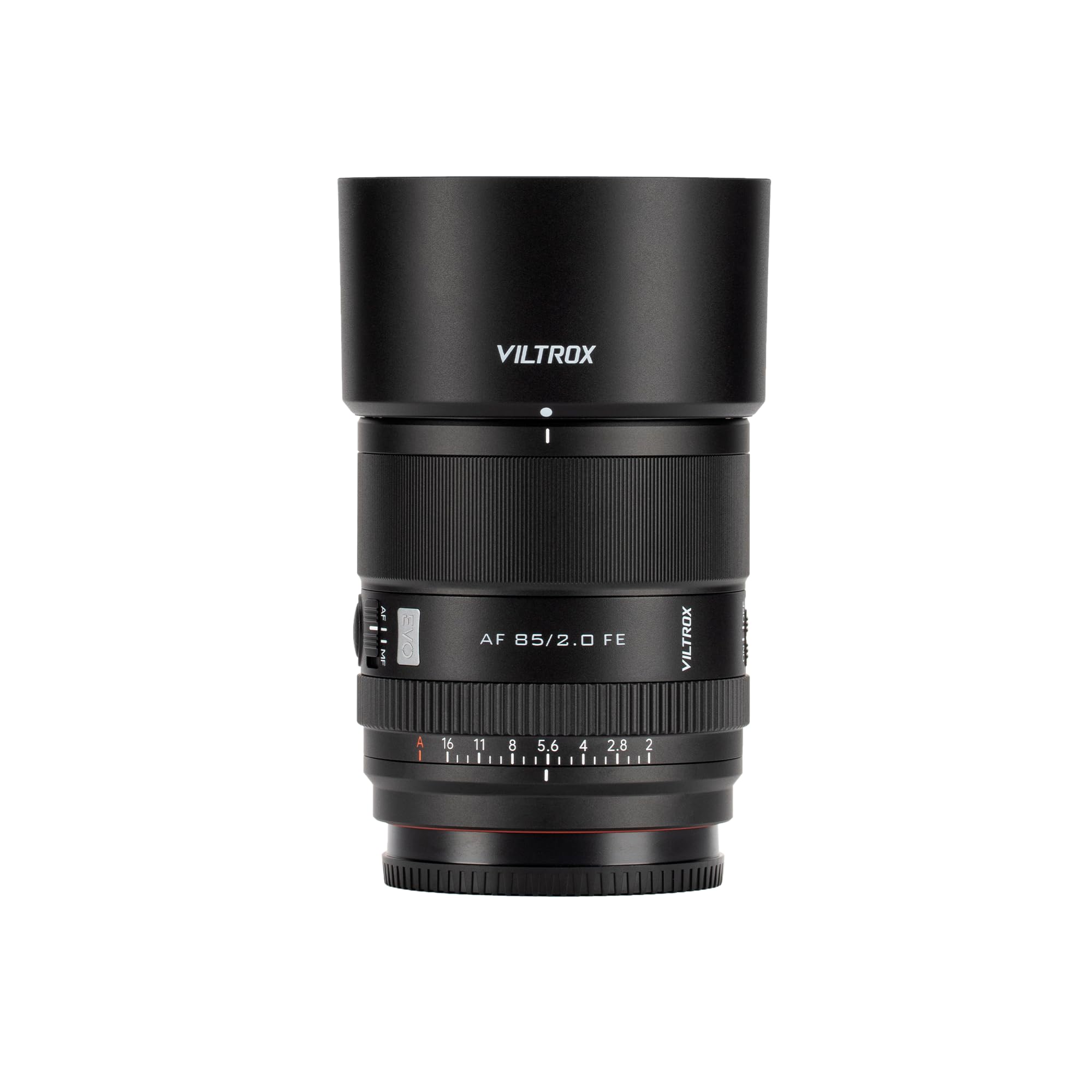
Viltrox 85mm F2 EVO

89 /100
Studio Score Strong Evidence

Key details

Focus Motor
Stepping motor
Focal Length
85mm
Max Aperture
f/2
Size & Weight
340 g
Check Price on Amazon

The Viltrox 85mm F2 EVO weighs 340 g and keeps the A7C II balanced while delivering a true 85mm f/2 portrait look. The lens is sharp wide open, and bokeh stays smooth enough for clean subject separation in portraits. Build quality feels solid, with damped focus and aperture rings that make manual control pleasant.

Autofocus is quick and quiet in normal light, which covers most portrait and travel use. The lens also holds its value position among full-frame primes: you get a real f/2 portrait lens at a budget-friendly price.

This suits A7C II owners who want a compact, affordable 85mm for portraits and casual daytime shooting. Autofocus can hunt in dim environments, so low-light action work is outside its use case; buyers who need weather-sealed professional build should keep shopping.

💡 Use single-point AF in dim rooms to help the lens lock before the shot.

Pros

  • Compact 340 g body balances well on the A7C II and feels solid in hand.
  • Autofocus is quick and quiet in normal light, with smooth manual control rings.
  • Sharp at f/2 with soft background separation, so portraits hold detail without stopping down.
  • Budget-friendly alternative to Sony's 85mm primes with real portrait character.

Cons

  • Barrel is not weather-sealed, so heavy rain or dusty outdoor sessions call for a sealed alternative.
  • Autofocus can hunt in dim scenes, limiting this to slower or controlled-light portrait work.
Our verdict

For A7C II owners who shoot portraits in normal light, this is the compact 85mm f/2 that delivers the budget-friendly look without the weight or price of Sony-branded glass.

Check Latest Price
5

Best Budget 50Mm Prime

Sony 50mm F1.8

93 /100
Studio Score High Confidence

Key details

Focus Motor
DC drive
Focal Length
50mm
Max Aperture
f/1.8
Size & Weight
186 g
Check Price on Amazon

The Sony FE 50mm F1.8 is the budget gateway prime for the A7C: 186 g, accessible price, and the classic full-frame look. It delivers the pleasing bokeh and subject separation of a fast 50mm without the bulk or cost of the premium 50mm G Master in this lineup. The lens keeps the compact A7C balanced for all-day carry, which is a key part of its appeal on a small body.

Image quality is strong at this price point. Wide open at f/1.8, the lens produces smooth bokeh with satisfying subject separation; stopped down to f/4 or f/5.6, sharpness stays consistent across the frame. The classic 50mm perspective works well for portraits, and the same rendering suits product and detail shots. For a first full-frame prime, this is an easy lens to build a kit around.

The autofocus is the biggest compromise — slow, noisy, and prone to hunting in low light. For stills-first A7C shooters who prioritize classic rendering and portability, manual focus fills the gap in dim conditions. Buyers who need video features or fast subject tracking belong with the premium 50mm G Master.

💡 Keep focus peaking on for low-light shooting — the f/1.8 aperture makes manual focus easy to verify.

Pros

  • Budget-friendly entry into full-frame primes with the classic 50mm view.
  • Pleasing bokeh wide open and sharp results stopped down.
  • 186 g weight that keeps the A7C balanced for all-day carry.
  • Solid portrait and product-shot performance with classic 50mm framing.

Cons

  • Autofocus can be slow and noisy, and it hunts in low light, where manual focus is the more practical option.
Our verdict

Stills-first A7C owners on a budget get the classic 50mm look and light carry at an accessible price — the right starting prime for a full-frame kit.

Check Latest Price
6

Landscape, Vlogging

Viltrox 20mm F2.8

90 /100
Studio Score High Confidence

Key details

Focus Motor
Stepping motor
Focal Length
20mm
Max Aperture
f/2.8
Size & Weight
157 g
Check Price on Amazon

Viltrox's 20mm f/2.8 delivers sharp full-frame wide-angle rendering in a 157g body, and the 0.19m close focus adds a useful near-macro range. The wide field of view is forgiving for handheld framing, so it suits vlogs and quick travel shots, and it rides well on the A7C without dominating the camera.

Landscape, travel, and vlog shooters on a budget are the right match. Fast action and sports fall outside its scope, and the 85mm sibling already occupies the higher recommendation tiers; this 20mm fills a narrower landscape/vlog niche.

Pros

  • Sharp 20mm full-frame rendering with minimal distortion for the price.
  • Cost-effective full-frame wide-angle option for A7C owners.
  • 157-gram prime body keeps travel and vlog kits light.

Cons

  • Autofocus can need getting used to on moving subjects; static landscape and vlog framing are unaffected.
  • Fixed 20mm focal length is a specialist wide view; general travel zoom flexibility comes from the 28-200mm alternative.
Our verdict

Buy it when the day's work is wide landscapes, travel scenes, and handheld vlogs; leave sports to another lens.

Check Latest Price

How to Choose

Focal-Length Coverage

A wide zoom range is convenient, but it forces a lens to move many element groups across a larger mechanical path. The extra travel makes the barrel bigger or the aperture dimmer at the long end. For A7C travel, 28-200mm covers most scenes without a bag of primes, while a 28-75mm covers events with less versatility but steadier behavior.

Maximum Aperture

Constant f/2.8 means the light-gathering area stays identical from wide to telephoto, so shutter speed and ISO do not drift as you zoom. Variable-aperture zooms close down as focal length increases, which is why a 70-300mm at 300mm acts like a much slower lens. Event and indoor shooters should choose constant-aperture glass; daylight travel shooters can live with the variable trade to save size and cost.

Size and Balance

The A7C's smaller body and shallow grip make front-heavy lenses tiring to hold for extended shoots. A 695 g pro zoom can work, but the center of gravity sits farther forward than on a larger a7-series body. Lighter primes and compact zooms let the camera hang naturally from a strap and stay steadier for handheld shots.

Autofocus Behavior

Focus motor type and aperture determine low-light performance more than the camera body does. Linear motors move the focus group quickly and precisely, while stepping or DC drives can hunt when light drops. A lens that is fast in the store may miss at a dim wedding reception, so match AF speed to the responsiveness your shooting demands.

Stabilization

The A7C has five-axis IBIS, but telephoto magnification makes hand shake more visible. A lens with OSS gives the system extra correction at 200-300mm, while a prime with IBIS only forces you to use a faster shutter or brace the camera. For wide and normal focal lengths, body-only stabilization is usually enough.

Frequently Asked Questions