5 Best Lens for Concert Photography 2026: Match Reach and Autofocus

Best lens for concert photography: match your seat, camera mount, and autofocus tolerance before buying.

A concert lens stands or falls on two numbers: aperture and focal length. The fastest primes gather light beautifully, but they only work from close enough to frame the act. A constant f/2.8 zoom covers the distance from a seat or balcony, yet gives up more than a stop of light.

Autofocus is the third number the spec sheet usually hides. Quiet and quick on paper, many budget primes hunt, whir, and click when the stage lights are low. That behavior matters more at a live show than any coating or bokeh claim.

The practical trade-off is clear: buy the widest aperture you can place next to the stage, or the longer reach your venue demands. Match the lens to where you actually stand, and you will keep the shot instead of the marketing story.

1

Best Concert Zoom

Tamron SP 70-200 f/2.8 VC USD

85 /100
Studio Score Strong Evidence

Key details

Lens Mount
Canon EF
Max Aperture
f/2.8 constant
Focal Length / Reach
70-200mm zoom
Autofocus In Low Light
Ring ultrasonic AF
Check Price on Amazon

At 70-200mm, the Tamron keeps a constant f/2.8, which gives a Canon DSLR concert shooter distance coverage from pit, barrier, or balcony without an exposure shift through the zoom range. Sharpness holds at both ends wide open, a trait that matters when a singer is backlit by stage lights and you have no margin to stop down. The rendering also treats a busy visual background well: bokeh stays smooth enough to separate a face from a crowd without harsh edges. VC stabilization extends the handheld envelope, so a 200mm shot does not turn into a blur the moment the house lights drop.

From a barrier or balcony position, 70mm catches the whole band, while 200mm frames an individual player for a tight head-and-shoulders shot. The aperture remains constant as you zoom, so exposure does not change when you reframe from a wide stage shot to a close-up. Moisture-resistant construction gives practical margin against damp club air and light rain on outdoor stages. VC is the reason this lens works as an all-night handheld tool rather than a monopod-dependent one; you can drop shutter speeds to the point where a non-stabilized 200mm lens would show shake.

This is the right lens for a Canon DSLR shooter whose concert priority is reach from a fixed crowd position rather than maximum light gathering up close. The physical cost is real: a large barrel and a heft you feel by the third set, and f/2.8 is more than a stop slower than an f/1.8 prime in very dark clubs. The payoff is 70-200mm flexibility without changing lenses mid-show. Budget-first shooters and mirrorless-native users who do not want to adapt EF glass will be better served by a lighter prime or a native-mount alternative.

Autofocus is quick enough to keep a moving singer in the frame during a live set, which is the behavior that matters most once the lights drop. The price position rounds out the case: this lens undercuts Canon's comparable L-series 70-200mm f/2.8 while delivering sharpness and bokeh that hold up alongside it. For a working photographer, that is the difference between owning one serious telephoto and renting one for every event.

Pros

  • Sharpness holds at 70mm and 200mm, with strong detail wide open.
  • Bokeh and color rendering isolate subjects cleanly from busy stage backgrounds.
  • VC stabilization keeps handheld 200mm shots sharp in dim venues.
  • Costs far less than Canon's comparable L-series 70-200mm f/2.8.

Cons

  • Zoom ring rotates opposite Canon-native lenses, so hand memory needs adjustment.
  • AF can require microadjustment on some bodies to nail focus at wide apertures.
Our verdict

For Canon DSLR concert and event shooters, this lens balances 200mm reach, stabilization, and sharpness at a price below comparable Canon L glass.
Check Latest Price
2

Budget Low-Light Prime

Canon EF 50mm f/1.8 STM

96 /100
Studio Score High Confidence

Key details

Lens Mount
Canon EF
Max Aperture
f/1.8
Focal Length / Reach
50mm, 80mm eq APS-C
Autofocus In Low Light
STM; hunts low light
Check Price on Amazon

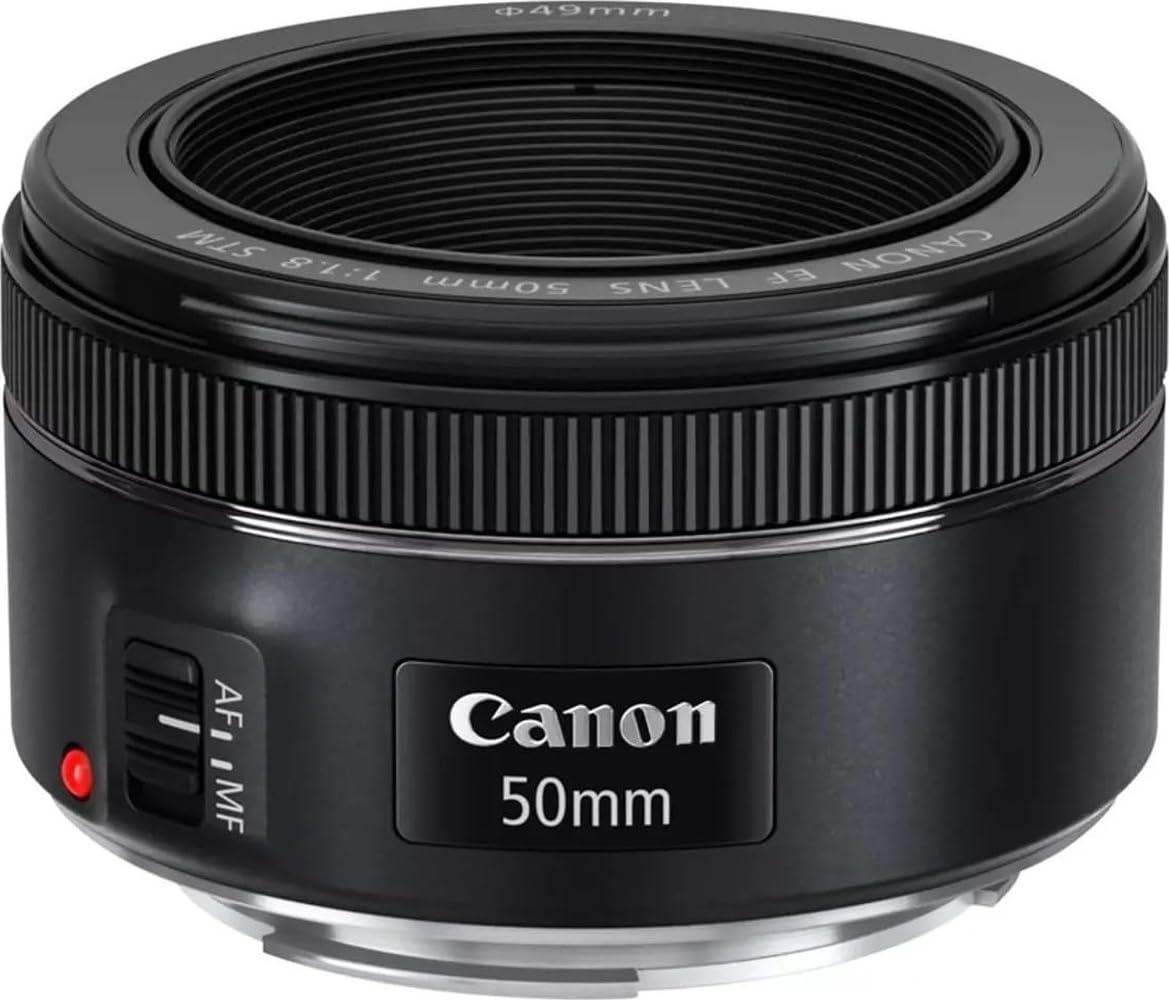
The Canon EF 50mm f/1.8 STM brings sharp f/1.8 optics to Canon DSLR owners without a zoom-lens price tag. It gathers enough light for dim clubs and small stages, and its compact 5.6 oz body makes it easy to keep on a strap for an entire set.

At f/1.8 the lens separates a singer from a busy background with soft bokeh, and stopping down to f/2.5-f/4 tightens central sharpness. That makes it a natural fit for portraits and near-stage event work where the subject is only a few meters away.

The right buyer is a Canon DSLR owner who can shoot from the front rows or reposition during a set. The f/1.8 aperture is the main draw, and the fixed 50mm angle puts close-stage access ahead of zoom reach.

Pros

  • Sharp f/1.8 optics with clean bokeh for portraits and stage subjects
  • Strong background separation for low-light event photography
  • Budget-friendly entry into fast primes with broad EF mount compatibility

Cons

  • Autofocus can hunt or whir in dim venues, so single-point AF is the safer mode.
Our verdict

For Canon DSLR owners who can shoot close to the stage, this 50mm f/1.8 delivers low-light sharpness and portrait-friendly bokeh at a budget-friendly price.

Check Latest Price
3

Canon Mirrorless Fast Fifty

Canon RF 50mm f/1.8 STM

94 /100
Studio Score High Confidence

Key details

Lens Mount
Canon RF
Max Aperture
f/1.8
Focal Length / Reach
50mm prime
Autofocus In Low Light
STM; hunts low light
Check Price on Amazon

Native RF mount, a control ring, and a 5.6 oz body give EOS R shooters a compact fast fifty with the same f/1.8 low-light character as the classic EF nifty-fifty. It drops the adapter that EF glass requires on mirrorless bodies, and the control ring adds direct exposure or focus adjustment. For close stage work, the f/1.8 aperture pulls in noticeably more light than a constant f/2.8 zoom, which matters in dark venues.

Wide open, the lens resolves fine detail and renders soft backgrounds with a pleasing bokeh, giving near-stage portraits separation from busy lighting rigs. The barrel is light enough to carry through a full show, and the control ring is easy to reach without leaving the viewfinder. That combination makes it a practical second lens for shooters who want fast glass without a heavy telephoto zoom.

This is for EOS R owners who want a normal prime for portraits, street, and low-light stills near the stage. The video side has limits: autofocus can hunt in low-light video despite Canon's smooth-AF marketing, and the box doesn't include a hood. Stills-first shooters can work around both, but run-and-gun video work calls for a different lens.

Pros

  • Compact body that balances on EOS R bodies and holds up to all-night shooting.
  • Budget-friendly entry into native RF fast primes, pairing f/1.8 with sharp rendering.
  • Sharp wide open with flattering bokeh for portraits and close stage shots.
  • Lightweight 5.6 oz build that disappears in a bag or on a strap.

Cons

  • RF mount only
  • Fixed 50mm angle means close stage access; a 70-200mm zoom covers distance better.
Our verdict

Canon EOS R shooters who stay close to the action get a sharp, portable f/1.8 normal prime without L-series weight or cost.

Check Latest Price
4

Sony E-Mount Budget Prime

Sony FE 50mm f/1.8

93 /100
Studio Score High Confidence

Key details

Lens Mount
Sony E-mount
Max Aperture
f/1.8
Focal Length / Reach
50mm, 75mm eq APS-C
Autofocus In Low Light
Slow noisy AF
Check Price on Amazon

The budget-priced FE 50mm f/1.8 is a fast prime for Sony E-mount shooters, pairing f/1.8 light with a 6.6-ounce build that stays comfortable on a gimbal. It delivers the classic nifty-fifty character: sharp detail, pleasing bokeh, and compact size that makes it easy to carry. At close range, the 50mm field of view suits street and portrait work as naturally as stage-side shooting.

At f/1.8, the lens gathers enough light to keep shutter speeds usable in dim rooms. The seven-blade aperture keeps out-of-focus highlights circular, and background separation is strong enough to isolate a performer from stage clutter. Sony shooters coming from a kit zoom notice the low-light gain immediately.

This lens suits Sony full-frame or APS-C shooters working street, portrait, and close-range low-light scenes, including front-row or small-stage concert photography. It is light enough for gimbal use, and the price leaves room for a second lens. As a single low-light prime, it covers a wide range of close work. Autofocus is slower and noisier than other Sony primes, which can be disruptive in quiet or fast-moving concert settings; shooters who can prefocus or work from loud stage-side positions will absorb that tradeoff without issue.

💡 For quiet sets, prefocus on a stage marker and let the subject move into the focus plane.

Pros

  • Sharp f/1.8 detail and pleasing bokeh at a budget price.
  • Sony's budget-priced FE 50mm f/1.8 option.
  • Weighs 6.6 oz, so it rides easily on a gimbal or camera strap.
  • Performs as an all-rounder and portrait lens without budget strain.

Cons

  • Fixed 50mm focal length requires getting close to the stage.
  • Autofocus can click, whir, or lag during low-light hunting.
Our verdict

Front-row and small-venue Sony shooters get f/1.8 light and compact handling in a budget-priced prime; treat it as a close-range concert lens and it delivers.

Check Latest Price
5

Budget Manual 85Mm Portrait

Lightdow 85mm f/1.8 MF

84 /100
Studio Score Strong Evidence

Key details

Lens Mount
Canon EF/EF-S
Max Aperture
f/1.8
Focal Length / Reach
85mm, 136mm eq APS-C
Autofocus In Low Light
Manual only
Check Price on Amazon

Real 85mm f/1.8 subject isolation and a six-blade rounded aperture produce soft, creamy background blur at a price that undercuts typical portrait primes. This is a portrait lens for deliberate composition, not a stage-work lens.

Center sharpness is solid at f/1.8 and improves by f/2.8, with enough resolution for head-and-shoulders portraits. Background blur stays smooth at normal shooting distances, and the body feels sturdier than its budget price implies. The barrel has a dense feel with no obvious flex, and the lens is compact enough to toss in a kit bag alongside a body.

For its price, this gets buyers into 85mm f/1.8 rendering that Canon's autofocus primes charge considerably more for. It is not a substitute for a concert zoom; it is a specialized portrait tool for a deliberate workflow.

Posed portrait sessions are this lens's natural habitat; manual-only operation and finicky Canon DSLR compatibility keep it to patient shooters. Buyers who need fast focus for moving performers on stage should choose the 50mm f/1.8 prime in this comparison instead. Newer Canon shooters expecting plug-and-play auto exposure on every body will find the manual workflow and body-specific menu requirements a step beyond their comfort zone.

💡 For static portraits, use Live View magnification to confirm sharp focus before releasing the shutter.

Pros

  • Real 85mm f/1.8 separation and six-blade bokeh for a very low price.
  • Capable sharpness that improves quickly when stopped down, with attractive background blur.
  • Build quality feels robust for its budget position.

Cons

  • Aperture communication can be inconsistent on some Canon DSLR bodies; menu setup helps, though occasional bodies remain uncooperative.
  • Manual focus is demanding with moving subjects, making live events an awkward fit.
Our verdict

For patient Canon DSLR portrait shooters, this is a budget route to 85mm f/1.8 character. Anyone covering live shows should bring an autofocus lens instead.

Check Latest Price

How to Choose

Aperture and Low-Light Speed

Aperture controls how much light hits the sensor, and the jump from f/1.8 to f/2.8 is more than a stop. That extra light lets you freeze stage motion or lower ISO. Fast primes win in dark clubs, but they only help if the subject is within reach.

Focal Length and Effective Reach

Focal length decides framing, and crop sensors change the math. A 50mm prime on an APS-C Canon frames like 80mm; on Sony APS-C it frames like 75mm. That reach helps, but it does not replace getting close.

A 70-200mm zoom covers wide stage scenes and tight close-ups from a seat. A fixed prime covers one angle, so you move rather than zoom.

Autofocus in Dim Venues

Autofocus hunts when contrast is low, and stage lighting is rarely kind to face detect or phase points. Noisy motors click and whir as they search, which can draw attention and slow the shot.

On DSLRs, a telephoto zoom may also need AF microadjustment to hit focus every time. Mirrorless bodies focus from the sensor, so low-light AF depends on the camera body as much as the lens.

Image Stabilization

Stabilization steadies the camera, not the subject. At 200mm it turns a slow shutter into a sharp shot when the performer holds still, but a moving guitarist still needs speed.

Telephoto lenses magnify shake, so stabilization matters most for crowd shooting. Short primes used near the stage can survive on higher shutter speed alone.

Lens Mount Compatibility

Mounts are not interchangeable without adapters, and adapters can slow autofocus. Canon EF glass belongs on EF DSLRs or EOS R bodies with a Canon adapter; Sony FE glass belongs on E-mount cameras.

Buy the mount you already shoot. The cheapest correct-mount lens beats a better lens that needs an adapter.

Frequently Asked Questions