6 Best Lens for Bird Photography in 2026: Real Reach, Real Light

Find the best lens for bird photography by matching reach, aperture, and weight to the birds and light you actually shoot. No wasted money.

A long lens solves distance but adds two problems at once: weight and light loss. Most birding zooms drop to f/8 or f/9 at the long end, and the first overcast session makes that obvious in higher ISO and softer feather detail.

The real trade-off is reach versus light. A 600mm f/6.3 zoom handles dawn and dusk far better than an 800mm f/9 zoom, but the 800mm frames distant birds the shorter lens cannot. Crop-sensor bodies shift the balance too: a 100-400mm on APS-C gives roughly 160-640mm equivalent, which covers more birding situations than most buyers expect.

The right lens matches reach, aperture, and weight to the camera you already own and the light you actually shoot in. That match matters more than the longest number on the box.

2

Best Budget RF Birding Zoom

Canon RF 100-400mm f5.6-8 IS

90 /100
Studio Score High Confidence

Key details

Mount
Canon RF
Autofocus
Nano USM
Focal Length
100-400mm
Max Aperture
f/8
Check Price on Amazon

The RF 100-400mm weighs 816g and brings Nano USM autofocus plus 5.5-stop optical IS to a telephoto zoom that is easy to carry through a full day of birding. It is the lighter, more affordable counterpoint to the 4.5 lb RF 200-800, so the choice comes down to reach versus weight rather than overall quality.

Sharpness holds up at 400mm, with detail that makes the modest price tag feel like a bargain. The Nano USM focuses quickly and quietly, and the 5.5-stop IS steadies handheld frames; on a body with IBIS, the combined stabilization reaches 6 stops. This is the rare budget telephoto that rewards field use instead of feeling like a compromise.

On APS-C bodies such as the R7, the 400mm reach becomes roughly 640mm full-frame equivalent, which stretches this lens into genuine birding territory. The wider view also makes it easier to track flying birds before they fill the frame. For hikers, 816g means the lens can stay mounted on the camera while you move between spots.

Canon RF users on a budget who shoot mostly daytime wildlife get the best result here; hikers and R50/R10/R7 owners gain the reach they need without packing a heavy super-telephoto. The lens answers the daylight side of birding, not the pre-dawn stakeout.

Pros

  • Sharpness at 400mm holds up against far more expensive RF telephoto glass.
  • Budget-friendly RF zoom opens up wildlife and sports shooting for Canon mirrorless users.
  • 816g weight makes this a practical hiking lens for a full day of handheld use.
  • Nano USM autofocus is fast and quiet; image stabilization steadies handheld frames.

Cons

  • Full-frame reach stops at 400mm, which can leave small distant birds as a modest crop.
  • At 400mm the f/8 maximum makes this a daylight lens; early morning and overcast birding will force higher ISO.
Our verdict

For Canon RF shooters who want a light, sharp 400mm without L-series cost, this is the value pick.

Check Latest Price
3

Maximum Reach for RF Shooters

Canon RF 200-800mm f/6.3-9 IS

88 /100
Studio Score Strong Evidence

Key details

Mount
Canon RF
Autofocus
USM
Focal Length
200-800mm
Max Aperture
f/9
Check Price on Amazon

Autofocus reach to 800mm in an RF zoom without exotic prime pricing is the defining fact. For Canon RF shooters, that length is unmatched in a native zoom. The top pick stops at 600mm, so birders who keep encountering small, distant subjects gain a real framing advantage here. It is premium-priced, but the reach-per-dollar is strong.

At 800mm, small birds fill more of the frame than shorter zooms allow, and sharpness holds across the zoom range. The long end is genuinely usable for small species, not just a magnified soft image. Autofocus on R-series bodies keeps up with birds in flight, and the optical stabilizer takes some of the strain out of framing at the long end.

Canon RF birders who photograph small, distant species in good daylight are the audience. f/9 at 800mm needs strong light; overcast and dawn/dusk sessions run into ISO limits. The external zoom and 4.5 lb weight affect handling, so this is a deliberate wildlife tool rather than a walk-around lens. If your days afield are mostly bright mornings, the reach solves the oldest birding problem: putting enough pixels on a small subject.

Pros

  • Puts 800mm autofocus reach in an RF zoom, so small distant birds fill more of the frame.
  • Sharp across the entire zoom range, so cropping at 800mm still holds fine detail.
  • Autofocus keeps up with birds in flight on compatible R-series bodies.
  • More reach per dollar than any other autofocus RF super-tele zoom.

Cons

  • The zoom ring can feel stiff while extending toward the long end.
Our verdict

For Canon RF birders whose subjects are small and distant, this lens is the missing reach between 600mm zooms and exotic primes.

Check Latest Price
4

Best for Nikon DSLR Birders

Nikon 200-500mm f/5.6E VR

93 /100
Studio Score High Confidence

Key details

Mount
Nikon F
Autofocus
AF-S
Focal Length
200-500mm
Max Aperture
f/5.6
Check Price on Amazon

Constant f/5.6 and VR in a 200-500mm F-mount zoom give Nikon DSLR shooters full-frame 500mm reach without super-tele prime pricing. It suits stationary and slow-moving subjects, which matches the way birders work from hides.

Sharpness at 500mm is the headline: wide-open image quality holds up against lenses costing several times more. At 500mm, small birds fill the frame in a way shorter zooms can't match, and the constant f/5.6 aperture keeps exposure steady across the zoom range. VR also makes handheld shots possible at moderate shutter speeds when you brace yourself between frames.

This lens fits Nikon F-mount DSLR users who want 500mm reach and work from hides, tripods, or a car window. Bulk and moderate AF speed are real tradeoffs for handheld or fast-action use, so it's not the first choice for hikers or for chasing erratic birds with teleconverters attached.

The ultra-light DX zoom in this comparison reaches 450mm equivalent but can't match the constant f/5.6 aperture or the full-frame 500mm field of view. For Nikon shooters already invested in F-mount glass, the 200-500mm is the reference point that other wildlife zooms are measured against.

Pros

  • Sharpness at 500mm holds up against much pricier primes.
  • Constant f/5.6 plus VR supports handheld 500mm shots at moderate shutter speeds.
  • Cost-effective 200-500mm constant-aperture zoom for Nikon F-mount wildlife shooters.
  • A go-to 500mm zoom for Nikon F birders who want one lens for most daytime wildlife situations.

Cons

  • The 5.1 lb weight makes long handheld sessions tiring, especially for hikers.
  • AF can hunt with teleconverters and may not keep up with fast-moving birds-in-flight.
Our verdict

For Nikon F DSLR shooters working from hides or tripods, the 200-500mm f/5.6E VR delivers 500mm reach and constant aperture at a price that makes it the value reference in this class.

Check Latest Price
5

Best Budget Sony E Telephoto

Tamron 70-300mm f/4.5-6.3 RXD

90 /100
Studio Score High Confidence

Key details

Mount
Sony E
Autofocus
RXD
Focal Length
70-300mm
Max Aperture
f/6.3
Check Price on Amazon

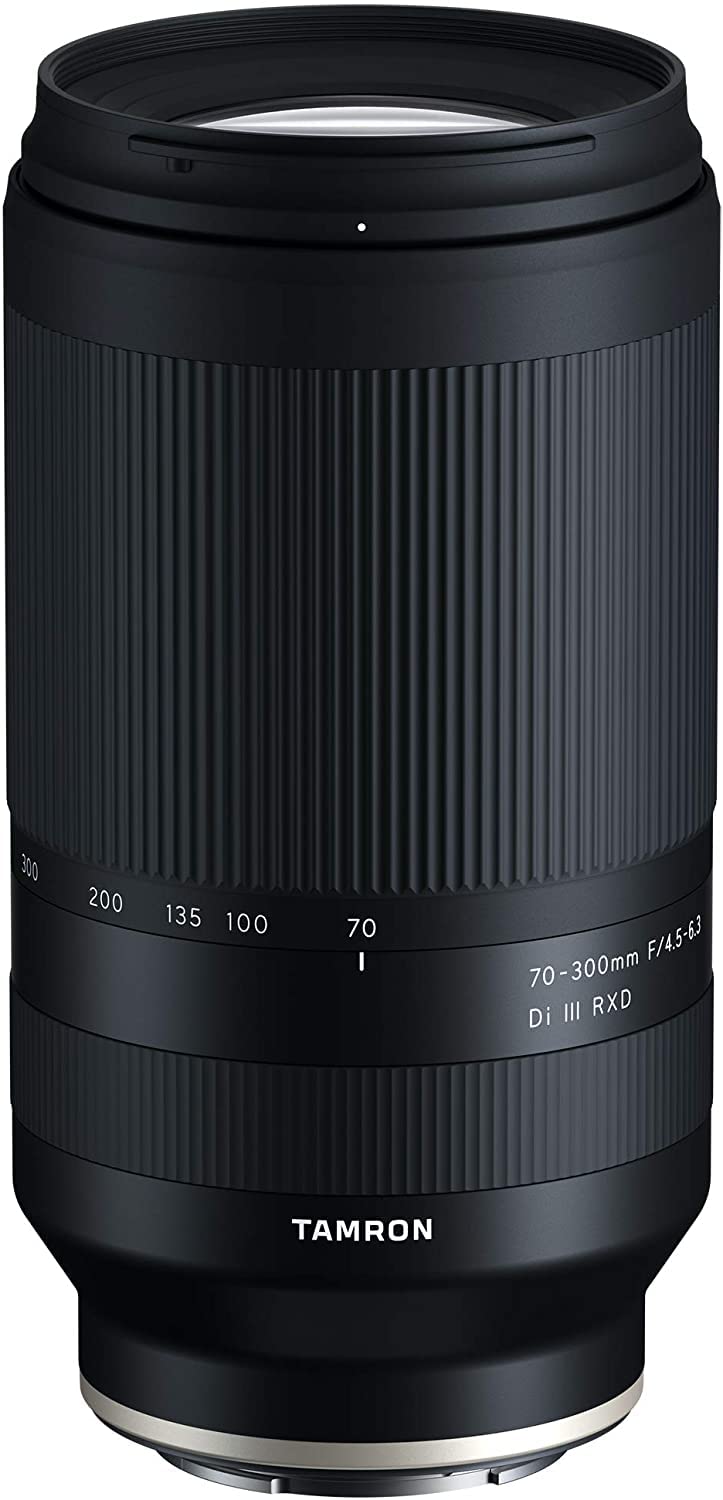
A 1.2 lb full-frame telephoto zoom is rare, and the Tamron 70-300mm RXD pairs its light body with sharp optics across the range. It is the take-everywhere alternative to the 200-600mm super-tele that dominates Sony birding kits — 300mm frames deer, herons, and sports fields while riding easily in a day pack.

Sharpness holds up well through the zoom range, with usable detail at 300mm for daytime wildlife and sports. The RXD autofocus motor is fast and quiet, keeping pace with moving subjects in good light.

Sony shooters who have IBIS in their camera body get the most from this lens: hikers, travel photographers, and daylight wildlife enthusiasts who want 300mm reach without the bulk of a super-tele. On APS-C bodies, the framing tightens to a 450mm equivalent view. Serious birders who need 500mm or more reach will find the 200-600mm top pick a better match.

The price is the entry point: full-frame 300mm reach at a fraction of the super-tele cost, letting budget-minded shooters start wildlife photography without the investment that dedicated birding zooms demand. That reach-to-weight proposition is what separates it from heavier, pricier alternatives.

Pros

  • Sharp 70-300mm zoom in a 1.2 lb body that's easy to carry on a full-day hike.
  • Fast, quiet autofocus that keeps up with daytime wildlife and sports.
  • Cost-effective full-frame telephoto
  • 70-300mm range covers wildlife, sports, and landscape details in one compact lens.

Cons

  • Handheld 300mm shots on non-IBIS bodies may need a fast shutter speed or tripod
Our verdict

Sony hikers and daylight wildlife shooters with IBIS get a light, sharp 300mm telephoto without the super-tele bulk or cost.

Check Latest Price
6

DX Beginners

Nikon 70-300mm DX AF-P ED

84 /100
Studio Score Strong Evidence

Key details

Mount
Nikon F
Autofocus
AF-P
Focal Length
105-450mm equivalent
Max Aperture
f/6.3
Check Price on Amazon

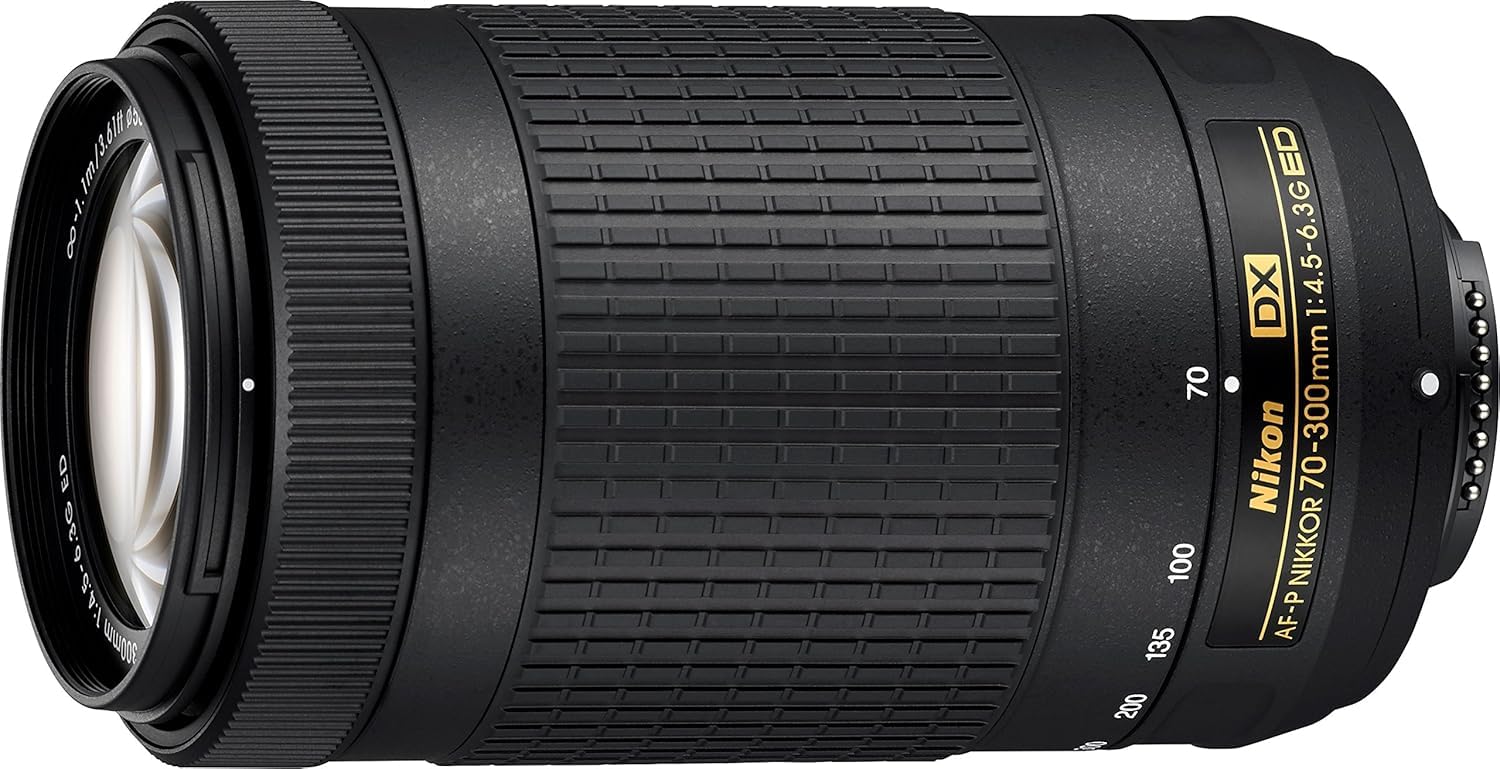
At 1.1 lb, the Nikon AF-P DX 70-300mm is an exceptionally light way to reach 450mm equivalent on a crop-sensor body, and the optical VR steadies handheld shots. On compatible newer Nikon DSLRs such as the D500, D7500, D5600, or D3400, it delivers sharp frames across the zoom range for a budget-friendly price. AF-P autofocus works only on newer bodies, so owners of older Nikon DSLRs must check compatibility before purchasing; full-frame shooters should pass this up. For serious birding, 300mm physical reach (450mm equivalent) still leaves small birds small in the frame, but for a first telephoto on a compatible DX body this lens buys a lot of reach without the weight or cost of a 500mm-class zoom.

Pros

  • Weighs just 1.1 lb with VR, so it disappears into a daypack.
  • Sharp results from 70mm to 300mm on compatible Nikon DSLR bodies.
  • A renewed copy can look and perform like new, lowering the entry cost further.

Cons

  • A renewed copy can show wear or a focus ring that doesn't behave correctly; inspect on arrival.
  • At f/6.3 on the long end, dawn and dusk birding is outside its comfort zone.
Our verdict

For a compatible Nikon DX shooter who shoots in daylight, this is a remarkably backpack-friendly way to add real telephoto reach at an entry-level price.

Check Latest Price
7

Lighter Nikon F

Tamron 100-400mm f/4.5-6.3 VC

80 /100
Studio Score Strong Evidence

Key details

Mount
Nikon F
Autofocus
USD
Focal Length
100-400mm
Max Aperture
f/6.3
Check Price on Amazon

Tamron's 100-400mm f/4.5-6.3 VC brings 400mm reach to Nikon F DSLRs in a body that is noticeably easier to carry than the 200-500mm alternative. The sharp imagery and natural color hold up for daytime wildlife, and the price makes it an approachable step up from shorter tele zooms.

AF compatibility issues and slower AF on some bodies are real limitations, which is why serious flight shooters should stay with the 200-500mm. For perched birds, slow-moving waders, or animals at the edge of a field, the lighter handling and VC still do the job.

Pros

  • Sharp, colorful 400mm reach at a price that undercuts Nikon's own super-tele zoom.
  • Light enough for a long walk, with a real weight advantage over the 200-500mm.
  • Budget-friendly 400mm reach for Nikon F without OEM-level pricing.

Cons

  • Early Nikon Z adapters lack firmware support, so mirrorless users get uncertain autofocus.
  • Focus tracking can lag once a bird takes off, so flight shots need patient technique and good light.
Our verdict

For Nikon F DSLR owners who want 400mm reach without the 200-500mm bulk and mostly shoot slower wildlife, this Tamron is a cost-effective carry.

Check Latest Price

How to Choose

Mount Compatibility

Your camera's lens mount determines which telephoto zooms can autofocus at all. A Nikon AF-P 70-300mm uses a pulse motor that older F-mount bodies like the D3200 cannot drive, so the lens will not autofocus on them.

Mirrorless adapters add another layer: some third-party F-to-Z adapters have no firmware support for lenses like the Tamron 100-400mm, causing lockups or focus hunting. Confirm the lens, body, and adapter generation are all compatible before buying.

Focal Length and Reach

Focal length is the raw number; full-frame equivalent reach tells you what your sensor actually sees. A 100-400mm zoom on APS-C acts like 160-640mm because the smaller sensor crops the image circle.

At 400mm full-frame, backyard feeders and large birds are workable; 500-600mm makes distant, skittish species easier to frame. Going to 800mm adds reach but costs light, weight, and stability.

Maximum Aperture

The maximum aperture at the long end controls how much light reaches the sensor. An f/8 zoom at 400mm can force ISO 6400 at dawn, where an f/5.6 lens at the same shutter speed stays near ISO 3200. That shows as noise and lost feather detail.

This is the aperture-versus-reach trade. A constant f/5.6 zoom keeps exposure stable; a variable f/6.3-9 zoom needs better light as you zoom in. Prefer a faster aperture over extra millimeters if you shoot early or late.

Image Stabilization

Stabilization lets you use a slower shutter speed. At 400mm, without IS you need roughly 1/400s; with four or five stops of IS, many shooters can handhold a perched bird at 1/50s to 1/100s.

It does not freeze bird movement. IS compensates for your hands, not wing motion, so birds in flight still need a fast shutter speed.

Autofocus Speed and Tracking

Autofocus motor type matters as much as the camera body. Ring USM, linear motors, and stepping motors respond differently to erratically moving birds, and slower designs can lose focus between burst frames.

For mirrorless eye-tracking, the lens must communicate focus changes fast enough for the body's algorithm. A 500mm lens with slow AF still misses small birds in flight.

Frequently Asked Questions