9 Best Canon Lens of 2026: Match Your Mount and Shooting Style

Find the best Canon lens for your camera and budget, with clear guidance on mount, zoom range, and low-light performance.

Canon now sells two lens families: EF for DSLRs and RF for mirrorless R-series bodies. RF lenses only fit RF cameras; EF lenses fit DSLRs and can be adapted to R-series bodies. Picking the wrong mount is the easiest way to waste money.

The next trade-off is range versus speed. A constant f/4 zoom covers a wider focal spread and usually weighs less; an f/2.8 zoom lets in an extra stop of light for dim venues and gives thinner depth of field. That stop costs more money and more weight, so the right choice depends on how often you shoot after sunset or indoors.

Match the lens to the mount, then to the light you actually shoot in. The best Canon lens is the one that gets carried, focused fast, and holds sharpness where you need it.

1

Best Overall

Canon RF 24-105mm f/4 L

92 /100
Studio Score High Confidence

Key details

Max Aperture
f/4 constant
Weight And Size
1.5 lb
Autofocus System
Nano USM
Focal Length & Zoom
24-105mm zoom
Check Price on Amazon

L-series sharpness holds across the 24-105mm range, and the constant f/4 aperture keeps exposure stable while zooming. The 5-stop optical IS makes handheld shots at 105mm more forgiving than a non-stabilized lens, an advantage for travel and family photography. For indoor daytime scenes, the IS matters more than the aperture because it lets you hold a lower shutter speed instead of climbing the ISO. In normal daylight, the lens stays sharp in the center with solid edge performance at mid-range focal lengths. This lens turns a full-frame RF body into a complete everyday kit.

Nano USM focuses quickly and quietly enough for event work, and the silent behavior does not fight internal video mics. The 24-105mm span covers wide room scenes and tight head-and-shoulders framing, so a single body with this lens handles family gatherings, city walks, and event coverage without a bag swap. Zoom torque is smooth enough for run-and-gun video, and the control ring can be assigned to ISO or exposure compensation on RF bodies. For shooters who want a grab-and-go setup, this is the closest thing to a camera-body-only carry. The AF tracks moving subjects well enough for family candids and event work, though dedicated sports shooters will still want a telephoto.

Full-frame RF owners who want one lens for travel, family, and events are the right buyers. The constant f/4 aperture is a fair trade for the range and the lower weight compared with an f/2.8 standard zoom. The range covers wide establishing shots and then tightens to a speaker without moving, which is why event photographers respond to the design. It is not the lens for ultrawide landscape specialists; a dedicated wide zoom should handle that role.

Strong value is easy to miss. The f/2.8 standard zoom costs more and adds weight without extending the range, and the 24-105mm f/4 undercuts it on both counts. For RF owners who do not need an extra stop for paid work, this L zoom is the stronger everyday value. The price still sits in premium territory, but it lands below comparable L-series standard zooms. The constant f/4 aperture keeps the lens slimmer than an f/2.8 zoom, which matters when the camera bag is already full.

๐Ÿ’ก Keep a fast prime or flash in the bag for low-light work after sundown.

Pros

  • Sharp, high-quality L-series all-rounder for RF bodies.
  • 24-105mm range covers travel, family, and event work without a lens swap.
  • Nano USM autofocus is fast and quiet enough for event and video use.
  • Priced below f/2.8 standard zooms while delivering L-series range and build.

Cons

  • The 1.5 lb weight can be noticeable on a full-day hike, though on the lighter side for L zooms.
  • f/4 aperture is less capable in dim venues and gives less background separation than f/2.8 zooms.
Our verdict

The RF 24-105mm f/4 L is the one-lens answer for full-frame RF shooters; f/2.8 zooms are faster but heavier and pricier.

Check Latest Price
2

Pro Standard Zoom

Canon RF 24-70mm f/2.8 L

94 /100
Studio Score High Confidence

Key details

Max Aperture
f/2.8 constant
Weight And Size
898 g
Autofocus System
Nano USM
Focal Length & Zoom
24-70mm zoom
Check Price on Amazon

Constant f/2.8 across the 24-70mm range, paired with 5-stop optical stabilization, is what makes this the standard paid-work zoom. It holds shutter speeds in dim reception halls and separates subjects from backgrounds without swapping lenses. The 24-70mm range pulls double duty, moving from group shots to tight portrait crops without changing lenses. L-series construction gives it the ruggedness event pros expect from a paid-work lens.

The Nano USM autofocus is fast, smooth, and quiet; faces get tracked through ceremony movement without hunting. The constant aperture keeps exposure stable while zooming through a scene, so a busy event does not require re-metering mid-shot. Detail stays crisp wide open, and color stays neutral enough that skin tones do not need heavy correction in post.

This lens fits wedding and event photographers, available-light shooters who need f/2.8, and pros building a complete RF kit. It is overkill for casual daytime shooting; travelers and hikers who want a lower-profile kit should look at the f/4 24-105mm L, and budget-conscious enthusiasts should weigh whether the speed premium changes their images. The substantial weight and price are boundaries, not deal-breakers, for working pros.

๐Ÿ’ก Keep a monopod or dual-body strap in the kit; long ceremonies are easier on the arms.

Pros

  • L-series construction and optical quality hold up across demanding event schedules.
  • Detail stays crisp and colors hold in mixed lighting without heavy post-processing.
  • 24-70mm range covers portraits, landscapes, and travel in a single lens.
  • Nano USM autofocus tracks moving subjects quickly without audible hunting.

Cons

  • On a full wedding day without a monopod, the 898 g weight can bring arm fatigue.
Our verdict

Carry it for the ceremonies and reception lighting where f/4 would force a flash or a higher ISO. Leave it at home for daylight travel.

Check Latest Price
3

Best Budget Prime for DSLR

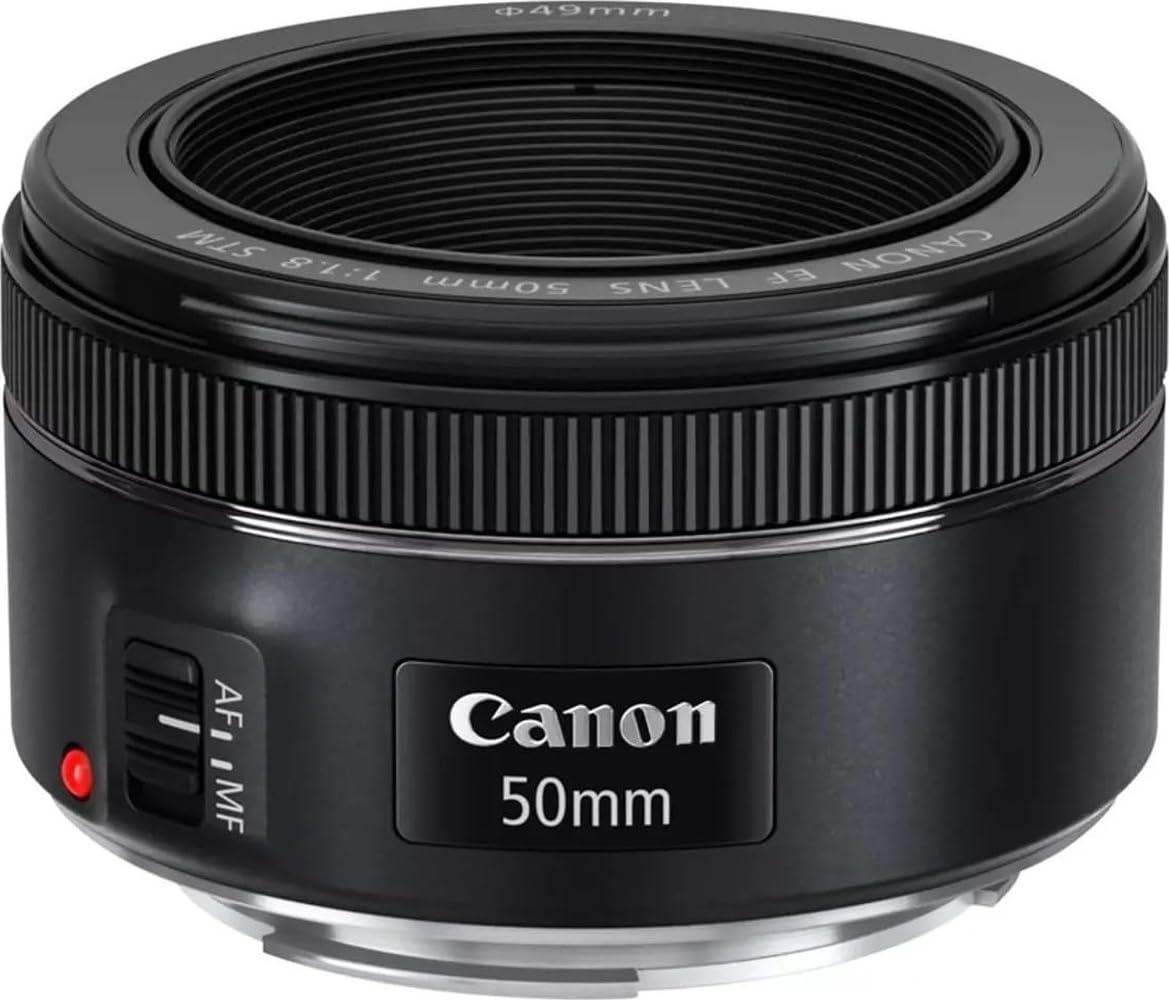
Canon EF 50mm f/1.8 STM

96 /100
Studio Score High Confidence

Key details

Max Aperture
f/1.8 fixed
Weight And Size
5.6 oz
Autofocus System
STM
Focal Length & Zoom
50mm prime
Check Price on Amazon

The EF 50mm f/1.8 STM is the classic gateway prime for Canon DSLRs: a 50mm f/1.8 lens that delivers portrait-scale background blur and low-light capability without L-series spending. Fixed framing means you move to compose, not zoom, but the shallow depth of field is exactly why this lens belongs in an EF kit bag. It is also small enough that it adds little weight to a body already in your hand.

At f/1.8, indoor and evening shooting is possible without flash, and background blur at portrait distances is smooth and pronounced. The f/1.8 aperture is the reason to buy it: subject separation arrives at a price that makes a first prime an easy decision. On an entry-level EF DSLR, the lens shifts the camera from a daylight kit zoom into a portrait and available-light tool.

Best for EF DSLR beginners and budget portrait shooters who want a compact prime for people photos and low-light stills. If your camera is primarily a video tool and silent autofocus matters, the RF-native 50mm f/1.8 is the better mount match. For stills work, this stays the budget lens that gets the best from an EF body.

๐Ÿ’ก In low-contrast scenes, switch to single-point AF and keep the shutter speed high to reduce hunting.

Pros

  • Budget-friendly f/1.8 prime that lifts portrait and low-light image quality on any EF DSLR.
  • Pronounced background blur at wide apertures makes subjects stand out from cluttered scenes.
  • Compact 5.6 oz body adds little weight to a Canon DSLR bag.

Cons

  • Fixed 50mm framing offers no zoom flexibility; composition changes come from your feet.
  • Autofocus speed can vary with light levels, and the motor may be audible in quiet scenes or hunt in low contrast.
Our verdict

For EF DSLR owners who want portraits and available-light stills without zoom-lens bulk, this is the prime to start with.

Check Latest Price
4

Best Value Telephoto

Canon RF 100-400mm f/5.6-8

90 /100
Studio Score High Confidence

Key details

Max Aperture
f/5.6-8 variable
Weight And Size
816 g
Autofocus System
Nano USM
Focal Length & Zoom
100-400mm zoom
Check Price on Amazon

The RF 100-400mm f/5.6-8 IS USM puts 400mm reach into an 816g zoom that is practical to carry through a full day of hiking. The 100-400mm range covers distant wildlife, airshows, and outdoor matches, and it undercuts the 100-500mm L on cost and carry weight, making it the natural first long telephoto for RF shooters who want reach without a heavier setup.

This lens suits birding beginners, hikers, and outdoor sports shooters who work in daylight. If your sessions start before sunrise or move indoors, the f/5.6-8 aperture's light-gathering drops noticeably at the long end, where f/8 leaves higher ISO and darker frames โ€” carry a faster lens for those situations. For its intended daylight use, the reach is the story: a 100-400mm range that frames distant subjects without demanding a tripod.

On crop-sensor RF bodies, the long end gives extra magnification that helps small subjects fill the frame, while full-frame users get a compact telephoto for wildlife and landscape compression. The Nano USM autofocus locks in quickly when light is sufficient, and the 5.5-stop optical IS keeps handheld shots steady at slower shutter speeds.

Pros

  • Long RF telephoto reach at a price that suits first-time wildlife shooters.
  • Sharpness is better than the price suggests.
  • 816g weight keeps 400mm reach practical on a hike.
  • Autofocus responds quickly and quietly in good light.

Cons

No notable drawbacks to flag.

Our verdict

This is the long-reach lens to grab for bright-weather wildlife and outdoor sports on an RF body.

Check Latest Price
5

Best Lightweight Telephoto

Canon RF 70-200mm f/4 L

93 /100
Studio Score High Confidence

Key details

Max Aperture
f/4 constant
Weight And Size
695 g
Autofocus System
Dual Nano USM
Focal Length & Zoom
70-200mm zoom
Check Price on Amazon

The RF 70-200mm f/4 L is the shortest and lightest 70-200 Canon makes for the RF mount. At 695 g, it slips into a small daypack without the bulk of the f/2.8 version, so travel and hiking photographers get L-series reach without a heavy kit.

Sharpness holds even wide open at f/4, which means no need to stop down for crisp telephoto shots. Dual Nano USM autofocus keeps pace in daylight sports and event work, and the 5-stop optical stabilizer provides a useful safety net at 200mm.

Portrait and event shooters get the telephoto compression they want at a fraction of the f/2.8 version's weight. The boundary is the f/4 aperture: it needs higher ISO in dim venues and delivers lighter background blur than the faster 70-200. Shooters who live in low light or depend on f/2.8 bokeh should pick that heavier zoom.

This premium-priced zoom is a cost-effective way into an L-series RF telephoto. Buyers who shoot mainly outdoors will rarely feel the missing stop of light, and the value comes from getting that performance in a lens light enough to carry all day.

๐Ÿ’ก Pair it with the 5-stop IS to keep 200mm shots steady at slower shutter speeds.

Pros

  • Sharpness holds even wide open at f/4, so you do not need to stop down for crisp telephoto results.
  • At 695 g and compact when collapsed, it is the easiest 70-200 to carry on long outings.
  • Autofocus is fast and quiet enough for daylight sports and events without distracting subjects.
  • Priced below the f/2.8 70-200 while keeping L-series image quality, it is a strong value in Canon's RF lineup.

Cons

  • In dim venues, f/4 forces higher ISO than an f/2.8 zoom would need.
Our verdict

For photographers who measure a lens by what it fits in a pack as much as by image quality, the RF 70-200mm f/4 L is the right telephoto.

Check Latest Price
6

RF Mirrorless Beginners

Canon RF 50mm f/1.8 STM

94 /100
Studio Score High Confidence

Key details

Max Aperture
f/1.8 fixed
Weight And Size
5.6 oz
Autofocus System
Gear-type STM
Focal Length & Zoom
50mm prime
Check Price on Amazon

A compact, budget-friendly 50mm f/1.8 built natively for RF bodies, this prime keeps the classic nifty-fifty recipe: sharp center detail, uncomplicated handling, and a wide aperture for low-light stills. Weighing 5.6 oz, it balances well on mirrorless bodies, and the RF control ring adds a customization option for quick aperture or exposure changes.

The fixed 50mm focal length limits framing flexibility for zoom-oriented buyers. For RF stills shooters, though, the compact form and portrait bokeh make it a natural first prime; video-first users should look elsewhere. It overlaps with the EF 50mm runner-up in this lineup; it is the right choice for RF owners, but doesn't occupy a distinct enough role to rank higher.

Pros

  • Sharp center detail and the classic 50mm portrait look at a budget-friendly price.
  • Wide f/1.8 aperture produces soft background blur that flatters portraits.
  • Weighs 5.6 oz and stays balanced on RF mirrorless bodies.

Cons

  • Fixed 50mm focal length means framing changes require moving rather than zooming.
  • In video, gear-type STM autofocus can be noisy and may hunt on low-contrast subjects.
Our verdict

For RF stills shooters who want a compact, budget-friendly prime, this is the one to keep in the bag; zoom-first buyers should pass.

Check Latest Price
7

Pro Sports, Events

Canon RF 70-200mm f/2.8 L

93 /100
Studio Score High Confidence

Key details

Max Aperture
f/2.8 constant
Weight And Size
2.6 lb
Autofocus System
Dual Nano USM
Focal Length & Zoom
70-200mm zoom
Check Price on Amazon

The RF 70-200mm f/2.8 L is a sharp telephoto zoom with fast Dual Nano USM autofocus and 5-stop optical stabilization, wrapped in a body that is compact by f/2.8 standards. On R5 or R6 bodies, it locks onto moving subjects and keeps the frame steady in dark event spaces. The premium price and 2.6 lb carry weight make sense only for low-light action and event professionals; the f/4 70-200 runner-up is lighter, less expensive, and better suited to travel and daylight shooting. In a gym or banquet hall, the extra stop of light turns a blurry shot into a keeper.

Pros

  • Image quality is sharp even at f/2.8, with clean background blur for portraits.
  • Autofocus locks onto moving subjects quickly in low-light event settings.
  • Compact body for a 70-200mm f/2.8, making it easier to pack for event work.

Cons

  • Budget buyers will find better value in the f/4 version.
  • Travel photographers who prioritize minimum weight will prefer the f/4 version.
Our verdict

For indoor sports and event work where f/2.8 means the difference between a usable shot and a miss, this is the lens to pick.

Check Latest Price
8

Landscape, Architecture, Interiors

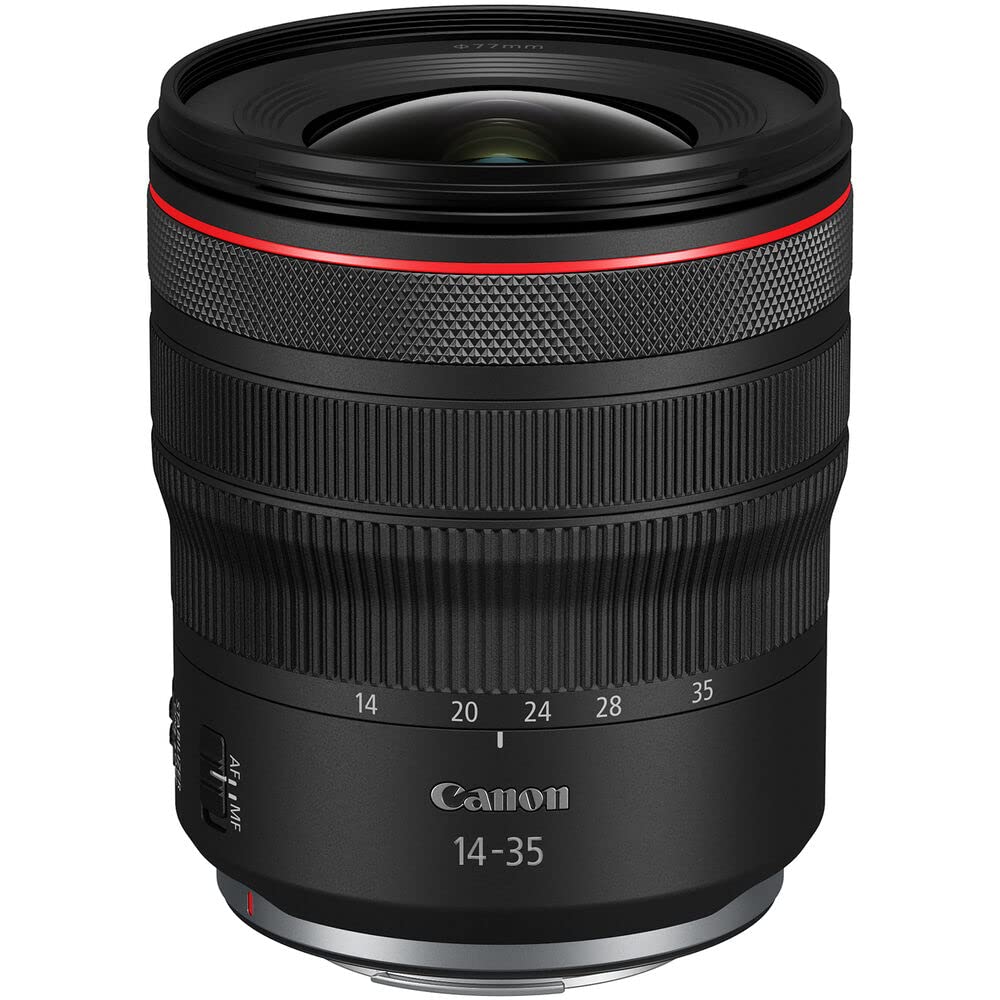
Canon RF 14-35mm f/4 L

90 /100
Studio Score High Confidence

Key details

Max Aperture
f/4 constant
Weight And Size
544 g
Autofocus System
Nano USM
Focal Length & Zoom
14-35mm zoom
Check Price on Amazon

The RF 14-35mm f/4L is the lightest way to get L-series ultrawide coverage from 14mm. The 544 g build stays balanced on RF bodies, and the Nano USM focuses quickly and quietly. Optical IS steadies handheld shots indoors and on uneven terrain.

This focal range serves landscape and real estate work, not general-purpose shooting. Corner softness can show at 14mm, and f/4 demands higher ISO in dim interiors. For shooters who pack light and need rooms captured wall-to-wall, those limits are an acceptable tradeoff; buyers after an everyday zoom or low-light speed should look toward the standard zoom in this set instead.

Pros

  • Compact, lightweight L-series build that keeps ultrawide coverage easy to carry on hikes and travel trips.
  • 14-35mm range with constant f/4 and optical IS suits real estate and landscape shooting.
  • Fast, quiet Nano USM autofocus with strong overall image rendering.

Cons

  • f/4 aperture calls for higher ISO in dim interiors, a tradeoff for the lighter build.
  • At 14mm, corner sharpness may soften and barrel distortion can show when shooting architecture.
Our verdict

This is the RF ultrawide for landscape and real estate shooters who balance weight against L-series coverage. It is not the pick for low-light action or general-purpose walkaround photography.

Check Latest Price
9

Serious Wildlife Shooters

Canon RF 100-500mm f/4.5-7.1

90 /100
Studio Score High Confidence

Key details

Max Aperture
f/4.5-7.1 variable
Weight And Size
3 lb
Autofocus System
Dual Nano USM
Focal Length & Zoom
100-500mm zoom
Check Price on Amazon

For dedicated wildlife shooters, this 500mm L-series zoom delivers the reach and autofocus speed bird photography demands. The 100-500mm range covers close action and distant perches without changing lenses, with image stabilization that helps in bright outdoor conditions. Indoors or in low light, the f/7.1 long end will require high ISO and slower shutter speeds, so treat it as a daylight lens. It is also heavier than the lightweight 400mm RF option, and the barrel can slide while carrying. Price and size push it past the average buyer; a 100-400 zoom covers the typical hobbyist at much lower cost. The extra reach and L-series AF make this the lens for serious naturalists.

Pros

  • Reaches 500mm with L-series sharpness and color for bird and wildlife work.
  • Stays sharp at distance and handles high ISO capture without losing detail.
  • Fast, decisive autofocus tracks moving subjects across the telephoto range.

Cons

  • Barrel can creep or slide while carrying; there is no zoom lock to hold it in place.
  • Weight can be taxing during long handheld sessions, though it is lighter than older EF telephoto zooms.
Our verdict

For dedicated wildlife and bird photographers who want 500mm reach without moving to a super-tele prime, this RF zoom fits when shooting stays in daylight and the carry weight is acceptable.

Check Latest Price

How to Choose

Mount Compatibility

Canon sells two lens families: EF for traditional DSLRs and RF for mirrorless R-series bodies. RF lenses physically do not fit EF DSLR bodies, while EF lenses can be adapted to RF bodies with Canon's adapter. Buying the wrong mount is the most expensive mistake in this category.

Focal Length and Zoom Range

Focal length determines how much of the scene appears in the frame. A 24-105mm zoom covers a wide landscape at one end and a compressed portrait at the other, making it the most useful all-round range. A 70-200mm zoom reaches further but forces you to back up for group shots. Primes give up range to gain aperture and smaller size.

Maximum Aperture

Maximum aperture controls the amount of light that reaches the sensor and the depth of field you can create. Each full stop doubles or halves the light: f/2.8 lets in twice the light of f/4, and four times as much as f/5.6. That is why a constant f/2.8 zoom is the standard for indoor events, while a variable f/5.6-8 telephoto is a daylight tool.

Image Stabilization

Image stabilization shifts lens elements to counteract hand shake, and it matters most at long focal lengths. At 300mm, small movements become visible blur; without IS, you need a shutter speed near 1/300s or faster. Five stops of IS can let you shoot handheld at much slower speeds, but it cannot freeze a moving subject.

Autofocus System

Canon's main autofocus motors are USM, Nano USM, and STM. Nano USM is fast and quiet, which suits both stills and video; STM can be audible and may hunt in low contrast. If you record video, choose a lens with quieter AF or plan to use an external microphone.

Weight and Size

Heavier lenses use larger glass elements to capture more light, but that weight adds up on your neck, bag, and hands. A 70-200mm f/2.8 weighs more than 60 percent more than the f/4 version, and the difference becomes obvious on a full day of hiking. Match the load to your carry style, not just the camera body.

Frequently Asked Questions