7 Best Canon Wide-Angle Lens of 2026: Match Mount, Skip Hype

Find the best Canon wide-angle lens for your camera by matching mount, focal length, aperture, and IS to how you actually shoot.

Canon's wide-angle lineup spans tiny RF primes, crop-sensor EF-S zooms, and heavyweight L-series glass. The labels all sound similar, but the shooting experience differs more by mount and handling than by badge. A lens that nails edge sharpness on a tripod can still fight you handheld if it lacks IS.

The main trade-off is zoom flexibility versus size and aperture. A compact prime slips into a bag and shoots in dimmer light, while a zoom covers more scenes without a lens change but costs more and weighs more. There is no universal best; there is a match for how you shoot.

Start with your camera's mount, then decide whether f/2.8 or image stabilization matters more than portability. That sequence eliminates most of the confusion before you compare optics.

1

Best Overall

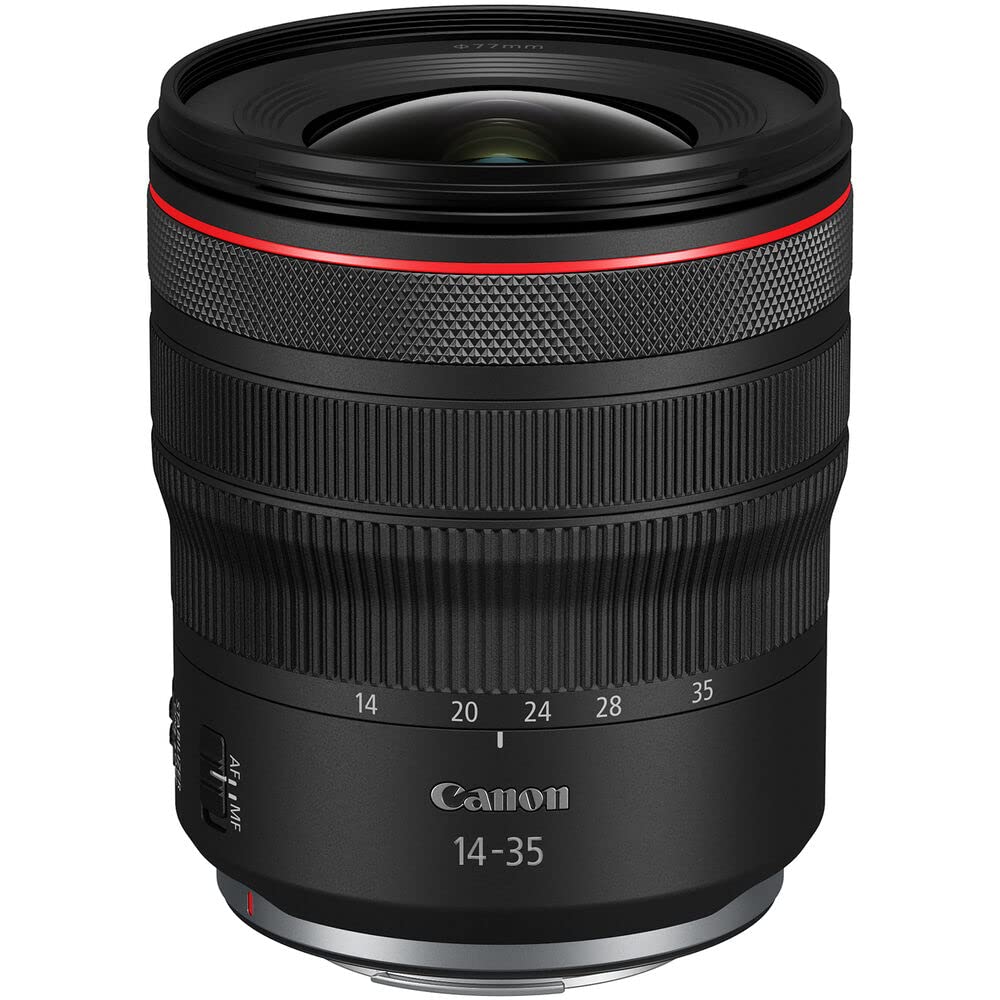
Canon RF14-35mm F4 L IS

90 /100
Studio Score High Confidence

Key details

Mount
Canon RF
Focal Length
14-35mm zoom
Max Aperture
f/4 constant
Size & Weight
544 g
Check Price on Amazon

Canon's RF14-35mm F4 L IS USM is the broadest practical RF wide zoom: a 14-35mm range with constant f/4, optical image stabilization, and L-series autofocus in a 544g body. That combination lets a full-frame RF shooter cover both ultra-wide and general wide-angle work from one lens, which is why it fits a travel bag more easily than a two-prime wide kit. The optical IS steadies handheld video, and the L-series build keeps the zoom ring damped and the barrel comfortable to hold for long sessions.

Autofocus is quick and quiet in stills and video, with no audible hunt during normal use. The close-focusing 35mm end provides a near-macro framing option, a behavior uncommon on wide zooms, and the 35mm field of view works for environmental portraits. Real estate walkthroughs, landscape compositions, street frames, and gimbal moves all sit inside the zoom range without a lens change. The 14mm end opens up interiors and tight outdoor scenes; at 35mm, the lens behaves like a normal-field-of-view prime for detail shots.

This wide zoom suits RF full-frame owners who want one lens for travel, landscape, real estate, and hybrid video. It is not intended for event shooters who need f/2.8 light-gathering; the 15-35mm f/2.8 RF sibling covers that role with a heavier body and higher price. The constant f/4 keeps exposure consistent while zooming, which simplifies video work. In daytime and well-lit interiors, f/4 is not a handicap; in darker venues, a tripod or higher ISO is the expected workaround.

The premium price sits below the f/2.8 RF zoom and buys L-series optics and optical IS in a package that stays manageable on a gimbal or in a daypack. On a full-frame R-series body, the balance point is comfortable enough for one-handed gimbal work, and the zoom range covers the angles travel and interior shooters reach for. For RF shooters weighing a small prime kit against the f/2.8 zoom, this lens lands in a middle zone that keeps the bag light without giving up zoom flexibility.

πŸ’‘ Use a lens profile when converting 14mm RAW files to straighten lines and recover corners.

Pros

  • L-series construction and optics deliver a smooth zoom ring and sharp center detail.
  • The 14-35mm range covers interiors, landscapes, and street frames in one lens.
  • Autofocus is fast and quiet enough for video and stills.
  • 544g body balances on RF cameras and carries comfortably through a full day.
  • Close-focusing 35mm end adds a near-macro option without a second lens.

Cons

  • At 14mm, RAW files can show barrel distortion and vignetting until profile corrections are applied.
Our verdict

The RF14-35mm F4 L IS USM is the single wide zoom that lets RF full-frame shooters leave the prime kit at home while keeping the bag lighter than the f/2.8 alternative.

Check Latest Price
2

Best Compact RF Prime

Canon RF16mm f/2.8 STM

92 /100
Studio Score High Confidence

Key details

Mount
Canon RF
Focal Length
16mm prime
Max Aperture
f/2.8 fixed
Size & Weight
163 g
Check Price on Amazon

The RF16mm f/2.8 STM is the lightest native RF ultra-wide in this guide: 163g with a fast f/2.8 aperture and a body that disappears into a jacket pocket. It won’t replace the top pick’s 14-35mm zoom range, but it trades that flexibility for a size that makes the lens easy to carry daily.

That tradeoff points to a specific buyer. RF vloggers, travelers, and real-estate shooters who want quick wide framing without a zoom get a lens that pairs with an R-series body without dominating a bag. Budget astrophotographers on EOS R bodies also get an f/2.8 start that is easy to pack. The AF can hunt in low-contrast scenes, and high-contrast edges can show chromatic aberration; both are manageable when the goal is a compact wide prime. Shooters who need 14-35mm zoom coverage are better served by the guide's top pick.

Center sharpness holds up at close distances, and color rendering is pleasant with minimal grading. The f/2.8 aperture makes handheld interiors more usable than the f/4 zoom that tops this guide. Vloggers framing at arm's length get an ultra-wide field without L-series weight.

The 163g body keeps gimbal setups simple during long takes, and real-estate shooters can step into a room and capture the space without changing lenses.

πŸ’‘ Use in-body stabilization on compatible EOS R bodies for handheld video; the lens has no optical IS.

Pros

  • Weighs 163g, making it one of the smallest native RF ultra-wide primes.
  • Center sharpness is strong at close distances.
  • Budget-friendly price undercuts native RF wide zooms while keeping f/2.8.
  • Color output is pleasant without heavy editing.

Cons

  • High-contrast edges can show chromatic aberration.
  • Autofocus can wander or feel slow in low-contrast scenes.
Our verdict

For RF shooters who want an ultra-wide that disappears into a bag, the 16mm f/2.8 is the compact answer.

Check Latest Price
3

Best Crop-Sensor Budget Zoom

Canon EF-S 10-18mm IS STM

94 /100
Studio Score High Confidence

Key details

Mount
Canon EF-S
Focal Length
10-18mm zoom
Max Aperture
f/4.5-6.3 variable
Size & Weight
240 g
Check Price on Amazon

The EF-S 10-18mm IS STM takes a crop-sensor Canon DSLR to genuine ultra-wide framing with a 10-18mm zoom range, optical stabilization, STM autofocus, and a 240g build that stays comfortable on long shoots. At 10mm the field of view is dramatic on an APS-C body, giving interiors, landscapes, and vlog shots a wider perspective than any kit lens can match.

Optical quality sits well above the budget price point, and the image stabilizer makes handheld work easier than the small body suggests. Build quality is solid for regular use, and the STM motor keeps autofocus quiet for video. The 18mm end covers standard wide framing; the 10mm end is the real reason most buyers pick this lens.

The 240g weight keeps a compact DSLR balanced, and the short barrel makes the camera easy to pack. It is the kind of lens that stays mounted because it does not get in the way.

This is a crop-sensor-only EF-S lens for Canon APS-C DSLR owners who want wide coverage for landscape, real estate, or vlogging without carrying a larger zoom kit. The slow f/4.5-5.6 variable aperture means low-light interiors call for a tripod, flash, or higher ISO β€” a boundary for indoor work that is easy to manage with support.

Pros

  • Ultra-wide 10-18mm zoom range gives APS-C DSLRs a real wide-angle perspective for landscapes and interiors.
  • 240g body with optical IS keeps handheld video steady without adding weight to a crop-sensor camera.
  • STM autofocus is quiet and smooth, which suits vloggers recording with the built-in microphone.
  • Budget-friendly price makes it an easy first ultra-wide for Canon APS-C shooters.

Cons

  • Edge distortion shows in uncorrected RAW files at 10mm, most visible along straight lines near the frame edge.
Our verdict

Canon APS-C shooters who want real ultra-wide coverage without a heavy investment get exactly that here. The 10mm end is the reason to buy it, and the weight and IS make it easy to keep on the camera.

Check Latest Price
4

Best EF Full-Frame Pro Zoom

Canon EF 16-35mm f/2.8L II

87 /100
Studio Score Strong Evidence

Key details

Mount
Canon EF
Focal Length
16-35mm zoom
Max Aperture
f/2.8 constant
Size & Weight
635 g
Check Price on Amazon

The 16-35mm f/2.8L II is the EF full-frame wide zoom that keeps working as the light drops. Its constant f/2.8 holds exposure steady through the range, and the USM focus motor is quiet enough for ceremony work. That combination is exactly what event and interior shooters on DSLR bodies need from a wide lens.

This lens targets EF full-frame photographers who shoot events, interiors, or landscapes and need f/2.8 in tight spaces. It is not the pick for mirrorless-only shooters who want a native RF mount and optical stabilization; the RF f/2.8 zoom in this lineup owns that role. The lack of IS means handheld low-light shots require high shutter speeds or a support, and wide-open at 16mm the edges can show softness and vignetting before you stop down. For tripod-based interior and landscape work, those are manageable boundaries.

On an EF body, the 16-35mm range is genuinely useful: 16mm opens up room interiors and tight streets, while 35mm frames a group shot or environmental portrait without switching lenses. The L-series build is dense enough for a gripped DSLR, and the front element is large. This is a working lens for working photographers, not a compact travel option.

πŸ’‘ At 16mm, stopping down to f/8 tightens the edges and reduces vignetting.

Pros

  • Constant f/2.8 keeps exposure stable from 16 to 35mm in dim event spaces.
  • Quiet USM autofocus suits ceremony work without adding focus noise to the frame.
  • L-series build quality holds up across demanding professional schedules.
  • Ultra-wide framing stays rectilinear; no fish-eye curvature at 16mm.

Cons

  • At 16mm, corner sharpness drops and vignetting can appear in sky-heavy frames.
  • No image stabilization, so handheld low-light shots need high shutter speeds or a support.
Our verdict

EF full-frame event and interior shooters who need f/2.8 and can work around the missing IS get a durable wide zoom. Mirrorless RF buyers who want stabilization should look at the RF f/2.8 option.

Check Latest Price
5

RF Pro Photographers

Canon RF15-35mm F2.8 L IS

91 /100
Studio Score High Confidence

Key details

Mount
Canon RF
Focal Length
15-35mm zoom
Max Aperture
f/2.8 constant
Size & Weight
840 g
Check Price on Amazon

Canon's RF15-35mm f/2.8 L IS USM is the luxury ultrawide for RF shooters who work in dim event spaces, interiors, or handheld video: the constant f/2.8 aperture and optical IS deliver clean, crisp frames where an f/4 zoom would push ISO higher. Autofocus is fast, accurate, and silent, and L-series optics stay sharp edge-to-edge. The tradeoff is positioning: it is more expensive and heavier than the 14-35mm f/4 top pick, and that low-light advantage matters mainly to event and interior professionals. The 840g body also uses a plastic barrel that can feel less dense than other L lenses, so it is a purposeful tool for paid work, not a travel-minimalist companion.

Pros

  • Constant f/2.8 with optical IS keeps handheld shots clean in dim venues.
  • L-series optics hold sharp detail across the frame.
  • Fast, accurate, silent autofocus tracks subjects for stills and video.

Cons

  • In cold weather, the plastic barrel may feel less reassuring than a metal L lens.
  • Premium price and 840g weight put it outside budget or minimalist travel kits.
Our verdict

Choose the RF15-35mm f/2.8 when your work actually needs f/2.8 in dim venues or handheld video; otherwise the lighter f/4 zoom is the better fit.

Check Latest Price
6

Budget RF Travelers

Canon RF15-30mm IS STM

87 /100
Studio Score Strong Evidence

Key details

Mount
Canon RF
Focal Length
15-30mm zoom
Max Aperture
f/4.5-6.3 variable
Size & Weight
390 g
Check Price on Amazon

The RF15-30mm F4.5-6.3 IS STM is a compact native ultra-wide zoom for RF full-frame cameras, and its optical stabilizer makes handheld framing in tight spaces practical. Center sharpness is stronger than expected at this price, and autofocus is quick enough for travel, landscape, and indoor architecture work.

The clear boundaries are the f/4.5-6.3 aperture and RAW distortion at 15mm: dim interiors and astrophotography need a faster lens or more support, while profile correction is part of the RAW workflow. It sits below the top pick because the variable aperture and edge distortion narrow its use cases, but RF full-frame shooters who want IS and a light kit still get a native ultra-wide zoom without an adapter.

Pros

  • Native RF 15-30mm zoom with optical IS covers tight interiors and landscapes without an adapter.
  • 390g weight and compact build make it an easy travel companion on full-frame RF bodies.
  • Center sharpness is stronger than expected for a non-L ultra-wide zoom in this price range.

Cons

  • Corner sharpness at 15mm will not satisfy shooters used to L-series edge performance.
  • RAW files at 15mm show barrel distortion that JPEG output automatically reduces.
Our verdict

For daytime travel and landscape shooters who want a native RF ultra-wide zoom with IS and a light kit, this fits; anyone needing constant-aperture performance should step up the lineup.

Check Latest Price
7

Budget EF Shooters

Canon 17-40mm f/4L

85 /100
Studio Score Strong Evidence

Key details

Mount
Canon EF
Focal Length
17-40mm zoom
Max Aperture
f/4 constant
Size & Weight
500 g
Check Price on Amazon

The Canon 17-40mm f/4L is the renewed EF L-series entry point: constant f/4, L-series build, and a 17-40mm zoom that gets full-frame DSLR shooters ultra-wide framing on a budget. It handles landscape and architectural subjects well, and the 500g weight keeps it manageable for day hikes. The lack of IS and renewed-condition copy variance are the main caveats, so confirm warranty and return terms before checkout. Alongside the pro f/2.8 L-series zoom in this lineup, this older design is a cautious budget pick, not a benchmark.

Pros

  • L-series build with constant f/4 gives EF full-frame shooters a durable ultra-wide zoom at a budget-friendly price.
  • 17-40mm range covers landscape and architectural framing without the weight or cost of a fast 16-35mm L zoom.
  • 500g body keeps the kit light enough for long outdoor shoots while still carrying Canon's L-series feel.

Cons

  • The 17mm end is less expansive than newer Canon wide zooms that start at 14mm or 16mm.
  • Constant f/4 is fine for daylight, but dim interior and evening handheld shots require higher ISO or a tripod.
Our verdict

This fits EF full-frame shooters who want L-series build and an ultra-wide zoom for daylight landscape and architecture; don't expect it to handle dim event work.

Check Latest Price

How to Choose

Mount Compatibility

Canon has three physically different lens systems: EF-S for APS-C DSLRs, EF for full-frame DSLRs, and RF for mirrorless bodies. EF-S lenses have a deeper rear element and a smaller image circle, so they only work on crop-sensor DSLRs. EF lenses work on EF DSLRs and can adapt to RF mirrorless bodies because the adapter preserves the original flange distance.

RF lenses use a shorter flange distance and cannot be adapted to DSLRs. If you already own an RF body, native RF glass is usually the right call; if you shoot EF DSLRs, EF lenses are the only choice.

Focal Length

The focal length number does not tell you the angle of view until you factor in sensor size. A 10mm EF-S zoom on APS-C delivers roughly the same view as a 16mm lens on full-frame. That is why the same focal length can feel wide on one Canon body and less dramatic on another.

Zoom range adds versatility but also size and cost. A 14-35mm RF zoom covers wide to normal perspectives, while a 16mm prime is fixed at one angle. Choose the widest focal length you will actually use; the last few millimeters of width often cost the most in weight and distortion.

Maximum Aperture

Maximum aperture controls how much light reaches the sensor. An f/2.8 lens admits roughly twice the light of f/4, which translates to a faster shutter speed or lower ISO in a dim interior. Constant f/2.8 zooms also keep exposure stable while you zoom, which matters for video.

The trade-off is physical. Larger aperture elements require heavier glass and bigger front elements, and the price climbs fast. For tripod-based landscape or daytime travel, f/4 or variable-aperture zooms deliver most of the image quality at a fraction of the cost.

Image Stabilization

Optical image stabilization physically shifts lens elements to counter hand shake. It is most useful at shutter speeds between 1/15s and 1/2s, where it can turn a blurred interior shot into a sharp one. It also steadies handheld video noticeably.

The hidden boundary is that IS cannot freeze a moving subject. A person walking through a cathedral will still blur at slow shutter speeds regardless of stabilization. If your subject moves, you need a faster aperture or higher ISO, not just IS.

Size and Weight

Weight is a practical constraint, not a cosmetic one. An 840g f/2.8 zoom pulls on a neck strap, changes gimbal balance, and takes up most of a small camera bag. A 163g prime sits unnoticed until you need it.

Compact wide-angle lenses achieve that size with smaller elements, which often means more distortion at the edges. In-camera or software corrections clean up most of it in JPEG or post, but RAW shooters will see the uncorrected geometry before applying profiles.

Frequently Asked Questions