8 Best Telephoto Lens for Nikon in 2026: Match Reach to Your Mount

Find the best telephoto lens for Nikon for your camera's mount, reach needs, and stabilization setup.

Most Nikon shooters shopping for a telephoto zoom start by comparing focal lengths. After a few sessions in the field, the lenses that stay in the bag are the ones with dependable autofocus, usable stabilization, and a mount that matches the body. A sharper 600mm on paper won't help if the lens hunts at dusk or needs a support system you don't own.

The main divide is between Nikon Z mirrorless and F-mount DSLR systems. Z shooters can use native long zooms with internal zoom and VR, while DSLR owners often get more reach per dollar from proven F-mount super-telephotos, at the cost of extra weight and older autofocus behavior. Adapters blur the line, but they don't eliminate the trade-off.

1

Best Overall

Nikon Z 180-600mm

88 /100
Studio Score Strong Evidence

Key details

Max Aperture
f/5.6-6.3
Focal Length Reach
180-600mm
Image Stabilization
5.5-stop VR
Mount Compatibility
Nikon Z
Check Price on Amazon

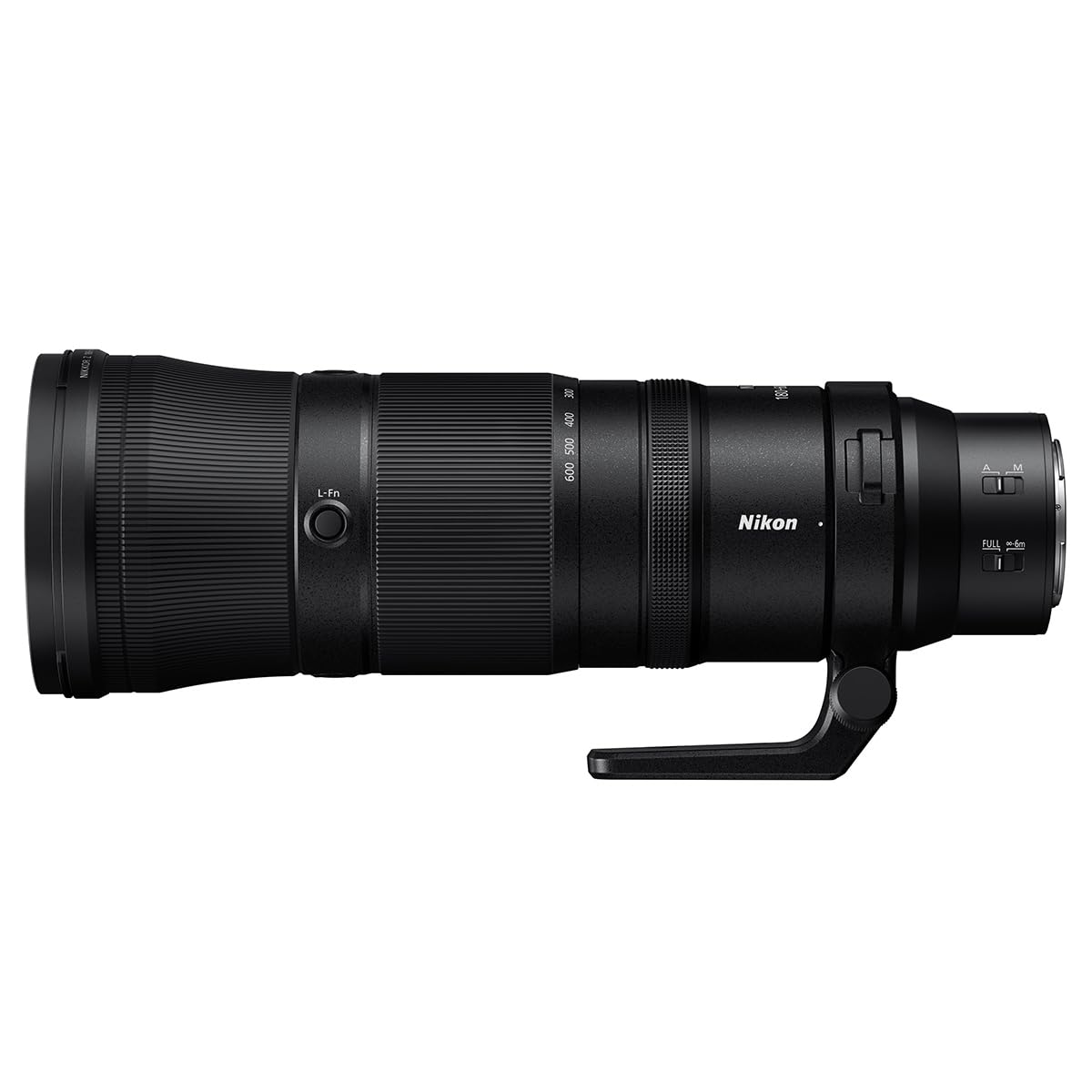
The 180-600mm f/5.6-6.3 VR gives Nikon Z shooters a direct path to 600mm without stepping up to a super-tele prime. The internal zoom keeps the barrel fixed at every focal length, so the lens stays balanced while you reframe, and it also keeps dust from being pulled into the barrel as the zoom moves. Five-and-a-half stops of VR turn 600mm into a handholdable focal length for birding and wildlife work, which is the main reason this lens belongs in a dedicated wildlife kit rather than a general-purpose bag.

Feather detail and fur texture hold at 600mm wide open, and stopping to f/8 tightens edge sharpness further. The f/5.6-6.3 aperture is the practical boundary for low-light action: it pushes you toward higher ISO before the shutter speed catches up with fast movement. At 4.7 lb, the lens is not a light carry, but the internal barrel keeps the center of gravity stable when panning with a flying bird. That stability extends to quick focal-length changes, because the physical length of the lens does not change when you zoom from 180mm to 600mm.

This is a specialized lens for Nikon Z shooters who build their kit around wildlife, birds, and motion work. Native Z mount keeps the AF and VR system in direct communication with the body, and the internal zoom reduces dust intrusion during lens changes. Budget-focused buyers or those seeking a compact everyday travel lens should not stretch for this lens; the premium price only makes sense if 600mm reach is a regular part of how you shoot. The 4.7 lb weight is part of the deal, and the balance is good enough for handheld use through a full outing.

Teleconverter users can push the 180-600mm toward 840mm and 1200mm in daylight. The built-in VR becomes more important as the effective focal length grows, and the internal zoom keeps the rig from becoming nose-heavy with a converter attached. That reach extension is what separates this lens from shorter Z telephoto zooms, which trade maximum focal length for lighter carry. On a tripod, the fixed-length barrel also removes the need to rebalance when changing focal length, a real advantage when you are waiting for a bird to move into a clearing.

💡 For flight shots in low contrast, switch to a smaller AF-area mode so the lens can lock onto the bird before you start a burst.

Pros

  • Image quality for wildlife photography holds up at distance.
  • Sharp detail holds across the 180-600mm zoom range.
  • Works for wildlife, birds, and motion photography.
  • Internal zoom keeps the lens balanced and reduces dust intrusion.

Cons

  • F-mount DSLR users need an adapter; this lens only mounts natively on Z bodies.
  • Autofocus speed can feel inconsistent in some demanding light conditions.
Our verdict

For Nikon Z shooters who need 600mm and want to stay handholdable, the 180-600mm is the lens to build a wildlife kit around.

Check Latest Price
2

Best F-Mount Wildlife Zoom

Sigma 150-600mm C

95 /100
Studio Score High Confidence

Key details

Max Aperture
f/5-6.3
Focal Length Reach
150-600mm
Image Stabilization
OS
Mount Compatibility
Nikon F
Check Price on Amazon

The Sigma 150-600mm Contemporary is the F-mount route to 600mm reach with optical stabilization, giving Nikon DSLR shooters a wildlife telephoto that outpaces older budget 500mm designs on autofocus speed.

On a DSLR body, the zoom range covers near-field birds and distant mammals without changing lenses. The OS system steadies the viewfinder while you track a subject, and images carry low distortion and accurate color.

This lens suits Nikon DSLR wildlife and birding photographers who accept its size. The 4.3 lb body is large and heavy; a tripod or monopod is recommended for long sessions. At 600mm wide open, sharpness is slightly soft, but f/8 to f/11 sharpens it noticeably.

Pros

  • Reaches 600mm for wildlife and birding subjects without the cost of native super-tele lenses.
  • Sharp frames with low distortion and accurate color across the zoom range.
  • Autofocus keeps up with moving birds and mammals in a wide range of conditions.
  • Strong value per millimeter of reach for budget-conscious Nikon DSLR shooters.

Cons

  • On Z bodies, an FTZ adapter is required, and adapted autofocus and VR are not identical to native Z lenses.
  • Does not double as a compact carry-everyday zoom; it is a purpose-built telephoto for dedicated sessions.
Our verdict

For Nikon DSLR shooters chasing birds and mammals, this is the cost-effective 600mm zoom.

Check Latest Price
3

Best Premium Z Telephoto

Nikon Z 100-400mm S

91 /100
Studio Score High Confidence

Key details

Max Aperture
f/4.5-5.6
Focal Length Reach
100-400mm
Image Stabilization
5.5-stop VR S
Mount Compatibility
Nikon Z
Check Price on Amazon

The Nikon NIKKOR Z 100-400mm f/4.5-5.6 VR S pairs S-line optical quality with a 3.2 lb body that makes handheld telephoto work practical. The zoom range covers the focal lengths most travel and wildlife assignments need, and the lens stays balanced on a Z body without turning a carry setup into a workout.

Images stay sharp at every focal length, and the quiet AF motor keeps up with moving subjects without drawing attention. Z teleconverters extend reach when needed, while the 5.5-stop VR S stabilizes the long end. The lens does not demand a tripod as often as heavier super-tele options, which is the real advantage for photographers working on foot.

This is for Z-mount shooters who want one S-line telephoto for travel, wildlife, and hybrid jobs without committing to a 600mm super-tele. The premium price and 400mm maximum reach are the boundaries: distant wildlife photographers should look at the native Z 180-600mm instead. It suits hybrid shooters who value quiet focus and consistent sharpness over maximum reach.

Pros

  • S-line build quality stands up to regular field use.
  • Frames stay sharp across the entire 100-400mm range.
  • Autofocus is quick and quiet enough for hybrid shooting.

Cons

  • At 400mm, f/5.6 pushes you to higher ISO values as light fades.
  • Weighing 3.2 lb, it is heavier than a compact 70-300mm for ultralight travelers.
Our verdict

If your subjects are small and far away, the 180-600mm Z is the one to grab. If you want S-line sharpness in a lighter package, the 100-400mm is the right Z telephoto.

Check Latest Price
4

Best Value Z Super-Tele

Tamron 150-500mm Z

85 /100
Studio Score Strong Evidence

Key details

Max Aperture
f/5-6.7
Focal Length Reach
150-500mm
Image Stabilization
VC optical
Mount Compatibility
Nikon Z
Check Price on Amazon

The Tamron 150-500mm f/5-6.7 Di III VC VXD gives Nikon Z shooters 500mm reach with built-in VC at a price below S-line telephotos. It lands as the value-minded runner-up to the longer 600mm native-Z zoom in this lineup; you trade the last 100mm of reach and some S-line finish for a lower price. That trade suits birding and wildlife outings, where 500mm covers the useful range.

Sharpness is the standout. Long-end images hold feather and fur detail well enough for aggressive cropping, and the optical VC steadies the frame during handheld bursts. The 150mm end makes locating subjects easier before zooming to 500mm. Lens quality exceeds expectations for a Z-mount super-tele at this price, with no handling surprises that take away from the shooting experience.

This lens suits Z-mount wildlife and birding shooters who want 500mm without S-line pricing. It pairs naturally with a Nikon Z body on long hikes and in hides, and the VC helps when support is not available. Autofocus accuracy can vary between copies, so checking close-focus and infinity behavior early is part of owning this one.

Pros

  • Sharpness at the long end holds up for feather detail and crop-friendly framing.
  • Lens quality impressions are strong for the price tier.
  • Reach per dollar beats S-line telephoto pricing.

Cons

  • At 500mm, the f/6.7 maximum aperture limits twilight action shooting.
  • The 4.1 lb body can add fatigue on long handheld sessions; a monopod or tripod helps.
Our verdict

This is the Z-mount telephoto to choose when budget matters more than the last 100mm of reach.

Check Latest Price
5

Best Compact Budget Z Tele

Tamron 70-300mm Z

86 /100
Studio Score Strong Evidence

Key details

Max Aperture
f/4.5-6.3
Focal Length Reach
70-300mm
Image Stabilization
None, IBIS only
Mount Compatibility
Nikon Z
Check Price on Amazon

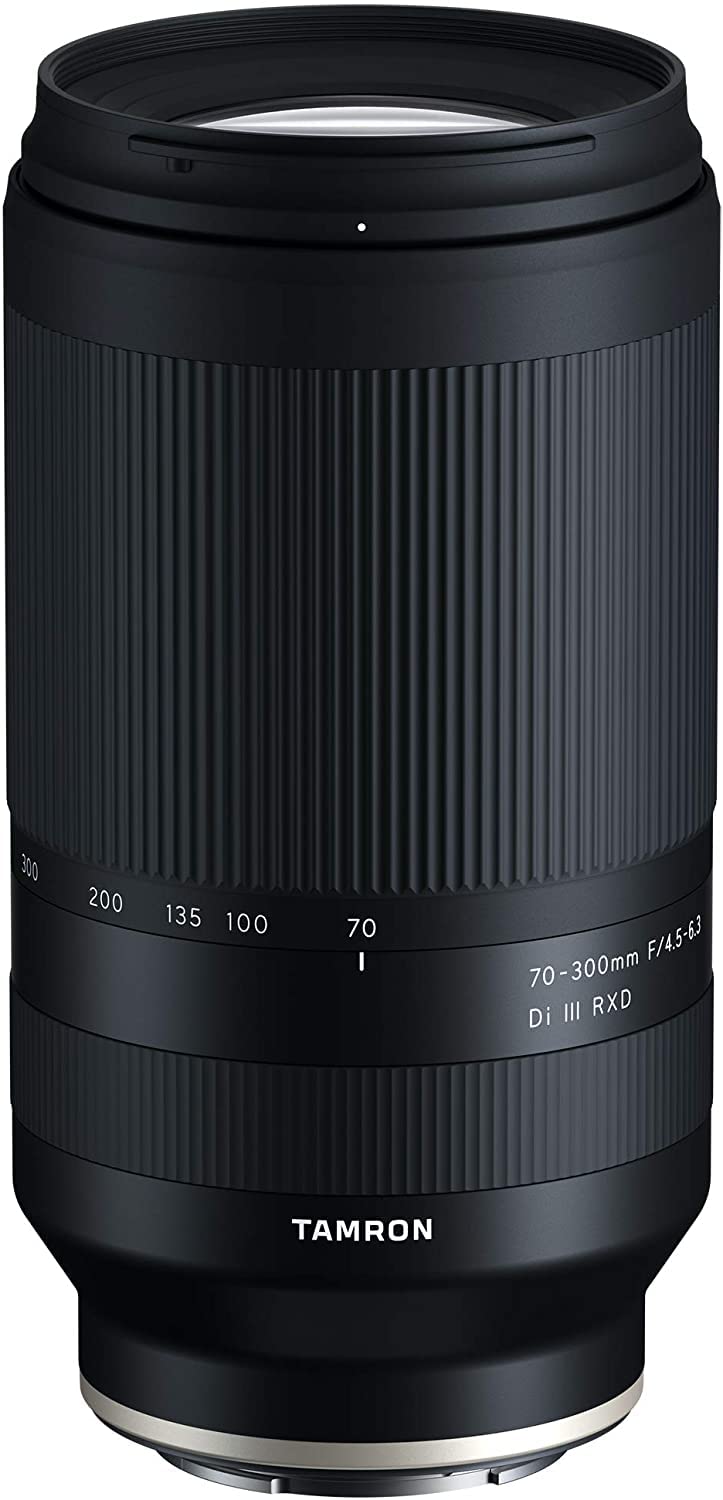
The Tamron 70-300mm f/4.5-6.3 for Nikon Z weighs 1.3 lb, making it the lightest long telephoto in this set. Its quiet autofocus locks onto birds and outdoor subjects quickly, and the 70-300mm range handles travel framing without turning a camera bag into luggage. Sharpness holds up at 300mm, so the compact barrel does not ask you to trade image quality for portability.

This lens is for full-frame Z shooters who want a light everyday telephoto and already have an IBIS-equipped body. The lens has no optical VR, so an IBIS-equipped Z body is required for steady handheld shots; on Z30/Z50 bodies without IBIS, you would want a tripod or very fast shutter speeds. That tradeoff is easier to accept because the whole setup stays comfortable for a day of hiking or city walking.

Compared with the 150-500mm zoom in this lineup, the Tamron saves nearly three pounds and a significant amount of bag space. It gives up super-tele reach, but for casual wildlife, landscapes, and compressed street shots, 300mm is enough. At a mid-range price, this is the practical pick for Z owners who want a telephoto without committing to a super-tele kit. For daylight travel and casual nature work, the balance of reach and weight is easy to live with.

Pros

  • Weighs 1.3 lb, so it can stay mounted for a full day of travel or hiking.
  • Quiet, responsive autofocus tracks birds and moving subjects well in daylight.
  • Image quality holds up at 300mm, with clear detail for telephoto shots.
  • Cost-effective entry into Z-mount telephoto reach.

Cons

  • The f/6.3 aperture at 300mm asks for good light, so low-light sports are better left to an f/2.8 zoom.
  • Maximum reach is 300mm, short of the 500-600mm super-tele range that dedicated wildlife kits provide.
Our verdict

A 70-300mm Z zoom that stays on the camera all day and keeps the bag light — the sensible travel telephoto for full-frame Nikon shooters.

Check Latest Price
6

F-Mount Budget Reach

Sigma 150-500mm OS

86 /100
Studio Score Strong Evidence

Key details

Max Aperture
f/5-6.3
Focal Length Reach
150-500mm
Image Stabilization
OS
Mount Compatibility
Nikon F
Check Price on Amazon

Sigma’s 150-500mm OS delivers the reach and stabilization that make 500mm wildlife shooting accessible to Nikon DSLR owners without flagship pricing. Image quality is strong for a long telephoto zoom, and 500mm sharpens when stopped down. The honest tradeoff is an older F-mount design: autofocus feels dated in low light, so this lens fits shooters who can use a tripod or monopod and prioritize reach over fast acquisition. Z-mount owners will need an FTZ adapter to use this F-mount lens. Low-light sports or hand-held walk-around shooting is not the assignment.

Pros

  • 500mm reach plus optical stabilization gives wildlife shooters steady framing at a lower price than modern Sigma super-tele zooms.
  • Image quality is strong for a long telephoto zoom, and 500mm sharpens when stopped down.
  • The optical stabilization is capable enough for handheld shots in moderate light.

Cons

  • At 4.2 lb, long handheld sessions get tiring; a monopod or tripod makes the weight manageable.
  • Autofocus can be slow to acquire in low light and feels dated against the newer Sigma 150-600mm Contemporary.
Our verdict

This fits Nikon DSLR shooters who want 500mm reach with optical stabilization and are comfortable shooting from a tripod or monopod.

Check Latest Price
7

Manual Portraits Astro

Rokinon 135mm f/2

87 /100
Studio Score Strong Evidence

Key details

Max Aperture
f/2.0
Focal Length Reach
135mm prime
Image Stabilization
None
Mount Compatibility
Nikon F
Check Price on Amazon

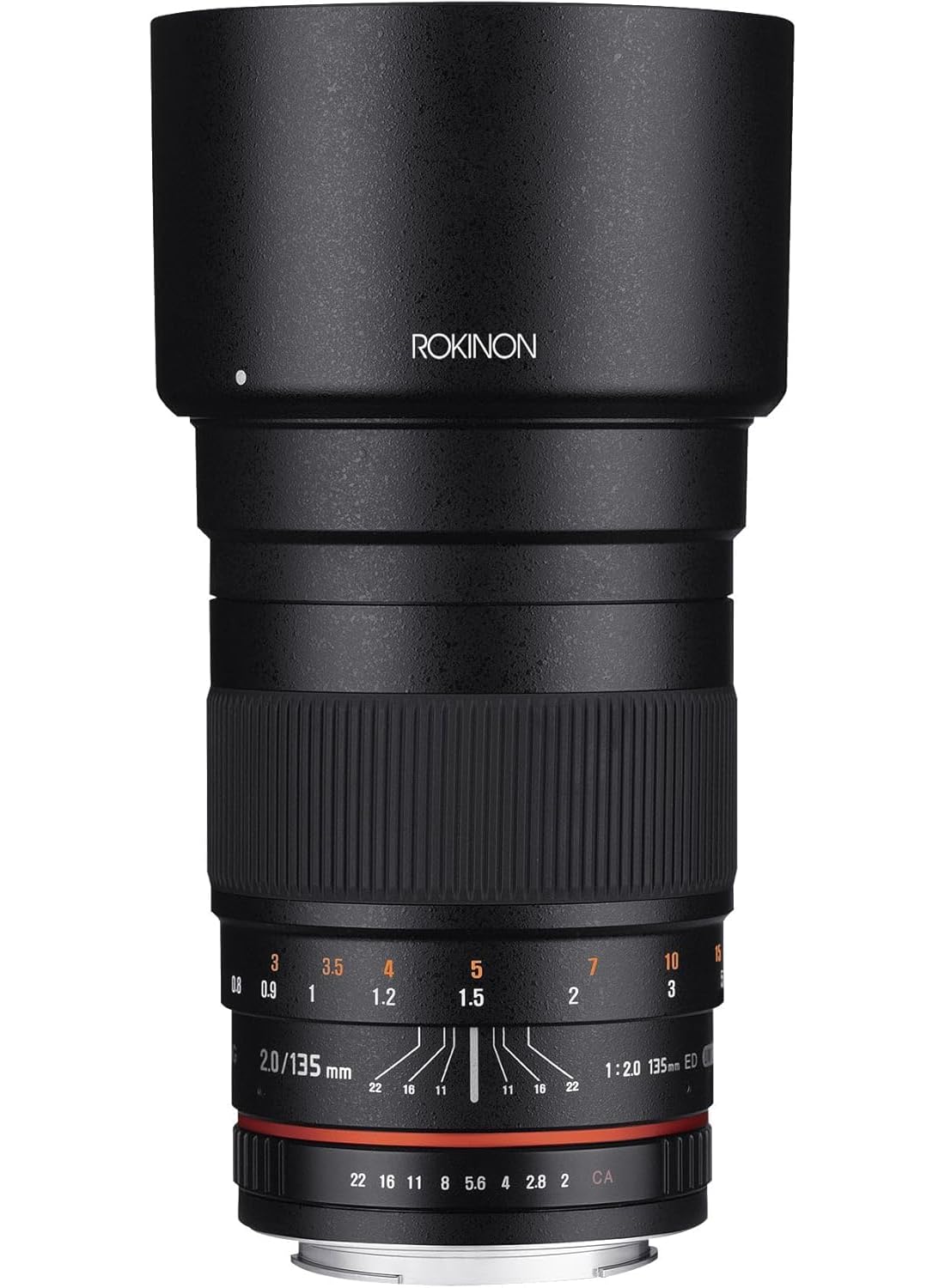
At f/2, the Rokinon 135mm produces razor-sharp detail with soft background separation that portrait and astrophotography shooters will appreciate. The all-metal barrel and damped focus ring feel substantial, and the AE chip keeps Nikon metering functional. It sits behind the autofocus telephoto zooms in this roundup; manual focusing demands a deliberate hand, and moving subjects are hard to track, so this is a tripod-friendly lens for static compositions. Manual-focus purists with Nikon F bodies who already work at this focal length will get the most from it.

Pros

  • Razor-sharp f/2 optics with smooth bokeh for portraits and astrophotography.
  • Metal barrel and damped focus ring give the lens a precise, substantial feel.
  • Cost-effective for a fast prime, with optical quality that punches above its price.

Cons

  • No image stabilization: handheld low-light shots rely on a fast shutter or tripod support.
  • Fixed 135mm focal length limits framing flexibility compared with telephoto zooms.
Our verdict

Posed portraits and tripod-mounted astrophotography are the clear fit; mixed-subject or action-heavy shooting calls for an autofocus telephoto zoom.

Check Latest Price
8

Static Moon Shots

Big Mike's 500mm Manual

80 /100
Studio Score Strong Evidence

Key details

Max Aperture
f/8
Focal Length Reach
500mm, 1000mm
Image Stabilization
None
Mount Compatibility
T-mount adapter
Check Price on Amazon

The included 2x converter and low price make this an easy way to try 500mm reach on a Nikon body, and the moon in good light is a realistic target. Manual-only focusing and T-mount adapter fit vary by camera, which is why this is an accessory-style lens rather than a dedicated native Nikon telephoto. That suits a curious beginner with a tripod and static subjects, not a wildlife or sports shooter looking for a native autofocus solution for their Nikon.

Pros

  • Low-cost entry to 500mm reach with a 2x converter included
  • Captures moon and other static distant subjects clearly in good light

Cons

  • T-mount adapter fit can vary by camera, so it is not a guaranteed Nikon plug-and-play option
  • Manual-only focus has a learning curve and can miss on moving subjects
Our verdict

A patient beginner with a tripod and a compatible T-mount adapter gets real value here; anyone expecting a native autofocus Nikon telephoto should move on.

Check Latest Price

How to Choose

Mount Compatibility

Mount compatibility is the first filter. Z bodies use native Z lenses; F-mount DSLRs use F lenses, and F lenses can sit on Z bodies only through an adapter. The adapter changes how focus motors behave, so a lens that feels quick on a DSLR may not track as well on mirrorless.

DX lenses cover APS-C sensors; FX lenses cover full frame. A DX telephoto on an FX body forces a crop mode, cutting resolution. Older AF-P lenses only work on compatible DSLRs; some bodies cannot drive the stepping motor at all.

Focal Length Reach

Focal length sets angle of view. A 200mm lens frames a head-and-shoulders subject from across a field; a 600mm lens pulls a distant bird into a tight crop. Every extra 100mm magnifies camera shake and haze, so reach without technique is useless.

Longer reach also means more physical lens. A 150-600mm zoom weighs over four pounds and grows while zooming; a 100-400mm is easier to handle but leaves small birds out of range. Choose the shortest reach that frames your actual subject.

Maximum Aperture

Maximum aperture controls light reaching the sensor. Telephoto zooms use variable apertures: f/5.6 at the wide end and f/6.3 at the long end. At max reach, the lens delivers less light, forcing higher ISO or slower shutter speeds.

Fast primes like a 135mm f/2 keep light and bokeh but lose zoom flexibility. If you shoot at dusk, a faster aperture matters more than extra millimeters of reach.

Image Stabilization

Image stabilization fixes photographer shake, not subject movement. A 5.5-stop VR lens allows slower shutter speeds with still subjects, but it will not freeze a running animal.

Some Z-mount zooms omit optical stabilization and rely on camera IBIS. On a Z6, Z7, Z8, or Z9 that works; on a Z30, Z50, or older DSLR without IBIS, there is no stabilization at all.

Weight and Handling

A long telephoto shifts the camera's center of gravity. A 4.7 lb lens and body push the rig forward, so your left arm fatigues. A tripod collar transfers the load to a monopod or tripod.

Handheld shooting at 500-600mm takes technique: brace elbows and use a higher shutter speed. For long birding sessions, lighter lenses like a 70-300mm are more practical despite shorter reach.

Frequently Asked Questions