5 Best Lens for Nikon Z50 in 2026: Match Reach and Speed

The best lens for Nikon Z50 comes down to what you shoot: telephoto reach, portrait bokeh, or an everyday prime. Find the one that fits your shooting style.

The Nikon Z50's biggest strength is also its easiest trap: it accepts both DX and full-frame Z lenses, but that 1.5x crop changes what every focal length actually does. A 50mm lens acts like 75mm. A 20mm lens acts like 30mm. Buy without accounting for the crop and you end up with a 'normal' lens that is too tight for the room.

The Z50 also has no in-body stabilization, so a zoom's VR matters more than on a Z6 or Z7. Handheld telephoto shots at 250mm without stabilization demand very fast shutter speeds or a support. That is not a flaw in the lens; it is a boundary to design around.

This guide sorts Z-mount lenses by the job they actually do on a Z50: all-in-one travel, telephoto reach, everyday low-light prime, portrait separation, macro. Match the lens to your daylight or evening routine, and the Z50 becomes more capable than the kit zoom suggests.

1

Best Overall

Nikon Z DX 18-140mm VR

86 /100
Studio Score Strong Evidence

Key details

Maximum Aperture
f/3.5-6.3
Focal Length & FOV
18-140mm (27-210mm equiv)
Image Stabilization
VR
Check Price on Amazon

The NIKKOR Z DX 18-140mm VR is the one-lens travel answer for a Nikon Z50: 27-210mm equivalent coverage, VR, and a body compact enough to balance on the small camera. At 18mm a hike starts with wide landscape framing; at 140mm it reaches compressed travel scenes and distant details. The zoom ring keeps the camera ready across that entire range, which is exactly what a walkaround lens should do. The lens mounts natively on Z-mount Z50 bodies, so there is no adapter to add length or weight.

Sharpness holds up through the mid-zoom and at the long end, so cropping into the 140mm frame stays practical. VR earns its keep beyond 100mm, where hand shake becomes visible; the stabilizer extends hand-holdable shutter speeds enough to make telephoto shots more certain. VR makes the difference between a keeper and a blurry frame at 210mm equivalent. This is the kind of performance that lets one lens carry a photo day without a backup zoom.

The weight and size make the coverage easy to live with. On a Z50 the lens adds heft but not the bulk of two separate zooms, and the balance remains comfortable for a day of walking. Travelers get 27mm equivalent for interiors and streets, then 210mm for signs, wildlife, and compression without changing lenses. Hikers will appreciate not carrying a second lens for reach. The zoom range tracks the focal lengths you actually use on a trip: city streets at the wide end, market close-ups in the middle, and distant landmarks at the telephoto end.

The target buyer is a Z50 owner moving beyond the 16-50mm kit zoom. This is the practical next step for that kit, adding reach without adding a second lens. That owner gets a genuine one-lens kit for daylight travel, with the understanding that the slow variable aperture, plastic-heavy barrel, and no hood in the box are the costs of the range. The 50-250mm sibling reaches further, but the 18-140mm gives back the wide end and keeps every day to a single lens.

Premium-priced against a standard kit zoom, this lens still saves money for travelers who would otherwise buy a separate telephoto. The convenience of one mounted lens has a real cost, but for a Z50 owner building a single-bag outfit, the 18-140mm is the more efficient purchase. It is not a budget lens, but the price reflects the range it replaces.

Pros

  • Covers 27-210mm equivalent without a lens swap, simplifying a travel kit.
  • VR steadies handheld shots at telephoto lengths on a Z50 body.
  • Wide-to-telephoto range fits landscapes, streets, travel details, and moderate reach.
  • Lightweight enough for all-day carry on a small DX body.
  • Center sharpness holds across the zoom range for practical crops.

Cons

  • At 140mm, background separation stays modest; portrait shooters who want heavily blurred backs should pair it with a prime.
  • Indoor event spaces push the lens past its useful range; a fast prime or flash handles that lighting.
Our verdict

The 18-140mm VR closes the gap between a standard zoom and a telephoto zoom for Z50 travel kits, leaving a fast prime as the only obvious partner.

Check Latest Price
2

Best Telephoto Zoom

Nikon Z DX 50-250mm VR

90 /100
Studio Score High Confidence

Key details

Maximum Aperture
f/4.5-6.3
Focal Length & FOV
50-250mm (75-375mm equiv)
Image Stabilization
VR
Check Price on Amazon

Nikon's 50-250mm VR delivers 75-375mm equivalent reach with VR and sharpness in a compact native zoom. Since the Z50 has no in-body stabilization, the VR is what makes handheld telephoto practical. The top pick's 27-210mm range is the better one-lens answer for mixed travel, but this lens gives Z50 owners dedicated reach for wildlife, sports, and outdoor trips without the bulk of a full-frame telephoto.

This lens fits Z50 owners upgrading from the kit zoom who want telephoto reach without going full-frame, and it works well as the long end of a two-lens travel kit next to a standard zoom. The wide end starts at 75mm equivalent, so indoor low-light shooting at 250mm sits outside its comfort zone. Buyers should be ready to add a hood to the purchase list and to give the lens a quick rattle check when it arrives.

Autofocus is fast and quiet, keeping up with moving subjects without audible hunting. Image quality stays sharp through the zoom range, with rendering that suits wildlife and compressed landscapes. VR up to five stops steadies handheld framing at the long end, and the lightweight body keeps the lens balanced on a small Z50 during extended outings.

Pros

  • Cost-effective telephoto reach in a lightweight build that suits a Z50.
  • Sharp image quality with pleasing rendering across the zoom range.
  • Fast and quiet autofocus that keeps up with moving subjects.

Cons

  • Lens hood is not included with the lens.
  • In dim indoor venues, the long end's f/6.3 aperture limits low-light shooting.
  • Some copies may produce a rattling or motor noise.
Our verdict

The 50-250mm VR delivers long reach on a Z50 without the weight or cost of a full-frame telephoto. Sharp, stabilized, and light, it's the reach half of a two-lens DX travel kit.

Check Latest Price
3

Best Budget Prime

Viltrox 35mm f/1.7 Z

85 /100
Studio Score Strong Evidence

Key details

Maximum Aperture
f/1.7
Focal Length & FOV
35mm (52.5mm equiv)
Image Stabilization
None
Check Price on Amazon

The Viltrox 35mm f/1.7 Z is a metal-bodied everyday prime that turns a Nikon Z50 into a 52.5mm-equivalent walkaround camera with a fast f/1.7 aperture in a 180g package. It splits the difference between a kit zoom's flexibility and the shallow depth of field of a portrait prime, while keeping the kit light enough for gimbal work.

For the Z50 owner replacing a kit zoom with a normal-length prime, this lens is the budget-friendly bridge: street scenes, casual portraits, and low-light walkarounds all fit its focal length. The autofocus can hunt when subjects move, and wide-open sharpness improves once you stop down, so a deliberate shooting pace gets better results than chasing action. The 52.5mm equivalent view keeps composition natural without pushing into telephoto territory.

The barrel balances cleanly on the small Z50 body and stays front-light on a gimbal. The f/1.7 aperture provides a meaningful low-light advantage over the 16-50mm kit zoom, and the metal housing feels more solid than the plastic builds common at this price tier.

Pros

  • The 180g metal body keeps the Z50 balanced in the hand and on a gimbal.
  • f/1.7 gives a low-light edge over kit zooms and creates background blur for close subjects.
  • 52.5mm equivalent framing suits street and everyday scenes without telephoto bulk.
  • Budget-conscious Z50 owners get a fast prime with a solid build at a competitive price.

Cons

  • Wide-open sharpness at f/1.7 is softer than the stopped-down result; f/2.8 and beyond add detail.
  • 52.5mm equivalent framing is not wide-angle; interiors and broad landscapes need a shorter lens.
  • Autofocus can hunt when a subject tracks across the frame; static scenes are the safer use.
Our verdict

The Viltrox 35mm f/1.7 Z is the walkaround prime for Z50 shooters who want a balanced, fast normal lens without carrying a heavier full-frame prime.

Check Latest Price
5

Best Budget Super-Telephoto

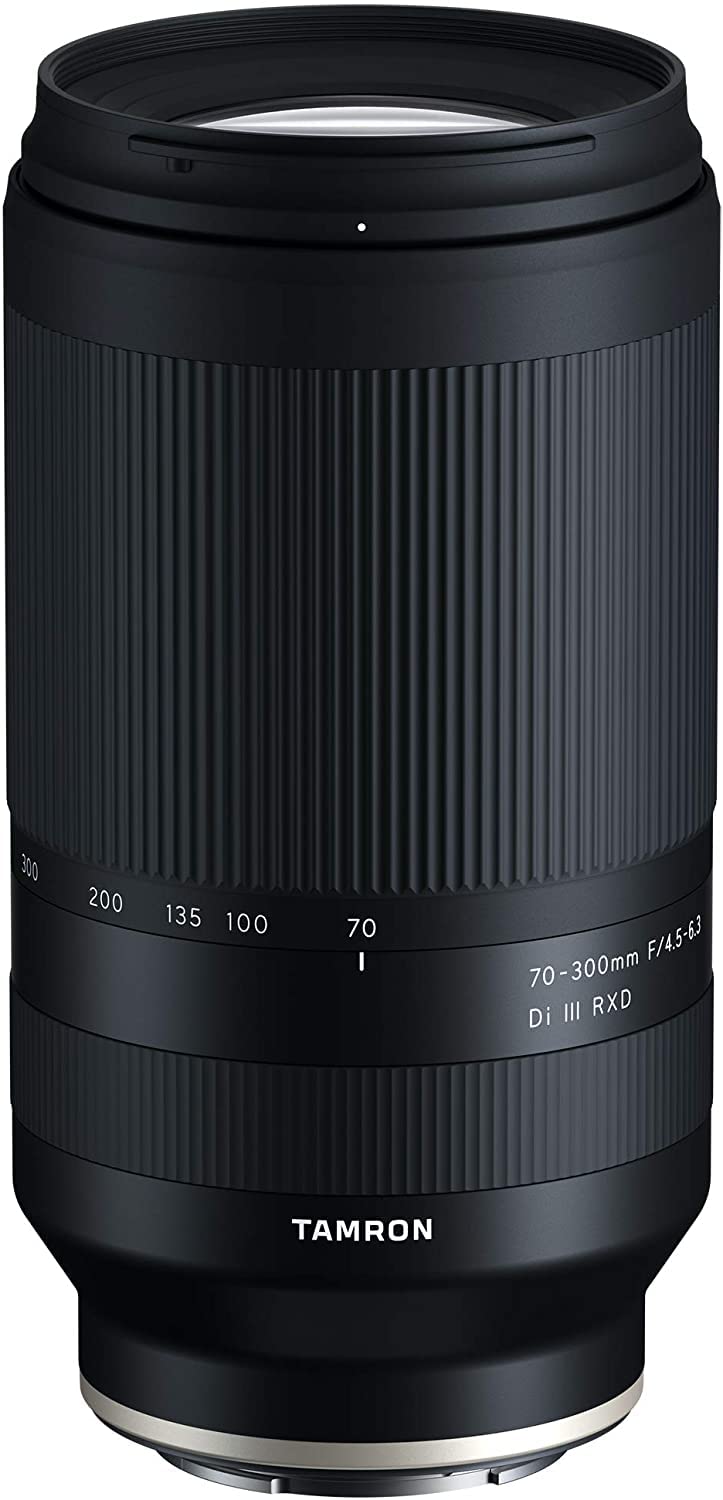
Tamron 70-300mm f/4.5-6.3 Z

86 /100
Studio Score Strong Evidence

Key details

Maximum Aperture
f/4.5-6.3
Focal Length & FOV
70-300mm (105-450mm equiv)
Image Stabilization
None
Check Price on Amazon

The Tamron 70-300mm f/4.5-6.3 fills the budget telephoto slot in this Z-mount group: on a Z50 it reaches 105-450mm equivalent, and autofocus keeps pace with birds and aircraft in daylight. It is also full-frame compatible, so it will not be wasted if you later move to a full-frame Nikon Z body.

Sharpness holds up through the zoom range at typical daylight apertures, and the 1.3 lb weight keeps the lens manageable on the small Z50 body.

Daytime wildlife, airshows, and outdoor sports are the intended use case. This lens is daylight and support-dependent on a Z50, so casual handheld telephoto after sunset is not where it belongs.

💡 At 300mm, keep the shutter speed fast or brace the lens on a monopod to keep distant subjects sharp.

Pros

  • Packs 105-450mm equivalent reach into a 1.3 lb body without Nikon's telephoto premium.
  • Autofocus is quick and accurate enough for moving subjects in daylight.
  • Images stay sharp across the 70-300mm focal range.

Cons

  • At 300mm, the f/6.3 aperture needs bright light to keep shutter speeds high.
  • No optical VR leaves handheld 300mm shots dependent on fast shutter speeds or support on the unstabilized Z50.
Our verdict

For daylight action shooters on a budget, the Tamron adds serious reach to a Z50 setup without the full-frame price tag.

Check Latest Price
6

Budget Portraits

Meike 85mm f/1.8 Z

78 /100
Studio Score Established

Key details

Maximum Aperture
f/1.8
Focal Length & FOV
85mm (127.5mm equiv)
Image Stabilization
None
Check Price on Amazon

The Meike 85mm f/1.8 delivers 127.5mm-equivalent portrait compression on a Z50 at a budget-friendly price, with smooth bokeh and a sturdy build for the money. On a DX body it frames like a short telephoto, so it is best suited to head-and-shoulders portraits rather than general walkaround use.

Autofocus can be inconsistent in dim conditions or with moving subjects, and backlit outdoor shots may show purple fringing around hair. That places it below the f/2 sibling in this set, so it suits a tighter budget where manual-focus override and controlled lighting are acceptable.

Pros

  • Budget-friendly f/1.8 portrait compression with soft backgrounds for Z50 shooters.
  • Sturdy build for the price.

Cons

  • Backlit outdoor portraits can show purple fringing around hair.
  • Autofocus can be inconsistent in dim conditions or with moving subjects.
Our verdict

For posed portrait sessions on a Z50 where you can confirm focus and shade the subject, the Meike delivers the compressed f/1.8 look at a low price.

Check Latest Price

How to Choose

Focal Length and Crop Factor

Every Z-mount lens has its focal length multiplied by 1.5 on the Z50. A 50mm prime frames like a 75mm short telephoto, and a 20mm wide-angle frames like a 30mm. The hidden trade-off is that full-frame lens names do not match DX results: 'standard' lenses become portrait lenses, and true wide-angle coverage requires 20mm or less. If a room or landscape is the goal, start with ultrawide focal lengths rather than assuming a 35mm or 50mm will feel wide.

Maximum Aperture and Low Light

Maximum aperture controls both light and depth of field. A variable-aperture zoom at 250mm may sit at f/6.3, which forces higher ISO in shade or dusk. Fast primes, like f/1.7 or f/2, gather several stops more light in a much smaller body. The trade-off is flexibility: you give up zooming range to gain the ability to shoot after sunset without dragging a tripod.

Image Stabilization and VR

The Z50 body has no in-body stabilization, so VR inside the lens is the only optical correction available. On a telephoto zoom, VR can mean the difference between sharp shots at 1/125s and blurred frames at the same shutter speed. A non-VR 70-300mm is workable in daylight with fast shutter speeds, but in overcast conditions you will need a support or a very steady technique.

Weight and Portability

A small APS-C body becomes front-heavy when mounted with a large full-frame lens. The Z 50mm f/1.2 S weighs 1090g, several times the Z50 body itself, which makes all-day carry awkward. Lightweight primes like the Viltrox 35mm f/1.7 at 180g preserve the camera's pocketable advantage. Choose a lens that you will actually bring; a heavy lens stays home more often than a fast one.

Autofocus Reliability

Native Nikkor autofocus is generally quiet and consistent, while third-party Z-mount lenses vary more copy to copy. Budget primes often hunt with moving subjects or in low contrast, making them better for posed portraits than action. If your subject is a running child or a bird in flight, prioritize proven AF and consider a native telephoto zoom over a cheaper alternative.

Frequently Asked Questions