5 Best Portrait Lenses for Nikon 2026: Match Lens to Your Sensor

Find the best portrait lenses for Nikon for your sensor format and budget, from classic F-mount 85mm primes to native Z-mount sharpness.

The most common portrait-lens mistake is choosing by the number on the barrel instead of the sensor behind it. A 50mm lens on a crop-sensor body frames like a short telephoto, not a normal lens. An 85mm becomes a long portrait lens. Getting the focal length right for the format matters more than chasing the widest aperture.

Fast primes also carry a real trade-off: a wider aperture gives smoother backgrounds and better low-light reach, but wide-open sharpness and focus consistency vary between designs. The strongest portrait setup balances aperture, focal length, and autofocus behavior for the type of shooting you actually do.

This guide sorts the choices by sensor format and use, from budget F-mount primes to native Z-mount lenses, so you can match a lens to the camera you own and the portraits you want to make.

1

Best Overall Portrait Prime

Nikon 85mm f/1.8G

95 /100
Studio Score High Confidence

Key details

Mount
F-mount
AF Motor
Silent Wave Motor
Focal Length
85mm
Max Aperture
f/1.8
Check Price on Amazon

The 85mm f/1.8G delivers tack-sharp portraits with clean color and smooth bokeh, giving F-mount shooters the classic 85mm look without the premium price. The focal length compresses facial features and flatters perspective more than a 50mm, which is why this prime holds its place in portrait kits. The Silent Wave Motor moves focus quickly for a lens in this class, and the f/1.8 aperture creates enough depth-of-field control to separate a subject from a busy background. It holds sharpness wide open on both FX and DX bodies, which makes it a dependable first portrait prime.

At close working distances, the shallow depth of field keeps backgrounds soft while the eyes stay in focus. The lens is steadier on still and slow-moving subjects, which covers the typical portrait session. Focus accuracy on a posed subject is consistent enough that the lens can carry a wedding or event kit without adding much weight. The compact barrel and 7-blade aperture keep it unobtrusive during longer shoots, and the low-light f/1.8 opening is handy in dim reception spaces.

The value case is simple: this lens undercuts the high-end options while keeping the portrait qualities that matter. The combination of silent focus, manageable size, and sharp files makes it a lens you can keep in the bag even if you later add a faster or native Z option. It is a sensible first 85mm for someone moving from a kit zoom to a prime; you get the classic look without adapting your budget or technique around a heavier lens. On DX bodies the 85mm frames like a short telephoto, which suits head-and-shoulders work from a bit farther back; on FX it behaves as the classic 85mm. The F-mount also adapts to Z bodies with an FTZ adapter, though native Z glass is the cleaner mirrorless fit.

This is the right F-mount option for FX and DX shooters who want a dedicated 85mm portrait lens for studio, wedding, and event work on a budget. There is no VR, and the autofocus is not built for tracking fast-moving subjects, so photographers who need stabilization or rapid action coverage should look elsewhere. Within its portrait lane, the lens gives you the classic compression, shallow depth of field, and sharp rendering that define the category.

๐Ÿ’ก For moving subjects, pre-focus on the spot where you want the shot and let the subject arrive in the focus zone.

Pros

  • Tack-sharp portraits with vibrant color and clean rendering at full aperture.
  • Cost-effective price for a dedicated portrait prime; an easy first 85mm.
  • Creamy, smooth bokeh that isolates subjects from busy backgrounds.
  • Portrait rendering with steady autofocus for still and slow-moving subjects.
  • Fast focus, generous depth-of-field control, and low-light ability without stopping down.

Cons

  • No VR, so slow handheld shutter speeds require a steady stance or support.
  • Fast-moving subjects can slip past the autofocus in action-style shooting.
Our verdict

For portrait work with a Nikon F-mount body, this lens gives you the classic 85mm frame, clean files, and bokeh at a price that leaves room for other gear.
Check Latest Price
2

Best Native Z Portrait Prime

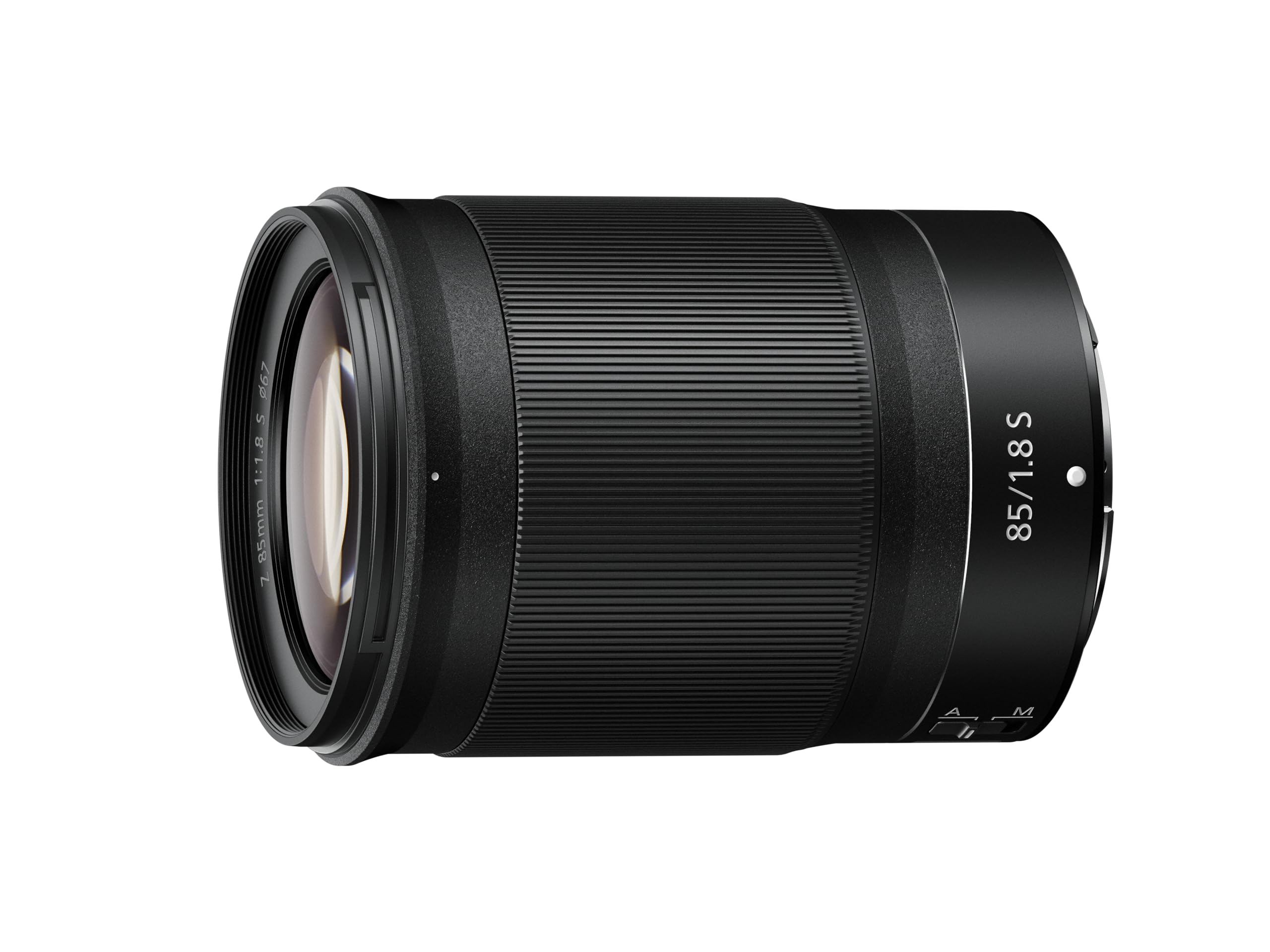
Nikon Z 85mm f/1.8 S

94 /100
Studio Score High Confidence

Key details

Mount
Z-mount
AF Motor
Silent STM
Focal Length
85mm
Max Aperture
f/1.8
Check Price on Amazon

The Z 85mm f/1.8 S is the native Z-mount portrait prime that brings S-line correction, two ED elements, and Nano Crystal Coat to the classic 85mm framing. Center-to-corner sharpness at f/1.8 sets it apart from the F-mount 85mm f/1.8G, which is the value pick in this lineup. The 9-blade aperture produces smooth, rounded bokeh, and color rendering is accurate straight from the lens. Nano Crystal Coat also keeps flare and ghosting in check for backlit portraits. The f/1.8โ€“f/16 range spans low-light isolation and stopped-down sharpness for environmental shots.

Weather-sealed barrel and silent AF suit outdoor portrait and event work. Focus locks quickly and quietly in normal portrait light. The rounded 9-blade aperture keeps out-of-focus highlights clean in backgrounds with lights or foliage, which is where portrait lens character often shows.

This is for Z mirrorless owners who want a native S-line 85mm and accept the premium price of f/1.8 glass. Z-mount-only design means F-mount DSLR shooters need an FTZ adapter or a body switch, so the F-mount 85mm f/1.8G remains the more compatible value pick. Photographers who prefer the smaller size and lower cost of an f/2 prime should also look elsewhere, as this lens prioritizes optical correction and build over compactness. Enthusiasts moving from F-mount primes will see the sharpness jump immediately.

Pros

  • Superb native Z S-line prime with Nano Crystal Coat and weather sealing.
  • Razor sharp from center to corners at f/1.8.
  • Beautiful, smooth bokeh from the 9-blade aperture.
  • Accurate color and fast AF for portrait work.

Cons

  • Autofocus can hunt in low-contrast or very dim scenes.
  • For maximum background separation, the f/1.2 S-line is the step up.
Our verdict

For Z mirrorless portrait shooters who want native S-line sharpness and weather sealing, this is the 85mm to get.

Check Latest Price
3

Best Budget Z Portrait

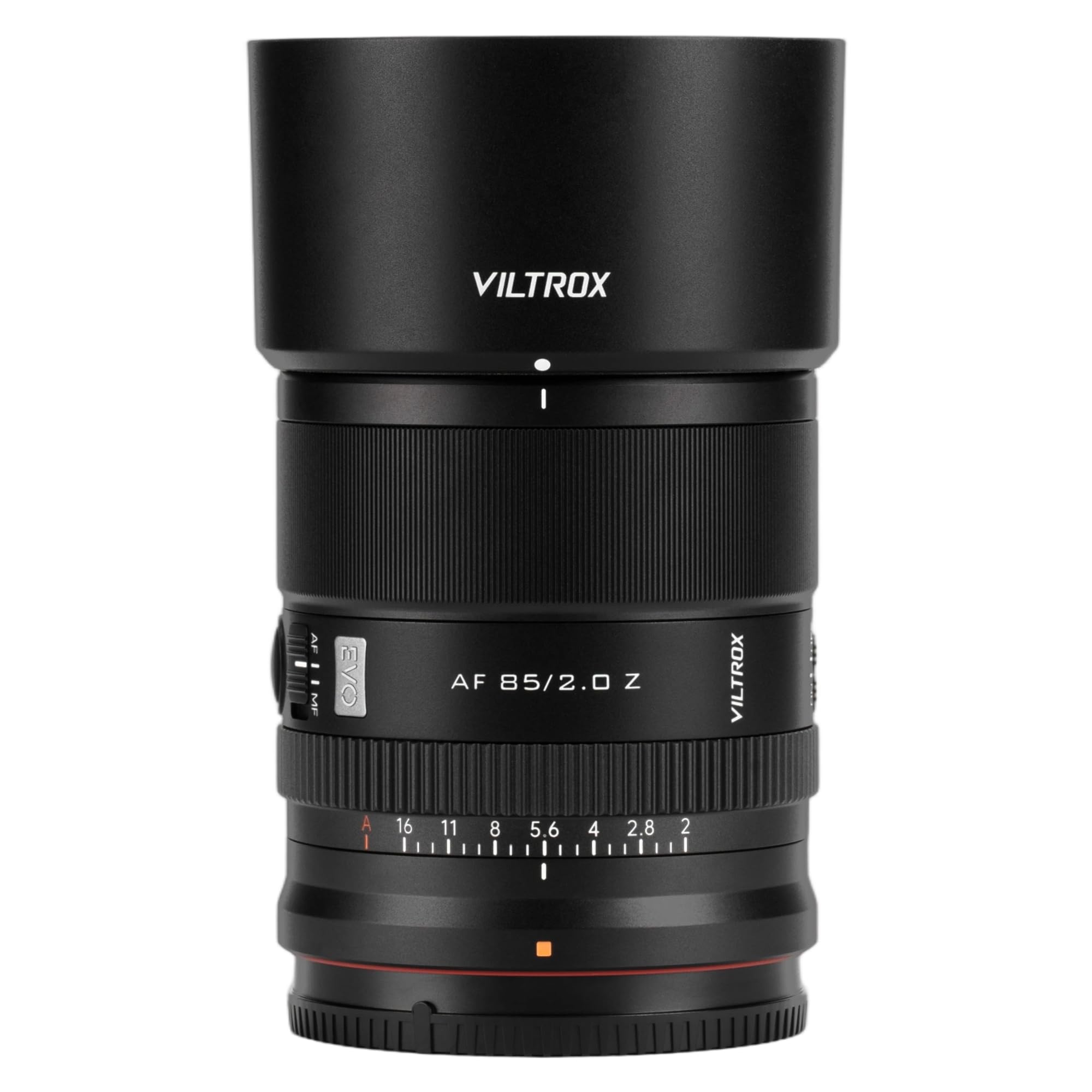
Viltrox 85mm f/2 Z

87 /100
Studio Score Strong Evidence

Key details

Mount
Z-mount
AF Motor
STM autofocus
Focal Length
85mm
Max Aperture
f/2
Check Price on Amazon

At 360g, this Z-mount 85mm f/2 is the lightweight path to classic portrait compression on Nikon mirrorless bodies. The 9-blade rounded aperture and quiet STM autofocus keep the lens easy to carry and unobtrusive in quiet settings. On Z bodies, the focal length delivers the head-and-shoulders framing and subject separation that portrait shooters expect from an 85mm prime.

Sharpness holds up wide open, and out-of-focus areas stay smooth rather than busy. The 9-blade aperture gives highlight shapes a soft, round look, which keeps backgrounds clean in portraits. At this budget level, the rendering is what sells the lens.

This lens suits Z mirrorless owners who want an 85mm portrait prime without stepping up to the S-line f/1.8. If you plan to work at f/2, the compact body and budget-friendly price-to-performance ratio cover daytime portraits, travel, and casual studio work. It is not the choice for photographers who need the fastest aperture in dark venues.

Pros

  • Sharp at f/2 with soft, creamy bokeh suited to head-and-shoulders portraits.
  • Cost-effective entry into Z-mount 85mm portrait rendering without S-line pricing.
  • Quiet STM autofocus and a 360g body keep handheld portrait sessions comfortable.

Cons

  • Lens is not weather-sealed, so wet or dusty outdoor shoots call for extra care.
  • The f/2 maximum aperture limits low-light and bokeh compared with faster portrait primes.
Our verdict

Compact and sharp at f/2, this Z 85mm gives portrait shooters a true 85mm framing at a budget price. It is the sensible value pick for shooters who don't need the extra light of a faster prime.

Check Latest Price
4

Best Budget F-Mount 50Mm

Yongnuo 50mm f/1.8N

92 /100
Studio Score High Confidence

Key details

Mount
F-mount
AF Motor
Built-in AF motor
Focal Length
50mm
Max Aperture
f/1.8
Check Price on Amazon

Yongnuo's 50mm f/1.8N is a functional F-mount prime with a built-in AF motor, which matters for entry-level Nikon DSLRs that lack body-side focus drive. At a budget-friendly price, it gives those shooters a fast 50mm prime for portrait work, with enough background separation to make a kit zoom feel limiting. For a first prime, it opens up the framing discipline that casual zoom use does not teach.

With a stationary subject, the lens is capable of pleasing subject isolation and smooth bokeh when you stop down to f/2.8 or f/4. The 50mm focal length on a DX body frames like a short portrait lens, so head-and-shoulders shots are practical. On an FX body, the standard field of view works for environmental portraits that include some context. This is not a lens for quick candids; it performs best when you set up the shot.

This lens is for budget-conscious beginners with F-mount DSLRs who need an AF motor inside the lens. Autofocus is slower and noisier than Nikon-brand glass, and some copies soften at wide apertures, so it rewards deliberate, stationary compositions. The money saved goes toward the next lens, not toward the kind of focus behavior that professional portrait work demands.

๐Ÿ’ก Stop down to f/2.8 or f/4 for the sharpest portraits, and give the autofocus time to lock before pressing the shutter.

Pros

  • Built-in AF motor works with entry-level Nikon DSLRs that lack a body-side focus motor.
  • Budget price puts a 50mm f/1.8 prime in reach for first-time portrait shooters.
  • Stopped down, the lens delivers sharp images and smooth bokeh.
  • Build quality holds up for casual portrait sessions.

Cons

  • Chromatic aberration can show at f/1.8 on high-contrast edges until you stop down.
  • Paid event work is outside its intended use; the focus system favors a measured, single-subject pace.
Our verdict

The lowest-cost way to put a functional 50mm prime on an entry-level Nikon, if your portrait subjects stay still and you shoot stopped-down.

Check Latest Price
5

Environmental Portraits

Yongnuo 35mm f/2N

87 /100
Studio Score Strong Evidence

Key details

Mount
F-mount
AF Motor
Built-in AF motor
Focal Length
35mm
Max Aperture
f/2
Check Price on Amazon

Yongnuo's 35mm f/2 gives Nikon F-mount shooters a budget-friendly way to include the setting in a portrait, covering the wider end of people photography without switching to a 50mm. The f/2 aperture can separate a subject from a busy street background, and stopped down to f/4 or f/5.6 the lens sharpens up for landscape-style environmental work. The autofocus motor is audible and slow, and in low-contrast conditions it may hunt; that makes it a poor fit for event coverage or quick candid work, though manual focus is workable. Copy-to-copy softness wide open has been noted, so checking the aperture you actually use matters. Classic tight head-and-shoulders portraits belong to 50mm and 85mm primes, but this lens earns its keep for environmental portrait shoots on a tight budget.

Pros

  • Gives F-mount shooters a 35mm prime at an entry-level price, making the wide normal focal length affordable.
  • Suits street, landscape, and environmental portrait work, where the wider frame adds context.
  • Wide f/2 aperture helps separate subjects from busy backgrounds without a premium price tag.

Cons

  • Wide-open sharpness can vary between copies; stopping down to f/4 or f/5.6 improves consistency.
  • Autofocus is audible, slow, and may hunt in low-contrast light, so event or quiet-settings work suffers.
Our verdict

For Nikon portrait shooters working with environmental or street scenes who can live with manual focus or slow AF, this 35mm f/2 is a budget-friendly way to add a wider perspective than a 50mm.

Check Latest Price

How to Choose

Mount Compatibility

Nikon has two mounts: F for DSLRs and Z for mirrorless. Z lenses fit only Z bodies; F lenses can be adapted to Z, but screw-drive AF-D lenses lose autofocus on the FTZ adapter.

Entry-level D3000/D5000-series DSLRs also lack the focus motor older D lenses need, so the lens must carry its own AF motor. If your body is one of these, check for AF-S, AF-P, or a third-party lens with a built-in motor before buying.

Focal Length and Sensor Format

A DX camera crops the image by 1.5x, so 35mm frames like 52mm, 50mm like 75mm, and 85mm like 127mm. This determines your working distance and how much background appears behind the subject.

Full-frame headshots suit 85mm; DX shooters get similar framing from 50mm, while 35mm works for environmental portraits. Choose the length based on the space you shoot in and the crop of your sensor.

Maximum Aperture

A wider aperture adds light and background blur, but it also thins the in-focus zone and makes focus errors easier to see. At f/1.8, an eye can be sharp while an ear falls out of focus.

Many f/1.4 and f/1.8 lenses sharpen up when stopped down one stop, so the extra stop is for low light or bokeh, not maximum sharpness. Decide which matters more for the portraits you shoot.

Autofocus Motor and Body Compatibility

Older D lenses rely on a screw-drive motor inside the camera body, so entry-level DSLRs and the FTZ adapter cannot autofocus them. The lens becomes manual-focus on those bodies.

Lenses with Silent Wave or STM motors focus on nearly every body; budget third-party motors are slower and noisier, which matters for moving subjects. For posed portraits, that compromise is often acceptable.

Optical Coatings and Special Elements

ED glass cuts chromatic aberration around high-contrast edges, while Nano Crystal Coat reduces flare in backlit portraits. These are the main reasons S-line lenses cost more.

They matter most when shooting into window light or wide open; in controlled studio light, simpler optics can look similar. Match the optical investment to your regular lighting conditions.

Frequently Asked Questions