4 Best Lens for Nikon Z9 and Z8 in 2026: Lenses That Earn Trust

Find the best lens for Nikon Z9 and Z8 by matching focal length, aperture, and autofocus behavior to your actual shooting — not just specs.

The Z9 and Z8 reward lenses with corner-to-corner resolution and fast, quiet autofocus — but they don't create it. A center-sharp lens with hunting AF can cost you the decisive frame, and a 14x zoom with f/8 at the long end will push ISO where you don't want it. The right lens is the one whose aperture, reach, and focus behavior match the shot list.

Most buying decisions here come down to a feature trade-off: constant-aperture zoom flexibility versus prime-level sharpness, or featherweight portability versus weather-sealed pro build. Telephoto reach usually means trading speed, and fast ultra-wides force a choice between budget and AF consistency. This guide works through those boundaries so you can match a lens to the way you actually shoot — events, travel, astro, or wildlife.

1

Best Overall

Nikon Z 24-70mm f/2.8 S

92 /100
Studio Score High Confidence

Key details

Weight
815g
AF Motor
Stepping motor
Focal Length
24-70mm
Max Aperture
f/2.8 constant
Check Price on Amazon

The NIKKOR Z 24-70mm f/2.8 S is the standard zoom that turns a Z9 or Z8 into a one-lens assignment kit. It holds a constant f/2.8 from 24mm group shots to 70mm portrait crops, so exposure stays put while you zoom. The S-line barrel is weather sealed at the mount and moving parts, which matters when an event shifts between indoor and outdoor settings. The zoom ring is smooth and the lens balances on the Z body without feeling front-heavy. This is the lens that stays on the camera through a full wedding day.

Autofocus response is quick and quiet on the Z9 and Z8, with no hunting in low-contrast scenes. The focus motor stays silent during video recording, which matters for interview and ceremony work. Wide open, the image holds high contrast and natural color across the frame; at 70mm the f/2.8 rendering gives enough separation for portraits, while 24mm keeps group shots clear edge to edge. You stop down to manage depth of field, not to rescue sharpness.

The 50mm f/1.8 S in this comparison is optically sharper at its single focal length, but it cannot cover the range this zoom does. For reception work, the 24-70mm removes the need to change lenses between a wide establishing shot and a close portrait. That range, combined with the constant aperture, is what makes this the primary working zoom rather than a specialty prime.

This lens targets event, wedding, and portrait photographers who carry a Z9 or Z8 and need one tool for the day. It covers establishing shots, detail work, and people moving between light and shadow. The 70mm long end is a boundary for wildlife or sports shooters, who will need a telephoto zoom alongside it. Weight and price are high for a walk-around lens, so casual street or travel photographers are better served by the lighter f/4 or compact prime options in this comparison.

Where this zoom separates itself from other Z-mount options is the combination of constant f/2.8, weather sealing, and autofocus consistency. Those three traits show up on every assignment: exposure settings stay put while zooming, light rain does not force a lens change, and focus keeps pace with a moving subject. It is the workhorse choice for mixed assignments, not the lightest or least expensive option in this lineup.

Pros

  • Fast, quiet focus locks onto moving subjects without calling attention to itself.
  • Wide-open sharpness keeps contrast and color strong from center to edge.
  • Sealed f/2.8 body is built for outdoor event work and long assignment days.
  • 24-70mm range covers groups, portraits, and detail shots on one lens.

Cons

  • The 815g barrel is heavier than f/4 or prime alternatives and can be felt on long carry.
Our verdict

The 24-70mm f/2.8 S is the one-lens answer for event professionals on a Z9 or Z8: constant aperture, sealed barrel, and quiet focus across the range working assignments demand.
Check Latest Price
2

Best Prime Lens

Nikon Z 50mm f/1.8 S

94 /100
Studio Score High Confidence

Key details

Weight
415g
AF Motor
Stepping motor
Focal Length
50mm
Max Aperture
f/1.8
Check Price on Amazon

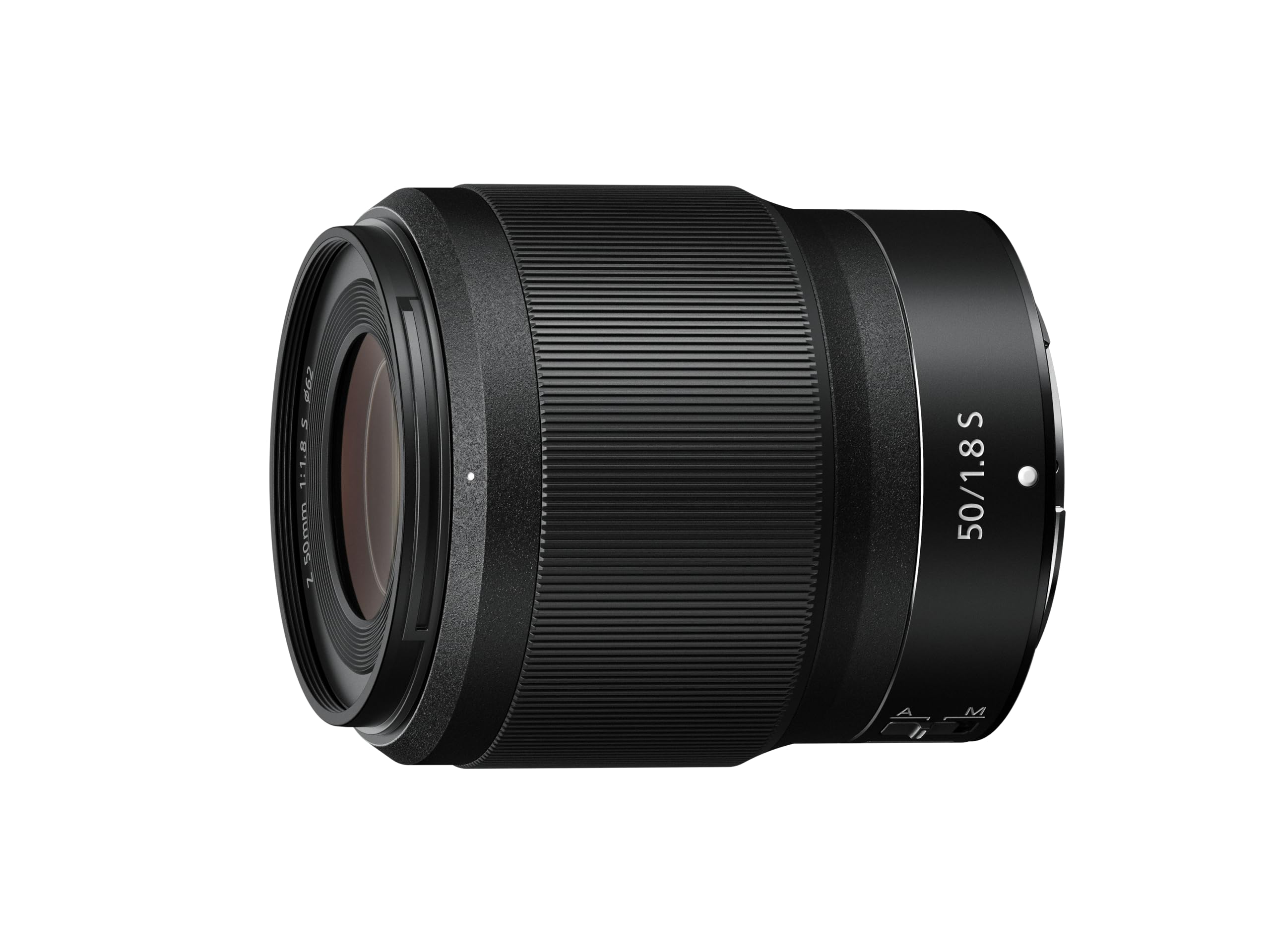
Resolution at f/1.8 is the lens's defining trait. At f/1.8 on a Z9/Z8, the 50mm S-line prime resolves fine texture in skin and fabric without stopping down, giving portraits a clean, dimensional look. The optical output keeps pace with the Z9/Z8's high-resolution sensor. Autofocus is quiet enough for video, and the barrel is shorter than the top pick's 24-70mm f/2.8 zoom, so it handles like a normal prime rather than a workhorse zoom.

Portrait photographers and hybrid shooters who want a single normal focal length on a Z9/Z8 are the primary audience. The fixed 50mm view is the boundary: framing changes cost money or feet, so event pros who need zoom reach are better served by the 24-70mm f/2.8 S. This is a prime for deliberate framing, not grab-and-go zoom coverage.

Z9/Z8 owners who want a compact S-line prime will appreciate how the 50mm works with the body's 5-axis stabilization. Handheld stills and video stay steady, and the f/1.8 aperture supports shallow depth of field for portrait isolation. At roughly 415 grams, it keeps handheld sessions manageable. A 62mm filter thread accepts standard filters, and the lens sits low-profile on the body.

Pros

  • Wide-open sharpness at f/1.8 keeps fine detail in portraits without stopping down.
  • Silent autofocus keeps focus pulls off the video track while stills stay sharp.
  • Depth separation and bokeh isolate subjects with smooth transitions.
  • S-line build keeps the lens manageable on a Z9/Z8 while delivering consistent optical quality.

Cons

  • The mid-range price is a hurdle for budget buyers who only want a basic 50mm.
  • The barrel is wider than compact 50mm primes, so coat-pocket carry is not realistic.
Our verdict

Portrait and hybrid shooters on a Z9/Z8 get S-line sharpness from this normal prime.

Check Latest Price
3

Best Ultra-Wide / Astro

Viltrox AF 16mm F1.8 Z

85 /100
Studio Score Strong Evidence

Key details

Weight
550g
AF Motor
Stepping motor
Focal Length
16mm
Max Aperture
f/1.8
Check Price on Amazon

The Viltrox AF 16mm F1.8 Z combines f/1.8 light collection with corner-to-corner sharpness and a built-in LCD, making it the fast ultra-wide specialist for Z-mount shooters. The all-metal barrel feels substantial on a Z9 or Z8, and the 550g weight sits comfortably with serious wide primes rather than feeling like a budget afterthought.

The integrated display shows aperture and focus distance without lighting up the scene, and the 77mm filter thread accepts standard astro filters. There is no optical stabilization, but the Z9 and Z8 in-body VR covers handheld work; on a tripod, that tradeoff disappears. Compared with the f/2.8 zooms in this class, f/1.8 gathers noticeably more light for night work. The 16mm focal length captures a broad angle of view without the bulk of a zoom.

This is the right match for astrophotographers and landscape shooters who want a fast, wide prime without paying native S-line prices. Autofocus consistency can vary between units, so confirm firmware and return terms if your work depends on AF. Architecture shooters will also value the wide coverage for interior and exterior lines. On a tripod, focus can be set once and left alone, which suits long astro sequences.

💡 Keep the lens firmware current before long autofocus sequences.

Pros

  • Cost-effective f/1.8 speed for dark-sky and low-light work.
  • Corner-to-corner sharpness for astro and landscape framing.
  • All-metal barrel feels solid and durable.
  • Built-in LCD shows aperture and focus distance without backlighting the scene.

Cons

  • Autofocus consistency can vary between units; individual copies may need a firmware update or exchange.
Our verdict

For Z9/Z8 shooters whose primary frames are dark skies and wide static scenes, this is the specialist lens to pair with a standard zoom.

Check Latest Price
4

Budget Ultra-Wide Alternative

Viltrox 20mm F2.8 Z

87 /100
Studio Score Strong Evidence

Key details

Weight
173g
AF Motor
Stepping motor
Focal Length
20mm
Max Aperture
f/2.8
Check Price on Amazon

At 173 g, the Viltrox 20mm F2.8 Z is the lightest wide prime in this Z-mount set, and its 20mm field of view opens up a compact ultra-wide option for Z9/Z8 shooters. The optical story is stronger than the price tier implies: stopped down to f/5.6-f/11, it delivers sharp, usable frames for landscape and architectural work. On a body as large as the Z9 or Z8, this is the kind of lens you can leave on for the whole day without noticing it.

The 0.19 m close-focus distance adds a near-macro option, which is unusual in an ultra-wide prime. Wide-open f/2.8 is workable in daylight but not a low-light lens; stopping down brings out the most definition. For interior and street scenes, the 20mm angle gives enough room to frame without stepping back, and the small barrel keeps the kit light.

Budget-minded Z9/Z8 owners who want a tiny wide for travel, street, or stopped-down landscape can plan around the AF drop after sleep/wake and the noticeable vignetting with filters. For event work or low-light shooting, the f/1.8 specialist in this set is the better match. If your primary need is a weather-sealed workhorse zoom, the top pick in this group remains the 24-70mm f/2.8 S, but the Viltrox covers wide-angle duties without demanding much space or budget.

💡 If autofocus switches to manual after sleep/wake, a quick power cycle or lens remount restores it.

Pros

  • Surprisingly sharp for a compact budget prime, especially when stopped down.
  • Low-cost entry to 20mm Z-mount ultra-wide, ideal for budget-conscious kits.
  • 173 g body is easy to carry and suits travel-focused Z9/Z8 setups.

Cons

  • Corner shading can get pronounced with filters, especially on the 52 mm thread.
  • Autofocus can drop to manual after the camera sleeps until the lens is reset.
Our verdict

This is the wide-angle prime to pack when the Z9/Z8 body is already heavy enough.

Check Latest Price

How to Choose

Focal Length Range

Focal length determines what fits in the frame, but the range also dictates lens size and aperture. A 24-70mm covers event work and environmental portraits without lens changes; a superzoom like the 28-400mm can shoot an entire hike, but the optics needed for that range force a slower maximum aperture at the telephoto end. Choose the range that eliminates lens swaps for the kind of subjects you shoot most.

Maximum Aperture

Every f-stop you gain roughly doubles the light reaching the sensor. A f/1.8 prime at 50mm can hold shutter speeds that an f/6.3 zoom at the same focal length cannot match in dim interiors. For moving subjects, that speed advantage turns a noisy higher-ISO shot into a usable one.

Autofocus Behavior

The Z9 and Z8 hand focus control to the lens's internal motor, so lens firmware is part of the autofocus system. Stepping motors are quick and quiet, but third-party lenses sometimes need firmware updates to stay in sync after camera sleep/wake cycles. If you shoot bursts of action, favor lenses with a proven focus track record on your body.

Weight and Balance

A lens's weight changes how the camera sits in your hands and how long it stays comfortable. A heavier zoom on a Z9 body balances well with a firm left-hand grip; a small prime feels easy for street but can still be sharp for stopped-down landscapes. Match total mass to the longest shooting day you actually do.

Weather Sealing and Build

Weather sealing keeps out the dust and moisture that can reach the mount and barrel. Nikon S-line lenses include substantial gaskets, while budget primes often rely on the body's own sealing. If you shoot rain, coastal spray, or dusty trails, sealing is part of the lens's performance, not a luxury.

Frequently Asked Questions