9 Best Nikon Lens of 2026: Sharpness That Matches the Way You Shoot

Find the best Nikon lens for your camera and how you shoot — travel range, fast portraits, or macro — without overpaying for reach.

Zoom range is the headline number on every Nikon lens box, but it is rarely the spec that decides whether a lens stays in the bag. A 400mm zoom that turns soft at the long end or hunts for focus in flat light is less useful than a shorter lens that nails focus every time. The real buying decision is matching reach to the light you actually shoot in.

Nikon's current Z-mount lenses reward buyers who pay attention to aperture and autofocus behavior, not just focal length. The tradeoff shows up in the mid-range: a constant f/4 zoom gives you a wide, practical range and keeps weight down, while an f/2.8 lens gives up reach to gather more light in dim rooms. The right choice depends on whether you shoot daytime travel scenes or handheld events after sunset.

1

Best Overall

Z 24-120mm f/4 S

91 /100
Studio Score High Confidence

Key details

Stabilization
—
Mount And Format
Nikon Z
Focal Length And Aperture
24-120mm f/4 constant
Check Price on Amazon

Constant f/4 through a 24-120mm range gives Z owners a single zoom that handles wide landscapes, street-length frames, and portrait framing without a lens change. The S-line glass holds center-to-edge sharpness at f/4, so it does not need to be stopped down to f/8 to look crisp. The 5x ratio collapses a 24mm, 35mm, 50mm, and 85mm prime kit into one barrel, and the 1.4 lb weight keeps the combo manageable on a full-day walk.

Dual STM autofocus is quick and essentially silent, which matters for candids and video clips where focus-drive noise would be picked up by the microphone. The zoom ring is smooth and the barrel feels solid without adding bulk, so the lens settles into a travel bag or street kit. Focal length drives the practical character: 24mm covers interiors, 50-ish frames subjects naturally, and 120mm compresses faces for portraits. The range is long enough that a 35mm or 50mm prime stays home on a normal day.

This lens suits Z owners who shoot a little of everything in daylight or ordinary indoor light: family events, city trips, portraits, and short video. Enthusiasts upgrading from a kit zoom get a visible jump in sharpness, reach, and constant aperture. The f/4 maximum aperture gives up one to two stops of light and shallower depth of field compared with the f/2.8 Z mid-zoom, so event pros who work in dark venues will still want the faster zoom.

Hybrid shooters gain from the constant f/4: exposure stays steady when zooming during video, and the quiet AF drive does not add a click track to recordings. The premium price is easier to justify when you count how many single-purpose lenses it replaces. A typical owner could keep this one zoom mounted for a trip and rarely need a prime unless the light drops.

At 120mm, f/4 provides enough background separation for a head-and-shoulders portrait when the subject is a few feet from the backdrop. At 24mm, the wide end is clean enough for architecture and interiors without reaching for a dedicated wide-angle zoom. For Z owners looking for a one-lens kit, this lens answers the daily question of what to mount before leaving the house.

💡 Keep a fast prime in the bag for venues that drop below comfortable light levels.

Pros

  • 24-120mm range covers 24mm, 35mm, 50mm, and 85mm framing in one zoom.
  • S-line optics hold center-to-edge sharpness at f/4, so images stay crisp without stopping down.
  • Dual STM autofocus is quick and quiet, suited to video and candid work.
  • 1.4 lb build keeps walkaround comfort without feeling flimsy.

Cons

  • Wildlife and birding subjects need more than 120mm; a dedicated telephoto zoom covers that role.
  • f/4 aperture gives up one to two stops of light and shallow depth of field versus f/2.8 pro zooms.
Our verdict

For Z owners who want a one-lens kit for everyday, travel, and video, this lens stays on the camera.
Check Latest Price
2

Best Wildlife Super-Telephoto

Z 180-600mm f/5.6-6.3 VR

88 /100
Studio Score Strong Evidence

Key details

Stabilization
VR 5.5 stops
Mount And Format
Nikon Z
Focal Length And Aperture
180-600mm f/5.6-6.3
Check Price on Amazon

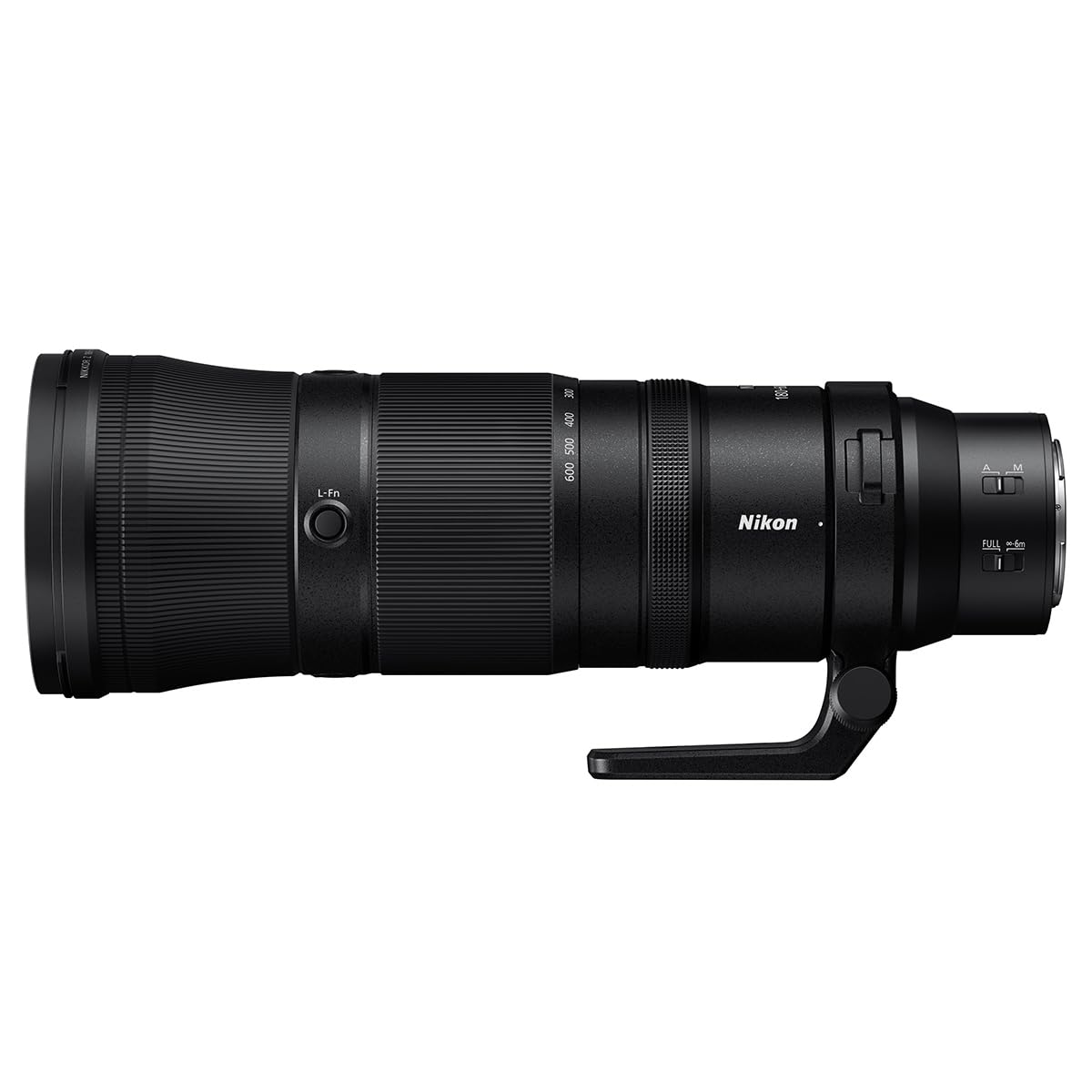
A fixed-length barrel sets the Z 180-600mm apart: 600mm reach without the price of a super-tele prime, and the lens does not extend as you zoom. The all-purpose f/4 zoom in this group covers everyday range, but this lens trades that flexibility for serious reach. Balance stays predictable, dust has fewer routes into the barrel, and Z teleconverters attach cleanly when you need more reach.

Image quality across the zoom range is sharp, and the close-focus distance of 4.27 feet with 0.25x reproduction adds a useful near-macro view for nests, insects, or small details. VR helps steady handheld shots, and the lens handles distant subjects without a bag full of primes.

This lens is heavy, and autofocus speed depends on the body and light, so it suits a wildlife, birding, or field-sports shooter who plans around those limits rather than a traveler grabbing one lens for everything. The compact 28-400mm superzoom in this set offers a wider focal range in a lighter body, but it cannot match the 600mm reach or accept a teleconverter. It is a premium-priced specialist, so budget-conscious buyers should start with lighter options.

Pros

  • Z shooters get verified super-telephoto quality for wildlife, with strong build, rendering, and reach.
  • Sharp, crisp images across the whole 180-600mm zoom range.
  • Internal zoom keeps balance predictable and reduces dust drawn into the barrel.

Cons

  • AF speed can vary on some bodies or in poor light.
  • At 600mm, a tripod or monopod is the realistic default for steady framing.
Our verdict

The Z 180-600mm is the reach-first specialist in this group: native 600mm, internal zoom, and teleconverter compatibility for wildlife-first shooters.

Check Latest Price
3

Best Everyday Prime

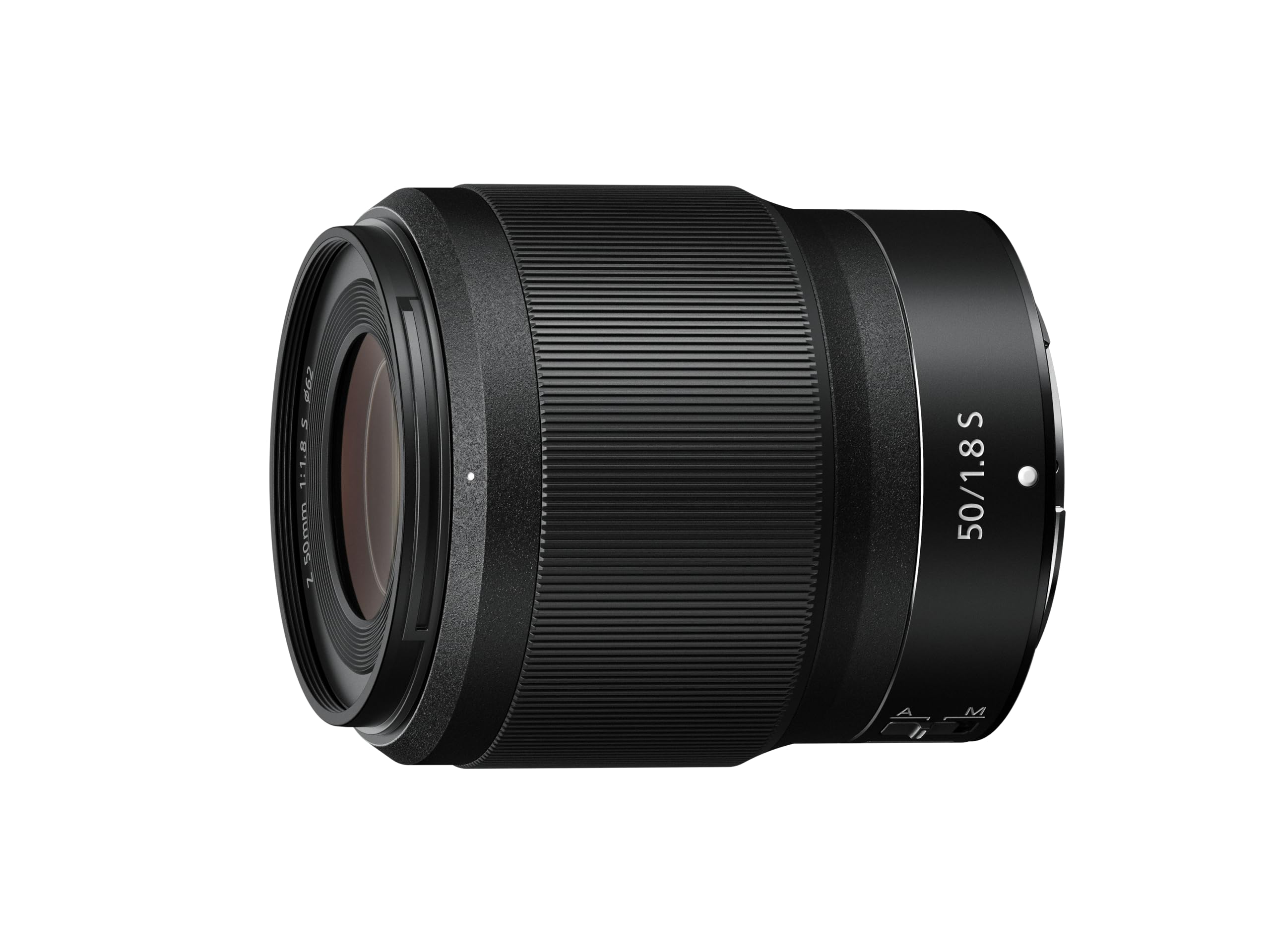
Z 50mm f/1.8 S

94 /100
Studio Score High Confidence

Key details

Stabilization
None
Mount And Format
Nikon Z
Focal Length And Aperture
50mm f/1.8
Check Price on Amazon

The Z 50mm f/1.8 S pairs S-line optical quality with f/1.8 speed at far lower cost than an f/1.2 prime. It is compact enough to stay mounted through a street session or a short video shoot, and its 62mm filter thread keeps filters affordable.

This is the prime for Z owners who want a fast, sharp daily lens for street work and environmental portraits. It won't deliver the strong compression of an 85mm portrait lens; the 50mm view favors walk-around shooting. Fixed 50mm means no zoom flexibility; you move or swap lenses to change framing. That tradeoff makes sense when your priority is light-gathering and image quality over range.

Wide-open sharpness is strong enough that this lens can serve as the default on a Z camera. The balanced size keeps it comfortable on small bodies, while the silent AF motor handles both stills and video without chattering. Bokeh stays smooth behind your subject, giving portraits a clean background without the bulk of a 1.2 lens.

Pros

  • S-line optical quality in a 50mm prime, one of the strongest standard primes in the Z lineup.
  • Sharpness at f/1.8 lets you shoot wide open without trading away crispness.
  • Smooth bokeh and accurate color keep portraits clean without extra grading.
  • Silent AF motor works well for both stills and video.

Cons

  • Barrel is larger than classic plastic f/1.8 50mm primes, so it's noticeable on a small body.
  • Mid-range pricing sits above entry-level plastic fifties, which surprises bargain-first Nikon shooters.
Our verdict

For Z shooters who want S-line sharpness and f/1.8 speed without the f/1.2 price, this is the prime to buy.

Check Latest Price
4

Best Portrait Prime

Z 85mm f/1.8 S

94 /100
Studio Score High Confidence

Key details

Stabilization
None
Mount And Format
Nikon Z
Focal Length And Aperture
85mm f/1.8
Check Price on Amazon

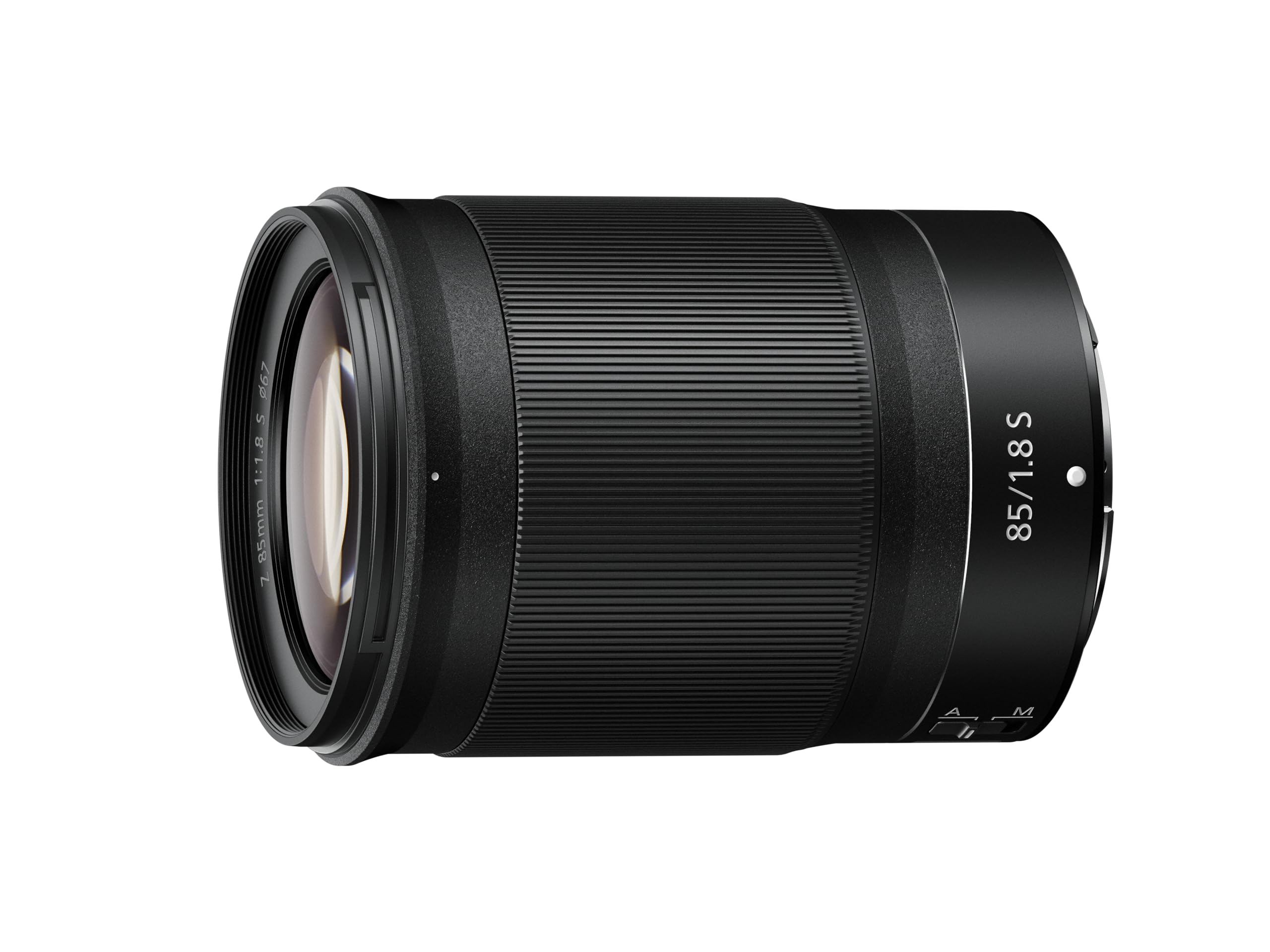
Razor-sharp center-to-edge rendering and creamy bokeh are the defining qualities of the Z 85mm f/1.8 S. This is a portrait prime that delivers S-line sharpness at f/1.8 without the size and cost of f/1.2 alternatives. The 50mm f/1.8 S covers general framing, but this lens is built specifically for people.

The 85mm focal length compresses faces and shoulders into a flattering medium-tele frame, and the f/1.8 aperture keeps available-light event work practical. Two ED elements and Nano Crystal Coat control flare in backlit portraits, while weather sealing covers outdoor sessions. Wide-open sharpness holds across the frame, so you do not need to stop down for edge-to-edge clarity. The lens is light enough to stay on the camera through a full event.

The right buyer is a Nikon Z shooter who wants a specialist portrait lens rather than a do-everything zoom. It is built for headshots, weddings, and event coverage at medium distance; it is not a walkaround or macro tool.

Compared with the constant-aperture zoom that leads this roundup, the 85mm gives up focal-length flexibility to deliver a brighter f/1.8 and smoother out-of-focus areas. For a photographer who knows their next job is portraits, that exchange favors the prime.

💡 When the scene lacks contrast, switch to single-point AF and place it on the subject's face.

Pros

  • Razor-sharp optics from center to corner at f/1.8
  • Smooth, creamy bokeh for flattering portrait backgrounds
  • S-line optical quality in a mid-range-priced Z prime
  • Flattering 85mm focal length for headshots and event portraits

Cons

  • The fixed 85mm framing is tight for group shots or small rooms.
  • Autofocus can hunt in low-contrast scenes.
Our verdict

A Z shooter who prioritizes portrait rendering gets S-line sharpness and smooth bokeh here without the f/1.2 premium. This is the prime to pair with the top-pick zoom for event and people work.

Check Latest Price
5

Best Macro / Close-Up

Z MC 105mm f/2.8 VR S

93 /100
Studio Score High Confidence

Key details

Stabilization
VR
Mount And Format
Nikon Z
Focal Length And Aperture
105mm f/2.8
Check Price on Amazon

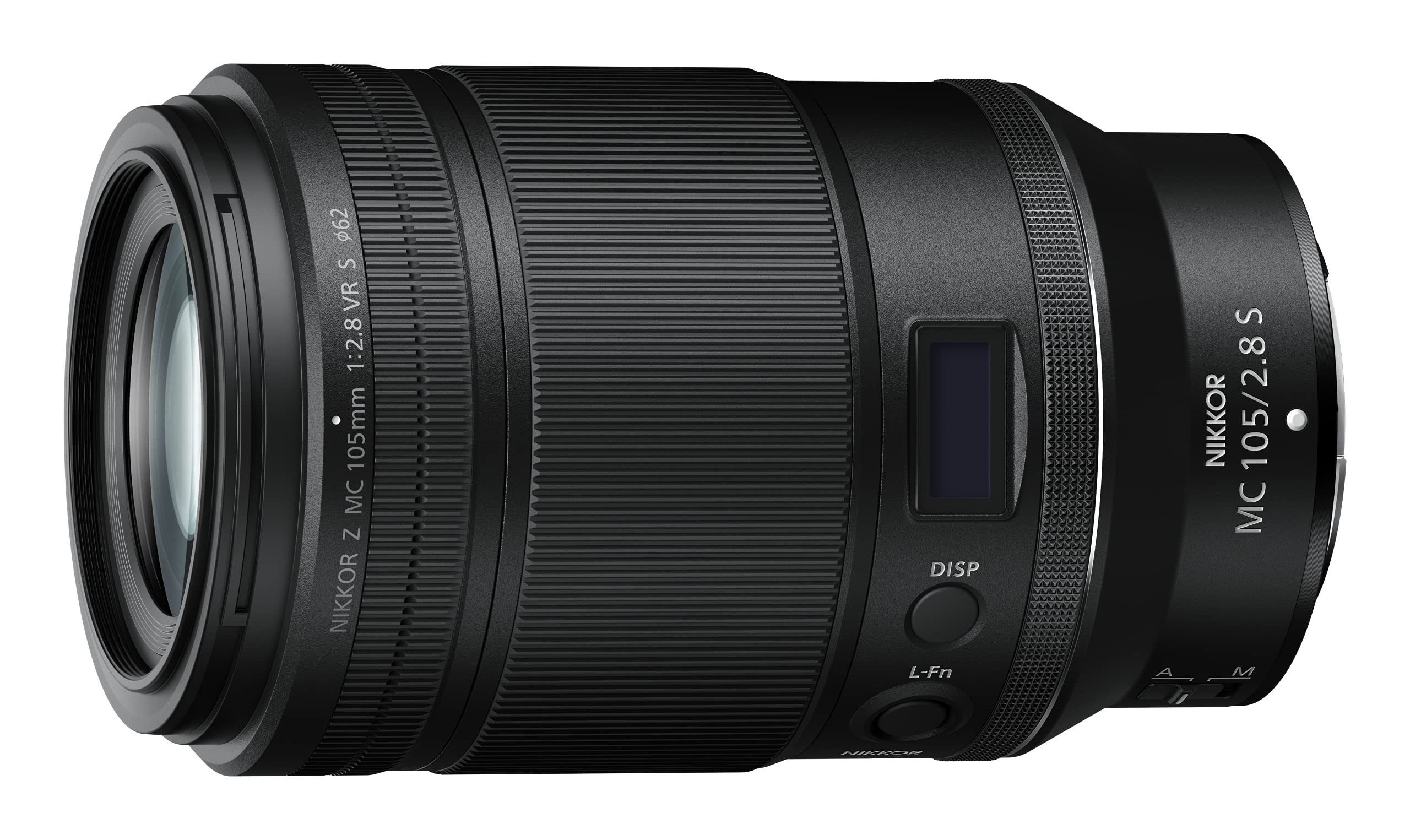
The Z MC 105mm f/2.8 VR S keeps hand-held close-up work practical at 1:1 magnification, and the 105mm focal length compresses backgrounds in a way that flatters portrait subjects. That combination separates it from the 85mm f/1.8 S portrait prime, which cannot focus close enough for macro work. The longer focal length also leaves room between the lens and subject, which makes lighting small objects easier.

S-line optics hold edge-to-edge sharpness at macro distances even wide open, which matters when the working distance is measured in inches. The lens is light enough to carry on a long hike without feeling like a dedicated macro kit, and VR steadies the viewfinder while you frame a subject at arm's length. The weather-sealed barrel also handles damp trail air and studio dust without complaint.

This is for macro enthusiasts on Z and photographers who want one prime for flowers, products, and people. It rewards a patient, deliberate shooting style and is not built for fast-action sequences; Z shooters who want native 1:1 and dual-use portraits are the core audience. Close-up product shooters will appreciate the working distance and 1:1 reproduction when filling the frame with small objects. It can handle a full portrait session without switching to a second lens.

💡 Set the focus limiter or switch to manual focus when shooting at 1:1 for steadier results.

Pros

  • Outstanding macro quality with true 1:1 capability and VR support for hand-held shots.
  • Edge-to-edge sharpness at macro distances holds even wide open.
  • Doubles as a flattering portrait prime with smooth 105mm compression.
  • Light enough for long hikes without a dedicated macro kit.

Cons

  • Mid-range price may push budget macro buyers toward more affordable F-mount alternatives.
  • Autofocus at macro distances is slow and may hunt before locking focus.
Our verdict

This is the Z prime for shooters who want true macro reproduction and flattering portraits without carrying two lenses.

Check Latest Price
6

Best Travel Superzoom

Z 28-400mm f/4-8 VR

88 /100
Studio Score Strong Evidence

Key details

Stabilization
VR 5 stops
Mount And Format
Nikon Z
Focal Length And Aperture
28-400mm f/4-8
Check Price on Amazon

The 28-400mm range in a 1.6-pound Z-mount body gives travel photographers a single lens that spans wide scenic to distant wildlife. Daylight sharpness holds across that range, which is the main reason to choose it over the shorter 24-200mm travel zoom. The extra 200mm of reach turns a morning walk into a wildlife outing without carrying a second lens, while the wide end still covers standard travel framing.

Hikers and walkaround shooters get a practical superzoom that stays on the camera for city streets, trails, and mountain viewpoints. The 28mm wide end covers groups and landscapes, while 400mm brings distant details close enough to frame without cropping heavily.

The 5-stop VR is most useful at 400mm, where small hand movements are magnified. In good light, the lens remains practical without a tripod, and the 1.6-pound weight does not punish a day of walking.

Daylight travelers and one-lens shooters are the core audience. The variable aperture closes to f/8 at 400mm, so low-light and indoor action performance is limited; that boundary is acceptable when you prioritize reach over aperture speed. It is not the lens for professionals who need a fast constant aperture, but it suits a hiker who wants a single carry-everywhere zoom.

Pros

  • One lens covers 28mm landscapes through 400mm distant subjects, so swapping lenses is unnecessary on the trail.
  • At 1.6 pounds, it is light enough to carry all day on a hike or tourist walk.
  • Daylight sharpness is consistent across the zoom range, which is uncommon for a superzoom.
  • The zoom range alone acts as a full travel kit, reducing the gear bag to one body and one lens.

Cons

  • At 28mm, the wide end is not as accommodating as 24mm lenses for tight interior shots.
  • The maximum aperture changes as you zoom, so exposure and depth of field shift while framing.
Our verdict

This is the Z-mount zoom for daylight travelers who would rather carry one lens than change lenses to reach a distant subject.

Check Latest Price
7

Events and Weddings

Z 24-70mm f/2.8 S

92 /100
Studio Score High Confidence

Key details

Stabilization
None
Mount And Format
Nikon Z
Focal Length And Aperture
24-70mm f/2.8 constant
Check Price on Amazon

Constant f/2.8, fast silent autofocus, and weather sealing make this the event-ready workhorse of Nikon's Z lineup. The 24-70mm range covers standard event, portrait, and documentary scenes with sharpness and contrast that hold up at wide apertures. On smaller Z bodies, the lens is heavy and bulky enough to notice; the weight is a real consideration for all-day carry, and the focal length stops at 70mm, so it won't replace a telephoto. It commands a premium price, and the top pick in this roundup covers more range for less money. That combination keeps it a specialist tool: ideal for working pros who need the extra stop in dark venues and value rugged weather sealing.

Pros

  • Professional-grade build and glass hold up to demanding paid work.
  • Sharp images with strong contrast even at wide apertures.
  • Autofocus locks quickly and quietly, suited to event photography and video.

Cons

  • Reach stops at 70mm, so distant wildlife and sports need a separate telephoto lens.
  • Heavy and bulky on smaller Z bodies, making all-day carry less appealing.
Our verdict

Choose this when a dark venue and high-paced work make the extra f/2.8 stop worth the weight and price. Travel-first buyers should look at the top pick in this roundup.

Check Latest Price
8

Budget Telephoto

AF-S DX 55-300mm VR

93 /100
Studio Score High Confidence

Key details

Stabilization
VR II
Mount And Format
F-mount DX
Focal Length And Aperture
55-300mm f/4.5-5.6
Check Price on Amazon

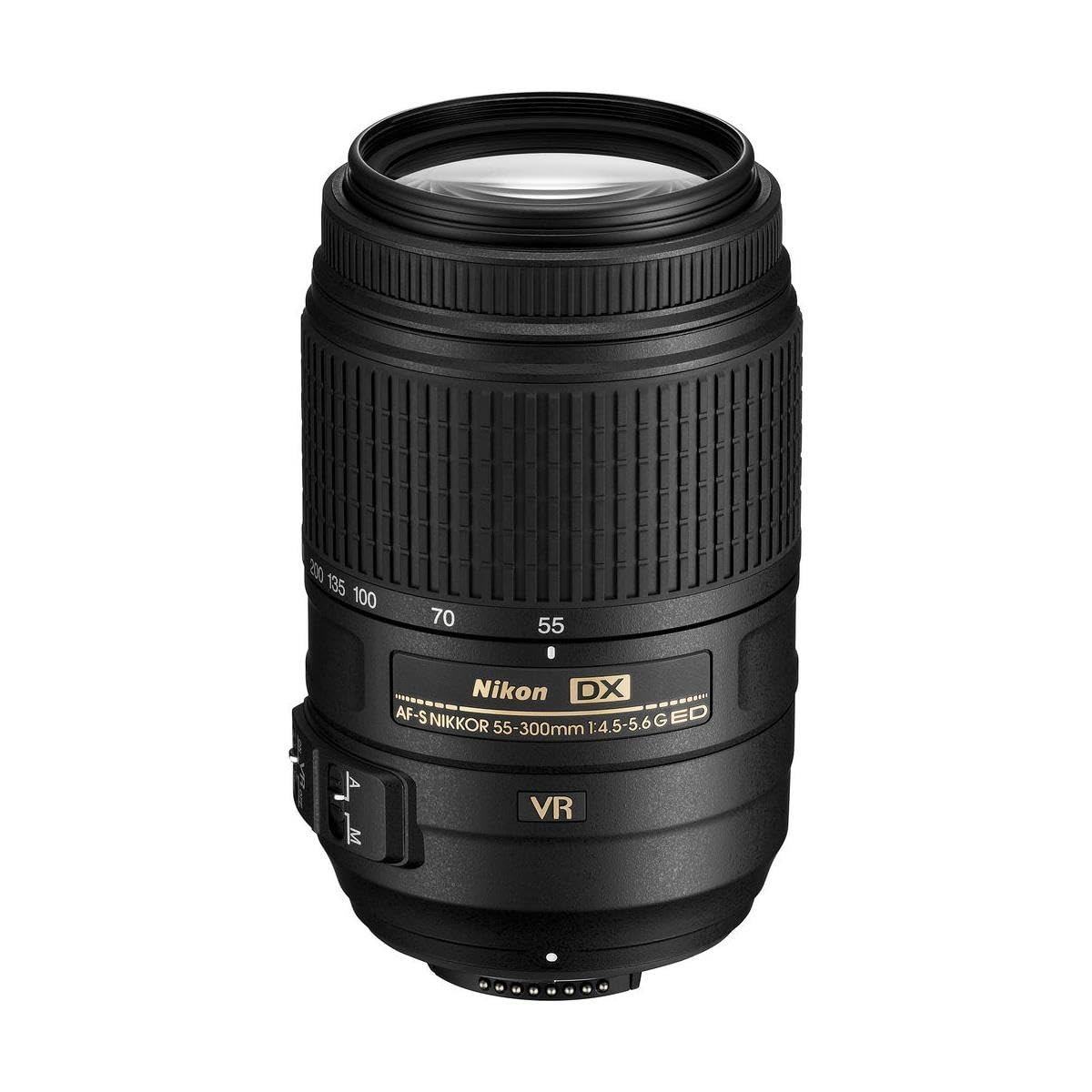
An affordable F-mount DX zoom that gives entry-level Nikon DSLR shooters genuine 300mm reach without stepping up to expensive glass. Vibration reduction steadies hand-held shots at the long end, and optical quality is crisp for the money. The tradeoffs are the older AF system, which can be slow at 300mm, the noticeable weight during long carries, and the DX-only mount that limits use to crop-sensor F-mount bodies. Those boundaries keep it below native Z tele-zooms, but for daylight wildlife, outdoor sports, and budget reach on a crop-sensor DSLR, it earns a spot as a sensible entry-level pick.

Pros

  • Delivers 300mm reach on crop-sensor Nikon DSLRs without the price jump to pro telephoto glass.
  • Sharp, colorful images with pleasing bokeh make distant subjects easy to appreciate.
  • Vibration reduction steadies hand-held shots, especially at the 300mm end.

Cons

  • Heavier than some DX zooms, so full-day carries make the weight obvious.
  • At 300mm, autofocus can lag when subjects move or light levels drop.
Our verdict

Best kept for daylight wildlife, outdoor sports, and budget reach on a crop-sensor Nikon DSLR.

Check Latest Price
9

Travel Walkaround

Z 24-200mm VR

89 /100
Studio Score Strong Evidence

Key details

Stabilization
VR
Mount And Format
Nikon Z
Focal Length And Aperture
24-200mm f/4-6.3
Check Price on Amazon

The Z 24-200mm VR covers a broad range of subjects in a lightweight Z-mount body, making it a practical companion for one-lens walks and hikes. It concedes reach to the longer 28-400mm superzoom in this set, and autofocus accuracy can be inconsistent in some situations. The f/6.3 aperture at 200mm limits low-light work, so this is a daylight outdoor companion for landscape, street, and portrait shooting. Hikers and travelers who keep to daytime hours will appreciate the light weight and the ability to frame wide scenes and compressed portraits without swapping lenses.

Pros

  • Covers a wide-to-tele range in a light Z-mount package, ideal for long walks and travel.
  • Produces sharp images throughout the zoom range for a superzoom.
  • Light enough for all-day hikes despite the 8.3x zoom ratio.

Cons

  • Fast indoor action is outside this lens's design brief.
  • Distant wildlife and birding subjects are better handled by a dedicated telephoto.
Our verdict

For hikers and travel photographers who shoot in daylight and want one lens, the 24-200mm range makes this an easy companion.

Check Latest Price

How to Choose

Mount and Sensor Format

Z-mount lenses are built for Nikon mirrorless bodies, while F-mount lenses fit the DSLR line and can adapt to Z with a mount adapter. DX lenses project a smaller image circle, so they work on crop-sensor cameras but force a full-frame Z body into a crop mode. Check the body first: a Z6 or Z8 owner should buy Z glass, not an F-mount lens made for a D5600.

Focal Length and Aperture Behavior

A wide zoom range is convenient, but a variable aperture reveals its cost at the long end. A 28-400mm lens that closes to f/8 at 400mm needs about four times the light of an f/4 lens, which pushes you to high ISO or a tripod in shade. Constant-aperture zooms keep the same exposure through the range, which is why they remain the default for events and indoor work.

Autofocus Motor and Compatibility

AF-P and newer stepping-motor lenses rely on electronic control that older DSLR bodies may not support; a lens can mount but never focus on a D3200-class body. Silent Wave motors are older but broadly compatible with F-mount DSLRs. Z-mount lenses use the mirrorless system's fast, quiet focus, so compatibility is less of a concern if the body is already Z.

Vibration Reduction

VR steadies a handheld shot of a static subject, but it does not freeze a moving athlete or bird. At 300-600mm, shake is magnified by the long focal length, so optical VR earns its keep even with a fast shutter. Some Z primes have no optical VR and rely on the camera body's sensor-shift stabilization, so the benefit changes if you are on a Z50 or Zfc without IBIS.

Weight and Balance

Weight matters less than where the lens sits over the camera. A long super-telephoto pulls the rig forward and demands a tripod or a strong left-hand support, while a short f/1.8 prime balances naturally on a small body. For hiking and travel, a one-pound difference becomes a real constraint after a few miles; for studio or car-based shoots, it barely registers.

Frequently Asked Questions