8 Best Lens for Sony A6400 in 2026: Match Specs to How You Shoot

Find the best lens for Sony A6400 by matching autofocus, stabilization, and aperture to how you actually shoot.

Most A6400 lens listings lead with focal length and f-stop, but the specs that decide a keeper are autofocus behavior and how the lens handles the body's lack of in-body stabilization. A sharp lens that hunts in low light will cost you shots; an unstabilized prime can turn handheld video into a shaky mess.

That makes the first decision a trade-off between reach and light. A do-it-all zoom covers everything from wide angles to wildlife but asks for daylight. A bright prime keeps indoor shots clean but means moving your feet or swapping lenses.

Buy for the conditions you shoot most: daylight reach, dim indoors, portraits, or travel weight. The lens that fits those conditions will get used; the one that only looks good on paper will stay home.

1

Best Overall

Sigma 30mm f/1.4 DC DN C

96 /100
Studio Score High Confidence

Key details

Autofocus
Focal Length
30mm (45mm equiv.)
Max Aperture
f/1.4
Size & Weight
9.28 oz
Check Price on Amazon

The 30mm f/1.4 Contemporary is the first fast prime an A6400 owner should evaluate when the kit zoom starts getting left behind after sunset. The f/1.4 aperture opens up shutter speeds that keep indoor stills usable without flash, and the lens holds sharpness at that wide setting. That direct combination separates it from the variable-aperture zooms in this set and gives it a clear role in low-light photography.

On the A6400, the 30mm focal length produces a 45mm equivalent, placing it between a classic normal lens and a short telephoto. The nine-blade rounded diaphragm keeps out-of-focus highlights smooth, and close-focusing range extends to tabletop and product-style shots. That lets the lens shift between portraits, street details, and small objects without a lens change, which is more flexibility than most fast primes offer at this price.

The buyer this suits is an A6400 owner who wants a normal-angle fast prime for portraits, evening street scenes, and indoor stills without paying full-frame prices. Autofocus is slower and more audible than native Sony lenses, and it may hunt in very low light, so the lens favors shooters who can let the drive settle before pressing the shutter. The optical quality is the priority here, and the focus system is the accepted tradeoff.

The value case comes down to a simple trade: a mid-range price buys wide-open sharpness and smooth background rendering that undercuts more expensive options in this comparison set. The 9.28-ounce barrel keeps the setup light enough for daily carry, and the f/1.4 speed gives it a low-light advantage the travel zoom cannot match. No other lens in this group combines that aperture and that sharpness at this price.

Pros

  • Fast f/1.4 aperture lifts low-light stills beyond what a variable-aperture zoom can manage.
  • Stays sharp wide open, giving portraits and street details a crisp focal plane without stopping down.
  • Mid-range price gets you fast-prime rendering and solid construction without a flagship cost.
  • Nine-blade rounded diaphragm creates smooth background blur and strong subject separation.

Cons

  • No optical image stabilization; handheld video can be shaky on an A6400 body without IBIS.
  • Fixed 45mm-equivalent focal length leaves no zoom margin for wide or distant subjects.
Our verdict

For A6400 stills shooters who want a fast normal prime, the Sigma 30mm f/1.4 delivers wide-open sharpness, smooth bokeh, and low-light reach at a mid-range price.

Check Latest Price
2

All-In-One Travel Zoom

Tamron 18-300mm f/3.5-6.3

87 /100
Studio Score Strong Evidence

Key details

Autofocus
VXD linear motor
Focal Length
18-300mm (27-450mm equiv.)
Max Aperture
f/3.5-6.3
Size & Weight
21.9 oz
Check Price on Amazon

The Tamron 18-300mm f/3.5-6.3 turns the A6400 into a one-lens camera for anyone who would rather carry a zoom than swap primes. The 16.6x coverage from wide-angle to super-telephoto is paired with a VXD linear motor that focuses fast and quietly, and Tamron's VC stabilization gives the body a workable safety net because the A6400 has no built-in IBIS.

In daylight, the lens handles the full zoom range without the usual softness at the long end. The 18-300mm focal spread frames a landscape at 18mm and then pulls in a distant animal at 300mm, while close focus adds a near-macro option for small subjects.

The all-in-one design keeps external controls simple: a zoom ring, focus ring, and dedicated switches are easy to find without looking away from the viewfinder. The lens balances well on the A6400, so long walkaround sessions do not feel front-heavy.

Travelers and outdoor shooters are the right audience. Indoor and night shooters should consider the fast prime in this set instead. The f/6.3 aperture at 300mm needs daylight, and zoom ring smoothness can vary between copies, so check the action on the specific unit if smooth zooming matters.

Pros

  • One lens covers 18-300mm, replacing multiple lenses for travel and outdoor walkaround.
  • Stays sharp through the practical zoom range and holds up at 300mm in daylight.
  • Autofocus is fast and quiet for a superzoom, with a linear VXD motor.
  • Build and optics feel solid for an all-in-one zoom of this scope.

Cons

  • The premium price places it above budget all-in-one zooms.
  • At 21.9 oz, it is heavier than a compact standard zoom, so pocketability is not its strength.
Our verdict

For A6400 owners who keep one lens on the camera for daylight trips, this Tamron is the practical alternative to a bag of primes and zooms.

Check Latest Price
3

Super-Telephoto for Wildlife & Sports

Sony 70-350mm f/4.5-6.3 G

91 /100
Studio Score High Confidence

Key details

Autofocus
XD linear motor
Focal Length
70-350mm (105-525mm equiv.)
Max Aperture
f/4.5-6.3
Size & Weight
22 oz
Check Price on Amazon

The Sony 70-350mm G gives an A6400 build a 525mm-equivalent reach with an XD linear motor, Optical SteadyShot, and G-series resolution in a 22-ounce body. In this set, it offers the longest reach, letting a distant bird or a far sideline fill the frame. It is a deliberate move away from the fast prime that leads this guide toward wildlife and outdoor sports, where distance to subject matters more than indoor aperture.

Autofocus is quick, quiet, and steady enough to hold moving birds and athletes in frame. With the A6400's subject tracking, the lens keeps a moving subject inside the focus area better than slower telephoto zooms. The zoom range covers outdoor sports and wildlife well, while the 22-ounce weight keeps it practical for a day of walking. On the A6400, which lacks in-body stabilization, the lens's OSS is what makes handheld shots at 350mm usable.

This lens is for A6400 shooters who accept a daylight appetite in exchange for reach. The variable f/4.5-6.3 aperture needs good light, and a small number of units have QC reports like internal dust or autofocus stoppage. Indoor or dusk shooting stays with the fast prime that leads this guide; this Sony earns its place when the subject is far away and well lit.

Pros

  • 525mm-equivalent reach stays handholdable in a 22-ounce body.
  • Crisp center resolution with G-series rendering keeps distant subjects defined.
  • XD linear motor autofocus is quick, quiet, and holds moving subjects.
  • Optical SteadyShot covers the A6400 body's lack of built-in stabilization.

Cons

  • Premium pricing sits well above entry-level telephoto zooms.
  • The 70-350mm range is a specialized reach tool, not a one-lens travel zoom.
Our verdict

The 70-350mm G is the longest reach option in this guide, built for A6400 bags that already have a fast prime for close and dim work.

Check Latest Price
4

Budget Portrait & Street Prime

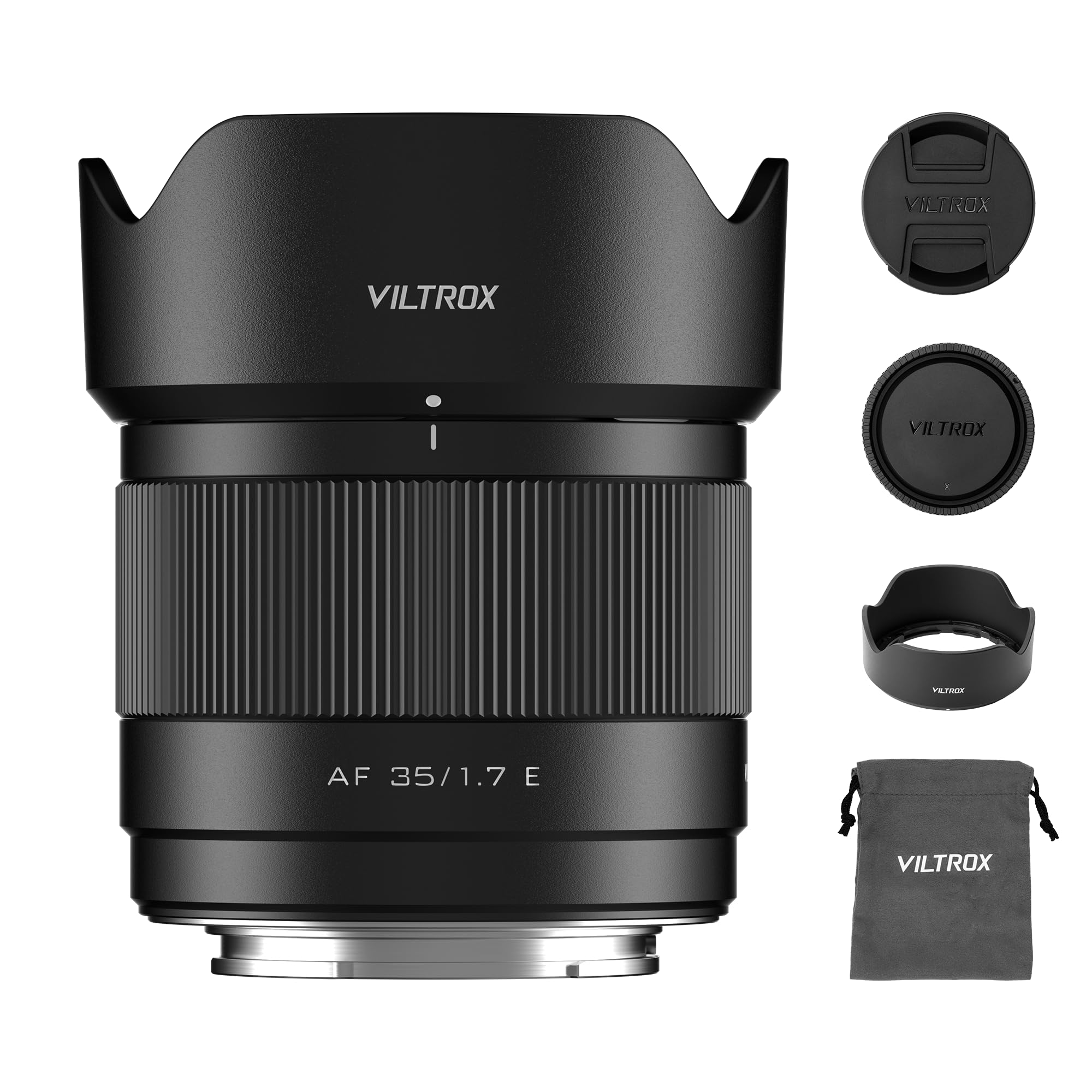
Viltrox AF 35mm f/1.7 Air

91 /100
Studio Score High Confidence

Key details

Autofocus
STM + eye/face
Focal Length
35mm (53mm equiv.)
Max Aperture
f/1.7
Size & Weight
180 g
Check Price on Amazon

Viltrox’s AF 35mm f/1.7 Air is the budget autofocus prime in this A6400 comparison, giving portrait and street shooters a normal-length prime with STM drive and eye/face detection at a price far below the f/1.4 top pick. The 53mm-equivalent view is tighter than a classic 35mm, which makes it suited to head-and-shoulders portraits as well as everyday street scenes. The lens delivers sharp center rendering at f/1.7 in a 180g body that does not unbalance the camera.

Autofocus behavior separates this from the zoom options. Single-shot AF is accurate and holds focus in ordinary portrait sessions, and the A6400’s eye detection can be left on for face tracking. In dim interiors, the motor may pause before locking; once engaged, the focus stays where it should. For a budget prime, this tradeoff is easy to live with in typical portrait and street use.

The natural buyer is an A6400 owner shopping for a first prime: portrait and street shooters, vloggers who want face AF on a compact prime, and everyday walk-around photographers. The lens is not the answer for fast-action sports or wildlife, and photographers who need a weather-sealed, all-metal build will find the light barrel a boundary, not a feature. Inside those boundaries, the Viltrox covers normal shooting needs.

Pros

  • Quality sits well above the price for a budget autofocus prime.
  • Budget-friendly value for portrait and street shooting.
  • Autofocus locks and holds focus well in normal single-shot work.
  • Sharp f/1.7 rendering with a portrait-friendly 53mm equivalent view.

Cons

  • No optical stabilization; on the A6400’s non-stabilized body, slower handheld shutter speeds require a tripod or steady support.
  • Dim indoor scenes can make the AF pause before it locks onto the subject.
Our verdict

A6400 portrait and street shooters can start with this prime without paying the usual cost of autofocus and eye detection.

Check Latest Price
5

Ultra-Wide for Vlogging & Real Estate

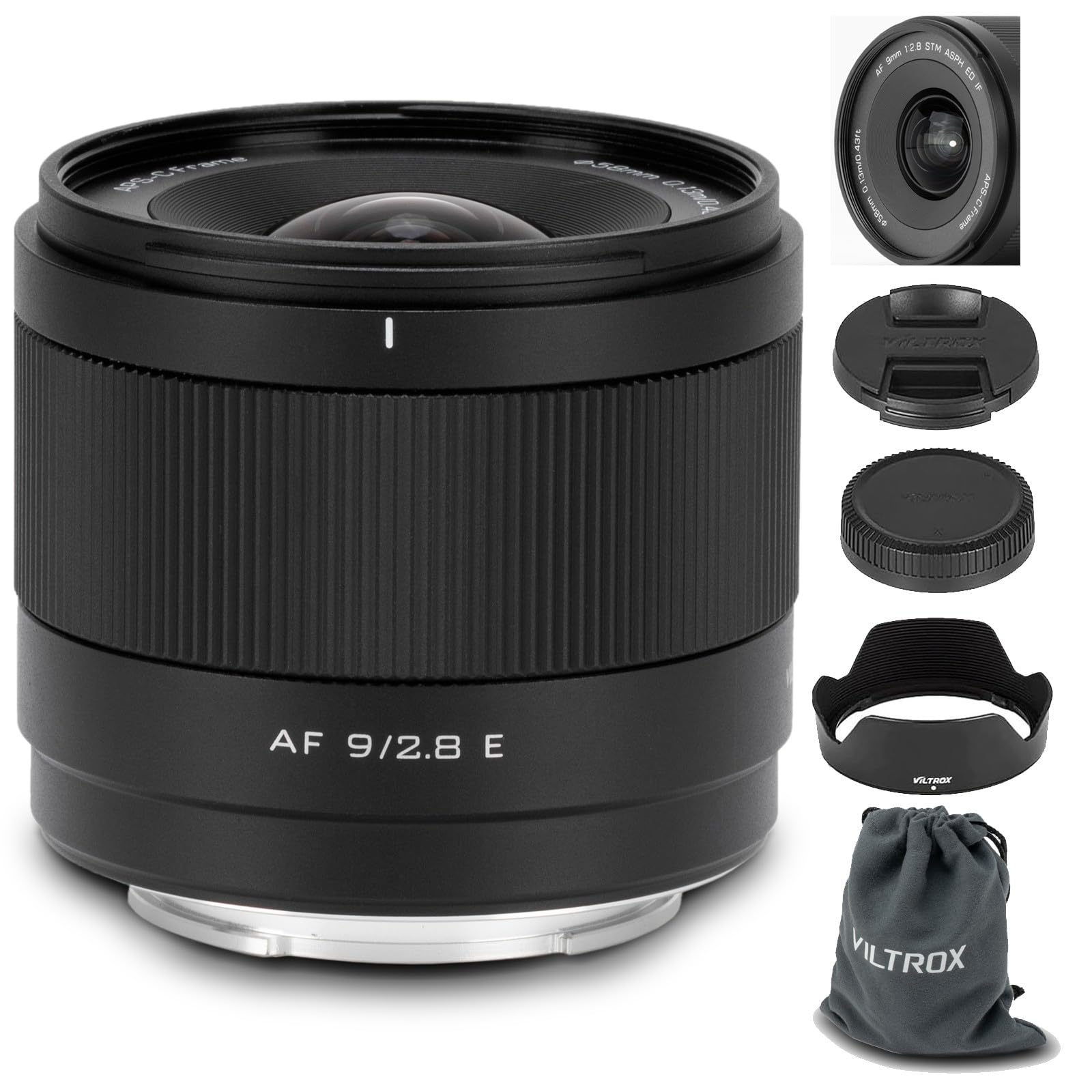
Viltrox 9mm f/2.8 AF

90 /100
Studio Score High Confidence

Key details

Autofocus
STM + eye/face
Focal Length
9mm (13.5mm equiv.)
Max Aperture
f/2.8
Size & Weight
175 g
Check Price on Amazon

The Viltrox 9mm f/2.8 is the ultra-wide option among autofocus primes for the Sony A6400. It delivers a 113.8-degree field of view from a 175g barrel with STM autofocus and eye/face detection, putting vloggers, interior shooters, and group-travel photographers in front of a wider scene than any zoom in this set while keeping autofocus active on faces.

For the price, the 9mm is a sharp ultra-wide prime at f/2.8 with quick, quiet autofocus that suits handheld vlogs and interior walkthroughs. It is light enough to leave mounted on an A6400 all day, and the wide view frames rooms without backing up. The 35mm f/1.7 sibling gives portrait shooters a more natural face framing, but this lens keeps the wide coverage.

Autofocus is quick in daylight and quiet enough for video, and eye/face detection holds vloggers during selfie-style shots. The lens stays compact for travel and fits a group into the frame from one arm's length.

Vloggers, real estate and interior shooters, landscape photographers, and group-travel photographers get the most from this ultra-wide. It frames rooms and close-range group selfies without backing against a wall, and the 175g body balances comfortably on the A6400. Ultra-wide edge distortion and vignetting are expected side effects, so leave extra space around the subject when composing interiors.

💡 Keep the camera level for interior and architecture shots so vertical lines stay upright.

Pros

  • Build and optical quality hold up well for a budget ultra-wide.
  • Budget-friendly price adds a true ultra-wide prime to an A6400 kit.
  • Sharpness is strong for an ultra-wide prime, even at f/2.8.
  • STM autofocus with eye/face detection is quick and quiet.

Cons

  • Bokeh rendering is scene-specific, so soft blur is not a reason to buy this ultra-wide.
  • Close-range perspective exaggeration alters facial proportions, so natural-looking portraits need a longer lens.
Our verdict

Mount this lens when the subject is a space, an interior, or a group — not when you want natural face-framing portraits.

Check Latest Price
6

Budget Telephoto Reach

Sony 55-210mm f/4.5-6.3 OSS

91 /100
Studio Score High Confidence

Key details

Autofocus
Focal Length
55-210mm (82-315mm equiv.)
Max Aperture
f/4.5-6.3
Size & Weight
Check Price on Amazon

The 55-210mm f/4.5-6.3 OSS is a lightweight tele zoom that stretches an A6400 far beyond the kit lens range, with Optical SteadyShot for steadier handheld shots and quiet internal zoom and focus for video. Slower aperture and more moderate AF keep it below the premium 70-350G, and the 210mm end can soften in some shots. That boundary is acceptable for daylight wildlife, outdoor sports, and travel, but less so for indoor action or buyers who need critical sharpness at full reach.

Pros

  • Delivers sharp daylight detail and useful reach at a budget-friendly price for A6400 owners.
  • Quiet internal zoom and focus suit handheld video work without drawing attention.
  • Lightweight body pairs naturally with Sony APS-C kit lenses for a portable travel kit.

Cons

  • Autofocus is moderate, so moving subjects in low light can catch it out.
  • The 210mm end can soften in some shots, leaving critical sharpness short of a premium tele zoom.
Our verdict

For A6400 shooters who want telephoto reach on a budget and can work within its daylight strengths, this is a sensible carry.

Check Latest Price
7

Manual Street Shooting

TTArtisan 25mm f/2 Manual

84 /100
Studio Score Strong Evidence

Key details

Autofocus
Manual focus
Focal Length
25mm (37.5mm equiv.)
Max Aperture
f/2
Size & Weight
Check Price on Amazon

This compact 25mm f/2 manual prime brings strong center sharpness and a low-priced, easy-carry design to the Sony A6400. The 37.5mm-equivalent framing works well for street and everyday shots, and the f/2 aperture gives some indoor speed when focus is handled carefully. At f/2, vignetting and chromatic aberration can appear in backlit scenes, so stopping down or a quick edit cleans up the frame. Manual focus and the unusual focal length keep it from being a universal walk-around lens, but for beginners learning focus on a budget, it's a capable companion.

Pros

  • Strong optical quality for a low-priced manual prime.
  • Fast f/2 aperture and budget price make it a cost-effective entry point.
  • Compact size fits an everyday carry kit without adding bulk.

Cons

  • The 37.5mm-equivalent view is a niche compromise between wide and normal.
  • At f/2, backlit scenes can show vignetting and chromatic aberration, so stopping down or editing is needed.
Our verdict

The right call for A6400 street shooters who prioritize a small, low-priced prime over autofocus convenience.

Check Latest Price
8

Manual Portraits

Brightin Star 55mm f/1.8 MF

81 /100
Studio Score Strong Evidence

Key details

Autofocus
Manual focus
Focal Length
55mm
Max Aperture
f/1.8
Size & Weight
Check Price on Amazon

Brightin Star's 55mm f/1.8 is a full-frame prime with a solid metal barrel and a short-telephoto view on the A6400. It is budget-friendly for a full-frame lens and gives new shooters direct control of focus and aperture while flattering portrait framing. The metal construction adds substance without making it unwieldy.

At f/1.8, softness and chromatic aberration can appear; stopping down sharpens the image. The build feels denser than the price suggests, and the focus ring turns smoothly enough for careful manual work.

Pros

  • Solid metal barrel and smooth focus ring provide a confident feel for a budget-priced lens.
  • Cost-effective entry into full-frame manual primes with a real f/1.8 aperture.
  • On the A6400, the 55mm focal length delivers a flattering short-telephoto view for portraits.

Cons

  • At f/1.8, softness and chromatic aberration can appear; stopping down yields cleaner results.
  • Manual focus is the only option, so every shot depends on your own focus technique.
Our verdict

Buy it for deliberate portrait sessions with the A6400, not for fast everyday shooting where autofocus expectations take over.

Check Latest Price

How to Choose

Aperture & Low Light

A brighter aperture lets the sensor capture more light, giving faster shutter speeds and lower ISO in dim rooms. That is why f/1.4 and f/1.8 primes lead low-light advice for the A6400. The trade-off is physical: larger aperture elements add size and cost, and budget primes can be soft wide open until stopped down. Without IBIS, a fast aperture also helps freeze handheld shots indoors because a faster shutter is the simplest cure for camera shake.

Autofocus Speed & Noise

Autofocus motor choice decides whether a lens keeps up during a shoot. Sony's XD and Tamron's VXD linear motors focus quickly and quietly, so they suit continuous AF for moving subjects; stepping motors in budget primes can lag when light drops. The real cost of slow AF is missed moments, not soft files. If your subject moves, favor a modern linear motor over a cheap, older design.

Focal Length Range

Zoom range determines how much of the world you can frame without moving, but it comes attached to aperture. An 18-300mm zoom covers 27-450mm equivalent yet needs strong daylight at the long end. A 30mm or 35mm prime frames fewer scenes but shoots more easily in dim light and weighs less. If one lens has to cover a whole trip, the zoom is practical; for a portrait or street style, a fixed focal length forces better composition.

Image Stabilization

Stabilization matters because the A6400 lacks IBIS. Stabilized lenses with Tamron's VC or Sony's OSS absorb hand shake, which helps keep telephoto shots sharp and handheld video steady. Fast primes without stabilization can still work for dim stills because a bright aperture provides a faster shutter. For video, unstabilized primes reveal micro-shake no matter how steady you try to stand.

Size & Weight

Size changes whether a lens stays on the camera. A 175g prime keeps the A6400 nimble for street or travel; a 22oz telephoto is capable but front-heavy and more tiring in an all-day bag. The hidden issue is balance, not just weight: long lenses put the center of gravity far from your grip. Match the carry weight to how long you actually hold the camera.

Frequently Asked Questions