6 Best Lens for Sony A7 II in 2026: Match Your Shooting Style

The best lens for Sony A7 II owners depends on how you shoot: travel zooms, budget primes, and telephoto options.

The Sony A7 II has a capable 24MP full-frame sensor, but its older autofocus system and modest used price shape every lens decision. Owners often face a choice between a slow kit zoom that undersells the sensor and a premium professional zoom that costs more than the body. The better path is picking a lens built around the A7 II's actual strengths: light weight, in-body stabilization, and the deep full-frame E-mount catalog.

Most buying guides focus on maximum sharpness numbers, yet A7 II owners in the field tend to care more about weight, focus behavior, and how far one lens can take them. A bright prime that hunts in low light becomes more frustrating than a slower zoom that locks on quietly. A 2.3 lb telephoto might deliver stunning reach but spend most of its time in the bag on a travel trip. Beyond aperture and focal length, the deciding factor is often how the lens behaves on a body with older contrast-detect AF.

The picks below are organized around how you shoot: one-lens travel, budget portraits, landscape and vlog work, and professional telephoto use. Match the lens to the job you actually do most, and the A7 II remains a genuinely capable camera.

1

Best Overall

Tamron 28-200 F2.8-5.6

90 /100
Studio Score High Confidence

Key details

Weight
1.3 lb
Autofocus
RXD stepping motor
Focal Length
28-200mm
Max Aperture
f/2.8-5.6
Check Price on Amazon

The 28-200mm zoom range in a 1.3 lb body replaces a bag of primes for A7 II owners who shoot a mix of street, landscape, and travel. At the wide end it opens to f/2.8, which helps with close subjects in dim rooms, and the RXD stepping motor works quietly enough for unposed street shots. The all-in-one construction feels stable over a full day of hiking, with no wobble or flex under normal handling. The lens also balances well on the A7 II body, so the extra reach does not turn into front-heavy fatigue.

Sharpness holds across the zoom range: the 28mm view is clean edge-to-edge at typical travel apertures, and the 200mm end stays detailed for daylight landscape and city work. The barrel extends only when you zoom long, so the default profile stays compact at the focal lengths you reach for. Zoom and focus rings sit where the fingers expect them, and the drag suits small framing adjustments.

This lens suits A7 II owners upgrading from the kit lens who want one lens from wide to telephoto without buying several primes. The practical boundary is low-light telephoto work: at 200mm the aperture is f/5.6, so dim telephoto shots push ISO, and autofocus can hunt in low-contrast conditions. For daytime travel, street, and landscape, both limits stay in the background; for indoor events or twilight wildlife, a prime or constant-aperture zoom is the better fit.

The replacement value is the easy part to recommend: a 28mm, 50mm, 85mm, and 200mm prime kit costs more and weighs far more than this single lens. At a mid-range price, it delivers the same practical coverage for the A7 II owner who will not swap lenses mid-hike. The one-lens approach also cuts down on bag weight, which matters when moving between bright outdoor light and indoor exhibits.

For travel and street, the focal range maps directly to common shots: 28mm for interiors, 50-85mm for people, 200mm for isolated details. That is the honest strength of the design: it does not need a scene-specific lens, and it lets the A7 II stay ready for the next shot without a bag fumble.

💡 When shooting in dim light, place the focus point on a high-contrast edge.

Pros

  • Turns 28mm wide-angle into 200mm telephoto without changing lenses
  • Sharp images through the whole zoom range
  • One lens replaces several primes and zooms for travel
  • Light 1.3 lb body keeps the A7 II balanced for all-day carry
  • All-in-one barrel stays solid across long shooting sessions

Cons

  • Autofocus can hunt in dim, low-contrast conditions
  • At 200mm the aperture is f/5.6, so low-light telephoto shots push ISO
Our verdict

For A7 II owners who want to cover daytime travel, street, and landscape without carrying a bag of primes, the 28-200mm is the practical centerpiece of a one-lens kit.

Check Latest Price
2

Best Budget Prime

Sony FE 50mm F1.8

93 /100
Studio Score High Confidence

Key details

Weight
6.6 oz
Autofocus
Focal Length
50mm fixed
Max Aperture
f/1.8
Check Price on Amazon

A light full-frame prime, the Sony FE 50mm f/1.8 keeps the A7 II comfortable for a full day of walking while delivering a genuinely fast aperture. It trades the zoom flexibility of the top-pick Tamron for a shorter working distance, but the optical results at 50mm are strong enough that the weight disappears from the equation.

The fixed 50mm view suits portraits, street scenes, and everyday photo walks, while the f/1.8 aperture creates visible background separation without the bulk of a zoom. Owners get sharp center detail and a bokeh character that plays well above the entry-level price point.

This is the right fit for first-time A7 II owners and budget-conscious portrait shooters who want a sharp, compact everyday prime. Autofocus is audible and can be slow or inconsistent in low light, so video shooters may need an external mic or a quieter lens; action and sports shooters will want faster glass. For stills work, the tradeoff is easy to live with.

On a gimbal or travel strap, the 6.6 oz barrel balances well and stays out of the way. The lack of optical stabilization is a non-issue because the A7 II's sensor-shift IBIS covers the lens.

Pros

  • At 6.6 oz, this is the type of lens you forget is on the camera all day.
  • The f/1.8 aperture brings low-light capability and smooth background blur for portraits.
  • Sharp center performance holds up alongside far more expensive 50mm primes.
  • 50mm angle-of-view is flexible enough for daily walkaround and street shots.

Cons

  • In quiet video settings, the focus motor's whir may show up in the audio track.
  • In dim conditions, autofocus can slow down and hunt before locking, particularly with moving subjects.
Our verdict

For a stills-first A7 II owner, this is the 50mm that makes the lens kit feel light without sacrificing sharpness or low-light reach.

Check Latest Price
3

Professional Telephoto

Sony FE 70-200 F2.8 GM II

92 /100
Studio Score High Confidence

Key details

Weight
2.3 lb
Autofocus
4 XD linear motors
Focal Length
70-200mm
Max Aperture
f/2.8 constant
Check Price on Amazon

The Sony FE 70-200mm F2.8 GM OSS II is the fast telephoto in this comparison, pairing a constant f/2.8 aperture with four XD linear motors that lock focus with little noise. Sharpness holds across the frame wide open, and the f/2.8 opening delivers the compression wedding and concert shooters expect from a 70-200mm. It comes in at 2.3 lb, light for a 70-200mm f/2.8 pro zoom, though it is still a real step up from the travel-oriented 28-200mm alternative.

Autofocus responds quickly during burst sequences, and the optical stabilizer keeps handheld shots at 200mm usable. The four linear motors are quiet enough for ceremony and performance work, where a loud lens draws attention. A7 II owners get clean pairing with the body's hybrid focus system, and the f/2.8 aperture keeps shutter speeds higher in low light.

This is a working lens for sports, wildlife, and event professionals who carry it for a job. At 2.3 lb with luxury-tier pricing, it is overkill for casual A7 II use; the 28-200mm alternative is the lighter companion for general shooting. If the assignment does not demand constant f/2.8, the carry weight and cost are difficult to justify.

Pros

  • Constant f/2.8 keeps shutter speeds high in dim event light while producing strong background separation.
  • Four XD linear motors deliver fast, near-silent autofocus that follows moving subjects without hunting.
  • Optical sharpness holds wide open across the zoom range, so heavy crops remain detailed.
  • 2.3 lb body is light for a 70-200mm f/2.8 professional zoom, easing long event handheld sessions.

Cons

  • Luxury-tier pricing is a serious commitment for an A7 II owner; the value only appears when a job needs the f/2.8 reach.
  • The constant f/2.8 optical design keeps the lens bulky; it will always dominate the camera bag and demands a sturdy strap.
Our verdict

For sports, wildlife, and event pros on an A7 II, this is the fast telephoto to own or rent when the job runs late into low light.

Check Latest Price
4

Budget Portrait Prime

Viltrox 85mm F1.8 II

85 /100
Studio Score Strong Evidence

Key details

Weight
626 g
Autofocus
STM
Focal Length
85mm fixed
Max Aperture
f/1.8
Check Price on Amazon

The Viltrox 85mm f/1.8 Mark II is a portrait-focused prime that gives A7 II owners a fast 85mm without the Sony-brand price tag. While the compact wide-angle 20mm in this lineup handles scenes and architecture, this lens is built around headshots, wedding details, and the blurred-background look that makes 85mm such a standard portrait choice. The metal barrel and 626g weight feel solid in the hand and suit a camera body like the A7 II.

At f/1.8, sharpness and bokeh are strong enough for portrait work in dim reception halls or late-afternoon sessions. Color rendering leans pleasing rather than clinical, and the STM autofocus locks in quickly under normal lighting, which covers typical posed headshot and wedding sessions. The combination is easy to use for a full shoot without constantly checking exposure or focus.

This is for budget portrait photographers with an A7 II who want a fast 85mm for headshots and weddings and who prefer a heavier, metal-bodied prime. Autofocus consistency can vary between units, so test focus on your copy after delivery before relying on it for paid work. The optical character and price make that extra check worthwhile for the right buyer.

Pros

  • Metal-barrel build quality that looks and feels more expensive than the price tag suggests.
  • Sharp images with pleasing natural color in portrait situations.
  • f/1.8 aperture delivers low-light performance and soft bokeh for indoor and evening portraits.
  • STM autofocus keeps up well in normal light for posed sessions.

Cons

  • Fixed 85mm field of view is a portrait specialist, not a street or wide-angle lens.
  • Manual-focus ring feel can vary between copies, so a hands-on check after delivery is worthwhile.
Our verdict

The Viltrox 85mm II is the portrait specialist for A7 II owners who want f/1.8 bokeh without emptying their wallet.

Check Latest Price
5

Budget Ultra-Wide

Viltrox 20mm F2.8 FE

88 /100
Studio Score Strong Evidence

Key details

Weight
157 g
Autofocus
STM
Focal Length
20mm fixed
Max Aperture
f/2.8
Check Price on Amazon

The Viltrox 20mm F2.8 FE is the compact alternative in this full-frame E-mount lineup: a 157g prime with a 20mm view and sharp, low-distortion output. It mounts directly to a Sony A7 II and keeps the camera small enough for long street sessions. Where the all-purpose zoom offers focal-length range, this lens holds a single wide angle without weighing down the kit.

At 0.19m minimum focus distance, the lens handles close foreground details as well as open scenery, and the wide angle keeps vertical lines straight for architecture. Its light body also makes it an unobtrusive street and vlog option, so the carrying cost stays low even on a full-frame body. That combination is rare among budget full-frame primes, which tend to be heavier and bulkier.

This is a prime for budget-conscious full-frame shooters who want a small wide-angle companion for landscape, street, and vlog on the A7 II. A single product listing covers several Viltrox FE lens versions, so verify the exact 20mm f/2.8 before relying on the specifications. If you need a standard walk-around focal length or fast action tracking, the flexible zoom and premium primes in this lineup fit better.

💡 For landscape use, set focus about a third into the scene and stop down to f/8 to make the lens effectively focus-free.

Pros

  • 157g body keeps an A7 II kit light for long walkaround sessions.
  • Sharp, low-distortion output makes architecture and landscape framing clean.
  • Budget-tier price brings full-frame wide-angle coverage without premium glass costs.
  • 0.19m minimum focus distance adds close foreground detail to wide scenes.

Cons

  • f/2.8 maximum aperture is modest, so indoor or dusk shots may need higher ISO or a tripod.
  • Autofocus can lag in dim, low-contrast scenes, so moving subjects may outrun it.
Our verdict

For A7 II shooters who already have a flexible zoom and need a dedicated wide-angle companion, this is the practical lightweight pick.

Check Latest Price
6

Creative Ultra-Wide

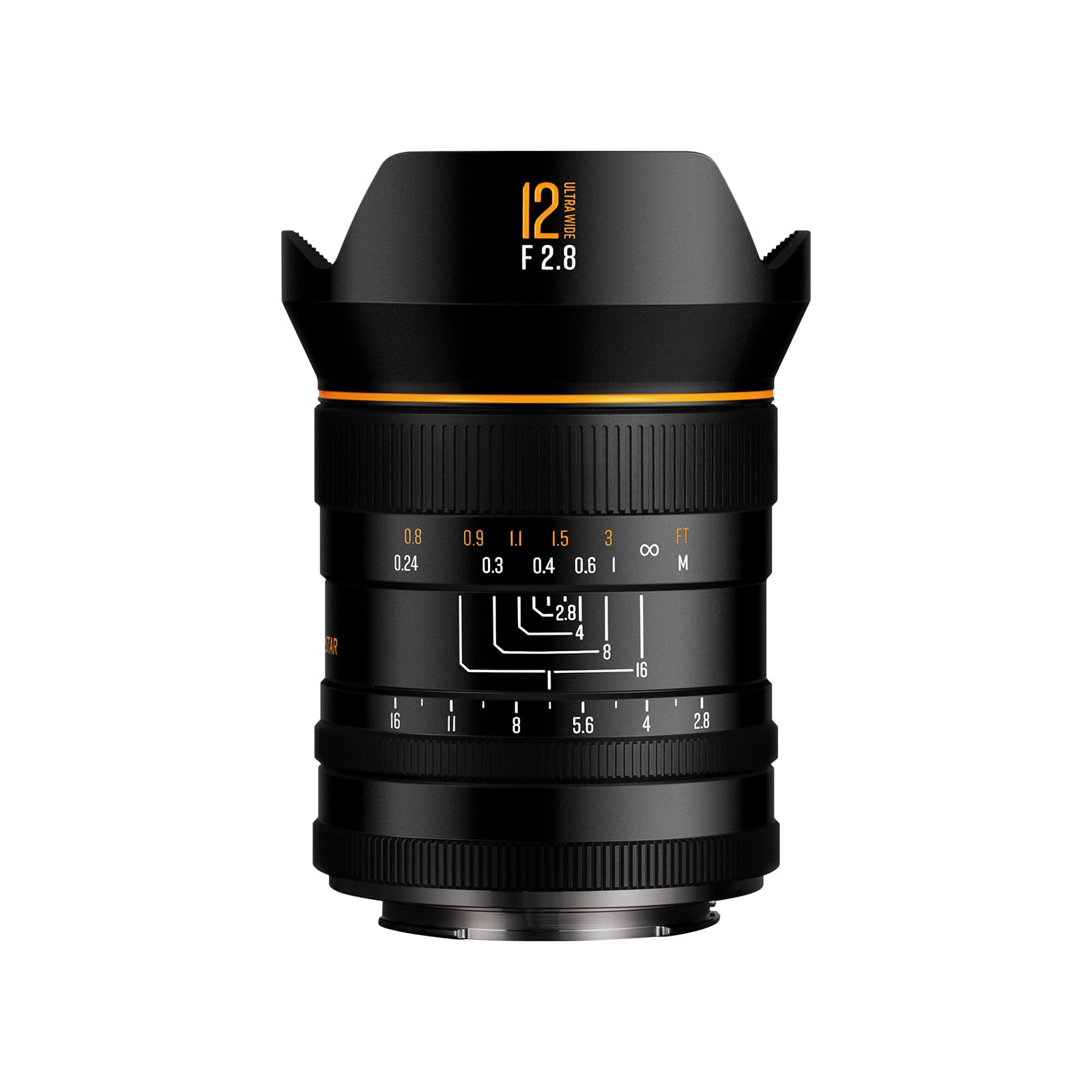
Brightin Star 12mm F2.8 MF

81 /100
Studio Score Strong Evidence

Key details

Weight
1.2 lb
Autofocus
Manual focus
Focal Length
12mm fixed
Max Aperture
f/2.8
Check Price on Amazon

The Brightin Star 12mm f/2.8 gives Sony A7 II owners a full-frame ultra-wide prime at a far lower cost than Sony's own wide glass, and the metal barrel feels substantial in the hand. The fixed manual-focus workflow and a stiff focus ring are manageable when you are locked on a tripod for architecture or astrophotography, but they rule out event and street shooting. The listing's angle-of-view spec conflicts between 122.5° and 170°, so verify the field before composing; for budget creators chasing dramatic ultra-wide or fisheye-style frames, the optical result is worth that check.

Pros

  • Solid metal build and good sharpness suit tripod-based architecture and night-sky framing.
  • Affordable entry into 12mm full-frame coverage for A7 II owners who don't need Sony's premium wide primes.

Cons

  • The listing's angle-of-view spec conflicts between 122.5° and 170°, so verify the field before framing.
Our verdict

A7 II owners who shoot architecture or astrophotography from a tripod and accept manual focus get the ultra-wide field of view Sony charges more for.

Check Latest Price

How to Choose

Full-Frame E-Mount Compatibility

Any full-frame FE lens physically mounts on the A7 II, but not all pair well with its contrast-detect AF system.

Lenses with modern motors like Sony XD or Tamron RXD lock on confidently. Older DC-motor designs work but may hunt in dim light.

Focal Length and Zoom Range

Focal length defines the frame, but the trade-off is range versus aperture. An all-in-one zoom like 28-200mm covers wide to telephoto, yet its aperture narrows to f/5.6 at the long end.

At 200mm f/5.6, the A7 II pushes ISO higher and slows shutter speed. A prime or constant-aperture zoom keeps more light hitting the sensor but forces lens changes.

Maximum Aperture and Low-Light Capability

Aperture controls exposure and depth of field. An f/1.8 prime delivers roughly 2.5 stops more light than f/5.6 at the same shutter speed.

That extra light also helps the A7 II's contrast-detect AF lock on. If you shoot handheld at night, a fast prime produces sharper frames than a slow zoom.

Autofocus Motor Type, Speed, and Noise

The A7 II's focus system depends heavily on the lens motor. Linear motors such as Sony XD or Viltrox STM move quickly and quietly; cheaper DC motors are audible and may whine.

For stills, noise may not matter. For video with a camera mic, a noisy motor lands on the soundtrack; use an external mic or choose a silent motor.

Weight and Portability

Weight shapes which lens actually gets used. A 157g prime disappears in a jacket pocket; a 2.3 lb professional zoom becomes a deliberate carrying decision.

The A7 II body weighs about 1.3 lb, so a heavy lens shifts balance noticeably. Lighter lenses stay comfortable on a wrist strap and handle better on a gimbal.

Image Stabilization

The A7 II body has in-body stabilization, so it steadies any mounted lens. Adding a lens with OSS combines both systems for greater correction.

At 200mm, stabilization becomes critical. The Tamron 28-200mm relies on the body alone; Sony's 70-200mm f/2.8 GM II includes OSS, which makes a visible difference at full zoom.

Frequently Asked Questions