4 Best Lens for Sony A7III of 2026: Picks That Match Real Shooting

Which lens for Sony A7III fits your shooting: primes vs zooms, f/1.4 vs f/2.8, and why quiet AF and real weight matter more than spec-sheet claims.

Most A7III lens listings promise sharpness and lightweight handling. The specs that matter become obvious only after you mount the lens: autofocus noise, real-world sharpness at working apertures, and how the lens balances on a small body.

Marketing pages tend to blur stabilization details and call everything lightweight. The practical difference shows up when you shoot a wedding, a wildlife trip, or a quiet video interview: a lens can nail specs and still be wrong for your style.

Every lens choice means giving up something else. A constant f/2.8 zoom covers events and travel with one lens, but it adds bulk; a fast prime melts into a gimbal but forces you to move your feet. No single lens does everything; the right one disappears into your routine and covers the shooting you actually do.

1

Best Overall

Tamron 28-75mm f/2.8 G2

92 /100
Studio Score High Confidence

Key details

Weight
19 oz
Autofocus
VXD linear motor
Focal Range
28-75mm
Max Aperture
f/2.8 constant
Check Price on Amazon

The Tamron 28-75mm f/2.8 G2 pairs a sharp constant f/2.8 aperture with a fast, quiet VXD autofocus in a 19-ounce body. The 28-75mm range covers the most-used focal lengths on the A7III, and the 9-blade aperture keeps background highlights smooth enough for portrait work. Optical quality holds up across varied lighting, from indoor event spaces to daytime street scenes, without forcing you to stop down to f/4 for usable sharpness. The optical consistency makes the lens feel more expensive than its price.

On the A7III, the G2's weight is the first thing you notice. It balances well on the grip and does not turn a gimbal into a shoulder workout. The linear VXD motor is quiet enough for video, and body IBIS handles stabilization duty since the lens has none. That division of labor works for normal handheld shooting, but slow handheld shutter speeds are where support matters; a monopod or brace can extend the range when the light drops. The compact barrel is part of the appeal: at 19 ounces, this zoom sits closer to a prime than to the 24-70mm G Master alternative.

Paired with the A7III's eye AF, the G2 holds up for posed portraits and event candids. The constant f/2.8 keeps indoor shutter speeds usable, and the bokeh from the 9-blade aperture has a smooth character that does not distract from the subject. Hybrid shooters get the same aperture across the zoom range, so exposure changes less when framing between 28mm and 75mm. For gimbal users, the 19-ounce body keeps the setup balanced and reduces the need to add front-end counterweight.

The right owner is an A7III shooter who wants one lens for events, travel, portraits, and video without a G Master-sized kit. This is not a 24mm wide-angle, and it lacks native GM weather sealing; autofocus can miss in challenging scenes, and vignetting is visible at f/2.8. Those limitations matter most to fast-action shooters and pixel-peepers, not to the event-and-portrait workflow this zoom is built for.

๐Ÿ’ก Set AF-C with a flexible spot in low-contrast scenes; the VXD motor responds best when the camera has a clear target.

Pros

  • High-quality optics and build at a price that undercuts the native GM zoom.
  • Sharp images with smooth background blur for portraits and event candids.
  • Cost-effective constant f/2.8 zoom for Sony E-mount full-frame shooters.
  • Handles varied lighting and shooting scenarios without changing lenses.
  • Compact 19-ounce barrel suits gimbal kits and long walk-around days.

Cons

  • Vignetting is visible at f/2.8, especially at 28mm, so wide-open shots are not edge-to-edge even.
  • Autofocus can miss in low-contrast or fast-moving scenes when the subject leaves the active zone.
Our verdict

The G2 is the value pick among full-frame A7III standard zooms: constant f/2.8, sharp optics, and a 19-ounce body at a mid-range price.

Check Latest Price
2

Budget Prime

Sony 50mm f/1.8 FE

93 /100
Studio Score High Confidence

Key details

Weight
6.6 oz
Autofocus
Audible AF motor
Focal Range
50mm
Max Aperture
f/1.8
Check Price on Amazon

The Sony FE 50mm F1.8 is the budget stills prime for A7III owners who want the classic nifty-fifty without the bulk of the f/1.4 GM in this lineup. Weighing 6.6 ounces, it barely changes the camera's balance and slips into a compact everyday bag. It is the kind of lens you keep on the body for street and casual portraits rather than swap out between shots.

At f/1.8 the lens produces sharp center detail and smooth out-of-focus areas that read well in portraits. The A7III's in-body stabilization covers handheld work, so the lack of optical stabilization is not an issue for normal stills. On A7-series bodies, the lens communicates aperture and focus information cleanly, with no adapter in the chain.

For gimbal work, the lens's low weight is a practical advantage: it balances without heavy counterweights and allows longer handheld or rigged sessions.

This is a stills-first lens for portrait and street shooters on a budget. Autofocus noise and hunting are real limitations, especially for video; the premium f/1.4 GM or the top-pick zoom handles those needs better.

Pros

  • Budget-friendly entry into full-frame 50mm shooting
  • Sharp images with attractive f/1.8 bokeh
  • All-around image quality holds up across portrait, street, and general stills
  • Very light and easy to carry or mount on a gimbal

Cons

  • AF motor may be audible in quiet rooms or during video takes
  • AF speed can lag or hunt in low-contrast scenes, so fast action is outside its comfort zone
Our verdict

For A7III owners who shoot stills and want a small daily prime without spending GM money, the FE 50mm F1.8 is the budget 50mm to carry.

Check Latest Price
3

Budget Telephoto Zoom

Tamron 70-300mm F/4.5-6.3

90 /100
Studio Score High Confidence

Key details

Weight
1.2 lb
Autofocus
RXD stepping motor
Focal Range
70-300mm
Max Aperture
f/4.5-6.3
Check Price on Amazon

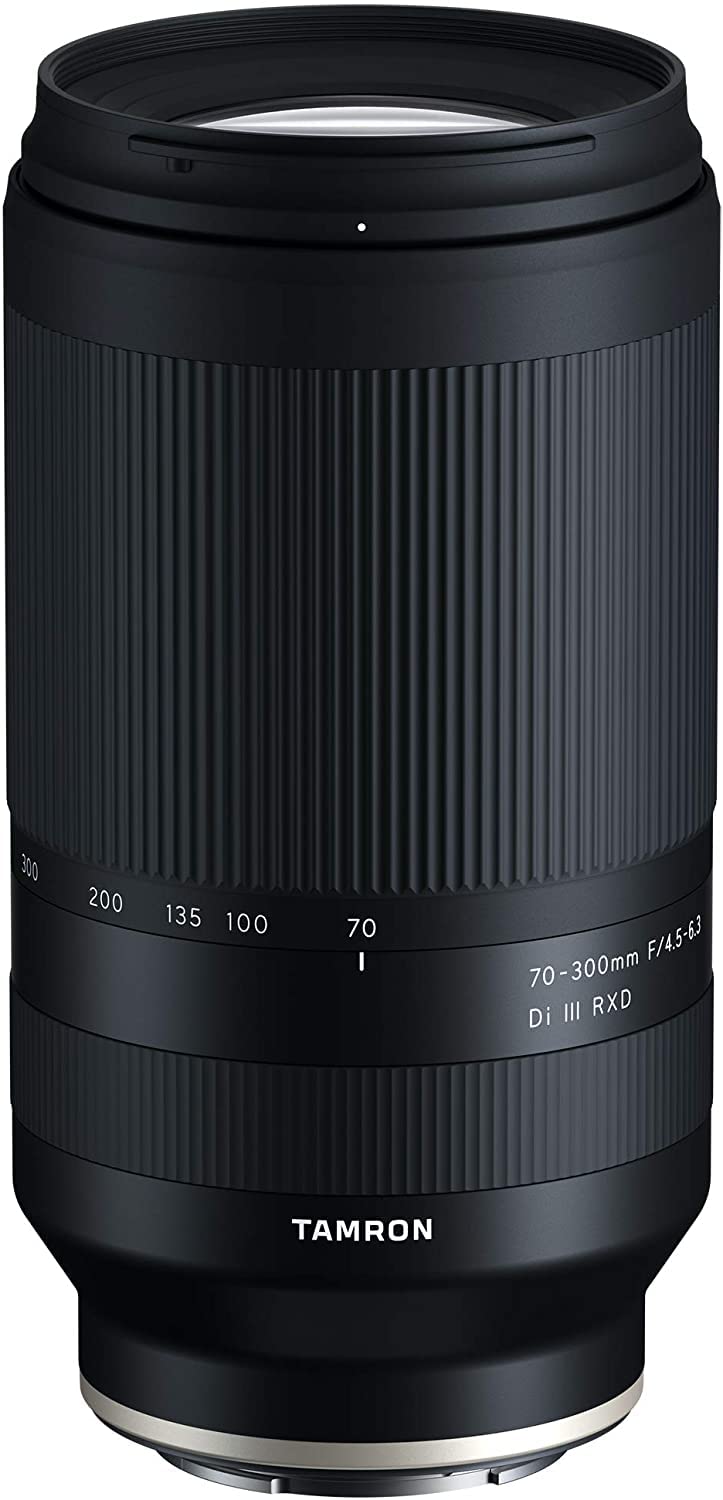
The Tamron 70-300mm delivers lightweight full-frame reach with RXD autofocus at a budget price. Where the f/2.8 standard zoom that tops this list covers events and everyday shooting, this telephoto targets daylight wildlife, sports, and compressed landscapes. It balances on the A7III without needing the chunky build of a pro tele zoom. This is the lens you add when your standard zoom runs out of reach.

The RXD focus motor keeps up with moving outdoor subjects, and the zoom range lets you isolate a background or pull in a distant ridgeline. Detail at 300mm holds up for moon shots and landscape crops, while color and contrast stay neutral enough for simple edits.

The 1.2 lb body is easy to carry all day, and the barrel has a sturdy feel without the bulk of a full-frame sports zoom. Pair it with a standard zoom and you have two-lens coverage for travel without dragging a large camera bag.

This lens is for daylight wildlife and sports shooters who want long reach without a heavy tele zoom. No OSS and f/6.3 at 300mm restrict low-light and handheld telephoto use, so indoor events and dim-light action belong to a constant-aperture standard zoom.

Pros

  • Long reach on a full-frame body for far less than native telephoto zooms.
  • Sharp, pleasing results for the price, with good detail from 70mm to 300mm.
  • Quiet, consistent autofocus that keeps up with moving outdoor subjects.
  • Only 1.2 lb, so it pairs with the A7III without turning travel into a workout.

Cons

  • The lens cap can feel stiff to remove, adding a small delay before a shot.
  • When carried, the zoom barrel can extend on its own, so you may need to reset the focal length.
Our verdict

Budget reach on the A7III is this lens's job; daylight wildlife and distant scenes are its territory, with the top pick covering general use.

Check Latest Price
4

Premium Wide Prime

Sony 35mm f/1.4 GM

93 /100
Studio Score High Confidence

Key details

Weight
1.2 lb
Autofocus
Silent linear motor
Focal Range
35mm
Max Aperture
f/1.4
Check Price on Amazon

The Sony 35mm f/1.4 GM delivers G Master edge-to-edge sharpness and f/1.4 speed in a 1.2-pound body, so the A7III keeps its compact full-frame character without giving up a fast prime. The 11-blade aperture rounds out-of-focus highlights, and the Nano AR II coating controls flare in backlit street scenes. This is a walk-around prime with rendering that suits both street and portrait work.

Autofocus performs without hunting or clicking that can ruin quiet moments. The f/1.4 aperture collects enough light for indoor event shots, and the compact body keeps the A7III balanced on a strap for long street sessions. At 35mm, the lens also flatters environmental portraits by separating the subject from a busy backdrop.

This 35mm GM is aimed at street, travel, and event photographers who treat 35mm as their primary framing on the A7III and want f/1.4 for low-light separation. The premium price is the main boundary; if f/1.4 is not essential, cheaper 35mm lenses can cover the same focal length. Photographers who prefer a 50mm field of view or need zoom range should look outside this prime.

Pros

  • G Master edge-to-edge sharpness keeps detail clean from f/1.4 through the aperture range.
  • Compact 1.2-pound body turns the A7III into a light street setup without losing f/1.4.
  • Quiet, accurate autofocus holds onto moving subjects in event and street work.
  • Eleven rounded blades give out-of-focus backgrounds a smooth, natural falloff.

Cons

  • For handheld video, the absence of lens stabilization means the A7III's IBIS carries the load.
Our verdict

For A7III shooters who want one fast 35mm prime that rides on the camera for street and event work, this lens delivers the look without the bulk.

Check Latest Price

How to Choose

Max Aperture and Low Light

Maximum aperture controls how much light reaches the sensor. An f/1.4 prime gathers two stops more light than an f/2.8 zoom, which is the difference between 1/60s and 1/250s indoors.

The cost is size and price: fast glass needs larger elements, so the lens gets heavier as the aperture grows. Match aperture to the light you actually shoot in.

Autofocus Speed and Noise

AF motor type controls speed and sound. Linear motors such as Tamron VXD are quiet and quick enough for video; older budget motors can be audible and sluggish in low contrast.

The impact shows in weddings or interviews, where re-focus noise is picked up by the mic. Fast AF also improves eye tracking for moving subjects, so silent linear motors are worth the premium for hybrid shooters.

Focal Length and Versatility

Focal length sets field of view and perspective. A 70-300mm at 300mm compresses backgrounds for wildlife and portraits; a 35mm lens shows more context for street and environmental shots.

The trade-off is coverage vs speed: a 28-75mm zoom covers many scenes without swapping lenses, but an f/2.8 zoom is bulkier than a fast prime at one focal length. Choose range based on how you actually fill a card in a day.

Weight and Ergonomics

Weight matters less than balance. A 19-ounce zoom centered over the mount feels lighter than a front-heavy 24-70mm over a long day.

The A7III's compact body amplifies any forward weight, so check overall length as well. On a gimbal, a 6.6-ounce prime is far easier to balance than a 1.9-pound zoom.

Stabilization and IBIS

The A7III IBIS steadies the sensor, not the subject. At 300mm, shake creates larger frame movements, so IBIS alone may not keep long shots sharp; a lens with OSS helps more than any sensor shift.

This is why a 70-300mm lens needs fast shutter speeds or support in dim light. Stabilization never replaces aperture for freezing motion.

Frequently Asked Questions