9 Best Lens for Sony A6000 in 2026: Pick AF That Keeps Up

Find the best lens for Sony A6000 by weighing real-world autofocus reliability and edge sharpness against aperture marketing.

Sony E-mount lens listings tend to lead with the widest aperture number. That number matters for low light, but it does not tell you whether autofocus can track a moving subject or whether edges hold up at f/1.4. Many A6000 owners notice this after buying a lens that looks impressive on paper and then misses focus in the field.

The practical question is what you will actually shoot. A bright prime suits low-light portraits and street work, a stabilized zoom handles wildlife and travel, and a compact wide opens up tight interiors. The best lens for the A6000 is the one whose autofocus behavior and sharpness profile match your subject, not the one with the boldest aperture claim.

The right balance depends on where and what you shoot. A huge aperture with slow autofocus still misses shots; a stabilized zoom with a modest aperture can be the better everyday companion.

1

Best Overall

Sigma 30mm F1.4 DC DN

96 /100
Studio Score High Confidence

Key details

Autofocus
Stepping motor
Focal Length
30mm (45mm eq.)
Max Aperture
f/1.4
Image Stabilization
None
Check Price on Amazon

The Sigma 30mm f/1.4 DC DN creates a 45mm-equivalent normal view with sharpness and bokeh that outclass kit glass on the Sony A6000. At f/1.4 it gathers enough light to keep shutter speeds usable in dim interiors, and the nine-blade rounded aperture makes close-range backgrounds fall off smoothly. Stop down to f/4 or f/5.6 and edge-to-edge detail holds up for landscape work.

Resolution is the lens's strongest suit. Center sharpness is high wide open and becomes consistent across the frame by f/2.8 to f/4, so a single lens can switch between a soft-background portrait and a deep-focus cityscape. The 30mm angle is wider than a classic portrait short-telephoto, which makes it more forgiving indoors while still isolating subjects when you move closer.

Bokeh quality is immediately visible in close-up work. The f/1.4 maximum aperture produces smooth transitions behind a subject, and the 30mm view keeps enough environmental context to avoid the flattened look of longer telephoto primes. This makes it a practical normal lens for street portraits, cafe shots, and evening scenes where you want both subject detail and a sense of place.

The lens balances well on A6000-size bodies, and the 30mm position means you can frame an interior or a head-and-shoulders portrait without constantly stepping forward and backward. It is compact enough to remain mounted for daily carry, and the metal mount adds confidence when swapping lenses in the field. For landscape work, f/5.6 or f/8 pulls the whole scene into focus without the soft corners found on lower-cost lenses.

Portrait shooters get enough separation at f/1.4 for subjects a few feet away, and landscape shooters can stop down without losing the crisp center. The 45mm-equivalent field of view also makes the lens a practical choice for everyday walkaround shooting, where a 35mm lens can feel too wide and a 50mm too tight.

The Sigma 30mm f/1.4 is for A6000 owners who want one fast normal prime for low-light, portrait, and landscape shooting. It is not the lens for all-in-one zoom travel or stabilization-dependent handheld video. Autofocus can hunt on low-contrast subjects, and wide-open shots can show fringing at high-contrast edges; both are manageable when your priority is light collection and sharpness.

Pros

  • Outshines the Sony kit zoom with benchmark image quality at a practical 45mm-equivalent focal length.
  • Sharp across the frame when stopped down; usable wide open for low-light scenes.
  • Covers portrait and landscape duties in one compact prime without frequent lens changes.
  • Delivers strong low-light performance at f/1.4 for indoor and evening shots.
  • Focuses quickly in normal conditions; suitable for static and street subjects.

Cons

  • Wide-open shots can show fringing on bright edges; stopping down or post-correction controls it.
  • Autofocus can hunt or lag behind native Sony primes in low-contrast or quick-action scenes.
Our verdict

The Sigma 30mm f/1.4 gives A6000 owners a single normal prime with low-light capability and crisp images across a wider range of subjects than a typical 50mm. It is right for shooters who prefer a fixed everyday view over zoom flexibility.

Check Latest Price
2

Best Super-Telephoto Zoom

Sony 70-350mm F4.5-6.3 G

91 /100
Studio Score High Confidence

Key details

Autofocus
XD linear motor
Focal Length
70-350mm (105-525mm eq.)
Max Aperture
f/4.5-6.3
Image Stabilization
OSS
Check Price on Amazon

The 70-350mm G gives APS-C shooters genuine super-telephoto reach: 105-525mm equivalent, with G-series sharpness, XD autofocus, and Optical SteadyShot in a handholdable body. The top pick covers everyday framing; this lens answers a different question.

At the wide end the lens resolves landscape details cleanly; at 350mm it still separates a bird's eye from its feathers. The XD linear motor locks on without the hunting that older telephoto zooms show, and the stabilizer keeps handheld shots usable along a trail or sideline. The quiet drive matters when you are close enough to hear the lens working.

This is for A6000-series owners who want serious reach without a full-frame backpack. It demands daylight: the f/6.3 long end needs sun to freeze action, and the barrel extends as you zoom. Those are the accepted tradeoffs for a handholdable super-telephoto. Pair it with the top pick and you have a normal-plus-reach kit that covers most travel and outdoor shooting.

The weight and size make the reach practical for travel: it fits a standard camera bag and stays balanced on a strap. That is the difference between taking a super-telephoto on a day hike and leaving it in the car.

💡 Bring a standard zoom along for anything closer than 70mm.

Pros

  • G-series optics give APS-C telephoto shots a level of detail that budget zooms miss.
  • Sharp, crisp images across the zoom range keep wildlife and sports details intact.
  • Fast, quiet autofocus tracks moving subjects without drawing attention.
  • Light and compact design makes the long reach usable on foot.

Cons

  • Premium price sits above budget telephoto zooms and entry-level E-mount glass.
Our verdict

For daytime wildlife and field sports on an A6000-series body, this lens delivers the reach without the tripod.

Check Latest Price
3

Best All-In-One Travel Zoom

Tamron 28-200mm F2.8-5.6

90 /100
Studio Score High Confidence

Key details

Autofocus
RXD stepping motor
Focal Length
28-200mm (42-300mm eq.)
Max Aperture
f/2.8-5.6
Image Stabilization
None
Check Price on Amazon

The Tamron 28-200mm f/2.8-5.6 covers a 42-300mm equivalent range on the Sony A6000, starting at f/2.8 and keeping image quality across the zoom span. That gives the A6000 traveler one compact barrel for wide scenes through distant subjects. The f/2.8 opening at 28mm is wider than typical all-in-one zooms, which helps when the light drops. The 70-350mm G in this lineup reaches further, but it cannot match the Tamron's broad wide end or f/2.8 opening.

Image quality holds together better than a typical all-in-one zoom, and the compact build keeps a hike bag light. The lens rewards deliberate shooting more than spray-and-pray, and its sharpness across the zoom range makes it a practical single-lens kit for daylight travel. Event shooters who switch between group shots and close-up candid framing can do it without swapping glass.

Best for the A6000 owner who wants one lens for travel, events, or hiking and prefers zoom flexibility over carrying multiple primes. Autofocus can hunt in low light on difficult subjects, and the long end reaches f/5.6, so low-light indoor sports fall outside its role; this is a daylight and brighter-light companion.

Pros

  • Wide-to-telephoto coverage fits in one compact barrel.
  • Sharp across the entire zoom range for a superzoom.
  • All-rounder image quality holds up across travel situations.
  • Replaces several lenses for travel, cutting bag weight.

Cons

  • No built-in image stabilization, so on the A6000 you'll need steadier handholding at slower shutter speeds.
Our verdict

A premium-priced all-in-one zoom that fits the A6000 travel kit when one lens and a daylight-ready compromise are the priority.

Check Latest Price
4

Best Budget Portrait Prime

Sony FE 50mm F1.8

93 /100
Studio Score High Confidence

Key details

Autofocus
DC motor, audible
Focal Length
50mm (75mm eq.)
Max Aperture
f/1.8
Image Stabilization
None
Check Price on Amazon

The Sony FE 50mm f/1.8 gives the A6000 a 75mm-equivalent portrait prime with strong bokeh and a light barrel, where the top pick's 45mm-equivalent view suits a wider walkaround range.

Sharpness is strongest in the f/4-f/8 range, which lines up with traditional portrait framing, and the compact body stays easy to carry or gimbal-mounted. The f/1.8 aperture adds background separation without adding bulk, so this lens earns its place as a budget portrait option. The middle apertures also keep enough depth of field for sharp eye-to-ear detail in close portraits.

Portrait-focused A6000 owners on a budget are the right audience, and the bokeh plus travel-friendly weight make it an easy single prime to grab. Video shooters and action photographers may find the motor noise and slower AF a mismatch in quiet scenes or low-light tracking, so those use cases sit outside this lens's strengths.

At a mid-range price, this lens concentrates its cost on optics and portability rather than AF innovation. The 75mm equivalent gives a portrait-friendly angle, and the f/1.8 aperture controls backgrounds, which is what portrait-focused A6000 owners want when they move beyond kit glass.

Pros

  • Sharpness through f/4-f/8 gives portrait shots a clean, defined look without stopping down to extremes.
  • The f/1.8 aperture delivers background separation at a price that suits A6000 owners moving beyond kit glass.
  • Light enough and small enough to ride on a gimbal or stay in a travel bag without adding weight.
  • Handles portraits and everyday travel framing, so it can serve as a go-to single prime for mixed shooting.

Cons

  • In quiet rooms or during video recording, the focus motor may be audible.
  • Low-light or fast-moving subjects may outpace the autofocus system, which is slower than newer Sony primes.
Our verdict

Portrait-first A6000 owners get a compact 75mm-equivalent f/1.8 with strong sharpness and bokeh at a budget-friendly price; video and fast-action work is better served by a newer prime.

Check Latest Price
5

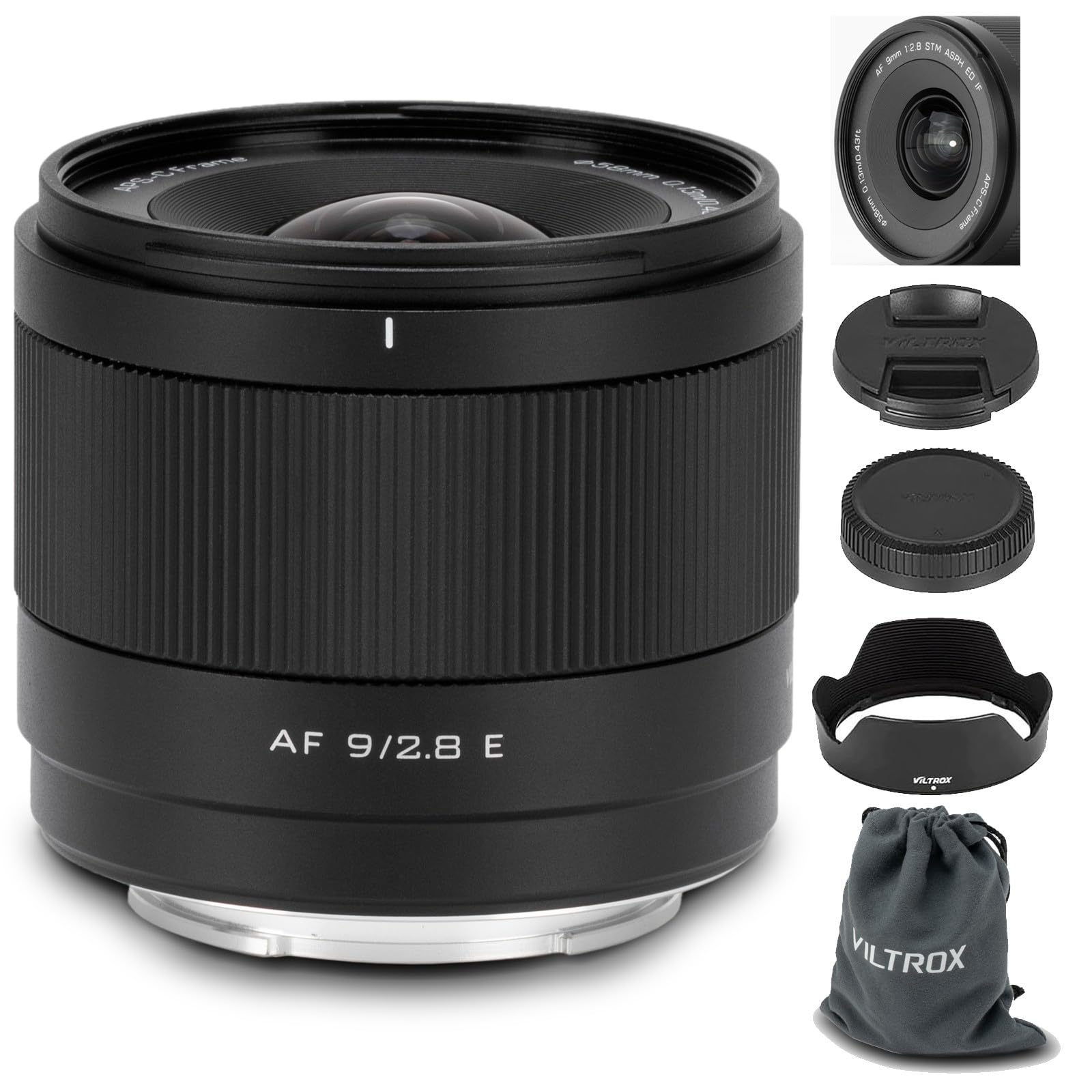
Best Ultra-Wide for Vlogging & Interiors

Viltrox 9mm F2.8

90 /100
Studio Score High Confidence

Key details

Autofocus
AF
Focal Length
9mm (13.5mm eq.)
Max Aperture
f/2.8
Image Stabilization
None
Check Price on Amazon

The Viltrox 9mm f/2.8 hands the A6000 a 113.8-degree view with autofocus in a compact barrel that barely changes the camera's carry profile. The 0.13m minimum focus lets you get close to a subject while the wide angle still captures the room around it. That combination makes it a specialist framing tool rather than an everyday normal, which separates it from the slimmer wide prime in this set.

Content creators who need a selfie-friendly wide shot, real-estate shooters working in tight rooms, and travelers who want an ultra-wide without much added weight are the right audience. Ultra-wide distortion and vignetting can show up before correction, especially along straight lines near the edges, so shooters who need clean lines straight out of camera should keep that in mind.

Autofocus is quick enough for everyday shooting, and the lens holds sharpness across the frame at f/2.8. Build quality feels polished for the entry-level price, which makes it easy to leave mounted for gimbal work or walkaround video.

For indoor real-estate work, the f/2.8 aperture is practical because the wide angle lets you shoot from tight positions without backing up. It is not a low-light specialist, but the field of view keeps subjects in context while the compact design keeps the setup light.

💡 Use lens-profile corrections when straight lines or architecture are part of the scene.

Pros

  • Sharp, detailed images that hold up well at this price.
  • Compact, lightweight barrel that stays comfortable for all-day carry.
  • Autofocus keeps up with everyday stills and video needs.
  • Polished build feel for an entry-level ultra-wide.

Cons

  • Ultra-wide distortion and vignetting can appear in unprocessed frames, especially along edge straight lines.
Our verdict

A6000 owners who want a true wide angle without stepping up in price will get the field of view, autofocus, and compact build they need from the 9mm f/2.8.

Check Latest Price
6

Best Compact Wide Prime

Viltrox 20mm F2.8 FE

90 /100
Studio Score High Confidence

Key details

Autofocus
AF
Focal Length
20mm (30mm eq.)
Max Aperture
f/2.8
Image Stabilization
None
Check Price on Amazon

The Viltrox 20mm f/2.8 FE makes a 30mm-equivalent wide view effortless on the A6000: the lens weighs 157g, focuses automatically, and covers a full-frame image circle in case you move up to an E-mount body. Compared with the top pick's 45mm-equivalent f/1.4, this lens trades light gathering for a wider frame and a much lighter barrel. The compact body also makes it the kind of lens you forget is mounted after a full day of walking.

Sharpness holds up through the center at f/2.8, and the color profile comes out warm without looking cooked. The f/2.8 maximum aperture is not a low-light specialist, but the lens handles daylight street frames, indoor vlogs with decent ambient light, and travel scenes without adding bulk to the camera. The short barrel keeps the camera balanced on the A6000, so framing tight lanes or building edges stays comfortable.

This is the pick for Sony A6000 owners who want one lightweight wide prime for street, travel, and handheld vlogging. Autofocus is generally quick in normal light, but it can be inconsistent at times; the barrel also lacks an AF/MF switch, so mode changes live in the camera menu. Fast-action tracking is outside the job description.

Pros

  • Budget-friendly full-frame wide prime with 30mm-equivalent framing on A6000.
  • Sharp center and pleasant color for a lens at this price.
  • 157g weight and small barrel make it easy to leave mounted every day.

Cons

  • The barrel has no AF/MF switch, so focus-mode changes require a trip into the camera menu.
  • In low-contrast or fast-moving scenes, autofocus can hesitate and miss the intended focus point.
Our verdict

A 157g wide prime that gives the A6000 a 30mm-equivalent walking-around lens at a budget-friendly price, with optical quality that makes image excuses unnecessary.

Check Latest Price
7

Budget Low-Light

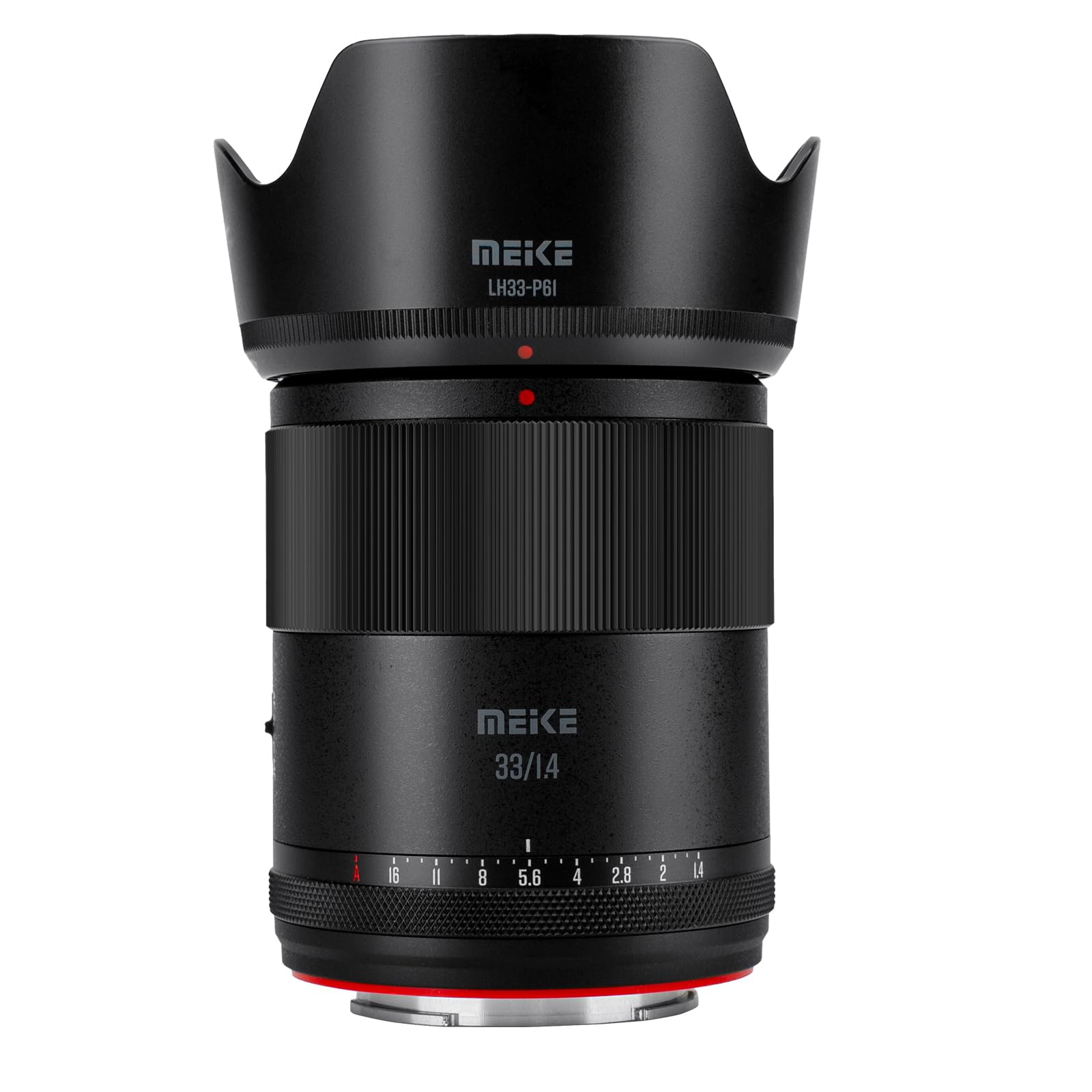
Meike 33mm F1.4 AF

82 /100
Studio Score Strong Evidence

Key details

Autofocus
STM stepping motor
Focal Length
33mm (49.5mm eq.)
Max Aperture
f/1.4
Image Stabilization
None
Check Price on Amazon

At f/1.4 the Meike 33mm is genuinely sharp in the center and gets sharper stopped down, with color and autofocus that suit portrait and street work on the A6000. The reason it doesn't top this roundup is the housing: a plastic barrel with no weather sealing. That is a reasonable trade for a budget price if you keep the lens in a jacket pocket or bag, but it is not the first choice for a rain-exposed outdoor kit.

Pros

  • Impressive image quality and color for the price.
  • Fast and smooth autofocus for street and portrait shots.
  • Sharp wide open, with more sharpness once stopped down.

Cons

  • Plastic barrel means careful handling rather than hard outdoor use.
  • No weather sealing; rain and heavy mist call for a protected bag.
Our verdict

For A6000 owners after a fast, compact AF prime on a budget, the Meike delivers the low-light look — but keep it out of the rain.

Check Latest Price
8

Manual Street

TTArtisan 25mm F2

84 /100
Studio Score Strong Evidence

Key details

Autofocus
Manual focus
Focal Length
25mm (37.5mm eq.)
Max Aperture
f/2
Image Stabilization
None
Check Price on Amazon

TTArtisan’s 25mm f/2 gives Sony A6000 owners a compact 37mm-equivalent prime that is sharp in the center and bright enough for street use after dark. The metal barrel and knurled aperture ring feel substantial without adding weight, and the optical quality is well above the price. Focus is on you, which suits manual-focus learners and photographers who prefer a tactile workflow. Manual focus is the main reason it won’t unseat autofocus primes for general use. For A6000 owners who want a compact manual prime for street and walkaround work, it fits well and delivers a lot for the money.

Pros

  • Compact 37mm-equivalent prime that is sharp in the center and bright at f/2.
  • Metal barrel and tactile aperture ring make manual focusing a deliberate process.
  • Budget-friendly price with solid overall image quality makes it an easy value pick.

Cons

  • Vignetting and chromatic aberration appear when shooting wide open into backlit scenes.
  • No zoom flexibility for run-and-gun video or rapid framing changes.
Our verdict

For A6000 owners who already have an everyday zoom and want a small, sharp prime for street or low-light walking, the TTArtisan 25mm f/2 is a compact match.

Check Latest Price
9

Creative Bokeh

Fotasy 35mm F1.6 MF

83 /100
Studio Score Strong Evidence

Key details

Autofocus
Manual focus
Focal Length
35mm (52.5mm eq.)
Max Aperture
f/1.6
Image Stabilization
None
Check Price on Amazon

The Fotasy 35mm f/1.6 uses a 12-blade aperture to create a dreamy, character-rich look on Sony E bodies at an entry-level price. That look works for portraits, moody video, and creative experiments, and f/1.6 remains genuinely useful in low light on the A6000. The tradeoff is clear: this is a creative specialist rather than an all-around lens. An A6000 owner shopping for one general-purpose lens should pick an autofocus prime; as a second artistic optic, the Fotasy adds a look that standard kit zooms cannot match.

Pros

  • A budget-friendly E-mount prime that brings f/1.6 light collection without a premium price.
  • Twelve-blade aperture creates dreamy backgrounds that suit portraits and cinematic video.
  • F/1.6 keeps low-light shooting practical without moving up a price class.

Cons

  • Wide-open corners and edges are soft; center sharpness can vary.
  • Manual focus ring stiffness can vary between units; precise focusing takes patience.
Our verdict

For creative portrait and video projects that want dreamy bokeh, this entry-level prime fits comfortably beside an autofocus everyday lens.

Check Latest Price

How to Choose

Aperture and Low Light

Maximum aperture controls how much light reaches the sensor. On APS-C, f/1.4 lets in four times as much light as f/2.8, which can be the difference between a usable handheld frame and a blurry one in a dim room. Wider apertures also make focus errors more visible, so a lens that hunts or renders soft wide open undercuts the low-light advantage.

Focal Length and Field of View

Every E-mount lens on the A6000 produces a 1.5x narrower field of view than its printed focal length. A 30mm lens behaves like a 45mm normal view, a 50mm becomes a 75mm portrait lens, and a 25mm gives a 37.5mm street angle. Choose focal length for the framing you want, not the number on the barrel.

Autofocus Speed and Noise

The A6000's hybrid autofocus is only as good as the motor inside the lens. Lenses with linear or stepping motors focus quickly and quietly, while older DC motors lag and produce audible clicks that end up on video audio tracks. If you shoot moving subjects or record video, prioritize lens motor type over aperture marketing.

Image Stabilization

The A6000 body has no sensor-shift stabilization. Without OSS in the lens, you are relying on shutter speed and handholding technique; at telephoto reach, camera shake becomes more visible at slower shutter speeds. Stabilized lenses allow sharper handheld shots at longer focal lengths, especially for wildlife and travel.

Size and Weight

APS-C is only convenient if the lens stays small enough to make the A6000 easy to carry. A heavy zoom can turn a compact body into a front-heavy rig that is tiring to hold and harder to keep still. For walkaround use, weight is as important as focal length; for tripod or bag work, it matters less.

Frequently Asked Questions