5 Best Anamorphic Lens of 2026: Pick the Squeeze That Fits Your Rig

The best anamorphic lens depends on your camera, squeeze factor, and workflow — this guide matches each option to the right shooter.

Anamorphic video looks simple in film stills: wide frame, blue horizontal streak, oval bokeh. In practice, the lens only delivers half of that look. The rest comes from the camera mount, the squeeze ratio, and whether your workflow supports de-squeezing in-camera or in post.

At the entry-level end of the market, the choice is between a true anamorphic prime and a clip-on attachment. A dedicated prime gives you real 1.33x squeeze and manual aperture control, but it locks you to one camera platform. A clip-on is cheaper and more portable, but the cinematic effect can be faint and often requires a specific filming app.

The practical consequence: a 1.2x or 1.33x squeeze is not a magic wand. It needs direct light for blue streaks, a stable rig for the wide frame, and a realistic expectation of how subtle the effect can be. Matching the lens to your camera system matters more than chasing the strongest flare.

1

Best Overall

Sirui 50mm f/1.8 E Mount

86 /100
Studio Score Strong Evidence

Key details

Max Aperture
f/1.8
Squeeze Factor
1.33x, 2.4:1
Workflow Needs
Manual focus, post de-squeeze
Mount Compatibility
Sony E
Check Price on Amazon

The Sirui 50mm f/1.8 is a dedicated 1.33x anamorphic prime for Sony E APS-C, and the f/1.8 aperture is what separates it from the wider f/2.8 anamorphic in the same lineup. It produces a 2.4:1 widescreen frame with a real squeeze, not a clip-on effect. The fast stop matters when you are shooting at night or trying to keep ISO down, and the all-metal barrel gives the lens a rigid feel without needing an adapter stack. With a 50mm APS-C focal length, this reads as a normal-to-short-telephoto lens, which suits a single shooter who wants an anamorphic character on a standard cinematic focal length.

Practical lights and reflections bring out blue anamorphic streaks, while the optics stay sharp enough that the anamorphic look comes from flares and oval bokeh instead of softness. The squeeze takes a moment to get used to: footage previews vertically stretched until you feed it to a monitor with 1.33x de-squeeze or add that step in post. That is standard for real anamorphic work, so it does not feel like a penalty. The f/1.8 maximum aperture also keeps handheld evening shots at a usable shutter speed while holding ISO in check.

This is for Sony E APS-C shooters who want a fast normal-FOV anamorphic at an entry-level price and are planning narrative close-ups or low-light scenes. The 50mm APS-C field of view is relatively tight for interior or gimbal work, and the 560g all-metal body is front-heavy on small mirrorless rigs. Neither is a defect if your shooting distance is under control and your rig has support.

Compared with the wider f/2.8 anamorphic in the same tier, this lens trades a roomy frame for one extra stop of light. For interviews or scripted scenes where the camera distance is set in advance, that trade favors the 50mm; for handheld walk-and-talk or small rooms, the wide sibling is the better fit. The build quality and image character are strong enough that this is the anamorphic prime to try first in the entry tier.

💡 Leave room around the 0.85m minimum focus when planning close shots, especially with a focus pull.

Pros

  • True 1.33x anamorphic prime delivers 2.4:1 widescreen framing from a Sony E APS-C body.
  • f/1.8 aperture keeps low-light shots usable and is the fastest stop in this tier.
  • Sharp optics with controlled oval bokeh and blue flares create a clean cinematic image.
  • All-metal build feels solid on a support rig and should handle regular field use.

Cons

  • The 560g all-metal barrel can shift balance forward on small mirrorless bodies and gimbals.
  • The 50mm APS-C field of view is tight for interior interviews and wide gimbal moves.
Our verdict

Sony E APS-C shooters who want anamorphic character and low-light speed get it here; the 24mm sibling covers wider spaces.

Check Latest Price
2

Best Wide-Angle Dedicated Lens

Sirui 24mm f/2.8 E Mount

84 /100
Studio Score Strong Evidence

Key details

Max Aperture
f/2.8
Squeeze Factor
1.33x, 2.4:1
Workflow Needs
Manual focus, post de-squeeze
Mount Compatibility
Sony E
Check Price on Amazon

The 24mm f/2.8 is the wide option in Sirui's E-mount anamorphic pair, with a true 1.33x squeeze and 0.6m minimum focus. That combination opens up interior and close-focus storytelling that the 50mm top pick cannot frame, making it the better choice when the scene is closer or the rig is on a gimbal.

Sony APS-C filmmakers who want a cinematic 2.4:1 frame from a compact gimbal or in tight rooms will get the most from this lens. The f/2.8 maximum aperture is the tradeoff against the faster 50mm sibling, so low-light work needs added source light or a higher ISO. The mount ring can also feel rough when attaching on some bodies; fitting it slowly avoids any grinding sensation. For the intended interior and gimbal use, the wide frame and close focus matter more than either limitation.

Image character is the selling point: the squeeze delivers the expected anamorphic widescreen look without a clip-on adapter, and manual focus turns smoothly enough for pull-focus work. The optical quality holds up in mixed lighting, and the aperture ring stays consistent shot to shot. At this entry price, the lens gives budget-conscious creators real anamorphic glass rather than a modified attachment.

Pros

  • Wide 24mm frame plus 0.6m close focus fits interiors and gimbal moves the 50mm can't cover.
  • Optical quality holds up in mixed light, with good definition for narrative work.
  • Manual focus and aperture rings move with a smooth, consistent feel for pull-focus work.
  • Entry-level price buys true 1.33x anamorphic glass, not a clip-on adapter.

Cons

  • Mount ring can feel rough or grind when attaching to some bodies; fitting it slowly avoids the grinding sensation.
  • f/2.8 maximum aperture needs added light or higher ISO in dim scenes compared with the faster 50mm sibling.
Our verdict

For Sony APS-C filmmakers who want a wide 2.4:1 frame from a gimbal or in tight interiors, this 24mm prime is the budget-conscious route into true anamorphic glass.

Check Latest Price
3

Best for DJI Osmo Pocket 3

K&F 1.2x Osmo Pocket Lens

82 /100
Studio Score Strong Evidence

Key details

Max Aperture
—
Squeeze Factor
1.2x
Workflow Needs
In-camera de-squeeze
Mount Compatibility
Osmo Pocket 3/4
Check Price on Amazon

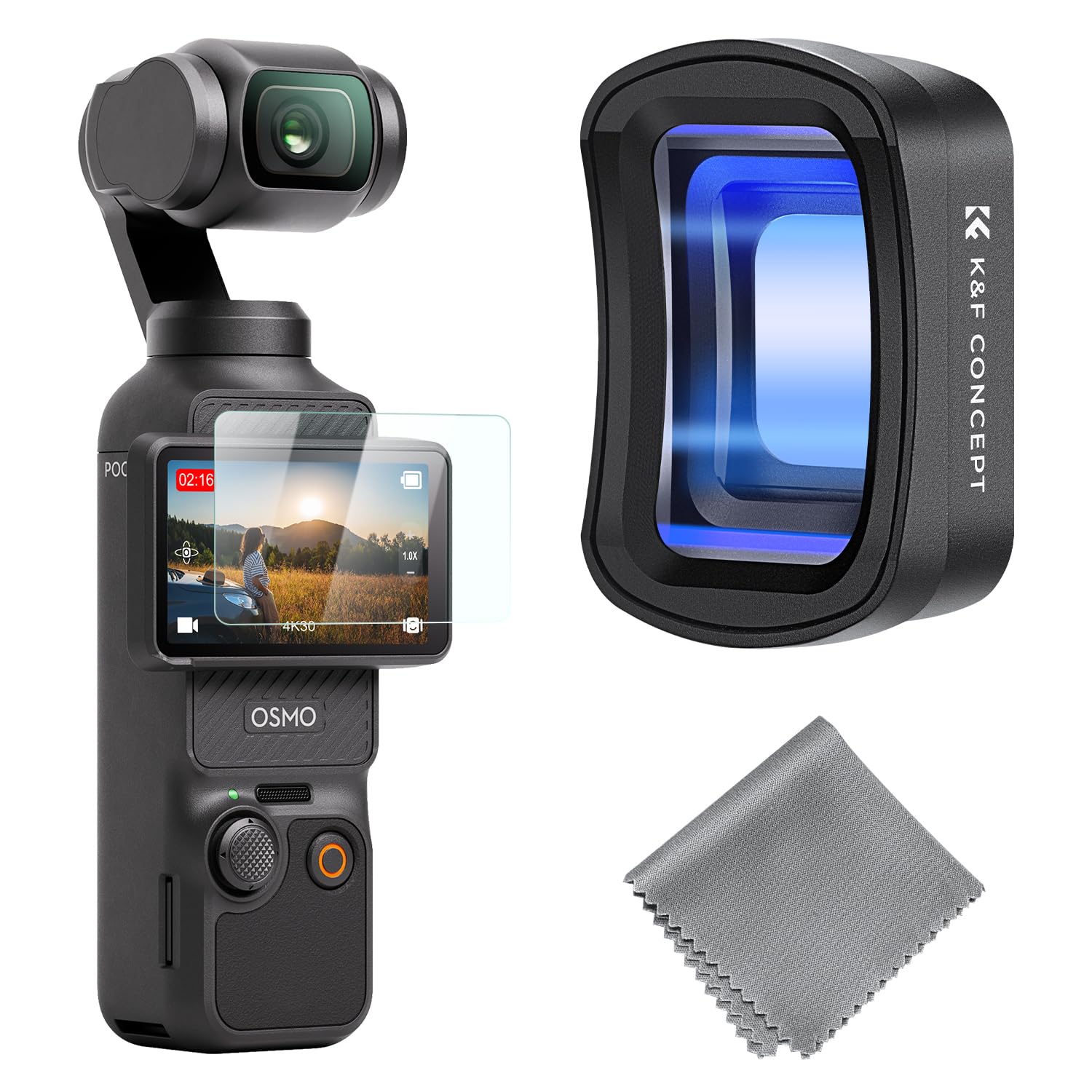
The K&F CONCEPT 1.2x is a magnetic clamp-on optic for the DJI Osmo Pocket 3 and 4 that adds anamorphic widescreen framing from a 20g package. It accepts VND and diffusion filters in the stack, so it works as a practical front-end addition rather than a one-time novelty. The magnetic attachment snaps into place without tools and makes it easy to switch between the bare camera and the lens-attached setup.

Handheld shooting remains balanced because the extra weight is negligible, and the magnetic mount keeps swaps quick. The 1.2x squeeze delivers a subtle widening of the frame; the effect is closer to a gentle cinematic crop than the dramatic 2.4:1 look produced by stronger 1.33x or 1.55x attachments. On the Pocket 3, normal gimbal moves stay smooth while the lens is attached.

This is for Osmo Pocket 3/4 creators who want an inexpensive way to try anamorphic framing before buying a true interchangeable-lens prime. The 1.2x effect is easy to manage on a handheld gimbal, but once the lens is mounted the camera no longer fits its original case, so shooters need to store the optic separately.

Build quality feels solid for a budget-friendly accessory, and the AGC glass with 28-layer multi-coating keeps the optics tidy without adding weight. That makes it an easy addition to a travel kit that already carries filters.

Pros

  • Magnetic quick-attach mount and 20g build keep handheld gimbal work balanced.
  • Adds a cinematic widescreen anamorphic frame to Osmo Pocket footage.
  • Stacks cleanly with VND and diffusion filters for flexible exposure.

Cons

  • Compatibility is limited to DJI Osmo Pocket 3/4, so interchangeable-lens shooters need a different anamorphic.
  • Blue streak flare can be absent in some lighting and overpowering in others.
Our verdict

A cost-effective way to get gentle anamorphic framing on an Osmo Pocket without committing to an interchangeable-lens prime, as long as the flare remains a variable.

Check Latest Price
4

Best for GoPro HERO13

GoPro Anamorphic HERO13

88 /100
Studio Score Strong Evidence

Key details

Max Aperture
f/2.5
Squeeze Factor
21:9
Workflow Needs
In-camera de-squeeze
Mount Compatibility
GoPro HERO13
Check Price on Amazon

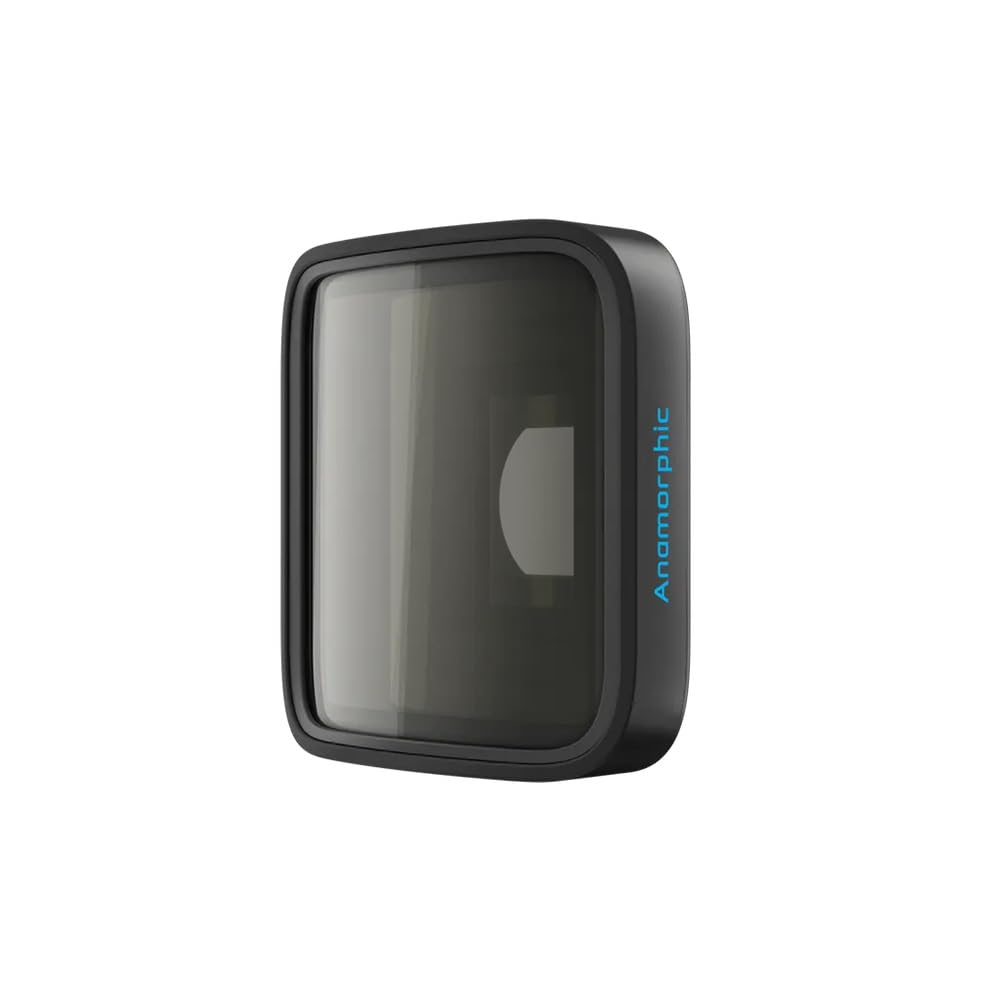
The GoPro Anamorphic Lens Mod is the dedicated anamorphic attachment for the HERO13 Black in this set, outputting an ultra-wide 21:9 frame before the footage ever leaves the camera. In-camera de-squeeze means the recorded clip already has the widescreen shape that other anamorphic setups only show after a separate conversion step. The output fills ultrawide displays without black bars.

This lens is for HERO13 Black owners who want anamorphic capture as part of the camera's official workflow rather than a phone clip or bolted-on cinema lens. It is limited to HERO13 Black, and some high-vibration shots still need a gimbal; gimbal-based adventure and travel videographers will get the steadiest results. Older GoPro models and interchangeable-lens cameras are outside the supported list. The target shooter is already invested in the HERO13 system.

HyperSmooth stays active with the lens attached, so the anamorphic frame and the camera's stabilization work together. That keeps gimbal use comfortable without turning the lens into a specialized cinema rig. Unlike the slimmer magnetic accessory for the pocket gimbal in this set, the GoPro mod uses the HERO13's own capture path.

Pros

  • In-camera de-squeeze delivers a finished 21:9 frame straight from the camera.
  • HyperSmooth remains active with the lens installed.
  • GoPro-native mount suits travel and gimbal kits.

Cons

  • Premium-priced for a single-purpose action-cam accessory.
  • The fixed f/2.5 aperture leaves less low-light headroom, so bright scenes are the safer setting.
Our verdict

For HERO13 Black owners who accept the single-camera constraint, this is the most direct route to a de-squeezed 21:9 anamorphic frame.

Check Latest Price
5

Best for Dramatic Phone Anamorphic

USKEYVISION 1.55x Phone Lens

76 /100
Studio Score Established

Key details

Max Aperture
—
Squeeze Factor
1.55x, 2.76:1
Workflow Needs
Filmic Pro required
Mount Compatibility
iPhone, Android
Check Price on Amazon

The 1.55x squeeze factor is the headline: it produces a 2.76:1 ultra-widescreen frame, a stronger anamorphic look than the 1.33x smartphone clip in this set. Universal and metal clips come in the box, so the lens works as a dedicated phone anamorphic attachment rather than a multi-purpose accessory kit. The storage case and cleaning cloth are practical extras for a lens that travels in a camera bag.

The two mounting options cover different setups: the universal clip gets the lens onto a phone quickly, while the metal clip gives a more rigid hold for controlled shots. The optic stays small enough that the phone remains manageable, and the wider frame is the main adjustment when composing on a phone screen. Both mounts keep the rig suitable for handheld or gimbal work.

This is for smartphone filmmakers who want the boldest anamorphic frame in this budget tier and already shoot in Filmic Pro, FotorGear, or ProMovie. Correct de-squeeze requires one of those apps, and Android support depends on the phone's rear camera placement; a centered camera module may leave the clip misaligned. iPhone 15/14/13 owners get the smoothest fit.

Pros

  • 1.55x squeeze delivers a 2.76:1 ultra-widescreen frame, the strongest anamorphic character in this set.
  • Universal and metal clips are included for iPhone 15/14/13 and compatible Android handsets.
  • Storage case and cleaning cloth protect the optic between shoots.

Cons

  • Stock camera apps leave a vertically stretched image; a separate de-squeeze app must handle the frame.
  • Android phones with a centered rear camera may not align with the clips, so compatibility depends on the phone.
Our verdict

This is the dedicated clip for anyone who wants the strongest 2.76:1 phone anamorphic frame in this set without leaving the budget tier.

Check Latest Price

How to Choose

Squeeze Factor and Aspect Ratio

Squeeze factor is the amount the editor stretches an image. A 1.33x lens turns a 16:9 frame into 2.4:1; a 1.55x phone lens can reach 2.76:1. The wider ratio looks more anamorphic only when footage is actually de-squeezed.

The effect still depends on lighting and focus distance. Blue streaks appear with bright light sources; flat interior shots can look like a simple wide crop. Choose a squeeze factor for the finals you want, not the label.

Camera Mount Compatibility

Dedicated anamorphic primes are built for one flange distance. A Sony E lens will not adapt cleanly to Micro Four Thirds, and a GoPro or DJI accessory will not work on an ILC.

So the mount is the first filter. If you shoot several systems, decide which camera carries the lens most often; clip-on hardware is also system-specific.

Physical fit matters after that. A lens attached to an Osmo Pocket or HERO13 can block cases or throw off gimbal balance, so check clearance before building a kit.

Aperture and Low-Light Performance

Maximum aperture controls light transmission, and anamorphic elements reduce it. An f/1.8 prime can shoot dim interiors where an f/2.8 lens needs ISO or extra lighting.

Faster glass also creates stronger subject separation, which makes the anamorphic frame feel intentional. Indoor shooters should favor f/1.8 over a wider field of view.

Minimum Focus and Manual Focus Feel

Minimum focus distance decides how close you can get before focus blurs. A 0.6m close focus handles a tabletop shot; 0.85m pushes you back and changes interior framing.

Budget anamorphics also require a manual focus habit. Focus rings vary, so confirm the near limit before a shoot. On a gimbal, a front-heavy lens may need rebalancing.

Workflow Requirements

Every anamorphic image needs a de-squeeze step. The GoPro mod does it in-camera, phone lenses need an app, and dedicated primes are usually stretched in the edit.

Choose the workflow you will follow. If you edit on a phone, in-camera de-squeeze matters more than a stronger ratio. If you already edit, post-production de-squeeze is a normal two-step process.

Frequently Asked Questions