7 Best Lens for Sony A6700 in 2026: Compact Picks That Fit Any Bag

The best lens for Sony A6700 depends on your light, reach, and carry needs; match each pick to the shooting style it suits.

The A6700's biggest strength is its compact body, and the right lens keeps it that way. The kit zoom often forces a choice between low-light capability and reach: variable apertures get you range, while fast primes give you speed but little flexibility. Most shooters end up with one all-round zoom, one prime, or both depending on how they actually carry the camera.

That first lens decision comes down to how you trade aperture against zoom range. A constant f/2.8 zoom suits indoor and evening work, while an 18-300mm superzoom covers daylight travel but loses speed at the long end. A compact f/1.7 prime offers low-light breathing room in a tiny body but fixes you to one angle of view. The best choice depends on whether you prioritize reach, speed, or everyday portability.

The A6700's sensor-shift IBIS also changes the stabilization math: lenses without OSS can still produce sharp handheld shots, so weight and price matter more than they did on earlier E-mount bodies. Buy for the light you shoot in and the weight you are willing to carry.

1

Best Overall

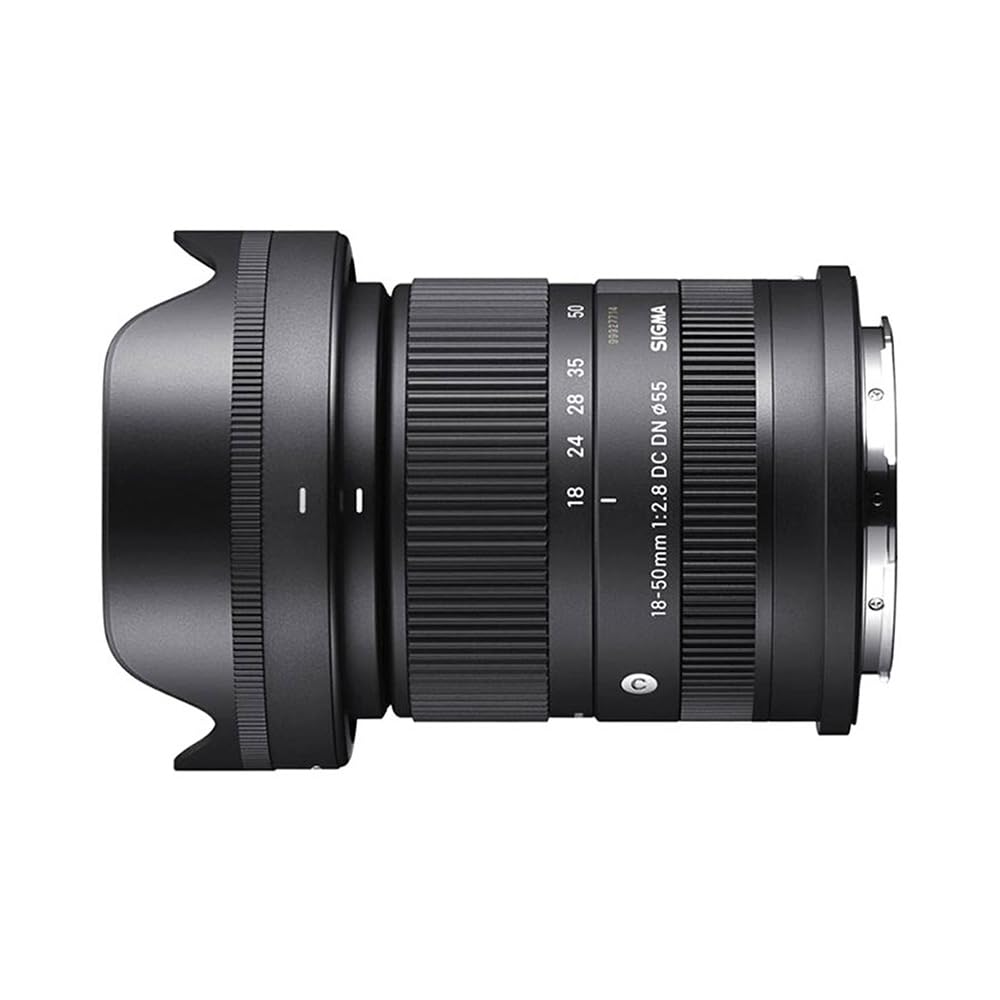
Sigma 18-50mm f/2.8

93 /100
Studio Score High Confidence

Key details

Focal Length
18-50mm standard zoom
Max Aperture
f/2.8 constant
Size & Weight
290 g
Stabilization
None (IBIS only)
Check Price on Amazon

The Sigma 18-50mm f/2.8 packs a constant f/2.8 aperture and a practical 18-50mm range into a 290 g body that balances on the A6700 without a heavy front end. Sharpness holds up across the frame for a standard zoom, and the 55mm filter thread keeps filters small enough to travel with. It delivers much of the premium APS-C zoom's real-world performance at a noticeably lower price, anchoring the value conversation for this camera. The lens does not try to cover every situation; it covers the situations an A6700 owner faces on a normal outing. It is the lens to have on when leaving the house with the A6700 and no list of planned shots.

The constant f/2.8 is the main reason to keep this lens on the camera. Exposure stays consistent when you zoom from 18mm to 50mm, and the extra light lets the A6700 hold a faster shutter speed in dim interiors. A compact barrel this light also makes it easy to carry a prime or a telephoto in the same bag without turning the bag into a backpack.

Handheld use on the A6700 is where the weight shows up: the lens does not pull the camera downward on a strap, so long days out are comfortable. There is no telephoto reach beyond 50mm, which means distant wildlife and field sports belong to an 18-300mm travel zoom. For everyday street and travel, the range covers the frames that normally end up in a photo album. It is a range that suits a typical photo walk, not a safari.

The core buyer is an A6700 owner who wants one compact standard zoom for everyday and travel photography and does not need GM-level spending. It relies on the A6700's IBIS rather than optical stabilization, which covers handheld stills and casual videos; tripod and gimbal users won't notice the difference. A6700 owners who already have a wide prime or a telephoto zoom will find this lens slots into the middle of the kit without duplicating their existing coverage.

Compared with the premium APS-C zoom, the Sigma gives up some edge sharpness and a wider 16mm start, but it is far lighter and costs less. That tradeoff suits a travel-first kit: you save money and weight, then add a prime or telephoto when the need is clearer. The difference in edge detail rarely matters in prints or social posting, while the size difference shows up on every outing.

Hybrid shooters can treat the 18-50mm as a video walkaround without pulling the camera off the gimbal. The 55mm filter thread takes standard ND filters without step-up rings, so outdoor exposure control stays simple. The lens is no bigger than a kit zoom, but it keeps f/2.8 across the whole travel range. That makes it easier to keep exposure consistent when moving between sun and shade.

Pros

  • Constant f/2.8 in a 290 g body that balances on the A6700 without a heavy front end.
  • Center sharpness and overall image quality hold up across the frame for a standard zoom.
  • Budget-friendly for a constant-aperture zoom, leaving room in the kit for a prime or telephoto later.
  • Small 55mm filter thread accepts affordable filters without step-up rings.
  • Light enough to leave mounted for daily carry and travel.

Cons

  • Autofocus can hesitate or hunt in some situations, so fast-moving subjects may need AF-C.
Our verdict

For A6700 owners who want compact f/2.8 zoom coverage without the premium APS-C zoom price, the Sigma is the practical standard.

Check Latest Price
2

Best All-In-One Travel Zoom

Tamron 18-300mm f/3.5-6.3

87 /100
Studio Score Strong Evidence

Key details

Focal Length
18-300mm superzoom
Max Aperture
f/3.5-6.3
Size & Weight
21.9 oz
Stabilization
VC optical
Check Price on Amazon

The 18-300mm Tamron is the only lens in this group that can frame a city street and then pull in distant wildlife without a lens change. VXD autofocus and VC optical stabilization make the long end practical in daylight, and the moisture-resistant build adds confidence on exposed trails.

Autofocus is quick and quiet, so moving subjects like birds and cyclists hold focus. Handheld shots at 300mm remain steady thanks to VC, and the 21.9 oz weight rides well on a daypack strap. In daylight, the lens delivers consistent detail across the range, which is enough for prints and social sharing without a second lens.

This is the right pick for the daytime traveler or hiker who wants one lens for cities, landscapes, and wildlife without carrying multiple primes or zooms. It trades a compact everyday form for reach, which matches a journey-based style rather than a minimal street-kit approach. If the plan is to be back before sunset, the Tamron removes the decision about which lens to carry.

Variable aperture limits low-light performance, and zoom ring smoothness can vary by copy. For the clear daytime traveler, neither is a dealbreaker; for event or video work, they are.

Pros

  • 16.6x zoom range from 18 to 300mm covers city, landscape, and wildlife in one lens.
  • Autofocus is fast and quiet, so moving subjects stay sharp without hunting.
  • Daylight shots hold up well across the range, with good contrast and usable detail.
  • Moisture-resistant body and VC stabilization support outdoor handheld use.

Cons

  • Moisture-resistant construction is not a sealed system, so a downpour still needs cover.
  • At 21.9 oz, it's heavier than the compact constant-aperture standard zoom that took the top-pick slot.
Our verdict

One lens from city sidewalk to mountaintop: that is the Tamron's case, and it does not pretend to be an event lens.

Check Latest Price
3

Best Premium APS-C Zoom

Sony 16-55mm f/2.8 G

88 /100
Studio Score Strong Evidence

Key details

Focal Length
16-55mm standard zoom
Max Aperture
f/2.8 constant
Size & Weight
1.7 lb
Stabilization
None (IBIS only)
Check Price on Amazon

The 16-55mm f/2.8 G is the standard zoom that gives A6700 owners a wider 16mm starting point than the top pick while maintaining corner-to-corner G-series sharpness throughout the range. Its constant f/2.8 aperture and 9-blade circular diaphragm keep exposure steady through the zoom and produce round out-of-focus highlights, which matters when backgrounds get busy. The wider end also covers tight indoor spaces without switching to a separate wide lens.

This is the lens for professional or enthusiast shooters who rank optical quality above portability and want an APS-C standard zoom that behaves like a pro workhorse. Event photographers get a constant f/2.8 for mixed light, and hybrid shooters get handheld video support through the A6700's IBIS rather than in-lens OSS. The tradeoff is clear: it is heavier than compact rivals and priced well above the value standard zoom, so casual walkaround buyers should look at the lighter constant f/2.8 option. This is a deliberate image-quality-first choice, not an everyday carry lens.

Autofocus responds quickly and holds onto moving subjects during continuous bursts, which covers the main stills demand of event coverage. The constant aperture also simplifies manual exposure while pulling zoom, so video work goes from wide to tight without resetting settings.

💡 Support the lens barrel with your left hand during handheld sessions to offset the front-heavy balance on the A6700.

Pros

  • Corner-to-corner sharpness keeps fine detail crisp at every focal length, the strongest optical result in this APS-C standard zoom group.
  • Autofocus responds quickly and tracks moving subjects during event coverage without visible hunting.
  • The 16mm wide end is broader than the top pick's 18mm start, which helps in tight indoor spaces.
  • Constant f/2.8 plus a 9-blade circular aperture keeps exposure steady and renders round out-of-focus highlights.

Cons

  • Front-heavy balance can be noticeable on the A6700's compact body during one-handed shooting.
Our verdict

The Sony 16-55mm f/2.8 G is the high-optical-end standard zoom for A6700 owners: sharper corners and a wider 16mm start, with weight and price as the admission cost.

Check Latest Price
4

Best Budget Everyday Prime

Viltrox 35mm f/1.7 Air

89 /100
Studio Score Strong Evidence

Key details

Focal Length
35mm prime
Max Aperture
f/1.7
Size & Weight
170 g
Stabilization
None (IBIS only)
Check Price on Amazon

The VILTROX 35mm f/1.7 Air is a 170g prime with near-silent STM autofocus and a 53mm-equivalent framing, making it a much lighter alternative to the standard zoom in this comparison. The f/1.7 aperture opens up low-light street and indoor shooting without the bulk of a constant-aperture zoom.

Sharpness holds up well in the center and the 9-blade circular aperture keeps background highlights smooth for a budget prime. The near-silent focus motor suits candid street work, and the small body lets the A6700 stay balanced in the hand.

This is the pick for A6700 owners who want a small prime kit for street, everyday carry, and low-light walkaround. There is no optical stabilization and no weather sealing, so the body's IBIS handles handheld motion while dry conditions are the lens's natural environment.

If a zoom range matters more than f/1.7 speed, the standard zoom in this set covers more ground; this prime covers 35mm and relies on footwork for the rest. The prime is the lighter, faster option; the zoom is the more flexible one.

Pros

  • Sharp f/1.7 normal prime that keeps low-light street shooting simple.
  • Near-silent STM autofocus suits candid and quiet shooting.
  • 170g body is easy to carry all day on an A6700.
  • Budget-friendly price lowers the cost of building a fast prime kit.

Cons

No notable drawbacks to flag.

Our verdict

A6700 owners building a budget prime kit get a fast, light normal lens that stays out of the way.

Check Latest Price
5

Budget Portrait Prime

Sony FE 50mm f/1.8

93 /100
Studio Score High Confidence

Key details

Focal Length
50mm prime
Max Aperture
f/1.8
Size & Weight
6.6 oz
Stabilization
None (IBIS only)
Check Price on Amazon

On the A6700, this 50mm f/1.8 delivers a true 75mm-equivalent portrait look — sharp center detail, smooth background separation, and a 6.6 oz body that disappears on the camera. It is also one of the more budget-friendly ways to get fast-aperture rendering on E-mount. The tradeoff is not video or action work: autofocus can be audible and may hunt on moving subjects, so this prime fits portrait, low-light walkaround, and close-up work better than fast-action shooting. As a single lens, it replaces a general-purpose zoom only if you accept a fixed focal length, which is why the compact zoom options in this set handle everyday flexibility better.

Pros

  • Classic 50mm prime rendering with sharp detail and smooth bokeh
  • Budget-friendly way to get an f/1.8 prime for portrait and low-light work
  • Light 6.6 oz body that pairs well with the A6700 for walkaround carry

Cons

  • Focusing noise can be audible in quiet rooms and during video capture
  • Autofocus may lag or hunt on moving subjects in some situations
Our verdict

This lens is the right call when portraits and low-light stills are the priority on an A6700 and quiet AF is not on the checklist.

Check Latest Price
6

Vlogging/real Estate

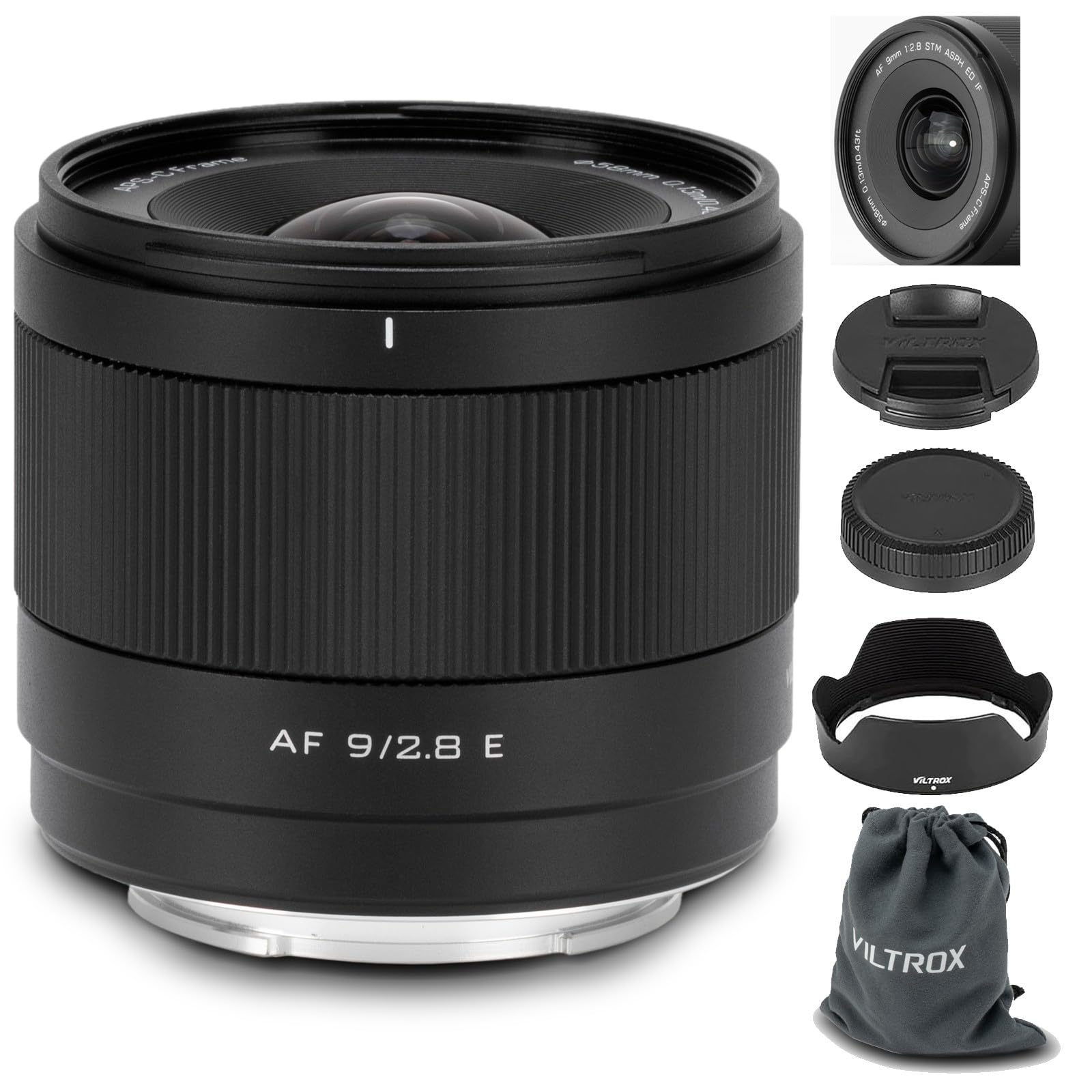
Viltrox 9mm f/2.8

88 /100
Studio Score Strong Evidence

Key details

Focal Length
9mm ultra-wide prime
Max Aperture
f/2.8
Size & Weight
175 g
Stabilization
None (IBIS only)
Check Price on Amazon

The Viltrox 9mm f/2.8 gives Sony A6700 owners a 113.8-degree field of view in a 175g body, which suits vloggers, real estate walk-throughs, and travelers after a dramatic wide angle. Center sharpness is strong for the price, and autofocus keeps up with routine handheld video and stills. The tradeoff is a committed focal length: this is a specialty wide prime, not a general-purpose lens. Edge distortion can show at frame borders, a reasonable compromise for this much angle. Buyers who want one everyday lens should stay with the compact standard zoom in this set.

Pros

  • Budget-friendly entry into ultra-wide APS-C shooting with strong center sharpness.
  • Fast autofocus suits vlogging and handheld stills on the A6700.
  • 175g body makes it easy to carry for wide-angle travel shots.

Cons

  • Bokeh rendering can be polarizing for a wide-angle lens.
  • The f/2.8 maximum aperture leaves less low-light headroom than a faster normal prime.
Our verdict

Choose this when an ultra-wide prime for vlogs and interiors is the goal; it fits A6700 owners who already have a general-purpose lens.

Check Latest Price
7

Casual Travel Use

Sony 16-50mm OSS Kit

86 /100
Studio Score Strong Evidence

Key details

Focal Length
16-50mm power zoom
Max Aperture
f/3.5-5.6
Size & Weight
—
Stabilization
OSS optical
Check Price on Amazon

The retractable 16-50mm power zoom keeps an A6700 outfit light and easy to pack, and Optical SteadyShot steadies handheld vlogging clips without adding bulk. The power zoom is handy for smooth focal-length changes during recording, which suits vloggers who don't want to stop and adjust a manual zoom ring.

At this price, it works as a casual first zoom. The bundle's condition can vary, and a lens may arrive looking handled rather than factory-fresh. A kit-class optical ceiling is the reason this sits outside the top picks for A6700 buyers, since it trails the sharper constant-aperture and prime options in this category.

Pros

  • Compact retractable barrel keeps the A6700 easy to pack for travel or everyday carry.
  • Power zoom and Optical SteadyShot make smooth handheld vlogging framing simpler.
  • Entry-level price keeps the first-lens investment lower for budget-conscious buyers.

Cons

  • Missing rear cap or E-mount cover can show up in the box; inspect the kit before mounting.
  • Variable f/3.5-5.6 aperture limits low-light flexibility for indoor or night scenes.
Our verdict

The right fit is a casual A6700 vlogger who wants a compact OSS zoom and can accept bundle-condition risk as part of a budget buy.

Check Latest Price

How to Choose

Focal Length and Field of View

On APS-C, a 35mm lens behaves like a 53mm normal lens because the sensor crops the image circle. Zoom range tells you how many of those perspectives you can reach without moving your feet.

Longer zoom ratios require more glass and smaller effective apertures at the long end, which is why superzooms lose low-light speed. A traveler in daylight gets more from 300mm; an event shooter gets more from constant f/2.8.

Max Aperture and Low-Light Speed

Aperture controls light and depth of field. An f/1.8 prime lets in more than three stops more light than a variable-aperture zoom at full extension, allowing faster shutter speeds and lower ISOs.

Constant f/2.8 zooms hold their aperture across the zoom range; variable zooms close down as you zoom. Indoors, f/2.8 or faster matters more than extra reach.

Autofocus Speed and Noise

The A6700's AF tracking depends on lens motors. Linear or stepping motors respond faster and quieter than older gear-driven designs, so moving subjects and video both benefit.

Focus noise matters in quiet scenes because the built-in mic picks it up. Choose a near-silent motor for video work, or plan for an external mic.

Size and Weight Balance

A compact 170-290g lens keeps the A6700 balanced and easy to hold; a 1.7 lb zoom changes the center of gravity and feels front-heavy on the small body.

Heavier lenses require more hand support, which adds shake and fatigue over a long session. Lighter glass makes the IBIS system's job easier.

Stabilization and IBIS

The A6700's 5-axis IBIS means lenses without OSS can still shoot sharp handheld at modest speeds. Lenses with VC or OSS add extra correction where body motion is magnified, especially at long focal lengths.

A 300mm handheld shot benefits from coordinated stabilization; a 35mm prime relies comfortably on IBIS alone. Buy stabilizing optics for long reach, not for normal primes.

Frequently Asked Questions