6 Best Lens for Sony A7IV of 2026: Pro Sharpness for Less

Which Sony A7IV lenses deliver professional sharpness and fast autofocus without G Master pricing — and which trade-offs matter.

The A7IV is a camera that rewards good glass, but 'good glass' no longer has to mean G Master pricing. Third-party lenses have closed the gap in sharpness and autofocus, so the real choice is a trade-off between convenience and consistency.

A do-everything zoom gives you 28-200mm reach in a compact body, but may hunt in low light. A dedicated f/2.8 telezoom delivers constant aperture and smoother autofocus, but costs more and covers less. A wide prime keeps the kit light, but limits you to one perspective. The right pick depends on where you shoot most.

This guide maps those trade-offs to specific A7IV use cases — travel, portraits, events, wildlife — and prioritizes the lens that fits the way you actually shoot, not the one with the biggest price tag.

1

Best Overall

Sony 24-70 GM II

89 /100
Studio Score Strong Evidence

Key details

Autofocus
XD linear motor
Focal Length
24-70mm
Max Aperture
f/2.8 constant
Stabilization
None (IBIS)
Check Price on Amazon

The 24-70mm f/2.8 GM II is a standard zoom that resolves like a prime at working apertures. Corner sharpness stays high from 24mm through 70mm, and the 11-blade aperture renders out-of-focus areas with smooth, even falloff. That is why it can stand in for a small prime kit during a paid shoot.

The near-silent XD autofocus is the other standout. It tracks moving subjects during event coverage and switches smoothly for video, with no audible hunting in low-contrast scenes. The A7IV body handles the AF system well, making this a strong partner for hybrid shooting. For a wedding photographer moving between a posed portrait and a walking shot, the focus response stays immediate without constant re-acquisition.

At 695g, this is a light lens for its class. It balances on the A7IV without the front-heavy feel of earlier 24-70 f/2.8 zooms, so an extended day of handheld photo and video work doesn't turn into a shoulder workout. Third-party 24-70 f/2.8 zooms have closed much of the optical gap; the GM II stays ahead through AF consistency and this weight advantage.

The 24-70mm span covers the framing used in event coverage: group shots, environmental portraits, and detail work all sit within reach without swapping lenses. The constant f/2.8 keeps exposure stable when moving between bright and dim spaces, which matters more when the light changes between rooms. The moisture-resistant build is another practical advantage for outdoor ceremonies, where the kit is not always under cover.

The case for this lens is not that it is the only sharp 24-70 f/2.8 available. It is the balance of sharpness, autofocus, and weight in a single package, which fits the A7IV's hybrid body better than a zoom that wins on one spec and gives ground on another. That balance is also what makes it feel smaller than the category implies.

This is the lens for A7IV owners who want one standard zoom for weddings, events, and hybrid photo/video work. The main boundary is stabilization: there is no built-in OSS, so the A7IV's IBIS does all the work. On this body that is workable for handheld shooting, but it is the tradeoff to know before buying.

Pros

  • G Master-level sharpness with clean bokeh across the 24-70mm range.
  • 695g weight makes it light enough for all-day event carry on an A7IV.
  • Fast, quiet XD autofocus keeps hybrid photo and video work on pace.
  • Can replace a small set of primes for weddings and event coverage.

Cons

  • 70mm max reach leaves distant sports and wildlife to a separate telephoto.
  • Premium price makes it a major line item for anyone building a lens kit from scratch.
Our verdict

For an A7IV owner working weddings or hybrid events, this is the standard zoom that sets the baseline for everything else in the category.

Check Latest Price
2

Best One-Lens Travel Zoom

Tamron 28-200 RXD

90 /100
Studio Score High Confidence

Key details

Autofocus
RXD stepping motor
Focal Length
28-200mm
Max Aperture
f/2.8-5.6
Stabilization
None (IBIS)
Check Price on Amazon

The 28-200mm RXD gives A7IV owners a single carry that starts wide and reaches into telephoto without swapping lenses. It covers 28mm interiors through 200mm detail in a compact barrel, and the long end stays sharp enough for everyday travel photography. Few zooms this light offer that much range, and the Tamron keeps image quality consistent as you move through the focal lengths.

Hikers, street shooters, and one-bag travelers are the intended audience. On the A7IV, the body's IBIS handles stabilization, so the lack of an in-lens stabilizer is barely noticeable. Low-contrast scenes can trigger AF hunting, which makes this a daylight-first option rather than an indoor action tool. City strolls and trail miles suit it better than dim event spaces.

The practical payoff is the way 28-200mm covers a full day of shooting: wide landscapes, street frames, and distant detail without a bag change. The barrel is light enough to stay mounted, and color rendering stays lively without heavy editing. Zoom transitions are smooth, and the size makes the A7IV feel closer to a compact travel camera than a full-frame rig. For travelers who want one lens to leave on the camera, this is a direct fit.

💡 When contrast is low, a single AF point on a bright edge gives the fastest lock.

Pros

  • Covers 28-200mm in a 1.3 lb body, so one lens handles wide and telephoto shots without a bag change.
  • Sharp, vivid rendering across the range, with detail that holds at the long end.
  • Cost-effective travel option that packs small and fits an A7IV without dominating the setup.
  • Strong overall build and image quality make it a worthy one-lens recommendation for everyday shooting.

Cons

  • Maximum aperture drops to f/5.6 at 200mm, so low-light telephoto work is limited.
  • Autofocus can hunt in low-light or low-contrast scenes, which slows shots in flat or dim conditions.
Our verdict

For A7IV owners who want one lens mounted for a full day of daylight travel, the Tamron 28-200mm is the practical single-lens answer.

Check Latest Price
3

Best Budget Portrait Prime

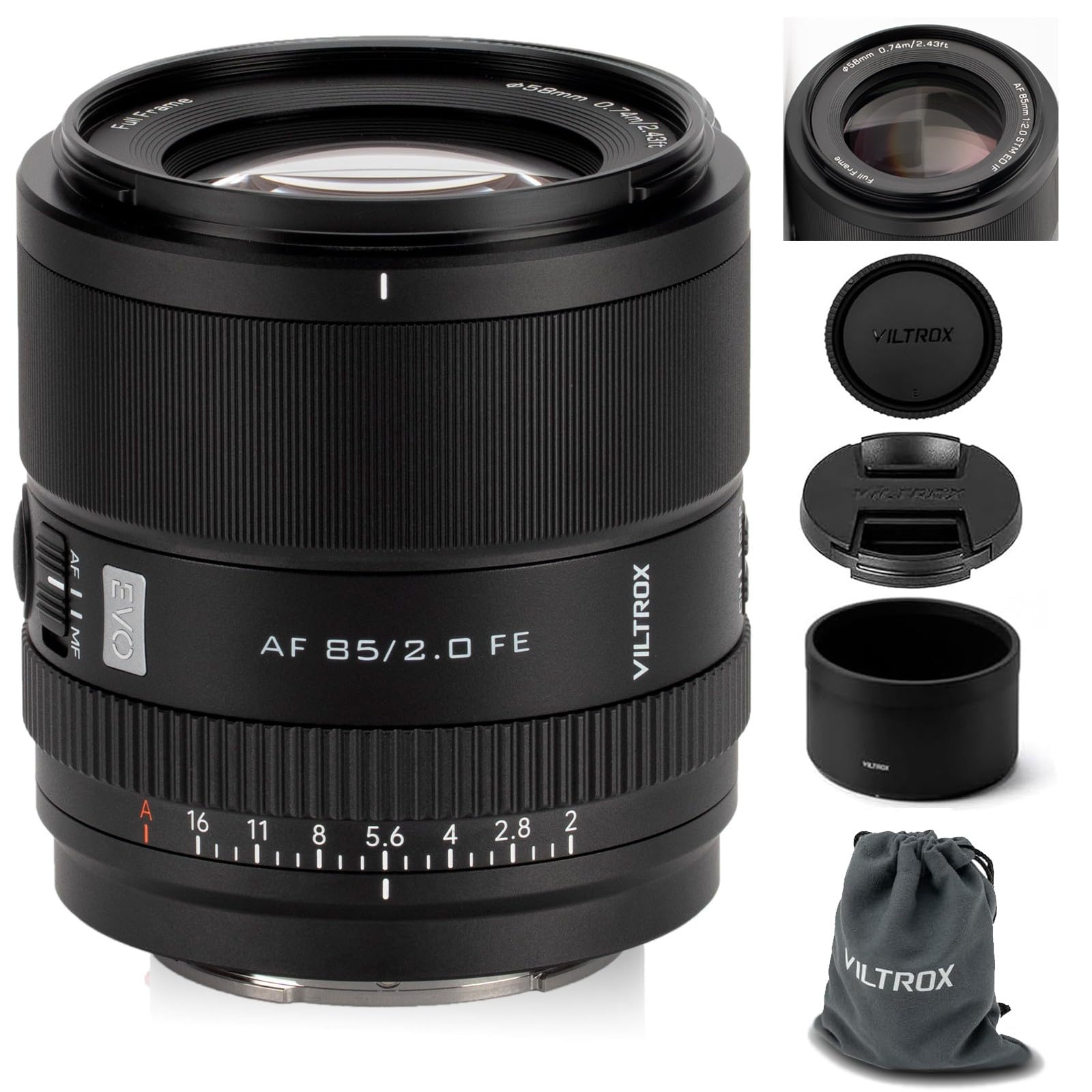
Viltrox 85mm F2 EVO

90 /100
Studio Score High Confidence

Key details

Autofocus
—
Focal Length
85mm
Max Aperture
f/2.0
Stabilization
None (IBIS)
Check Price on Amazon

The Viltrox 85mm F2 EVO is the budget portrait prime in this A7IV lens roundup, pairing 85mm compression with f/2.0 and eye AF in a 0.4 kg body. Where the compact ultra-wide prime in this set reaches for wide scenes, this lens aims at the opposite end of the frame: head-and-shoulders portraits with a 0.74m close-focus limit.

At f/2, subject separation is clear at normal portrait distances, and the A7IV's eye AF keeps up with face-tracking without the lens becoming front-heavy. Close focus at 0.74m covers head-and-shoulders and upper-body compositions, which makes it a practical single-lens setup for indoor sessions. On the A7IV, the combination of eye AF and the f/2 aperture keeps faces sharp in dim rooms where f/2.8 zooms start to struggle.

This lens suits A7IV owners who want a fast 85mm for people photography without spending G Master money. It covers low-light and close-up portrait work, and the dust and moisture-resistant shell is fine for outdoor shoots. It stays light enough for all-day carrying. Bokeh rendering can be scene-dependent, so portrait shooters who favor busy backdrops should check sample images before committing.

Pros

  • Sharp image quality with fast AF for the price.
  • Strong value among budget portrait primes.
  • Compact 0.4 kg body with dust and moisture resistance.
  • Go-to lens for portrait work with a useful close-focus distance.

Cons

  • Minor vignetting can appear at f/2 in certain frames.
  • Landscape and ultra-wide shooters will find the fixed 85mm framing too tight.
Our verdict

For A7IV portrait shooters, this is the budget 85mm to start with; it delivers prime-look compression without the G Master price.

Check Latest Price
4

Best Value Fast Telephoto

Tamron 70-180 VC G2

89 /100
Studio Score Strong Evidence

Key details

Autofocus
VXD linear motor
Focal Length
70-180mm
Max Aperture
f/2.8 constant
Stabilization
VC
Check Price on Amazon

Constant f/2.8 and VC in a 1.9 lb body set this apart from the 28-200 travel zoom in the same lineup. The 70-180 f/2.8 is a reach and aperture play, not an all-in-one: you trade superzoom coverage for a faster, steadier lens that still covers the telephoto range event shooters actually use.

Images are razor-sharp wide-open, and bokeh stays smooth for clean portrait separation. The build quality overdelivers for the price, and the autofocus on the A7IV is responsive enough for event work and daylight sports. VC gives handheld shots a steadier feel at the long end, a practical advantage for a lens this light.

This lens suits A7IV owners who shoot portraits, events, or sports in good light and want a constant f/2.8 without hauling a native 70-200 GM II. Those who prefer Sony-brand glass may still pick the GM II, but the Tamron is the cost-effective alternative.

Reach ends at 180mm instead of 200mm, so it is not a full 70-200 equivalent. That shorter barrel buys a 1.9 lb carry weight, and the tradeoff lands in favor of portrait and event shooters who rarely need the extra 20mm. Wildlife shooters chasing distant subjects will be better served by a dedicated long lens, but the A7IV owner photographing people gets a faster, lighter setup.

Pros

  • Razor-sharp images with smooth bokeh make portrait and event work easy.
  • Solid build quality and handling belie the mid-range price.
  • Compact f/2.8 telephoto with VC stays light in the bag.
  • Strong value against Sony GM alternatives for enthusiast budgets.

Cons

No notable drawbacks to flag.

Our verdict

For A7IV owners who want a fast telephoto without the GM weight, the Tamron is the mid-range pick that still delivers sharp images and VC.

Check Latest Price
5

Best Budget Ultra-Wide

Viltrox 20mm F2.8 FE

92 /100
Studio Score High Confidence

Key details

Autofocus
—
Focal Length
20mm
Max Aperture
f/2.8
Stabilization
None (IBIS)
Check Price on Amazon

At 157g, the Viltrox 20mm F2.8 FE is one of the lightest full-frame primes available for the A7IV. That low mass is the reason it suits gimbal rigs and daily carry: the 20mm angle of view covers room interiors, city streets, and walk-and-talk video without pulling the front of the camera down. On a gimbal, the balance point stays close to the body, so setup time is shorter than with heavier zooms.

Center sharpness holds up well wide open, and the 0.19m minimum focus lets you move in close while keeping the wider scene as context. A 52mm filter thread keeps filters small and easy to pack, which matches the travel-first character. Depth of field is broad enough to hold both a foreground subject and the surrounding room in acceptable focus.

This is the right lens for A7IV owners who want a compact wide prime for vlogging, gimbal work, travel, and real estate walkthroughs. Indoor low-light scenes are bounded by the maximum aperture, so it suits daylight and hybrid work better than dim-event or astrophotography shoots. Buyers who need telephoto compression should pair it with a second lens rather than expect this one to do double duty.

Pros

  • Very sharp for a budget ultra-wide; center detail is crisp in everyday shots.
  • 157g body makes gimbal work and daily carry easy.
  • Budget-friendly price for a full-frame wide prime.

Cons

  • Background separation is minimal at 20mm; this lens favors context over blur.
  • Corner performance is typical for a budget compact prime; the center is the strong point.
Our verdict

The Viltrox 20mm F2.8 FE makes a strong case as the low-fuss wide prime for a compact A7IV kit.

Check Latest Price
6

Pro Events

Sony 70-200 GM OSS II

92 /100
Studio Score High Confidence

Key details

Autofocus
XD linear motor
Focal Length
70-200mm
Max Aperture
f/2.8 constant
Stabilization
OSS
Check Price on Amazon

Class-leading autofocus, optical stabilization and resolution in a 70-200 f/2.8 make this the benchmark for event and sports coverage. A7IV owners who shoot weddings or sideline action get a constant aperture that holds exposure through bursts, plus OSS for handheld telephoto work. This is a specialist tool, and it is superb at the job it sets out to do. The premium price and a focal range that suits dedicated telephoto work make it a second-lens purchase rather than the one-lens answer for most A7IV owners. Budget-conscious beginners are better served by a rental or a less expensive telezoom.

Pros

  • Class-leading edge-to-edge sharpness with a constant f/2.8 aperture.
  • Autofocus locks onto moving subjects quickly and holds them through bursts.
  • Weighs 2.3 lb, which is light for a 70-200 f/2.8 and balances on the A7IV.

Cons

  • For a compact travel kit, 2.3 lb plus hood is a noticeable tradeoff.
Our verdict

Rent it for the big event, and buy it only if weddings, sports or sideline work is a regular part of your shooting.

Check Latest Price

How to Choose

Focal Length and Reach

Focal length decides what you can frame before moving your feet. A 24-70mm covers everyday and event work, a 70-200mm compresses backgrounds for portraits and sports, and a 200-600mm brings wildlife into the frame. The trade-off is that longer reach usually means larger glass and a smaller maximum aperture at the same price.

Maximum Aperture and Low-Light Performance

Maximum aperture controls how much light reaches the sensor and how strongly the background falls out of focus. A constant f/2.8 zoom lets you keep shutter speed up in dim interiors, but it costs more and weighs more than a variable-aperture zoom.

Variable zooms like f/2.8-5.6 lose light as you extend the focal length, which pushes ISO exactly when you need reach. Focal length coverage interacts with aperture: an f/2.8 standard zoom can replace a bag of primes, but a variable-aperture superzoom trades low-light speed for convenience. That trade is acceptable for daylight travel, not for dim event halls.

Autofocus Motor Reliability

Autofocus motor type sets the ceiling for tracking and video work. Linear motors such as XD and VXD are near-silent and settle quickly, while budget stepping motors can be audible and hunt in low contrast. If you shoot weddings, sports or pets, choose the motor over the last stop of aperture.

Image Stabilization

The A7IV's IBIS helps at normal focal lengths, but lens-based stabilization matters more as reach grows. OSS or VC adds a second correction stage that cancels shake the sensor alone cannot fully handle. At 200mm and beyond, a stabilized lens prevents missed shots in marginal light. The exception is close-range and wide-angle shooting, where IBIS alone is usually enough.

Weight and Handling

Every gram of glass has a handling cost on a full-frame body. A 695g standard zoom feels balanced on the A7IV, while a 4.7 lb super-telephoto demands a monopod for long sessions. Buy based on how you carry the kit: event days, flights and hikes punish weight differently.

Frequently Asked Questions