5 Best Portable Strobe for Outdoor Portraits in 2026: TTL/HSS Match

The best portable strobe for outdoor portraits matches TTL/HSS and battery behavior to your real shooting style, from travel fill to overpowering midday sun.

Portable strobe listings lead with watt-seconds and full-power flash counts, but those numbers do not tell you how a light behaves after an hour of HSS bursts in midday sun. Battery management, recycle speed under load, and whether the trigger in the box actually delivers TTL/HSS decide if the strobe works on location.

This guide is built around that distinction. It separates lights that can overpower daylight from those that work best as close-up key or fill, and it treats TTL/HSS as a workflow feature rather than a checklist item. The trade-off that matters: 100–120Ws models are easy to pack but need to sit close to the subject, while 400–600Ws units carry enough output for groups and harsh sun at the cost of weight and battery care.

For most outdoor portrait work, the 300Ws TTL/HSS class is where portability, power, and auto exposure converge. That is also where the buying decision gets easier.

1

Best Overall

Godox AD300 Pro

87 /100
Studio Score Strong Evidence

Key details

TTL/HSS
Yes / 1/8000s
Output Power
300Ws
Recycle Time
0.01–1.5s
Mount / System
Godox X
Check Price on Amazon

The AD300 Pro is the balanced 300Ws TTL/HSS location strobe for outdoor portrait work: a 1.25kg body with Godox X triggering and enough output to shape daylight without packing a 600Ws monolight. HSS sync reaches 1/8000s, which turns bright-sun portraits from a fight into a routine fill-light setup. Its built-in battery means no cables or packs on the ground when moving between locations.

Recycle runs 0.01–1.5s depending on power, and the 2600mAh battery delivers around 320 full-power flashes before a recharge. At typical portrait powers, the light keeps up with a walking subject and leaves time to reposition without waiting on the pack. Even at full power, the recycle is short enough to keep a portrait session flowing; at fractional power it is effectively instant. The 1.25kg body also balances well on compact stands, so the overall footprint stays small.

TTL metering is consistent enough for event work, and the HSS ceiling lets you drop shutter speed in bright sun while controlling ambient with the strobe. That combination removes the biggest hassle of manual-only location strobes: checking and resetting power between poses. Godox X wireless control also allows remote power adjustment from a transmitter, so a light on a c-stand across a scene can be dialed without walking over. The flash exposure stays predictable shot to shot, which matters more than the raw watt-second number for event coverage.

The right buyer is a portrait or wedding photographer who already carries Godox triggers and wants one location light that moves from a softbox to a bare-bulb setup without a second person. The battery eject button can stick in some units, so keep the pack rails clean and avoid forcing it during swaps; that is the one usability quirk on a light that otherwise moves well.

Because the AD300 Pro uses the same X trigger system as Godox speedlights and larger strobes, it slots into an existing kit rather than creating a separate setup. A single trigger controls bounce fill and off-camera key light together, which is what on-location shooters actually need from a 300Ws pack. For photographers who already own Godox triggers, the AD300 Pro is less a new system and more an additional tool in the same bag.

💡 Clean the battery rails and use steady, even pressure when the eject button sticks; forcing it only adds friction.

Pros

  • Balanced 300Ws TTL/HSS output in a 1.25kg body keeps outdoor portrait setups moving fast.
  • Mid-range pricing undercuts larger TTL/HSS location strobes while covering typical on-location portrait needs.
  • 300Ws is enough to shape daylight for small groups and outdoor portraits without a 600Ws generator.
  • Godox X triggering integrates with an existing speedlight and strobe ecosystem for one remote setup.
  • Dependable recycle and output behavior make it a practical primary light for event photographers.

Cons

  • Large group coverage runs out at 300Ws when heavy ambient overpowering needs a 600Ws monolight.
  • Battery eject button can stick, so pack swaps on location may need steady pressure and clean rails.
Our verdict

The AD300 Pro is the outdoor portrait strobe for shooters who want one light that balances TTL/HSS, 300Ws output, and 1.25kg portability without moving up to a generator-style 600Ws monolight.
Check Latest Price
2

High-Power TTL/HSS Alternative

NEEWER Q6 600Ws

87 /100
Studio Score Strong Evidence

Key details

TTL/HSS
Yes / 1/8000s
Output Power
600Ws
Recycle Time
0.01–0.9s
Mount / System
—
Check Price on Amazon

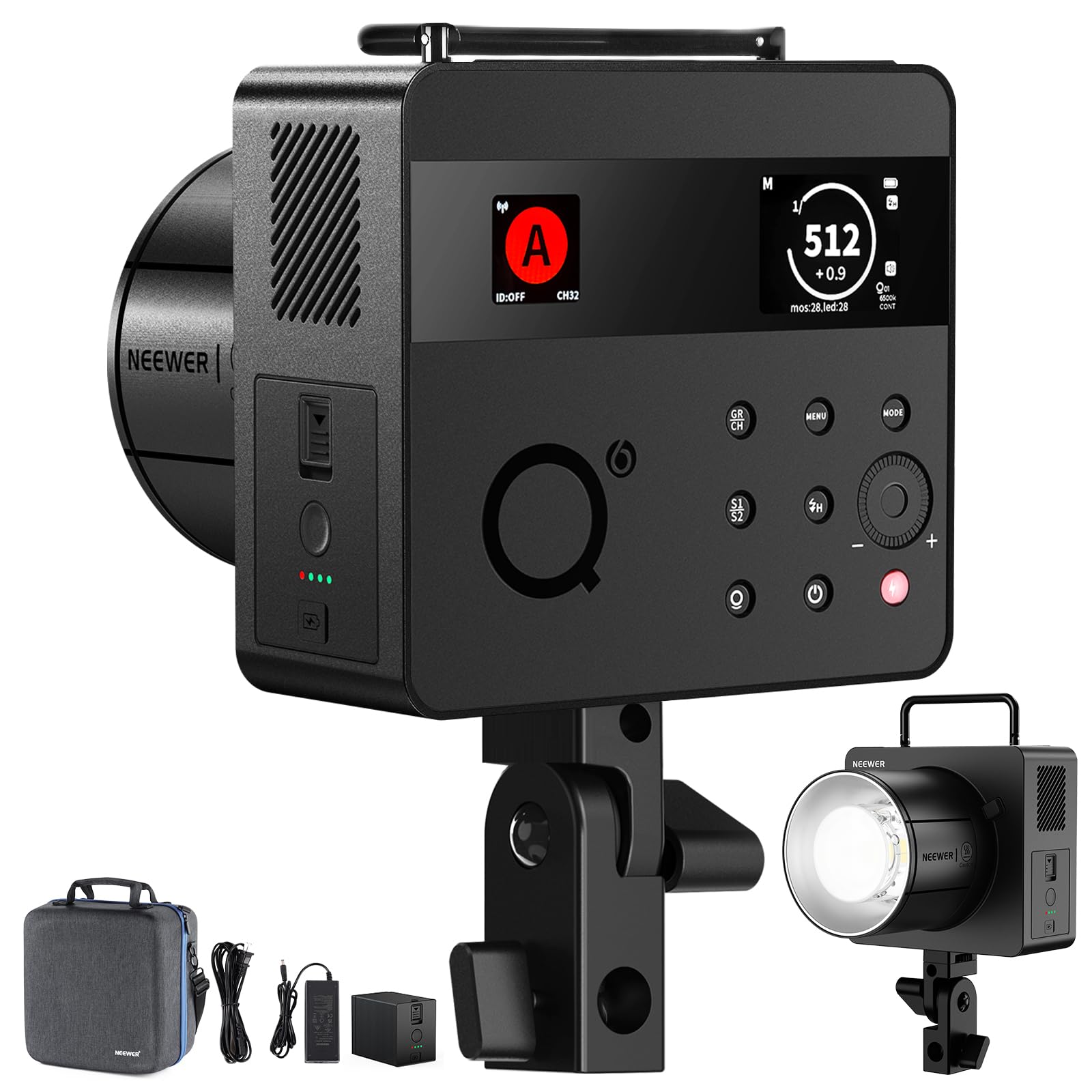
The Q6 delivers 600Ws TTL/HSS in a battery-powered body with a 30W bi-color modeling lamp and NEEWER app control. That combination puts it ahead of the 300Ws all-rounder for photographers who need to overpower daylight at distance rather than just shape it.

The power tube is bright enough to mimic or overpower the sun, and HSS sync at 1/8000s supports wide-aperture portraits outside. TTL exposure stays consistent in mixed light, and the 30W bi-color LED (CRI 95+) gives a workable preview of shadow placement without requiring a separate hot light.

This suits professional portrait and fashion photographers who want studio output without AC power and who use TTL rather than a handheld flash meter. The 600Ws class is the right call when a 300Ws all-rounder lacks enough daylight-fighting reach. Sustained full-power recycle can be slower than the 0.9s headline under continuous shooting, so the Q6 rewards paced bursts.

Build quality holds up to location use, and app control makes power adjustment from behind the camera practical. The integrated battery removes the need for a separate power pack or generator, and the package undercuts comparable 600Ws TTL/HSS strobes for an AC-monolight replacement outdoors.

💡 For maximum battery flash count, keep the 30W modeling lamp off during the shooting run; the preview LED draws from the same pack.

Pros

  • Sturdy body and controls hold up to regular location packing and session-to-session use.
  • TTL/HSS exposure stays consistent outside, reducing test-shot churn in mixed light.
  • 600Ws output can mimic or overpower direct sun for daylight portraits at distance.
  • App control, menu layout, and the 30W bi-color LED simplify setup for the price.

Cons

  • The integrated battery and 600Ws tube add bulk, so minimalist travel kits should look elsewhere.
  • The 3000mAh pack delivers around 400 full-power pops; a long all-day shoot may need a spare battery or lower output.
Our verdict

For photographers who need 600Ws TTL/HSS outside without AC power, the Q6 is the daylight-fighting alternative to the balanced 300Ws top pick.

Check Latest Price
3

Best Travel-Size Dual-Head Strobe

Godox AD200 Pro II

85 /100
Studio Score Strong Evidence

Key details

TTL/HSS
Yes / 1/8000s
Output Power
200Ws
Recycle Time
—
Mount / System
Godox X
Check Price on Amazon

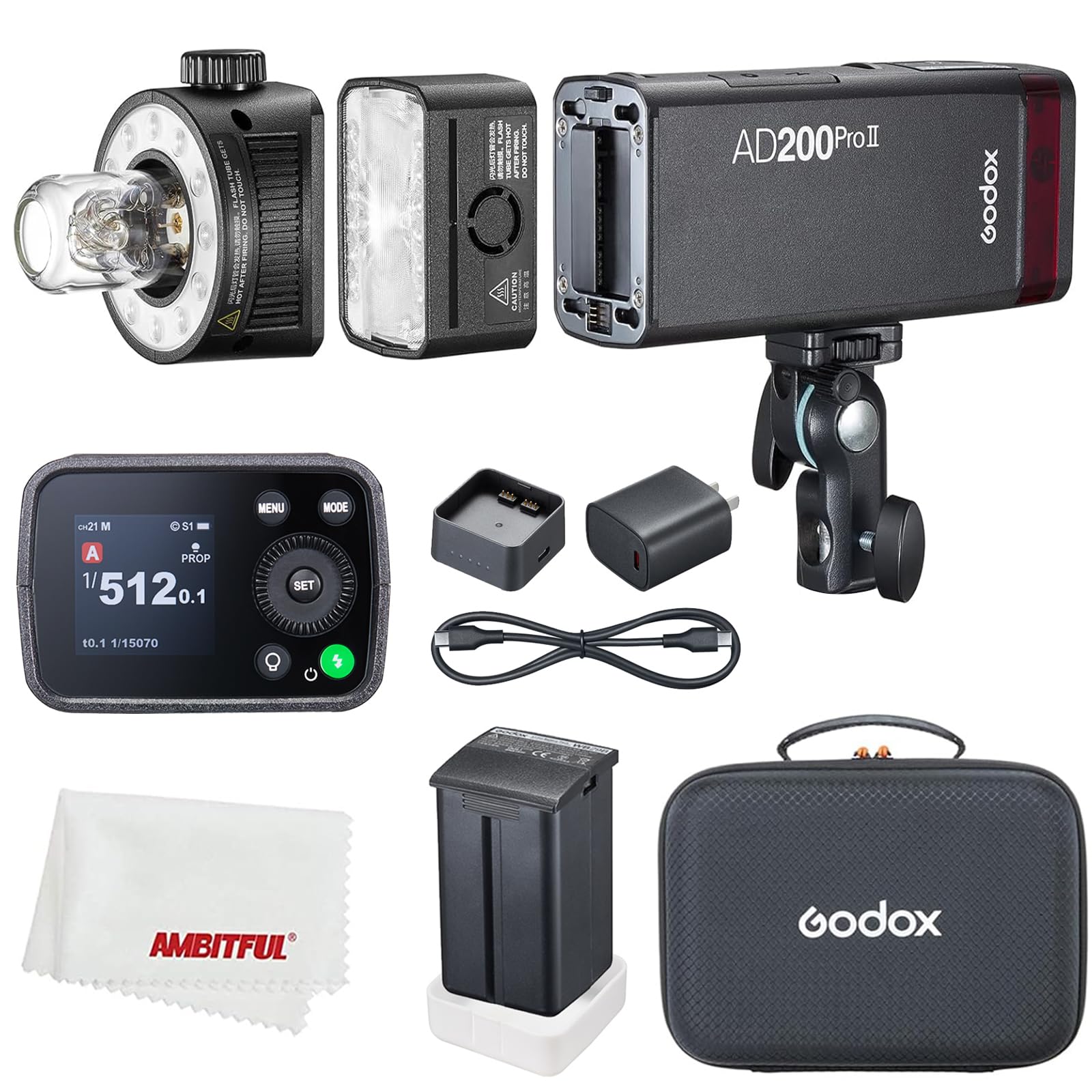
Two interchangeable heads set the Godox AD200 Pro II apart: the H200II speedlight head and the H200JII bare bulb share one 200Ws body. TTL/HSS runs through the Godox X trigger system, and the X3 one-tap pairing makes setup a single step. The compact body and integrated battery keep it viable for outdoor portrait sessions where 200Ws covers the distance.

The bi-color modeling lamp previews light in shade or mixed conditions without a separate continuous source. That helps when positioning a single head around a face or checking shadow falloff before the first frame. The battery holds enough power for a full portrait session, and the small body fits a location kit that travels by hand rather than by case.

The 200Ws output ceiling means less daylight overpowering than 300Ws or 600Ws models, so in harsh midday sun it needs to be closer to the subject or paired with another light. That makes it a strong match for travel and event photographers who want dual-head flexibility, for Godox X3 users who want one-tap sync, and for shooters who need 200Ws in a compact body. The 300Ws top pick in this guide covers more ground when outdoor groups or longer working distances are the norm.

Pros

  • Two interchangeable heads deliver speedlight and bare-bulb flexibility from one 200Ws body.
  • One-tap pairing with the Godox X3 trigger cuts setup time for TTL/HSS work.
  • The built-in battery carries enough charge for a full location session.
  • The bi-color modeling lamp helps preview light placement before the first frame.

Cons

  • One-tap pairing is a Godox X3 feature; other triggers won't get that shortcut.
  • The two included heads add a second component to pack; a single-head strobe stays simpler in the bag.
Our verdict

For close-range outdoor portraits and travel-heavy kits, the dual-head AD200 Pro II is the compact way to carry speedlight and bare-bulb options in one bag.

Check Latest Price
4

Travel Close-Range

NEEWER Q120 120Ws

91 /100
Studio Score High Confidence

Key details

TTL/HSS
Yes / 1/8000s
Output Power
120Ws
Recycle Time
1.5s full power
Mount / System
Godox X
Check Price on Amazon

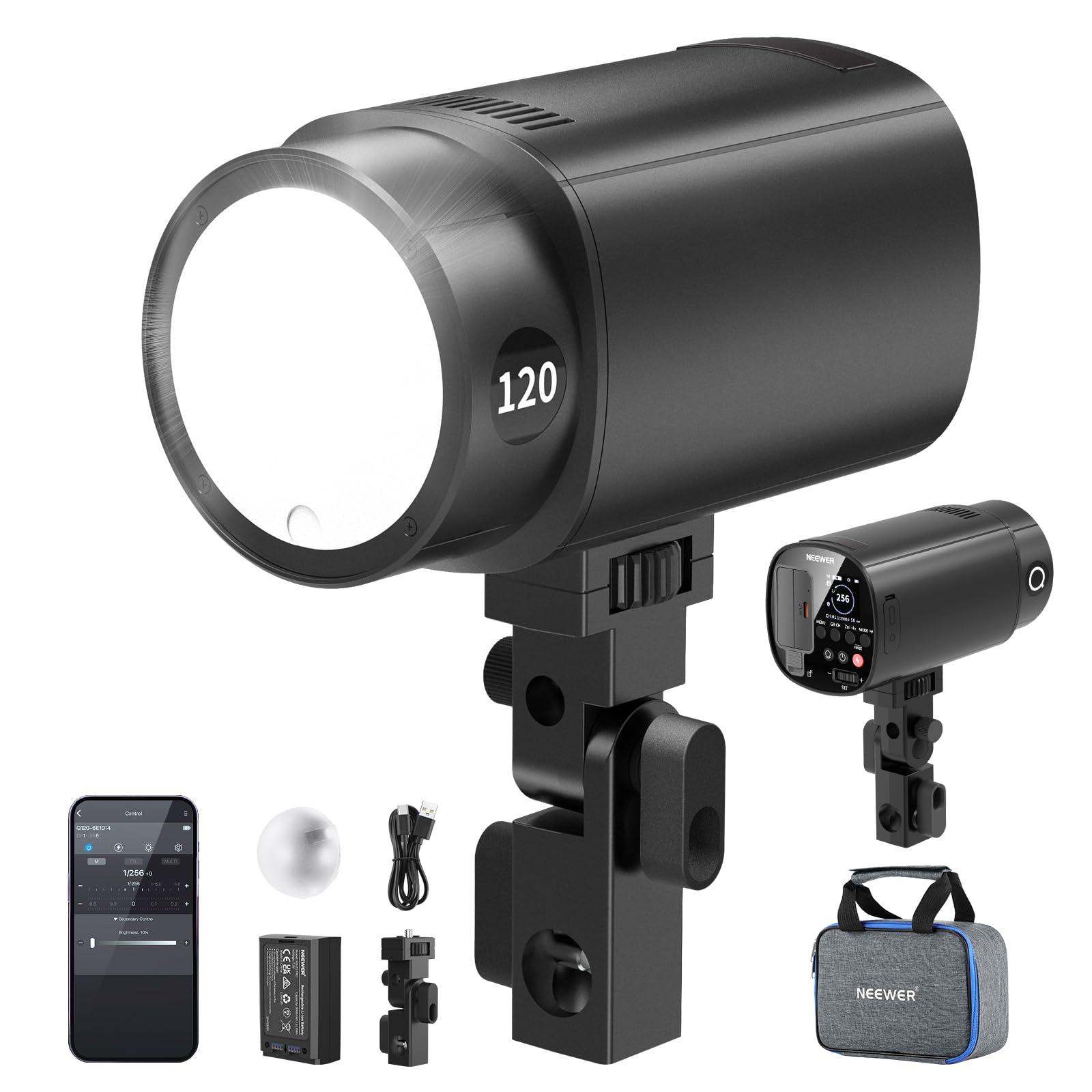
The Q120 is a palm-sized 120Ws TTL/HSS strobe with USB-C charging, app control, and Godox X triggering, plus an integrated battery that holds enough charge for a mobile event or travel portrait session. That 120Ws output is the boundary: it works best in open shade, close range, or as fill, and it will not overpower direct sunlight at distance. For entry-level outdoor portrait photographers who keep subjects within a modest working distance, this is a cost-effective way to get TTL/HSS automation without moving up to a larger monolight.

Pros

  • Palm-sized body with TTL/HSS, USB-C charging, app control, and Godox X triggering fits easily in a travel bag.
  • Integrated battery supports a long session of close-range flash work without an external pack.

Cons

  • In direct sunlight at distance, the Q120 works as fill rather than key.
Our verdict

Travel and run-and-gun portrait shooters get TTL/HSS automation in a palm-sized strobe when portability matters more than distance keying.

Check Latest Price
5

Manual HSS Shooters

Flashpoint XPLOR 600

91 /100
Studio Score High Confidence

Key details

TTL/HSS
HSS only
Output Power
600Ws
Recycle Time
0.01–2.5s
Mount / System
Bowens mount
Check Price on Amazon

The XPLOR 600 brings 600Ws HSS, a Bowens mount, and an 8700mAh battery rated for 450 full-power flashes. That puts it among the highest-output manual/HSS options for location work, but the lack of TTL auto exposure is the boundary that separates it from the full TTL/HSS group.

Flash-meter users in the Adorama/Flashpoint ecosystem are the natural fit; they get the output without paying for automation they will not use. This is the high-power manual choice for experienced shooters who already own manual triggers.

Pros

  • 600Ws output handles direct-sun fill when you set power manually.
  • Bowens mount keeps modifier selection broad and budget-friendly.
  • The 8700mAh battery gives 450 full-power pops per charge for location days.

Cons

  • Manual output control calls for a flash meter or extra test-frame time.
  • The 600Ws body and battery are more kit than a compact 300Ws-class light.
Our verdict

For a flash-meter shooter already in the Adorama/Flashpoint system who wants maximum daylight-overpowering output per dollar, the XPLOR 600 is the manual-workhorse pick.

Check Latest Price

How to Choose

Output Power

Watt-seconds set the light's reach, not just its brightness. A 100–120Ws strobe works as a close-range key or fill, but it will struggle to overpower midday sun unless it sits close to the subject. A 300Ws unit shapes daylight at normal portrait distances, which is why it is the practical starting point.

TTL and HSS

TTL auto-exposure sets flash power for you; HSS lets the camera shoot above the normal sync limit. Together they turn a strobe into a daylight key light, but they usually require a brand-specific trigger that is not always in the box.

Manual exposure removes the need for TTL, but it means adjusting power by hand as light changes. TTL saves time for events; manual HSS is the budget-friendly workflow for fixed setups with a flash meter.

Battery Capacity

Manufacturers rate battery life by full-power flashes, but HSS and rapid bursts drain the pack faster than that number suggests. A strobe rated for 400 full-power pops can deliver far fewer when every shot is HSS at high output. Plan around your longest shoot and favor a 500+ full-power rating or a spare battery.

Recycle Time

Recycle time is the gap between full-power bursts, and advertised figures are measured with a fresh battery. As the pack drains, recycle slows noticeably. Look for a strobe that stays under about 1.5 seconds after sustained shooting; a 600Ws light claiming a 0.9-second recycle may not hold that pace in high-volume use.

Mount and Trigger System

The modifier mount decides which softboxes and reflectors attach without adapters. Bowens is the most common open standard, while proprietary mounts often need an adapter that shifts the center of gravity. If you already own modifiers, match the mount before you buy, and confirm the trigger supports your camera's TTL/HSS.

Frequently Asked Questions