8 Best Sony Flashgun 2026: TTL, HSS, and Battery Life That Actually Match How You Shoot

Sony flashguns sorted by real trade-offs: TTL/HSS, battery life, and hot-shoe durability. Find the right fit for events, travel, or pocket fill.

Sony camera bodies pack impressive low-light capability, but there are times when raising the ISO or slowing the shutter is not enough. A flashgun can transform indoor events, fill in harsh daylight, or give portraits a cleaner look โ€” if it matches the way you actually shoot.

The problem is that not every 'Sony-compatible' flash delivers the same experience. Some fit the hot shoe but lack TTL and HSS. Others offer automatic exposure but sap AA batteries in an afternoon. The common thread in buyer complaints is a mismatch between what the product listing implies and what the flash does on a real event timeline.

This guide focuses on three decisions: how much exposure automation you need, whether the battery system will survive the shoot, and how the flash handles the physical stress of the hot shoe. Match those to your use-case and the right flash becomes obvious.

1

Best Overall

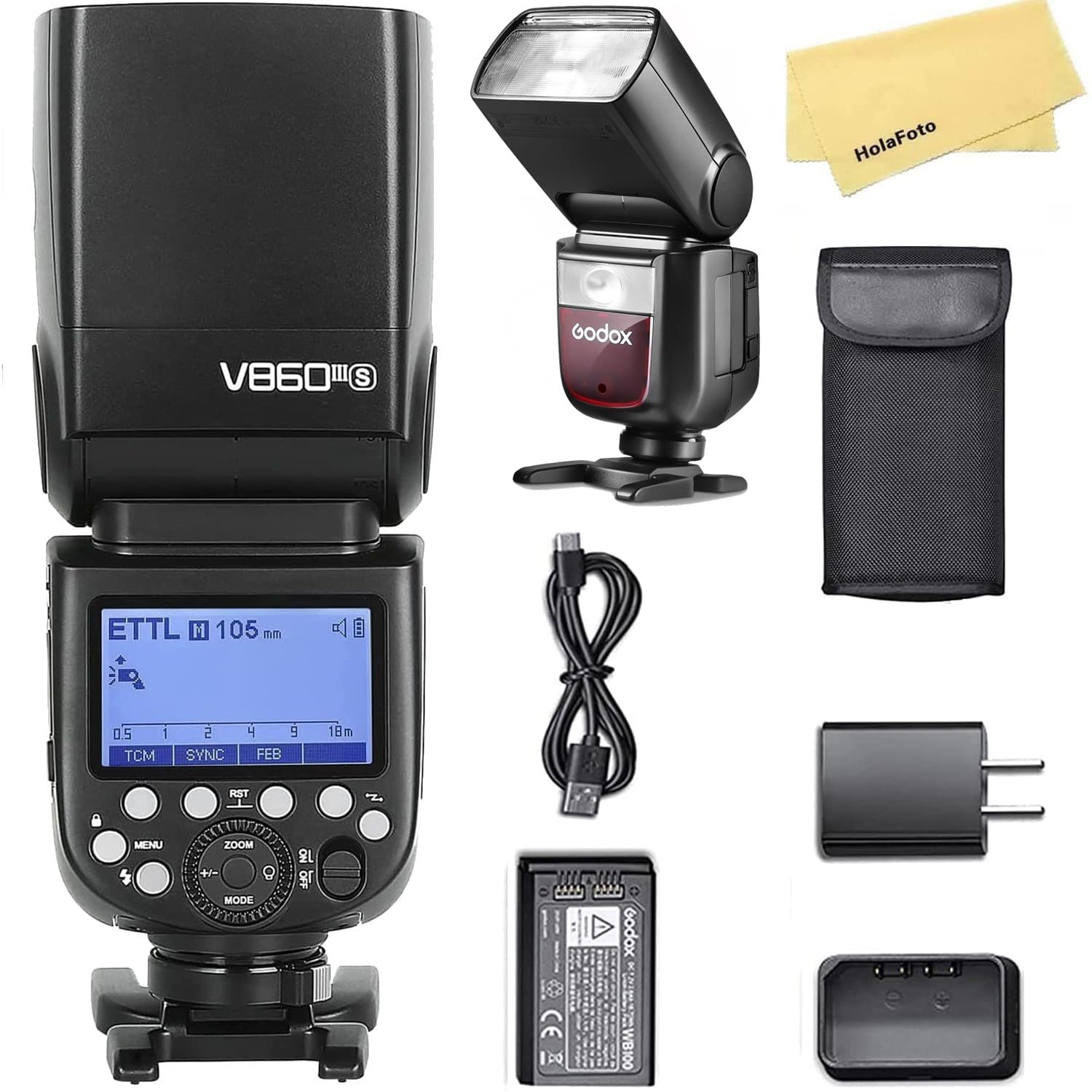
Godox V860III-S

91 /100
Studio Score High Confidence

Key details

HSS
1/8000
Power
Full-size speedlight
Battery
Li-ion, ~480 pops
Wireless
Godox 2.4G
Check Price on Amazon

The Godox V860III-S is a full-size Sony speedlight that delivers TTL and HSS up to 1/8000s, with a built-in 2.4G radio for Godox's X system. The lithium battery is rated around 480 full-power pops, which covers a full wedding reception without reaching for spares. A front LED modeling light makes dark reception rooms and off-camera setup noticeably easier to compose, and the same battery powers long off-camera sessions without the weight of a separate pack.

During continuous wedding coverage, the flash keeps up with rapid sequences, and TTL exposure stays consistent as the camera meters different backgrounds. The radio link lets it act as a commander on-camera or a remote slave off-camera, so moving from bounce flash to an umbrella setup does not require a separate trigger. For manual users, the power dial gives direct control over output levels, and the same unit works as a simple off-camera key light without switching modes.

This is the flash for Sony photographers who want a single unit for events, portraits, and off-camera practice. The rectangular head is a boundary: if you want round-head magnetic modifiers, choose a round-head model. The plastic hot shoe foot is the other boundary: under heavy torque it can snap, so seat it fully before locking it down and use a bracket for heavy on-camera use.

At a mid-range price, the V860III-S covers the same core feature set as premium OEM speedlights without the premium label. The control layout keeps TTL, manual, and radio settings accessible without diving through menus, and the body has a dense, solid feel that suits constant packing and unpacking. The Godox wireless system also stays compatible with Godox triggers and strobes, so it slots into a multi-light setup later.

Full-size construction means it is not a pocket companion like the compact travel flash in this set. That size pays off in higher output and the lithium battery, so it is the right trade for event and portrait work where a gripped body or bracket is already part of the kit. For dedicated macro or budget manual work, lighter single-contact flashes are cheaper, but they leave TTL and HSS on the table.

๐Ÿ’ก Seat the flash fully before tightening the lock and use a bracket if you carry the camera by the flash.

Pros

  • Lithium battery sustains long event days without frequent recharges.
  • Full TTL/HSS with Godox 2.4G wireless works from on-camera to off-camera setups.
  • Consistent firing in demanding wedding and event use.
  • Mid-range pricing undercuts OEM equivalents without cutting key features.

Cons

  • Rectangular head won't accept round-head magnetic modifiers.
  • Plastic hot shoe foot can snap if the flash is heavily torqued on the camera.
Our verdict

For Sony shooters who want one flash that can move between event coverage, portrait work, and off-camera sessions, this is the standard mid-range choice.

Check Latest Price
2

Best Compact Travel Flash

Godox TT350S

85 /100
Studio Score Strong Evidence

Key details

HSS
1/8000
Power
GN36
Battery
4x AA
Wireless
Godox 2.4G
Check Price on Amazon

At roughly half the size of a full speedlight, the TT350S brings Sony TTL and HSS to 1/8000s while staying inside the Godox 2.4G wireless system. That combination is what makes it the go-anywhere flash for small mirrorless Sony kits: the wireless ecosystem stays intact without the bulk.

A clear LCD and simple controls keep the learning curve short, and the head tilts and swivels for bounce work. Build quality holds up at this price, and the same Godox X triggers used by larger flashes will fire it off-camera. That makes it a practical travel companion for Sony shooters who already use a bigger main flash.

This suits Sony shooters who value a compact walkaround kit and still want TTL/HSS plus wireless triggering. Keep spare AAs in the bag: the compact body runs through four AA batteries quickly, which matters less on a street shoot and more for all-day coverage without a swap stop.

Pros

  • Solid build and clear controls for a compact flash
  • Budget-friendly entry to Sony TTL/HSS
  • Travel-friendly footprint works with Godox wireless off-camera

Cons

  • Unit-to-unit consistency can vary; occasional units may need an exchange out of the box.
  • GN36 output is modest for bright daylight fill or larger groups.
Our verdict

For Sony shooters who want TTL/HSS and Godox wireless without a bag-size commitment, the TT350S is the compact pickup โ€” as long as spare AAs are in the pocket.

Check Latest Price
3

Best Value Round-Head TTL

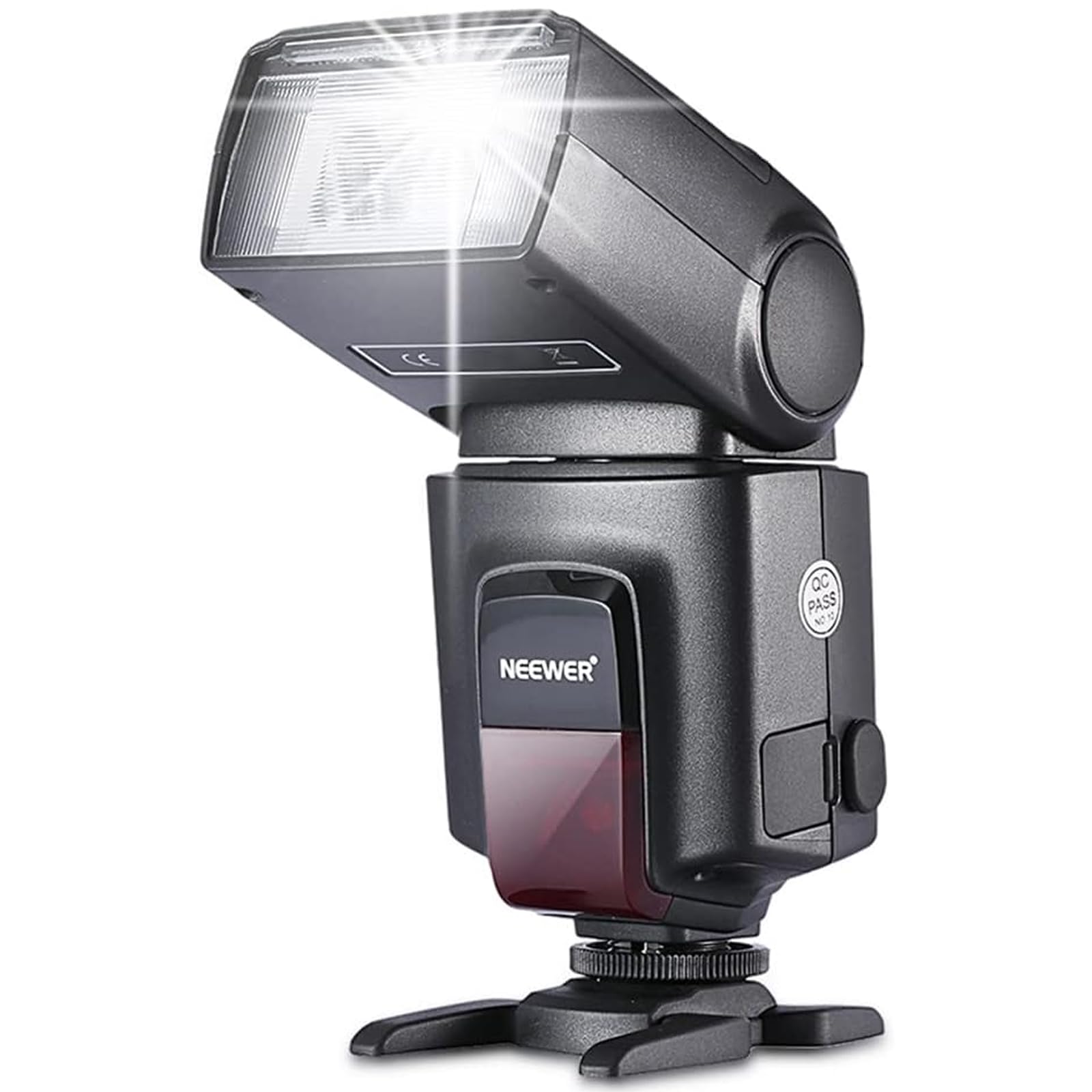
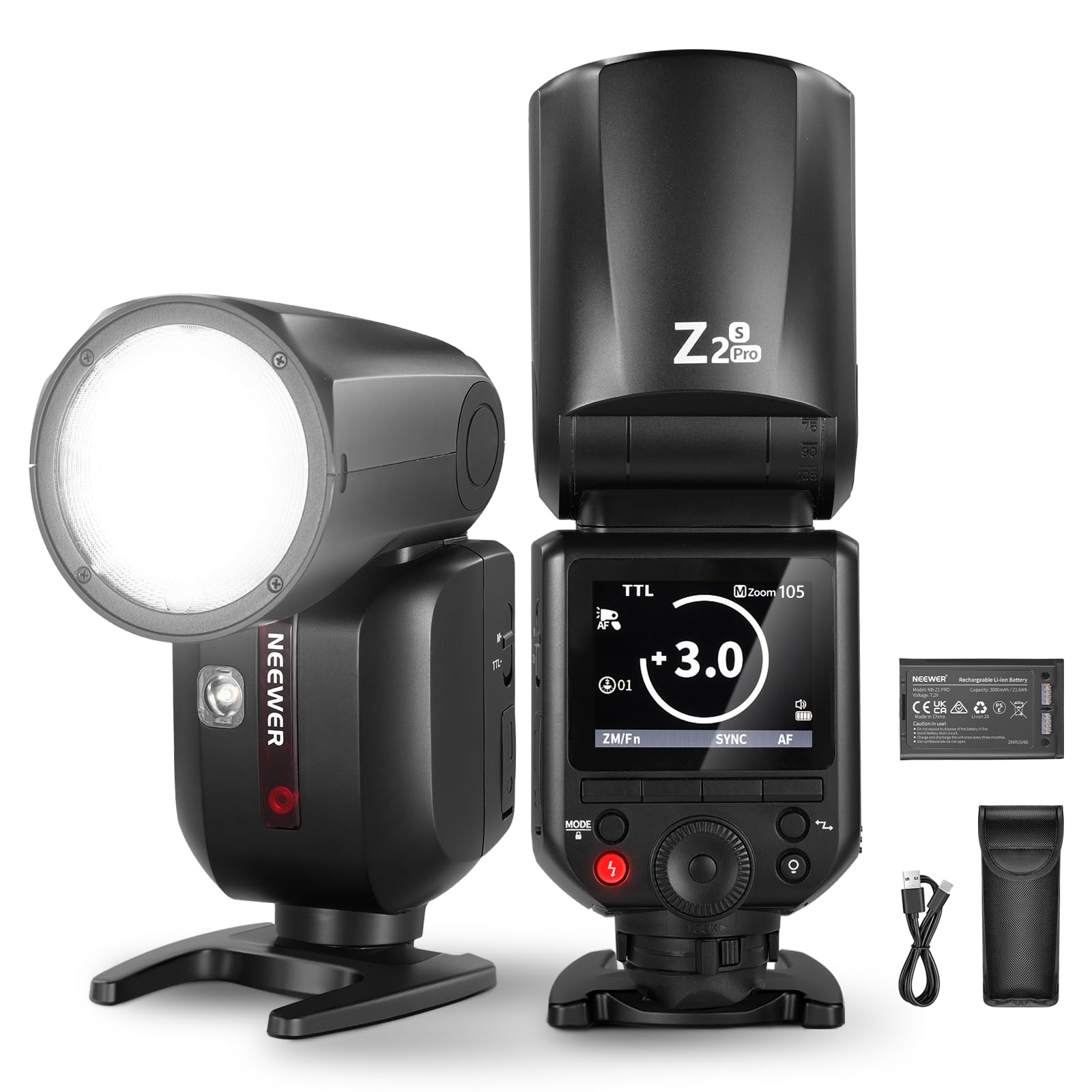
NEEWER Z2PRO-S

88 /100
Studio Score Strong Evidence

Key details

HSS
1/8000
Power
76Ws
Battery
3000mAh Li-ion
Wireless
NEEWER/Godox compatible
Check Price on Amazon

The NEEWER Z2PRO-S delivers round-head 76Ws output, TTL/HSS to 1/8000s, and a 3000mAh lithium battery at a mid-range price. That puts round-head light quality within reach of Sony shooters who don't want to spend flagship money. The round head softens the edge between highlight and shadow when bounced or fired at close distance, and the battery's 600 full-power pops reduce charger stops during event coverage.

Sony portrait and event shooters on a budget are the intended audience. The flash pairs with Sony cameras and NEEWER or QPro triggers for TTL/HSS off-camera work, and 76Ws is workable for fill, key, and direct bounce. Wireless behavior can be quirky when Godox and NEEWER gear are mixed, so a same-brand trigger setup is the safer route; firmware updates may be required if you do mix. Photographers who need 100Ws output should look at higher-power round-head options.

On-camera operation is direct: set TTL for bounce, switch to manual for consistent output, and the recycle speed at moderate power keeps up with active portrait sets. This is a practical light for event work because you are not juggling AA batteries between shots.

Pros

  • Round-head 76Ws output, TTL/HSS, and lithium power arrive at a budget-friendly price.
  • Sony TTL/HSS works with NEEWER and QPro trigger setups for on- and off-camera use.
  • Solid 76Ws output with quick recycle keeps portrait sessions moving.
  • Built-in 3000mAh battery supports around 600 full-power pops.

Cons

  • Wireless behavior in mixed Godox/NEEWER setups can be quirky, with occasional misfires or auto-firing during multi-light work.
Our verdict

The Z2PRO-S is the value-driven path to round-head TTL/HSS for Sony shooters; it rewards those who keep their radio ecosystem to NEEWER or QPro triggers.

Check Latest Price
4

Budget Manual Workhorse

NEEWER TT560

91 /100
Studio Score High Confidence

Key details

HSS
No
Power
GN38
Battery
4x AA
Wireless
S1/S2 optical slave
Check Price on Amazon

The NEEWER TT560 is the manual flash that puts every exposure decision in your hands, with a tiny set of controls that makes learning off-camera flash a direct exercise. The power dial, swivel/tilt head, and simple mode selections are the whole interface, so a beginner can focus on light placement rather than menu diving.

This is the right first speedlight for a Sony shooter who wants to practice bouncing light and setting power ratios manually. The tradeoff is that this is a manual-only tool: AA batteries drain quickly, and some units may fire intermittently, so it is better suited to learning sessions than paid event work.

Off-camera use relies on S1/S2 optical slave modes, which fire the flash from another burst or from a cheap hot-shoe trigger. S1 mode works with a camera's pop-up flash, while S2 mode ignores pre-flash from TTL systems, so it plays nicely with a range of triggering setups. That keeps the entry cost low for basic side and back lighting experiments.

๐Ÿ’ก Set S1 when triggering from a camera pop-up flash and S2 when the master flash uses pre-flash.

Pros

  • Build quality holds up at a budget price point.
  • The manual power dial is quick to learn for a first-time flash user.
  • Output can handle ceiling and wall bounce in most indoor rooms.
  • Swivel/tilt head covers the angles needed for basic bounce lighting.

Cons

  • Manual-only operation means no TTL/HSS automatic exposure; power and distance are set by hand.
  • Sony hot-shoe compatibility should be verified with your specific camera before purchase.
Our verdict

For Sony shooters who want to learn manual flash before committing to a TTL system, the TT560 is the budget entry point that controls the essentials.

Check Latest Price
5

Best Pocket Fill Flash

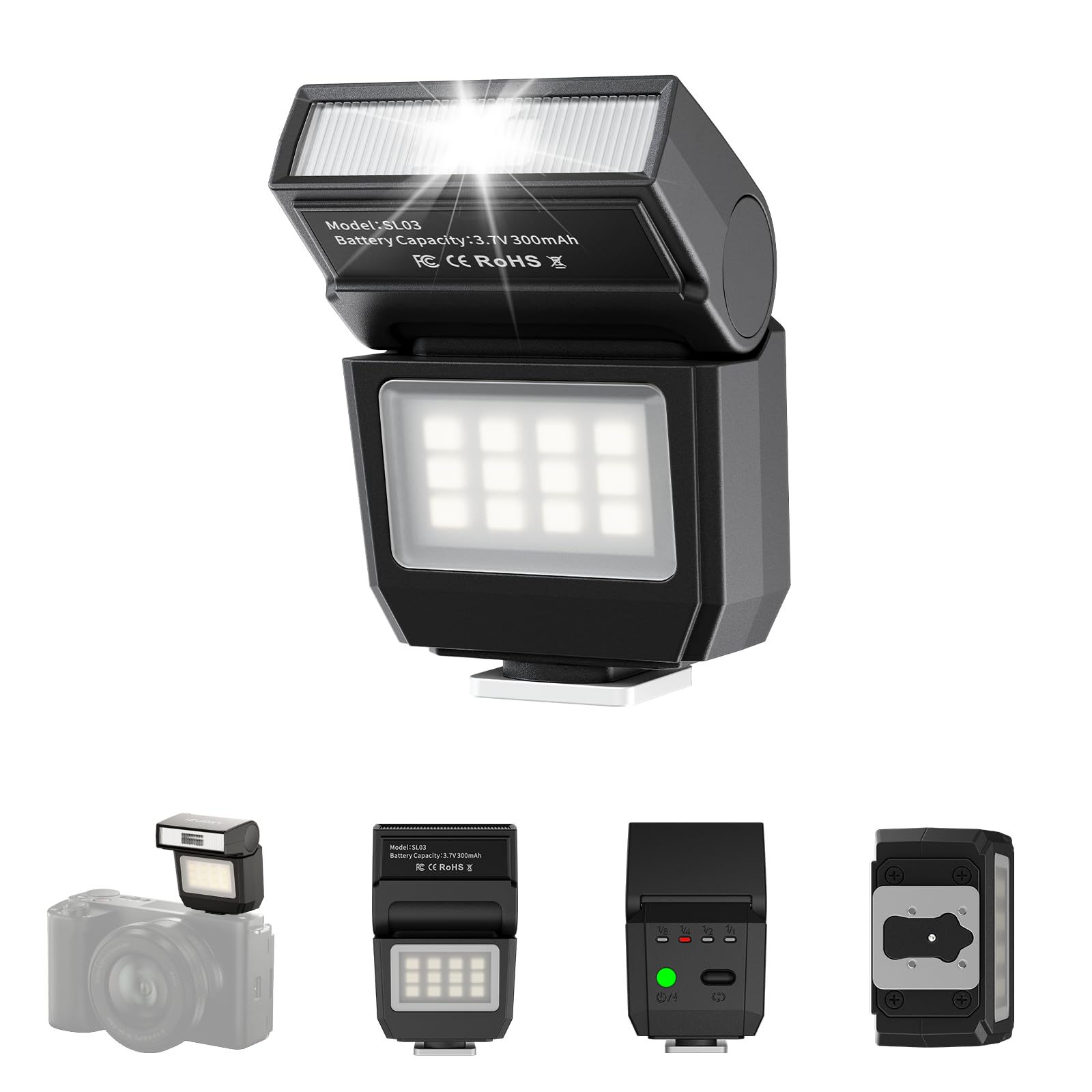
ULANZI SL03 Mini Flash

82 /100
Studio Score Strong Evidence

Key details

HSS
No
Power
GN8
Battery
250mAh USB-C
Wireless
None
Check Price on Amazon

The SL03 is small enough to live in a jacket pocket, yet its GN8 output is genuinely useful for filling shadows in close-range Sony vlog shots. The built-in LED extends the same compact package into continuous video fill, and USB-C charging keeps flash and camera accessories on one cable.

Manual power control sits on the flash body, so output changes don't require a trip into the camera menu. The flash provides enough light for talking-head fill or subtle background separation in low-light settings. The LED is also handy as a video light for short clips.

Given the budget-friendly price, the SL03 feels more substantial in the hand than the size suggests. It is not a substitute for a full speedlight, but it fills a different niche: a light that gets packed because it doesn't take up space.

This is aimed at casual or vlog Sony shooters who want a compact manual fill light and don't need TTL/HSS. Since the hot shoe has a single contact, confirm your Sony body will fire single-pin flashes before buying; cameras without that contact won't trigger the SL03.

๐Ÿ’ก Use the LED as a preview light to see where shadows land before firing the flash.

Pros

  • Pocket-friendly body fits in a jacket pocket or small camera bag without adding bulk.
  • Budget price makes it a low-risk entry into manual off-camera flash.
  • Output is bright enough to serve as fill light or subtle backlight in low light.
  • Build quality feels solid for a budget flash, with a compact but sturdy shell.

Cons

  • Battery behavior can vary between units; some copies lose charge while sitting unused.
  • Manual-only output means close-up shots may be overexposed or underexposed until you adjust power.
Our verdict

For casual Sony vloggers who don't need TTL/HSS and want a pocketable fill light, the SL03 is a practical, low-cost companion.

Check Latest Price
6

Native OEM Integration

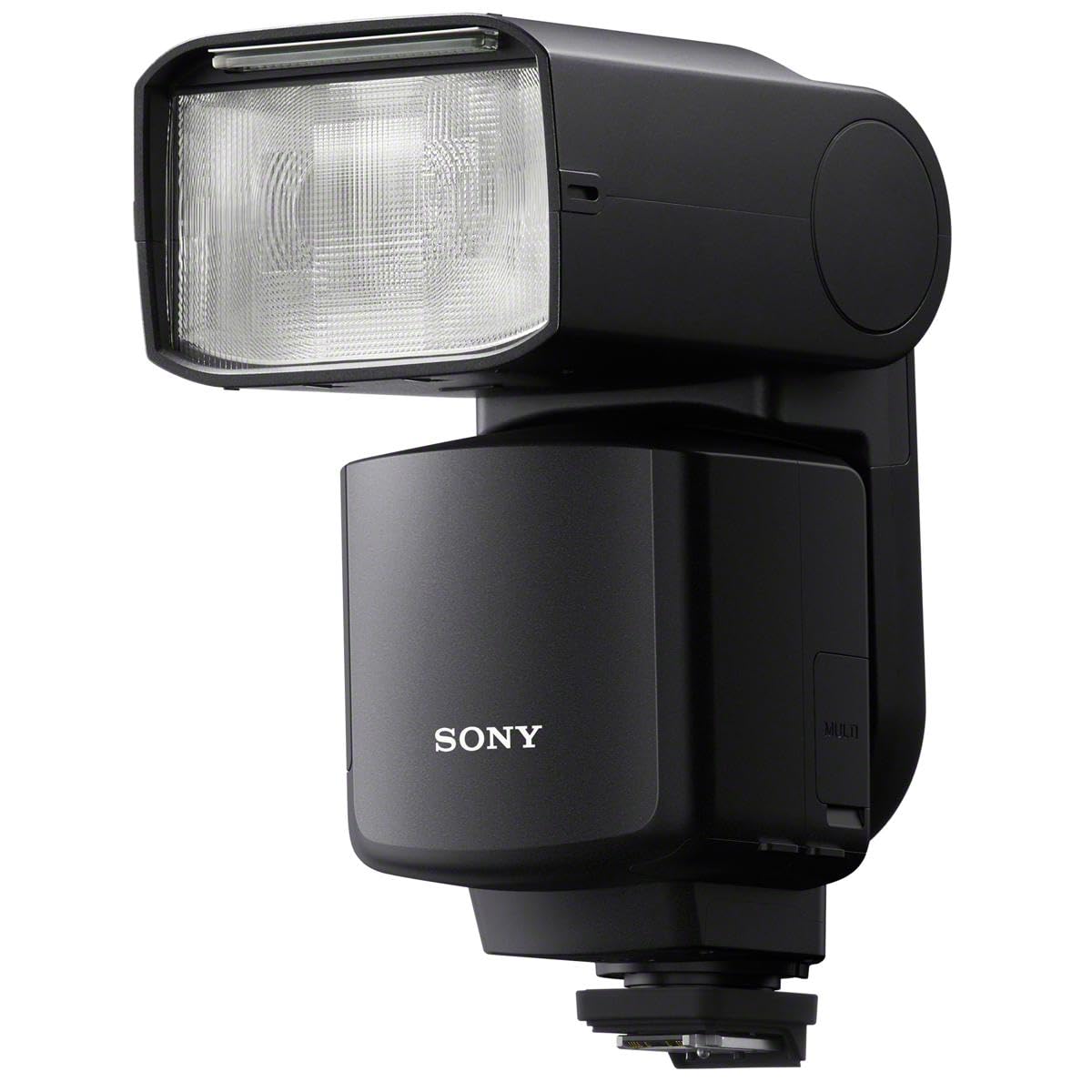
Sony HVL-F60RM2

85 /100
Studio Score Strong Evidence

Key details

HSS
Yes
Power
GN60
Battery
4x AA
Wireless
Radio control
Check Price on Amazon

The HVL-F60RM2 adds GN60 output and Multi Interface Shoe communication to Sony's native radio TTL system, keeping off-camera flash metering inside the camera's exposure workflow. That integration is the reason to pay the premium: a Sony shooter who needs off-camera flash can keep TTL behavior without introducing a third-party trigger system.

Four AA cells instead of a lithium-ion pack add carry weight and spare-battery management, and the premium price sits well above comparable Sony-compatible speedlights. For professionals who depend on native radio TTL, this specialized OEM flash is the direct fit; for buyers weighing value or wanting Li-ion convenience, it is a niche choice rather than the all-round recommendation.

Pros

  • Face-detection-linked TTL keeps flash exposure aligned with Sony's subject-recognition system.
  • Built-in radio control coordinates off-camera flashes in the Sony ecosystem.
  • Multi Interface Shoe connection carries TTL and radio control through the native camera interface.

Cons

  • Four AA batteries add carry weight and require spare battery management on long shoots.
  • Premium price sits well above comparable Sony-compatible speedlights, so casual buyers pay for integration they may not use.
Our verdict

Working Sony professionals who need native radio TTL can make the premium worthwhile; value-focused or lithium-oriented buyers should treat it as a specialized option.

Check Latest Price
7

Compact AA TTL Flash

Nissin i60A

80 /100
Studio Score Strong Evidence

Key details

HSS
Yes
Power
GN60
Battery
4x AA
Wireless
Optical
Check Price on Amazon

The Nissin i60A is a compact GN60 TTL flashgun for Sony cameras, with a 24-200mm zoom head powered by four AA batteries. It suits photographers who want simple on-camera TTL flash without adopting a radio wireless system. The optical wireless mode can trigger remote flashes but depends on more careful placement than radio triggering, which is why it sits below radio-based options in this roundup. That limitation matters only if you plan a multi-flash off-camera setup; as a direct hot-shoe flash it keeps the kit small and familiar. Premium pricing is the other tradeoff, landing close to competitors that include Li-ion batteries and radio receivers.

Pros

  • Compact body with 24-200mm zoom head keeps a Sony kit small while covering a useful range.
  • Four-AA power keeps spare batteries easy to find when shooting away from a charger.
  • Direct Sony TTL support gives simple auto exposure without an external trigger.

Cons

  • Optical wireless triggering depends on line of sight, so radio systems permit looser off-camera placement.
  • Premium pricing lands close to radio-capable units with Li-ion rechargeable batteries.
Our verdict

If your Sony kit needs a compact hot-shoe flash for on-camera TTL and occasional optical remote work, the i60A fits without adding a radio receiver. Multi-flash radio users should look at radio-equipped options.

Check Latest Price
8

Ultra-Budget Pocket Flash

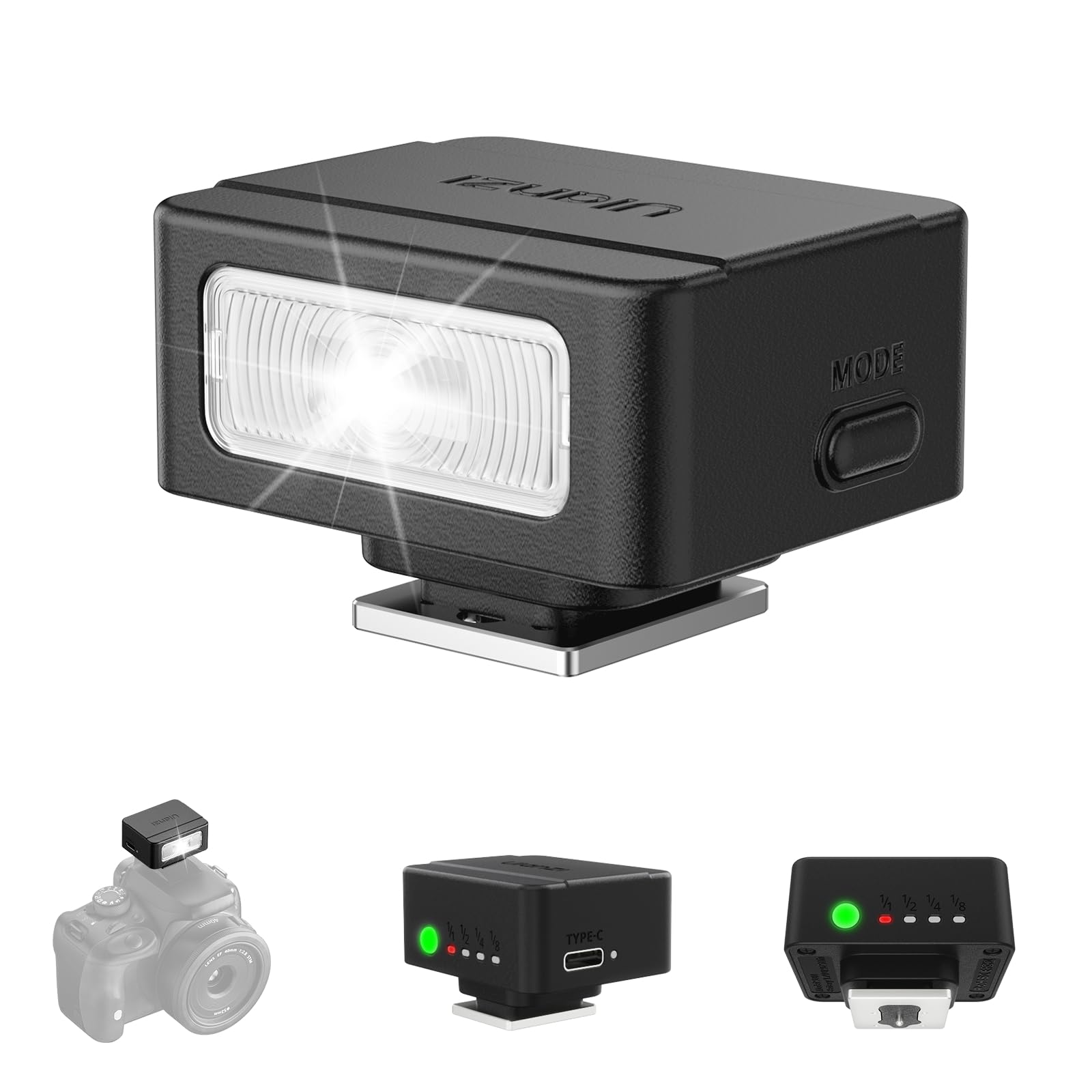
ULANZI SL01 Mini Flash

78 /100
Studio Score Established

Key details

HSS
No
Power
GN8
Battery
250mAh USB-C
Wireless
None
Check Price on Amazon

The ULANZI SL01 is the smallest and least expensive manual fill flash in this set, and that is exactly the niche it serves. It pairs a pocket-size body with a USB-C rechargeable battery and just enough output for one or two stops of fill on a Sony ZV-E10 or A6xxx. Camera compatibility is the key dependency: the hot-shoe connection is single-contact and manual-only, so TTL/HSS is off the table and certain bodies may not fire it. Close-range output steps are coarse, which makes exposure a bit unpredictable at arm's length. A slightly more capable ULANZI pocket model exists nearby, so this one belongs to travelers who want the absolute cheapest way to carry a fill flash and have confirmed their camera hot shoe works with it.

Pros

  • Tiny body slips into a pocket or bag without adding bulk.
  • Rechargeable battery handles a casual shooting session without needing a charge.

Cons

  • Close-range output steps are coarse, so fill can be too bright or inconsistent.
  • Single-contact sync can be incompatible with certain Sony camera bodies; confirm your model before buying.
Our verdict

For ultra-budget travelers who want a pocket-size fill for a compatible Sony body, this flash works; TTL/HSS shooters should pass.

Check Latest Price

How to Choose

TTL vs Manual Exposure

TTL (through-the-lens) metering lets the camera and flash calculate exposure together. For wedding receptions, indoor events, or anything where the light changes as you move, TTL saves you from adjusting power manually between every frame. Manual mode, by contrast, gives you consistent output across an entire setup because the flash does not change its own power based on what the camera sees.

The hidden trade-off is that TTL systems add complexity and can disagree with your camera in mixed-lighting environments. If you are learning flash photography, starting with manual is often faster and cheaper. If you are being paid for results, TTL is a practical time-saver.

High-Speed Sync (HSS)

HSS lets you use flash at shutter speeds above the camera's normal flash sync limit, typically around 1/250s. This matters when you shoot wide-aperture portraits in bright daylight and need to keep the background from blowing out. A flash without HSS forces you to stop down the aperture or block light with an ND filter.

The trade-off is that HSS output drops as shutter speed increases, so a flash that feels powerful at 1/250s can become weaker at 1/4000s. If you only shoot indoors, HSS is not essential. If you regularly shoot outdoor portraits with a fast lens, it is the difference between a usable and an unusable flash.

Power and Head Shape

Guide number and watt-seconds measure different things. A higher guide number (GN) describes reach calculated with flash-to-subject distance and aperture, while watt-seconds measure actual energy output. Round-head flashes distribute light more evenly than rectangular heads and produce softer shadows when used with magnetic modifiers.

For most Sony shooters, a GN60-class rectangular flash or a 76-100Ws round-head unit is enough for bounce work and off-camera portraits. Rectangular heads are the safer general-purpose choice because spendy magnetic modifier systems are scarce, while round heads offer smoother output at a higher price.

Battery System and Recycle Time

Lithium-ion rechargeable speedlights keep recycle times short and hold hundreds of full-power pops per charge. AA-powered flashes are lighter and easier to fuel in a pinch, but they drain fast in continuous shooting: a compact TTL flash can chew through four AA batteries in a few hundred full-power bursts.

If you shoot events or long studio sessions, the lithium-ion battery is the single biggest quality-of-life upgrade. If you only grab a flash occasionally, AA batteries keep the upfront cost low and avoid worrying about built-in battery aging.

Wireless Ecosystem Compatibility

The wireless system is the invisible commitment. Once you buy a flash that uses something like the Godox 2.4G X system, you can build out an off-camera kit: triggers, AD-series strobes, and multiple speedlights that talk to each other. A flash that only offers optical slave modes cannot communicate as reliably outdoors or in bright sunlight.

The practical consequence is that your first flashgun can quietly lock you into a brand ecosystem. If you plan to add off-camera lights later, choose a system with broad support rather than a flash that only works as a standalone unit.

Frequently Asked Questions