3 Best Point and Shoot Film Camera of 2026: Get Sharp Shots

Find a simple reusable 35mm point and shoot that delivers sharp, well-exposed photos without the guesswork.

A reusable point-and-shoot should be the easiest camera you own: load film, press the shutter, get photos back. But the category is full of retro-styled bodies hiding simple internals where two things go wrong most often โ€” the flash and the film transport. When those misbehave, you don't get a bad photo, you get no photo at all.

The field splits into two practical approaches. Half-frame cameras double your shots per roll and keep the cost of shooting low, but they trade negative size for economy, which means more visible grain and vertical-only framing. Full-frame models keep the classic negative and image quality but usually cost a bit more and offer less room for error on exposure.

What matters is matching the format and build to the way you actually shoot. This guide sorts the options by that trade-off so you know what you're giving up before you buy.

2

Best Full-Frame Upgrade
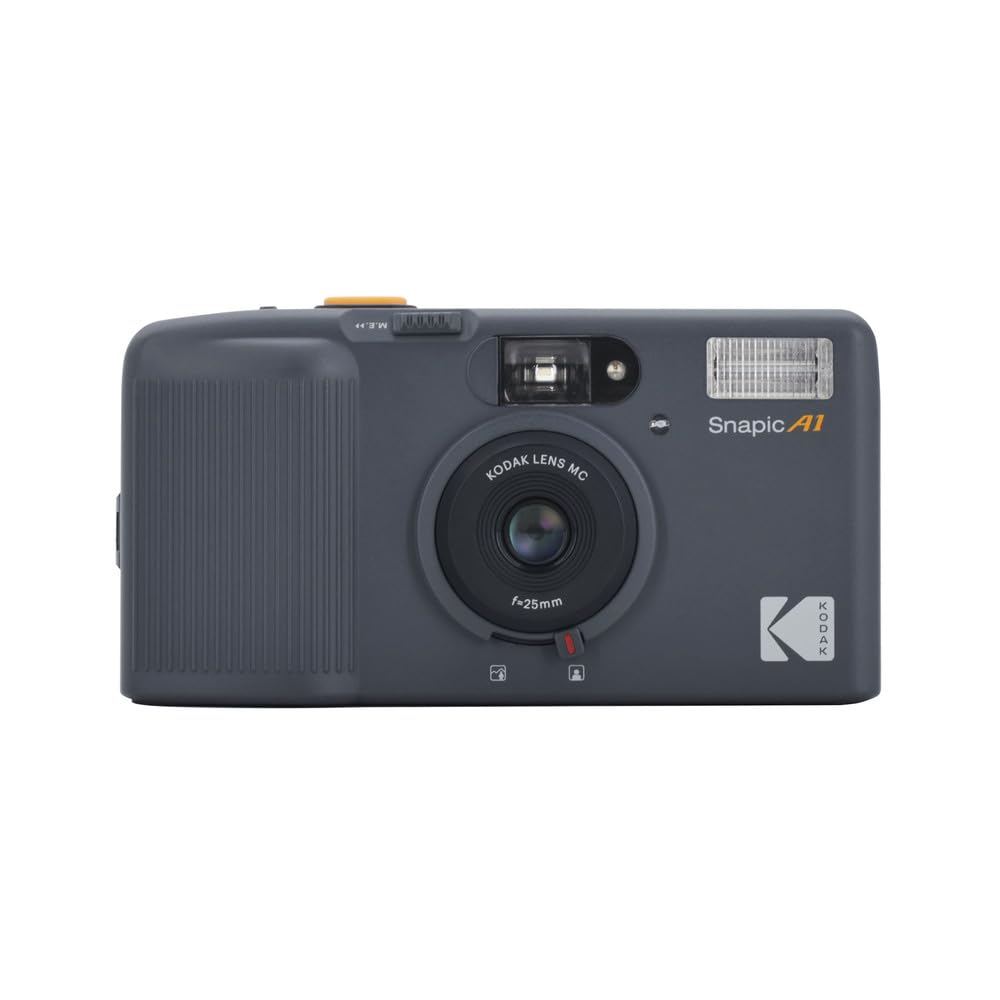
Kodak Snapic A1

84 /100
Studio Score Strong Evidence

Key details

Flash
Auto with red-eye reduction
Format
Full-frame 35mm
Focus System
2-zone focus
Shots Per Roll
36
Check Price on Amazon

The Snapic A1 pairs a 3-element glass lens with full-frame 35mm in a body light enough for a jacket pocket. While the category's best-selling half-frame maximizes shots per roll, this Kodak goes the other direction: fewer exposures, but larger negatives and a sharper-looking image from the glass optics.

This is the right fit for casual shooters who want a simple point-and-shoot with better image quality than basic plastic cameras, without tracking down vintage film gear. Auto exposure and built-in flash with red-eye reduction keep operation simple; the 2-zone focus is the only real setting to think about. Strict budget buyers counting per-shot costs will get more value from a half-frame model, but anyone prioritizing print-friendly full-frame negatives will appreciate the tradeoff.

Unit-to-unit variance can appear: occasional cameras may suddenly cease operating or refuse to power on. That makes this a casual-use camera rather than an event workhorse, and the glass-lens image quality is the reason to accept that risk. Checking the camera soon after purchase is the practical way to address the concern.

๐Ÿ’ก Run a test roll before a big trip so any power-on or transport issue shows up while you can still switch cameras.

Pros

  • Three-element glass lens delivers noticeably better sharpness than basic plastic point-and-shoots.
  • Auto exposure and 2-zone focus keep operation simple for beginners.
  • At 117g, it slips into a pocket without adding bulk.

Cons

  • Full-frame rolls yield 36 shots rather than 72, so per-image film and processing costs are higher than half-frame rivals.
  • Some units can suddenly cease operating or refuse to power on, so there is a chance the camera turns out to be unusable.
Our verdict

For casual travel and everyday 35mm shooting, the Snapic A1 is the full-frame alternative to the category's half-frame leader, delivering sharper negatives in a pocketable body. Buy it for the glass lens and simple controls; run a test roll before anything important.

Check Latest Price
3

Best Premium Half-Frame

Pentax 17

83 /100
Studio Score Strong Evidence

Key details

Flash
Built-in
Format
Half-frame 35mm
Focus System
Six-zone zone focus
Shots Per Roll
Up to 72
Check Price on Amazon

The Pentax 17 is the only newly manufactured camera in this set, pairing a 25mm f/3.5 HD-coated lens with a six-zone focus system and a 1-year warranty. It also shoots half-frame, so every roll of 35mm yields up to 72 frames rather than 36. The build is noticeably more substantial than the entry-level models that dominate this category.

Image quality from the HD-coated lens is a step above the budget half-frame options, and the format keeps per-shot film cost low. Half-frame negatives carry more visible grain than full-frame when enlarged, but at typical print sizes the lens holds detail well. The zone-focus system gives the shooter direct control over focus placement, which suits landscapes and measured portraits more than quick street grabs.

This is for film enthusiasts who want a new camera with modern coatings and warranty support, and who enjoy deliberate manual-winding photography. The premium price and the manual zone-focus workflow make it more involved than the focus-free point-and-shoots in this set, so it is not the entry-level pick. Budget-conscious beginners should start with the category's default half-frame option. A shutter problem can appear early in ownership, which makes the warranty more than a formality.

๐Ÿ’ก Keep the warranty card and receipt with the camera โ€” the coverage is part of what separates it from cheaper half-frame options.

Pros

  • HD-coated 25mm f/3.5 lens delivers defined, well-balanced half-frame images.
  • Half-frame format captures 72 shots per roll, lowering the per-frame cost of film.
  • Manual winding and tactile controls create an intentional, enjoyable shooting rhythm.
  • Substantial construction and thoughtful controls back the premium positioning.

Cons

  • Premium price puts it out of reach for casual, budget-first buyers.
  • Manual film advance and zone-focus decisions require a deliberate, slower workflow.
Our verdict

The Pentax 17 is for shooters who want half-frame economy and a hands-on workflow without giving up build quality or warranty coverage.

Check Latest Price
4

Budget Experimenters

1 Shot Half Frame

81 /100
Studio Score Strong Evidence

Key details

Flash
Built-in
Format
Half-frame 35mm
Focus System
Fixed focus
Shots Per Roll
Up to 72
Check Price on Amazon

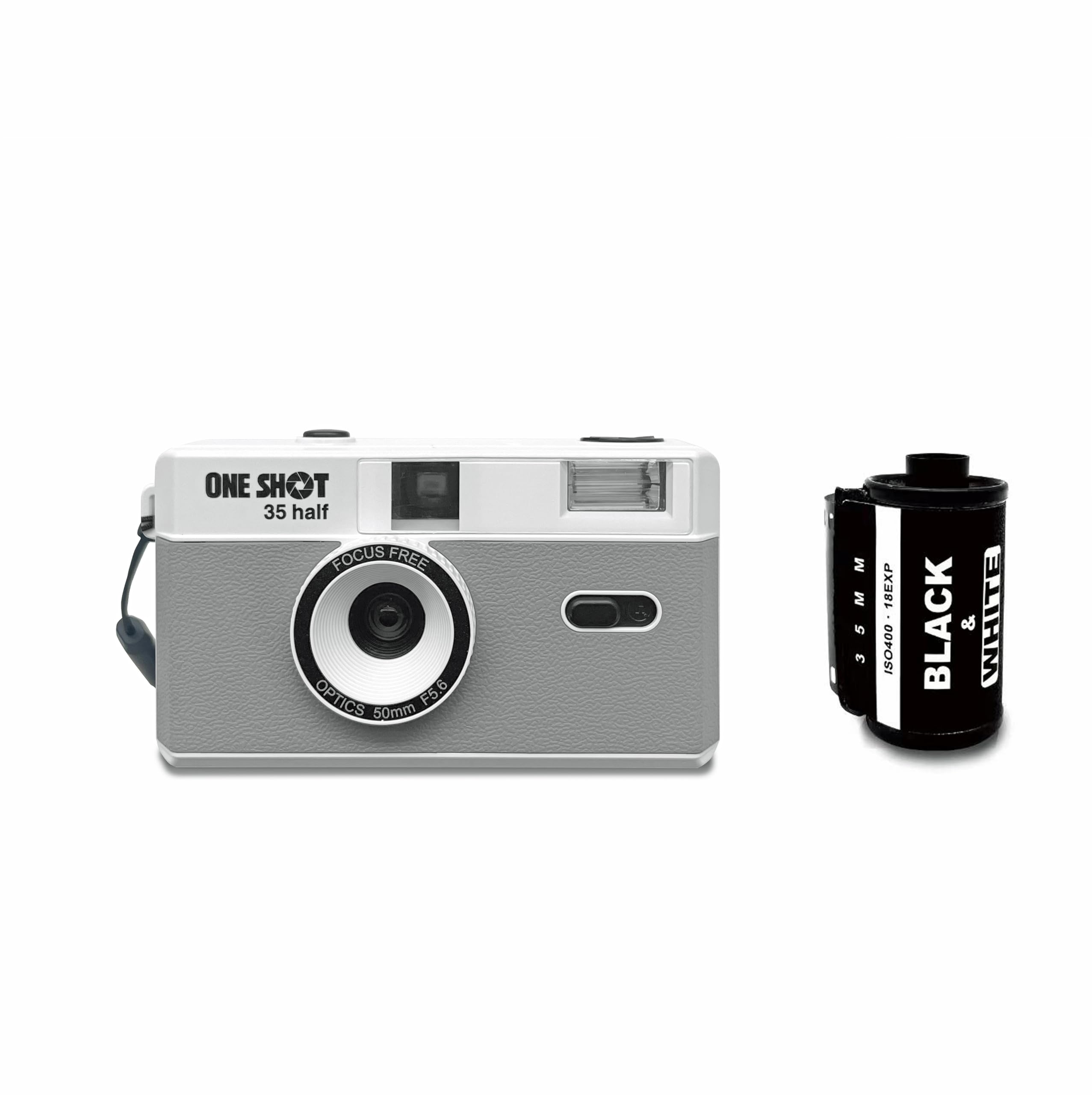
The 1 Shot Half Frame is a reusable, fixed-focus 35mm camera that ships with one roll of ISO 400 B&W film, so it is ready to shoot before you buy anything else. Its half-frame design doubles a 36-exposure roll to 72 shots, and the built-in flash covers casual indoor use. For an ultra-budget experimenter or a gift-giver who wants film included, it is an easy way in.

The low price comes with boundaries. Real-world consistency is unverified, so this is an enjoy-the-risk experiment rather than a dependable daily camera. The leading half-frame option in this set is a better bet when you need predictable results, but the 1 Shot remains the lowest-cost way to find out whether half-frame shooting fits your style.

Pros

  • Bundled roll of ISO 400 B&W film means the kit is ready to shoot immediately.
  • Half-frame design delivers 72 shots per 36-exposure roll, doubling film mileage.
  • Fixed-focus operation keeps controls as simple as a disposable camera.

Cons

  • The flash takes 10-15 seconds to recycle, making quick indoor sequences impractical.
  • Enlarged prints from small half-frame negatives can look grainier and softer than full-frame shots.
Our verdict

Buy it when you want a cheap, film-included kit for casual daylight experiments; choose a different half-frame model if you need predictable performance.

Check Latest Price

How to Choose

Half-Frame vs Full-Frame

Half-frame cameras expose two vertical images on a single 35mm frame, which means a 36-exposure roll yields about 72 shots. That cuts your film and development cost per photo roughly in half, but the negative is much smaller, so grain is more visible in enlargements and every image is oriented vertically.

Full-frame cameras produce traditional horizontal 24x36mm negatives with better tonal detail and more flexibility for prints or scanning. You'll go through rolls twice as fast, so if you shoot regularly, your film budget will be noticeably higher.

Lens and Focus System

Most budget point-and-shoots use fixed-focus plastic lenses with a short focal length and small aperture, which keeps everything from about 1.5 meters to infinity acceptably sharp. These are fine in daylight but have limited ability to isolate a subject or handle low light.

A multi-element glass lens with zone focus, like the 3-element optical unit in the Snapic A1 or the six-zone system in the Pentax 17, resolves more detail and gives you some control over where sharpness falls. The trade-off is that you have to choose a focus zone and estimate distance, which adds a step between you and the shot.

Flash Reliability

The built-in flash is the most common failure point in budget film cameras. Some units arrive dead, and others stop firing after a few rolls, leaving indoor shots dark. A camera with an unreliable flash may still work perfectly outdoors, but it is not a dependable all-weather choice.

Test the flash before you load your first roll and again after your first few shots. If the flash is essential for your shooting style, prioritize a model with a glass lens and better overall build, and avoid the lowest-cost plastic bodies where the flash is often an afterthought.

Shots Per Roll

Shots per roll is the direct result of the format decision. Half-frame cameras give you 72 exposures from a 36-exposure roll, which lowers your cost per shot and makes them ideal for travel, daily carry, and experimentation.

The downside is that you'll get smaller scans and prints at the same resolution, and you can't rotate the camera for horizontal shots without producing a vertical image. If you plan to make large prints or scan for professional use, full-frame is the safer investment.

Weight and Pocketability

A point-and-shoot should be the camera you don't leave at home. The lightest models weigh around 100 grams and fit easily in a shirt pocket, making them genuinely unobtrusive for daily carry.

Heavier cameras with metal construction and premium optics feel more robust and balanced, but they are more likely to stay in your bag. Think about whether you'll actually carry the camera with you, because the best camera is the one that's in your pocket when the moment happens.

Included Film and Batteries

Some bundles include a roll of film, but almost none include the AAA or CR123A battery needed to power the flash and exposure system. Factor the battery cost and the need to have spares on hand when you're traveling.

A bundle with film can be a convenient way to start, but the included film is often a 24-exposure roll rather than a full 36-exposure one. Check the package before assuming it's a full roll.

Frequently Asked Questions