4 Best Disposable Camera of 2026: Match Film Speed to Your Event

Which disposable camera to pick for trips, parties, beach days, and weddings without wasting film or overpaying for development.

Disposable cameras get sold on nostalgia, but the practical purchase is about film speed, flash behavior, and pack size. A 400-speed two-pack covers most travel and party use. An 800-speed option holds up slightly better in dim rooms — if the flash fires where it should.

The catch is consistency. Advertising photos come from controlled setups, while real frames depend on distance, light, and the individual camera in your multipack. Some packs deliver clean, warm photos; others turn out dark or grainy. The smart move is to pick a camera matched to the lighting and event, and treat it as a memory-maker rather than a precision tool.

Waterproof bodies broaden the range but add their own leak risk. Bulk packs cut cost per camera but inflate the total bill once development is added. Sorting out those trade-offs before buying matters more than brand name.

1

Best Overall

Fujifilm QuickSnap Flash 400

94 /100
Studio Score High Confidence

Key details

Flash
Continuous flash switch
Exposures
27 per camera
Pack Size
2 cameras
Film Speed
ISO 400
Check Price on Amazon

The QuickSnap Flash 400 two-pack is the everyday all-rounder among disposable cameras: 400-speed 35mm film, a built-in continuous flash switch, and no settings to adjust. Film advances automatically and the camera draws power from its own circuit, so there are no batteries to buy, no menus to explain, and nothing to hold up a group photo. That hands-off operation makes it the broadest-fit option for mixed groups, from a wedding party to a family vacation. It also keeps the learning curve near zero for a guest who has never used film before.

The continuous flash switch is the one control to think about; slide it on and it stays on for every indoor shot until you turn it off. The film produces a warm, slightly grainy character that digital filters rarely match, giving the images the old-school look buyers of disposable cameras expect. That look is the reason the QuickSnap keeps showing up on travel tables and gift tables. For anyone who grew up with film, the colors and grain arrive with a familiar, unpolished feel that phone photos do not offer.

This two-pack suits first-time disposable buyers, casual travelers, and hosts who want simple guest cameras at parties or weddings. If waterproof shots or low-light flexibility are the goal, a dedicated underwater model or an 800-speed option covers those jobs better. Treat this as a fun memory-maker rather than a precision tool: some frames arrive dark, blurry, or grainy, and flash output can vary between units. Those are natural limits of a fixed-exposure camera, and they are easy to accept when the goal is candid moments rather than gallery prints.

The two-pack format adds a planning convenience: one camera can sit on a gift table while the other goes in a carry-on, or two people can each shoot their own roll without sharing. The price is mid-range for the category, and the familiar name and easy operation keep it a low-risk backup for a phone at events.

Party hosts get the greatest practical value from this pair because a quick 'slide the flash on' is enough to put a guest to work. Two cameras cover two tables or one weekend away without anyone needing a tutorial, and the recognizable Fujifilm badge makes the gift-table presentation feel more intentional than a plain plastic camera.

Pros

  • Point-and-shoot operation with no settings or batteries to manage; guests can shoot immediately.
  • Fun for parties, weddings, and getaways; guests can just pick it up and shoot without instruction.
  • Delivers the vintage, old-school film look disposable-camera buyers are after.
  • Holds up across multiple users and settings, from family vacations to wedding tables.

Cons

  • Anyone expecting crisp, pixel-perfect scans will find the disposable format limited.
  • Processing fees add up after a roll is finished, putting the total cost above the camera's purchase price.
Our verdict

For casual travel, parties, and wedding tables, this two-pack is the easy entry point to disposable film photography.
Check Latest Price
2

Best for Nostalgia & Gift-Giving

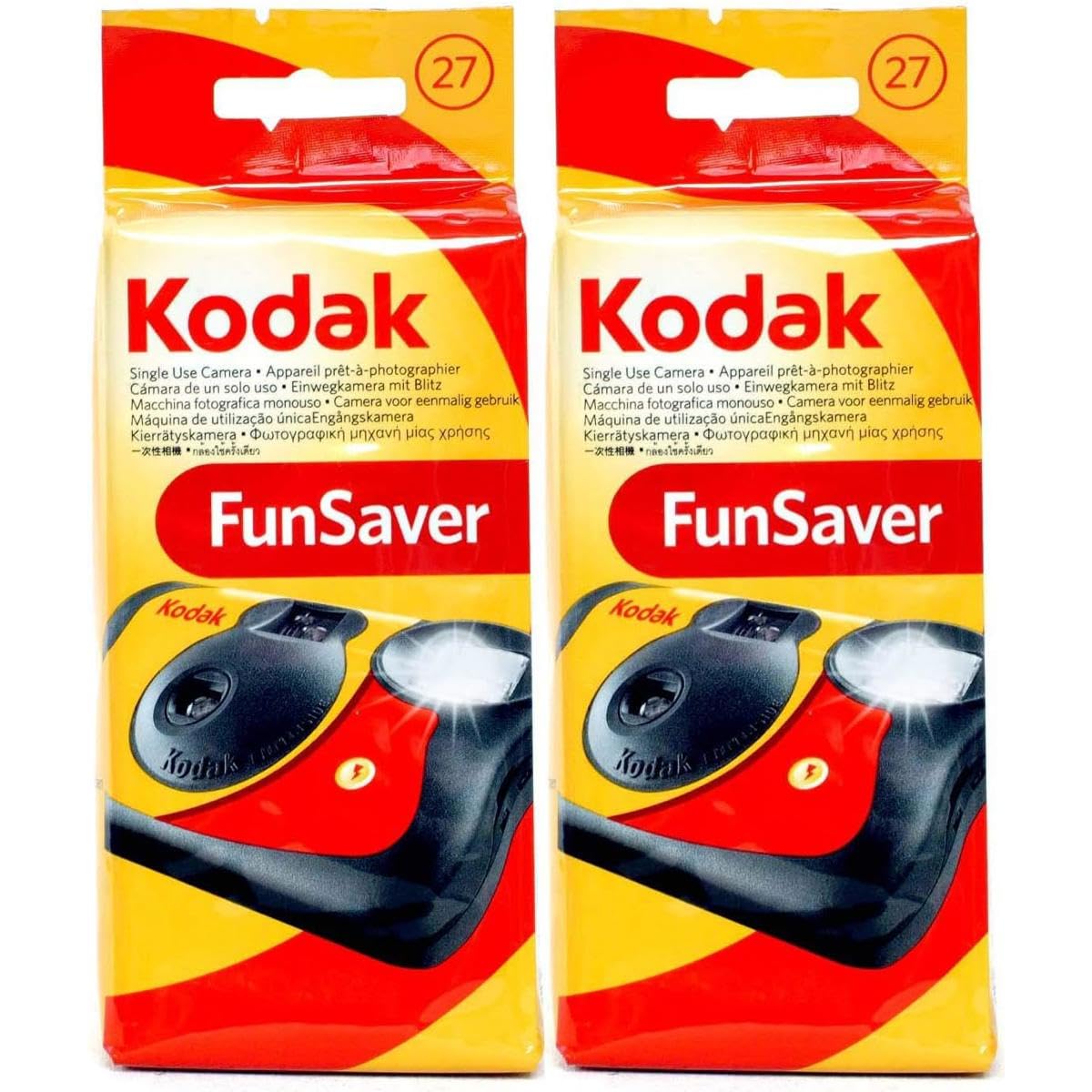
Kodak Funsaver 2-Pack

93 /100
Studio Score High Confidence

Key details

Flash
Manual flash
Exposures
27 per camera
Pack Size
2 cameras
Film Speed
ISO 800
Check Price on Amazon

The Kodak Funsaver 2-pack loads ISO 800 film — a stop faster than the top-pick Fujifilm two-pack — giving it a small but valuable edge in dim party rooms and indoor events. The Kodak name carries immediate recognition for gift-givers, and the buttons are simple enough for kids and grandparents to use without instructions.

This is a low-pressure camera built around memory-making rather than pixel-level precision. It handles ordinary indoor light well when the flash is used within its working range, and it rewards a steady hand more than technical skill. That makes it a good fit for hosts who would rather pass the camera around than worry about exposure settings.

The two-pack splits easily between two events or two people, and each camera's 27 exposures cover a full party without running out early.

Families, gift-givers, and event hosts who want a familiar Kodak experience will appreciate the fast film and simple operation. Frames can come back dark, grainy, or blank when the light is poor, so buyers should treat this as a nostalgia-driven memory-maker, not a guaranteed every-shot performer.

💡 Charge the flash before each shot and keep subjects within 4-11.5 ft for the best indoor results.

Pros

  • ISO 800 film gives indoor party shots a low-light edge over 400-speed competitors.
  • Simple controls that a child or grandparent can master on the first try.
  • Kodak's familiar name makes it an easy gift for teens, kids, and friends.
  • Two cameras in the box cover multiple events or an extra person.

Cons

  • Manual flash needs a deliberate press and charge, which can slow down quick party candids.
  • Film advance can stick in a given camera, making it hard to wind to the next frame.
Our verdict

For Kodak fans and gift-givers who want an 800-speed disposable with a classic feel, this two-pack is the one to pass around.

Check Latest Price
3

Best for Water Adventures

Fujifilm QuickSnap Waterproof

86 /100
Studio Score Strong Evidence

Key details

Flash
No flash
Exposures
27 per camera
Pack Size
2 cameras
Film Speed
ISO 800
Check Price on Amazon

The QuickSnap Waterproof 800 is the two-pack that belongs in a beach bag rather than an evening bag. Its 17-foot waterproof rating and ISO 800 film make it the practical disposable for actual water use, and the included strap and larger shutter release keep wet-handed handling simple.

On a snorkel or pool day, the 35mm roll produces real film images with the analog look disposable buyers expect: natural grain, muted highlights, and occasional lens flare. The two-pack covers more ground than a single camera, so one stays dry in the beach bag while the other follows you into the water. Each camera holds 27 exposures, enough for a morning of reef and shoreline shots. The ISO 800 film also gives a bit more leeway in shade and overcast light than slower rolls.

Snorkelers, beachgoers, and cruise passengers who want film photos from water without risking a phone are the right audience. Waterproofing can vary between units — leaks or fogged film are possible in some cases — so buy ahead and shoot a test roll before an irreplaceable trip. On casual beach days, this pack is easy to enjoy; on a once-in-a-lifetime dive, a dedicated underwater camera is the safer companion.

Pros

  • Water-ready to 17 feet, so it shoots real 35mm film in ocean and pool conditions.
  • Two-pack with a strap and larger shutter release is easy to manage on boats and beaches.
  • ISO 800 film gives useful latitude in bright water and overcast conditions.

Cons

  • No built-in flash means evening events and indoor parties fall outside its specialty.
  • Underwater shots may come out darker and grainier than expected in some conditions.
Our verdict

This is the one to pack when the itinerary includes a beach, a reef, or a cruise-ship shore day.

Check Latest Price
4

Best Customizable Wedding Pack

H&H Photo White 12-Pack

87 /100
Studio Score Strong Evidence

Key details

Flash
Built-in upgraded flash
Exposures
27 per camera
Pack Size
12 cameras
Film Speed
ISO 400
Check Price on Amazon

The 12-pack is an event component, not just film: white bodies with blank surfaces for guest decorating, a tote for handing them out, and a development discount for the host. Each camera arrives individually wrapped, so the table reads as a planned activity rather than a bulk box being passed around. That focus separates it from a no-frills volume pack, where the priority is simply the lowest per-camera cost.

The small white shells are easy to mark with pens or stickers, and the 27-exposure ISO 400 film with a built-in flash suits typical reception light. Under normal exposure, the photos keep a warm, candid snapshot character that fits wedding albums. There is no need to coach guests through settings; the activity is point, flash, and pass along.

This is for hosts who want a coordinated guest-camera activity and care about the tote and discount package. Buyers who need a viewfinder for accurate framing should choose a camera with one. A camera within a pack can also come back with dark or black frames, so ordering one extra 12-pack is a sensible safety net for a celebration you cannot reshoot. Tight budgets should factor in processing fees; a plain volume pack will be cheaper overall.

💡 If you want less guesswork, use the top edge of the camera as a framing guide and crop later.

Pros

  • White bodies arrive individually wrapped and look like a deliberate part of the event design.
  • The interactive, nostalgic format lands well at weddings and parties.
  • Properly exposed shots have a warm, candid, snapshot feel that suits event albums.
  • Per-camera cost is reasonable for a 12-pack that includes a tote and development discount.

Cons

  • With no viewfinder, guests frame by eye rather than composing precise shots.
  • On a wedding day, one camera that comes back with dark frames is a meaningful loss; the moment cannot be re-shot.
Our verdict

The coordinated presentation is the reason to choose this over a plain volume pack; the film itself behaves like any 400-speed disposable. For wedding decor, that is exactly the point.

Check Latest Price

How to Choose

Film Speed

ISO 400 film is the general-purpose choice: it balances speed and grain for outdoor and indoor flash use. ISO 800 film responds to less light, which helps in dim rooms and overcast scenes, but the extra sensitivity shows as heavier grain in bright conditions. Buyers who pick 800 for 'better quality' often end up with more visible film texture than they expected.

Flash

A built-in flash only works when the subject is within its range, usually around 4 to 12 feet. Outside that range, indoor shots go dark; too close, faces wash out. Flash reliability also varies from unit to unit, so take a test frame or two before an event moment you cannot redo.

Exposures

27 exposures is the standard, but that number isn't a suggestion. Once the roll is done, the whole camera goes to the lab, so a full frame-count pack means the least time between handoff and development. If you are distributing ten cameras, expect some users to waste frames on tests or accidental shots.

Water Resistance

Waterproof disposables rely on an O-ring seal and a one-time plastic shell; they are rated to a depth, not a duration. At 17 feet, they handle snorkeling, but rough use can break the seal. A rinsed, dried camera can still have moisture inside, so treat the rating as a maximum, not a guarantee.

Pack Quantity

Multipacks lower per-camera cost but push the total bill up front, and development is charged per roll. A 10- or 12-pack with 27 exposures each means 270-plus frames to process — enough for a large event, but a large lab expense. If you only need a handful, a two-pack is the cheaper practical unit.

Frequently Asked Questions