8 Best Film of 2026: Match Stock to Your Camera and Light

35mm color, black-and-white, and instant film picks that match your camera, shooting style, and light conditions without wasting money on the wrong pack.

Most disappointing film photos trace back to one of three issues: the wrong format for the camera, the wrong ISO for the light, or stock that sat too long before purchase. Film is chemistry, not magic — once you match those three variables, even budget film holds up well in scans and prints.

Instant film adds another layer. Blank or dark frames usually come from shooting in low light without flash or from stale cartridges, not a faulty product. Knowing the difference saves money and stops a good pack from being blamed for a lighting problem.

This guide focuses on the choices that actually affect your negatives and prints: camera compatibility, ISO behavior, exposures per roll, and color versus monochrome character. Get those right, and the remaining decision is simply which look you prefer.

1

Best Overall

Kodak Ultramax 400 3-Pack

96 /100
Studio Score High Confidence

Key details

Film Type
Color negative
Exposure Count
36 exp, 3 rolls
Development Process
C-41 process
Format Compatibility
35mm
Check Price on Amazon

Kodak Ultramax 400 pairs ISO 400 speed with 36 exposures per roll, giving handheld shooting a workable margin in overcast light and keeping reloads to a minimum. The three-roll bundle sits in the mid-range of film pricing, so it is an easy stock to keep in the bag. That balance is the core of its appeal: enough speed for indoor and evening frames, enough roll length to cover a full outing without changing film.

Old SLRs, compact point-and-shoots, and simple cameras handle this emulsion without trouble. The 400-speed rating steadies shots in shaded streets and overcast afternoons, while the negative latitude absorbs small exposure misses from older light meters. Color stays vibrant without looking overdone, skin tones read as natural, and scans remain crisp at normal snapshot sizes. For a mixed-condition day, this is the roll to load when you would rather think about the subject than the exposure.

The 36-exposure length and three-roll count lower the cost per frame compared with single 24-exposure rolls, which matters when you plan to shoot through a full day. It is also a stock you can load without locking in a specific look; daylight, flash, and cloudy scenes all come back with the same pleasant character. For a trip where variety is the plan, this pack removes the guesswork. The same roll handles bright sun, overcast sky, and indoor flash without switching, which makes packing simpler when the day's lighting is unknown.

This is the film for beginners, travel shooters, and anyone using a vintage camera. If a black-and-white darkroom is the goal, a dedicated monochrome film fits better. Fulfillment can vary with the three-roll bundle; in some cases a single roll arrives instead of three, so count the rolls when the package lands.

The color palette stays pleasant across daytime, shade, and flash, which keeps it in a camera bag that carries only one film. It is not a specialist tool, but it is the roll to grab when the plan is simply to shoot. That combination of speed, price, and forgiving color is why it belongs in a casual 35mm bag.

Pros

  • Three-roll bundle keeps the per-roll cost low enough for regular shooting.
  • Works well in older SLRs, point-and-shoots, and simple cameras.
  • Produces crisp, clear images with vibrant color in normal prints and scans.
  • Skin tones look natural without the heavy color shifts some films create.

Cons

  • Grain becomes more visible at large enlargement sizes than with a slower ISO 100 stock.
Our verdict

For everyday 35mm shooters who want one color negative film for mixed light and old cameras, this three-roll pack is the balanced pick.

Check Latest Price
2

Best for Instant Cameras

Fujifilm Instax Mini Twin Pack

96 /100
Studio Score High Confidence

Key details

Film Type
Instant
Exposure Count
20 exp, 2 packs
Development Process
Instant development
Format Compatibility
Instax Mini
Check Price on Amazon

The Instax Mini twin pack is the quickest route to a finished photo in this film lineup: expose a frame and a credit-card-size print slides out about 90 seconds later. ISO 800 sensitivity keeps indoor party shots bright, and the white border gives every image that deliberate instant-camera look. The two cartridges together provide 20 exposures, which lines up with a party or a day of gifting.

Color balance follows Fuji's familiar instant-film palette: natural skin tones, a touch of softness, and borders that make even casual snapshots feel like keepsakes. The prints are small enough to tuck into a wallet or stick on a fridge, and they come out ready to share with no memory card, app, or drying time. Because the camera handles exposure and processing, there is little to adjust before handing the print over.

This is the correct film for Instax Mini camera owners who want a tangible keepsake at events, and it is an easy gift for teens or kids because the camera carries the work. Dark or blank frames can happen in low light or with aging cartridges, so using flash and fresh stock keeps results consistent; that is a modest boundary in casual social shooting.

Pros

  • Delivers consistent, high-quality instant prints across many conditions.
  • Produces sharp details and clear pictures.
  • A go-to gift for teens and kids because the camera carries the work.
  • Classic white-frame finish adds to the retro appeal.

Cons

  • Only fits Instax Mini cameras, so 35mm shooters need a different film type.
  • Does not produce black-and-white negatives for darkroom or archival work.
Our verdict

Keep an Instax Mini loaded with this twin pack for events that call for instant keepsakes.

Check Latest Price
3

Best Black-And-White Film

Ilford HP5 Plus 3-Pack

96 /100
Studio Score High Confidence

Key details

Film Type
B&W negative
Exposure Count
36 exp, 3 rolls
Development Process
B&W chemicals
Format Compatibility
35mm
Check Price on Amazon

HP5 Plus sets the baseline for ISO 400 black-and-white negative film. The tonality runs deep and rich, with shadow detail that holds up when pushing to 800 or 1600 in standard developers. Resolution stays crisp across handheld scenes, and the grain structure enlarges cleanly.

The 3-pack's advantage is its range: it handles everyday street work, action sequences, and darkroom printing without changing kits. Where Tri-X leans on a recognizable look, HP5 Plus stays a more neutral tool, which makes it a solid choice for shooters who want predictable negatives across different lighting.

This film is for photographers who already know they want black-and-white and do their own processing or scanning. It is not the right pick for color-negative shooters or beginners who prefer automated point-and-shoot color film. In some camera bodies, roll loading can meet occasional resistance; load carefully the first few times.

Pros

  • Deep blacks and shadow detail define the tonal range without blocking up.
  • Three-roll pack keeps per-roll cost reasonable for regular black-and-white shooting.
  • Crisp images with good resolution across everyday and action shots.
  • Flexible for everyday, action, and darkroom work without switching emulsions.

Cons

No notable drawbacks to flag.

Our verdict

For B&W shooters who want a dependable 3-pack with push-processing headroom and standard chemistry response, HP5 Plus is the default.

Check Latest Price
4

Best for Landscape / Fine Grain

Kodak Ektar 100 2-Pack

95 /100
Studio Score High Confidence

Key details

Film Type
Color negative
Exposure Count
36 exp, 2 rolls
Development Process
C-41 process
Format Compatibility
35mm
Check Price on Amazon

Kodak Ektar 100 is the fine-grain, high-saturation option in this lineup. Where the top pick covers mixed conditions as an all-rounder, this stock rewards deliberate outdoor shooting with crisp detail and vivid color. It is not a casual point-and-shoot film; it is a purpose-built emulsion for photographers who want the negative itself to carry the image.

The payoff is a clean negative that scans without heavy noise reduction and enlarges with detail intact. Color stays saturated without turning muddy, and fine grain keeps edges defined. For a 100-speed stock, it behaves predictably in bright scenes, which is the context where it is meant to be used.

Landscape and outdoor photographers who scan or enlarge their work are the natural audience, along with street shooters who stay in bright light. The ISO 100 speed sets the bright-light/tripod boundary: indoor handheld work is not this film's territory, and third-party stock can arrive expired, so check dates when the package lands. The color and detail make this 2-pack worth considering for those specific uses.

Pros

  • Vivid, saturated colors with strong contrast give landscapes a rich, dimensional look.
  • Crisp, detailed images with near-invisible grain enlarge cleanly and scan well.
  • Fine-grain performance makes this a strong choice for scanning and large prints.
  • Bright outdoor scenes play to this film's strengths, especially for landscape work.

Cons

  • Premium per-roll cost suits enlargement work more than casual snapshots.
Our verdict

Kodak Ektar 100 is for shooters who treat film as a detail-first medium and work in conditions that give the ISO 100 speed room to perform.

Check Latest Price
5

Best Fuji Color Negative Alternative

Fujifilm 400 3-Pack

91 /100
Studio Score High Confidence

Key details

Film Type
Color negative
Exposure Count
36 exp, 3 rolls
Development Process
C-41 process
Format Compatibility
35mm
Check Price on Amazon

Three 36-exposure ISO 400 rolls give Fuji shooters a modern color-negative stock with a clean, controlled palette. The film keeps that look across bright daylight, overcast scenes, and mixed lighting, and the three-pack format avoids an extra stop at a camera shop before a trip. It matches the Kodak 400 3-pack on convenience while offering a different color signature.

In a point-and-shoot or a 35mm SLR, the 400-speed emulsion buys enough shutter speed for shaded streets and overcast afternoons without forcing flash as often as ISO 200 film. The negatives keep clear separation between highlights and shadows, and the color stays vivid without tipping into oversaturation. That is the combination that makes the three-roll pack a practical travel choice.

This pack suits Fuji color-negative fans, travel photographers, and point-and-shoot users who want ISO 400 latitude in 36-exposure rolls. Some shooters see a cool or blue cast; color rendering is subjective, so the palette is a boundary to accept rather than a flaw to fix. If you already know you prefer Kodak's warmer rendering, the Fuji look is worth testing before you commit to three rolls.

Pros

  • Three-roll bundle is a practical buy for anyone who regularly shoots 400 film and wants fresh stock on hand.
  • Color stays consistent across varied lighting, giving mixes of daylight and indoor shots a unified look.
  • Clear, vibrant negatives carry the film look that Fuji shooters expect.

Cons

  • Three-roll pack commits you to a full stock before you have confirmed the color palette suits your shooting.
  • Per-roll pricing is premium next to entry-level Kodak 400 3-packs, which matters if you track cost per frame.
Our verdict

For Fuji loyalists and point-and-shoot travelers who want ISO 400 latitude in a convenient 36-exposure 3-pack, this is the color-signature pick.

Check Latest Price
6

Vintage Polaroid Cameras

Polaroid 600 Film 8-Pack

93 /100
Studio Score High Confidence

Key details

Film Type
Instant
Exposure Count
8 exp, 1 pack
Development Process
Instant development
Format Compatibility
Polaroid 600
Check Price on Amazon

Polaroid 600 Film is the correct cartridge for vintage 600-series cameras, with the battery built in and classic white frames. It shoots at ISO 640 in Impulse, SLR680, and OneStep2 bodies. The limitation is the lack of a bulk-value option: this is a single premium cartridge, so frequent shooting carries a higher per-photo cost. That tradeoff makes sense for an enthusiast loading a few shots, while high-volume instant shooters should compare multi-pack pricing.

Pros

  • Built-in battery powers 600-series bodies from each cartridge, so no separate battery is required.
  • ISO 640 film outputs classic white-frame prints that match vintage Polaroid 600 cameras.

Cons

  • Cartridge is specific to Polaroid 600-family cameras, so Instax Mini owners need a different format.
  • A single pack holds only eight frames, which can disappear quickly during an active shoot.
Our verdict

Keep this in mind for occasional 600-series shooting; if you fill multiple frames per outing, the i-Type bulk pack is the cost-effective route.

Check Latest Price
7

Modern Polaroid Cameras

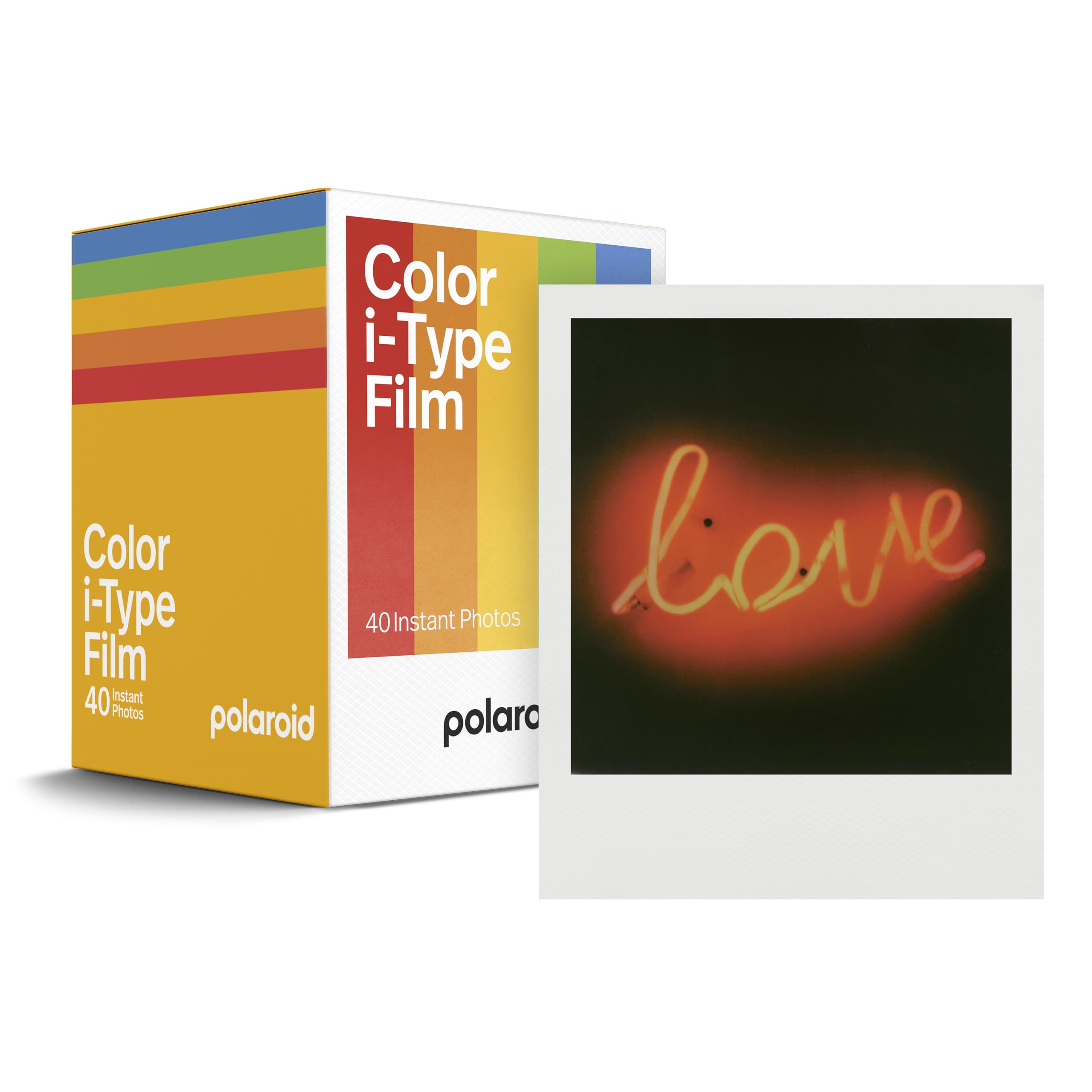
Polaroid I-Type 40-Pack

93 /100
Studio Score High Confidence

Key details

Film Type
Instant
Exposure Count
40 exp, 5 packs
Development Process
Instant development
Format Compatibility
Polaroid i-Type
Check Price on Amazon

The Polaroid i-Type five-pack puts 40 color instant photos in reach for the Now, OneStep+, and OneStep2, with ISO 640 film that keeps the familiar Polaroid frame and development. Buying five eight-shot cartridges at once trims the per-photo premium that makes single packs so expensive, so regular shooters get more frames per dollar. The format boundary is clear: i-Type cartridges do not fit vintage 600-series cameras, and those owners need the 600 film line instead. The upfront cost is also premium-priced, which makes this bulk box a better fit for people who know they will shoot all five cartridges than for someone trying instant film for the first time.

Pros

  • Five cartridges in one box give frequent shooters a lower cost per frame than buying singles.
  • ISO 640 color instant film works in mixed lighting while keeping Polaroid's print identity.
  • Drops directly into Polaroid Now, OneStep+, and OneStep2 cameras without adapters.

Cons

  • The box price is steep enough that casual or one-event buyers are better served by a single cartridge.
  • i-Type cartridges only work in modern cameras; vintage 600-series bodies require the separate 600 film.
Our verdict

This five-pack is the right size when you shoot a modern i-Type Polaroid often enough to work through 40 frames.

Check Latest Price
8

Mixed-ISO Color Shoots

Kodak Ultramax+Gold 6pk

92 /100
Studio Score High Confidence

Key details

Film Type
Color negative
Exposure Count
36 exp, 6 rolls
Development Process
C-41 process
Format Compatibility
35mm
Check Price on Amazon

This bundle delivers six 36-exposure Kodak color rolls split between Ultramax 400 and Gold 200, letting one order cover both mixed-light travel and bright outdoor scenes. The two emulsions are the same familiar stocks sold elsewhere, not a new film, but the convenience of having both ISO speeds in one box is real. It sits below the separate 3-packs as a value play because the bundled accessory raises the upfront cost and the per-roll math takes a few extra seconds. As a third-party bundle, freshness depends on the seller's storage, so shop by reputation. That tradeoff is easy to accept for travelers who want a mixed-ISO kit; shooters who need one stock or a minimal budget will be better served by a single-emulsion 3-pack.

Pros

  • Genuine Kodak color quality across two stocks in one order.
  • Six 36-exposure rolls cover a trip without juggling separate purchases.
  • The included lens cloth adds a small practical bonus.

Cons

  • The bundled cleaning cloth adds little for shooters who already carry one.
  • The two-stock mix doesn't suit shooters who only want one Kodak emulsion.
Our verdict

The right fit is a traveler who wants one box of Kodak color for mixed lighting and will put both ISO stocks to work.

Check Latest Price

How to Choose

Format Compatibility

Format is the first filter because film only works in cameras built for it. 35mm cartridges fit SLRs and point-and-shoots, Instax Mini fits Fuji instant cameras, and Polaroid i-Type is physically incompatible with older 600-series bodies.

Polaroid 600 cartridges carry a small battery that powers the camera; i-Type packs omit it, so they cannot be swapped. A format mismatch is not a quality problem — it means the cartridge will not load or fire.

ISO and Light Sensitivity

ISO is the film's sensitivity to light. Lower-speed stocks like ISO 100 use smaller silver halide crystals, which give fine grain but need bright sun or a tripod. ISO 400 uses larger crystals, so it holds up in overcast light and indoors without flash.

The trade-off is grain versus handholdability: ISO 100 for landscape scans, ISO 400 for everyday and travel. ISO 800 instant film needs strong light or flash to avoid dark frames.

Exposure Count and Pack Size

Pack size controls cost per shot more than the shelf price. A 24-exposure 3-pack has 72 frames; a 36-exposure 3-pack has 108. The same number of rolls can mean half again as many photos, so compare per-frame cost before buying.

Shorter rolls suit infrequent shooters and test rolls; longer rolls suit photographers who reload often.

Color, B&W, or Instant

Color negative film is the most forgiving of exposure errors and develops with standard C-41 chemistry. Black-and-white film gives control over contrast and development time, and it pushes well in low light.

Instant film develops itself and produces a physical print, but there is no negative for later corrections. Frames are sensitive to light at the moment of ejection, so shooting conditions matter as much as the pack itself.

Development and Freshness

Film is a chemical product with a shelf life. Even unexposed rolls degrade as temperature and humidity trigger background reactions, which shows up as dull color or a color cast. Fresh stock from a high-turnover seller matters more than the name on the box.

For color film, check the expiration date before buying. For instant film, buy recent production and keep packs out of heat until use.

Frequently Asked Questions