5 Best Instant Camera of 2026: Match Film Format to Real Use

Match an instant camera to how you shoot: print size, analog vs hybrid preview, and low-light behavior before film costs add up.

Most first-time instant camera buyers hit the same wall in the first pack of film: a shot that looked fine through the viewfinder comes back too dark, too soft, or just off. The camera itself is rarely the problem. Auto exposure assumes bright light, and instant film is too expensive to treat as practice.

The useful distinction is not brand loyalty. It's whether you want a pure analog camera, a hybrid with a digital preview, or a camera-plus-printer that works from your phone. That choice determines how much film you waste, how small the prints are, and how much you enjoy the process.

The right instant camera is the one whose print size, exposure behavior, and preview workflow match the moments you actually shoot, not the one with the most nostalgic name. Get that match right, and film cost earns its place in the album.

1

Best Overall

Fujifilm Instax Mini 12

94 /100
Studio Score High Confidence

Key details

Film Format
Instax Mini
Battery Type
2x AA batteries
Shooting Style
Analog; no preview
Bundle Contents
60 sheets, case, album
Check Price on Amazon

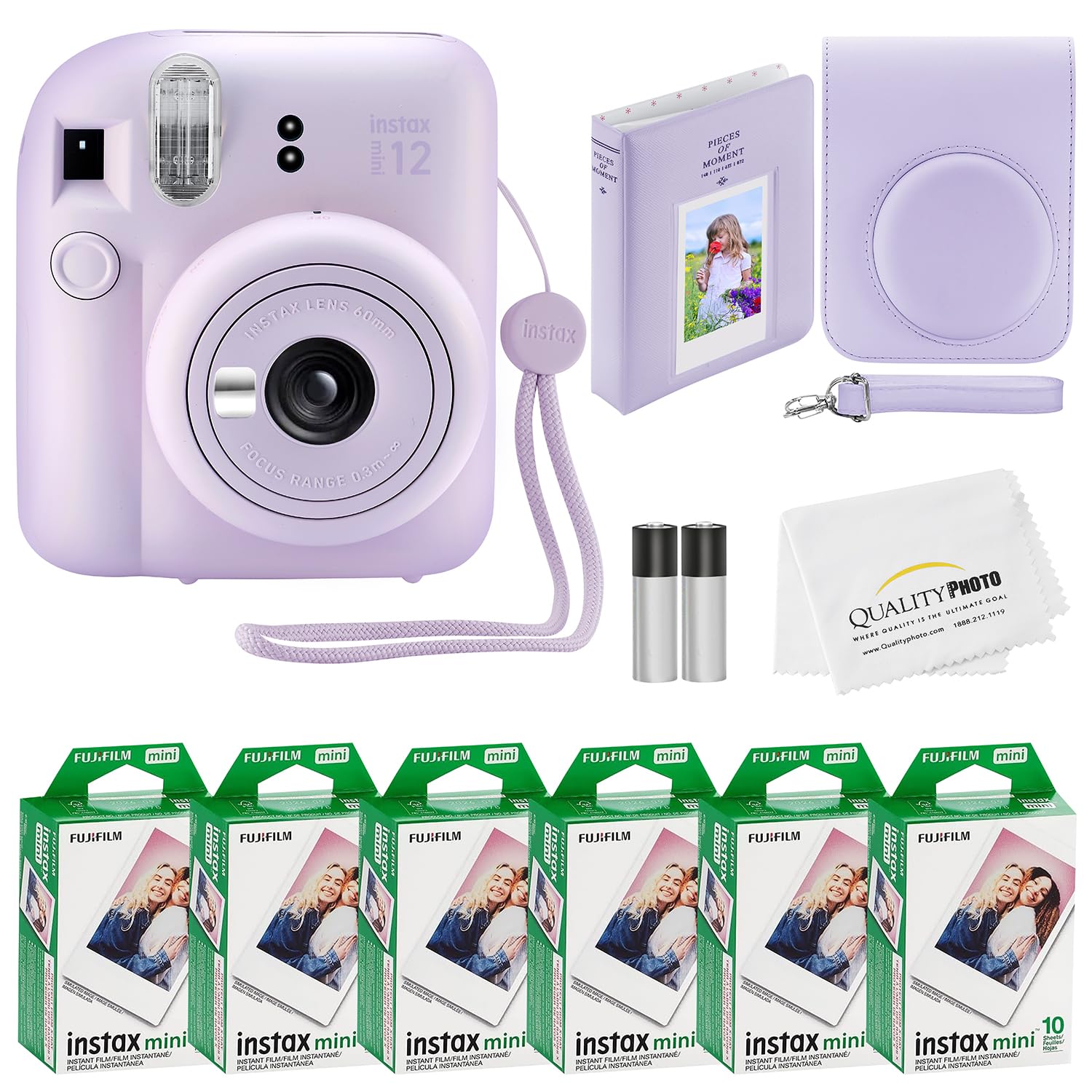
The Fujifilm Instax Mini 12 bundle is the easiest route into analog instant photography: load a pack of Instax Mini film, press the shutter, and the camera sets exposure automatically. The kit includes 60 film sheets, a case, an album, stickers, frames, and clips, so a new owner can start shooting immediately without picking up any extras. The film loads in seconds, and the automatic exposure means a first-time user can get acceptable prints from the first pack. That makes the bundle a genuine grab-and-go option for birthday parties, playdates, and holiday gatherings. It is the kind of package that removes friction before the first shot.

The camera body is refreshingly simple. An optical viewfinder frames the shot, automatic exposure handles brightness, and the shutter release is the only action needed. The technical decisions are made by the camera, leaving the user with one job: frame and shoot. For kids, grandparents, and anyone who has never used an instant camera, that is the appeal. The lilac purple finish adds a friendly touch that suits the intended audience.

The 60 included sheets are a meaningful stake in the ground for a starter kit. Instead of running out after one session, a new user can work through the basics of framing, distance, and timing before the first reorder. That buffer is what makes the bundle feel like a real starter kit rather than a camera with a single sample pack.

This bundle is for parents, gift-givers, and first-time instant camera owners who want a no-fuss, complete kit. The honest tradeoff is that there is no preview-before-print, and after the 60 included sheets, film is an ongoing cost. If you already own Instax Mini accessories and only want the camera body, the added case, album, and frames will be redundant. As a first purchase or a gift, the bundle does its job without demanding any prior knowledge. The bundle solves the two biggest stumbling blocks for a beginner: what to buy and how to start.

The automatic exposure keeps the focus on the moment rather than on settings. That simplicity is the core appeal for casual family photography. It is an analog experience, and it stays that way on purpose.

Pros

  • Complete kit with 60 film sheets and accessories out of the box.
  • No-fuss operation: load film, press shutter, automatic exposure handles the rest.
  • Gift-ready package with case, album, stickers, frames, and clips.
  • High overall satisfaction for a simple analog Instax.

Cons

  • No phone printing or in-camera filters
  • No manual exposure controls, so creative adjustments are limited to choosing the film pack.
Our verdict

This is the bundle for a gift-giver or first-time owner who wants to start shooting immediately, with enough film and accessories to avoid an instant second purchase.

Check Latest Price
2

Best Hybrid for Creative Control

Instax Mini EVO

92 /100
Studio Score High Confidence

Key details

Film Format
Instax Mini
Battery Type
Rechargeable USB-C
Shooting Style
Hybrid; LCD preview
Bundle Contents
Check Price on Amazon

The Instax Mini EVO is the hybrid option in this lineup: a digital sensor feeds a 2-inch LCD, while 10 lens effects and 10 film effects combine into 100 looks. You can shoot without touching a film pack, then choose the frames that deserve Instax Mini prints. Bluetooth printing from your phone extends the same output to images that never passed through the lens.

Turning the two dials changes color, contrast, and optical character before the shutter opens, so the preview is the same image the film will see. That control is what makes film use deliberate: a full pack can last through a day of experimenting because only the selected shots print. The app workflow uses Bluetooth to print existing phone photos, and microSD storage holds unprinted originals for later.

This is the right instant camera for shooters who treat composition as part of the fun: hybrid fans, phone-photo users who want Instax Mini prints, and anyone who has avoided instant cameras because of wasted film. It is a print-first device; the Instax Mini print is the deliverable. If you want the simplest one-button analog starter with a large film bundle, the top pick in this lineup is the simpler route.

Pros

  • Selective printing lets you shoot freely without burning through film, then print only the frames you like.
  • Bluetooth phone printing turns the camera into an Instax Mini printer for images already on your phone.
  • The retro body and tactile dials make it fun to handle, and the effect controls invite experimentation.

Cons

  • Digital image resolution is modest; photos shine as 2x3-inch prints but won't replace a phone camera for pixel-level sharpness.
Our verdict

The EVO is the creative hybrid for print-first shooters who want to choose before film gets spent; the top pick remains the simpler analog entry point.

Check Latest Price
3

Best Pocket-Sized Instant for Kids & Travel

Polaroid Go Gen 2

85 /100
Studio Score Strong Evidence

Key details

Film Format
Polaroid Go film
Battery Type
Rechargeable, 15 packs
Shooting Style
Analog; no preview
Bundle Contents
16 color photos
Check Price on Amazon

The Go Gen 2 is the smallest Polaroid body in the lineup, with a built-in selfie mirror, double-exposure mode, and a retro shape that makes it a natural fit when a full-size instant camera would stay home. It ships with 16 color photos, so the first few prints happen without an extra purchase.

Battery life covers up to 15 film packs per charge, which is enough for a vacation. The viewfinder mirror helps with self-portraits, the self-timer adds a steady option, and the compact body simplifies handing the camera to a child or fitting it in a day bag.

This is a travel-friendly novelty camera for kids, teens, and gift-givers who value fun over full-size prints. The tradeoff is that Go prints are noticeably small and image quality depends on strong lighting; dark or cloudy indoor shots can come out murky. Buyers who want consistent event photos or classic Polaroid-sized images should look at a full-size model instead.

Pros

  • Retro design that appeals to kids, teens, and gift-givers
  • Fun factor for travel and casual moments rather than formal events
  • Compact body fits in a pocket or day bag for trips
  • Built-in selfie mirror, double-exposure, and self-timer add creative options

Cons

  • Replacement Go film is costly, so per-shot spending adds up quickly.
  • Quality and functionality can vary between units, and occasional units may need an exchange.
Our verdict

Choose the Go Gen 2 for a child's first instant camera, a travel companion, or a low-pressure gift that encourages creative shooting.

Check Latest Price
4

Best Camera + Phone Printer Hybrid

Kodak Mini Shot 2 Retro

87 /100
Studio Score Strong Evidence

Key details

Film Format
2x3-inch 4PASS
Battery Type
Rechargeable battery
Shooting Style
Hybrid; phone printing
Bundle Contents
38 sheets included
Check Price on Amazon

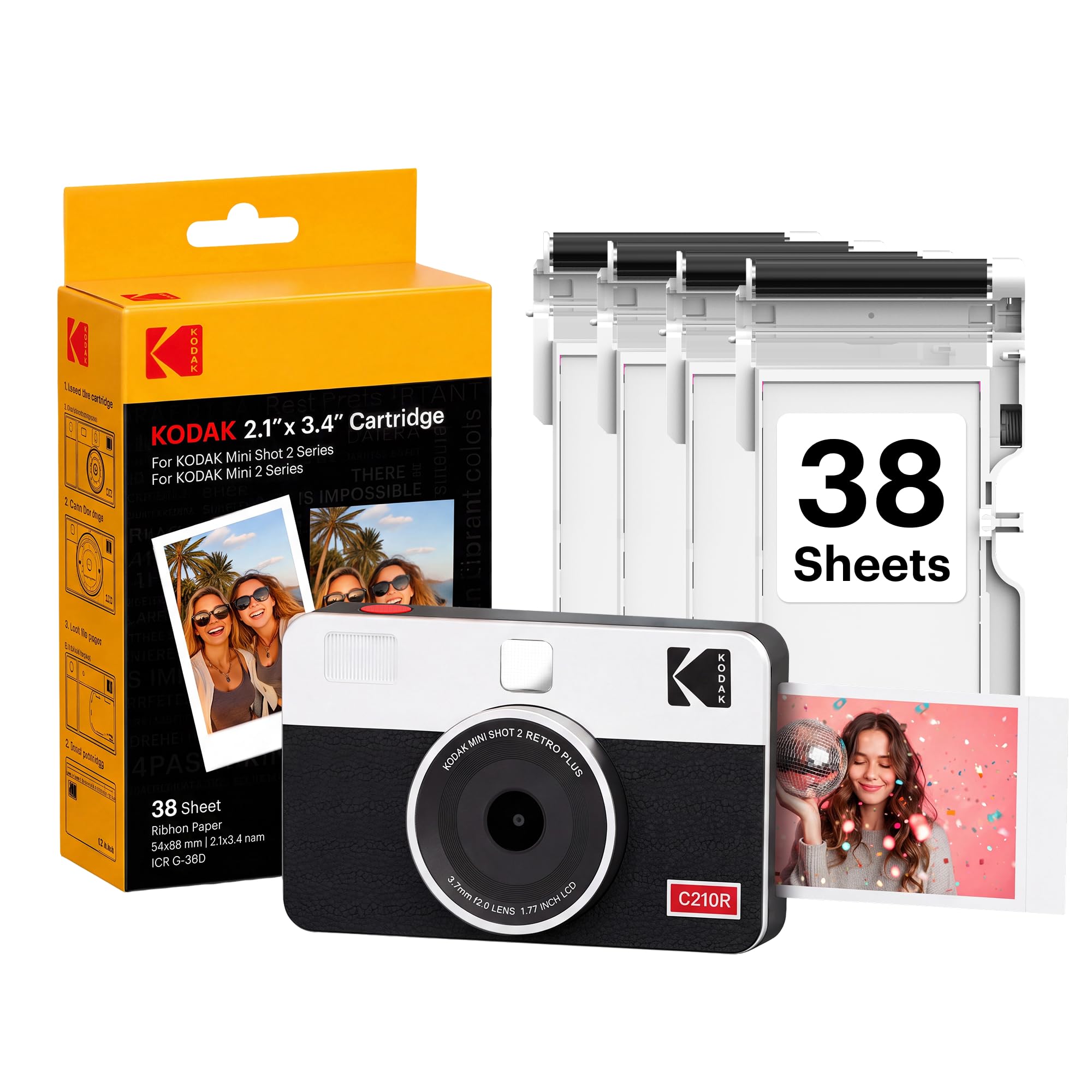
With 38 sheets in the box and Bluetooth printing from the Kodak app, the Mini Shot 2 Retro is best understood as a phone-first hybrid with a camera body included. It outputs 2x3 4PASS prints, so the workflow favors selecting and editing shots on a phone before committing them to paper. That puts it on the opposite side of the instant-camera spectrum from a no-preview analog starter: you see the image on your screen first, then print.

The built-in 10 MP camera is best treated as a convenience rather than the main reason to buy. The phone-printing side is the stronger use: import a shot into the Kodak Photo Printer app, adjust it, and send it to the 4PASS engine for a 2x3 print. That workflow, plus the included 38 sheets, makes this a practical party favor maker or scrapbook companion.

This is the right pick for smartphone-first users, scrapbookers, and party-favor creators who want quick 2x3 prints more than a one-chance analog frame. The analog film ritual belongs to film-first cameras; this hybrid makes phone photos printable in minutes. Plan to carry USB power for longer outings, and treat the built-in camera as a convenience rather than the centerpiece.

Pros

  • Compact, retro-styled body that makes prints feel fun at a party table.
  • Bluetooth phone printing via the Kodak app turns saved smartphone shots into 2x3 prints.
  • Built-in 10 MP camera covers occasional instant shots without needing the phone.

Cons

  • Battery capacity suits short print bursts more than full-event coverage.
  • Print and picture quality can be soft; fine for tiny scrapbook accents, less satisfying for sharp keepsakes.
  • Unit-to-unit consistency can vary, so a new unit may have printing issues from the start.
Our verdict

The Mini Shot 2 Retro makes the most sense as a print station for phone photos and party favors, once you accept the small 2x3 format.

Check Latest Price
5

Best for Full-Size Polaroid Nostalgia

Polaroid Now Gen 3

82 /100
Studio Score Strong Evidence

Key details

Film Format
Full-size Polaroid i-Type
Battery Type
USB-C rechargeable
Shooting Style
Analog; no preview
Bundle Contents
16 color photos
Check Price on Amazon

The Now Gen 3 captures full-size Polaroid i-Type prints from a familiar body with twin-lens autofocus, double-exposure mode, self-timer, and USB-C charging. The bundled 16 color photos get you started, and the classic format is what sets it apart from pocket-size instant cameras. The autofocus switches between two focal lengths automatically, so closer subjects and wider scenes are covered without manual adjustment. This is not a pocket camera, but the payoff is a larger print with more of the classic Polaroid character.

Buyers who want the old-school ritual of pulling a full-size print from a Polaroid frame will get the most value here. Full-size prints are light-hungry, so indoor shots need bright light or flash within a couple of meters; this camera suits social events with daylight or flash-friendly settings more than spontaneous point-and-shoot in a dim room. Those prints are meant to be handed around or taped to a memory board, which is the point of choosing Polaroid over a hybrid that previews first.

Double-exposure and self-timer modes add creative control without a phone app, and the USB-C battery is rated for 15 or more packs, so charging once before an event should carry the afternoon. There is no editing screen and no app, which is part of the appeal for buyers who want an analog keepsake rather than another digital file.

💡 Keep the flash on for indoor shots within a couple of meters and treat the first pack as a learning round.

Pros

  • Full-size i-Type prints deliver the iconic Polaroid look and a tangible photo to hand out or pin up.
  • Double-exposure and self-timer modes expand creative options beyond basic point-and-shoot.
  • USB-C rechargeable battery supports 15 or more film packs, so charging stops are rare.
  • Strong gift appeal from the Polaroid name and a 16-photo starter pack in the box.

Cons

  • Indoor scenes in ordinary lighting can produce dark or soft prints, so a close flash may be necessary.
  • i-Type film is expensive, so a missed exposure carries a real cost if you shoot carelessly.
  • Print output can vary from unit to unit, with occasional black or faded frames.
Our verdict

The Now Gen 3 is the full-size Polaroid for nostalgic buyers who accept its light needs and film cost in exchange for the classic print ritual.

Check Latest Price

How to Choose

Film Format and Print Size

In instant photography, film format is the specification that overrides everything else. Instax Mini is the most common and least expensive per shot, Instax Square sits in the middle, Polaroid Go is tiny, and full-size Polaroid i-Type is the largest canvas. Each format requires its own film, so changing cameras later means committing to that print size.

Larger prints make exposure errors more visible. If most of your shooting happens indoors, a smaller format is more forgiving, because the flash can cover the whole frame more easily and the print hides softness better.

Analog or Hybrid Shooting

Pure analog cameras have no preview. Every shutter press uses film, and a bad frame is permanent. Hybrid models add a sensor and LCD so you can review, delete, and re-shoot before any film is exposed. That one workflow difference changes how much film you burn and how willing you are to experiment.

The hidden cost of hybrid shooting is power and complexity. Hybrid bodies need charging, boot time, and a digital sensor, but for photographers who hate wasting film, the preview alone justifies the higher price.

Included Film and Accessories

Bundled film is the most direct way to lower the effective cost of your first pack. A kit that includes 40 or 60 sheets, a case, and an album gives a new owner everything needed to learn the exposure behavior of the camera.

The trade-off is that extras only matter if you use them. A case and album add real value to a gift, but if you already own accessories, a camera-only purchase plus separate film is the cleaner calculation.

Exposure and Low-Light Behavior

All automatic instant cameras share a low-light weakness: the sensor meters the entire scene, the built-in flash has a limited reach, and bright backgrounds trick the exposure into making faces dark. This is physics, not a defect.

Keep subjects within a meter or two, use direct front light, and avoid mixed-lighting scenes like a window behind the subject. The cameras that handle this best are not the most expensive ones; they are the ones you use inside their light envelope.

Battery and Charging

Analog cameras with disposable batteries can sit in a drawer for months and still work when you pull them out. Hybrid and printer models draw much more current because they power a sensor, LCD, and the print mechanism.

USB-C rechargeable batteries are convenient, but they introduce the habit of charging before events. If a camera also prints from your phone, budget for quicker drain and keep a power bank in the bag.

Frequently Asked Questions