5 Best Panasonic Lumix G7 Lens of 2026: Upgrade Beyond Kit Limits

Find the best Panasonic Lumix G7 lens for your style — fast primes, budget tele zooms, and manual-focus options that fix the kit lens limits.

The G7's kit zoom is capable outdoors, but its slow variable aperture pushes you into higher ISO the moment the light drops. Most owners discover the real upgrade is not a newer body — it is a lens that lets more light hit the sensor.

This guide sorts the Micro Four Thirds options that actually change how the G7 shoots: fast primes for low light and portraits, stabilized tele zooms for reach, and budget manual lenses for controlled shooting. Listings sometimes exaggerate focal length or coverage on the M4/3 mount, so knowing what a spec means before you buy matters more than chasing the biggest number.

Match the glass to the two or three situations you shoot most. A fast normal prime fixes the kit lens' biggest weakness; a tele zoom solves a different problem entirely. The right lens makes the G7 hold its own against cameras that cost far more.

1

Best Overall

Panasonic 25mm f/1.7

95 /100
Studio Score High Confidence

Key details

Lens Type
Prime
Focus Type
Autofocus
Focal Length
25mm (50mm equiv.)
Max Aperture
f/1.7
Check Price on Amazon

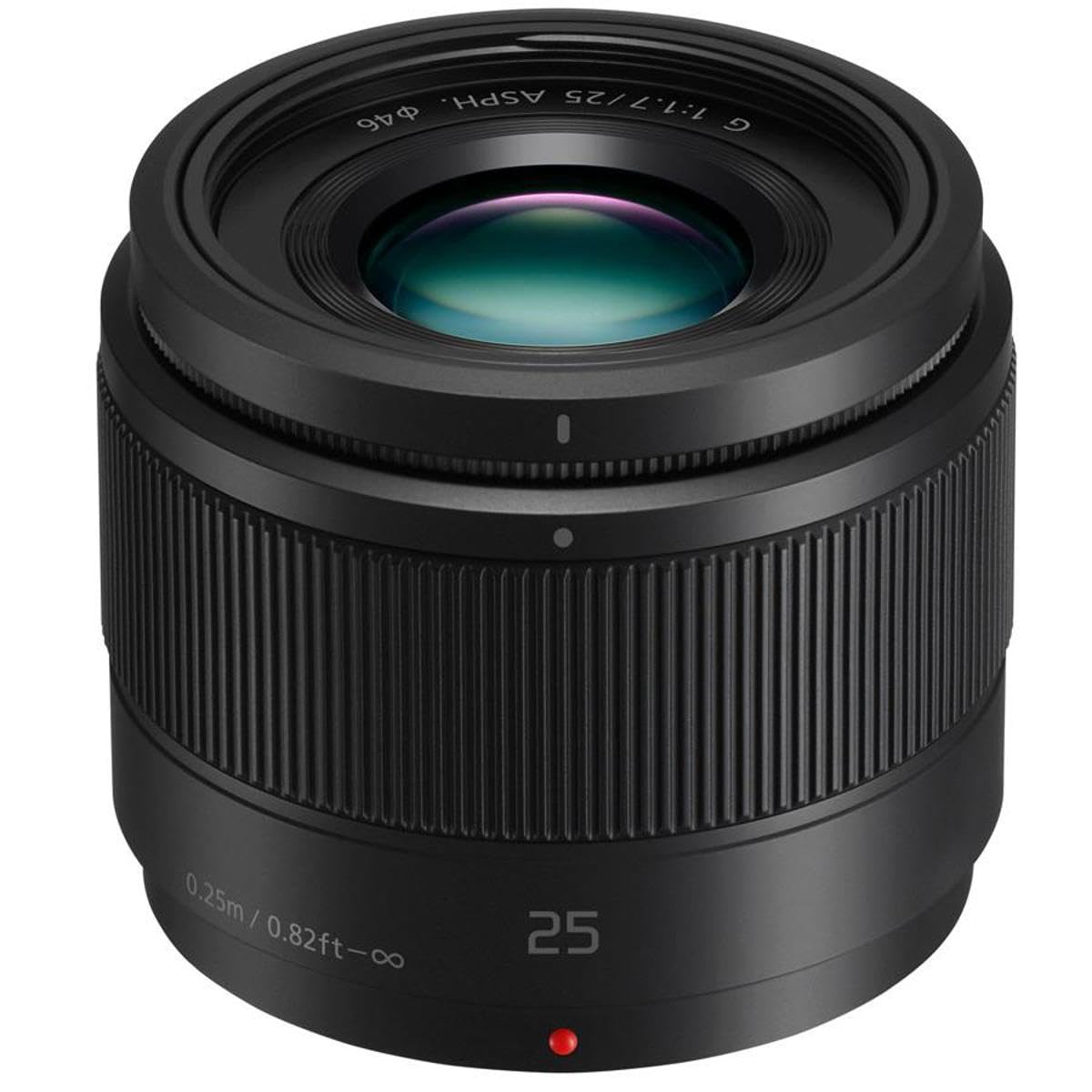
The f/1.7 aperture and 50mm-equivalent field of view turn a Panasonic G7 into a camera that can shoot after sunset and separate a subject from a busy background without stepping back. The 25mm normal perspective keeps proportions natural for street work and environmental portraits, while the fast aperture keeps shutter speeds high enough for handheld indoor shots. For a G7 owner still on the kit zoom, the difference is immediate: f/1.7 lets in roughly two stops more light than the kit lens at 25mm, which changes what feels possible in a dim restaurant or evening walk.

Wide open, the lens resolves facial detail well enough for portraits; stopped down, it stays clean across the frame. Backgrounds render softly rather than as a jumble of edges, which matters when you shoot an interview against bookshelves or a street portrait near a storefront. The color character leans natural rather than overly contrasty, keeping skin tones believable without aggressive in-camera processing.

At 125g the prime keeps the G7 compact enough for a wrist strap and one small bag. Focus acquisition outdoors is quick, and the stepping motor is quiet enough for interview video. There is no aperture ring, so exposure control stays on the camera body; in low-contrast scenes the AF can hunt, and switching to a single AF point gives it a clear subject to lock onto.

This is the first prime for a G7 owner who finds the kit zoom's f/3.5-5.6 aperture limiting in dim rooms or who wants visible subject separation without paying for a heavier zoom. The price sits in the mid-range of MFT primes, yet the lens undercuts most autofocus options while holding its own on resolution. Budget-conscious shooters get a normal focal length that matches human perspective, a bright aperture, and a compact body to carry daily.

It is not the lens for someone who needs weather sealing for mountain work or a parfocal zoom for smooth in-shot video pulls. Telephoto reach belongs to the stabilized tele zoom in this class, and video users who plan in-shot zooms will want an internal power zoom instead. For stills, those boundaries do not undercut the 25mm: it owns the normal focal length, the fast aperture, and the portrait rendering that the kit zoom cannot deliver.

💡 Keep the G7 on a single AF point when shooting in dim or low-contrast scenes so the lens has a clear target.

Pros

  • f/1.7 aperture lets the G7 shoot handheld in modest indoor light without pushing ISO.
  • Soft bokeh separates portrait subjects from busy backgrounds.
  • Sharpness holds up across the frame at a price that makes it a natural first prime.
  • Flattering rendering for portraits and interviews without the cost of a dedicated portrait lens.

Cons

  • No optical stabilization; handheld video at 50mm equivalent can show camera movement.
  • Autofocus consistency can vary between copies; low-contrast scenes may trigger hunting until you switch to single-point AF.
Our verdict

For a G7 owner who wants a fast normal prime, this is the one to buy when the budget sits at mid-range. It fixes the kit zoom's low-light limits and gives portraits a background blur the kit lens cannot manage.

Check Latest Price
2

Best Budget Telephoto Zoom

Panasonic 45-150mm f/4-5.6

90 /100
Studio Score High Confidence

Key details

Lens Type
Zoom
Focus Type
Autofocus
Focal Length
45-150mm (90-300mm eq.)
Max Aperture
f/4-5.6
Check Price on Amazon

Panasonic's 45-150mm f/4-5.6 gives the G7 a true telephoto range, reaching 300mm-equivalent in a 318g body. That makes it one of the lightest ways to pull in distant wildlife, field sports, and compressed travel scenes without carrying a full-size zoom. The image stabilizer reinforces that reach, so handheld shots at the long end stay usable in daylight. The 25mm f/1.7 prime in this set covers the normal-length side; this zoom starts where that lens ends.

G7 owners who want a second lens for outdoor sports, wildlife, or travel will get plenty of use from this zoom. Video shooters who need smooth in-shot zoom should prefer the internal power-zoom lens in this set; the 45-150 is best treated as a stills-first tele.

Mega OIS steadies handheld shots at the long end, and autofocus responds well to outdoor movement in daylight. The zoom range covers compressed landscapes and sideline action without changing position. The compact barrel and 52mm filter thread keep the kit light and accessory costs reasonable. The lens balances well on a G7 body, so it doesn't turn a compact camera into a front-heavy rig. Image quality holds up for the price, with good contrast and color in bright conditions.

Pros

  • Stabilized telephoto reach at a price below rival zooms
  • Sharp, clear images for a second lens budget
  • Light 318g body pairs well with the G7 for travel
  • Autofocus and stabilization handle daylight action without fuss

Cons

  • In-shot video zooming can jump because the manual zoom ring is jittery
  • The f/4-5.6 aperture requires strong daylight; twilight sports and indoor events need a faster prime
Our verdict

For stills-first G7 shooters, the 45-150mm is the budget telephoto to keep in the bag for outdoor sports and travel.

Check Latest Price
3

Best Budget Manual Prime

Meike 25mm f/1.8 MF

85 /100
Studio Score Strong Evidence

Key details

Lens Type
Prime
Focus Type
Manual focus
Focal Length
25mm (50mm equiv.)
Max Aperture
f/1.8
Check Price on Amazon

The Meike 25mm f/1.8 is the budget path to a fast normal lens on the G7: all-metal barrel, 50mm-equivalent field of view, and f/1.8 light collection at a price well below the autofocus Panasonic 25mm. Center sharpness holds up well for everyday stills, and the compact body balances neatly on the camera. The 49mm filter thread fits inexpensive accessories, which adds to the value.

The manual focus ring provides enough resistance for controlled focus pulls, and the clickless aperture ring allows smooth exposure changes during video. All-metal construction gives the lens a dense feel that sets it apart from typical budget MFT primes. Video users can ride the aperture while recording without the click stops of conventional lenses. The compact size makes it easy to leave the lens mounted on the G7 for walk-around stills.

This lens is aimed at G7 owners who are comfortable with manual focus and do not need autofocus or aperture EXIF. You will need to enable 'Shoot Without Lens' on the camera; the lens communicates no aperture or focus data. If AF is a requirement, the Panasonic 25mm f/1.7 is the safer route.

💡 Use the G7's focus peaking and magnified view to confirm focus before recording or releasing the shutter.

Pros

  • Fast f/1.8 normal prime without the autofocus price premium for G7 shooters.
  • Center sharpness and contrast hold up well for everyday stills at a budget price.
  • All-metal construction gives the lens a solid feel that typical budget MFT primes miss.

Cons

  • Printed focus scale does not line up reliably, so infinity focus needs peaking or magnification.
  • Clickless aperture ring has no detents, so the f-stop can shift while you compose.
Our verdict

For G7 shooters who are happy focusing by hand, this Meike delivers low-light capability and compact handling at a price that leaves room for another lens.

Check Latest Price
4

Best Budget Portrait Telephoto

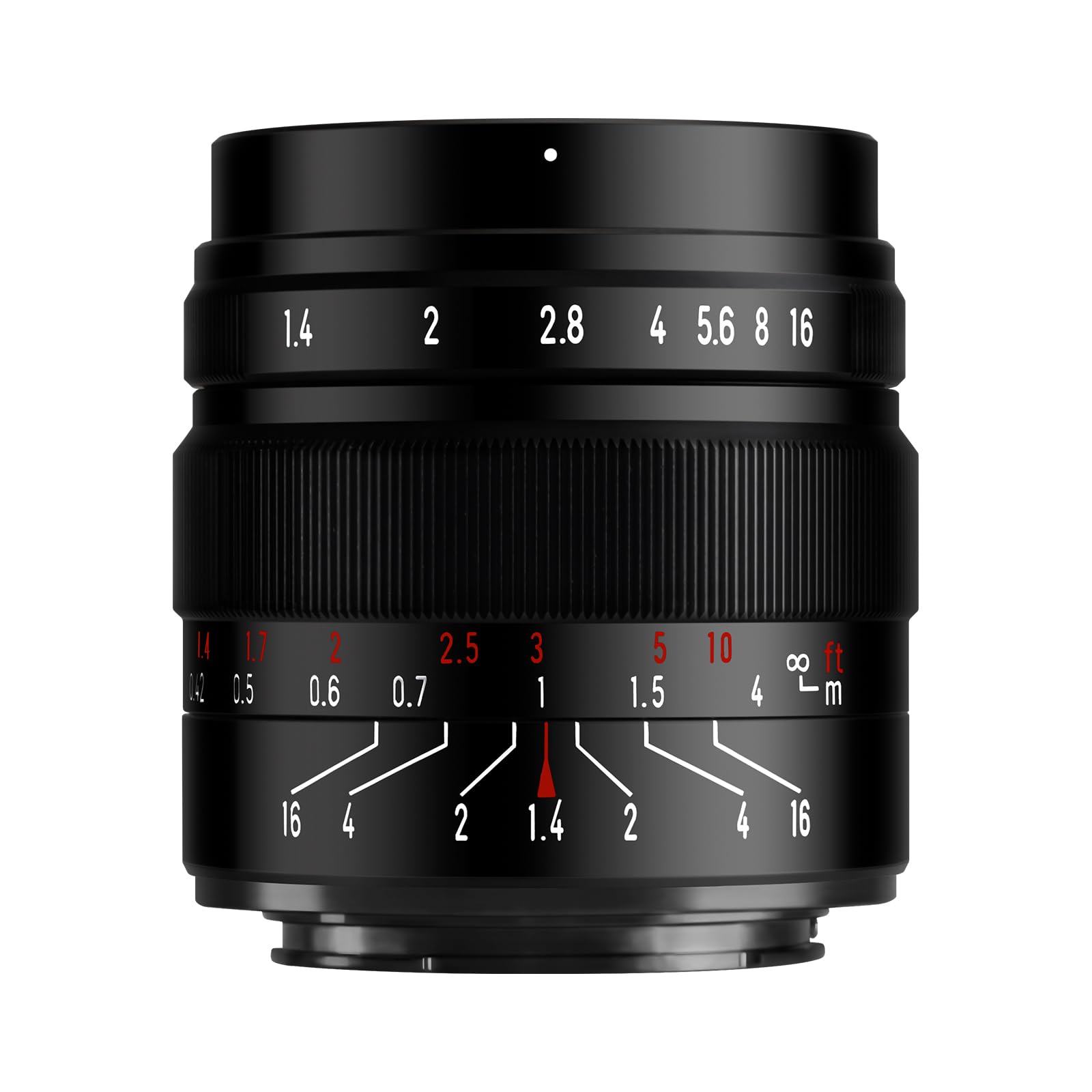
Brightin Star 50mm f/1.4

81 /100
Studio Score Strong Evidence

Key details

Lens Type
Prime
Focus Type
Manual focus
Focal Length
50mm (100mm equiv.)
Max Aperture
f/1.4
Check Price on Amazon

The Brightin Star 50mm f/1.4 III gives G7 shooters a 100mm-equivalent portrait angle with f/1.4 depth separation. The 9-blade aperture keeps out-of-focus highlights rounded, and the all-metal barrel with a damped focus ring makes manual composition feel controlled rather than loose.

At typical head-and-shoulders distances, the focal length flatters faces without the wide-angle distortion of shorter primes. The focus ring is smooth enough for deliberate pulls, and because the lens is fully manual the G7 needs Shoot Without Lens enabled in the menu.

This is for budget portrait photographers who already work in manual and want f/1.4 subject isolation more than pixel-level wide-open sharpness. Softness at f/1.4 is part of the character, so stopping down to f/2.8 is the practical route to crisper detail while keeping bokeh character.

Compared with autofocus portrait primes in this group, the Brightin Star swaps AF speed for a lower entry price and a wider f/1.4 aperture. That makes it a deliberate addition for staged portrait work or controlled focus pulls rather than a run-and-gun event lens.

💡 Enable Shoot Without Lens in the G7 menu or the shutter will not release with this manual lens.

Pros

  • f/1.4 at 100mm equivalent creates strong background separation for portraits.
  • All-metal barrel and damped focus ring hold up well in a budget kit.
  • Budget-friendly entry to a fast portrait focal length on Micro Four Thirds.
  • 9-blade aperture produces rounded bokeh highlights at moderate apertures.

Cons

  • Manual operation means no autofocus or EXIF metadata for cataloging.
  • Color fringing appears in high-contrast edges at f/1.4.
Our verdict

The Brightin Star is the right MFT portrait option when you want f/1.4 separation at a budget price and don't mind pulling focus yourself.

Check Latest Price
5

Best Creative Fisheye

Brightin Star 10mm f/5.6

80 /100
Studio Score Strong Evidence

Key details

Lens Type
Prime
Focus Type
Manual focus
Focal Length
10mm fisheye
Max Aperture
f/5.6
Check Price on Amazon

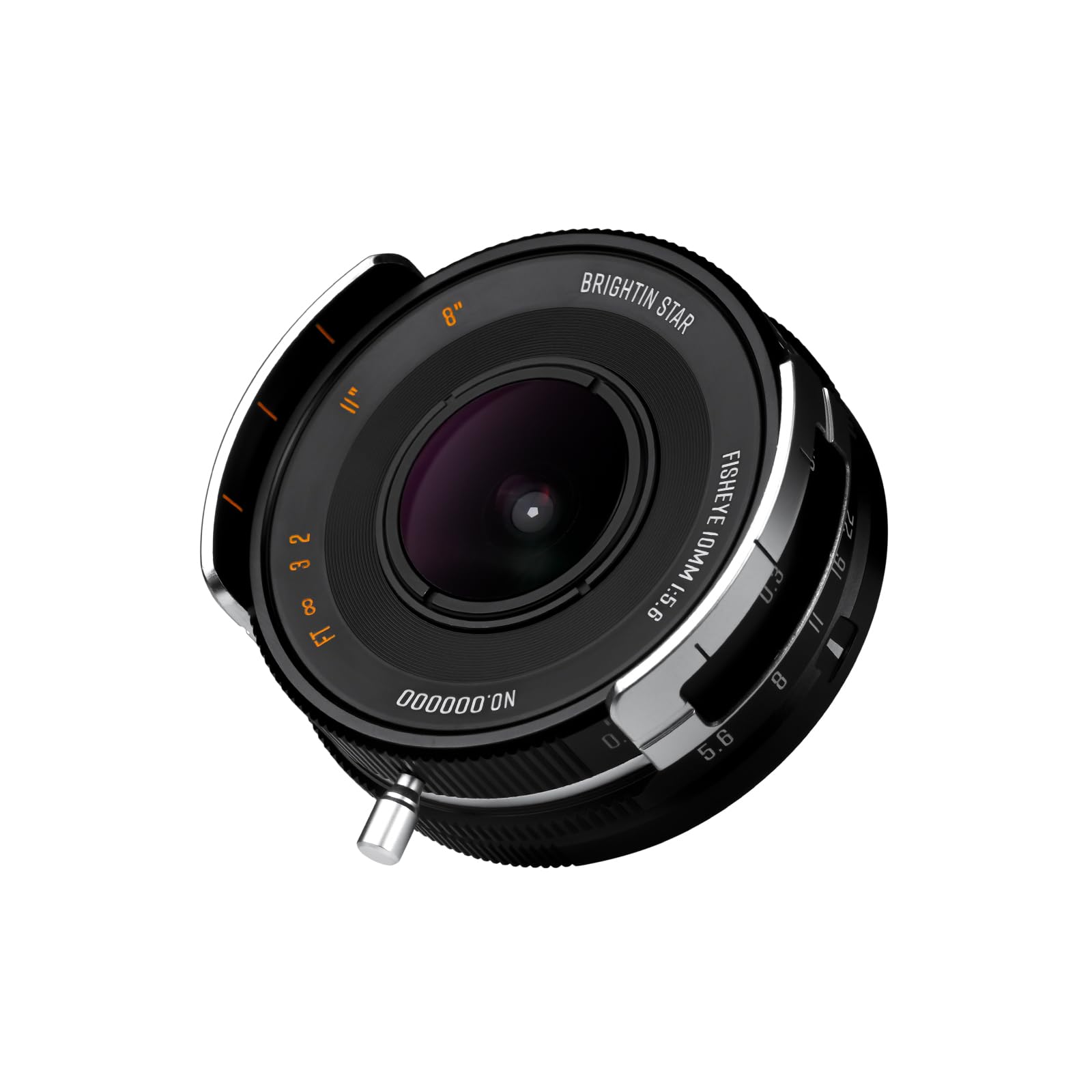
The Brightin Star 10mm f/5.6 Pro Fisheye is a compact all-metal lens that adds dramatic curvature to the G7 kit for modest money. At roughly 100 g it can ride in a jacket pocket or stay mounted on the camera without throwing the balance off, and the build quality feels above its price class. For the asking price, it is a low-risk way to see whether fisheye framing fits your style.

Center detail is sharp and no obvious artifacts appear, so the fisheye look is usable beyond novelty shots. The 10mm focal length gives a strong sense of space, which suits street scenes and interior experiments more than tight close-ups. The distortion is strong enough to change how you frame ordinary scenes, but controllable when you keep the subject near the middle.

This lens suits G7 owners who want a low-cost, pocketable fisheye for creative experimentation and are comfortable verifying the claimed 175° field of view with M4/3-specific sample images before relying on it; on a Micro Four Thirds body the actual angle may be narrower than that number. Manual focus is the only option, so autofocus shooters should look elsewhere.

Pros

  • Compact all-metal body weighs about 100 g, so it is easy to carry as a second lens.
  • Center sharpness holds up with no obvious artifacts at typical shooting distances.
  • Entry-level price opens up fisheye framing for curious shooters.

Cons

  • Strong sunlight can produce flare that lowers contrast in backlit shots.
  • Focus peaking can be difficult to read in bright conditions, making critical focus slower.
Our verdict

For G7 shooters who want a tiny manual fisheye without a big spend, this lens delivers a distinctive look and a clear creative detour from the standard zoom.

Check Latest Price

How to Choose

Max Aperture and Low Light

Going from the kit zoom's f/5.6 to an f/1.8 prime adds roughly three stops of light, letting the G7 use faster shutter speeds or lower ISO indoors.

A wider aperture also shortens depth of field, pulling a subject away from a busy background. This is the fastest single upgrade for evening or portrait shooting.

Focal Length and Crop

Micro Four Thirds applies a 2x crop, so 25mm frames like 50mm on full frame and 45-150mm frames like 90-300mm. Multiply the printed focal length by two before judging reach.

The crop also explains why telephoto lenses feel longer here than their numbers suggest. For ultra-wide lenses, verify actual coverage rather than taking the listing's angle claim at face value.

Autofocus vs Manual Focus

Autofocus lenses give the G7 full electronic control, including aperture in EXIF and normal shutter release. Manual lenses require enabling 'Shoot Without Lens' first.

Manual focus is a low-cost route for video, landscapes, and controlled portraits, but it is the wrong choice for kids or events. No EXIF aperture data is recorded, so set the f-stop on the ring and check focus with peaking.

Image Stabilization

The G7 body has no in-body sensor stabilization, so lens OIS is the only shake correction you get. At telephoto focal lengths, that makes OIS a real keeper-rate difference.

Panasonic's Power OIS is built for smoother video than the older Mega OIS. Keep stabilization on when shooting 150mm or longer without a tripod.

Zoom vs Prime

Variable-aperture zooms lose light as you zoom in, exactly when reach makes shake and noise more visible. A 45-150mm lens is therefore an outdoor, daylight tool.

Primes keep a wide aperture but lock you into one focal length. Choose a zoom for all-day travel flexibility or a prime for evening and portrait work.

Size, Weight, and Weather Sealing

Weather-sealed lenses add weight, cost, and larger filter threads. On a G7 body without full sealing, they reduce dust at the mount but do not make the camera rainproof.

A compact all-metal prime is easier to bring every day than a large weather-sealed zoom. Add sealing only if you shoot in dusty or damp locations.

Frequently Asked Questions