3 Best Lens for Nikon D3500 in 2026: Fast Primes Beat Kit Zooms

The best lens for Nikon D3500 depends on your shooting: fast primes beat kit zooms for low light, while travel zooms add reach without frequent swaps.

The Nikon D3500 is a capable body, but the kit zoom holds it back in low light. Its aperture narrows as you zoom, so indoor shots need higher ISO, slower shutter speeds, or flash. The fix is matching the lens to the scenes you actually shoot.

Every D3500 owner faces the same trade-off: zoom flexibility versus aperture. A zoom covers more ground, but the aperture shrinks at the long end and low-light capability drops. A fast prime loses zoom range, yet its wide aperture changes indoor, portrait, and street photography more than any other single upgrade.

The right starting point depends on how you shoot. If your camera mostly comes out indoors, at night, or for people photos, a fast prime is the answer. If you travel and want one lens on the camera all day, a stabilized zoom with a wide-to-telephoto range will serve you better.

1

Best Overall

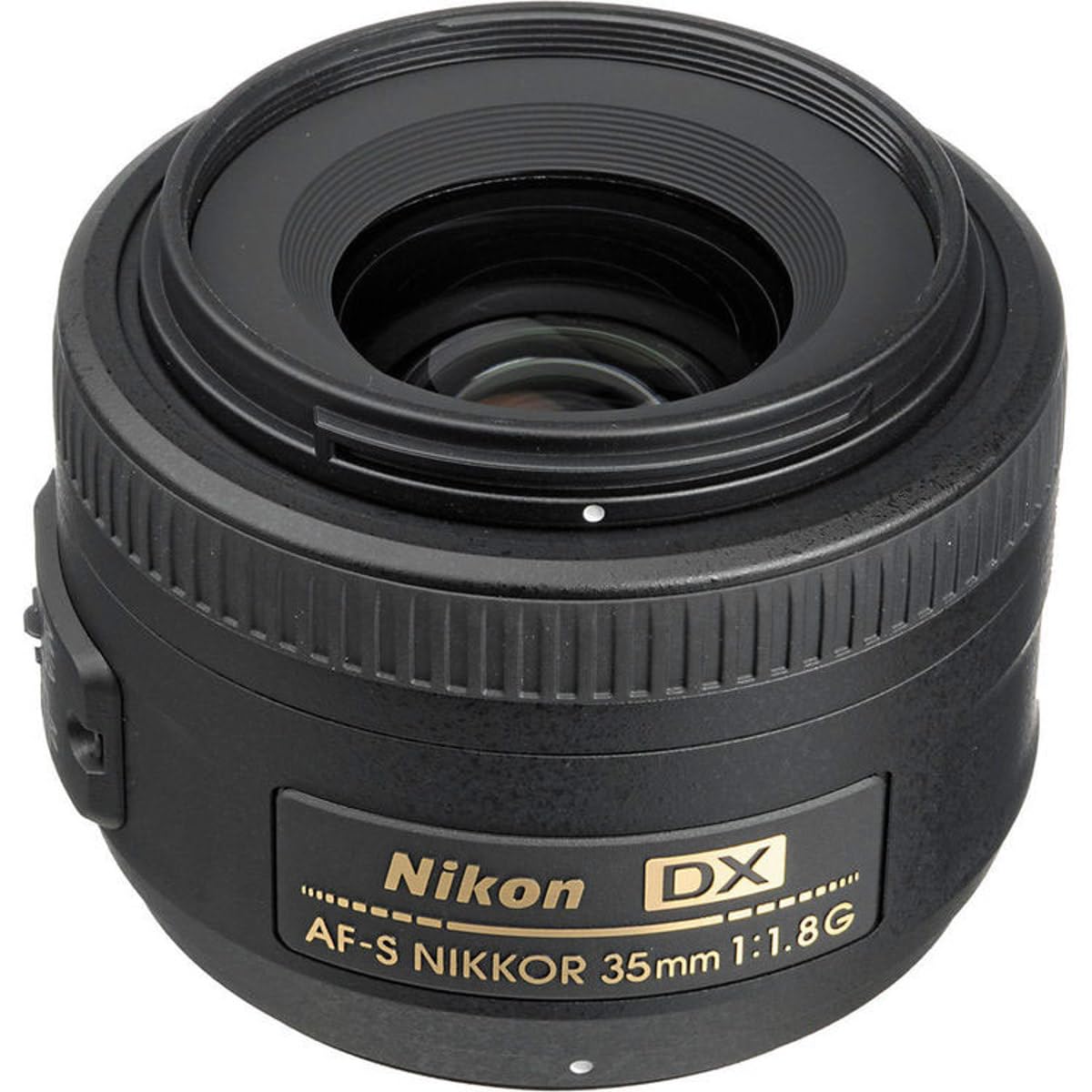
Nikon 35mm f/1.8G

96 /100
Studio Score High Confidence

Key details

AF Motor
AF-S
Focal Length
35mm
Max Aperture
f/1.8
Stabilization
None
Check Price on Amazon

The f/1.8 maximum aperture is the headline: it gathers substantially more light than the camera's kit zoom, so indoor handheld shots and natural-light portraits stop being a struggle. The 35mm focal length renders a natural perspective on a DX body, and wide-open images keep crisp detail while out-of-focus backgrounds smooth out into a soft blur. That combination is what makes the fast prime such a direct upgrade over an all-purpose zoom.

On a D3500, the lens uses the AF-S Silent Wave motor to autofocus without help from the camera body, which matters because the D3500 has no in-body focus motor. In normal daylight, focus locks quickly enough for casual street shooting, and the compact barrel stays balanced on a lightweight DSLR. It also focuses close enough for food, flowers, and small-product shots while keeping the same sharp rendering, so it does not need to come off the camera between subjects.

The prime also changes how the D3500 behaves in dim rooms. Kit zooms push the camera toward high ISO and flash; at f/1.8 the camera can shoot by available light, which preserves ambient color and lets people stay natural instead of flattening them with a pop-up flash. Street and portrait shooters get enough background blur to separate a face without losing the surrounding context.

This is the right next lens for a D3500 owner who keeps hitting the limits of the kit zoom in dim light, who shoots portraits and street scenes, and who wants one compact lens for daily carry. The tradeoff is the fixed 35mm focal length and no VR: framing means moving your feet, handheld video can be shakier than with a stabilized zoom, and telephoto reach or all-in-one travel flexibility belongs to other lenses in this set.

For its price tier, the 35mm f/1.8G gives the biggest image-quality return per dollar in this group. A D3500 owner adding one lens after the kit zoom will see the difference immediately, especially in shots taken after sunset or inside houses. The longer-range zooms in this set add reach; this prime adds light and separation.

Pros

  • Wide-open sharpness with soft background separation gives portraits and street shots a clean, dimensional look.
  • Budget-friendly entry into a fast prime; the image-quality jump over the kit zoom is immediate.
  • Handheld indoor shots without flash become practical at f/1.8.
  • Natural 35mm perspective suits portraits and close-up subjects without requiring a macro lens.
  • Compact size keeps it on the camera as a daily walking-around prime.

Cons

  • Autofocus can be slower in low-contrast or dim scenes, though it locks confidently in normal light.
Our verdict

For D3500 owners who shoot people and everyday scenes in less-than-ideal light, the 35mm f/1.8G is the lens that makes the camera feel like a much larger investment.

Check Latest Price
2

Best All-In-One Walkaround

Nikon 18-140mm VR

92 /100
Studio Score High Confidence

Key details

AF Motor
AF-S
Focal Length
18-140mm
Max Aperture
f/3.5-5.6
Stabilization
VR
Check Price on Amazon

The 18-140mm range is the practical heart of this lens: it reaches from wide group shots to short-telephoto portraits without swapping glass. VR steadies handheld video and slower shutter speeds, while the AF-S motor works directly on the D3500 and stays quiet enough for live-view use. This zoom trades a fast f/1.8 opening for range and stabilization, making it a genuine one-lens travel kit.

Focus settles cleanly on faces and everyday subjects, and the damped zoom ring moves smoothly enough to adjust without jarring the frame. The stabilizer earns its keep at 140mm, where camera shake is more visible. The lens is happiest when the camera is walking around in daylight, where 18-140mm reach replaces the need for a second lens. Travelers can leave the camera backpack behind and carry the D3500 with this zoom as the only optic.

The renewed condition is the part to manage: verify the seller's return policy and inspect the glass and barrel when the box arrives. The variable aperture is the boundary for dim rooms and evening shots, where the fast prime in this guide takes over. For family travel, day hikes, and city trips, this zoom is the one-lens walkaround.

Pros

  • One compact lens covers 18-140mm from wide group shots to short-telephoto portraits.
  • VR steadies handheld video and slower shutter speeds in daylight.
  • Autofocus is quiet and keeps pace with everyday subjects.
  • Renewed stock offers a budget-friendly route to this zoom range.

Cons

  • Cosmetic wear can vary on renewed examples.
  • The 140mm long end leaves wildlife and distant sports out of reach.
Our verdict

For day-trip and travel shooting, this renewed zoom is the one-lens answer; pair it with the fast prime once the light drops.

Check Latest Price
3

Budget Prime Backup

Yongnuo 35mm f/2

87 /100
Studio Score Strong Evidence

Key details

AF Motor
Built-in motor
Focal Length
35mm
Max Aperture
f/2
Stabilization
None
Check Price on Amazon

A fast f/2 normal on a D3500 costs a fraction of first-party alternatives, and in ordinary daylight it can deliver clean stills with background separation that kit zooms can't match. The AF motor is noticeably noisy, can hunt in low light, and individual copies may develop focus faults, so this is a budget experiment rather than a Nikon optical equivalent. That distinction keeps it below the top-pick f/1.8 prime. For manual-focus-friendly shooters or D3500 owners who need a spare prime for casual use, the price is the point.

Pros

  • Budget-friendly f/2 35mm that brings fast-aperture shooting to Nikon F-mount bodies without first-party pricing.
  • In normal daylight it produces usable stills for casual and street photography.
  • A sensible backup prime for D3500 owners who already have a zoom and want a spare fast prime.

Cons

  • Build quality is budget-grade, so the lens won't feel as polished as first-party Nikon primes.
  • Image quality varies between copies; some examples are noticeably softer than the top-pick prime.
Our verdict

For a budget-first D3500 shooter who mostly shoots in daylight and treats this as a spare prime, the price is the main argument.

Check Latest Price

How to Choose

Autofocus Motor

On the D3500, autofocus only works with lenses that contain a motor. Nikon's AF-S and AF-P lenses do; older AF-D or AF Nikkor lenses rely on a screw-drive coupling in the camera body, which the D3500 does not have. Third-party lenses with their own AF motor can work, but you should confirm the mount and motor type before committing.

Image Stabilization

VR, Nikon's image stabilization, shifts an internal lens group to counter small hand movements. It matters most at telephoto focal lengths because shake is magnified as the angle of view narrows. With a 200mm lens, a shutter speed of roughly 1/300s is often needed without VR; with effective VR, many shooters can handhold at 1/80s or slower.

Maximum Aperture

Maximum aperture controls how much light reaches the sensor and how much background blur the lens can create. An f/1.8 prime lets in about four times more light than an f/3.5 zoom at the same focal length. That extra light lets you keep ISO lower, avoid flash, and use faster shutter speeds indoors.

Focal Length Range

The focal length range sets the framing options: a wide-angle view for rooms and landscapes, a normal view for people, and a telephoto view for distant subjects. A wide-to-telephoto zoom is convenient because it covers several of those ranges in one lens. The cost is that variable-aperture zooms usually get darker as you extend to the telephoto end, so the reach you gain comes with a low-light penalty.

Weight and Portability

Weight determines whether the D3500 comes with you. Every extra 100 grams shifts how the camera hangs on a strap and how quickly your arms tire during a full day of shooting. Compact primes keep the body small and make it easier to grab the camera on the way out; larger zooms offer more range but can end up staying in the bag.

Frequently Asked Questions