Best Overall
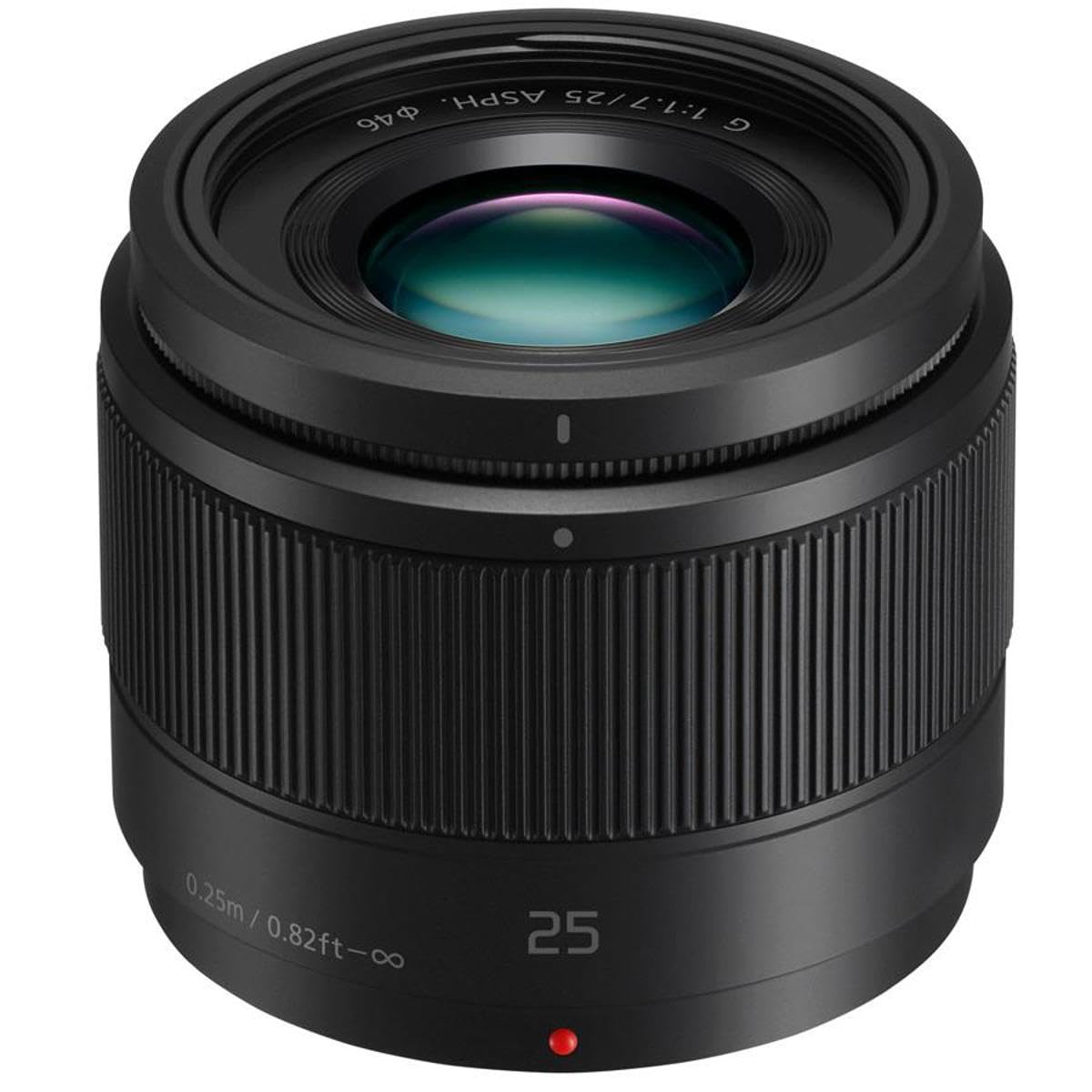
Panasonic 25mm F1.7
Key details
- Focus Type
- Autofocus
- Size And Weight
- 125 g
- Maximum Aperture
- f/1.7
- Image Stabilization
- None in-lens
At f1.7, this 25mm prime opens up evening shots and indoor scenes that a kit zoom would soften or blur. The 125g build keeps the camera lightweight, and the optics hold crisp detail across the frame even before stopping down. That combination matters more than the focal length alone: it turns a Micro Four Thirds body into a tool for available-light photography without adding bulk. The aperture also gives enough control over depth of field to make close-up portraits look distinct from the background, while the normal angle keeps facial proportions natural. It replaces the need for a flash in moderately lit rooms, which matters for candid shots. For a normal-perspective prime, it is a strong everyday performer.
Low-light frames rely on the wide aperture rather than a tripod, and the compact barrel keeps the camera easy to raise for street shots. Portraits gain smoother background falloff than the kit zoom, and the normal field of view avoids the distortion that wide-angle portraits sometimes show. Everyday photos get the separation that makes prime lenses attractive, without the weight penalty of larger optics. At close to moderate focus distances, the f1.7 look stays sharp enough to be useful rather than just a soft blur effect.
This is the natural second lens for M4/3 owners moving up from a kit zoom, especially those who shoot street, portraits, or low-light scenes regularly. It is not for weather-sealed field work, and Panasonic bodies without in-body stabilization need deliberate shutter speeds because there is no lens-based stabilization. Keep this prime as the everyday carry for single-lens simplicity. The reward is a consistent look that makes images feel composed rather than captured.
The price point sits between budget manual primes and premium f1.2 glass, and the optical quality justifies the step up from a kit lens. For a first prime, the normal field of view suits more everyday situations than a telephoto or ultra-wide specialist, and the weight means you won't think twice about carrying it. The value comes not from any single spec, but from how often this lens stays mounted for casual, lower-light, and portrait-minded shooting.
If you already own a compact zoom, the difference shows up quickly: the f1.7 aperture captures light the zoom cannot, and the normal perspective keeps scenes in proportion. That makes it a deliberate tool for learning composition rather than a one-size-fits-all optic. It works on any M4/3 body without an adapter, which is the baseline requirement for a system lens. For the buyer who wants a fast standard prime, this is the lens that defines the M4/3 category.
Pros
- Sharp f1.7 rendering gives kit-zoom owners a clear quality jump when shooting wide open.
- Fast aperture makes evening and indoor shots easier without relying on a tripod.
- Background blur and portrait rendering separate subjects naturally.
- Cost-effective entry into fast primes, priced below comparable glass without sacrificing optical quality.
Cons
- Fixed 50mm-equivalent framing leaves no zoom flexibility for events or travel.
- Autofocus can intermittently hunt in low-contrast scenes on certain bodies.
For M4/3 shooters who want a fast normal prime, this is the sensible first upgrade from a kit zoom: sharp, light, and capable in dim light.


