Best Full Frame DSLR of 2026: Picks That Balance AF, Speed, and Value

Which full frame DSLR is best for your style of shooting — high-res studio work or one all-around body?

Full-frame DSLR listings lean hard on megapixel counts and 4K video, but the specs that decide whether a camera feels worth the money are often quieter: autofocus trust, low-light behavior, and how files fit into a real workflow. A 45MP body can be the right tool for a studio; the same body can become a storage burden for an event photographer who needs 24MP files and a focus system that keeps up.

Buyers in this category are choosing between two ideas of the same tool. One path favors maximum detail and speed. The other favors balance: enough resolution for most paid work, dual card slots, a tilting screen, and a price that leaves room for lenses.

That trade-off shapes the buying decision. If you shoot landscapes or studio work, resolution will dominate your choice. If you shoot events, travel, or low-light scenes, AF consistency and manageable file sizes will matter more.

2

Pro Stills Powerhouse
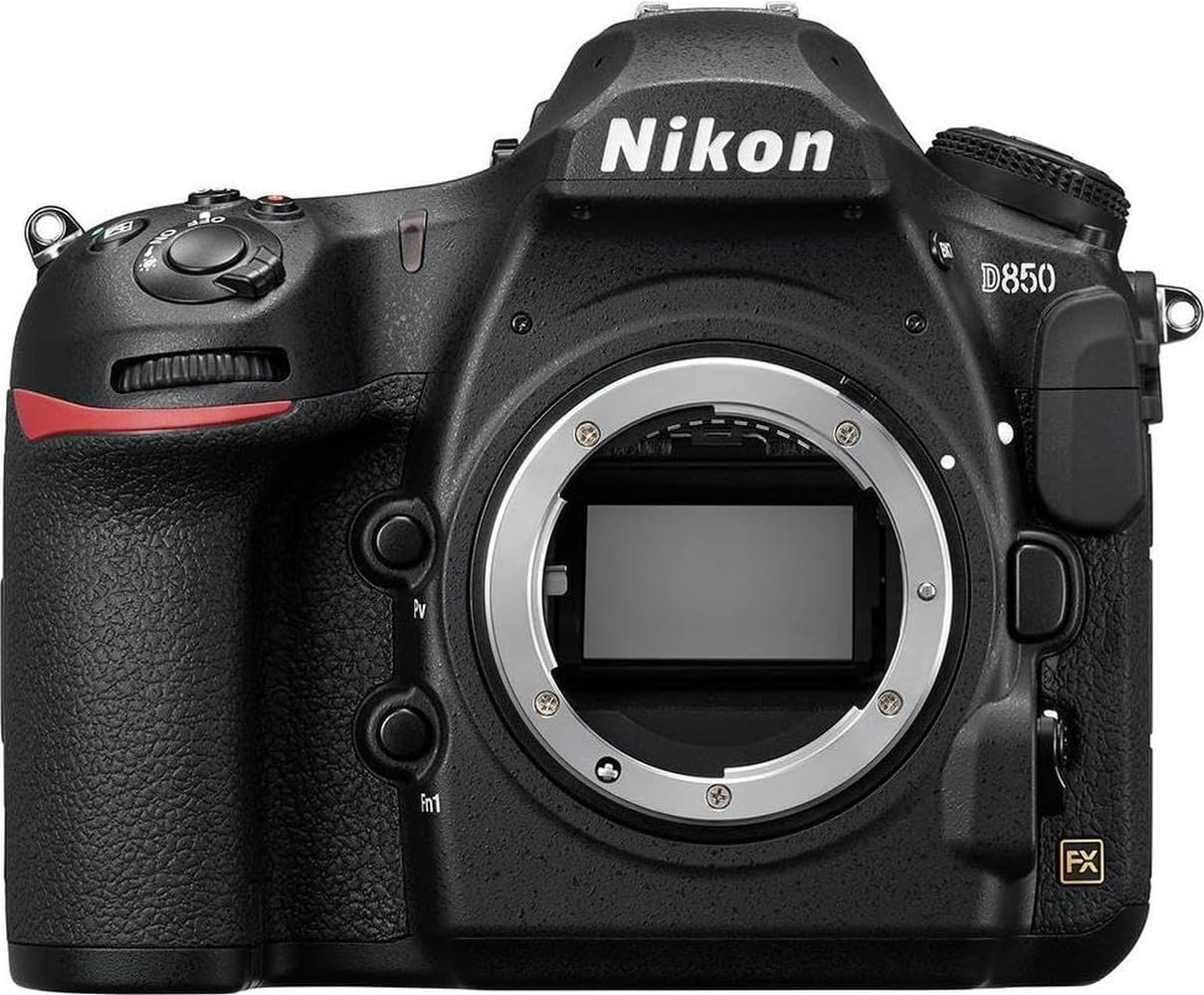
Nikon D850

92 /100
Studio Score High Confidence

Key details

Ergonomics
Tilting touchscreen
Sensor & ISO
45.7MP BSI, ISO 64-25600
Shooting Speed
9 fps
Autofocus Points
153-point AF
Check Price on Amazon

The D850 pairs the highest sensor resolution in this full-frame DSLR set with 153-point AF and 9fps bursts, so it out-specs the more balanced 24MP body in this roundup on nearly every headline number. Nikon shooters who want a flagship DSLR without moving to mirrorless get that here. For stills work where fine detail decides the shot, this is the direct route to that detail.

The body build and handling are flagship-grade, with a solid feel and controls that make sense on long location days. It is a full-size pro DSLR body, so it suits tripod and studio work more than walk-around travel. The 3.2-inch tilting touchscreen is useful for low-angle landscape work. The buy-in is premium-priced, and the body-only format leaves lens selection to the shooter.

This is for landscape, studio, architecture, and commercial photographers who will use the extra resolution and are set up for the file sizes. The 45.7MP files require heavier storage, faster cards, and more processing power than a 24MP body, so casual or travel photographers who do not need that resolution are better served by the lighter, more affordable full-frame body in this set.

Pros

  • 45.7MP BSI sensor captures more detail than any other body in this full-frame DSLR roundup.
  • Pro body build and handling support long shoots without feeling like a compromise.
  • 153-point AF with 99 cross-type sensors and 9fps shooting suit fast studio and location work.

Cons

  • Autofocus lockups or power-on refusals can occur in some units, with a restart or repair resolving the affected camera.
Our verdict

The D850 is the benchmark full-frame DSLR for resolution-focused stills work; shooters who do not need that should compare the more balanced full-frame body in this set.

Check Latest Price

How to Choose

Sensor and ISO

A full-frame sensor gathers more light than a crop body, but resolution decides how that light becomes files. A 24MP body produces manageable RAW files and strong high-ISO performance, while a 45MP body reveals more detail but creates bigger files and longer write times.

High-resolution files also demand heavier storage and editing hardware. If you shoot events or travel, a 24MP sensor is often the better workflow; if you shoot landscapes or commercial work, the extra detail matters more.

Autofocus

Autofocus is not just about point count. More cross-type points give better coverage for off-center subjects. The real difference appears in dim light and low-contrast scenes, where an AF system either locks on calmly or hunts.

A body with sensitive AF tracks moving subjects across the frame; a dated system hunts in the same situation. Match AF capability to subject speed — events need quick lock, studio work can survive slower AF.

Video Capability

Video specs go beyond 4K versus 1080p. Some DSLRs record 4K in Motion JPEG, producing enormous files; others use more efficient codecs. Live-view AF behavior also varies, so a camera that focuses well through the viewfinder can be less capable on a monitor.

1080p60 from a capable hybrid body is often enough if video is secondary. If you plan to grade footage or shoot regularly in 4K, prioritize modern codecs and live-view AF.

Continuous Shooting

Continuous shooting speed matters less than buffer depth. A body rated at 7fps can slow after a few RAW frames if the buffer fills, so card speed and buffer size decide whether bursts are usable.

For wedding ceremonies or sports, a deep buffer and 6.5fps are more useful than a high burst rate that stalls. For studio work, single-shot speed is rarely the bottleneck.

Ergonomics and Handling

Ergonomics shape how often a camera leaves the bag. A tilting touchscreen helps with low-angle shots, dual card slots provide redundancy, and body weight matters on long assignments.

A heavier pro body feels steadier with big lenses, while a lighter body is easier to carry through a travel day. Match controls, screen, and card layout to your actual shooting positions.

Frequently Asked Questions