6 Best Waterproof Camera of 2026: Picks That Actually Handle Water

Which waterproof cameras hold up for snorkeling, pool days, and beach trips — without trusting megapixel marketing.

Waterproof camera listings lead with big specs: 5K video, 64MP sensors, and deep depth ratings. The numbers that matter more on a beach trip are how deep the camera works without a housing, how long one battery lasts, and whether the body floats or needs a case.

That gap between advertised specs and real-world behavior is why this guide focuses on what actually matters at the beach, pool, or reef: true waterproofing, usable controls, battery endurance, and a form factor that fits how you shoot. A 64MP still from a small sensor still looks soft in low light, and a 4K action camera is only as useful as its mounting and battery strategy.

The trade-off is between an action-cam shape that needs a housing for deeper dives and a bare-waterproof compact that goes from beach bag to water with zero setup. Start with the depth you actually need, then match the camera to that limit.

1

Best Overall

AKASO EK7000

89 /100
Studio Score Strong Evidence

Key details

Video Specs
4K30fps, EIS
Sensor Specs
20MP CMOS
Waterproof Depth
131ft with included case
Check Price on Amazon

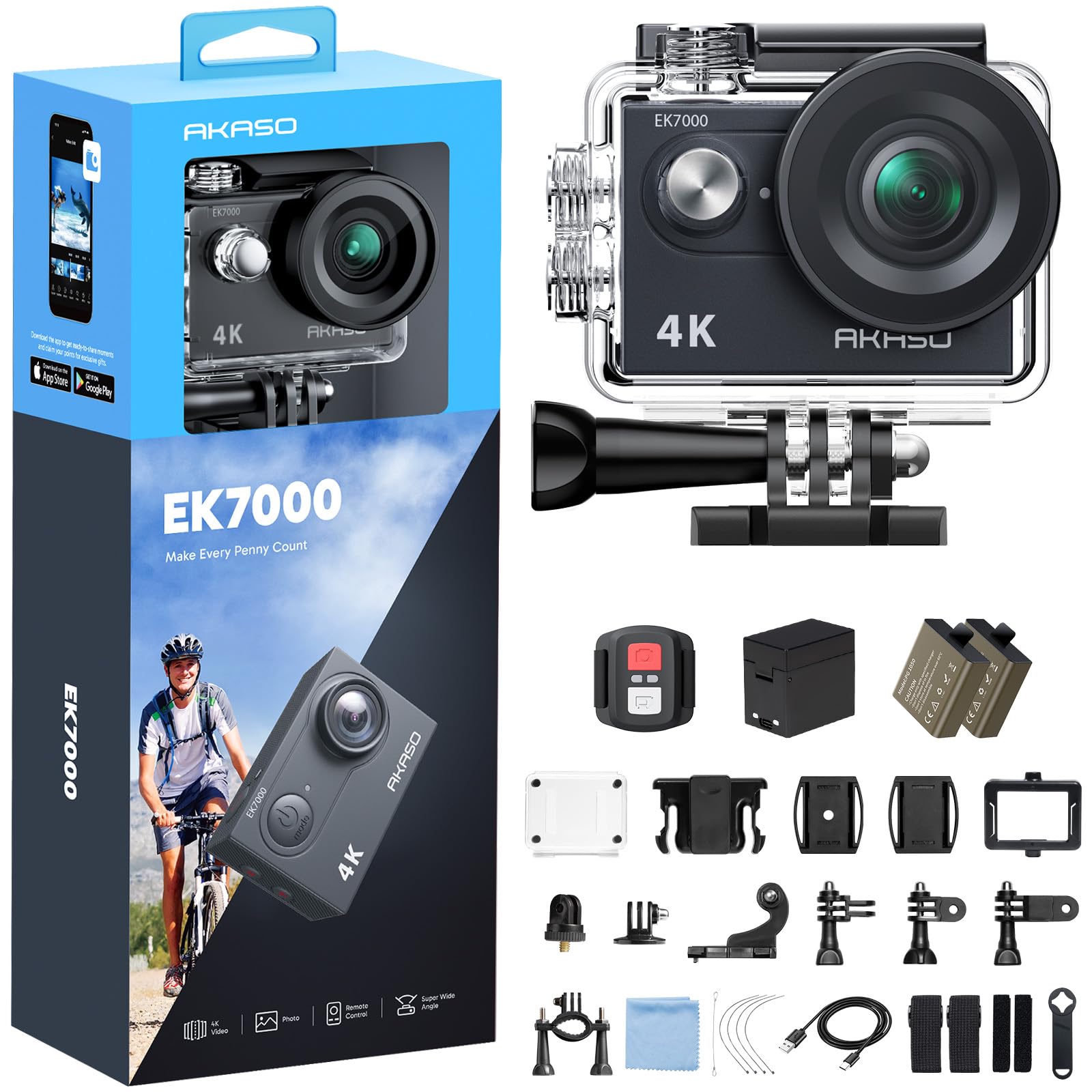
The AKASO EK7000 combines 4K30fps video, electronic image stabilization, a 131ft-rated waterproof housing, remote, and two batteries in a budget-friendly kit, so a first-time buyer can start shooting beach and snorkel clips without ordering extra gear.

The waterproof case seals cleanly, and the included remote and mounts let you start recording from a board or strap without touching the camera itself.

Snorkelers and water-sports shooters looking for an inexpensive 4K camera should treat the EK7000 as a wide-angle action cam, not a pocket point-and-shoot replacement. Continuous recording uses the included pair of batteries faster than expected, and the built-in microphone is weak; both are manageable with spare cells and an external mic.

Compared with a bare-waterproof compact, the EK7000 needs its housing for underwater work, but that housing extends the depth rating to 131ft, far beyond what most no-case compacts offer. The tradeoff favors buyers who will mount the camera on a board or strap and don't need a dual-screen selfie setup.

Pros

  • 4K30fps video and 20MP stills deliver strong daylight quality for the price.
  • Included 131ft waterproof housing takes it well past snorkeling depths without extra gear.
  • Two batteries, remote, and mounting kit cover a beach outing and provide remote triggering.
  • Electronic image stabilization smooths handheld walking and paddle footage without adding gimbal weight.

Cons

  • Fixed wide-angle lens has no optical zoom; distant subjects require moving closer or cropping.
  • In low light or murky water, the small sensor produces softer detail and muted colors.
Our verdict

For a budget-first snorkeling and beach setup, the EK7000 gives you the 4K video, deep-rated housing, and bundled gear to start shooting immediately.
Check Latest Price
2

Best Bare-Waterproof Snorkeling Compact

YAXTIFIU WDC902W

87 /100
Studio Score Strong Evidence

Key details

Video Specs
5K UHD
Sensor Specs
96MP CMOS
Waterproof Depth
33ft without case
Check Price on Amazon

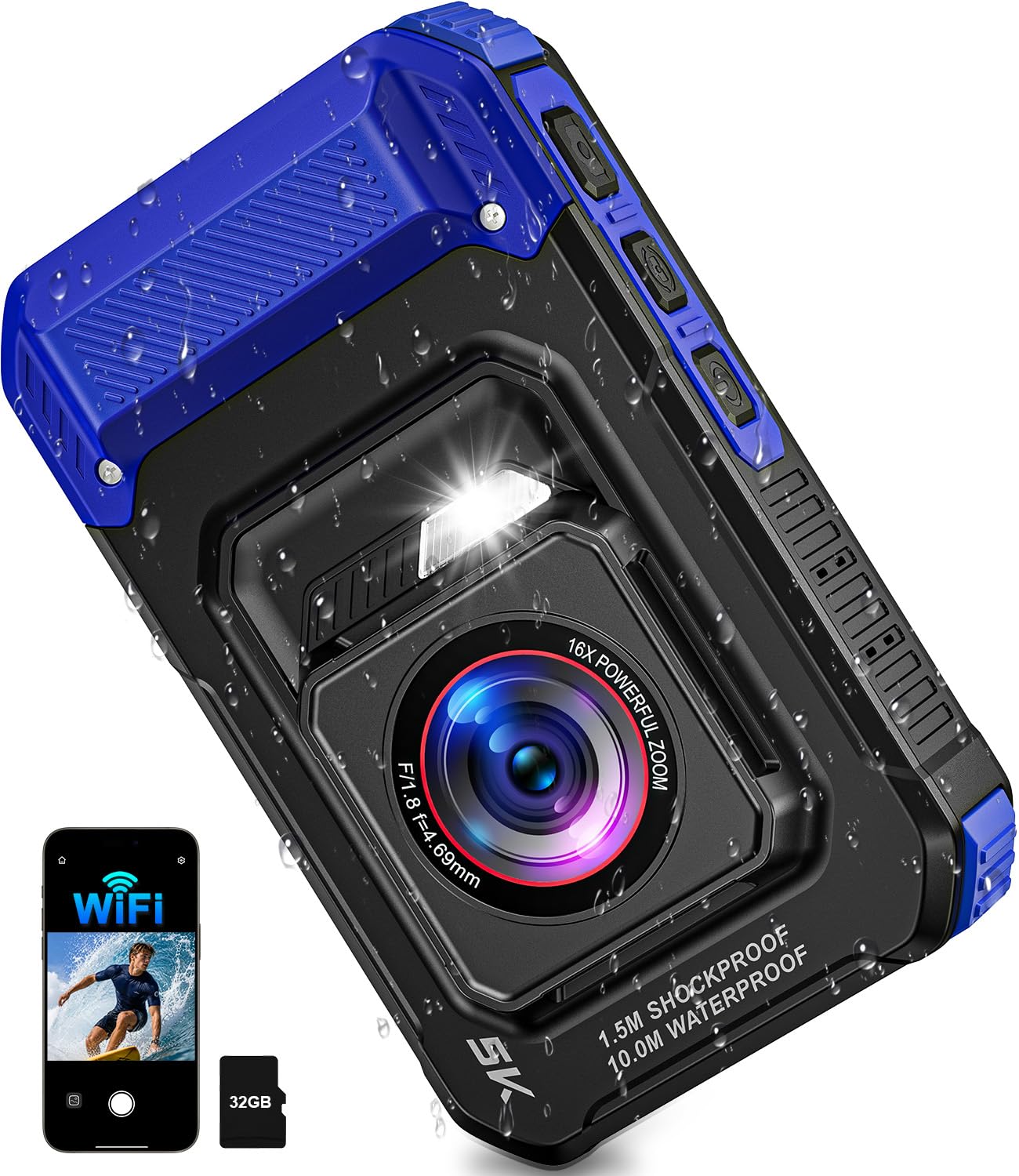
The YAXTIFIU is the no-housing route: 33ft bare waterproofing covers snorkeling depth, and the dual-lens front screen plus WiFi makes selfie-and-share use easy. It brings the point-and-shoot convenience that the action-cam top pick gives up when it needs a case.

Snorkelers and beachgoers who shoot in clear daylight are the fit; this is not built for low-light dives or long-range reach. The all-in-one kit — 32GB card, two batteries, and the included charging setup — removes most of the accessory shopping that usually comes with waterproof cameras.

Daylight stills and 5K clips come out sharp and colorful both above and below the surface, while the bare waterproofing keeps beach and pool days simple. The dual screens are especially useful for framing selfie-style vlogs without guessing where the lens points.

Pros

  • Sharp, vibrant stills and video hold up both above and below the surface.
  • No-housing 33ft waterproofing handles snorkeling without an extra case.
  • Budget-friendly kit includes WiFi, dual-lens selfie screen, two batteries, and memory card.

Cons

  • Small sensor and digital-only zoom mean low-light and distant shots lose some clarity.
Our verdict

For snorkeling, beach days, and pool-side vlogging, it skips the action-cam case routine and covers the essentials without extra purchases.

Check Latest Price
3

Budget Floating Pool & Beach Camera

Yifecial UP014

86 /100
Studio Score Strong Evidence

Key details

Video Specs
4K UHD
Sensor Specs
64MP CMOS
Waterproof Depth
16ft, floatable
Check Price on Amazon

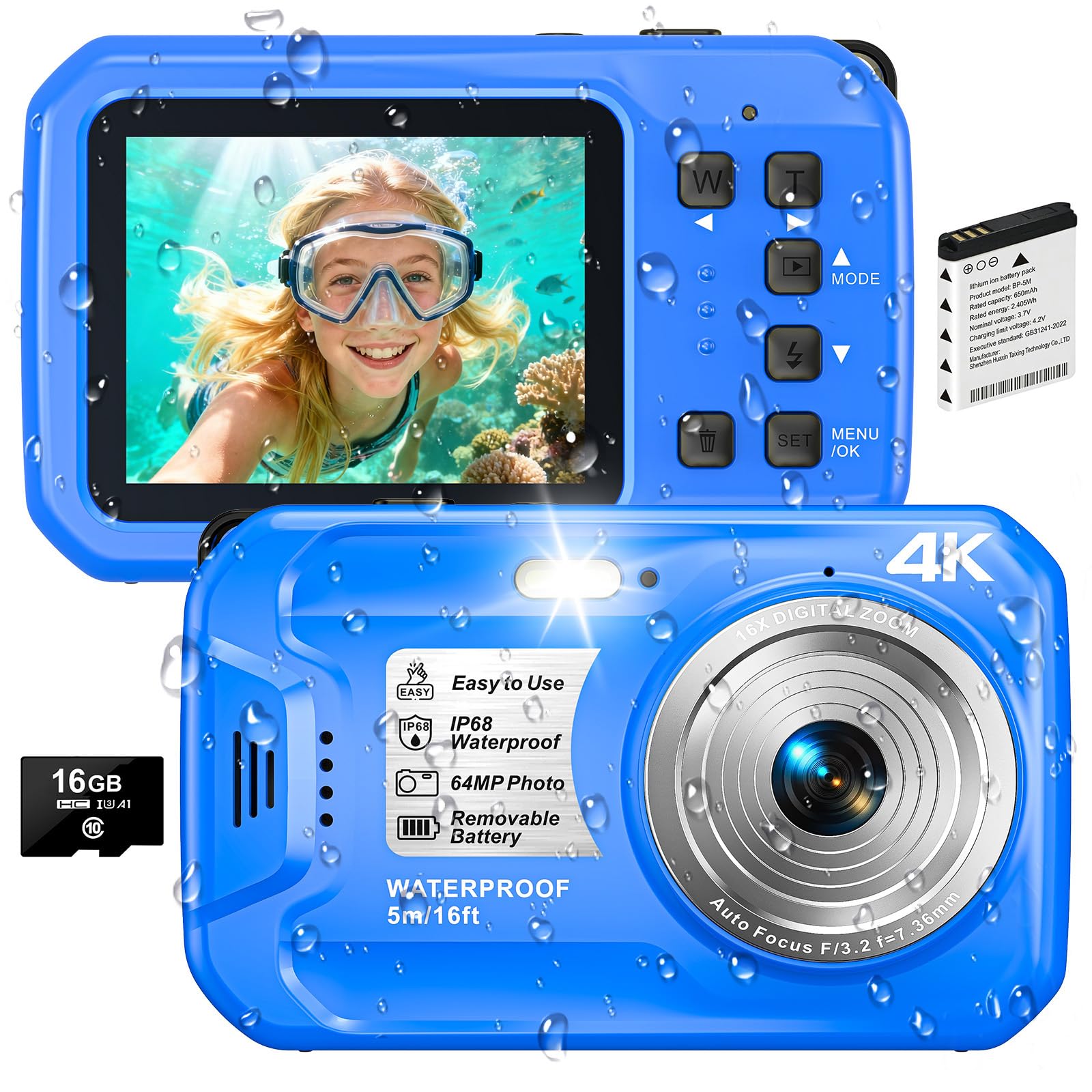
The Yifecial UP014 floats, shoots 4K video, and includes a 16GB card, so a family can start capturing pool and shallow-water moments without buying extra accessories. The IP68 rating covers 16ft of depth, which suits pool floors and easy snorkeling, and the buoyant body returns to the surface if it slips out of a hand. Daylight stills come out clear with autofocus that locks on without hunting; the 64MP sensor is best treated as a headline number rather than a low-light promise.

This is a low-stakes camera for families, teenagers, and budget travelers who want a grab-and-go waterproof compact rather than an action-cam setup with housing and mounts. The battery runtime of about 70 minutes per charge is the real boundary: a full day at the lake or beach requires a power bank or a planned charging stop. If the goal is short clips and casual stills between swims, that limitation is easy to absorb.

Where it fits in the lineup is between the housing-based action camera and the dual-screen floating compact with WiFi. You give up the selfie screen and wireless transfer of that pricier model, but you also avoid the extra setup of an action-cam case. For a first underwater camera, the simplified controls and floatable body make it the less fiddly entry point.

Pros

  • Floats if dropped and is waterproof to 16ft without a housing, so it suits pool and shore use.
  • Daylight photos are clear and the autofocus locks onto subjects without hesitation.
  • Simple button layout lets kids and teens start shooting right away.
  • A 16GB memory card is included, so the camera is ready to use immediately.

Cons

  • The 16x zoom is digital, so distant subjects lose sharpness when enlarged.
  • The 16ft depth cap rules out diving and deeper snorkeling.
Our verdict

This is the low-cost floating compact for families who want a simple, waterproof camera for pool days and shallow shore snorkeling without accessory fuss.

Check Latest Price
4

Premium Rugged Adventure Camera

OM System TG-7

82 /100
Studio Score Strong Evidence

Key details

Video Specs
4K, 120fps, high-speed
Sensor Specs
12MP BSI CMOS
Waterproof Depth
15m without case
Check Price on Amazon

The OM System TG-7 is the premium rugged compact for divers and macro shooters who need true bare waterproofing and underwater-specific controls. It reaches 15m without a housing and adds five dedicated underwater modes, RAW capture, and 1cm macro in a shockproof, freezeproof, crushproof body. That puts it ahead of the slimmer bare-waterproof compact in this set for anyone who wants control below the surface.

Bright reef and daylight scenes are where the camera performs best: the underwater modes pull usable color from shallow snorkel conditions, and 4K/120fps video captures fast water movement cleanly. The body needs no housing at 15m, so moving from beach bag to water is quick. Core functionality holds up when the camera is used inside those conditions: bright water, daylight, and surface action.

This is for serious snorkelers and divers who want dedicated underwater modes, macro, and RAW files in a rugged compact, plus adventure travelers who need shockproof, freezeproof, and crushproof build. Budget-first buyers and anyone expecting large-sensor image quality or a simple menu system will find a better fit in a casual floating compact or an action cam.

💡 Set the camera's underwater modes before you enter the water; that saves fiddling during a dive.

Pros

  • Bare 15m waterproofing and five underwater modes make it a housing-free tool for real snorkel and dive sessions.
  • RAW capture and 4K/120fps video cover stills and motion in bright reef or surface conditions.
  • 1cm variable macro reveals small sea life that most rugged compacts miss.
  • Shockproof, freezeproof, and crushproof build takes rocky shorelines and cold-air launches in stride.

Cons

  • In darker water or low light, the small sensor can deliver soft, noisy stills.
  • Durability can vary between units; one camera may endure years of abuse while another shows issues near the one-year mark.
Our verdict

This is the dive-bag camera for photographers who plan shots around the reef rather than the shoreline.

Check Latest Price
5

Traditional Point-And-Shoot

Kodak Pixpro WPZ2

83 /100
Studio Score Strong Evidence

Key details

Video Specs
1080p
Sensor Specs
16MP BSI CMOS
Waterproof Depth
15m without case
Check Price on Amazon

Kodak's WPZ2 delivers 15m waterproofing, 4x optical zoom, and a 16MP BSI CMOS sensor in a familiar point-and-shoot body that needs no housing. Snorkelers and beach travelers get a mid-range compact with real optical zoom, which is a practical alternative to fixed-lens action cameras. The 1080p video ceiling and basic underwater mode selection push 4K and reef-macro buyers toward the premium rugged compact in this set. The camera remains a spec-sheet pick rather than a field-verified one, so buyers who want confirmed real-world behavior before purchase should weigh that before committing.

Pros

  • Bare 15m waterproofing keeps snorkel trips simple without adding an external housing.
  • 4x optical zoom gives framing flexibility that fixed-lens action cameras can't match.
  • Pocket-friendly body and physical zoom control feel familiar to traditional point-and-shoot users.

Cons

  • 1080p video cap leaves 4K shooters looking at the action-cam option in this set.
  • Underwater controls are basic, so close-up reef work belongs to the premium rugged compact.
Our verdict

Fits a budget-conscious snorkeler who wants a no-housing compact with optical zoom and can accept 1080p video; it is not the pick for 4K or advanced underwater photography.

Check Latest Price
6

Families and Kids

YISENCE 4k806

85 /100
Studio Score Strong Evidence

Key details

Video Specs
4K UHD
Sensor Specs
64MP CMOS
Waterproof Depth
16ft, floatable
Check Price on Amazon

Dual 2.7-inch screens, a floatable body, and an included 32GB card make this an easy beach and pool camera for families. Still photos come out clear and detailed in bright light, so kids can frame their own shots without wrestling with a phone. The 16ft waterproof rating and lack of WiFi set clear boundaries: this is for shallow-water fun, not deeper snorkeling or instant phone sharing. For a kid's first waterproof camera or a spare for pool days, those limits are easy to accept.

Pros

  • Dual 2.7-inch screens make selfies and group framing easy for kids and adults.
  • Still images stay clear and detailed in daylight, helped by a 64MP sensor.
  • Floatable compact body and included 32GB card simplify beach and pool packing.

Cons

  • There's no WiFi, so on-the-spot phone sharing isn't part of the workflow.
  • Waterproofing is 16ft max, so deeper snorkeling and diving are outside its reach.
Our verdict

This works well as a beach or pool camera for families who want dual-screen selfies and don't need phone transfer or deeper snorkeling.

Check Latest Price

How to Choose

Waterproof Depth: Bare or Housing

Depth ratings need a clear 'bare body or included case' check. Action cameras often reach their rated depth only inside the supplied plastic housing; the bare body may handle splashes but not submersion. A housing also adds a setup step, and controls have to be pressed through plastic, which changes how you shoot.

Video Resolution and Frame Rate

4K is the marketing benchmark, but the frame rate decides how smooth water-sports footage looks. 4K30fps is enough for normal clips; 60fps or 120fps gives usable slow motion when a wave hits or a diver kicks. The trade-off is battery drain: higher resolution and faster frame rates shorten recording time and generate more heat, so a camera that promises 5K may need frequent breaks.

Still Resolution and Sensor Size

Megapixels describe pixel count, not light gathering. Compact sensors in waterproof cameras are small, so 64MP and 96MP files still show grain in gloomy water or dim interiors. A lower-resolution camera with a larger lens and RAW capture can deliver sharper, more editable underwater stills.

Battery Count and Runtime

Continuous recording is the real battery killer; compact cameras often run out in well under an hour at 4K. Kits with two batteries or USB-C charging solve the biggest practical frustration better than a larger internal battery number. For full-day trips, plan to recharge during lunch or swap batteries between dives.

Underwater Modes and Macro

Underwater color shifts blue-green, and dedicated modes adjust white balance and focus to compensate. Macro capability unlocks close-ups of coral, anemones, and small fish, while budget models without underwater modes rely on manual tweaks that are easy to misjudge. If close-up detail matters, choose a camera with a 1cm macro or a dedicated underwater setting.

Frequently Asked Questions