6 Best Used Full-Frame Camera of 2026: Pick the Mount That Lasts

Choose the best used full-frame camera by lens mount, AF generation, and battery reality — not resale hype.

Buying a used full-frame camera comes down to one decision that matters more than the body: lens mount. A low-priced body can become an expensive project if your current lenses don't fit or the system you want is costly on the used market.

The other common trap is assuming the newest feature list matters more than day-to-day usability. Previous-generation bodies often deliver the full-frame sensor, autofocus, and low-light performance most shooters need, while sparing your wallet for better glass. Battery life and chargers, though, can still catch you off guard.

This guide sorts through those trade-offs by matching each body to a specific job: budget DSLR work, high-resolution studio work, a mirrorless upgrade, or hybrid video. Whether this is your first full-frame or a second body, the choice should come down to lens system, feature generation, and the way you actually shoot.

1

Best Overall

Sony a7 III

93 /100
Studio Score High Confidence

Key details

Autofocus
693-point phase-detect
Lens Mount
Sony E-mount
Video Capability
4K UHD 2160p
Sensor Resolution
24.2MP full-frame
Check Price on Amazon

The Sony a7 III pairs a 24MP full-frame sensor with a 693-point phase-detect AF system and 425 contrast AF points, and its eye AF tracks faces quickly through portraits and video. High-ISO output stays clean in dim rooms and at night, which makes the camera an easy recommendation for event and low-light shooters. The 4K UHD 2160p mode covers hybrid shooters who want a solid video option from a body that remains a stills-first tool.

At 10 fps burst capture, the a7 III handles children, pets, and street action better than its used-market price suggests. The 24MP files offer enough detail for modest crops and prints without demanding the storage overhead of high-resolution bodies. Body-only pricing leaves room for lenses, and lenses make up the larger share of a full-frame kit. The camera also balances well with smaller primes, so a body-plus-lens kit stays portable. A hybrid shooter can move between stills and 4K clips on the same card without changing the setup.

First-time full-frame buyers, hybrid shooters, and Sony APS-C owners with E-mount lenses are the natural fit for this body. It is not the body for high-resolution studio work that needs 40MP+ or for video specialists who need 4K 120p/10-bit internal recording; those workflows call for a different camera. The used market is the right place to buy because the a7 III's feature set still competes with newer full-frame options at a more accessible price.

The wide AF coverage keeps moving subjects in frame even off center, which matters for event work. That is one reason this body remains a useful hybrid camera years after launch. Pair it with a fast prime and the a7 III covers routine everyday shooting without needing a second body.

💡 Keep a spare battery in the bag; long shoots will drain it even though overall battery life holds up well.

Pros

  • Sharp 24MP stills with strong high-ISO output keep portraits and nighttime shots clean.
  • Eye AF locks onto faces and moving subjects quickly, cutting down missed focus in event work.
  • Low-light capability stays strong indoors, so evening shooting doesn't force a flash.
  • Used-market pricing leaves room for good lenses, making the full-frame entry cost practical.

Cons

  • Some body-only listings ship without a dedicated charger, so add one to the purchase cost.
  • Individual units can lock up during the first year, so a clear return policy is a safeguard.
Our verdict

The a7 III is the value benchmark for used full-frame hybrid shooting.
Check Latest Price
2

Best Budget DSLR

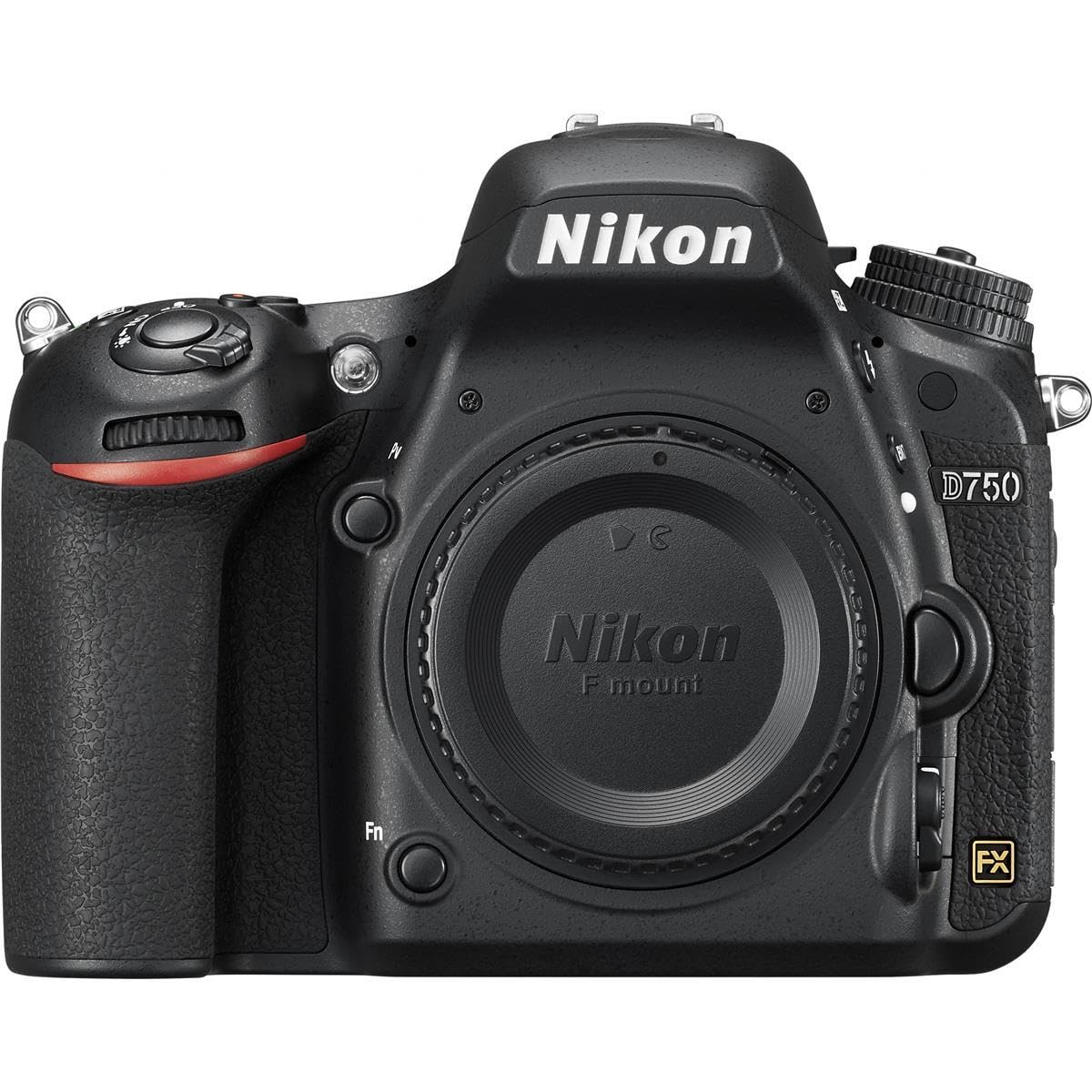
Nikon D750

92 /100
Studio Score High Confidence

Key details

Autofocus
51-point Multi-CAM
Lens Mount
Nikon F-mount
Video Capability
Full HD 1080p
Sensor Resolution
24.3MP full-frame
Check Price on Amazon

In the used full-frame market, the D750 is the affordable DSLR workhorse for event and wedding shooters who already own Nikon F lenses. Its 24.3MP sensor keeps high-ISO stills usable, while dual card slots and 51-point AF cover the essentials without forcing a move to mirrorless.

Buyers shopping the used full-frame market should see this as a stills-first body. It suits budget-conscious Nikon F-mount owners and event photographers who want dual slots; video is 1080p only, and occasional memory-card write errors have been noted, so a pre-owned copy should be tested before paid work. The optical viewfinder and familiar F-mount controls are part of the appeal, while buyers who want a compact mirrorless body should look at the slimmer options in this set.

Pros

  • A budget-friendly way into Nikon full-frame stills, with a sensor that still delivers sharp detail.
  • Full-frame 24.3MP stills come out sharp with good detail across normal ISO ranges.
  • 51-point AF handles dim venues well, reducing focus misses during event coverage.

Cons

  • Video tops out at 1080p, which puts 4K off the table for hybrid shooters.
  • Occasional memory-card write errors have been noted, so test a used body before paid work.
Our verdict

Stills-first Nikon shooters get a budget-friendly full-frame DSLR with dual slots and usable high-ISO output.

Check Latest Price
3

Best Pro Hybrid

Canon EOS R5

92 /100
Studio Score High Confidence

Key details

Autofocus
1,053 Dual Pixel AF
Lens Mount
Canon RF
Video Capability
8K RAW, 4K 120p
Sensor Resolution
45MP full-frame
Check Price on Amazon

The Canon EOS R5 carries the high end of the used full-frame market with 45MP stills, 8K/4K video, class-leading AF, and 5-axis IBIS in an RF-mount body. It moves well beyond older EF DSLRs like the 5D Mark III in autofocus speed and resolution, though the RF lens mount is a separate investment.

Burst shooting reaches 12 fps mechanical or 20 fps electronic, and the 5-axis IBIS supports handheld work. The 1,053-point Dual Pixel AF system tracks faces and animal eyes, which gives it an edge over older full-frame bodies.

This is the body for pro hybrid shooters, wedding and event photographers who want 45MP stills, fast eye detection, and Canon RF-system enthusiasts already holding RF glass. High-resolution 8K/4K video can trigger thermal limits, so plan around shorter clips or drop to 4K for extended recording sessions. For stills-first shooters, those limits rarely matter.

Pros

  • 45MP stills capture sharp, cinematic detail with room to crop for event and wedding work.
  • Dual Pixel AF with eye detection locks onto faces and animal eyes during portraits and fast-moving subjects.
  • Pro-grade build and 5-axis IBIS keep handheld shots steady across long wedding days.

Cons

  • Premium-priced for a used body, so budget-conscious full-frame buyers should look elsewhere.
  • Occasional lockups or AF faults can appear in individual units, so a used purchase needs a return window.
Our verdict

A premium-priced RF body for hybrid shooters who need 45MP stills, fast AF, and the option to record 8K video.

Check Latest Price
4

Best Nikon Mirrorless Value

Nikon Z 6II

93 /100
Studio Score High Confidence

Key details

Autofocus
273-point phase-detect
Lens Mount
Nikon Z
Video Capability
4K UHD 60p
Sensor Resolution
24.5MP full-frame
Check Price on Amazon

The Z 6II makes a strong bridge from Nikon DSLRs to mirrorless with a Z mount, dual card slots, and 4K 60p video. Sensor-shift stabilization steadies handheld shots, and the 24.5MP BSI sensor turns in sharp, detailed images. The body also accepts F-mount lenses through an adapter, so existing glass stays useful during the switch.

This is the natural target for Nikon DSLR owners moving to mirrorless who want a modern hybrid body without a full lens-system restart. Hybrid shooters get a well-balanced camera for video and stills, and the 14 fps burst is enough for event work and general action. Autofocus tracking is good but not flagship-level for demanding action, so photographers chasing fast, erratic subjects should weigh that before buying.

The body is comfortable in hand for long event days, and the button layout keeps common controls within reach. The switch from a DSLR setup should feel like an upgrade rather than a relearn.

💡 For action bursts, set a tighter AF area and pre-focus on the subject; the body tracks best when it has a clear target.

Pros

  • Overall build and handling quality comes through as polished and consistent.
  • Image quality is sharp and detailed, with clean files in everyday shooting.
  • Existing F-mount glass adapts cleanly, so Nikon owners can build into Z glass gradually.

Cons

  • 24.5MP leaves less crop headroom than high-resolution rivals for large landscape prints.
  • Fast, erratic action can push the autofocus system past its comfort zone.
Our verdict

The Z 6II is the practical bridge for Nikon DSLR owners who want stabilized video, dual card slots, and a gradual move into Z-mount glass.

Check Latest Price
5

Best High-Res Value

Sony a7R II

90 /100
Studio Score High Confidence

Key details

Autofocus
399-point phase-detect
Lens Mount
Sony E-mount
Video Capability
4K UHD
Sensor Resolution
42.4MP full-frame
Check Price on Amazon

The a7R II pairs a 42.4MP full-frame sensor with 5-axis sensor-shift stabilization and 4K UHD capture in a body that now sits well below the price of newer high-resolution mirrorless cameras. Image quality is the priority here: the 42MP Exmor R CMOS delivers sharp detail and good dynamic range for controlled shooting. That resolution advantage shows up in large prints and heavy crops, while the in-body stabilization makes adapted glass easier to hand-hold. It is a stills-first body rather than a do-everything hybrid.

Landscape and studio photographers who want 42MP without paying for the newest sensor are the right audience. The large 42MP RAW files demand a real storage workflow, low-light AF can hunt in dim conditions, and battery life is modest — acceptable on a tripod or in controlled light, but the a7 III is the better all-rounder for mixed use.

Pros

  • The 42MP sensor captures sharp, high-res images with strong dynamic range.
  • Build quality and handling hold up across a range of shooting conditions.
  • In-body stabilization and 4K UHD make it a capable body for stills and occasional video.

Cons

  • Video capture lacks modern 10-bit codecs, so video-first creators should look elsewhere.
  • The 5 fps burst rate limits fast action work.
Our verdict

For landscape and studio shooters shopping the used market, this is the value high-res option; the a7 III is the better all-rounder.

Check Latest Price
6

Best EF-Mount Workhorse

Canon 5D Mark III

87 /100
Studio Score Strong Evidence

Key details

Autofocus
61-point cross-type
Lens Mount
Canon EF
Video Capability
1080p HD
Sensor Resolution
22.3MP full-frame
Check Price on Amazon

Canon's 5D Mark III is a durable full-frame DSLR with a weather-sealed magnesium body, 61-point AF, and well-established image quality. It stays with the EF mount and the optical viewfinder, so it does not try to be the modern RF hybrid body in Canon's lineup. The 6 fps burst handles typical event sequences, and for photographers already holding EF lenses, this is a budget-friendly route to a full-frame sensor without changing systems.

This is for portrait and wedding shooters who like DSLR ergonomics and want a tough camera body rather than a compact travel mirrorless. The clear boundaries: video is 1080p only, and the low-light AF is older-generation compared with modern bodies, so dim candid work may require center-point focus or a flash assist. Those limits are easy to accept for controlled portrait sessions and event coverage where the optical viewfinder and full-frame output carry the day.

Pros

  • Full-frame output stays crisp and well-balanced in portrait and wedding files.
  • Budget-friendly used price that lets EF owners move to full-frame without switching systems.
  • 61-point AF improves focus speed and accuracy for stationary and moderately moving subjects.

Cons

  • Video tops out at 1080p, with no 4K capture or modern video autofocus.
  • In dim venues, the older-generation AF can hunt, so event coverage may need center-point focus.
Our verdict

For stills-first Canon EF shooters, this durable body is the budget-friendly way into full-frame without leaving the lenses you already own.

Check Latest Price

How to Choose

Sensor Resolution

Megapixels set the ceiling for cropping and large prints, but they also set the file-size floor. A 42MP body produces 80MB-plus RAW files, which slows memory cards and eats storage during long shoots. A 24MP body is easier on your computer and cards, with no visible difference for most web, social, or 8x10 prints.

For landscape or studio work where you crop heavily, higher resolution earns its cost. For events and travel, 24MP is often the better balance.

Autofocus System

Older DSLR autofocus points cluster near the center, so off-center subjects require focus-and-recompose or careful framing. Mirrorless systems spread phase-detect points across the frame and add eye detection, which changes how you shoot moving subjects.

Low light separates generations: older AF hunts in dim scenes where newer bodies lock quickly. Check the number of cross-type points on DSLRs and the face/eye tracking performance on mirrorless bodies.

Video Capability

Video specs matter only if you record sound and motion regularly. A body that lists 4K may still crop the sensor, limit recording time, or lack a headphone jack, so check the generation.

Higher-resolution formats like 8K generate heat and demand fast cards, so a 4K 60p body often serves hybrid shooters better than an 8K flagship.

Image Stabilization

In-body stabilization shifts the sensor to counter hand shake, turning a 1/60s handheld shot into a 1/15s shot without a tripod. It also steadies adapted and vintage lenses.

DSLRs without IBIS depend on stabilized lenses, which cost more and only help at specific focal lengths.

Lens Mount Ecosystem

The mount determines which lenses fit without adapters and which future bodies you can move to. A cheap body with an expensive or shrinking lens system can cost more over three years than a pricier body with affordable lenses.

Check used lens availability and third-party support before committing, especially for newer mounts.

Frequently Asked Questions