4 Best Editing Console for Lightroom in 2026: Match Your Version

Find an editing console for Lightroom that matches Classic or CC and keeps working after Adobe updates without wasting money on unstable software.

Most photo consoles advertise Lightroom support, but the fine print usually means Lightroom Classic. If you edit in the cloud-based Lightroom CC, several popular consoles have no native preset at all. That version mismatch is the first thing to settle before spending money.

Software stability matters just as much as button count. A console loaded with shortcuts is only useful when its companion app actually connects and keeps profiles after an update. The right unit for your desk is the one whose software holds up under regular use, not the one with the longest spec list.

A controller only pays off if it maps to the app you actually open every day. The buying decision comes down to Classic versus CC support, wired versus wireless connection, and how much configuration you are willing to own.

1

Best Overall

TourBox NEO

89 /100
Studio Score Strong Evidence

Key details

Controls
14 keys, dial, knobs
OS Support
macOS, Windows
Customization
Programmable keys, macros, presets
Connection Type
Wired USB-C
Check Price on Amazon

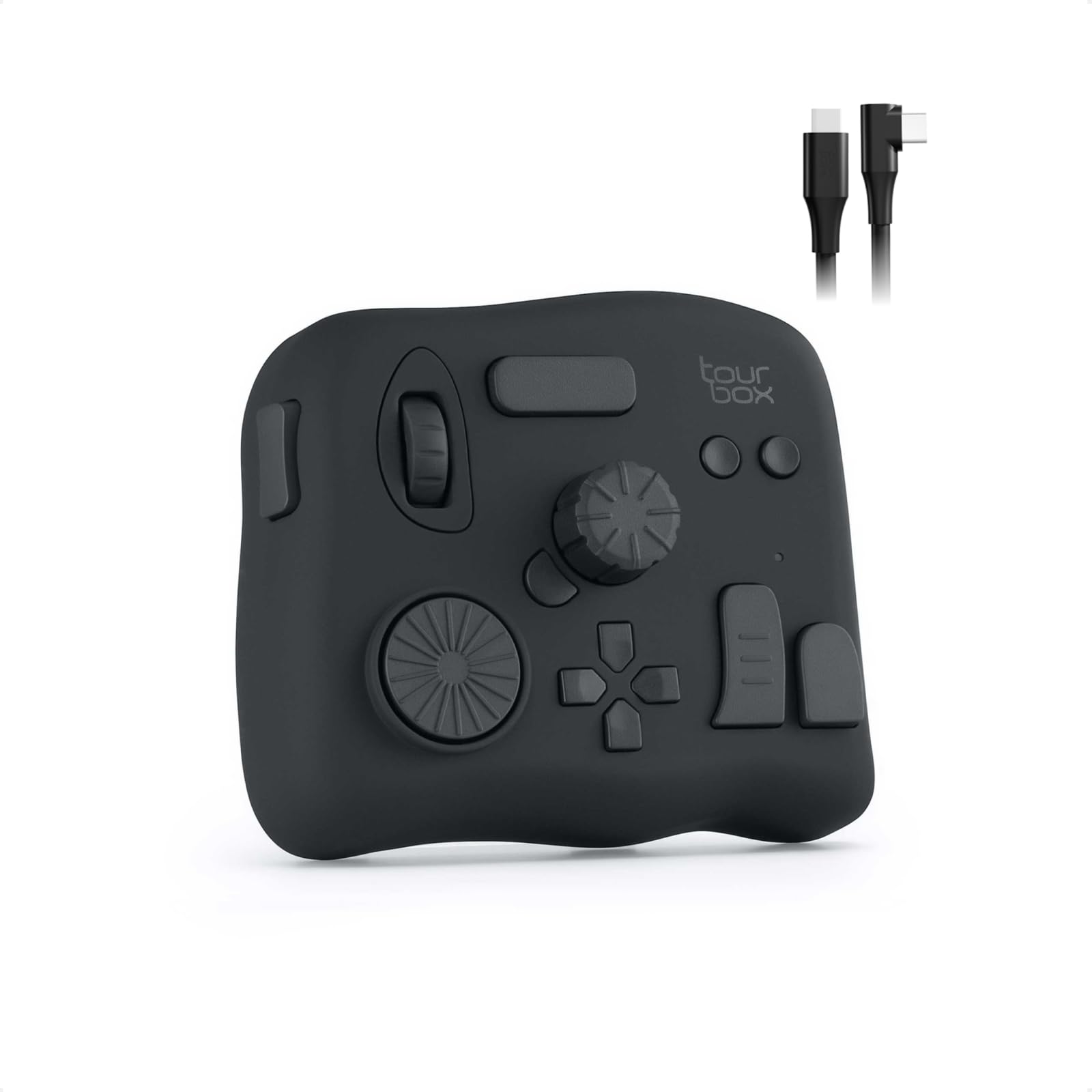
TourBox NEO pairs a wired USB-C connection with a 14-key ergonomic layout, and its Lightroom Classic preset library is mature enough to make bulk culling feel direct. Photo editors who rate, flag, and adjust in batches can keep one hand on the console and the other on the mouse, with no battery charging or wireless dropouts in the middle of a session. The TourBox Console software exposes more than 150 actions and macros, so the default mapping can be reshaped for Capture One, Photoshop, Premiere, or DaVinci Resolve.

The controls respond without perceptible lag in Photoshop, Premiere, and Capture One, and the console earns its desk space during long edits. The dial, knobs, and scroll wheel sit close enough that a hand can move between them without hunting, which is where the time savings show up in real sessions. Preloaded presets cover multiple creative apps, and editing or duplicating a template is simple enough for someone who has never owned a macro pad.

This is a Mac/PC console for Lightroom Classic editors who cull and adjust in bulk, not for iPad/tablet-only editors or anyone expecting Bluetooth freedom. New users should expect a learning curve, and a few controls remain pre-assigned rather than fully remappable; both are boundaries that fade once the button layout becomes familiar.

๐Ÿ’ก Spend the first session mapping your rating and flagging commands, then let muscle memory do the rest.

Pros

  • Accelerates batch culling and adjustment in Lightroom Classic, turning repeated mouse work into quick key presses.
  • Deep customizability via editable templates, so the console can be reshaped for Photoshop, Premiere, or Capture One.
  • Strong editing performance with no perceptible lag, making it a genuine time-saver in Photoshop, Premiere, and Lightroom.
  • Good value at its price tier for what it delivers on a Mac/PC desk.

Cons

  • The pre-assigned dial and scroll wheel can't be remapped, so some workflows need to adapt around their fixed roles.
  • The NEO asks for a learning period before the button layout becomes muscle memory.
Our verdict

For Lightroom Classic-first photo editors, the TourBox NEO delivers a focused, wired control surface that turns bulk culling into a tactile workflow.
Check Latest Price
2

Best Budget Pick

TourBox Lite Bluetooth

89 /100
Studio Score Strong Evidence

Key details

Controls
8 buttons, wheel, knob
OS Support
macOS, Windows
Customization
30 custom presets
Connection Type
Bluetooth or USB-C
Check Price on Amazon

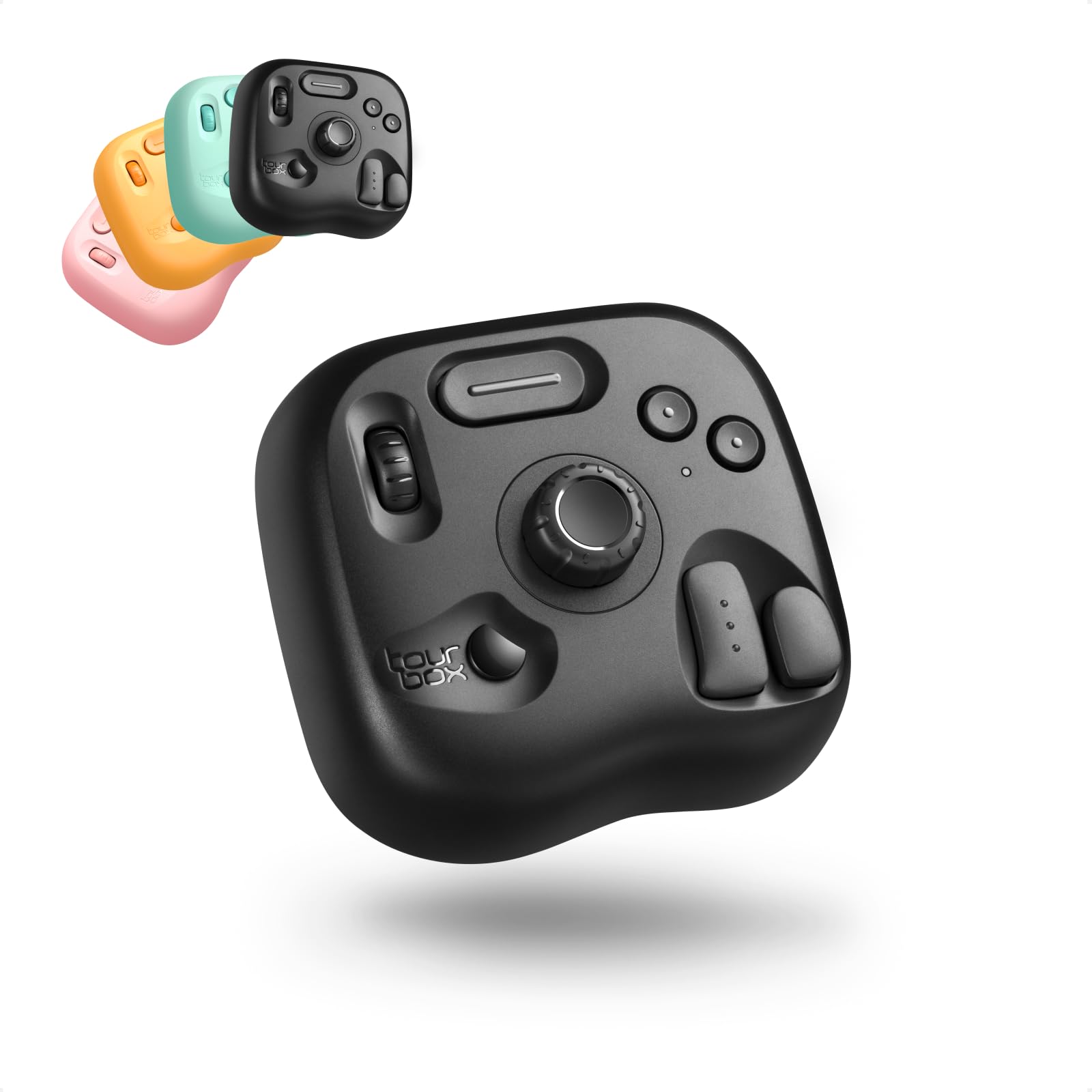
TourBox Lite brings TourBox's auto-detecting preset library into an eight-button Bluetooth body small enough to travel with a laptop. Lightroom presets load on launch, the HUD shows the active mapping on screen, and the wheel/knob handle exposure and brush adjustments without reaching for the keyboard. It does not claim the control depth of the wired full-size deck in this lineup, but it brings the TourBox workflow to a far lower entry price.

Setup is close to plug-and-play: install the companion app, let it detect Lightroom, and the default preset is immediately usable. Reassigning a control takes a click in the preset editor, and the 30 custom preset slots cover photo, video, and general desktop tasks.

This is the console for a first-time buyer who edits in Lightroom or Photoshop on a Mac or Windows machine and wants wireless control without paying for a full-size deck. It also suits travelers: the shell is compact, and the Bluetooth link gets you through a culling session on a laptop. Editors who build macro-heavy workflows around 14+ physical keys will hit the ceiling of this layout and need combo shortcuts to reach deeper adjustments.

๐Ÿ’ก If you prefer a wired connection, bring your own USB-C cable โ€” the Lite ships without one.

Pros

  • Compact body keeps exposure, brush, and wheel controls within finger reach on a crowded desk.
  • Auto-detecting presets and an on-screen HUD make the first Lightroom session immediate.
  • Bluetooth keeps the setup cord-free for laptop and travel use.
  • Entry price brings the TourBox preset ecosystem within reach of budget buyers.

Cons

  • Editors using Affinity Photo need to map their own controls; no official preset is included.
  • Macro-heavy editing outgrows the eight physical controls, leaving combo shortcuts for deeper workflows.
Our verdict

For Lightroom and Photoshop editors who want a wireless, budget-friendly introduction to a programmable console, this is the one to start with.

Check Latest Price
3

Best for Adobe Cloud Users

Logitech MX Creative Console

81 /100
Studio Score Strong Evidence

Key details

Controls
9 LCD keys, dial, roller
OS Support
Windows, macOS
Customization
Profiles, custom LCD icons
Connection Type
USB-C plus Bluetooth
Check Price on Amazon

The Logitech MX Creative Console stands out from the wired TourBox NEO by putting nine LCD keys on the keypad that relabel themselves for each Adobe app, with native Lightroom and Lightroom Classic profiles alongside Photoshop, Premiere Pro, Illustrator, Final Cut Pro, and DaVinci Resolve. The dial and roller share that app context, so the same hardware controls switch roles when you move between editors.

The right owner is an Adobe Creative Cloud subscriber who already works inside Logitech's software and will invest time in assigning actions and icons. That investment returns labeled keys and app-specific profiles that make Lightroom and Photoshop shortcuts feel direct. Buyers who need true plug-and-play behavior or a budget Lightroom-only console should favor the wired TourBox NEO instead; everyone else should expect occasional plugin or profile troubleshooting after software updates. Setup time is front-loaded, but a completed profile turns the console into a physical shortcut map.

Once profiles are set, the productivity gain is real: frequent shortcuts collapse into one press, and the control dial handles brush size, tone adjustments, or timeline scrubbing depending on the app. The companion software is the variable โ€” plugin installs and profile loads can be interrupted by Adobe or Logitech updates, so occasional reinstallation is part of ownership. The keypad itself remains stable over USB-C, and the LCD keys keep their labels clearly visible after the software settles.

๐Ÿ’ก Keep the Logitech companion app current and reinstall the Adobe integration after major updates to avoid profile-loading hiccups.

Pros

  • Nine LCD keys relabel themselves per app, so shortcuts stay visible without memorizing keycaps.
  • Lightroom and Photoshop profiles map common edit actions directly to the dial and keys.
  • Frequent shortcuts become one-press actions once profiles are configured.

Cons

  • The wireless dial can drop its connection and need re-pairing in some setups.
  • Plugin installs and profile loads can be interrupted by software updates, requiring occasional reinstallation.
Our verdict

The MX Creative Console fits Adobe-centric editors who want labeled, app-specific keys and will invest time in the Logitech software side. For Lightroom Classic-only editing with a wired setup and less troubleshooting, the TourBox NEO is the better route.

Check Latest Price
4

Most Controls Per Dollar

XP-Pen Pilot Pro

85 /100
Studio Score Strong Evidence

Key details

Controls
19 buttons, tri-rotary, joystick
OS Support
Mac, PC
Customization
100+ shortcuts, 7 themes
Connection Type
Bluetooth, 2.4G, USB-C
Check Price on Amazon

Against the wired 14-key console in this lineup, the Pilot Pro counters with 19 assignable buttons, an all-way joystick, a tri-rotary, and tri-mode wireless at a mid-range price. The on-screen HUD labels your active Lightroom profile, and vibration feedback confirms a shortcut registered without looking down. That density is the whole point: photo editors with long shortcut lists gain direct control instead of menu digging.

This is a tinkerer's console for buyers who want to build a Lightroom layout around their own culling, grading, and retouching habits. It suits someone open to spending time in the driver software to assign keys and save profiles. Driver stability can vary, especially on Mac, and the chassis feels lighter than premium competitors, so buyers who need a plug-and-play install or a premium sculpted hand feel should consider the wired full-size option in this lineup instead.

The tri-rotary is a natural fit for brush size and exposure adjustments, the joystick pans and zooms, and the remaining buttons can cover flags, star ratings, and before/after toggles. The wireless link held up through a full editing day, and the 24-hour battery means an overnight charge covers repeated sessions. The hardware density is what makes this worth the time you'll spend mapping it to Lightroom.

Pros

  • Delivers 19 assignable buttons, an all-way joystick, and a tri-rotary at a price that undercuts comparable consoles.
  • Tri-mode wireless makes it easy to shift between a desktop and a laptop without unplugging a cable.
  • On-screen HUD and vibration feedback confirm each shortcut without breaking the editing flow.

Cons

  • Profile-saving on macOS can take extra steps when setting up a Lightroom preset.
  • Button action can vary with time, including occasional sticking or wear.
Our verdict

This is the value pick for control-hungry Lightroom editors. If your shortcut list outgrows simpler consoles, the Pilot Pro puts more of it at your fingertips than anything else near this price.

Check Latest Price

How to Choose

Lightroom Version

Lightroom Classic and Lightroom CC are separate applications with different plugin architectures. A preset written for Classic cannot read the cloud catalog, so a CC user will find many buttons do nothing until they map them by hand.

Check the product page for the app name; if it only says Lightroom, assume Classic until the listing explicitly adds CC.

Controls and Layout

Buttons and dials reduce hand movement, but the total count matters less than whether the controls match the actions you repeat. Culling a thousand wedding photos needs a fast pick key and a reject key, while color grading needs a responsive dial.

An eight-button console handles the first pass, but a larger layout earns its space when you adjust sliders in batches.

Connection Type

A wired USB-C connection has no pairing step and no battery state to manage, which suits marathon editing sessions. Wireless adds desk freedom but also adds a point of friction: re-pairing, battery drain, and the occasional idle disconnect.

If you edit at a fixed desk, wired removes that entire class of interruptions. If you move between setups, wireless becomes the practical trade-off.

OS Compatibility

Mac and Windows support is standard, but iPadOS support is a separate software effort. A controller that works smoothly on macOS can have a thinner iPadOS profile because the mobile app is maintained independently.

If you split editing between a desktop and an iPad, check the iPad app version and update history rather than trusting the compatibility sticker.

Software Customization

The hardware is only half of the product; the companion app defines how many actions you can assign and how quickly profiles load. Macro support lets you collapse a multi-step adjustment into one press, but that power depends on the software staying current with Adobe updates.

A console with pre-assigned buttons is easier to learn but limits your workflow later.

Frequently Asked Questions